Tag: ISRO

  • India earns Rs 650+ crore by launching 45 foreign satellites

    India earns Rs 650+ crore by launching 45 foreign satellites

    NEW DELHI: The country has earned a sum of approximately Rs 662 crore ($17 million and 78.5 million Euros) by launching 45 satellites from 19 countries using Indian Space Research Organisation’s (ISRO) Polar Satellite Launch Vehicle (PSLV).


    The commercial wing of the ISRO, Antrix Corporation Limited, has been generating income with commercial arrangements through launching of satellites of foreign countries on-board ISRO’s launch vehicle. 


    Space Department sources said the launch missions conducted by ISRO for launching Indian satellites are intended for National development. 

    Antrix has signed agreements for launching 28 more foreign satellites from six countries:  Algeria – three, Canada – four, Germany – four, Indonesia – two, Singapore – six and the United States – nine.


    The launches of these foreign satellites are envisaged during the 2015-2017 time period. Discussions with foreign agencies and companies are going on for providing launch services to their satellites on-board ISRO’s PSLV and Geo-synchronous Satellite Launch Vehicle (GSLV). 

    Furthermore, the images received from the Indian Remote Sensing (IRS) satellites (RESOURCESAT-2, RISAT-1 and CARTOSAT-1) are marketed globally by Antrix through International Ground Stations established outside India. The IRS images of regions outside India received and processed at ISRO’s Ground Station are also marketed to global customers through Antrix.

  • Narendra Modi triumphs again, this time on twitter

    Narendra Modi triumphs again, this time on twitter

    MUMBAI: Twitter as a global social platform, has always allowed netizens to express themselves in 140 characters, during moments of celebration, protest, mourning and joy. The micro blogging site receives more than 500 million tweets per day. And we Indian’s are not far away.

    Politicians, actors, cricketers, opinion leaders and citizens have taken to the platform quite well this year. But for the year 2014, Prime Minister Narendra Modi didn’t just steal the show during the elections, but also on twitter.

    The Golden tweet aka .the most-retweeted tweet for India in 2014 was Modi’s election-winning tweet. It received more than 70,000 RTs as it became the most retweeted tweet ever in India. The tweet read, “India has won. Bharat Ki Vijai. Aache Din Aane Wale Hain.”

    Globally, the golden tweet went to the Ellen Show’s starry photo from the Oscars telecast, which gave rise to the selfie phenomenon world over. It received more than 33,67,817 RTs.

    Meanwhile, India’s list of power tweeters is dominated by Bollywood stars, apart from Modi. In the top 10, Amitabh Bachchan leads with 1,18,18,056 followers, followed by Shah Rukh Khan at 1,02,46,755. Cricketers Sachin Tendulkar and Virat Kohli too make their entry but at number 15 and 16, respectively. Author Chetan Bhagat adds variety to the list, rounding off the top 20 for India.

    Rohit Sharma’s smashing the world record for the highest individual ODI cricket score of 264, on 13 November was the top peak moment for twitter. In fact, of the top 10 moments, three are related to cricket including the Indian Premier League. The second largest peak in twitter conversation for the year was Rajinikanth’s arrival on twitter. With over 2,00,000 followers in the first 24 hours and now over 1.1 million in total, it’s clear that he has many loyal fans both off and on twitter. Hardly surprising, two of the top five peaks in conversations were about Modi.  With 8.5 million followers, he is currently the second most followed political leader in the world (after President Barack Obama) and continues to grow his followers at a rapid pace.

    The fastest rising Twitter hashtag trends in India saw a mixture of sports, disasters and political campaigns. Conversations around the 2014 FIFA World Cup lead the trend, followed by the disappearance of the Malaysian Airlines flight, MH370. Meanwhile, Mufflerman, a campaign led by the fans of the Aam Aadmi Party in support of leader Arvind Kejriwal, gathered momentum towards the end of the year.
     

  • PSLV-C26 successfully launches IRNSS-1C

    PSLV-C26 successfully launches IRNSS-1C


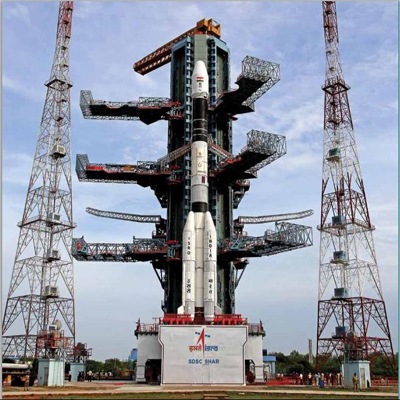
    MUMBAI: ISRO’s Polar Satellite Launch Vehicle, PSLV-C26, successfully launched IRNSS-1C, the third satellite in the Indian Regional Navigation Satellite System (IRNSS) at 0132 hours IST from Satish Dhawan Space Centre, Sriharikota. This is the twenty seventh consecutively successful mission of PSLV. The ‘XL’ configuration of PSLV was used for this mission. Previously, the same configuration of the vehicle was successfully used six times.

    After the lift-off of PSLV-C26 with the ignition of the first stage, the important flight events;  stage and strap-on ignitions, heat-shield separation, stage and strap-on separations and satellite injection, took place as planned. After a flight of about 20 minutes 18 seconds, IRNSS-1C Satellite, weighing 1425 kg, was injected to an elliptical orbit of 282.56 km X 20,670 km, which is very close to the intended orbit.

    After injection, the solar panels of IRNSS-1C were deployed automatically. ISRO’s Master Control Facility at Hassan, Karnataka assumed the control of the satellite. In the coming days, four orbit maneuvers will be conducted from Master Control Facility to position the satellite in the Geostationary Orbit at 83 deg East longitude.

    IRNSS-1C is the third of the seven satellites constituting the space segment of the Indian Regional Navigation Satellite System. IRNSS-1A and IRNSS-1B, the first two satellites of the constellation, were successfully launched by PSLV on 2 July 2013 and 4 April 2014 respectively. Both IRNSS-1A and 1B are functioning satisfactorily from their designated geosynchronous orbital positions.

    IRNSS is an independent regional navigation satellite system designed to provide position information in the Indian region and 1500 km around the Indian mainland. It will provide Standard Positioning Services (SPS) – provided to all users – and Restricted Services (RS), provided to authorised users.

    A number of ground stations responsible for the generation and transmission of navigation parameters, satellite control, satellite ranging and monitoring, etc., have been established in as many as 15 locations across the country.

    In the coming months, the next satellite of this constellation, namely, IRNSS-1D, is scheduled to be launched by PSLV. The entire IRNSS constellation of seven satellites is planned to be completed by 2015.  Minister of State (Space), Dr Jitendra Singh, witnessed the launch from the centre.

  • “DoT should regulate carriage and I&B can look at content”: Rahul Khullar

    “DoT should regulate carriage and I&B can look at content”: Rahul Khullar

    NEW DELHI: The Telecom Regulatory Authority of India (TRAI) chairman Rahul Khullar has once again spoken loud and clear. The 62-year-old Khullar has proposed that while the Department of Telecom should exclusively focus its attention on carriage and carriage related issues while the Information and Broadcasting Ministry (I&B), considering its history, should be only regulating content.


    “And I think that is the way we need to go,” he said while addressing the gathering at the recently concluded CII Big Summit 2014.


    He also came down heavily on the politicians and political parties. He said, “The Supreme Court through its ruling has clearly stated that airwaves are not the monopoly of the state.”


    So, while Prasar Bharati must exist and it must be independent; politicians, governments, state governments and their organs have “absolutely no business whatsoever to be in broadcasting space,” he announced and suggested that the government must announce this as an integral part of the National Media Policy.


    Khullar also gave his perspective on the other components of the National Media Policy. “Firstly, there must be a clear articulation that we want a free media, unhampered and unrestricted by the government in any way possible,” he said while also suggesting that the media itself must be subject to safeguards. “It could come from other forms of independent regulators. You cannot have an institution which has rights but no duties,” he added.  


    Secondly, there must be commitment in National Media Policy to uphold plurality of views and opinion. “And this must be a commitment,” he said.


    Thirdly, time has come that we start talking about infrastructure. “If this National Media Policy is actually going to work, are we or are we not going to be in a digitised world? We cannot be flipping and flopping the dates as we send out wrong signals to the rest of the world about your credible commitment towards any policy,” he stated.


    Khullar also pointed out the issues with spectrum availability. “It is a nightmare to deal with ISRO. The organisation neither gives you a transponder nor does it allow you to get a transponder of your own,” he informed.  

  • Union Minister Jitendra Singh presents ISRO report card

    Union Minister Jitendra Singh presents ISRO report card

    MUMBAI: The Indian Space Research Organisation’s (ISRO) commercial arm Antrix Corp has been involved in 10 satellite launches of eight foreign countries from the two operational satellite launch pads at Satish Dhawan Space Centre, Sriharikota over the last three years. In the process, it has earned revenues of 540,000 euros in 2001-2012 and 21.09 million in 2012-2013. This was disclosed by Union Minister of State for Science & Technology and ministry of earth sciences, department of atomic energy and department of space Jitendra Singh in a written reply in the Lok Sabha today.


    Singh revealed that the government is considering setting up a new satellite launching pad, referred as Third Launch Pad, at Sriharikota. The Third Launch Pad is intended to support increased launch frequency, provide active redundancy to existing launch pads and to support launching requirements of advanced launch vehicles. The possible site  for the Third Launch Pad has been identified in Sriharikota taking into account the safety distances and maximal utilization of existing launch pad facilities. The existing launch pads  are used exclusively for launch vehicles developed by ISRO.


    Singh added  that ISRO’s  satellites have done yeoman’s service in improving telecom, long-distance education, telemedicine in rural and flung areas of the company. He pointed out that  ISRO satellites have helped in achieving 100 per cent coverage of the Indian mainland and rural and far flung areas for direct to home  (DTH) satellite television.  


    Additionally, they have helped in three other areas:

       * Telecommunication: About 1.75 Lakh satellite communication terminals are supporting various applications like village telephony, data connectivity, broadband connectivity, Automatic Teller Machines (ATM) of banks, etc., covering the rural and far flung areas of the country.


      * Tele-Education: 56,000 classrooms connected through satellite networking, of which 51,000 are Receive Only Terminals (ROTs) and around 5000 are Satellite Interactive Terminals (SITs) catering to all the sectors of education from primary to higher and professional education.


    * Telemedicine: The Telemedicine network connects the patients at a remote hospital to a speciality hospital for tele-consultation. 60 specialty hospitals connected to 308 remote and rural hospitals and 16 Mobile Vans.
     

    The Developmental Education and Communication Unit (DECU) of ISRO conducted  a study to ascertain the utility of tele-education and tele-medicine networks over the years, a Press Information Bureau (PIB) release states. The findings of the study indicate the following.
     

    * Tele-education networks are very effective to reach out remote and rural areas of the country and also to enhance the understanding level of the students. The target audience for tele-education include students from school, technical education, higher education, teachers training including physically challenged students. On an average 2-3 hours of programmes are transmitted for 4-5 days in a week.


    * Tele-medicine networks are very useful in treating the patients located in remote and rural areas. Through tele-medicine patients get the best doctors for consultation. Tele-medicine provides the advantage of saving time and money to the patients and also provides relief to family members from the hassles of accompanying the patient to speciality hospitals in the urban areas. Mobile tele-medicine vans are found to be ideal to cover larger geographical area with treatment in the fields of Ophthalmology, Diabetic screening, Cancer, General Medicine and hearing impairments in the infants.


  • ISRO earns over Rs 4 crore for supplying data received on Indian satellites and for leasing transponders

    ISRO earns over Rs 4 crore for supplying data received on Indian satellites and for leasing transponders

    NEW DELHI: Antrix, the commercial arm of the Indian Space Research Organisation, has earned Rs 4,408.07 crore since 1992 through various satellite launch missions by providing services on commercial basis.


    These services include marketing and direct reception of data from Indian Remote Sensing Satellites to national and international clientele and leasing of satellite transponders on-board INSAT/ GSAT satellites.


    In addition, ISRO has launched 40 satellites of 19 foreign countries on commercial basis under contract between respective foreign customers and Antrix and generated income of € 50.47 million and US $ 17.17 million. 

    Minister of State for Department of Space Jitendra Singh told Parliament today that the future course of action plan includes expanding the data and direct reception services of Indian Remote Sensing Satellites to international clientele, enhancing leasing of satellite transponders to Indian customers, increasing launch services for foreign satellites on-board Indian launch vehicles, and enhancing marketing of satellites and sub-systems. 

  • Mars Orbiter Spacecraft crosses half way mark of its journey

    Mars Orbiter Spacecraft crosses half way mark of its journey

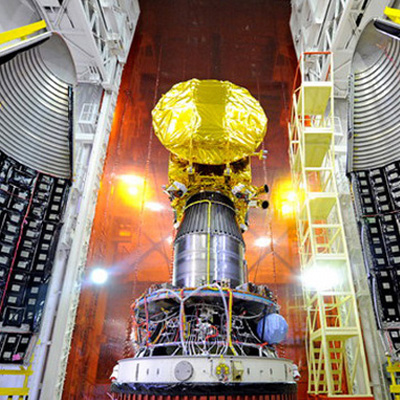
    MUMBAI: India’s Mars Orbiter Spacecraft crossed the half-way mark of its journey to the ‘Red Planet’ along the designated helio-centric trajectory at 9:50 am on 9 April.


    Mars Orbiter Spacecraft was launched onboard PSLV-C25 on 5 November 2013. On 1 December 2013, Trans Mars Injection manoeuvre was conducted successfully and the Spacecraft was set in its course towards Planet Mars through a helio-centric trajectory. Soon after the Spacecraft crossed the sphere of influence of Earth, a Trajectory Correction Manoeuvre (TCM) was performed successfully on 11 December 2013.


    ISRO has been continuously monitoring the Spacecraft using its Deep Space Network complemented by that of NASA-JPL. As the Spacecraft is on its designated trajectory, the TCM planned for April 2014 is not considered essential. If required, the next TCM is planned to be carried out in June 2014.


    Mars Orbiter Spacecraft and its five scientific instruments are in good health. Periodic tests are being done on the different levels of autonomy built into the Spacecraft for managing contingencies.


    As of 9 April, the radio distance between the Spacecraft and the Earth is 39 million km. A signal from the Earth to the Spacecraft and back to Earth takes 4 minutes and 15 seconds. Soon, the High Gain Antenna of the Spacecraft will be put in service for handling communications with the ground stations.


    The Mars Orbit Insertion (MOI) manoeuvre would be performed on 24 September 2014.

  • New Ku-band Telugu channel Manna TV launched

    New Ku-band Telugu channel Manna TV launched

    The southern Indian state of Andhra Pradesh yesterday witnessed the launch a new Telugu channel christened Manna TV on state-of-the art Ku band-based satellite communication network.


    The state’s chief minister N Chandrababu Naidu did the honours on the occasion of Ugadi, Telugu New Year, according to the Press Trust of India.


    As part of pilot transmission, Manna TV will commence telecasting long distance education programmes of Dr BR Ambedkar Open University and the University Grants Commission (UGC) respectively. It will also provide information about various state government departments and help farmers with prompt and timely update on weather and seasonal conditions.


    In his inauguration address, Naidu thanked the Indian Science Research Organisation (ISRO) for agreeing to his government’s request for providing the Ku band linkage. He said apart from literary and informative programmes, the channel would also focus on beaming entertainment programmes. The Ku band connected channel – which now caters to the needs of students belonging to 46 junior colleges, 12 degree colleges, 56 high schools and 94 government departments – will be expanded to more university colleges and schools from the next academic year.

  • Tata Sky to reply to MIB’s showcause notice

    Tata Sky to reply to MIB’s showcause notice

    MUMBAI: A month after the ministry of information and broadcasting (MIB) came out with its mandate that 24 Doordarshan channels have to be carried on all DTH platforms; the ministry has cracked the whip on three DTH players in the country for not obeying the notification. Showcause notices have reportedly been sent to Reliance Digital TV, Sun Direct and Tata Sky as to why action shouldn’t be taken against them for not complying with this requirement.


    Now, one of the big players is all set to give a fitting reply to the ministry – Tata Sky, which has unsuccessfully been chasing the MIB for transponders on ISRO’s GSAT-10 satellite. “Our licence with Doordarshan was to carry eight channels but we were carrying 15 since our customers wanted them. We have been running pillar to post to get capacity but no one has been helping us,” says and agitated Tata Sky CEO Harit Nagpal.


    The DTH operator has signed long term contracts with all its channels and has no more capacity left for any more channels. “I am ready to carry the 24 channels that the government says I should but I need time to figure out how to do it. Capacity creation takes time. There are only two ways to create capacity- either get more transponders or remove channels. If I remove channels, customers may not be too happy with it,” adds Nagpal. “And also my contracts with other broadcasters for carriage of their channels have to be kept in mind.”


    The notice was sent to Tata Sky yesterday and it has a deadline of 15 days to submit its reply. However, going by the looks of it, it won’t be too long before the ministry gets Nagpal’s reply. “We had written even when the notification was passed requesting them to reconsider since we could not do it since it had failed to help us get capacity. We got no response from the MIB for that letter,” he reveals.


    According to the rule, all DTH operators have to provide 24 DD channels irrespective of whether they provide them a-la-carte or in packages to their subscribers.


    The channels which cable operators must show are DD National, DD News, DD Bharati, DD Urdu, DD Sports, DD India, DD Kashir, DD Punjabi, DD Girnar, DD Sahyadri, DD Saptagiri, DD Malayalam, DD Podhigai, DD Chandana, DD Bangla, DD North East, DD Bihar, DD Uttar Pradesh, DD Rajasthan, DD Madhya Pradesh, DD Oriya, Gyan Darshan, Lok Sabha TV and Rajya Sabha TV. 

  • ISRO’s GSLV D5  successfully launches GSAT-14

    ISRO’s GSLV D5 successfully launches GSAT-14

    MUMBAI: The first time it was about to launch in august 2013 a technical snag forced an abortion. But now Indian Space Research Organisation’s (ISRO) twenty third communication satellite GSAT-14 has been successfully launched on 5 January 2014 from launch vehicle Geosynchronous Satellite Launch Vehicle GSLV-D5 that is using an indigenous cryogenic engine for the first time. The launcher propelled the satellite into a Geosynchronous Transfer Orbit (GTO) after which it used its own propulsion system to settle itself at 74 degrees east longitude orbit.

    The mission was an important one for ISRO since India has been developing cryogenic engines or two decades but till now had been dependent on Russian ones. This launch puts India at a prominent position in space science at par with countries like the US and Russia. Previous attempts at launches using a cryogenic engine have ended up in a mess. The launch that was telecast live on DD National saw the rocket being propelled up into space with each stage crossing at its intended time. 

    ”Team ISRO has done it. The cryogenic engine has performed as predicted and injected GSAT- 14 in the intended orbit. This is an important day for science and technology and space technology in the country. 20 years of our effort in realising an indigenous crygoenic engine has now fructified. We have put in excruciating efforts of three and a half years after test flight of cryogenic stage in 2010,” said an ecatatic ISRO chairman K Radhakrishnan as the whole team rejoiced  when the the cryogenic stage was initiated and completed and years of ISRO’s hard work paid off. The launch cost approximately Rs 370 crore.

    The previous attempt to blast off GSLV into space was aborted following a fuel leak in its engine that developed hours before launch. ISRO worked on it and gave it a better metal covering following which it decided to give it another shot. A three stage rocket- the first stage runs on solid fuel, second on liquid fuel and third on the cryogenic engine – the GSLV-D5 carried the 1982 kgs GSAT-14 to replace GSAT-3 that wa decomissioned in 2010.

    The new satellite’s structure is based on ISRO’s two ton weighing (I-2k satellite bus). The satellite has six Ku band transponders (51.5 dBW EOC-EIRP), six C band transponders (36 dBW EOC-EIRP) and 2 Ka band transponders and will be co-located with INSAT-3C, INSAT-4CR and KALPANA-1.

    A 29 hour countdown began at 11: 16 am on 4 January and the launch was at 4: 18 pm on 5 January from the Satish Dhawan Space Centre at Sriharikota in Andhra Pradesh. The 17 minutes and 8 second flight launch is the first of 2014 after the postponement of Space X’s launch of Thaicom-6 from 3 January to between 6 to 9 January. The Elon Musk backed company decided to go in for a later liftoff as problems had emerged with Falcon-9 rocket’s fairing.

    This mission is likely to have a beneficial spinoff. It could lead to orders to build more rockets that can carry payloads of up to 5 tonne to Lower Earth Orbit. Till now ISRO has been using Polar Satellite Launch Vehicle (PSLV) that carries loads of around a tonne.