Tag: Isobar

  • Isobar launches Sri Lanka Operations

    Isobar launches Sri Lanka Operations

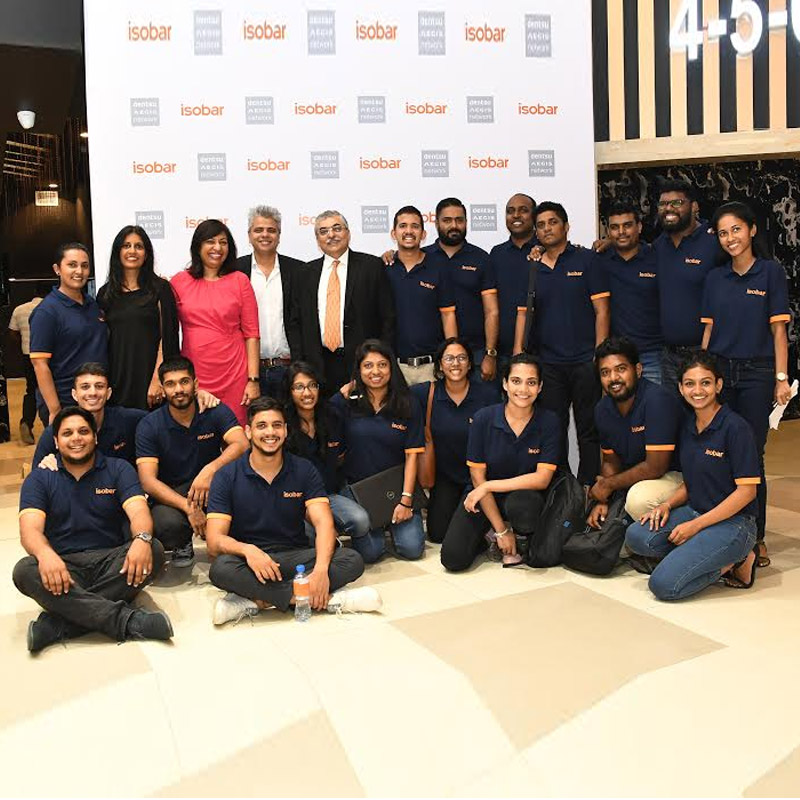
    MUMBAI: Isobar, the digital agency from Dentsu Aegis Network, has expanded its operations to Sri Lanka.

    Last year, Dentsu Grant Group, Sri Lanka's largest integrated communications agency with a 60-year-old legacy, disrupted the nation’s advertising industry with the introduction of the global marketing conglomerate Dentsu Aegis Network into the country.  Now, it will do so once again, reinventing Sri Lanka’s rapidly growing digital economy, with the launch of its full-service digital agency – Isobar.  

    Commenting on the prospects of Isobar in Sri Lanka, Shamsuddin Jasani, Group Managing Director – Isobar South Asia said, “I am very excited to launch Isobar in this amazing country. Sri Lanka is a rising mobile economy with smartphone penetration growing by over 20% and mobile penetration growing over 120% year-on-year. With the launch of Isobar Sri Lanka we are looking at creating a leading agency for the digital age that follows a true full service model. Under the guidance of Neela and her team, I am sure we will be a force to reckon with in this market in the years to come.”

    Speaking on the launch of Isobar Sri Lanka, Neela Marikkar, Chairperson – Dentsu Grant Group and Dentsu Aegis Network Sri Lanka states, “We are thrilled to be introducing such an iconic brand into the Sri Lankan advertising industry. We are fortunate to be working so closely with our global and regional offices; we are confident that we will be able to use their global knowledge and skills to help develop business opportunities for our clients as well as help the digital economy of the country and accelerate through Isobar’s experience led transformation and brand commerce expertise.”

    Ready to revolutionize the market, Isobar Sri Lanka will offer end to end full service digital media creative and technology services and help clients navigate the world of tangible and intangible businesses through mobile brand commerce, product innovations, artificial intelligence (AI), virtual reality (VR), the internet of things (IOT) and wearables.

  • BrandVid – Can a brand become a media company?

    BrandVid – Can a brand become a media company?

    MUMBAI: Traditional media companies today have a very diverse story and narrative no matter what the subject. A consistent story is shared across paid, earned and owned media. However, media companies are more than that today. They create programming and/or distribute it. They also share the content via various media channels.

    But what we’ve been increasingly seeing is that brands have now started to become media companies by creating and distributing their in-house content. 

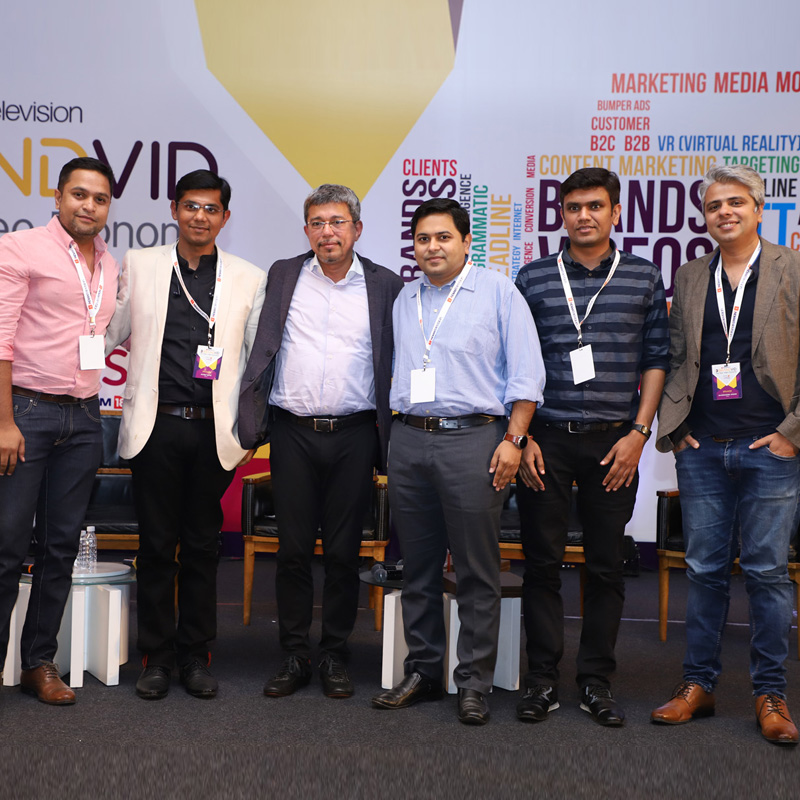
    It is challenging for a traditional agency to sustain and survive in a competing environment like this. But is there a way where brands, agencies and publishers can co-exist and collaborate? Well, that was precisely the topic of discussion at BrandVid 2018, powered by Colors. The session saw industry leaders discuss on whether a brand can after all become a media company. And if yes, how can they monetise their assets. 

    Clearly disagreeing with the proposition, Firstpost business head of revenue & strategy Anurag Iyer believes that the objective of becoming a media company and becoming a brand are completely different. He said, “Redbull as a business looks at its studio business as a separate entity and has great traction back to its website, but does its film on adventure and sports result in more Redbulls being sold? I don’t think so! But does it have a great brand rub off with their audiences? Absolutely!”

    On the other hand, Online Fashion portal Myntra is a brand as well as an e-commerce company that is also a media company to some extend as it creates in-house content. But does that mean it will become a full-fledged media company in the time to come? Probably! Myntra VP marketing Achint Setia is of the opinion that brands need to first figure out the role of content and the business objective. For a brand, its business objective is to drive revenue and sales and that’s where content plays a critical role. “Brands have a role to play in consumer’s mind and they should stick to that role. However, that role can get enhanced and more meaningful with the right use of content.”

    But while brands are struggling to find their sweet spot in the cluttered media ecosystem, there hasn’t been a better time for agencies as they get to have the cake and eat it too. Isobar Group MD South Asia Shamsuddin Jasani wants partake of that cake. Though it is a difficult proposition, big global brands want to monetise their content. Global FMCG giants Mondelez and Pepsi want 20-30 per cent of their spends to be recovered via video content and Isobar doesn’t want to miss out on that opportunity. 

    A lot of brands mistake content’s role in their business lifecycle. It is not about monetising content for the sake of it or about using content as an ROI drive. It is more about using content to have a deeper relationship with your community. 

    Shamsuddin said, "Big advertisers feel there is some monetisation that needs to happen and they are all grappling with how to create those monetisation opportunities. As an agency, we are working with brands to create those IPs. As brands, they will do it and as agencies we will have to do it because we don’t have a choice or they will push us to do it.”

    Although it’s a vicious and profitable cycle, but when does a brand pause, take a step back and think whether they are overstepping their business objective and should rather focus on sales and revenue? That’s exactly what Marico head of media and digital marketing Ankit Desai thinks. He believes it will be a few hits and a lot of misses for brands if they go the media company route. “While media companies can deal with many misses and start over again, it’s a different ball game for brands as it is linked back to business objective where you don’t have the option of repetitive failure since your marketing money will be wasted and that’s really the challenge.”

    Getting customer attention is a task for most marketers today. The millennial consumer will not stick to your content no matter how well made it is if it isn’t engaging and informative enough. It will take a lot of time for brands to understand the young customer of today. Agreeing that brands will become media companies in the future, Fastrack head of marketing Ayushman Chiranewala said that you cannot time when it will actually happen. He however thinks that it will come from a different business need which will be to be on the top of customer mind because getting the customer attention will only keep getting difficult in the future.

    Brands will become media companies in the times to come and there is no denying that but the timeline is likely to vary. For Myntra, it may happen in less than three years from now whereas Fastrack believes it will take five to 10 years. Interestingly, today content creators are also becoming brands in themselves. They create an IP and later sell products around the IP, eventually creating a brand. 

    All in all, maybe the world in the future will not be about everyone trying to do everything but about a lot of collaborations and partnerships. But every brand and creator should keep their minds open and think about consumer intent first.

  • Isobar India bags digital mandate for Colorbar

    Isobar India bags digital mandate for Colorbar

    MUMBAI: Isobar India, the digital agency from Dentsu Aegis Network, has been appointed as the digital partner for Colorbar, one of India’s leading beauty brands that is positioned in the premium segment.

    Isobar India won the account following a multi-agency pitch and will manage the brand from its Delhi office.

    Colorbar head of digital marketing Jayati Modi says, “We are very excited to partner with Isobar. With its global expertise in the digital space, Isobar brings an unparalleled value to the table. We’re looking forward to working together, innovating together and growing together. We are sure that with them by our side, we will be able to build as strong a presence in the digital space as we have in the retail industry.”

    Isobar India executive vice president Gopa Kumar adds, “We are really excited to partner with Colorbar. It is one of the leading players in the fashion and beauty segment. We are looking forward to creating exciting digital-first experiences for the brand Colorbar as the primary mode of communication for this category.”

    Isobar is a global full-service digital agency known for its significant innovations in digital marketing communications.

  • TV in future to be delivered through internet pipe, not DTH: Isobar group MD

    TV in future to be delivered through internet pipe, not DTH: Isobar group MD

    MUMBAI: The year 2008 will always be remembered as the year of the global financial crisis. It was the worst financial crisis the world ever faced since the Great Depression of the 1920s. The crisis that originated in the United States gradually extended over a period of time and eventually brought the entire world under its grip. And India wasn’t spared from the catastrophe as well. It was a time when brands didn't have enough money in their pockets to spend on advertising and manufacturing.

    Digital agency Isobar that started operations in 2008 during the meltdown, recently celebrated its 10-year anniversary. While it was a definite challenge convincing brands to come on board to advertise on a new medium, it definitely paid off. The agency has worked for Godrej securities, V-Guard, Wrangler, Adidas, Lego, Durex, Acer, Voot, CEAT, Barbie, ROUSH among others. Isobar has over 6,500 people in 85 locations across 45 markets globally.

    We sat down with the recently elevated Isobar group MD for South Asia Shamsuddin Jasani along with executive vice president Gopa Kumar where they discussed about their journey at Isobar, what has changed in the last 10 years, the advent of newer technologies, challenges for the industry and much more.

    It was a challenging time when you started the agency. How was it?

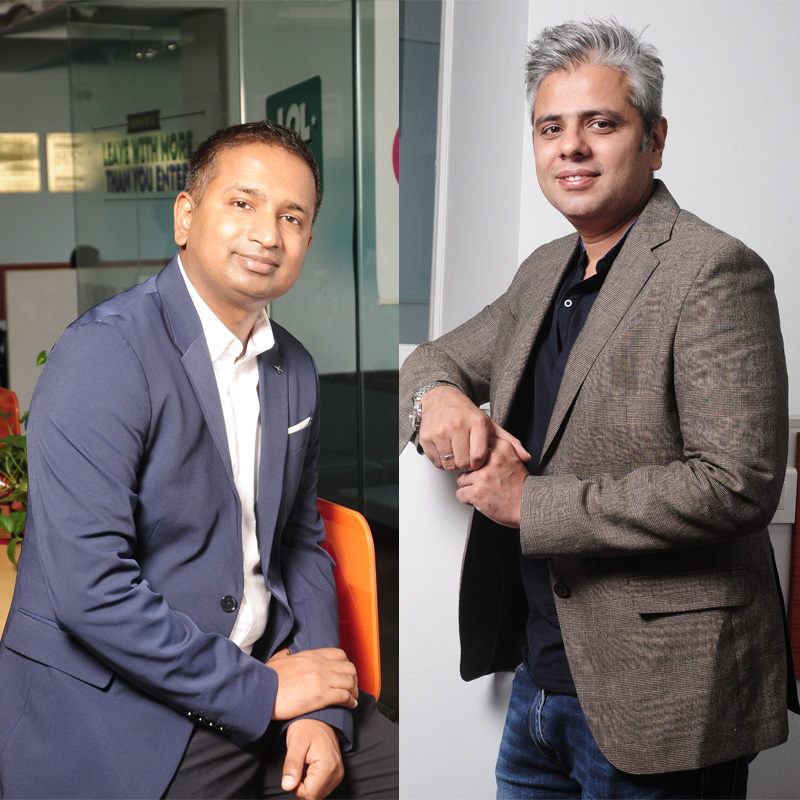
    Shamsuddin: We started Isobar when there was a global financial meltdown in 2008. Businesses across were shutting down and it was a bad phase for the entire industry. But it was a good time for us to start the company. It was a different time altogether as digital was just coming up. Ashish Bhasin had joined Dentsu just two months before I joined.

    2006-2008 was a time when brands were new to the digital world. How challenging was it to get brands on board?

    Shamsuddin: In 2008, businesses were reducing spends on media due to the global meltdown. People wanted to start experimenting on digital more than before as the idea was that you need to spend much lesser on digital than on print and television. But yes, we worked really hard to get clients on board for a relatively new medium. We had to use our existing list of contacts but it was more about going to clients and explaining to them how digital works. But clients were also receptive to hearing us out as they wanted to experiment with their money. The years 2008 to 2012 was more about educating clients but digital really hit home in 2012. The digital spends between 2008-12 were around 8-10 per cent which has now gone up to 20-30 per cent.

    How has it been working with Ashish Bhasin? He is known as one of those bosses who really gives you the creative freedom to operate the way you want to.

    Shamsuddin: We have learnt so much from him and we have grown so much because he has allowed us to make our own mistakes and take our own risks while giving us a guiding light. I wouldn’t have been able to build Isobar the way it is if we were a part of a different network.

    Gopa: His ethics and the way he conducts himself is inspirational to us. It has been great working with him. He is a guiding light to everyone at Dentsu Aegis Network.

    Are brands okay and accepting to spend a huge chunk on digital marketing or will it still take them some time to accept digital?

    Shamsuddin: The acceptance has happened and clients now know the importance of digital. Every brand is on digital today but it’s more about how brands are exploring the medium to the fullest. For a long time, digital was seen in isolation from other mediums and that is where it failed. I think soon everything will move to digital. Five years down the line, you will have television that will be delivered digital only through an internet pipe and not through DTH.

    So the way we consume digital will change?

    When Jio fibre comes out with its set top box that will be a game changer for television because you will now watch a lot of content on demand. That will create a sea change in the money we are spending. Television metric will be intrinsic to digital because you will be buying everything through digital. The explosion is already happening due to Reliance Jio. In the next few years, video will drive a lot of the consumption stories and advertising stories along with e-commerce. Increasingly, a lot of people are not searching for brands on Google but directly on e-commerce websites.

    When do you see the shift happen when everything becomes digital?

    Shamsuddin: Even when it becomes a digital world, you will still buy television and outdoor. Outdoor will become 30-40 per cent of the total media spends because you will have digital screens. Advertising will be a digital led industry, not necessarily digital buying in as early as 2020. However, that may not necessarily mean that digital spends will be 40-50 per cent of the ad budget.

    They said out of home a dying medium but increasingly we see a lot of brands exploring the medium to the fullest. Also digital OOH is becoming every advertisers’ favourite medium…

    Shamsuddin: Outdoor and digital have the perfect marriage. Experiential advertising in the next few years will change the face of advertising altogether. Nearly 30-40 per cent of all outdoor in India will be through digital outdoor. That is simply because digital outdoor is very local and also digital now allows us to do hyperlocal. Some exciting times ahead for us!

    There is a constant chatter about digital content regulation. If it happens, won’t that only be a bad decision altogether?

    Shamsuddin: The basic question here is, how will you regulate digital content? It basically means that you will not have free content because you can’t regulate digital content. A player like Netflix or Amazon may abide by that but a lot of created and shared content can’t be regulated. You need to have enough filters to stop communal content but a content that users are paying for shouldn’t be regulated. It has to be more about self regulation by content creators because it’s viewed on a personal device.

    Whats your view on technologies like Augmented Reality and Virtual Reality? Will they become inevitable in advertising few years down the line?

    Gopa: India has used VR as a tactic and gimmick but nothing which has translated into scaleable marketing solution. But around the world, people are using VR and actually adding value to it. I think in India, it won’t only be about AR or VR, but mixed reality and that solution will be sustainable. More brands and agencies need to invest in these technologies and only then we can scale it up in terms of quality as people need to experiment.

    Shamsuddin: I think AR will be bigger than VR in reality between the two technologies. That is simply because you don't need bulky headsets to experience AR. Now smartphones come with preloaded AR kit. But I think it will take another two to three years before AR changes the way we interact and use our phones and see things around us. Google glasses came in too early in the game but this would have been the perfect time.

    In India, it’s only Republic TV and Discovery Jeet that are using VR to show news. Is the Indian audience even ready for such technology?

    Shamsuddin: I don't think VR is ready yet in India and I don't think VR is something that you would want to take on live. The virtual content does not lend itself well for live content. It might work well for a cricket match or a Formula1 race but I don't know how important this is for news because news we are already consuming through video or text and that gives us enough information. The immersive concept works well for concerts and live sports.

    One word of advice that you would want to give to upcoming talent?

    Shamsuddin: You need to work on the basics as the basics don't change just because it is a digital agency. Just because you work in a digital agency, it doesn’t mean this is Silicon Valley where you can come in by 2 pm and leave by 6 pm! It is still work and you need to work! You need to work hard, get your basics right and make yourself better every day.

    Gopa: For me, it’s all about hard work, being passionate and having your integrity is the foundation. The industry is dynamic and everything changes at the fly and if you are not ahead of the curve and you are not reinventing yourself, you will never be able to succeed.
  • Isobar, Godrej Security engage Twitter users on Friendship Day

    Isobar, Godrej Security engage Twitter users on Friendship Day

    MUMBAI: Isobar, the digital agency from Dentsu Aegis Network India which handles the digital mandate for Godrej Security Solutions, had recently launched a marketing campaign, #StayConnected, to celebrate Friendship Day.

    As part of the campaign, Godrej Security Solutions tapped into the usual order of Friendship Day banter and took that on to Twitter. The brand engaged audiences with a personalised tweet response every 30 seconds, leading to nearly half-a-million impressions for the activity. The response from Twitterati was further leveraged when Godrej Security Solutions went on to engage in conversations with brands such as Durex and Café Coffee Day.

    Isobar India creative director Ranjeet Kumar said, “We knew that the idea of creating branded, bespoke emojis and ambushing the user’s conversation in a pleasantly surprising way will get us their attention. But, until it is personalised at scale with the creative use of digital, it will not have a big impact. So, we developed a custom API over our social listening tool, integrated it with an AI bot that listens, learns and engages with people on friendship day (tracking more than 100 dynamic keywords), and then contextually converses with them. For us, perception change is a long-term goal, and we have successfully kicked it off with a one-on-one dialogue with our TG.”

    Godrej Security Solutions vice president and global head marketing, sales and innovation Mehernosh Pithawalla added, “We believe in innovations that make our offerings relevant in daily lives. This activity was nothing but an extension of the same ideologies. Small innovations like these that individuals can relate to, make a serious category like ours a lot more interesting.”

    Campaign is based on the insight that 92 per cent of the online population today use emojis to portray an emotion, a feeling or an expression. Not to forget, there are ‘select’ emojis that we use to identity with our near and dear ones. This gives brands an opportunity to latch onto conversations and become a part of the discussion chain.

  • DAN acquires stake in Scottish creative agency

    DAN acquires stake in Scottish creative agency

    MUMBAI: Multinational media and digital marketing communications company, Dentsu Aegis Network has acquired 100 per cent stake in a Scotland based creative agency, Whitespace.

    Established in 1997, with a focus on digital and brand design, Whitespace has developed into one of Scotland’s leading and most awarded creative agencies. Currently housed with a talented team of 70 and located in Edinburgh, the agency offers specialised services in brand strategy, digital production, content and integrated campaigns spanning mobile, augmented reality and virtual reality to a diverse portfolio of clients.

    Following the acquisition, Whitespace will remain a standalone agency and will add capability infill in creative services, digital and production to DAN North, in addition to making an important contribution to the Dentsu Group’s business throughout the UK.

    The impact of this transaction on Dentsu’s consolidated financial results for the fiscal year ending 31 December 2018 is expected to be minimal.

    Dentsu Aegis Network, the Dentsu Group’s global business headquarters based in London, is expanding the group’s business worldwide through ten global network brands–Carat, Dentsu (Dentsu Brand Agencies), dentsu X, iProspect, Isobar, mcgarrybowen, Merkle, MKTG, Posterscope and Vizeum–as well as through several specialist/multi-market brands.

  • Isobar launches commerce practice in India

    Isobar launches commerce practice in India

    MUMBAI: Isobar, part of Dentsu Aegis Network, has launched a commerce practice in India, following the launch of the global counterpart.

    The expansion of this department will lead to a commerce centre of excellence, delivering end to end experiences for clients, through integrated platforms and solutions that are informed by local insight. This addresses a growing demand for commerce solutions from clients in India, where India’s e-commerce market value is projected to grow by 30 per cent annually to a total of $200 billion by 2026 according to a Morgan Stanley report.

    Speaking on the launch, Isobar CEO Asia Pacific Jane Lin-Baden says, “Commerce is no longer about optimising the last mile, it’s now the space where people interact and experience brands. By establishing Isobar Commerce in India, Isobar can offer clients higher commercial value and customer satisfaction by leveraging our customer experience design, data intelligence, and technical commerce solutions.”

    Isobar India managing director Shamsuddin Jasani adds, “E-commerce in India has exploded. By launching Isobar commerce practice in India, we will not only be able to offer the best development capabilities but also to partner with our clients on their entire e-commerce journey and delivering solutions across the board powered by our offering across Isobar and Fractal Ink.”

    This will bolster Isobar India’s strategic capability and scale to deliver brand commerce solutions, bringing brand experience and commerce closer together. This integrated commerce offering in India will be delivered through its 150 e-commerce specialists, in addition to 450 people from design specialists (Fractal Ink-Linked by Isobar) and innovative marketing and media specialists (Isobar India).

    The Indian Isobar commerce division will join the 1,000+ commerce specialists across Isobar’s network in Americas, EMEA and Asia-Pacific. The global practice includes all commerce centres of excellence, all e-commerce, m-commerce, retail commerce experts and commerce off-shore delivery centres within the Isobar network. Isobar global commerce has strong technology credentials across all major platforms and is aplatinum Salesforce partner. Isobar is also a global alliance partner with Adobe, a SAP Hybris partner and SAP Hybris value added reseller (VAR), Microsoft managed partner, an Oracle business partner, an Apple strategicpartner, and is the Asia-Pacific leader for Magento.

    Isobar commerce practice globally combines strategic, technology, user experience (UX) and operational support to deliver rapid growth for global brands and retailers and has delivered transformational commerce work for leading brands including include Asda, Clarins, Ecco, Lacoste, Nestle, Samsonite and Pandora and more.  

    The global practice delivers commerce experiences using platforms and solutions with the biggest technology players, including Salesforce, Adobe, SAP Hybris and Magento – combining strategic, technology and operational support to multi-market and regional clients. It also covers strategy and brand commerce in third-party market-places, such as Amazon and Tmall. The end-to-end offering includes commerce strategy and consulting, customer experience design, data and technology implementation and platform management to ensure rapid growth for Isobar’s clients.


  • Has advertising finally begun to embrace AI?

    Has advertising finally begun to embrace AI?

    MUMBAI: Artificial intelligence (AI), a tool that uses logic to mimic the human brain, has been the buzzword in the advertising industry for quite some time now. 

    AI was founded as an academic discipline in the year 1956, and in the years since, the technology has experienced several waves of optimism, followed by disappointment and the loss of funding (known as an AI winter), thereafter by new approaches and success.

    People often tend to use the term AI interchangeably with machine learning (ML), but they are completely different tools. While AI is the broad concept of teaching machines with data to do things in an efficient way, ML is the technique of using algorithms to process data, learn from insights and make predictions that train AI. As Wunderman AI’s global leader Robbee Minicola rightly says, “You can have machine learning without AI, but you can’t have AI without machine learning.”

    With the implementation of AI in advertising and marketing, brands can discover the price at which networks are willing to pay for an impression and identify the optimum times of data to serve an ad for target consumers.

    public://IKEA.jpg

    AI’s potential for improving campaign effectiveness is only just being unearthed with a limited understanding of impact. AI-driven elements like image and voice recognition on smartphones, algorithm-based viewing suggestions for Netflix and Google’s real language analysis in search are now gaining mainstream status. It is believed that AI will soon become indispensable in advertising. 

    The concept of ‘technological singularity’, in which machines become better at developing themselves, is a reality but human intervention will always be required. Isobar executive vice president Gopa Kumar doesn’t believe in giving everything to automation and AI as it is an indispensable part of the future media ecosystem.

    According to Adobe’s 2018 Digital Trends report, top-performing companies globally are more than twice as likely to be using AI for marketing (28 per cent vs 12 per cent). The report also found that less than one in five global respondents said their companies are pushing forward with AI and nearly half of respondents said their organisation has inconsistent integration between technologies.

    Although advanced and matured markets like the US, UK, China and Japan have been early adopters of the technology, India is catching up at a fast pace because of its risk-taking ability. Programmatic platforms and advertising are the first kind of AI intervention in advertising and is increasingly becoming more and more pervasive. 

    It is still early days for AI in India as compared to the western world in understanding and implanting these technologies. Havas Media Group India MD Mohit Joshi believes that the adoption of technologies is already happening, however, reaching the US level of adoption will require the clients to be equally convinced and more importantly give them some ‘use case’ success stories. 

    Programmatic advertising will contribute to more than 60 per cent of advertising in the next two years in India which is the currently world average.

    Isobar India EVP Gopa Kumar thinks that AI in India is still at a very nascent stage and in media it is just being initiated. He adds that though it will take a while to be the prime choice, but once it does, its adoption will be widespread and then the usage of AI in advertising will be across platforms and mediums. 

    In India, sectors like BFSI, e-commerce and FMCG have been able to make the most of artificial intelligence, big data analysis and machine learning to have better connect with consumers and enhanced consumer experience. But there’s a lot to learn from the daddies like IKEA and Alibaba.

    public://alss.jpg

    Since AI is an expensive tool and hiring an agency for it is often expensive, advertisers today are looking at building their own in-house AI capacities. With benefits including improved consumer engagement through personalisation, leaner marketing operations and cost savings on ad serving, the return on investment (RoI) prospects are rather appealing for advertisers. What it does require is a heavy initial investment in hardware and software for data collection and processing and acquiring the right talent.

    Dentsu Aegis Network chief data officer Gautam Mehra admits that AI is not a magic sauce and it will not change the brand’s RoI overnight and clients (brands) need to understand their business challenges before they plan on investing in these technologies. “The primary challenge for any advertiser is how do you know which data to go after and how do you bring that data into your warehouse (cloud or physical) and maintain that data warehouse to give data insights. Brands need to trust data and have a data driven culture in the organisation,” he adds. 

    Not all advertisers may understand the technicality of AI and the automation of basic data processes and the implementation of integrated analytics. This is precisely where advertising agencies can help their clients, both as trusted advisers and execution partners.

    The lack of good media infrastructure is a barrier to better implementation of AI in India. Our challenge is how do we make AI actionable because our other mediums are not evolved enough and we don’t have programmatic OOH or digital OOH except at airports. Mehra asks how do we bring about a real time change in media when our media itself is not programmatic? While India’s radio is still terrestrial, a majority of set-top boxes for television are not trackable and, therefore, there is reliance on BARC data. 

    India is still a data-starved market and AI works only on data. Joshi concludes that the biggest challenge for India will be getting the right talent, as we need great data scientists and the best of them ignore the media space.

    While India is on its way to becoming AI-ready, some major players including Vodafone, Myntra, Flipkart, HSBC Bank and SBI Bank have started putting in the effort to adopt the technology.

    Also Read :

    The Glitch to leverage GroupM data to reach rural India

    2017 – The year of long-format ads

    How iProspect’s Vivek Bhargava foresaw a digital future two decades ago

    Talent retention is key, says Mindshare’s Prasanth Kumar