Tag: ISL

  • Star Sports to telecast ISL Draft and Auction live

    Star Sports to telecast ISL Draft and Auction live

    MUMBAI: Star India’s sports broadcaster Star Sports, will telecast the first ever auction of football players in India live and exclusive on Friday, 10 July, 2015 from Mumbai. The Hero Indian Super League (ISL) 2015 domestic player auction and draft will witness the top football talent in the country going under the hammer, with the eight teams bidding aggressively to add the finest Indian football talent to their roster.


    The auction will go live at 10 am on Star Sports 2 and Star Sports HD2 and will be anchored by renowned broadcaster and football expert John Dykes. Charlie Ross, resident auctioneer of Gooding and Company, the American vintage automobile auctioneers and for Mac Dougalls, the Russian Fine Art Auction House, will head the auction proceedings for the day. 


    Mobile internet advertising will surge at a 23.1 per cent CAGR to 2019, overtaking display internet advertising globally in 2018 and replacing paid search in the US by 2016 as the leading internet advertising category. Global video advertising spend which is also expected to rise at a CAGR of 19.5 per cent will be catalyzed by a near-doubling of global smartphone connections to 3.85billion in the said year. 


    This rapid rise in mobile and internet video advertising calls for media companies to offer both native and programmatory inventory of their advertising portfolios, taking into consideration the timescales and skills set of these two varied mediums which need different management.


    The auction will be followed by a domestic draft with 114 players available for selection in the second season of the Hero Indian Super League.


    The auction and draft day telecast will begin with a special in-depth analysis on Star Sports 2 and Star Sports HD 2 on what to expect at the auction and draft. Star Sports presenter Seema Jaswal along with former footballers and experts Paul Masefield and Bengaluru FC coach Ashley Westwood will be a part of the pre-auction show.  A special one hour wrap up show featuring all the action from the day long auction will broadcast between 10:30 pm – 11:30 pm on Star Sports 4 & Star Sports HD4.


    Each club is regulated to have a minimum squad of 22 players and maximum of 25, consisting of one marquee, eight international and 13 domestic players including two mandatory under-23 developmental players.


  • Chennaiyin FC sign ISL winning duo Edel and Fikru

    Chennaiyin FC sign ISL winning duo Edel and Fikru

    MUMBAI: Chennaiyin FC has signed Indian Super League (ISL) champion franchise Athletico de Kolkata’s (ATK) duo Apoula Edel Bete and Fikru Teferra Lemessa for the second season of the tournament.


    Cameroonian-born Armenian goalkeeper Edel and Ethiopian forward Fikru played pivotal role in ATK journey to conquest in the inaugural edition of the tournament.


    After the 2014 ISL, Edel played for Hapoel Tel Aviv in Israel while Fikru was with South African outfit Bidvest Wits.


    Edel has previously had a spell with French giants Paris Saint-Germain in his career and has also represented Armenia at senior international level. The custodian made nine appearances in last year’s ISL and kept four clean sheets with a memorable award-winning save in the final.


    Fikru has captained Ethiopia at senior international level and also has ten goals for the African country. The striker is assured of a place in ISL history as he scored the first-ever goal of the competition in the inaugural game last year. Fikru netted five goals in 12 appearances in the 2014 ISL.


    Chennaiyin FC manager Marco Materazzi said, “We are very happy to have signed Edel and Fikru for the 2015 ISL. They were both highly consistent performers last year and of course won the ISL. They were two of the best foreign players of the first ISL with Edel doing some outstanding goalkeeping throughout the tournament and Fikru had a great presence upfront with clinical finishing. The duo will add plenty of quality and experience in our squad.”


    Edel added, “I had a great experience playing in India last year and I am thankful to Chennaiyin FC for providing me the chance to come back again this time. Chennaiyin FC were one of the most competitive teams of the first ISL so I am delighted to have joined them and it will be an honour playing under World Cup winner Materazzi. I still remember the game against Chennaiyin in Chennai. The atmosphere was electric so it will be great to have such home support this time. I won the ISL last year and I want to lift the trophy with Chennaiyin this time.”


    Fikru opined, “I am delighted to have joined Chennaiyin FC as the opportunity to work with the legendary Materazzi is something you can’t turn down. Playing in the ISL was one of the best experiences of my career. I still can’t forget the moment when I scored the first goal in the competition’s history. I want to perform even better this time and make Chennaiyin FC the champions. Chennaiyin were the most consistent team in the league stage and they enjoyed great support throughout the tournament. I can’t wait to get started with CFC.”

  • ‘ISL and I-League will complement, not threaten each other:’ AIFF’s Kushal Das

    ‘ISL and I-League will complement, not threaten each other:’ AIFF’s Kushal Das

    MUMBAI: The Rs 700 crore deal between All India Football Federation (AIFF) and IMG-Reliance, signed after the contract termination between AIFF and Zee Sport, gave IMG-Reliance the opportunity of kick-starting a new football league in India namely the Indian Super League (ISL).


    The 15-year deal between AIFF and IMG-Reliance signed in 2010 will subsequently conclude in 2025. The deal gave IMG-Reliance exclusive commercial rights to sponsorship, advertising, broadcasting, merchandising, video, franchising, and rights to create a new football league.


    Naysayers termed the emergence of ISL as a threat to traditional I-League but Television Audience Measurement (TAM) ratings for the 2014 -15 season sang a completely different tune.


    I-League, which was telecast on Zee’s Ten Sports and Ten Action, garnered 79 TVTs in 2014-15 season which is 13 per cent more than 70 TVTs of the 2013-14 season. In terms of TVRs, the league registered 11 per cent growth in the current seasons.


    Speaking exclusively to Indiantelevision.com AIFF general secretary Kushal Das says, “I-League’s growth this year is really encouraging and it proves what I have always been saying that both ISL and I-League will complement each other and there is no chance of one posing threat over other. This year the growth has been because of various reasons. Infrastructure played a vital role, quality of matches were good and the players wanted to leave a mark so that they could have a bigger opportunity and that’s where ISL helped. Overall, it has been a very positive year for the League.”


    The conclusion of 2014-15 season also marked an end to the 10 year broadcasting deal with Ten Sports. The league had no advertiser on board in the current season. When asked if the network will bid again for the asset Ten Sports CEO Rajesh Sethi says, “I-League is an organised mechanism, which reflects the national interest. In England we have English Premier League and this edition of I-League has been a major encouragement. The interest level was high, we witnessed 20000 attendance in the final and football is more widespread across the nation now. So it’s no longer Bengal, Kerela and Goa… it’s all over the country. ISL at a macro level has increased the pie of football and all these factors make I-League an interesting prospect. Hence we will be of course going for it and see how things are.”


    Football viewership in India was descending at a brisk pace till ISL came into picture. While in 2012 it was 137 GVTs, in 2013 it dropped to 127 GVTs. However, the emergence of ISL in 2014 heaped it up to a mammoth 215 GVTs, which is only second to cricket. Not only GVTs, in terms of cumulative reach, football in India reached to mammoth 637 million viewers, which forced advertisers to pay attention to the sport.


    “The only way for football in India is upwards. The sport will witness a 360 degree growth. After the success of ISL, advertisers are looking at the sport with a different vision. I don’t know if I–League singlehandedly can turn out to be a highly revenue generating asset for broadcaster but overall if bundled properly, it may turn out to be an interesting prospect. However, having said that I feel that football will witness a holistic growth,” asserts a senior media planning expert.


    It now remains to be seen which channel becomes the screen for I-League and if both the leagues can ensure prosperity at the same time. Overall after the 1950s, it’s the first time that football is becoming a prime force in the sports fraternity.

  • CPL takes a leap with SRK as franchise owner; Hero as title sponsor

    CPL takes a leap with SRK as franchise owner; Hero as title sponsor

    MUMBAI: With two-wheeler manufacturer Hero MotoCorp as title sponsor and actor Shah Rukh Khan as the owner of Trinidad and Tobago franchise, the Caribbean Premier League (CPL) is emerging as a substantial entity in the franchisee cricket fraternity.


    Both developments are of huge magnitude for the mushrooming league as Khan’s involvement will drive his fans to the sports too, which will result in increased viewership.


    The broadcasting right of CPL is with Multi Screen Media’s sports and entertainment channel Sony Six, which also telecasts Indian Premier League (IPL). A viewership boost will only help the channel generate more revenue.


    Not long back after Hero invested heavily on Indian Super League (ISL) and bagged the title sponsors tag speculations were drawn that the automobile company will permanently move away from cricket and endorse other emerging leagues. However, the one-year deal with CPL quashes all speculations. As part of the deal, CPL will now be called as Hero Caribbean Premier League, which is synonymous with other sports properties like Hero Indian Super league and Hero Hockey India League.


    Hero has been associated with cricket for over two decades in various capacities. In 2007, Hero was the Global Partner of the ICC World Cup, held in West Indies.


    Speaking to Times of India after signing the deal with CPL franchise Trinidad and Tobago, Khan said, “This is in line with our vision to expand globally. We are thrilled to become part of the cricketing tradition of Trinidad & Tobago. The passion for franchise cricket in the Caribbean is evident with the success of CPL and we hope to bring all the best practices of KKR to the T&T franchise.”


    Speaking about the deal, Hero MotoCorp CEO and managing director Pawan Munjal said, “Hero MotoCorp has been associated with sports, and particularly cricket, for well over two decades. The game of cricket has for long remained the most popular sport in India, and also in the Caribbean. As Hero rapidly expands its global footprint, we have been forging strong associations with sporting icons and events as part of our global brand building initiatives. Caribbean cricket and cricketers have always been highly popular in India and in many other parts of the world, and our title sponsorship of the CPL is a logical extension of our long-term association with the game. We look forward to a highly exciting month of cricket in the Caribbean.” 


    Hero Caribbean Premier League chairman Richard Bevan added, “It is our pleasure to have the world’s largest two-wheeler manufacturer, Hero MotoCorp, as title sponsor of CPL. Hero has been one of the leading sponsors of cricket throughout the game’s history, and it is a testament to CPL’s growing success that the event will now be known as the Hero CPL. We look forward to Hero’s support and to making season 3 of the CPL the biggest yet.


    CPL started two years back and has been growing in terms of both players’ participation and global viewership. Renowned international cricketers like Kevin Pietersen, Jacques Kallis and Shahid Afridi will join the Caribbean’s finest cricketers namely Chris Gayle, Kieron Pollard and Dwayne Bravo. The tournament will also witness participation of talented local players from the Caribbean region.


    CPL 2014 attracted a massive global audience in excess of 65 million. This number is expected to break all previous records to post record participation of spectators from around the world.


    Speaking to Indiantelevision.com a senior cricket expert asserts, “Caribbean cricketers have always been the best entertainers of cricket. If we see in recent times in the IPL, it has been Gayle. Pollard and Bravo have always been crowd pullers. Indian cricketers not participating will hamper viewership in India but if quality cricket is exhibited, then people will tune in provided there is no India match happening simultaneously.”


    He further added, “Shah Rukh Khan owning a franchise is a big boost for the league, as he will make efforts to promote the franchise. KKR was the first franchise to start generating profit from IPL so with his business mind, he will make sure he gets good returns.”


    A veteran media planning expert feels that though there are big names associated with the league, it is highly unlikely that the brand interaction will go anywhere close to IPL or any other India involved cricket match. “The game is clear, you have India playing cricket… it’s a festival. You have matches played in India, it is a celebration but cricket without Indian players will find it tough to garner viewership. Hero and Shah Rukh joining the league is good news for the league as well as for the broadcaster. However, at the end of the day, it’s the quality of cricket and cricketers that will get brands and viewers.”

  • “Creating sporting events more important than acquiring expensive rights”: Sanjay Gupta

    “Creating sporting events more important than acquiring expensive rights”: Sanjay Gupta

    MUMBAI: Star India is in major over drive mode. The network has picked up a 74 per cent stake in Mashal Sports, which is the owner of Pro Kabaddi League.


    While delivering a keynote at the 2015 edition of Asia Pacific Video Operators Summit (APOS) Star India chief operating officer (COO) Sanjay Gupta spoke about the company’s aim to spawn a multi-sport culture in the country by promoting local content with events like Indian Super League (ISL) and Pro-Kabaddi League.


    “People are queuing up to buy an English Premier League (EPL), a LaLiga or a Bundesliga, but the question here is how much engagement do these games actually offer as compared to relevant local content. We tried this with ISL and Kabaddi and the initial response has been very encouraging,” Gupta informed.


    “Sports is a long haul business and it takes sustained investment to build something ground up. We need to have a long term commitment to build a sport… a 10 to 20 years approach to build it ground up. Take the example of EPL, which has been around for decades and has built an extremely strong consumer franchise, which advertisers are eager to associate with. The three year view of buying sporting rights has to change, which disallows most of the partners to make money and disincentives anyone trying to build a sport,” he further added.


    Talking about lack of innovation in stifling sports business economics, Gupta said, “When there’s a big sporting event, people congregate to watch in huge numbers. The only question is if there are enough of these happening and how much innovation has been happening.”


    Speaking about mushrooming ventures like ISL and Pro Kabaddi League, Gupta added, “Better engagement in sports will drive greater consumption. People don’t look happy when they win a sports bid. Practices in the sports business have become quite toxic. Instead of a content creation business this has been run as a rent a cab business. If I am league owner, chances are I’ll squeeze more money from you than you can ever hope to earn. One of the challenges that we are seeing is that almost all of the investment in sports is going into rights cost. We are trying to change that by investing in basic sports infrastructure apart from rights, whether it was grooming the players for an on screen experience in Kabaddi or partnering to get the stadiums ready for ISL.”


    Speaking about the stake acquisition in Mashal Sports, Star India CEO Uday Shankar said, “Star has acquired a majority stake in Mashal Sports with a vision to create an even more favourable ecosystem for the great Indian sport of Kabaddi and build on its successful launch. The investment, completely in sync with Star’s aim to spawn a multi-sport culture in the country, will further help in nurturing India’s sporting talent. We are totally committed to abiding with the vision of Mashal management and all stakeholders of Pro-Kabaddi and will further develop the league in the upcoming season 2.”

  • Leagues propel Indian sports industry to Rs 48,069 million in 2015: GroupM

    Leagues propel Indian sports industry to Rs 48,069 million in 2015: GroupM

    MUMBAI: From being a country that thrived on a single sport namely cricket, India has come a long way in the last couple of years. The country witnessed a sports boom of sorts with the mushrooming of various sports leagues. And with that came in the moolah in terms of sponsorships and advertisements.


    According to a report by GroupM ESP and SportzPower, the overall sports industry in India has grown by 10 per cent – up from Rs 43,725 million in 2013 to Rs 48,069 million in 2015. However, cricket saw a dip in on-ground and cricket team sponsorship. While on-ground sponsorship fell from Rs 5083 million to Rs 4647 million, team sponsorship was down to Rs 3478 million from Rs 3892 million.


    The growth in the industry has come mainly on the back of the emergence of new sports leagues – Indian Super League, Pro Kabaddi League, World Kabaddi League, Champions Tennis League and Indian Premiere Tennis League. FIFA was the big factor for the increase in TV spends.


    The second edition of GroupM ESP and SportzPower’s report on sports sponsorship captures the emergence of new leagues in India along with other key highlights. The report captures the trends and developments in advertising and sponsorship in the Indian sports industry in 2014.


    Speaking on the future of sports marketing in India, GroupM South Asia CEO CVL Srinivas says, “Sports marketing is finally coming of age in India. Even though cricket has shown the way and continues to be the dominant sport, newer leagues are helping broad base sports and make it a great platform for brands. Digital, especially social media, is helping build a fan following much faster. At GroupM, we made inroads into sports marketing some years ago and are now scaling up our practice.”


    The second edition of report examines:

    • Emergence of five new leagues in India.
    • Advertising investments and sponsorship in Indian sport from four angles: On-Ground, Team Sponsorship (subset franchise fees), Athlete Endorsement, and On-Air spends
    • Investments in sports besides cricket
    • 10 trends in the sports broadcast industry


    Focusing on the key developments that are expected in 2015, GroupM ESP national director, sports & live events Vinit Karnik says, “The key highlights of this report are on-ground sponsorships, team sponsorships and franchise fees, social conversations and endorsements. The sports industry has grown by 10 per cent in 2014 and seen the formation of newer leagues and successful franchises. From a single sports country to a multi-sport country, India is witnessing a boom, which will benefit the sports business ecosystem. In 2015, we predict to see a change in the way consumers interact in the realm of sports and entertainment.”


    SportzPower co-founder Thomas Abraham further discusses the future of sports broadcasting in India. “Other sports are emerging gradually with the onset of many new league styled sport events. Even though FIFA was a big factor in the increase in TV spends in 2014, cricket yet dominated Indian sports TV broadcasting with back to back cricketing sports tournaments like the World Cup and IPL, although there was a rise in viewership of other sports too,” he says.


    Key Observations:


    · From a single sports country to a multi-sport country; India is witnessing a sports boom.


    · The entertainment value adds the necessary pull for the new leagues, as audiences are being offered a wide platter of sportainment that is being relished by one and all.


    · Split beam: India being a diverse regional market with large linguistic preference, networks have begun to offer feeds in regional languages too. This will grow further with split beams leading to ad-versioning with even regional advertisers getting a slice of the pie.


    · TV & Digital: The lines are now blurring. The ICC Cricket World Cup had more than 25 million views on digital. IPL is slated to surpass that in the current 2015 season.


    On Ground


    · Dip in cricket on-ground numbers are mainly due to lesser matches being held in India in 2014 – only eight cricket matches were played in India in 2014 vis-?-vis 21 matches in 2013. IPL also had no new central sponsor, resulting in a flat year for IPL ground sponsorship.


    · New leagues contributed in driving the growth for on-ground sponsorship. While ISL had 10 sponsors at the central level with almost Rs 500 million sponsorship amount; Coca Cola – IPTL was the landmark deal.


    Social Conversation


    · IPL had over 550,000 social conversations. In spite of the first season, ISL had around 200,000 conversations. 


    · PKL (70,000) has more conversation than IPTL (32,000) & HIL (11,000) put together, even though Kabaddi is the least talked about sports in India.


    · Pepsi received 41 per cent visible mentions with IPL, whereas 29 per cent associated with Hero Moto Corp with ISL.


    Team Sponsorship & Franchise Fee


    · Indian cricket team sponsorship price was reduced to Rs 20 million/match from Rs 33.3 million/match with the new sponsorship of Star India. Also IPL 2014 team sponsorship money saw a dip in 2014 from Rs 2750 million to Rs 2537 million, because of the tournament partly shifting to UAE.


    · Other sports have also contributed in growth of team sponsorship & franchise fee due to the new sports league. While Football registered a 227 per cent increase from Rs 265 million to Rs 603 million powered principally by the ISL, it was the emergence of other leagues – notably IPTL, CTL, PKL, and WKL that saw a spectacular 1,064 per cent jump from Rs 70 million to Rs 745 million.


    · Social & search data depicts different trends for different leagues – while the popularity of IPL led the Search and Social data trends independent to each other; Social and Search data for the other leagues were almost parallel to each other.


    Endorsement


    · A 14 per cent dip was seen in overall sports celebrity endorsement from Rs 3822 million in 2013 to Rs 3278 million in 2014.


    · While the new kids like Virat Kohli’s endorsement fee and number of endorsement brands are going up steadily, for the old boys like Sachin Tendulkar, Mahendra Singh Dhoni, Yuvraj Singh and Virender Sehwag, the number of endorsements and fee per endorsement have gone considerably down.


    · Moving off cricket and the top earners are all women of substance. Boxer Mary Kom, tennis ace Sania Mirza and badminton queen Saina Nehwal (in that order) are the Big Three of Indian non-cricket sports brand endorsements.


    · Tiger Woods endorsing Hero Moto Corp is first-of-its-kind in non-cricketing sports industry– Rs 500 million per year.


    · Social & Search Data – While Virat Kohli, MS Dhoni and Sachin Tendulkar were the most talked about & searched on digital media athletes in 2014; Saina Nehwal, Mary Kom and Sania Mirza are keeping the flame alive for non-cricketing sports.


    Year 2015:


    · Non-cricket sports are likely to expand the sports business ecosystem.


    · Live match content is being repurposed in multiple ways to facilitate social consumption. This trend is slated to grow even bigger in 2015.


    · Sporting entities will evolve by building digital and social assets to drive their valuation.


    · Sports businesses are predicted to build strong grassroots engagement through experiential programs.


    · In stadium experience will be more social and thus, more enhanced. Given that 70 per cent of fans bring a mobile device to the stadium or arena, they are expected to use it during a game too.


    · Pro Kabaddi League is the one to watch out for!


    Conclusion:


    In 2015, non-cricket sports are likely to expand on the lines of various trends all around. Live match content will repurpose in multiple ways to facilitate social consumption. Sports businesses will build strong grassroots engagement through experiential programs. In stadium experience will be more social, more enhanced, as a large majority of fans bring a mobile device to the stadium or arena and will be expected to use it during the game.
     

  • Fan base needs to increase for sports team monetisation: Panel

    Fan base needs to increase for sports team monetisation: Panel

    MUMBAI: India’s evolving sports ecosystem has a lot to offer in terms of opportunities for monetisation. But in order for that to happen, a stronger fan base with long term loyalty to respective teams and better infrastructure like stadiums need to be created. This was the opinion shared at a session on monetisation from sports in India titled ‘The M-Word “Monetisation”- Lessons To Learn,’ which was held at the Australia Business Week in India.
     
    The panelists included, Australian proximity engagement company and Touch Holdings managing director Simon Szewach, Populous senior principal Andrew James and SE TransStadia COO Hiren Pandit. The session was moderated by Victoria University Dean College of sport and exercise science professor Hans Westerbeek.
     
    The discussion began with Westerbeek asking the panelists whether it was worth investing in Indian sports? Pandit shared his knowledge by replying that investment in Indian sports can be seen in two ways; either as an associate with the sport or as a pure business investment. “Is the sport like the Indian Premier League (IPL) large enough for all franchises to make money?” he asked. He added saying that apart from making profits from their respective teams, owners had used their franchises for other better purposes than just receiving ROI. “The UB Group, which owns the Royal Challengers Bangalore uses the team to gain visibility because advertising of liquor brands is not allowed in India,” he informed.
     
    James felt that passion for the sport was the first step necessary for investment, followed by steps to connect with fans. “Currently there is a boom in the UK to build stadiums so that English Premier League (EPL) teams can connect better with the fan base. On the other hand, the Liverpool team has more fans in Indonesia than in the UK.” He opined that it was now necessary to capture this fan base and monetise it. For example Liverpool selling its jerseys in Indonesia and making profits from the same.
     
    Castellino then said that the honeymoon period, whereby sports is only looked in terms of passion, was over. “Sports should now be looked as a business seriously,” he said. He went on to say that it was a challenge to create winning franchises, which could deliver not just during tournaments but also during non-game events in order to pull in fans. Providing an analogy he said Manchester United had 80 per cent of its fan base in different parts of the world and 20 per cent only in the UK! He found that teams should first gather fans of this scale on board and then make money.
     
    Westerbeek then posed a second question: “Famous clubs like Real Madrid and Barcelona are fan membership driven, wherein the profits are directed back towards these clubs. Is the club membership model effective in India?”

    Pandit, relating to the share market, said that India’s population was very large versus the size of investors, which was very small. He also found it difficult to define a “fan” in India due to their fickle nature as they tend to follow only a winning team. He therefore said that India was not ready to have a model where fans could own a team. “India is not a sporting nation but a nation of couch potatoes, who want to lie back and watch a match on television. Single person investors are ready but not 1,000 fans,” he emphasised.
     
    Szewach at this point interjected and said, “Passion for sports drives out when not reinforced through constant messages. There is a need to constantly engage with fans throughout the year.” He lamented about how he found it difficult to purchase jerseys of the IPL franchises in sport shops, even when the event was just a few months away.
     
    Castellino felt that professionalism, which has entered the Indian sports ecosystem now, would help in its growth in the long run.
     
    The discussion then revolved around the role of federations in India and if they were a stumbling block when it came to monetisation of sport entities.

    Pandit opined that most federations were interested in governing the sport rather than promoting it. “It is a complicated situation,” he said, adding that the challenge currently would be to prove to the government that they are only required for the short term and entities can become self sufficient in the long run. “Studies have shown that our stadiums are used only for two per cent of the time and therefore are under utilised. There exists a vicious cycle between grassroots programme and monetisation,” he said.
     
    James recalled his first visit to India 10 years ago wherein he met N Srinivasan and Lalit Modi. He found it shocking how one single Indian player could earn more income versus the revenue generated by stadiums. “It is extremely inexpensive to build a stadium in India versus the cost of building a 500 million pound stadium in the UK,” he said.

    Post the discussion, the panel was seen sharing their thoughts with the audience. They were of the opinion that much more was needed to be done and there were a lot of opportunities for sponsorships for various teams. Westerbeek concluded by saying, “It is about two magic words – ecosystem and opportunities – for the Indian sports market. A lot more concrete definition would come by in the next five years.”

  • Liverpool FC’s – DSK Shivajians – gets shot in the arm with investment of Rs 50 crore

    Liverpool FC’s – DSK Shivajians – gets shot in the arm with investment of Rs 50 crore

    MUMBAI: With football fever reaching a crescendo with the recently concluded Hero Indian Super League (ISL), the country seems to have fallen in love with the game once again. It definitely has more to do with the rugged game itself rather than its celebrity owners. While foreign clubs have a fair fan share in India right from Man U to Real Madrid and AC Milan, many of them have spotted opportunities and carried out various initiatives in India to further build on this huge supporter base for the game. A case in point is Manchester United and Chelsea, with both conducting clinics in India.

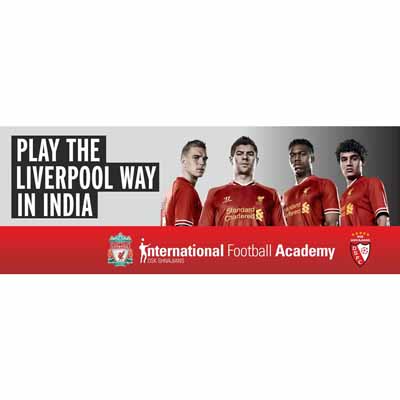
     Not only this, Arsenal too has had multiple training centres in New Delhi, Karnataka and Maharashtra. Liverpool, on the other hand, has a tie-up with DSK Shivajians, and has formed India’s first internationally-branded residential football academy, called the Liverpool International Football Academy- DSK Shivajians. “With a total investment of over Rs 50 crore, we are confident that India will experience the international flavour of football,” says LFC International Football Academy, DSK-Shivajians CEO Ardeshir Jeejeebhoy.

    The Academy located at Pune, promises to provide aspiring young talent with the right platform to get trained under expert supervision and world-class infrastructure. It has a state-of-the-art 4G pitch, along with a natural turf, self-contained accommodation, gym and swimming pool and a cafeteria serving varied dietary requirements. The Academy thus far has enrolled 64 players from all across India in the Under 17 and Under 19 age groups. They will also be provided group tutorials for core subjects, which aggregate over 660 hours of classes over the year. When asked about the long-term objective of the Academy, Jeejeebhoy informs, “The aim is to give a platform to aspiring talented footballers to train and get direct supervision from two full-time talented coaches from Liverpool FC. We look at it as an opportunity for taking Indian football to international standards.”

    About the players and franchise owners, he opines that the League is an excellent platform for Indian talent to get noticed on the international arena and a great opportunity for stakeholders in football across the country to engage with the youth.

    “Sponsors get more visibility for their brand due to the sheer magnitude and uniqueness of the event and with the use of modern methods of advertising and marketing in the digital space. The new format does not have a clutter of brands, which ensures the brands that have partnered with the ISL get valuable presence and recall,” he says.

    “One of the many ways that the League could be looked at to bring in-stadia spectators closer to the game, would be to invest in refurbishing existing infrastructure and building stadia, where its sheer design and layout allows spectators to be closer to the pitch. This will establish a better connect with the game,” the executive goes on.

    Moving on to  Star India, a promoter of the League,  Jeejeebhoy feels the commitment from the Network with prime time spots and live HD telecast, added to the quality of the product. “Over the past couple of years, audiences have shown a growing interest and acceptance in sports as varied as football, motorsports, kabbadi and tennis among others. Boxing also has true potential going forward,” says Jeejeebhoy.

    The growing TV viewership for FIFA World Cup and football leagues such as UEFA Europa League from Europe, have shown the increasing popularity of football as a viewership sport in India. The game has always been followed at a regional level and one would hope with the ISL, that the game is accepted across the country.

    Concluding on a high note, he is of the opinion that, “with the advent of the ISL and the country hosting the FIFA U-17 World Cup in 2017, it has created a lot of positive buzz around football.”

    “It’s the very first time that something of this magnitude has been attempted for football in the country, and has generated interest not only from football followers, but also neutrals, who have flocked in large numbers to the stadia. Fans, who erstwhile did not have such an opportunity to watch live matches, have turned up in huge swarms,” he concludes.


  • The year of improved sports marketing and production

    The year of improved sports marketing and production

    The year 2014 may have seen a few new leagues coming up but cricket very clearly rules the roost both from an on ground and on air perspective.  While gap between cricket and other sports have shortened, it’s still quite significant.  Indian Super League (ISL) has begun well with aggressive marketing and managed to garner eyeballs for Indian football. ISL has also garnered encouraging response from advertisers. For the first time a non-cricket sports has more than six central on ground sponsors.  Though lot of work need to be done in the grass root development of football, it’s been a great beginning considering its first season.

    Moving onto FIFA, the market in India for the sport is growing every four years as can be seen from the last three editions.  We have beaten the benchmarks of 2010 in 2014. It also generated lot of hype that helped garner newer audiences and fan base. Overall football, as a sport is growing and FIFA being the biggest football tournament has managed to score on all counts. The cumulative efforts over the last five to eight years, by  FIFA, European Soccer Leagues and the broadcast community backed by audience desire to see a more local flavor of football has helped in the formation of the ISL. 

    The surprise package of 2014 was the Pro Kabaddi League (PKL), a pleasant surprise I must say. It was a league which was very well marketed and packaged with fantastic production value. While everyone thought of Kabaddi as rural sports, it’s quite interesting to see viewership numbers ticking from metros.  Looking forward to season 2 of PKL with a hope that it continues to attract audience and build stickiness.

    Indian Badminton League (IBL) launched in 2013 with top international talent and lot of fan following, missed the show in 2014. Hope to see IBL back with bigger and better show in 2015. The Hockey India League (HIL) also showcased fabulous production quality and packaging. HIL has also managed to grab reasonable response from advertisers till now. Currently with the fabulous winning performance of team India, in 2015 we would like to see a better marketing of HIL to attract and hold audience attention.

    The Champions Tennis League (CTL) and the International Premier Tennis League (IPTL) both failed to generate buzz because of lack of marketing efforts. CTL has been a bit disappointing with respect to the production value, while IPTL’s production was world class. Expectations from IPTL were quite high considering the participation of big current stars and legends like Roger Federer, Novak Djokovic, Pete Sampras, Serena Williams etc…. Aspirational and emotional connect with IPTL was very high for the fans who have been following tennis for more than two decades. It was like a dream coming true to see the likes of Roger Federer, Novak Djokovic, Pete Sampras, Serena Williams or even Sania Mirza playing in India. There was high interest in fans to go and see their heroes play live and get to meet them or get a closer glimpse of them.  But would that translate into TV viewership is something we will have to wait and watch. Therefore while CTL’s structure is towards building affinity for tennis as a sport with a hope that more Indian start playing the game. IPTL is clearly going after the experience of getting up and close with the big international stars and ride on their popularity to garner eyeballs. However considering the structure of both leagues, the overall objective of both leagues is little unclear.

    Marketing and production values of these sports have been a key highlight this year.  Sport marketing in India has been ahead of the curve in terms of marketing and production value. Great production values along with a greater thrust on marketing has led to a stronger audience and advertising interaction.

    ICC Cricket World Cup 2015 is the biggest sporting event in 2015 and will continue to attract audience in large numbers. The advertising pie will grow and be bigger than 2011 as other sports are still catching up and are in the development phase.


    (These are purely personal views of GroupM ESP national director entertainment sports and live events Vinit Karnik and indiantelevision.com does not necessarily subscribe to these views)

  • I really wanted to be a part of ISL, says King Khan

    I really wanted to be a part of ISL, says King Khan

    KOLKATA: After a number of starts recently flaunting their football teams, King Khan, who already co-owns a cricket team, expressed his disappointment at not being able to be a part of the Indian Super League (ISL).


    The Baadshah of Bollywood who tried to buy the Kolkata franchise of the ISL said that he could not bring himself to buying another city.


    “I will say something which is unfortunate and sad for me. I really wanted to be a part of ISL and I wanted to own a football team but there was no way that I would have got Kolkata and if I can’t have Kolkata I can’t have any other city,” the superstar reckoned.


    “I was offered every other city but I said I won’t do it,” he added. “If we play football we have to play for Kolkata, you don’t play for any other city. I have all my love for Mumbai and Delhi but the city I back is Kolkata.”


    The brand ambassador of West Bengal, who was in Kolkata to promote his latest film Happy New Year described Kolkata as his ‘home’.


     “This is my hometown. I have been all over the world to promote this film. But I told them that one place where you have to come is Kolkata which is my own city,” SRK said.


    He, however, congratulated Ganguly, the co-owner for the ISL’s Kolkata franchise. “More deserving than me is ‘dada’ (Ganguly) and he should have it and I can’t compete with him…I wish ‘dada’ and everyone in the championship. I hope it does well.”


    He said the team is in better hands than him and would do well.


    “Even today when I was flying down I felt very sad that I don’t have the football team of Kolkata. I started IPL because I was told that IPL will extend into soccer. My love is for football. I play football, my son plays football and my daughter is the captain in football,” the actor-producer revealed.


    He also went to meet West Bengal Chief Minister Mamata Banerjee with Happy New Year co-actors Sonu Sood, Vivaan Shah and director Farah Khan. “She has told me that she has liked my film although I don’t think she had the time to watch the whole film. She is the ‘didi’ (elder sister), I do not see her only as a chief minister,” Khan said.


    Khan, who also co-owns IPL franchise Kolkata Knight Riders, said he had met everyone involved to buy the Kolkata ISL franchisee which was eventually bought jointly by former cricketer Sourav Ganguly, businessmen Harshavardhan Neotia, Sanjiv Goenka, Utsav Parekh and Spanish club Atletico Madrid.