Tag: ISL

  • Sports Minister lauds b’casters, other stakeholders in promoting sports

    Sports Minister lauds b’casters, other stakeholders in promoting sports

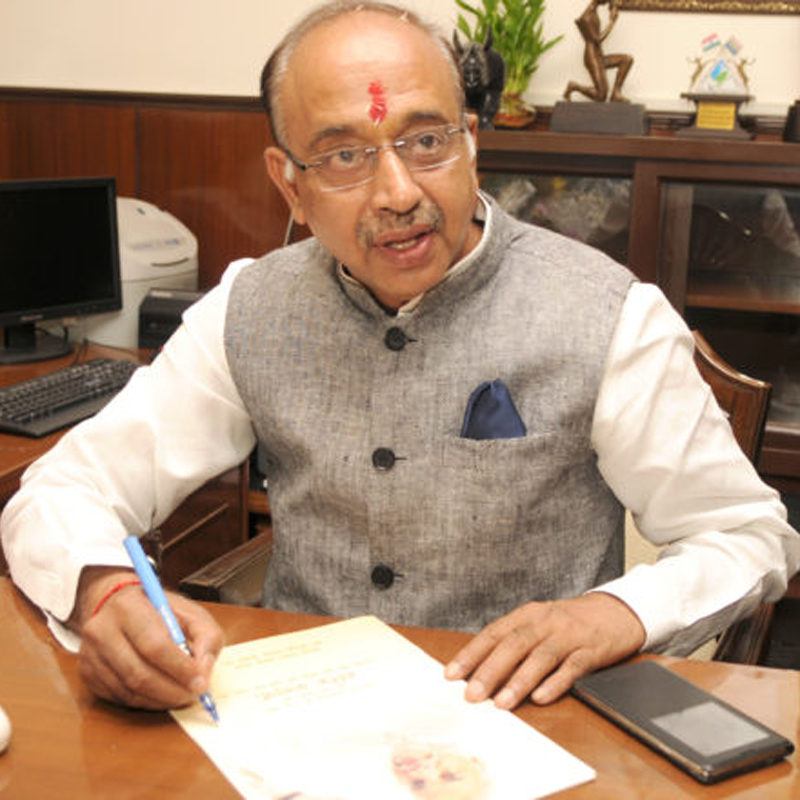
    NEW DELHI: India’s Sports Minister Vijay Goel said on Wednesday that digital media broadcasting will play a critical role in bringing about change in sports broadcasting in India but broadcasters must also focus on how sports as a product is delivered to audiences in rural areas so as to popularise the culture of sports.

    Addressing the CII Big Picture Summit 2016 here, he said increasing penetration of internet, mobile devices and cheaper data services, especially in rural areas, will prove a game changer in this direction.

    Interacting with the panellists on a session on `Sports Broadcasting in India: A Game Changer’, which meandered most of its time period all over the place despite having good representation from various segments of sports broadcasting and marketing, the Sports Minister said media has helped promote sports in the country and has also given a fillip to less popular sports like kabaddi.

    A majority of sports leagues have been made possible, including football, kabaddi, wrestling, hockey, tennis and badminton, by persistent efforts by various stakeholders, leading to cascading effects on tourism and infrastructure sectors, Goel, added.

    Pointing out that slick packaging of the sports leagues as entertainment by TV channels in India has been a game changer, the Minister said, “This is reflected in more than 450 million viewers of Indian Super League (football) with the most interesting revelation being the Pro Kabaddi League with a viewership of more than 500 million.”

    To make sports more catchy and interesting for an average man, some games can also learn few tricks from cricket’s bosses who invented shorter formats of the game to keep the viewer and on-field spectators hooked on, while creating a new business model.

    However, the Minister did admit that the sports as a culture is yet to percolate down to every Indian home and to rectify it an all out effort has to be made not only by the government, but also the people of the country.

    “Playgrounds in schools and residential areas are being trimmed because of scarce availability of land and such actions don’t help,” Goel said, adding the government is committed to working towards building a culture of sports and improving infrastructure but all stakeholders, including corporate and sponsors, must work towards this common objective.

  • Himalaya Men & BharatBenz kick-start festive season with Chennaiyin FC

    Himalaya Men & BharatBenz kick-start festive season with Chennaiyin FC

    MUMBAI: ESP Properties has enabled key deals for ISL’s Chennaiyin FC by roping in BharatBenz and Himalaya Men as jersey sponsors. Through this deal, BharatBenz comes on board with an ISL team for the first time and Himalaya Men continues their path breaking campaign of – Pimple Story.

    After the successful collaboration of Himalaya Men and IPL (with RCB team), ESP Properties has continued Himalaya’s Pimple story campaign with PKL (with Patna Pirates team) and now ISL (with Chennaiyin FC team). As an activation, for the first 2 matches of Chennaiyin FC during ISL 2016, the back of jersey would have ‘Pimple’ written on it and from 3rd match onwards, it’s going to change to ‘Himalaya Men.’ A key idea which was implemented through a unique sports marketing led campaign than vanilla advertisements!

    For BharatBenz, it would be their first foray into sports sponsorships. They have crafted a unique campaign to spread their ‘Safety First initiative’ roping the kids who accompany the players to the field at the start of the game.

    ESP Properties business head Vinit Karnik said, “The strategy is being seen as a move to leverage ISL as a platform to target Himalaya’s and BharatBenz’s key consumers by associating with the Chennaiyin FC. ISL marks the beginning of the festive season in India where brands are looking to increase their share of voice need clutter breaking and engaging platform to occupy consumer mind space.”

    Chennaiyin FC co-owner Vita Dani said, “We are delighted to welcome Himalaya Men as the Co-Sponsor of Chennaiyin FC.”

    Himalaya Men’s Ashwani Gandhi said, “Sports lends itself as a perfect platform for us to connect with our TG, the youth. After fruitful associations with IPL and PKL, we are hoping to continue our success run by associating with the Chennaiyin FC.”

    “Chennaiyin FC, the club is young, dynamic and a powerful force in the league – just like what BharatBenz is in the commercial vehicle segment. We also share a strong affinity with Chennai being our home ground,” added BharatBenz, Daimler India Commercial Vehicles general marketing manager Apar Bansal.

  • Himalaya Men & BharatBenz kick-start festive season with Chennaiyin FC

    Himalaya Men & BharatBenz kick-start festive season with Chennaiyin FC

    MUMBAI: ESP Properties has enabled key deals for ISL’s Chennaiyin FC by roping in BharatBenz and Himalaya Men as jersey sponsors. Through this deal, BharatBenz comes on board with an ISL team for the first time and Himalaya Men continues their path breaking campaign of – Pimple Story.

    After the successful collaboration of Himalaya Men and IPL (with RCB team), ESP Properties has continued Himalaya’s Pimple story campaign with PKL (with Patna Pirates team) and now ISL (with Chennaiyin FC team). As an activation, for the first 2 matches of Chennaiyin FC during ISL 2016, the back of jersey would have ‘Pimple’ written on it and from 3rd match onwards, it’s going to change to ‘Himalaya Men.’ A key idea which was implemented through a unique sports marketing led campaign than vanilla advertisements!

    For BharatBenz, it would be their first foray into sports sponsorships. They have crafted a unique campaign to spread their ‘Safety First initiative’ roping the kids who accompany the players to the field at the start of the game.

    ESP Properties business head Vinit Karnik said, “The strategy is being seen as a move to leverage ISL as a platform to target Himalaya’s and BharatBenz’s key consumers by associating with the Chennaiyin FC. ISL marks the beginning of the festive season in India where brands are looking to increase their share of voice need clutter breaking and engaging platform to occupy consumer mind space.”

    Chennaiyin FC co-owner Vita Dani said, “We are delighted to welcome Himalaya Men as the Co-Sponsor of Chennaiyin FC.”

    Himalaya Men’s Ashwani Gandhi said, “Sports lends itself as a perfect platform for us to connect with our TG, the youth. After fruitful associations with IPL and PKL, we are hoping to continue our success run by associating with the Chennaiyin FC.”

    “Chennaiyin FC, the club is young, dynamic and a powerful force in the league – just like what BharatBenz is in the commercial vehicle segment. We also share a strong affinity with Chennai being our home ground,” added BharatBenz, Daimler India Commercial Vehicles general marketing manager Apar Bansal.

  • Are we headed for a sports broadcasting ‘Duopoly’ in India?

    Are we headed for a sports broadcasting ‘Duopoly’ in India?

    As a nation, India has evolved significantly in sports broadcasting. With unbounded technological progress nipping away at our heels, a digital evolution was a long time coming, especially in the Indian subcontinent. The sporting world has all its eyes on the recent SPN̶̶-ZEEL deal, an acquisition that will leverage, consolidate and crucially enhance the relationship between right-holder, broadcaster and the fan. Truly, India has launched itself to transforming into a sporting nation to reckon with. 

    Content and consolidation will drive and scale up distribution and reach for both – network(s) within India and the subcontinent. 

    This acquisition is a major win and a penetration peak for SPN. It can now break into hitherto untapped territories and consolidate content from a far-‘reaching’ perspective. The world is in a frenzied state of “digital data drive” and this drive is only going to escalate. Our broadcasting output is changing every day. Last two decades has seen Single TV households changing their viewing environs from terrestrial TV to cable and satellite. The big daddies of the DTH universe are all moving towards consolidating the reality of second and third screen-driven ecosystems.

    Taking stock of things, Star India has the telecast rights of BCCI, ICC, Cricket Australia, English Cricket Board, Formula 1, EPL and tennis Grand Slams like Wimbledon and the French Open. In addition to this, Star has significant rights to the local sports leagues like ISL, PKL, PBL, HIL and IPTL. 

    SPN, on the other hand, proudly holds the rights to FIFA, UEFA, Euro, NBA and UFC on the international circuit. Through this landmark deal with TEN Sports, SPN now has an open-door all-access pass to the media rights of numerous golfing events as well as the rights to the cricket boards of African countries, Sri Lanka, West Indies and Pakistan. In the tennis world, they own the first and the last Grand Slams of the year – Australian Open and the US open, respectively. However, in India, IPL remains their biggest marquee acquisition despite being up for renewal post the 2017 season.

    The sports broadcast gladiatorial arena thus will soon witness a veritable battle between these two. With two key players running neck and neck towards the finish line, it’s a race that changes the environment and brings about a scale-up in distribution and revenue.

    The network that makes itself more accessible, more consumable and creates, builds and sustains real-time conversations while enhancing fan experience will emerge as the monarch in a currently duopolistic condition. The focus on Digital India, the technological and revenue-right prowess of the two key network players should reveal some of the answers in the times to come. Data will play a pivotal role in making sports content more consumable and build real-time conversations around enhancing fan experience and build higher level stickiness and relevance. 

    This phenomenon is aptly called ‘Datagiri’ – big data is the big dada, and it will outpace the traditional broadcast model soon enough. With live sports streaming and on-the-spot digital consumption through various media platforms such as Hotstar and Sony Liv may look to rise to the top with the Usain Bolt speed, a certain aggression and a prepared relevantly stronger digital interface.

    The digital ecosystem experiences an amplification of connections at an exponential rate. Every day, there is a new surge in distribution and a revamping of the “traditional” model since consumers are establishing newer ways and means of connecting with their favorite sports. After all, the name of the game is “enhanced fan experience”. The Rio Olympics displayed this very digital omnipresence – it was up to the fans to consume sports data, whenever, however, and in whichever way suited them best. The power was at the consumer’s fingertips.

    Some questions though surface strongly — Will data-driven content-providers compete with the traditional broadcast platforms? Will telecom players drive and build the next billion sports consumers? Will the definition of the 1st screen economy change?  These are just some of the questions that will be answered in times to come. 

    In summary, it promises an exciting time for the Sports Fan. The sports fan will share its limelight with no one; he or she will be at the centrestage of the best sporting live action. It will be served on a platter for his or her gluttonous consumption – peppered with analytic appetisers and tantalizing trivia, thus cinching a momentous union between networks, right-holders and sports fans. 

    (The author is the business head of ESP Properties. The views expressed are entirely his own and Indiantelevision.com does not subscribe to them)
     

  • Are we headed for a sports broadcasting ‘Duopoly’ in India?

    Are we headed for a sports broadcasting ‘Duopoly’ in India?

    As a nation, India has evolved significantly in sports broadcasting. With unbounded technological progress nipping away at our heels, a digital evolution was a long time coming, especially in the Indian subcontinent. The sporting world has all its eyes on the recent SPN̶̶-ZEEL deal, an acquisition that will leverage, consolidate and crucially enhance the relationship between right-holder, broadcaster and the fan. Truly, India has launched itself to transforming into a sporting nation to reckon with. 

    Content and consolidation will drive and scale up distribution and reach for both – network(s) within India and the subcontinent. 

    This acquisition is a major win and a penetration peak for SPN. It can now break into hitherto untapped territories and consolidate content from a far-‘reaching’ perspective. The world is in a frenzied state of “digital data drive” and this drive is only going to escalate. Our broadcasting output is changing every day. Last two decades has seen Single TV households changing their viewing environs from terrestrial TV to cable and satellite. The big daddies of the DTH universe are all moving towards consolidating the reality of second and third screen-driven ecosystems.

    Taking stock of things, Star India has the telecast rights of BCCI, ICC, Cricket Australia, English Cricket Board, Formula 1, EPL and tennis Grand Slams like Wimbledon and the French Open. In addition to this, Star has significant rights to the local sports leagues like ISL, PKL, PBL, HIL and IPTL. 

    SPN, on the other hand, proudly holds the rights to FIFA, UEFA, Euro, NBA and UFC on the international circuit. Through this landmark deal with TEN Sports, SPN now has an open-door all-access pass to the media rights of numerous golfing events as well as the rights to the cricket boards of African countries, Sri Lanka, West Indies and Pakistan. In the tennis world, they own the first and the last Grand Slams of the year – Australian Open and the US open, respectively. However, in India, IPL remains their biggest marquee acquisition despite being up for renewal post the 2017 season.

    The sports broadcast gladiatorial arena thus will soon witness a veritable battle between these two. With two key players running neck and neck towards the finish line, it’s a race that changes the environment and brings about a scale-up in distribution and revenue.

    The network that makes itself more accessible, more consumable and creates, builds and sustains real-time conversations while enhancing fan experience will emerge as the monarch in a currently duopolistic condition. The focus on Digital India, the technological and revenue-right prowess of the two key network players should reveal some of the answers in the times to come. Data will play a pivotal role in making sports content more consumable and build real-time conversations around enhancing fan experience and build higher level stickiness and relevance. 

    This phenomenon is aptly called ‘Datagiri’ – big data is the big dada, and it will outpace the traditional broadcast model soon enough. With live sports streaming and on-the-spot digital consumption through various media platforms such as Hotstar and Sony Liv may look to rise to the top with the Usain Bolt speed, a certain aggression and a prepared relevantly stronger digital interface.

    The digital ecosystem experiences an amplification of connections at an exponential rate. Every day, there is a new surge in distribution and a revamping of the “traditional” model since consumers are establishing newer ways and means of connecting with their favorite sports. After all, the name of the game is “enhanced fan experience”. The Rio Olympics displayed this very digital omnipresence – it was up to the fans to consume sports data, whenever, however, and in whichever way suited them best. The power was at the consumer’s fingertips.

    Some questions though surface strongly — Will data-driven content-providers compete with the traditional broadcast platforms? Will telecom players drive and build the next billion sports consumers? Will the definition of the 1st screen economy change?  These are just some of the questions that will be answered in times to come. 

    In summary, it promises an exciting time for the Sports Fan. The sports fan will share its limelight with no one; he or she will be at the centrestage of the best sporting live action. It will be served on a platter for his or her gluttonous consumption – peppered with analytic appetisers and tantalizing trivia, thus cinching a momentous union between networks, right-holders and sports fans. 

    (The author is the business head of ESP Properties. The views expressed are entirely his own and Indiantelevision.com does not subscribe to them)
     

  • Red Chillies taps into young audience for ‘Dilwale’ via Hotstar tie-up

    Red Chillies taps into young audience for ‘Dilwale’ via Hotstar tie-up

    MUMBAI: Red Chillies Entertainment’s Shah Rukh Khan – Kajol starrer Dilwale in association with Rohit Shetty Productions has drawn up a comprehensive plan to reach young digital audiences by inking a strategic marketing alliance with Star India’s over the top (OTT) platform Hotstar.

    Dilwale’s promotions on Hotstar kid-started almost five weeks before its scheduled release.

    The production house has employed a start-to-end approach, which is showcasing all the great video elements released – starting from the trailer to two song videos and entertaining behind-the-scenes videos. Additionally, a one-hour video with Shah Rukh Khan and Kajol for Hotstar’s original show M Bole Toh has also been specially shot. The content momentum will be sustained right through the release weekend from Friday – Sunday.

    Dilwale content will also reach Hotstar’s film-lovers worldwide through Hotstar.com, with cross promotions across the Star network’s international TV channels. The TV cross-promotions of the Dilwale content on Hotstar will also roll out in India across Star Network channels.

    The Dilwale content will also be cross promoted across tentpole hotstar properties like On Air with AIB, Cricket, ISL and EPL amongst others.

    Dilwale marks the return of Khan and Kajol on screen. The movie, directed by Shetty, also stars Varun Dhawan and Kriti Sanon.

    Red Chillies Entertainment CEO Venky Mysore said, “Dilwale is the biggest film we have made and therefore we decided to promote it across all platforms, especially via Hotstar. Hotstar is a unique platform for a large, fast-growing and important young digitally active audience, which is an important segment for any film marketer today. We have taken a pure content-driven approach with several Dilwale video elements. We are delighted with the great response and the reception it is receiving through Hotstar – both in India and, through its website, across the world.”

    Hotstar head Ajit Mohan added, “We are delighted to partner with Dilwale to introduce an exciting movie to our audiences in India and across the world through hotstar. Hotstar is introducing a whole new way of promoting and marketing a movie premiere, and I must compliment Red Chillies Entertainment for their strategic, and brave new approach to reach a large and young digital audience in India and worldwide.”

  • ‘Technology is the future of experiential marketing:’ Vidur Patney

    ‘Technology is the future of experiential marketing:’ Vidur Patney

    MUMBAI: When talking of marketing campaigns we often come across the term ‘on ground activation.’ While at a rudimentary scale, it’s how a brand markets itself through direct engagement with consumers, its utility and purview is infinitely evolving. The idea is to create a bond between the consumer and the brand beyond ‘buying and selling’ by immersing them in a fun and memorable experience, which evokes emotions within the consumers that they thereafter associate with the brand instead.


    From a simple handing out of Red Bull cans at a music concert to Multi Screen Media’s open air bus ‘Bulaava Express,’ which toured the country across 13 cities creating euphoria for the 2014 IPL — the beauty of experiential marketing lies in its flexibility of mode and scale to target the consumers.


    While the concept isn’t new to marketers, its rapid evolution over the years armed by technology and digitisation has made it increasingly important to understand experiential marketing from an insider’s perspective.


    With that in mind, Indiantelevision.com approached recently appointed Maxus national director – experiential marketing Vidur Patney to shed light on the changing landscape of experiential marketing, and the role it is going to play in the near future.


    Purview:


    From on ground and van activations through major cities to team building activities from brands at corporate level, experiential marketing plays on a wide range, and the possibilities are endless.


    How you use the formula to connect with your consumer, what chord you strike with them in the process is what puts you at an advantage when it comes to this form of marketing. The idea is to wow the consumers with unique interactions and engagements that leave impressions in their minds. Creating vanilla experiences that the consumers can then start associating with the brand is also part of the process.


    Though the possibilities are endless, it is getting increasingly challenging to come up with new ways to give consumers that vanilla experience. The only way forward is to use the available digital and technological tools at our disposal. By identifying how the consumers engage with such tools, we come up with concepts that allow us to make the most of it.


    Evolution:


    The evolution of experiential marketing has happened in three phases. Often considered an old school marketing art, the first hurdle was to get brands and marketers to realise its potential in the current ecosystem. To make them look beyond the generic TVC marketing and acknowledge that today consumers are not content with just knowing a brand through their television sets.


    Once that was established, phase two was to explore the various ways in which experiential marketing can be used, and integrated with the headlining campaigns. This was the period we saw an increase in on-ground activities, contests, product launches where consumers could interact with brand ambassadors, etc.


    Once that was achieved, we had to think how to expand the reach of experiential marketing, take it from being a space restricted solution, to a trigger that leads to conversations and interactions about a brand on a larger scale. That’s why currently we are concentrating on making way for more and more shareable experiences using the digital platforms.


    Role of technology:


    There’s no denying the fact that technology is the way forward when it comes to marketing, be it at the concept level or while executing. It has become an integral part of our consumers’ lifestyle. We can not only target consumers better with analytical tools made available to us through technology, but also engage consumers to give them the best of experiential.


    Technology is also the differentiator when a brand wants to stand out and grab eyeballs. It is no longer something people are averse to. People are willing to accept technology into their lives and know more. As a result, to customise for them, to garner more participation and deliver a powerful brand message, technology plays a very important role.


    The tools could be one on one engagement through technology, giving consumers a virtual experience. Use of technology is important because it is something today’s generation is excited about. If used right, it helps give that wow factor and conveys a much stronger message for the brand. Also, it goes a long way into consumers accepting what you are saying and giving them something memorable.


    For example, the recent use of virtual reality (VR) and augmented reality technology can and has opened up new avenues when it comes to experiential marketing. People can now get a first hand interaction with how a brand functions. These are extremely useful tools for automobile and technology related brands where a consumer can see the inner workings of a car or a phone. It has a much bigger impact than simply sharing the specs with a consumer. But its use is endless when it comes to other sectors as well. One may argue that applying virtual and augmented reality in marketing may rack up the cost of marketing for brands but that’s just the initial phase. Just like any other technology, it’s the first investment that costs more, after which one can cash in on them while enjoying more innovations.


    Going beyond metros:


    Experiential marketing can be a very important marketing tool when it comes to tier II and tier II cities. We have noticed that while on ground activations work in metros, its reach is becoming limited. It only draws in a niche crowd. The urban consumer isn’t easily wowed by simple events, you need to spend more and innovate your engagement concepts to keep their interest. They get easily bored. Consumers in tier II and tier III cities, on the other hand, can still be catered with vanilla experiences by creating simple engaging moments. With brands now looking their way to expand consumer base, use of experiential marketing becomes crucial in those areas.


    We recently did an on-ground activation for a movie screening in Indore where hundreds of kids and their parents turned up by simply allowing them to play games on an app we developed for the event. In a metro that would have only interested a niche group, way below hundred.


    Experiential marketing in sports:


    If there is one section where experiential marketing dominates, it is sports. We all interact with sporting events for a personal connection, be it our passion for the sport, our loyalty to a team or love for a favourite player. That is why brands love to associate with sporting events. It is easier to create those memorable moments, which brands would to be credited for. They want consumers to associate their favourite on ground memories with the brands.


    There are numerous possibilities for experiential marketing for any sporting event, be it Indian Premiere League, Indian Super League, Pro Kabaddi League, etc.


    A holistic marketing solution:


    Experiential marketing and digital marketing forms two important pillars of the core media solution that we provide our clients. Having an experiential marketing arm gives Maxus an added advantage of providing a holistic marketing solution.


    It’s a three way communication within Maxus that helps us achieve that. When it comes to digital technology and bringing it on ground, we have Metalworks. Figuring out how that technology can be used to wow and create a memorable experience for the consumer is what we at Experiential Marketing do. When these come together with Maxus’s core media vertical, we are able to give brands the best possible solution to engage with the consumer.


    Going only experiential:


    So far experiential has worked in collaboration with core media and other arms of marketing. While there are certain brands that can go only experiential as their marketing strategy, it highly depends on the brand’s target audience and the type of campaign. There are some products for which experiential gets the lion’s share of the marketing budget.


    While there is no set rule, more and more brands are keeping budgets aside for experiential marketing because it’s the last mile of communication between the brand and a consumer.


    Experiential works best when it’s area specific. If a brand launches a product aimed at consumers of a certain area, having a localised approach makes more sense rather than a TVC.

  • Merging I-League & ISL can solve logistical chaos in Indian football calendar: Nitin Kukreja

    Merging I-League & ISL can solve logistical chaos in Indian football calendar: Nitin Kukreja

    MUMBAI: Stakeholders in the growing Indian sports industry unanimously agree that the appetite for football in India is definitely on the rise though there are numerous challenges, which have to be overcome before its full potential can be realised.


    At the recently held Star Sports India Football Forum 2015, Star India president sports Nitin Kukreja said that while merging I-League and ISL would solve much of the logistical chaos currently reigning in the Indian football calendar, no concrete progress has been made towards that. He also stressed on the need for schools and colleges to participate in the sport in a structured manner in order to allow a footballing culture to develop on a larger scale, especially in North and West India where the sport does not have much popularity.


    Senior professionals from the sports and broadcast industry deliberated on the multiple opportunities in the football sector at the forum titled: “Taking Indian Football Higher, Deeper, Wider,” held in Mumbai on 29 October.


    The day-long conference revolved around various Knowledge Sessions such as: Governance & Management – Faster Growth, Higher Visibility, Stronger Management; Maximising Fan Experience- Getting It Right on Air and In Stadia; Internet & Mobile Keys To Experiential Nirvana- Connecting To the Consumer in a Fast Evolving Media Landscape and Corporate Social Opportunity– The Business Potential in Grassroots Outreach.


    Established in 2010, the India Football Forum, the flagship property of the SportzPower Knowledge Series (SKS) in partnership with Event Capital, brings together some of the best minds in the industry on one platform to deliberate on the business of football in this market.


    Industry stalwarts such as U Sports founder Ronnie Screwvala, DFL Sports Enterprises chief representative Asia Pacific Peter Leible, Future Brands MD & CEO Santosh Desai and Kukreja spoke on the various factors that indicate the rapid strides made by football, and the initiatives required to take it to the next level.


    Leible, who drew a parallel to the recent period of revival in German football to provide context to the Indian experience, said a similar widespread initiative, with emphasis on clubs doing their bit on the grassroots and academy side of things, could lead to a uniform growth of football in India though “patience” is the key criteria while implementing such programmes.


    Screwvala, in conversation with conference chair Ayaz Memon, said that with ISL, the changes are positive in Indian football, but there needs to be an effort to develop the game at the grassroots level to actually help improve the standards of Indian football.

  • CFL derby’s lofty ratings defies urge to merge domestic leagues

    CFL derby’s lofty ratings defies urge to merge domestic leagues

    MUMBAI: The outpour of ecstasy and glamour in the first edition of Indian Super League (ISL) easily outclassed the other existing Football leagues in India. Subsequently, pundits and authorities began debating if other leagues should stay or be merged into one.


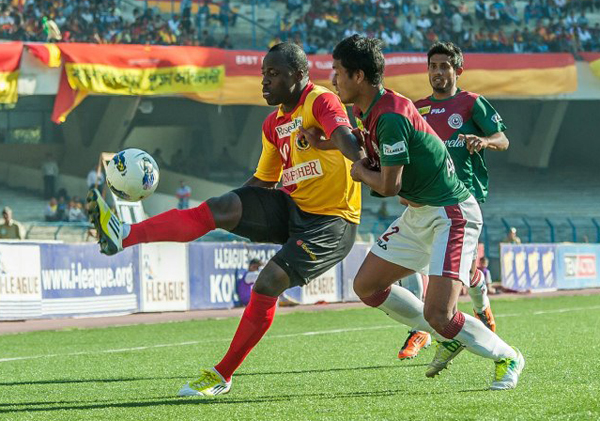
    Silencing all cynics are the ratings of the Calcutta Football League (CFL) derby match between Mohun Bagan FC VS East Bengal. Aired on Star India’s regional channel Star Jalsha, the derby match garnered highest ever ratings for a CFL match.


    Approximately 82,000 spectators were at the edge of their seats in the stadium for the match’s entire 90 minutes duration, while 16.3 lakh people tuned in to Star Jalsha to watch it live. The average time spent was a whopping 58.4 minutes. The match garnered a rating of 4.45 per cent in NCCS 4+, in M 15+ ABC marker the match clocked six per cent ratings while the reach garnered is 10.2 per cent in NCCS 4+.


    Star India gives much importance to the production quality and that’s one of the reasons why ratings are going up. “I believe that the ratings will go even higher the next time,” says Grey Mind productions founder Anilava Chatterjee. “We deployed 14 cameras this year and we are improving the production quality every match thanks to Star. The quality of football is getting better. Overall, the league has a great future,” he adds.


    A football commentator, on condition of anonymity, said, “I have no doubt that the domestic leagues in India in some regions have more fan following than ISL. Sports now is a matter of packaging and Star is a master in that. That’s why ISL looks so colourful. Spend the same amount of money in local football and that will also look glamorous. From a football follower’s perspective, I feel India needs both and a merger can turn out to be a debacle.”


    “Local football has potential of revenue generation if and only if it is packaged properly. Also the domestic leagues can be of huge benefit for broadcasters as the acquisition costs are low. Now it’s for IMG and the authority to decide if a merger is the solution,” added a veteran in media selling fraternity.


    Football in India has failed to attract the youth and one of the main reasons behind it is lack of ideologies. Former Indian skipper Sourav Ganguly has often made a point at various public gatherings, “Youth in the country, while growing up wants to be like Gavaskar, Sachin and Dravid. When they will have idols in football, the sport will grow enormously.”


    Recently former India football skipper Baichung Bhutia also expressed his disagreement on a merger. Now it remains to be seen if high ratings saves the domestic leagues from getting diminished.

  • Q1-2016: Den Networks revenue down 11%, posts net loss of Rs 52 crore

    Q1-2016: Den Networks revenue down 11%, posts net loss of Rs 52 crore

    BENGALURU: Den Networks Ltd (Den Networks) reported lower Total Income from operations (TIO) in the quarter ended 30 June, 2015 (Q1-2016) at Rs 265.60 crore, 11.1 per cent less than the Rs 298.81 crore in Q1-2015 and 1.7 per cent lower than the Rs 270.30 crore in Q4-2015. 


    The company’s loss in the current quarter at Rs 51.89 crore was lower than the Rs 61.15 crore reported in the immediate trailing quarter Q4-2015. The company had posted a profit of Rs 1.12 crore (0.4 per cent margin) in the corresponding year ago quarter – Q1-2015.


    Note: 100,00,000 = 100 lakh = 10 million = 1 crore


    However, there were a few silver linings in the in the gloomy financial picture. Den’s Broadband revenue increased sharply to Rs 5.21 crore against Rs 1.06 crore in Q1-2015. Den, through a wholly owned subsidiary has participated in India Soccer League through the Delhi Dynamos FC. The company says that the response to the ISL is unprecedented and has given a huge advantage to the Den brand. Soccer revenue flow has started in current quarter at Rs 93 lakh, reveals Den.


    Some of Den Networks operational highlights in the current quarter include the fact that Den says that it has seeded 20 lakh boxes in phase III markets ahead of December 2015 deadline. It claims a 21 per cent market share in India’s digital cable subscribers (25 per cent in Phases 1 and 2). Further, the company’s Cable EBITDA improved by 26 per cent from Rs 14 crore in Q4-2015 to Rs 18 crore in the current quarter.


    Den Networks’ Broadband reach has increased 50 per cent in terms of number of homes passed and subscribed and broad band ARPU is Rs 760. Also, the company reports a strong growth in Den-Snapdeal clocking with the venture clocking an annualised GMV of Rs 144 crore in the current quarter as compared to the Rs 117 crore in previous quarter.


    Den Network’s operating loss (EBIDTA) in the current quarter was lower at Rs 4.67 crore as compared to the Rs 5.97 crore in Q4-2015. The company had reported a positive EBIDTA of Rs 57.16 crore (19.1 per cent margin) in the corresponding year ago quarter.


    The company’s Total Expenses in Q1-2016 at Rs 320.33 crore (120.6 per cent of TIO) was 12.4 per cent higher than the Rs 284.93 crore (95.4 per cent of TIO) in Q1-2015, but was one per cent lower than the Rs 323.70 crore (119.8 per cent of TIO) in Q4-2015. 


    Content cost in Q1-2016 at Rs 136.06 crore (51.2 per cent of TIO) was 27.9 per cent more than the Rs 106.42 crore (35.6 per cent of TIO) in Q1-2015, but was 2.2 per cent lower than the Rs 139.13 crore (51.5 per cent of TIO) in the immediate trailing quarter.


    The company’s finance costs in Q1-2016 declined 7.8 per cent to Rs 18.27 crore (6.9 per cent of TIO) as compared to the Rs 19.82 crore (6.6 per cent of TIO) in Q1-2015, but was 11.6 per cent more than the Rs 16.37 crore (6.1 per cent of TIO) in the immediate trailing quarter.


    Employee Benefit Expense at Rs 34.15 crore (12.9 per cent of TIO) in Q1-2016 was 20 per cent more than the Rs 28.46 crore (9.5 per cent of TIO) in Q1-2015 and was 13.4 per cent more than the Rs 30.12 crore (11.1 per cent of TIO) in Q4-2015.