MUMBAI: Hero Indian Super League (Hero ISL) season five is just around the corner and Dream11 being the official fantasy football partner and home to more than four crore fantasy sports fans is looking to capitalise on the championship’s buzz to expand its user base.
Looking at the increase in the number of users playing fantasy football on the platform, the company felt partnering with the Hero ISL was an ideal opportunity to deepen fan engagement
The fifth edition of the Hero ISL is set to kick off on 29 September 2018 with broadcast in six different languages English, Hindi, Tamil, Malayalam, Bengali and Kannada. On the digital front, the league will also be live streamed on Hotstar and Jio TV.
Dream11 CMO Vikrant Mudaliar said, “Fantasy sports enjoys a symbiotic relationship with real-life sports and we firmly believe in growing with sports leagues by partnering with them. Globally, almost all major sports leagues are using fantasy sports as their primary tool of fan engagement and in India we have taken the lead to partner with some of the sports leagues like Hero ISL to provide great fan experience.”
According to Mudaliar, Hero ISL has helped bring football to the mainstream and aided the popularity of the sport at the grassroots level. It is good to see another sport taking the lead for a change in a cricket focused country.
Mudaliar believes that the whole experience of consuming the sport can be made more enriching by offering fans experiences which cater to their lifestyle and living experiences. Right from the commute to the stadium to the food delivery at home to the sports merchandise being bought by the ardent fans – it is all a part of the overall sports experience.
These are all opportunities and touch point for brands to get involved in a sports fan’s life and provide them with an enriching, immersive experience. He also believes in working with sports leagues to drive sports promotion and awareness.
For Dream11, associating and partnering with sports leagues and platforms is a natural fitment. It enjoys a close relationship with real-life sports and therefore sports leagues become the natural choice for association. It also provides sports leagues an opportunity to deepen their fans’ engagement with the sport.
“We can together dip into each other’s expertise offering a great product + market fit to cater to a loyal fan base and provide incremental connect for the users,” he concluded.
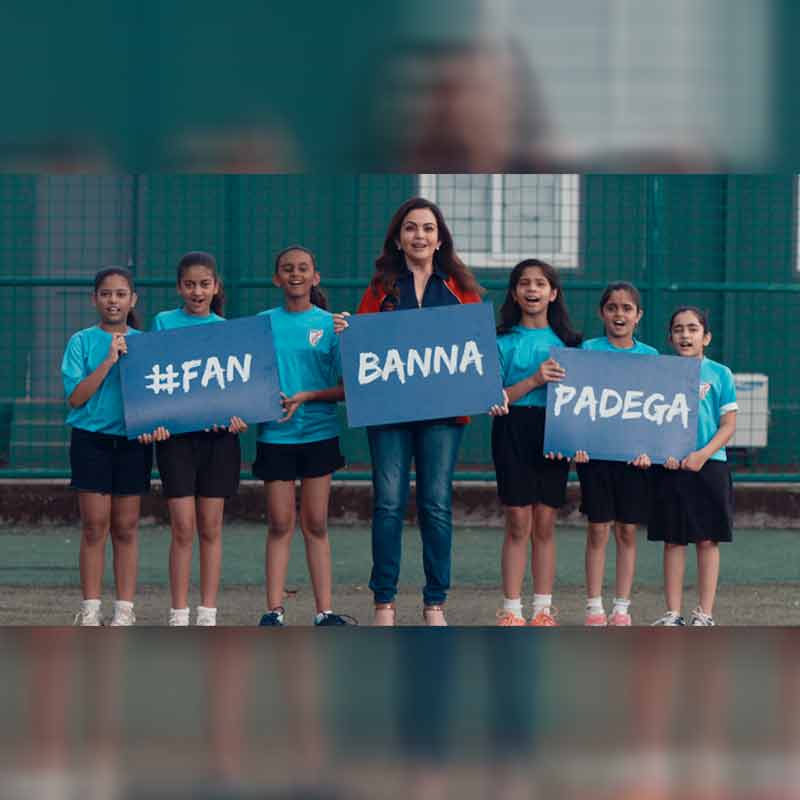
MUMBAI: Hero Indian Super League (ISL) – India’s premier football league, set to kick off on 29 September 2018, has launched its national campaign titled #FanBannaPadega.
The campaign puts football fans at the heart of the experience and their role in helping Indian football grow. With the upcoming season of the ISL, fans have the opportunity to show their love for Indian and global footballing talent on display.
Football globally has never been about who wins and who loses, it is about the sense of belonging and the unconditional support and loyalty towards the sport. India is an emerging football-loving nation, with loyalties divided at marquee global leagues/tournaments, but ISL gives them the opportunity to come together to celebrate India’s footballing revolution. Thus, the campaign for season five is a call out to all football fans at large to come together for Indian football – #FanBannaPadega.
Commenting on the launch of the campaign, a Star India spokesperson said, “The Hero ISL stands for the realisation of a dream, the dream for millions of Indians to experience and understand the essence of Indian football. Season five is all set to usher in a new, refreshed wave of enthusiasm in India’s emerging appetite for football. It is this essence that fuelled the introduction of the #FanBannaPadega campaign, bringing football fans in the country together to support their heroes, their team, and their nation.
#FanBannaPadega will be supported by an extensive 360 degree execution plan that will be spread across the across the country through ATL, BTL activities, TV, print, radio, OOH and social media. Following the national campaign roll out, there will be specific market campaign to build on the local club support.
Hero ISL season five will be broadcast in six different languages – English, Hindi, Tamil, Malayalam, Bengali and Kannada, While five languages will be on the Star Sports network, the Kannada feed will air on the newly launched Colors Kannada Cinema. On the digital, front the league will also be live streamed on Hotstar and Jio TV. It will also see the debut of Star Sports 3, Wherein the ISL will be exclusively broadcast in Hindi.
The Indian football journey has come a long way, a journey which began with the nation, in unison, singing “Lets Football” in 2014. The past four years has not only seen the Indian national football team enter the Top 100 in FIFA Men’s rankings but has also seen India hosting its first ever FIFA tournament (FIFA U-17 World Cup India 2017), Indian national team qualifying for the AFC Asian Cup 2019 and Indian U16 and U20 teams making the country proud with some strong performances during their exposure trips to Europe and other parts of the world.
MUMBAI: When it comes to sporting events, Star India and its sports bouquet Star Sports, has been at the forefront for the last couple of years. Event after event has been bagged by the network, beating not just broadcasters but even the likes of Facebook.
Shifting away from cricket, focus on other sports has grown in recent times. But yet, cricket remains important. This Asia Cup, Star Sports is very bullish about regional languages and plans to increase its reach by launching a couple of channels more in Kannada, Telugu and Marathi languages.
The sports bouquet of Star India has increased to 13 channels with the recent announcement of Star Sports 3 launching on 15 September 2018. With the growth of football, it sees merit in dedicating much of the new channel for it.
Indiantelevision.com caught up with Star Sports CEO Gautam Thakar to talk about its plans for Asia Cup and the upcoming tournaments. Though he is all smiles with the response from advertisers, the aim is still to drive up regional areas as well as overall consumption.
Excerpts:
With Asia Cup just around the corner, do you have any specific technological innovation?
I don’t know whether you can call it specific for Asia Cup but a couple of things we learnt from IPL, we want to expand on. Some are possible some are not. Certainly, we feel really good about the regional agenda, getting into languages because it did two-three things to us and I’m using IPL as a reference because it was most recent, partly because it was the most extensive coverage anybody has done and I also joined just before the IPL.
What it does for us is it increases engagement because it’s just more familiar in the language but it has also broadened audiences. So a lot of people, particularly in the south, have written to us saying ‘My mom can also watch the IPL now and I don’t have to bother explaining to her everything because it’s easy’. That is something that we want to continue in Asia Cup and beyond.
Our ambition is to have as many languages as possible over the next two-three years. Certainly, we think Kannada and Telugu will be our first forays, depending on licences from the ministry. But there is no doubt that we want to continue our regional investment.
Asia Cup is a very short duration tournament, so we would prefer to have our own channels to show it extensively as opposed to IPL for where we showed a bit on some GEC and movies channels. In a short two-week window it is less obvious that we can build up habit very quickly. Unfortunately, we won’t do it for the Asia Cup. The tournament will be in Tamil, Hindi and English for which we have three channels.
As the language agenda evolves, every sport that we have, we will put in as many languages. The Select Dugout that we did during the IPL, we will have that for the first time for the ODI format. Now one of the things that our core viewers appreciated was that experts were demonstrating what worked or didn’t work.
By design, we have limited advertising on that particular format and with one-day international, it gives us more time to explain from a cricketing sense both strategy and predictive nature of what will happen. So we think that is something we want to continue to do.
From a Hotstar perspective, ‘WatchN’Play’ was a strong engagement driver. People who played the game online instead of just watch were 2X the number of people who didn’t play the game. We feel that gamification is something that we want to continue to invest in as we go. At this point in time, I think there is so much in the cricket calendar that in fact, this is our biggest year. Asia Cup is followed by India West-Indies tour and after that we have Women’s T20 World Cup, India tour of New Zealand and there are other things but from Star India’s perspective, it is Australia coming to India then IPL followed by World Cup. So we have a continuous nine-month cricket calendar which means that from the marketing perspective and the category building, sports consumption, relative to more developed markets, is still low. It is massive in absolute minute terms but percentage wise it is still growing. Now any given week of the year there is some cricket activity.
After Asia Cup finals we have ISL starting from 29 August 2018. There is a nice build up that we can move the audiences there. PKL will start from 5 October 2018.
I was speaking to somebody last week and he said, from the advertising perspective it is good, because of Diwali season, which is great. But we think the world is changing and seasonality is going away a little bit. IPL which happens in March, April and May period, traditionally it is not the advertising period but it is the biggest sporting advertising property in a year.
Asia Cup will kick it off for us but kabaddi and football added will be three big pillars. There are a bunch of sports we have invested in but these three are the big drivers of growth.
If we talk about advertising, especially because you were in America before this, for a marquee sports property like a Superbowl they make the Superbowl ads. We don’t have that sort of facility. Can a broadcaster play a role in facilitating that?
In the US, as you know Superbowl has been on for a long time and this has built-up. It is like high points of the year and there is a lot of social viewing and from the advertising perspective, people actually take pride in what they have created and are very expensive. Some of the ads only air at the time of Superbowl and they spend millions of dollars doing that, but it breaks through the clutter and gets them virality.
The broadcasters can play some role but ultimately marketing professionals need to drive that agenda. We had Re-imagine awards for IPL, it was the first time we were doing it but the idea behind that was to spur the marketing community to think of the IPL in a different way and create advertising for the IPL. We will do the awards every year now to showcase what is the best advertising. In our own little way we are trying to enable it but ultimately the marketers need to embrace it.
What are the challenges in building momentum for a short format tournament like Asia Cup?
There is not much of a challenge to build momentum for Asia Cup. The challenge I was speaking about was about a channel which is not a sports channel because if it airs on a movie channel it takes time before people watch.
Asia Cup this time has a likelihood of having three India versus Pakistan games. We are not seeing Asia Cup as a challenge at all. In fact, advertiser interest is very strong and a lot of it is driven by India versus Pakistan. The challenge comes when the tournament is short and it is a new sport.
Kabaddi is no longer a new sport. In fact, it is the second biggest sport that we have. Imagine if kabbadi was only a two-week event, by the time you get into it, it’s over. Even football is the world’s number one game and is growing nicely in India but there are still a few years before it scales up. ISL being extended over a period of time allows people enough opportunity to get into the game. Because the real challenge in leagues, if they are very short, is that a lot of interest is driven by team affinity and you need some time to build the rivalry, the team support and things like that.
Now the way we consume cricket is changing because of T20 cricket, shorter attention spans of fans. So in a 50-overs format, what is your vision for interactivity and how do you try and keep the viewers glued to the screens as long as possible?
At the end of the day, we as broadcasters can do a few things in terms of quality of our coverage, ultimately the quality of the game is what drives the biggest interest. The way we think about it is two or three things. One is the Hotstar team is doing a lot of things to figure out how to have gamification.
The other thing is audience profiling over time. If you think about what we tried as an experiment in the IPL, the dugout worked well.
During this IPL season, we used something called Piero technology which dimensionalises action on the field in terms of data.
Ultimately, the quality of cricket and the rivalry between different nations is the biggest factor driving engagement. While the first campaign “Knock Knock” was based on the creative insight that one’s neighbour’s success will always be a consistent reminder of their own failure, the second TVC “Pange Wala Padosi” on the fact that the strongest of rivalries occur between neighbours, or in this case India and Pakistan. The commercial showcases Bollywood actor Omi Vaidya who plays the role of the ever challenging or ‘Pange Wala’ Neighbour – highlighting the tongue-in-cheek rivalry that stems between neighbours.
Another idea we are thinking about is, how we get fans to engage with this #knockthemout theme. Fans could give their advice to the Indian team to knock the neighbours out and we will relay it on the TV. Some of it could be in jest and some could be serious advice. We haven’t yet figured out the way to show it on the TV.
Will you be using Star Sports 3 to telecast Asia Cup because the channel is launching on the same date?
We are not yet sure, but the big part of the launch will be with ISL. We think that football is starting to grow in the country and it might merit a channel that large proportion of it should be football. It is not dedicated as a football channel but it is largely football.
We had our plans ready for Star Sports 1 Kannada, unfortunately, we couldn’t get it through the process. We are working on the formalities which need to be done. Kannada and Telugu will be top of the list. Bengali and Marathi are other interesting markets. After all these, the only remaining is Malayalam which is a very football heavy market and so the question would be, do we require a full channel for it?
How do you innovate coverage for your regional audience?
One is at a very basic level which is commentary. It is easier to hear Telugu if you are Telugu speaking native. Another thing that we have for most of the tournaments is unilateral cameras, which means we have a camera dedicated to that channel. Even in the IPL, when we were showing RCB and MI match, we focussed one camera on Bangalore players or fans and their reactions and cut to more coverage of that in the actual feed. The world feed will be what it is but 20 per cent of the coverage will be dedicated to the local feed. The third thing is every state has a flavour and we haven’t got it fully right yet.
How many advertisers do you have on board for Asia Cup?
Some brands which we have on board are Coca-Cola, Dream11, Hero Motors, Byju’s, Google, Nerolac, Britannia, Kajaria, Domino’s, Apollo, Cars24, Unimoni etc. One advantage of a short format tournament with a few big games is that there is a lot more demand and we have to actually manage some demands, particularly for the big games. Actually, advertising is the easiest thing for the tournament like the Asia Cup with big marquee games like this.
We think India is on the cusp of growth from a sporting perspective, still small relative to the world but growing fast now. We think Hotstar is adding a lot of value and incremental consumption, so how do we better coordinate TV and digital and make the experience more seamless. It is a hard place for advertisers not to be.
Do you have scope of more brands coming in?
There are different properties – one is advertising spots then there is some various sponsorship opportunity. So there are enough to do but we try to keep some amount of category exclusivity. There are some categories coming up which are very sports relevant but historically have not been as big as food and drinks. This category is a massive sporting property from an advertiser perspective for all sports and it’s only now starting to take off in India.
How would you manage the Select Dugout feed for 50 overs in Asia Cup?
That’s actually the interesting concept and problem we are talking about right now. The way we are thinking about it is that even in the three hours game the experts’ reactions were that they didn’t get enough time to show some of the nuances. It will be a little bit of an experiment because it is the first time for an ODI format. I think between now to IPL and the World Cup we want to perfect both of these offerings for ODIs and T20Is so by that time we have a higher consumption programming.
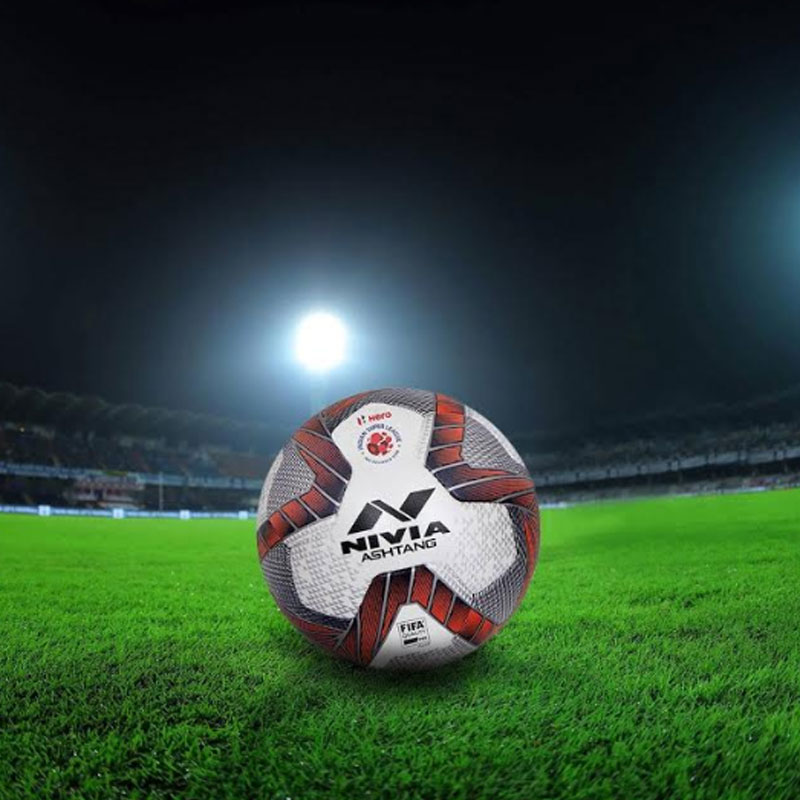
MUMBAI: NIVIA, the Indian sports manufacturing brand has signed a three-year agreement with Football Sports Development to be the official ball partner of the Hero Indian Super League (ISL) starting season 2018/19.
With this multi-crore deal, NIVIA will supply the official match balls NIVIA ‘Ashtang’ to the League and the ten clubs throughout the season.
NIVIA MD Rajesh Kharbanda said, “We are elated to be associated with ISL as the official ball partner. The FIFA Pro categorised Ashtang balls are the newest edition in our professional football product stable and we are confident of upping the game in the highly competitive league environment.”
An ISL spokesperson said, “We are delighted to introduce FIFA Pro certified match balls Nivia Ashtang for Hero Indian Super League. Ashtang has been produced by Nivia with the highest standards and newest technology to maximise performance.”
“The association of NIVIA with the ISL is a constructive partnership aimed towards cultivating a strong system of developing football in India and maturing it to International level, a trend that is evident from the performance of U-20 and U-16 Indian teams recently. I would like to thank Inventive Sports for recognising the synergies and facilitating this association,” Kharbanda added.
NIVIA Ashtang is a FIFA Pro category approved ball which is the highest quality certification that FIFA can grant on the quality of the ball.
The iconic Indian sports brand has been associated with the league through individual club deals as kit partners with ATK, Jamshedpur FC and Shillong Lajong (I-League). NIVIA, since its early days has been closely associated with the grassroots development of football in India and has become an integral part of the glorious history of Santosh Trophy since 1970s.
MUMBAI: Football is attempting to kick up a storm in India. Though it has to withstand the might of cricket in the country, the staunch supporters aren’t backing off.
India’s successful hosting of the FIFA U-17 world cup has already delivered a massive attendance in the history of the tournament. As per Star Sports India Football Forum (IFF) 2017 data the event was witnessed by 1,347,143 spectators at the six host venues across the country, with average attendance at 25,906. But more than anything else, the WC U-17 has been about the youth getting connected on the ground and in the digital arena.
Sony Pictures Network India EVP & business head, Prasana Krishnan said, “The role of broadcasters in India moved away from being a broadcaster to an incubator. We need to expand the market, a country of 1.3 billion people can’t be serviced by a single sport and few select content that is available.”
Football is also expanding in India through the Indian Super League (ISL), which is believed to have given the sport the impetus it desperately needed.
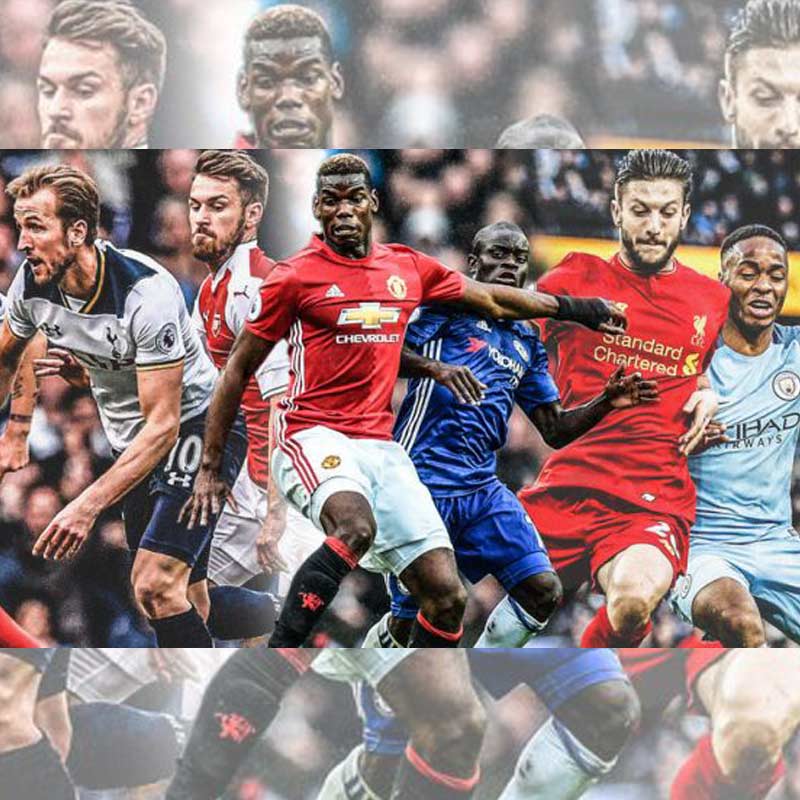
English Premier League (EPL) is the most watched football league in the world in the current scenario. According to ESP Properties senior business director Subhamoy Das, there is a wide open area for ISL here. Says he, “45 per cent of the EPL audience tuned into ISL 2017-18, the remaining 55 per cent of the EPL viewers is the opportunity for ISL to win over.”
Broadcast Audience Research Council business head- television Rohit Sarma feels that there is a huge vacuum to fill for Indian broadcasters for sports viewership. He said, “While globally sports contributes 9 per cent of total TV viewership, in India the contribution is currently 3 per cent. This shows that there is immense headroom for growth in this genre on TV. In India, ISL contributes to 60 per cent of the total viewership in football.”
The digital numbers in terms of viewership in India for football are growing at 3x rate growing from 9 billion minutes in 2014 to 23 billion minutes in 2017 on digital platforms. “In Indian sports context, out of the overall population of 1.324 billion, sports consumption on TV is 741 million and in-stadium attendance is around 4 million,” Das added.
According to Local Organising Committee tournament director Javier Ceppi, the three building blocks for developing a sport are participation, incentivisation and commercialisation.
In India, the participation of kids for football is drastically less than that of the UK. According to All India Football Federation, 3.4 million kids play organised football in the UK as compared to a meagre 4000 in India. We have a coach per two lakh people in India and one coach per 55 thousand in the UK.
The audience of EPL and ISL are very different. EPL is watched by 4-30 years old and ISL attracts 22-50 years old. ISL season 2 and 3 was also watched by 45 per cent females.
The data provided by ESP Properties pointed out that as per Facebook audience insights, states like Maharashtra, Gujarat, UP, Punjab, Rajasthan and few more can potentially drive up cumulative interest levels towards ISL by 19 per cent.
Commercialisation in India works well, with around 40 brands regularly investing in sports which includes DHL, Amul, Bisleri, Apollo Tyres and many more.
La Liga country manager India Jose Antonio Cachaza is working to make the tournament popular in the country. He said, “We are here to bring a La Liga team to India. Indian football fans now don’t just support FC Barcelona or Real Madrid, but also other clubs of La Liga. Our motive is to get it to the number one league in Asia, by investing a lot in grassroots tournament, NGO programmes and academic activities to improve the quality. The main income in La Liga is from the TV rights.”
MUMBAI: Former Star India sports head Nitin Kukreja has joined iQuest Enterprises as its chief executive officer. Kukreja had left Star in March this year.
IQuest is an enterprise of Nimmagadda Prasad, the former owner of the Maa TV group, who has multiple business interests ranging from infrastructure to sports. It is pertinent to note that Star India took over Maa TV of which he was chairman for around Rs 2,300 crore in 2015.
Prasad’s Iquest reportedly has actor Nagarjuna Rao Akkineni, Allu Arvind and Ram Charan Tej Konidala listed as directors according to corporate filings. But newspaper reports have suggested that Sachin Tendulkar and Prasad’s former business associate in Maa TV actor Chiranjeevi too are involved in the company as a partner. Kurkreja will have his hands full managing the sports business for iQuest though it has investments in other sectors as it owns teams across different sports:
• Kerala Blasters, a team in the Indian Super League.
• Badminton team, Benguluru Blasters, in the Premier Badminton League
• Pro Kabaddi League team, Tamil Thalaivas.
As the sports head at Star Sports, Kukreja was instrumental in the addition of mega sports IPs such as the Indian Super League and Pro Kabaddi League to the Star portfolio.
Kukreja, a qualified chartered account, prior to his long stint with Star India has been an investment banker and served in private equity divisions of Morgan Stanley and the Audit and Assurance division of PricewaterhouseCoopers. He has also been an advisor for Prime Minister Narendra Modi’s Khelo India programme.
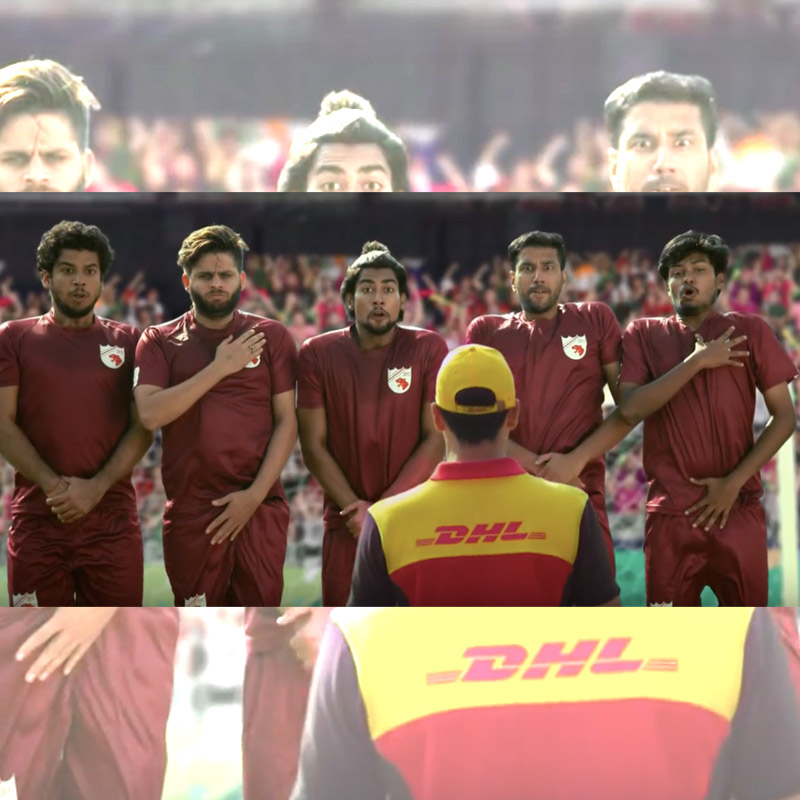
MUMBAI: International express services provider, DHL Express, has launched its 360-degree interactive brand campaign with a TVC that draws parallels between the game of football and the business landscape. The campaign was released during the Indian Super League (ISL) 2017 season for which DHL is an associate sponsor.
Anchored by three TVCs, the overall brand campaign is expected to engage over 500 million people across the country during five months of the ISL season. The campaign will leverage print, radio, OOH, in-Stadium and digital activation initiatives to amplify the messaging and reach its consumer base beyond the 10 ISL cities and across the country.
The TV commercial is the first in a series of three that highlight DHL’s core proposition of ‘Excellence. Simply Delivered.’ through rich visuals and use of light-hearted humour. Each TVC showcases a different scenario in a football match and is a metaphor for describing the challenges faced by businesses and how DHL as an expert enables them to overcome these hurdles. The use of humour is intended to provide a mood break to the viewers in between tense football matches and, at the same time, convey DHL’s brand message.
DHL express India country manager RS Subramanian says, “The single line brief for the campaign was to position DHL as an enabler that helps businesses overcome challenges in the marketplace and win. The creative treatment given to the campaign highlights our brand promise of Excellence, Simply Delivered.”
Williams Lea Tag India managing director Amit Chandra adds, “We have designed the campaign to create brand resonance for DHL by communicating its message linked to football, which the ISL’s target audience will relate to. We are confident that the use of humour and exaggeration through the match scenarios showcased in the TVCs will strike a chord with the audience.”
This year’s campaign is set to be bigger in scale and aims to reach an even larger audience through sustained outreach over the extended ISL season.
MUMBAI: It has been a 10-week-long wait for Sony Pictures Network (SPN) India to make it to the top of the ratings chart. Broadcast Audience Research Council (BARC) ratings show that the live telecast of WWE Raw and Smackdown on Sony Ten 1 managed to clinch it for SPN.
In week 46, Sony Ten 1 netted 97932 Impressions (000s) sum as compared with 89102 Impressions (000s) sum the week before. The most popular programme WWE Raw garnered 1873 Impressions (000s) sum for the channel.
Star India and IMG Reliance-owned Indian Super League season 4 struggled to grab eyeballs for the opening ceremony held on 17 November 2017. The opening ceremony garnered 1055 Impressions (000s) sum on Star Sports 1 Hindi.
Star India, thanks to domestic leagues, ICC events and the BCCI rights, stayed on top for several weeks because of back-to-back sporting events such as the ICC Champions Trophy 2017, ICC Women’s WC 2017, Pro Kabbadi League season 4 and the India vs New Zealand series. The third T20 match between India and New Zealand, earlier this month, was the top programme, garnering 16975 Impressions (000s) sum in BARC All India data week 45.
The last time SPN sports cluster took the top spot was in week 35 with 166753 Impressions (000s) sum at the time of third ODI match between India and Sri Lanka.
The tenth season of the T20 cricket tournament Indian Premier League (IPL) got the nation hooked with 1.25 billion impressions for the 59 matches played between 5 April and 21 May 2017 on Sony sports cluster, a 22.5 per cent jump compared to ninth season.
Let’s see how long Sony can manage to retain its peak position in BARC ratings of the sports genre. Despite the disappointment of the opening ceremony, the ISL may still work wonders for Star India.
MUMBAI: The fourth edition of the Hero Indian Super League (ISL) is all set to kick-off in a day. From this year, ISL has moved from a three-month season to five months.
Last year’s semi-finalist Mumbai City FC has upped the ante on its marketing and sponsorship this year. Talking to Indiantelevision.com Mumbai City FC CEO Indranil Das Blah says, “Sponsorship has been significantly better than the last three seasons. We sold our entire inventory and the sponsorship amounts have been increased by 50 per cent compared to last year. Mumbai City FC has added a whole bunch of new sponsors this season.”
A close industry source informed Indiantelevision.com that the teams in the smaller markets have a sponsorship range of Rs 50-60 million and the teams in big markets including Kerala, Chennai, Goa, Mumbai and Kolkata have a sponsorship range of Rs 120-150 million.
The title sponsor for Mumbai City FC is Ace Group since three years, back sponsor is Spicejet and on the right chest the jersey has OkSir, one of Indias advanced app-based service aggregators. The team is expecting to close four other sponsors. It is planning to increase sponsor list through licensing deals that will not be on the jerseys.
Mumbai City FC is planning to go with outdoor and digital marketing this season. “We are concentrating a lot on digital marketing because our young audience spends more time on internet than on TV. For football, digital will be of paramount importance. Our marketing is not focused towards generating revenue but to improve the Mumbai City FC brand,” says Blah.
Globally, merchandising plays an important role in contributing to revenue. A report by Transparency Market research pegs the global licensed sports merchandise market to rise at a 6.2 per cent CAGR from 217-2025. It will hit a value of $49.6 billion by then from $29.26 in 2016. But the Indian market is yet to involve and overcome barriers like price sensitivity and piracy.
This season, the team will increase fan engagement activities. Despite Mumbai’s propensity to pay more, the stadium tickets have been kept affordable so that students and children can come to watch the games. This season, Mumbai FC has launched a loyalty programme too. This apart, meet and greet with team members, contests and access to training sessions are on the anvil.
The state of Indian sports being cricket-centric five years ago has today paved way for many others. “Today we can see more non-cricketing events doing well like football and kabaddi. Badminton, as a sport, is growing. Brands, sponsors, people in the federation and fans understand the development of the ecosystem. Globally, Brazil and India are the only two developed markets with one sport focus, football and cricket respectively,” says Blah.
This year’s ISL has 10 teams with the first game between Kerala Blasters FC and defending champions Atletico de Kolkata, which is now called just ATK. The latter surprisingly has no major sponsor.
Bengaluru FC, Jamshedpur FC and Goa FC club ownerships are backed by their own business entities. Jamshedpur FC is backed by Tata Steel (title sponsors), Tata Trust and Tata Motors. Bengaluru FC owners JSW have yet again retained the title, with Puma being the main associate. FC Goa is backed by Deltin Hotels, Goa. The hospitality group sponsorship brand owner Jaidev Mukund Modi is a 65 per cent stakeholder in the club.
MUMBAI: In its third year, international express service provider, DHL, today announced the renewal of its partnership with the Hero Indian Super League (ISL). It will continue as associate sponsor.
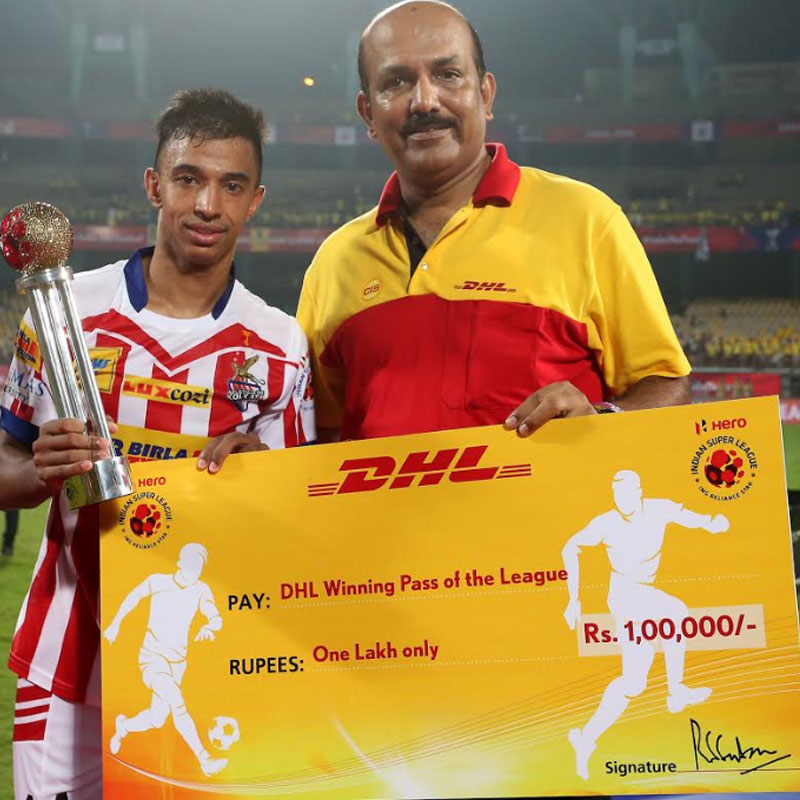
DHL is the official match ball partner for all games. It will also award the ‘DHL Winning Pass’ to the player with the highest number of assists in each game, as well as for the entire season.
Additionally, it will unveil an exciting 360 degree interactive brand campaign specifically created for this season which has the potential to be seen by 215 million television viewers and 1.5 million in-stadia spectators.
DHL Express India country manager RS Subramanian said, “ISL has grown to be an integral part of the country’s sporting calendar. With our shared passion for football, at DHL, we see this partnership getting stronger each year. The increase in the number of games this season gives us greater opportunity to engage with our audiences on and off-ground for an even longer period of time.”
Globally, DHL supports some of the world’s biggest football clubs and tournaments such as Manchester United, FC Bayern Munich and Copa Libertadores. The sponsorship of ISL is in alignment with the company’s core values of team spirit and having a can-do attitude.
This season, ISL has grown to 95 matches from last year’s 65, and will be played over five months.
An ISL spokesperson said, “Having strengthened club participation from eight to 10 in the Hero Indian Super League this season, its soaring viewership and the league’s commitment to grassroots football, India is undergoing a football renaissance. It is going to be an exciting new journey with the longer season set to kick-off shortly. We are extremely happy that we are seeing greater interest from corporates with DHL having extended their association and committed to be part of the Indian football growth story”.
The fourth season of ISL will kick-off on 17th November in Kochi. It will see the debut of two new clubs, Jamshedpur FC and Bengaluru FC, making it a 10-team league.