Tag: Ishani Banerjee

  • SWA’s ‘Sab Khairiyat?’ highlights need for mental health support in writing community

    SWA’s ‘Sab Khairiyat?’ highlights need for mental health support in writing community

    Mumbai: The Screenwriters Association (SWA), a collective voice for the rights and welfare of screenwriters, recently hosted ‘Sab Khairiyat?’, a discussion focusing on seeking mental health support as writers and their challenges. Moderated by the renowned screenwriter Anjum Rajabali, the session brought together esteemed screenwriters Preeti Mamgain, Ishani Banerjee, Mitesh Shah, and Adhiraj Sharma to share their personal experiences and insights.

    The session highlighted the often-overlooked mental health struggles that screenwriters face, including isolation, loneliness, the stress of meeting deadlines, and anxiety due to financial insecurity. With about 50 per cent of screenwriters enrolled in screenwriting courses seeking psychiatric help, the discussion aimed to break the taboo around the need for mental health support within the creative community and dispelling the image of the tortured artist. It also focused on the collective bargaining for the fundamental rights of writers.

    Anjum Rajabali elaborated on the concept of losing oneself in the passion for writing, often abandoning reality to immerse in their fictional worlds. He discussed the dual nature of writers’ psyches, swinging between feelings of godliness and servitude, which fuels their creativity. He emphasized, “Writers have to ‘bleed on the page,’ as temporary loss of self-identity while being deeply invested in characters yields powerful results. Self-doubt is an inevitable part of the creative process and writers must embrace this journey to succeed.”

    Adding further, Mitesh Shah, said, “I prefer observing my characters from a third-person perspective, which helps me grow as a writer and person. For me, achieving material success did not equate to happiness, which led me to take breaks to enjoy life.” He shared his experiences with burnout, having taken on extensive work in television writing.

    President of the Screenwriter’s Association of India, Preeti Mamgain, opened up about how passion can turn into possessiveness when writers become deeply attached to the characters they create. She spoke about how letting go of her ideas and characters, especially when facing initial rejection, was extremely challenging. Learning to collaborate and accept changes to her work was traumatic but ultimately beneficial.

    Adhiraj Sharma spoke about his initial desire to create his own world through writing, only to realize that even in this space, complete control was unattainable. He discussed how writing became a way to escape the real world, but as guidelines and rules came in, he found that even in his own world, he couldn’t be a god. He also highlighted the mental toll of becoming a “creative machine” in the advertising industry.

    Ishani Banerjee discussed the cathartic nature of writing, where distress in characters elicits empathy from the audience. She believes that writers are merely vessels for the stories that demand to be told. She also spoke about how the interplay of distress in characters and the empathy it evokes in the audience makes the whole experience profoundly cathartic.

    The event highlighted the inherent strength in safeguarding writers’ rights and ensuring fair treatment through the collective bargaining of fundamental rights. It emphasized how solidarity and support can help bring about a profound sense of security among writers and keep anxiety at bay. By nurturing dialogue, enhancing awareness, and staunchly advocating for writers’ mental well-being, the event marked a significant stride toward a more robust, equitable future for the industry.

    Few highlights-

    1. Passion turns into possessiveness when writers create their own world in their stories. For Preeti, letting go of the idea of the characters of her stories or facing initial rejection was an extremely difficult challenge.

    2. Storytelling serves as a therapeutic outlet for writers, providing a means for self-expression and introspection amidst moments of self-doubt and existential questioning.

    3. Writers have a complex relationship with their craft which can also take a toll on their mental health. From navigating the fine line between godlike control and submission to the page, to the therapeutic role, writing can play in resolving personal turmoil.

    4. External factors, such as societal upheavals and personal challenges, impact the creative process, highlighting the symbiotic relationship between the writer’s craft and the world around them.

    5. Writers shed light on the importance of maintaining a balance between personal struggles and their passion for storytelling and the harsh realities of the industry, revealing the delicate interplay between creativity and pragmatism.

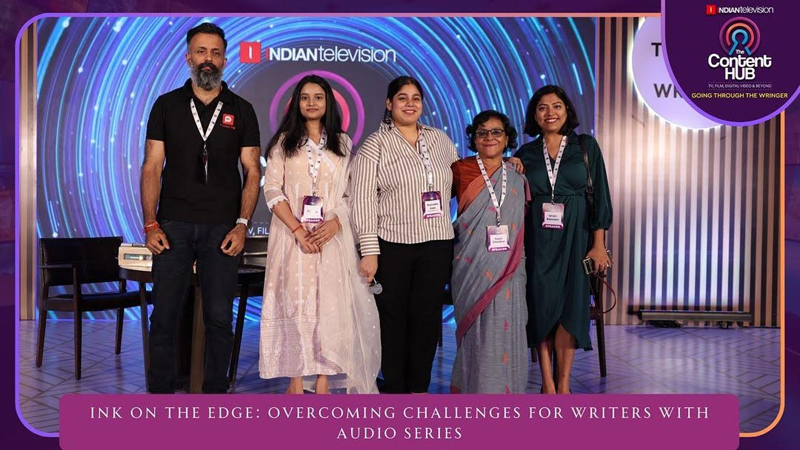
  • TCH 2024: Ink on the edge: Overcoming challenges for writers with audio series

    TCH 2024: Ink on the edge: Overcoming challenges for writers with audio series

    Mumbai: The eighth edition of The Content Hub Summit delved into the ever-changing world of content creation. With the consolidation of platforms, creators face new hurdles in gaining visibility, maximising revenue, and maintaining creative freedom. The event also explored the remarkable theatrical success of Indian cinema and unraveled the secrets behind its unprecedented profits, with a critical eye towards its sustainability.

    The session was chaired by Radioandmusic.com editor Namrata Kale. It included the following panelists: writer & director Pubali Chaudhuri, screenwriter Ishani Banerjee, Majburi Main Bandha Ek Rishta writer Jigyasa and Pocket FM head – branding and communications Vineet Singh.

    The panel discussion shed light on the challenges writers face in the audio, film, and OTT industries, stressing the need for recognition, fair contracts, and empowerment.

    Pubali emphasized the need to acknowledge writers’ contributions and improve revenue sharing, while Ishani highlighted the significance of contracts, credits, and acknowledgment in empowering writers. Vineet outlined Pocket FM’s initiatives to empower writers globally with equitable revenue-sharing models, while Jigyasa shared her journey of discovering writing talent during the lockdown and finding success with Pocket FM.

    In conclusion, the panel underscored the industry’s commitment to addressing the challenges faced by writers and providing platforms like Pocket FM to showcase diverse narratives.