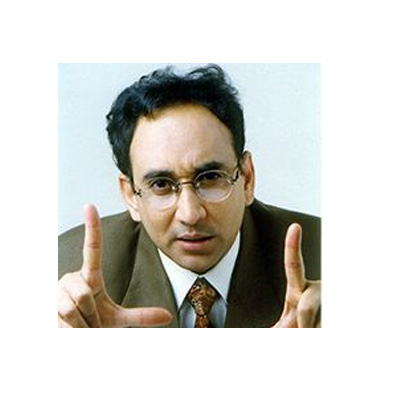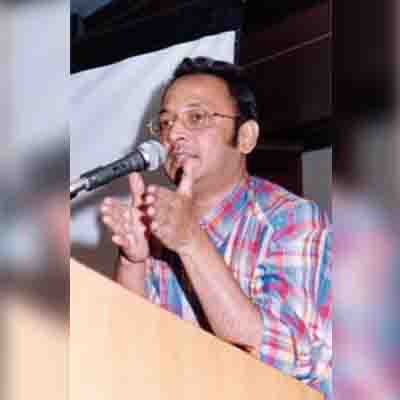
Tag: Ishan Trivedi

  • “Reject the cliches. Whatever comes to your mind first is the easy way out” : Ishan Trivedi scriptwriter

    “Reject the cliches. Whatever comes to your mind first is the easy way out” : Ishan Trivedi scriptwriter

    For someone who was pursuing geology at Kumaon University in the beautiful and quiet town of Nainital; National School of Drama (NSD) sure was a different leaf to turn. And the turn has led him on a different road – one he loves and lives on.

    The creative brain behind more than two-dozen screenplays of the episodes of Rishtey, Star Bestsellers, Saturday Suspense, and X-Zone, Trivedi has also been penning shows like Ketan Mehta’s Mr. Yogi, Amol Palekar’s Mrignayani, Manju Singh’s Ek Kahani and Darshan, Ajai Sinha’s Samay and the award winning Justujoo.

    Apart from that, he has worked on the BBC sitcom adaptation for Indian television One Foot In The Grave, Doordarshan’s popular cultural magazine Surabhi and a magazine on environmental issues Bhoomi. He has also produced a daily soap called Ye Dil Kya Kare for Zee.

    Bolstering his career graph, are his stints as commissioning editor with Star Plus in 1995-96 and Zee TV in 1996-97.

    His ambit includes not only television but also extends to films. Dialogues of blockbuster Bollywood movies like Ghulam, Aisa To Na Tha (a film still in the making), among others come from this man’s creative juices.

    Ishan Trivedi spoke to indiantelevision.com’s Richa Singh about his work and the issues that surround his work. Excerpts:

    What brought you to scriptwriting?
    I’m from Nainital and we had a theatre group over there. Since I was interested in pursuing it as a career, I applied at the National School of Drama (NSD) and got selected. That’s how it all started.

    At NSD, I had adapted a Scottish play. Somebody chanced upon it and asked me to write a series called Bargad for Pradeep Krishan. Arundhati Roy was doing the screenplay. Then in the late eighties, I came down to Bombay and worked with Ketan Mehta for about three years.

    But what happened in Bombay is interesting. There were a lot of writers in the industry, but not many respected deadlines. So if somebody comes around with respect for deadlines, then work starts rolling. That is exactly what happened with me. I don’t know whether I was good or bad, but I always wanted to make television serials and films. I had specialised in direction at NSD. There was no course in writing in those days.

    And now that you are on the faculty of a scriptwriting course – Qalam 2003, what is the most important lesson that these new scriptwriters can imbibe from your experience?
    Reject the clichés. Whatever comes to your mind first is the easy way out. It is something that you’ve seen and heard over a period of time. It is déj? vu.

    I think one should always be willing to break the ‘set’ mould. Only then will you grow as a writer. Unfortunately, most of the times the producers, channels, directors demand that ‘this is what works currently and this is what you have to write’. For me personally, whether I’m successful or not, I’ve never been into trends. Agreed that one has to write as per the market, but you need not cater to the market all the time.

    Second thing is that it is a discipline like any other job. Deadlines are deadlines.

    You are very particular about timing.
    I strictly adhere to the deadline, don’t miss it even by a minute. That is what makes me very popular among producers. And I realise that most of us are cheating on that aspect because we take up too many projects and don’t really focus on what we should be doing.

    Also, I sometimes feel that most writers tend to compartmentalise themselves. Instead of interacting with the real world outside, they are on their computer or notebook writing 10-12 hours a day. That is when they stop growing and follow clichés.

    Read as much as you can, see a lot of movies, theatre, and go to a lot of painting exhibitions…

    So, basically you derive your learning curve from experience and interaction.
    A scene can be done in 50 different ways. So unless you start exploring those paths you will dish out the same fare. It will earn you your bread, but the growth stops. Television, as a medium, wouldn’t grow; films don’t grow either.

    For a successful channel, even a slight drop in TRPs is like a sword hanging on their heads”

    Since you’ve brought up this correlation between clichés and growth, what’s your take on the fact that scripts often change with TRPs because of channel interference?
    Channels’ logic is that they know what they are doing – their jobs are at stake. So most of the times, channels dictate what they think is right. But their point of view may or may not be shared by writers or producers.

    Of course, for a successful channel, even a slight drop in TRPs is like a sword hanging on their heads. But at the same time, I feel that there should be that space for conversation between producers and channels.

    Do you view it as a compromise – as an encroachment of your space?
    Obviously yes. But since the channels help you earn your bread, you can’t afford to antagonise them. Nobody’s going to say no to what the channel demands. It’s a sad scenario.

    But how significant are TRP ratings for you – do they influence what you write or how you write?
    To be honest, yes. If I’m writing a show like Justujoo, which is appreciated by all and wins all the awards but doesn’t get high TRPs, it bugs me. In such a scenario, you are not very sure whether what you are making is going down well with the audience or is it just being watched by a niche audience. I think it is human that you want to be popular and you want your programme to be popular as well.

    Wasn’t Justujoo meant for a niche audience?
    No. A television programme is not meant for a niche audience unless it’s a commissioned programme for select audiences on channels like BBC or Discovery or to some extent even Doordarshan.

    Currently, you are writing and directing a licensed BBC sitcom for Star Plus – Kaua Chala Hans Kee Chaal. What is it about and when can we see it?
    It is an adaptation of Keeping Up Appearances. It was a hugely popular programme way back in 1992 in the UK. It’s about a woman who wants to be what she’s not. Her aspirations are page three aspirations. In India, ‘page three’ is not such a known phenomenon. Even in Bombay, not a lot of people would be reading Bombay Times, page 3. We have made it keeping in mind the audience who don’t.

    We have wrapped up 13 episodes. In fact, deliveries will start some time next month. Once they have a battery of four episodes, they will slot it somewhere.

    What has been your contribution in the adaptation – have you taken a lot of liberties with the script?
    Apart from direction, I am in the writers’ team. I have written six of the 13 episodes.

    We also knew that the British sense of humour is not what would work here. But then, because it is a licensed programme, we couldn’t deviate too much. At the same time, we presume that we know what our audiences’ tastes are. Accordingly, we converted situations and adapted characters. The structure remains the same, but the tone and the humour changes. The dialogues are ‘Indianised’.

    What are the other projects you are working on?
    As far as TV is concerned, none. I am writing two films for Ajai Sinha. One is Uphaar, which is about Indo-Pak relations and the other is Stop, which is about friendship – you could call it a crossover film.

    Also I’m writing and directing a feature film called Sapna Hai, Sach Hai, Kahaani Hai. I am in process of signing Irfaan Khan, while talks are on with Govind Namdeo, Anand Desai, Vijay Kashyap and Lalit Tiwari.

    It’s a small budget film scheduled to go on floor from 1 December. It’s about television channels and how they start dictating what is to be followed by real people – how they get involved with reality or the real world. It’s an idea we’d been working on for the past four-five months.

    Which genre do you enjoy writing for most? If you have to make a choice, which one would you rather not do without?
    A genre that is not happening currently, at least on TV – which is – thrillers.

    But you do have thrillers Balaji’s ‘Kya Haadsa…’ on weekends on TV these days.
    Not exactly those kinds of thrillers. But the real-real thrillers… maybe a mystery. A thriller may not necessarily be about crime – it can be about relationships also, probably like… Star Bestsellers.

    How has been the reaction to your telefilms – audience as well as channel reactions?
    Star Bestsellers were of 45 minutes duration. The slot was meant for telefilms so the channel was calling them telefilms. They were calling them telefilms because they were giving huge budgets and were treating them as films. For a 90 minute telefilm, there was no slot anywhere, ever.

    So why do you think we don’t have a market for telefilms?
    The moment you call them telefilms people withdraw. In America, they have channels showing alternative cinema where they produce films exclusively for television. Big stars are called and huge budgets are allotted.

    In India, we have a very restricted market and the same people are busy with television… so there is no time for alternative cinema. Then again, the budgets are meagre. For instance Josh. They had the budget, they shot it on film and they treated it like a film. Whether it was good or bad, I won’t be able to comment but that is the treatment you need for a film. Even for series like Kashmeer, the budget was not very high which means you make a lot of compromises in terms of logistics, so neither became a big game.

    In America, even a Tom Hanks would appear in a television film. That is the difference. People don’t want to see the same television actors repeating in a 90 minute film. So there’s no difference between television programmes and telefilms.

    Is writing satisfying in terms of remuneration? What is the payment structure like?
    It is a highly paying job right now. Writers are demanding their pound of flesh and they are very well paid, at least on TV. They are at par with any other profession. At times, a writer gets more than a director does.

    It usually goes from Rs 5,000 to Rs 40,000 per episode.

    How about the new writers – are they getting a raw deal or are they paid as well?
    In the beginning, people are exploited. But slowly as you prove your worth, you can start demanding from five – seven to 10 – 15.

    Way back in 1989, I used to get Rs 2,000 per episode.

    Writers are demanding their pound of flesh and they are very well paid, at least on TV”

    How much time does it take for you to pen an episode?
    I am one of the slowest writers. For one episode, I take two to three days. There are people who are writing two episodes in a day.

    What about the quality of output?
    If they are talented, why not?

    What are the other problems you faced as a writer in this industry? How do you deal with them?
    I think the biggest problem is of perception. If you are the person who’s paying me, it is you who is calling the shots, dictating the structure of the episode, the emotional spine and the spectrum. Sometimes a writer feels like breaking out but is not allowed.

    But TV has been good to writers as far as getting payments is concerned. In films, it’s a big problem, say, if you sign a contract for Rs 100, most of the times you wouldn’t get more than Rs 50-60. That is the most frustrating aspect of film writing. Films have their own clichés but there are times when you can really achieve something that has never been done before. In television, it is very restricted.

    So how do you switch on and off between television and films?
    Because of television, I can survive. If I were only exclusively writing for films, I would not have.

    Survival – as in steady income?
    Film producers are cheaters! Most writers in films are getting four-five lakhs and even that is not being paid to them.

    You prepare a draft, fulfill your commitment but there is no cheque. Then dishonesty creeps in the whole deal. They always say ‘the story is the star’ but then what about the writers who create that story. Of course there are pretensions in television too, but then television pays the writer.

    So quite evidently, you enjoy television more than films.
    Yes, I’ve written very few films. I do get offers for films but they are fraught with danger.

    Once I was promised five lakhs after a lot of bargain. But I got only one lakh.

    Seems like you have burnt your fingers, and you still want to work for films. Why?
    I have burnt my fingers all the time and it does put me off. But right now I’m directing my own film and for producers who are very honest in their dealings.

    Does the credit given to a television writer justify the effort put in?
    In the credit scroll, my credit comes just before the actors. In television, writers are respected. Of course, no one will come for autographs because they don’t know the writers. Even the media doesn’t talk much about scriptwriters. But if you go to the sets, everyone gives you that respect because they know that you are the one who is creating the story and their characters.

    I don’t think we are a nation that is interested in literature at all”

    Our scripts don’t draw on our rich Hindi and regional literature. Why?
    But how many amongst us know who are the prominent names in literature? I could tell you instances when people have asked me who Premchand is! ‘Is he a producer?’ I don’t think we are a nation that is interested in literature at all.

    There is no market for literature. It is only in the second stage where you turn literature into a visual medium.

    How many people buy literature? How many buy books? In India, very few.

    If you were to make a literature based script, who’s literature will it be?
    I would prefer Jaiprakash who is a new wave writer. But I don’t think it will happen. (Smirks) Nobody would allow me to base my script on some literature piece.

    Do you think ‘different’ story ideas like Sony’s ‘Jassi…’, which is an adaptation of Yo Soy Betty La Fea, will play a role in freeing the script from the saas-bahu shackle?
    I was supposed to be one of the writers for Jassi…, but I didn’t have time for that. It is a good sign that people are liking something that is different from the saas-bahu sagas. If more such stories work, the programmer’s point of view will change. But in the meanwhile, a whole lot of generations get sacrificed. If a change comes after 15 years, scores of writers will be finished and done with by then.

    Do you think this is parallel to the similar phenomenon of crossover films – is it a passing fad or will it stay?
    It should stay and it would stay because of the market’s own logistics. You can make a film in Rs 20 million. But because of the viability such kind of films are produced. If out of 20, one film clicks, it is better than one out of 100 similar plots. I hope it stays because it gives a person like me scope to write different stories.

  • Qalam 2003 – annual writers workshop starts 9 Jan

    MUMBAI: The countdown to Qalam 2003 – the second annual scriptwriter’s workshop and forum has begun. After the grand success of Qalam 2001, it is back to score another first by holding “Writers Pitch”, a golden opportunity for participants to present their concepts directly to the channel executives and representatives of production houses.
    Qalam 2003 will be a comprehensive workshop and will cover everything to do with scriptwriting for television: such as the fundamentals of scriptwriting; the essence of a script’s concept, story, screenplay, dialogue and characterisation.
    The Indian scriptwriting community and budding aspirants will gather at Time & Again banquet hall in Mumbai’s Lokhandwala complex, Andheri, from 9 January to 11 January 2003 .
    Qalam 2003 will also have individual instructional sessions on writing for the various genres of television programming such as daily soaps, comedies, thrillers, game shows as well as writing for news.
    “For the first time in India, writers – some of them first-timers – will get an opportunity to present their story ideas and concepts to creative professionals from major production houses and television programming executives who will be part of a judging panel at the “Writers’ Pitch”. It is quite possible that that some of the work may be picked up if the writing measures up to the requisite standards,” says Indian Television Dot Com founder and chief executive officer Anil Wanvari.
    The cr?me de la cr?me of India’s TV scriptwriters will participate in the panel discussions and training sessions over a three-day period. The list includes stalwarts such as : Atul Tiwari, Anurag Kashyap, Ishan Trivedi, Kamlesh Pandey, RD Tailang, Rajesh Joshi, Rekha Nigam, Sanjay Upadhyay, Sanjay Chhel, Shishir Joshi, Sutapa Sikdar, Vinta Nanda and Vinod Ranganath.
    The Qalam initiative has got the kudos from senior scriptwriters who are part of the forum-cum workshop. Says Sutapa Sikdar: “Qalam is a very nice platform. It will help writers to actually understand what contemporary writing for television involves.”
    Ace comedy writer Sanjay Chhel has this to say about the effort in his inimitable style: “Writing is a taxing job. I welcome participants to the heart attack club. I look forward to doing an open heart surgery on scriptwriting at Qalam 2003.”
    Indiantelevision.com is coordinating its Qalam efforts with leading production houses and television channels. Sony TV has given its consent to be the principal sponsor. The event has also got participation support from UTV, Balaji Telefilms, Cinevistaas, BAG Films, Nimbus, InHouse Productions, Creative Eye, Siddhant Cinevision, Contiloe Films, Firework Productions, Tracinema, TV18. Several programming executives from television channels such as Star, Sony Entertainment, Zee TV, Sahara, B4U, MTV will also be attending Qalam.

  • “My programmes may not find enough takers on TV amid the regressive wave” : Ajai Sinha

    “My programmes may not find enough takers on TV amid the regressive wave” : Ajai Sinha

    Hasratein was his ticket to fame in the heady early days of satellite television in India.

    The effective, empathetic portrayal of the other woman was a revolutionary concept for Indian TV, but Ajai Sinha made it work. In the seven years since then, he has turned out just a few more serials, content on working one project at a time and maintaining high standards of quality. Justujoo, currently airing on Zee, is just another example. Between Hasratein and Justujoo, Sinha has also directed Gudgudee, a sitcom that ran on Zee for two years and Samay, a weekly serial that boasted a cast of 18 lead characters.

    For someone who started out with ambitions of making it big as an actor but turned into a director midway, it’s been a long way down a road less travelled by.

    Excerpts of an interview with indiantelevision.com correspondent,Amar.

    Is being a producer-director an advantage or a disadvantage?
    A bit of both, actually. The advantage is that I have complete say over financial matters and decisions about the shooting. The director is often constrained by budgetary limits set by the producer and his creative freedom is curtailed to a large extent. This does not hold for me, as I am my own boss. Also, I am in direct touch with the channel over my programme. The disadvantage of course, is that financial and administrative responsibilities that I shoulder sometimes affect my concentration on direction.

    Channels feel more secure handing over another project in the same genre to a director instead of experimenting with something new.

    ____________

    Which subjects appeal the most to you?
    None in particular. I have tried to be as diverse in my subjects as possible. After Hasratein, which was based on an extra-marital relationship, I did a sitcom Gudgudee and followed it up with Samaywhere the protagonist was a 70-year-old woman suffering from Alzheimer’s disease and could not recognize her children correctly.Justujoo is the story of a man who is attracted to his sister-in-law. It is unfortunate that people tend to connect me only with Hasratein and the extra-marital theme.

    But doesn’t the channel do this typecasting for its convenience?
    Probably. Once a director has delivered quality drama, quality comedy or quality suspense, the channel feels more secure handing over another project in the same genre to him instead of experimenting with something new.

    How did the actor in you turn into a director?
    Actually, I wanted to be an actor and acted in several serials. But I always felt I could add much more if I were behind the camera. I have also been a writer, singer and musician. I felt these abilities converged very well into the overall responsibilities of a director. Somewhere I was seeking greater creative satisfaction when I decided to venture into direction.

    I assisted director Padmanabhan on four episodes of a sitcom Kissa Tota Maina Ka. But beyond that, it is my observations of the directorial process while I was acting that came in very handy. I feel my passion for direction compensated for my lack of training.


    On the Sets of Gudgudee
    TV is all about making the audience feel as though a certain incident is taking place in their own lives.

    What are the important factors you bear in mind before starting a new project?
    The most basic and important factor I have in mind is that I should not repeat myself. I like to do something I have not done before.

    And what would you not compromise on as a director?
    I never compromise on the authenticity of a scene. If I feel that a 15 second footage shot in the gym or on the beach will make a scene appear more authentic, I will shoot the scene there instead of the characters narrating the same. This no doubt, incurs an additional cost, which most producers might want to avoid. But I have never fooled the audience.

    Who are your favourite writers?
    Ishan Trivedi, Ashok Patole, Raghuvir Shekawat and Mir Muneer.

    Are you completely opposed to directing serials for outside banners?
    Not totally, but by and large, yes. I have not had a pleasant experience working for an outside banner. I was directing Dollar Bahu for an outside producer. But once the programme started building up, the producer started indulging in excessive and unwarranted cost-cutting. He probably felt that by getting someone else to direct, he would be able to save costs substantially. So, I moved out.

    Today’s serials are basically a conglomeration of high voltage scenes with very little substance in the content.

    Explaining scene to actors on the sets Of Hasratein

    On what basis do you choose a channel for your serial?
    So far, I’ve been with Zee because I find them most open to new ideas. Also, I have a good rapport with them, since I have worked with them for several years. But I am open to other channels. I am negotiating with Mak TV for one of my serials. I had shot the pilot of a sitcom, Jale to Phooljhadi, Phate to Bomb for Star last year, but at the eleventh hour, Star ditched us and gave the slot to Neerja Guleri.

    Do you feel hassled by Executive Producers in channels over storyline, cast and other matters?
    No. Fortunately, I have been able to convince executive producers of my point of view and I don’t remember any occasion when we have had a major disagreement.

    Who are your favourite directors?
    Mehboob Khan, Hrishikesh Mukherjee, Bimal Roy and Raj Kapoor.

    What is the constitution of your production set-up?
    Because I usually do only one project at a time, I have very few people employed with me on a full time basis. But I have my own editing set-up. Besides, my wife as the executive producer functions as the backbone of my production. We also have two production people and an accountant employed on a fulltime basis.

    What do you feel about the quality of serials today vis-?-vis ten years ago?
    I feel the quality has certainly gone down today. Today’s serials are basically a conglomeration of high voltage scenes with very little substance in the content.


    A Clipping From Justujoo

    Who do you blame for this?
    I would blame it on our audience. Whether you accept it or not, the IQ level of our audience is very low. They enjoy regressive, make-believe saas-bahu conflicts but do not like new concepts that would open up their minds. And I will tell you why this is happening. Ten, fifteen years ago, the audience that was going to cinema halls were the lower class, relatively uneducated people while the upper class, educated people would watch TV. Today, the same people who would throng cinema halls ten years back, stay glued to the TV sets while those who would then patronize television are no longer such avid viewers. This is why the entire cycle has reversed. The quality of TV programmes today can be equated with the quality of movies in the eighties; and the quality of movies today can be equated with the quality of TV programmes in the eighties.

    What factors do you consider before taking somebody under your wing?
    I would look for a person with a good educational background, common sense and a good understanding of cinema.

    Are you satisfied with your innings as director?
    By and large, yes. I never expected to win the best director’s award in a competition that had me locked with some of the most influential production houses that had the backing of the most powerful channels. But my winning the award only vindicated the fact that my work has quality and is different from the ordinary. I am pretty satisfied with the work I have done.

    A Scene from Samay

    What is it that distinguishes Ajai Sinha- the director from the rest?
    I try to pump in as much realism into every scene as I can. TV is all about making the audience feel as though a certain incident is taking place in their own lives. The audience has to relate instantly. I will tell you about a scene from Justujoo and you see how close this could be to a real life incident. I have this tendency of sneezing every morning after waking up and I like to see tissue paper kept all around. When I am not able to find tissue paper on waking up, I tend to get irritated. The same scene was enacted in Justujoo, wherein Harsh Chhaya would shout at his wife over this trivial issue. It looked so very real and identifiable.

    Besides, like I said I have never compromised on the authenticity of a scene. See, the attitude of most producers today is to save costs relentlessly, but I have never subscribed to this attitude. Even if a small 15-second scene appears ineffective from the costing point of view, but I feel that this scene is important I go ahead with it.

    What does the future hold for you?
    I plan to venture into film direction. Even though I have never gone by the trend, the fact is that in front of the regressive wave that exists today in programming, my kind of programmes may not find enough takers. So it is always better to venture into films.