Tag: Irina Bokova

  • UN panel: Time for a ‘new deal’ if b’band is to reach everyone

    NEW DELHI: The Broadband Commission for Sustainable Development has committed to concrete actions that will spur the roll out of broadband around the world as around five billion people are without mobile broadband access, meaning that the paths to access digital services and applications are currently blocked for much of the world’s population – holding back progress towards the 2030 Agenda for Sustainable Development.

    In its 2017 Spring Meeting in Hong Kong, SAR China yesterday, participants at the Commission discussed the need to come up with a new deal between all players, with renewed commitment to work towards concrete actions that will effectively connect the unconnected with broadband – especially to support Least Developed Countries. In particular, emphasis was placed on remote and rural areas which represent the biggest challenge and where barriers to access need to be also viewed through the prism of affordability and content, notably local and multi-lingual content.

    Broadband Commission Co-Chair, President Paul Kagame underlined that “ICT and broadband are linking everyone and everything for the betterment of economies and societies. We are motivated by wanting to have the global community connected, especially the billions of unconnected. We will succeed when we work together: government, industry and civil society leaders.”

    International Telecommunications Union Secretary General Houlin Zhao, who is co-Vice Chair of the Broadband Commission, added, “Our central conviction is that broadband and ICTs are critical if we are to achieve the Sustainable Development Goals. ICTs underpin vital achievements and modern services in many sectors, and governments and industry must increasingly work together to create the conditions so badly needed to facilitate the growth of broadband for sustainable development.”

    The 2030 Agenda provided the context for discussion. UNESCO DG Irina Bokova, co-Vice Chair of the Broadband Commission, noted, “The framework for all our work is the 2030 Agenda for Sustainable Development and the 17 new Sustainable Development Goals. We must ensure the digital revolution is a revolution for human rights, in order to promote technological breakthroughs as development breakthroughs.”

    The importance of scaling efforts on digital education and mobile learning was a matter which received full support and agreement. In advance of UNESCO’s Mobile Learning Week, many Commissioners singled education out as one of the most fundamental areas for action where the Commission can fuel effective change.

    A recurrent issue under discussion was the need to strike a workable balance between investment and taxation, for the benefit of all members of society – to promote human development and sustainable growth, while spurring innovation. On top of this are issues associated with the cost of spectrum auctions, often in key markets where the digital divide is most prevalent.

    The Commission underlined the need to build an ecosystem with government, including all ministries, and private sector working together, for more efficient investment and taxation, to empower all. In this respect, it was recommended to work more closely with Ministries of Finance to better promote the development potential of broadband.

    In the run-up to the day-long meeting of the Commission there was a series of four Working Group meetings focused on a range of broadband-related issues, notably: education, outer space technologies, a new pilot initiative to index the pace of digitalisation at national level, and the digital gender divide.

    In addition, a number of broadband commission partners – the United Nations University and the Berkman Klein Center for Internet and Society and Harvard University – joined forces to launch a new data research group into the digital gender divide.

    Comprising leaders from government, industry, international organizations and academia, the Broadband Commission was established in 2010 as a top-level advocacy body promoting broadband as an accelerator of global development. The Commission is chaired by President Paul Kagame of Rwanda and Mexico’s Carlos Slim Helú. In September 2015 it was re-named the Broadband Commission for Sustainable Development with the specific purpose of working to help achieve, through the power of broadband connectivity, the Sustainable Development Goals.

    The Commission’s Spring Meeting 2017 was hosted by Huawei Technologies which also included a visit to Huawei headquarters in Shenzhen on 17 March 2017.

  • UNESCO, Indian newspersons condemn killing of mediapersons

    UNESCO, Indian newspersons condemn killing of mediapersons

    NEW DELHI: UNESCO Director-General Irina Bokova today called for an investigation into the killing of journalists Akhilesh Pratap Singh and Rajdev Ranjan who died in separate attacks in northeastern and central India respectively.

    “I condemn the murders of Akhilesh Pratap Singh and Rajdev Ranjan,” the Director-General said. “I call on the authorities to investigate these killings to prevent impunity for crimes against freedom of expression and freedom of information from taking root.”

    On 12 May, unknown assailants shot Akhilesh Pratap Singh, a correspondent for Hindi-language broadcaster Taaza TV, who was also known as Indradev Yadav, in the Chatra district of the state of Jharkhand in the northeast of India.

    Senior reporter Rajdev Ranjan was shot on Friday 13 May in Siwan in the central Indian state of Bihar. He was the bureau chief of the Hindi-language national daily Hindustan.

    Earlier, the Press Council of India also held a meeting to condemn the killings and called upn the Government to ensure security of newspersons in their line of duty.

    The issuance of the UNESCO statements on the killing of media workers is in line with Resolution 29 adopted by UNESCO Member States at the Organization’s General Conference of 1997, entitled “Condemnation of Violence against Journalists.” These statements are posted on a dedicated webpage, UNESCO condemns the killing of journalists.
     

  • UNESCO, Indian newspersons condemn killing of mediapersons

    UNESCO, Indian newspersons condemn killing of mediapersons

    NEW DELHI: UNESCO Director-General Irina Bokova today called for an investigation into the killing of journalists Akhilesh Pratap Singh and Rajdev Ranjan who died in separate attacks in northeastern and central India respectively.

    “I condemn the murders of Akhilesh Pratap Singh and Rajdev Ranjan,” the Director-General said. “I call on the authorities to investigate these killings to prevent impunity for crimes against freedom of expression and freedom of information from taking root.”

    On 12 May, unknown assailants shot Akhilesh Pratap Singh, a correspondent for Hindi-language broadcaster Taaza TV, who was also known as Indradev Yadav, in the Chatra district of the state of Jharkhand in the northeast of India.

    Senior reporter Rajdev Ranjan was shot on Friday 13 May in Siwan in the central Indian state of Bihar. He was the bureau chief of the Hindi-language national daily Hindustan.

    Earlier, the Press Council of India also held a meeting to condemn the killings and called upn the Government to ensure security of newspersons in their line of duty.

    The issuance of the UNESCO statements on the killing of media workers is in line with Resolution 29 adopted by UNESCO Member States at the Organization’s General Conference of 1997, entitled “Condemnation of Violence against Journalists.” These statements are posted on a dedicated webpage, UNESCO condemns the killing of journalists.
     

  • Declaration on press freedom at meet on World Press Freedom Day

    Declaration on press freedom at meet on World Press Freedom Day

    New Delhi: A record-breaking number of participants from all parts of the world have adopted the Finlandia Declaration setting new challenges to ensure press freedom, access to information, safety of journalists and cultural diversity for all media practitioners everywhere.

    More than 1000 media practitioners and stake holders, including representatives of governments during a meeting on World Press Freedom Day on 3 May in Helsinki called on UNESCO’s 195 member states to “reaffirm that press freedom and the right to information are essential for a free, independent and pluralistic media and crucial to the advancement of human rights and sustainable development.”

    In keeping with the new sustainable development goals set by the United Nations for the next 15 years, the Finlandia Declaration stresses the importance of access to information and the responsibility of states in making public information available both on and off-line, and promoting universal access to the internet.

    It also calls on states to ensure the safety of journalists, whose vulnerability to violent attacks undermines press freedom and freedom of information in many parts of the world.

    The Declaration furthermore recognizes the pertinence of UNESCO’s 2005 Convention on the Protection of and Promotion of the Diversity of Cultural Expression, artistic freedom and cultural diversity to the exercise of the fundamental human right of freedom of expression.

    Participants at this year’s main World Press Freedom Day event, organized by UNESCO and Finland, lauded UNESCO’s Executive Board decision to celebrate an International Day for Universal Access to Information on 28 September every year.

    During the two-day conference, the director-general of UNESCO, Irina Bokova, the prime minister of Finland, Juha Sipilä and the host country’s president, Sauli Niinistö, highlighted the paramount importance of press freedom and freedom of information for sustainable development, good governance and a basis for all freedoms.

    The celebration of World Press Freedom Day 2016 drew the support of some 50 civil society and media organizations. Some 100 World Press Freedom Day events have been organized around the world this year.

  • Declaration on press freedom at meet on World Press Freedom Day

    Declaration on press freedom at meet on World Press Freedom Day

    New Delhi: A record-breaking number of participants from all parts of the world have adopted the Finlandia Declaration setting new challenges to ensure press freedom, access to information, safety of journalists and cultural diversity for all media practitioners everywhere.

    More than 1000 media practitioners and stake holders, including representatives of governments during a meeting on World Press Freedom Day on 3 May in Helsinki called on UNESCO’s 195 member states to “reaffirm that press freedom and the right to information are essential for a free, independent and pluralistic media and crucial to the advancement of human rights and sustainable development.”

    In keeping with the new sustainable development goals set by the United Nations for the next 15 years, the Finlandia Declaration stresses the importance of access to information and the responsibility of states in making public information available both on and off-line, and promoting universal access to the internet.

    It also calls on states to ensure the safety of journalists, whose vulnerability to violent attacks undermines press freedom and freedom of information in many parts of the world.

    The Declaration furthermore recognizes the pertinence of UNESCO’s 2005 Convention on the Protection of and Promotion of the Diversity of Cultural Expression, artistic freedom and cultural diversity to the exercise of the fundamental human right of freedom of expression.

    Participants at this year’s main World Press Freedom Day event, organized by UNESCO and Finland, lauded UNESCO’s Executive Board decision to celebrate an International Day for Universal Access to Information on 28 September every year.

    During the two-day conference, the director-general of UNESCO, Irina Bokova, the prime minister of Finland, Juha Sipilä and the host country’s president, Sauli Niinistö, highlighted the paramount importance of press freedom and freedom of information for sustainable development, good governance and a basis for all freedoms.

    The celebration of World Press Freedom Day 2016 drew the support of some 50 civil society and media organizations. Some 100 World Press Freedom Day events have been organized around the world this year.

  • INA & UNESCO to safeguard, digitise & make accessible 70 hrs of AV programming

    INA & UNESCO to safeguard, digitise & make accessible 70 hrs of AV programming

    NEW DELHI: UNESCO director general Irina Bokova and French National Audiovisual Institute CEO Laurent Vallet have signed an agreement to preserve 70 hours of audiovisual (AV) programming from UNESCO’s valuable collections and make them available to the public.


    Cooperation between UNESCO and INA, which is France’s repository of radio and television archives began 10 years ago on the occasion of the organisation’s 60th anniversary.


    To mark the 70th anniversary, INA and UNESCO decided to reinforce this partnership, undertaking both to preserve and make accessible to the general public a selection of 70 hours of audiovisual programming that includes film, video and audio material.


    UNESCO is in possession of exceptional audiovisual archives containing thousands of items, which bear testimony to 70 years of the world’s cultural history and to the organisation’s activities. As is the case with audiovisual heritage anywhere, these collections are vulnerable, perishable and at risk of being forgotten unless they are digitised and shared with the greatest number.


    INA is presently mobilising the range of its technical capacities to secure the preservation and enhancement of UNESCO’s audiovisual archives: digitisation of material, its organisation and the development of a multiple-use offer for different audiences.


    UNESCO’s material will be accessible to the public on INA’s websites and to professionals on inamediapro.com. It will also be made available to researchers, teachers and students at INA THEQUE centres and partner multimedia libraries across France. INA will also make this audio and video material available for cultural and educational purposes.


    “The agreement marks a new decisive step in raising awareness of the need to implement a safeguarding and digitisation plan for UNESCO’s audiovisual archives. Similarly, in order to safeguard audiovisual heritage, INA invites Member States to reinforce national policies and support safeguarding and enhancement measures for all of UNESCO’s collections,” declared Vallet.


    “This partnership reinforces the strong relationship that already exists between UNESCO and INA. It will help enhance the value of a shared memory, which also sheds light on the recent history of humanity. This is a very concrete way to preserve fragile documents and contribute to the dissemination and sharing of know-how at the service of peace,” said Bokova.

  • CNN’s Christiane Amanpour named UNESCO Goodwill Ambassador

    CNN’s Christiane Amanpour named UNESCO Goodwill Ambassador

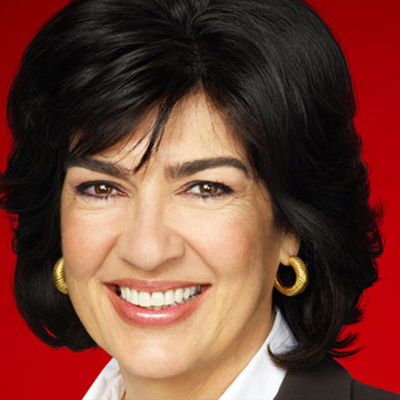
    NEW DELHI: Renowned journalist and CNN chief international correspondent Christiane Amanpour has been named the UNESCO Goodwill Ambassador for Freedom of Expression and Journalist Safety in a ceremony at the organization’s headquarters in Paris.


    UNESCO director-general Irina Bokova named Amanpour “in recognition of her efforts to promote free, independent and pluralistic media, having the right to work free from the threat of violence, and contributing through this to peace, sustainability, poverty eradication and human rights.”


    “In the most challenging situations, addressing the most demanding interlocutors, integrity and courage have always guided you, with the conviction that freedom of expression, media freedoms are essential for stronger societies, for healthier democracies, for peace and reconciliation as well as sustainable development – we need to defend these principles more than ever today, at a time when they are challenged across the world,” Bokova said.


    In her acceptance speech, Amanpour stressed the important role of journalists as pillars of reform, freedom and democracy whose task was to strengthen civil society. “We’re here to make the world a better place,” she said.


    She also made an impassioned plea for the release of all imprisoned journalists, wherever they may be, and condemned the increasing number of attacks and assassinations of media professionals


    Amanpour has won every major television journalism award, including eleven News and Documentary Emmy Awards, four Peabody Awards, two George Polk Awards, three duPont-Columbia Awards and the Courage in Journalism Award. She has received nine honorary degrees, has been named a Commander in the Most Excellent Order of the British Empire (CBE) and was this year inducted into the Cable Hall of Fame.

    In a message to mark World Press Freedom Day on 3 May, United Nations secretary Ban Ki-moon said called upon all Governments, societies and individuals to uphold the principles put forward by Member States on the need for the free exchange of information and ideas, both within and among nations.


    “We must commit to ensure that the safety and human rights of journalists are protected, independent of the political, socioeconomic or cultural pressures that may threaten, impede or deter their freedom to keep the world informed. Around the globe, journalists are attacked every day as they try to carry out their work. In the last year alone, 61 journalists were killed. Many more languish in jails without charges or any sign of due process, the victims of Governments and others that prohibit free inquiry and use the power of the State to intimidate the press. As we mark World Press Freedom Day this year, let us honour the memory of those who lost their lives and intensify our efforts to uphold the fundamental human right to freedom of expression and press freedom,” Ki-moon said.


    This year’s theme, Let Journalism Thrive! Towards Better Reporting, Gender Equality, & Media Safety in the Digital Age emphasizes the importance of ensuring a free and pluralistic media against the backdrop of a fast-paced and ever-changing digital world.


    Meanwhile, UNESCO will celebrate World Press Freedom Day in Riga, Latvia, this year with a two-day conference and the awarding of the UNESCO/Guillermo Cano World Press Freedom Prize. The conference in Riga will be held from 2 to 4 May while national celebrations will take place in about 100 countries around the world.


    On World Press Freedom Day, the World Press Freedom Prize will be awarded to jailed Syrian journalist Mazen Darwish in a ceremony to be held in the presence of the president of Latvia Andris Berzins. The laureate will be represented by his wife, journalist Yara Bader, who is also the director of the Syrian Centre for Media and Freedom and winner of the 2012 Ilaria Alpi award for brave female journalists.


    UNESCO is focusing on three themes for World Press Freedom Day this year: the need for “quality journalism”, reporting that is accurate and independent, remains a constant concern in a media landscape that is changing due to technological and commercial developments; Gender imbalance continues in the media 20 years after the Beijing Declaration and Platform for Change. All too few women journalists are able to reach decision-making positions in the media. For this reason, more than half of all the speakers at the conference will be women, executives and media professionals from all over the world: and digital safety, a topic of growing concern because digital communications makes it difficult for journalists to protect themselves and their sources.


    During the conference, UNESCO will launch Building Digital Safety for Journalism, a study analyzing key digital threats facing journalists and their sources. This is the most recent in a series of UNESCO publications designed to help journalists improve their professional security.

  • United Nations adopts plan of action to improve safety of journalists

    United Nations adopts plan of action to improve safety of journalists

    NEW DELHI: More than 500 professionals have been killed in the course of their duties over the past decade. Many more have been assaulted, abducted, sexually violated, intimidated, harassed, arrested or illegally detained. The vast majority of these crimes did not concern international war correspondents but journalists working in their home countries, often in times of peace, and covering local stories. The instigators for the most part, remain unpunished.

    Concerned with this data, a coordinated inter-agency mechanism is in the process of being established to handle issues connected to the safety of journalists and impunity which will involve monitoring of progress at both national and international levels.

    Safety and impunity are also to be incorporated into United Nations contributions to national strategy, notably development assistance programmes and the possible inclusion of media stake holders in some of the preparatory processes of the UN’s development projects.

    The decision was taken at a meeting of representatives of UN agencies, programmes and funds meeting at UNESCO in Paris which drafted an Action Plan to improve the safety of journalists and combat impunity of crimes against them.

    The Draft Action Plan was prepared at the meeting held on 13 and 14 September under the chairmanship of Information and Broadcasting Ministry Secretary Raghu Menon, who is Chairperson of the Impunity to Programme for the Development of Communication (IPDC).

    UNESCO Director-General Irina Bokova; UN Under-Secretary General for Communications and Public Information Kiyo Akasaka; UN Special Rapporteur on the promotion and protection of the right to freedom of opinion and expression Frank la Rue, and representatives of leading freedom of expression and press freedom organisations also attended the two-day meeting.

    The meeting was endorsed by UN Secretary-General Ban Ki-moon and High Commissioner for Human Rights Navi Pillay, who addressed the participants at the start of session.

    The Draft also foresees the extension of work already conducted by UNESCO to prevent crimes against media workers. This notably includes assisting countries to develop legislation and mechanisms favourable to freedom of expression and information, and by supporting their efforts to implement existing international rules and principles, especially the 1997 UNESCO General Conference Resolution concerning violence against journalists. This stipulates that there should be no statute of limitations on crimes against freedom of expression.

    To further reinforce prevention, awareness raising campaigns will also be conducted with member states, civil society, non-governmental organisations and concerned bodies about issues of freedom of expression, journalists’ safety and the danger of Impunity to Programme for the Development of Communication (IPDC) at its next session in March 2012 and will then be submitted to the bodies in charge of UN-wide coordination.

    UNESCO is the UN agency mandated to “promote the free flow of ideas by word and image”, with the aim of establishing a coordinated, UN system-wide approach to preventing and combating these crimes.