Tag: IRF

  • Navi Mumbai to host Maharashtra’s first-ever ‘Formula night street race’

    Navi Mumbai to host Maharashtra’s first-ever ‘Formula night street race’

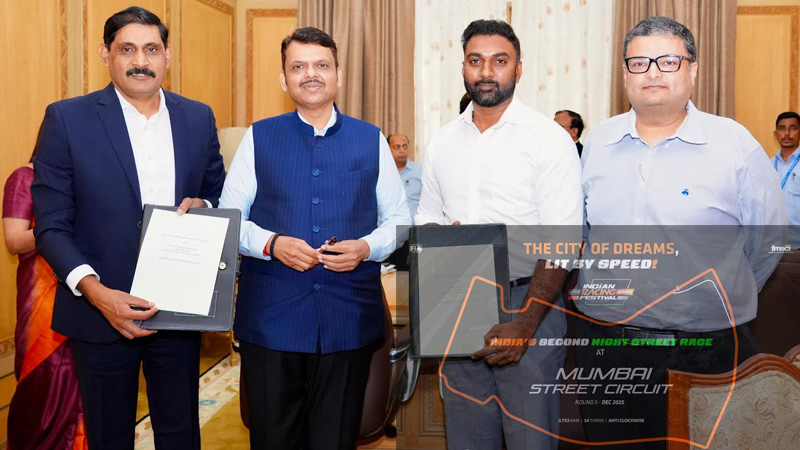
    MUMBAI: Maharashtra is set to make motorsport history as Navi Mumbai gears up to host the state’s first-ever ‘Formula night street race’ this December, marking the grand finale of the Indian Racing Festival (IRF). The announcement was made in the presence of chief minister Devendra Fadnavis, during the signing of an Mou between Racing Promotions Pvt. Ltd. (RPPL) and Navi Mumbai Municipal Corporation (NMMC).

    For the first time, Navi Mumbai’s streets will transform into a world-class FIA-grade racing circuit. Spanning 3.753 km with 14 turns, the track begins at Palm Beach Road, weaving past scenic stretches of Nerul Lake under floodlights, offering both drivers and fans a thrilling night racing experience.

    The weekend promises double the adrenaline with the Indian Racing League (IRL) and FIA-certified Formula 4 Indian Championship (F4IC). Top Indian and international racers will battle it out, while spectators enjoy motorsport action against the city’s glowing skyline.

    Fadnavis hailed the event as a milestone for Maharashtra’s motorsport journey, highlighting its potential to inspire young talent, boost tourism, and generate jobs. RPPL, chairman & MD, Akhilesh Reddy, emphasised that Mumbai’s debut street race will set a new benchmark for motorsport in India.

    Blending speed, glamour, and entertainment, the festival will feature celebrity team owners including John Abraham, Arjun Kapoor, Sourav Ganguly, Sudeep Kichcha, Naga Chaitanya, and Swetha Sundeep Anand. With previous successful street races in Hyderabad and Chennai, the Navi Mumbai finale cements India’s place on the global motorsport map.

    In December, the roar of engines, the energy of fans, and Navi Mumbai’s skyline will converge for an unforgettable weekend where speed meets spectacle.


  • Engines will roar as Indian Racing Festival 2025 revs up to flag off in Coimbatore

    Engines will roar as Indian Racing Festival 2025 revs up to flag off in Coimbatore

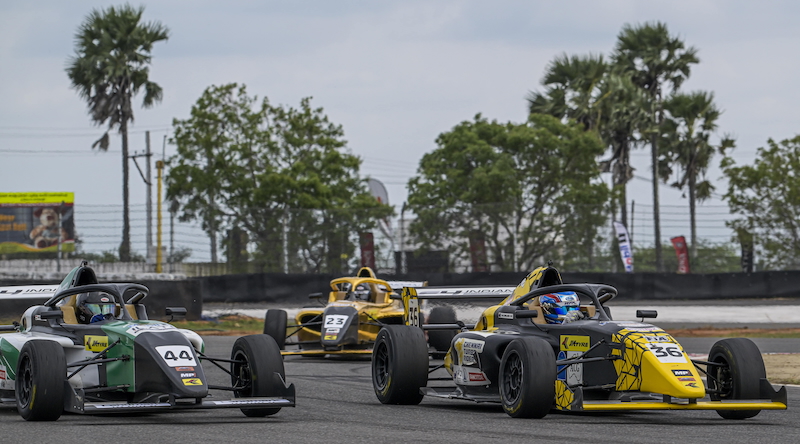
    COIMBATORE:  The Indian Racing Festival (IRF) – the country’s most ambitious motorsport showcase – tears off the starting grid this weekend at the Kari Motor Speedway, Coimbatore, promising a heady mix of raw pace, engineering finesse and fierce competition. Across 16–17 August, fans will witness three of India’s top championships sharing one high-octane stage: the franchise-led Indian Racing League (IRL), the FIA-certified Formula 4 Indian Championship (F4IC) and the FLGB4 class from the 28th JK Tyre FMSCI National Racing Championship.

    The 2025 festival stretches over five race weekends across established circuits and select street tracks, pulling Indian motorsport closer to the global mainstream. It is as much a celebration of driving talent as it is of the deep bench of mechanics, engineers, data analysts and strategists who turn precision into performance.

    This year’s IRL grid – a six-franchise, mixed-gender format – was set through the league’s first-ever official drivers’ draft in Mumbai. The process delivered a potent mix: international veterans, rising Indian stars and female racers competing on equal terms. Teams such as Speed Demons Delhi, Hyderabad Black Birds and Chennai Turbo Riders will campaign Wolf Thunder GB08 prototypes powered by Aprilia RSV4 1.0-litre engines producing 201 HP, capable of touching 290 km/h.

    F4IC, the FIA-recognised feeder series, offers a rare chance for domestic drivers to earn FIA Super Licence points without leaving the country. Competitors will pilot the latest Mygale Formula 4 Generation 2 chassis fitted with Alpine engines prepared by Oreca – a platform designed to sharpen racecraft while meeting the highest global safety standards.

    Anchoring the grassroots end is FLGB4, India’s longest-running national racing category. Powered by 1300cc Suzuki Swift engines and now in its 28th year, it has been the proving ground for names like Narain Karthikeyan, Karun Chandhok and the Maini brothers. The 21-driver grid features multi-team rivalries, from Sarosh Hataria’s Team Ahura Racing to Armaan Ebrahim’s MSport.

    “Coimbatore has always been a key pillar of Indian motorsport – from grassroots karting to professional racing,” said Racing Promotions Pvt Ltd chairman and managing director Akhilesh Reddy. “The competitive bar is higher than ever, but what excites me most is the depth of the ecosystem – from race engineers to pit crews – ensuring racing that is fast, precise, safe and world-class.”

    The festival will be broadcast live on Star Sports Select 2 and JioHotstar, with Round 2 heading to the Madras international circuit from 22–24 August, followed by further rounds in October and November.

    With FIA points on the table, a mixed-gender franchise league and a national championship under one banner, IRF 2025 is not just starting its engines – it is accelerating India’s push into the global motorsport slipstream.

  • RED FM sweeps Indian Radio Forum Awards yet again

    RED FM sweeps Indian Radio Forum Awards yet again

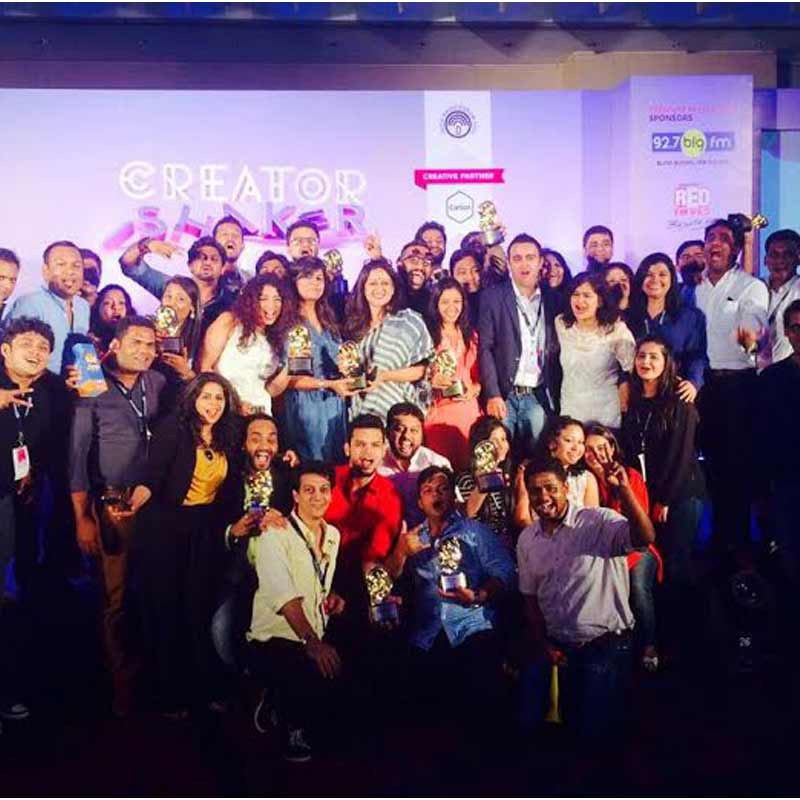
    MUMBAI:  Red FM 93.5 added several more feathers to its cap last evening at the prestigious India Radio Forum by winning 13 awards across5 different categories. The esteemed ‘Excellence in Radio Awards’ by India Radio Forum celebrates the very best of Indian radio, by honouring innovative and creative programming, popular on-air personalities, outstanding marketing & promotional activities within the fraternity. This year also marked Red FM’s 11th year partnering with IRF as Premium Presenting Partners

    Marking another remarkable year of creating impact in the industry, Red FM was honoured with multiple awards. Red FM Delhi’s famous Bauaa was bestowed as Best Radio Sparkler of the year. Red FM Pune’s Morning No.1 show was honoured as the Best Radio Program (Marathi). While Red FM Mumbai’s Morning No.1 and Suryam FM’s Blade No.1shows took away the Best Breakfast Program award in Hindi and Tamil categories respectively. Red FM Hyderabad’sZabardasth Masthi was recognized as Best Program (Non-Breakfast) in Telugu category. Red FM came out shinning with four of the RJs receiving RJ of the year awards. RJ Blade Shankar from Suryan FM Chennai, RJ Dhrumil from Red FM Rajkot, RJ Sowmya from Red FM Kochi and Red FM Pune RJ Sangram stole the limelight with RJ of the year trophy in Tamil, Gujarati, Malayalam and Marathi categories respectively. Red FM Mumbai’s popular show Special 26, Red FM Hyderabad’s Red FM Sankranthi and Red FM Mysore’s Pani to Police initiative were well recognized for Best Radio Promo (In-house) in Hindi, Telugu and Kannada category. Red FM Delhi’s famous social initiative – ‘Himmat Ki Kimat Delhi’ was conferred the Best Community Service Award.

    Speaking about IRF and the Excellence Awards, an elated Nisha Narayanan, COO, Red FM said, “It is a moment of immense pride for Team Red FM.  In a constantly evolving and challenging industry scenario, being recognized for creativity, innovation and clutter breaking campaigns is an encouraging impetus. We have aggressive plans for the coming year both in programming and marketing and listeners in each of our stations can look forward to some great listening experiences.”

    The Indian Radio Forum is an annual one-day event that presents and discusses latest industry developments and issues and challenges. This year, the theme of discussion was dedicated to the revolution of on-air marketing, boosting radio relevance and amplifying the bond between sound and soul. Red FM being the Premium Presenting Sponsor at IRF, the session began with an opening address by Rajat Uppal, National Marketing Head at Red FM. He spoke about the importance of creating strong business and financial structures and building an engaging brand by creating content on digital. Nisha Narayanan, COO – Red FM moderated the panel discussion on “Radio Selling beyond FCT”; a session that discussed the benefits of collectively using the powers to widen the horizons for Radio in India. 

  • RED FM sweeps Indian Radio Forum Awards yet again

    RED FM sweeps Indian Radio Forum Awards yet again

    MUMBAI:  Red FM 93.5 added several more feathers to its cap last evening at the prestigious India Radio Forum by winning 13 awards across5 different categories. The esteemed ‘Excellence in Radio Awards’ by India Radio Forum celebrates the very best of Indian radio, by honouring innovative and creative programming, popular on-air personalities, outstanding marketing & promotional activities within the fraternity. This year also marked Red FM’s 11th year partnering with IRF as Premium Presenting Partners

    Marking another remarkable year of creating impact in the industry, Red FM was honoured with multiple awards. Red FM Delhi’s famous Bauaa was bestowed as Best Radio Sparkler of the year. Red FM Pune’s Morning No.1 show was honoured as the Best Radio Program (Marathi). While Red FM Mumbai’s Morning No.1 and Suryam FM’s Blade No.1shows took away the Best Breakfast Program award in Hindi and Tamil categories respectively. Red FM Hyderabad’sZabardasth Masthi was recognized as Best Program (Non-Breakfast) in Telugu category. Red FM came out shinning with four of the RJs receiving RJ of the year awards. RJ Blade Shankar from Suryan FM Chennai, RJ Dhrumil from Red FM Rajkot, RJ Sowmya from Red FM Kochi and Red FM Pune RJ Sangram stole the limelight with RJ of the year trophy in Tamil, Gujarati, Malayalam and Marathi categories respectively. Red FM Mumbai’s popular show Special 26, Red FM Hyderabad’s Red FM Sankranthi and Red FM Mysore’s Pani to Police initiative were well recognized for Best Radio Promo (In-house) in Hindi, Telugu and Kannada category. Red FM Delhi’s famous social initiative – ‘Himmat Ki Kimat Delhi’ was conferred the Best Community Service Award.

    Speaking about IRF and the Excellence Awards, an elated Nisha Narayanan, COO, Red FM said, “It is a moment of immense pride for Team Red FM.  In a constantly evolving and challenging industry scenario, being recognized for creativity, innovation and clutter breaking campaigns is an encouraging impetus. We have aggressive plans for the coming year both in programming and marketing and listeners in each of our stations can look forward to some great listening experiences.”

    The Indian Radio Forum is an annual one-day event that presents and discusses latest industry developments and issues and challenges. This year, the theme of discussion was dedicated to the revolution of on-air marketing, boosting radio relevance and amplifying the bond between sound and soul. Red FM being the Premium Presenting Sponsor at IRF, the session began with an opening address by Rajat Uppal, National Marketing Head at Red FM. He spoke about the importance of creating strong business and financial structures and building an engaging brand by creating content on digital. Nisha Narayanan, COO – Red FM moderated the panel discussion on “Radio Selling beyond FCT”; a session that discussed the benefits of collectively using the powers to widen the horizons for Radio in India. 

  • IRF 2013: James Cridland: Indians love their radio II

    IRF 2013: James Cridland: Indians love their radio II

    This is the second part of the excerpts/summary of radio futurologist James Cridland’s session on “How People Are Listening to Radio in Today’s Multiplatform World – and what your station needs to do about it” at the recently concluded International Radio Festival 2013 in Zurich (IRF 2013) by The Indian Television Dot Com Pvt. Ltd. South India Head Tarachand Wanvari. You can read the first part here: IRF 2013: James Cridland: Indians love their radio.

    “In Norway, a little piece of research was done where a man called Gunnar listened to internet radio on a full battery charge of his exciting Android device. He got six hours 53 minutes worth of radio streaming on 3G through his mobile phone until his battery ran down. He used it for nothing else, just streaming and then you look at how much he got in terms of FM – he got 48 hours out of the same battery. FM on mobile is a pretty good thing as compared to radio on mobile phone internet on the same device,” opined Cridland.

    “My definition of radio is a live simulcast, Pandora is a not a radio station. My definition of approved mobile phones is that they are a little more than a transmitter-receiver which put the cord in touch with the personalised operator who dials up the number you want and then connects your remote radio extension with the rest of the telephone network.”

    Who is using mobile phones to tune in to radio?

    “In the UK, there is a growth of adult population from a little more than 10 per cent in 2010 to 20 per cent now. If you look at young people then it is considerably higher from about 30 per cent in 2010 to about 40 per cent. Radio on the mobile is definitely a young person’s thing and that’s good news for the future of radio because younger people are by and large tuning into less radio than they ever have. Over 50 per cent of the adults in the UK own smart phones and that number is similar for most other European countries.”

    “They are listening to FM mobile radio on their mobile phones by streaming. Back in 2010, 53 per cent of the listeners tuned into FM on their mobile phones, while 16 per cent ran a branded radio ad from a radio station. If only Apple would listen and included radio into its iPhones, there would be a lot more.”

    “There are discussions in the US about many mobile phones not having FM radio. Many of the US mobile cell operators don’t want to put FM radio into phones because they sell bandwidth and they think its competing. That is a perception that is changing there, partially because of the work that Next Radio has been doing. Now you find less and less mobile phone companies deliberately taking out the FM from phones. I don’t really understand why Apple has not put FM into the iPhone.  One story that I have heard is that Apple do not consider the user experience of FM on a mobile phone to be good enough.”

    Apple v/s Android

    “53 per cent of the mobile applications downloads are happening on the Apple iPhone and 31 per cent on Android devices because most of the Android devices are of poor quality and cheap. So people are not installing too many apps on their Android phones.”

    “In terms of usage in the US, they say that Apple and Android have very similar usage patterns, but Android delivers more users on the apps. Apple delivers more average time spent listening, almost twice the amount of time spent on listening.”

    “I talked to a few research companies about this and one of them said that probably because Apple phones are premium, and are likely to be in peoples’ pockets while they are at work and they are more likely to be at work in an office with Wifi. Androids, which are sometimes cheaper and might be used by construction workers or people who are not necessarily in the office and do not have as much access to Wifi.”

    Understanding the listening habits

    “UK listeners tune into radio for roughly three hours per day across all platforms.  I asked three different mobile phone app manufacturers how long people tune into the radio through their mobile phone? One came back and said 12 minutes 46 seconds. Another one came and said its between 12 and 16 minutes and the third one came back and said that it depends and could be anywhere between 14 to 45 minutes.”

    “But when you look at other research for example O2, one of the large mobile companies in the UK, they say that 15 minutes a day is spent listening to music.”

    “It is interesting to know what’s happening in the Indian market now, because it’s exploding with the amount of new commercial licenses, India has been relatively late in getting 3G as well, so what will that do in terms of consumption of media as a whole? India is very different in terms of culture of music and news and everything else.”

    “As I have said earlier, radio has a future in India because 94 per cent of the listeners in Mumbai who tune into radio do on a mobile phone; only 16 per cent is on radio receiver. By the way all of this is FM, and it’s a really very amazing thing.”

    “Absolute Radio published figures for July 2013- they have 232,000 active users that use 1,040,000 app sessions per month which means that people are using their mobile phone apps once a week, which probably means 15 minutes a week. Now, we listen to 23 hours of radio a week and 15 minutes of that is through a mobile device and it could be potentially quite expensive for people as well in terms of data and bandwidth. In the UK, 26 TB of radio a month is steamed over mobile.”

    Where are people tuning in on mobile phone?

    “In Germany they call the mobile phone ‘Handy’, I think that’s a brilliant name. In the UK, the European Union and Australia, 70-75 per cent of the listening requests are on Wifi of which 25 per cent is over 3G. That shows where people are actually tuning in.”

    When to advertise Mobile Apps?

    “If you want to know when to advertise your apps – advertise them at the end of the week because most people will install them on a Sunday when they have the time to do that.”  “Here is some research -What do people do with their mobile phones? The first thing that they do is to change the background.  Secondly is click on sponsors and ads, which is really surprising.”

    Here are a few takeaways that I have:

    (1)    The majority of app users are not ‘mobile’ but on Wifi at home or at work.

    (2)    Usage is similar to a spare radio when you don’t have anything better – not a replacement to a radio receiver.

    (3)    Apps may increase audience recall of your brand (because of app on home screen) but unlikely to have a massive effect on audience figures right now. Having your radio station logo is going to do very good things to your audience figures.

    (4)    Advertising on them appears to work; but it simply hides the app. Time to add more to your app than just audio? I think you can earn quite significantly from that.

    (5)     Consumers want FM (and HD and DAB+) chips on their phones because that will save them battery life, save them bandwidth and a variety of other things.
    “Even if we get all this stuff, you also have to remember content, because without the content, we won’t make our audiences smile,” concluded Cridland.

  • IRF 2013: James Cridland: Indians love their radio II

    IRF 2013: James Cridland: Indians love their radio II

    This is the second part of the excerpts/summary of radio futurologist James Cridlands session on “How People Are Listening to Radio in Today’s Multiplatform World – and what your station needs to do about it” at the recently concluded International Radio Festival 2013 in Zurich (IRF 2013) by The Indian Television Dot Com Pvt. Ltd. South India Head Tarachand Wanvari. You can read the first part here: IRF 2013: James Cridland: Indians love their radio.

    In Norway, a little piece of research was done where a man called Gunnar listened to internet radio on a full battery charge of his exciting Android device. He got six hours 53 minutes worth of radio streaming on 3G through his mobile phone until his battery ran down. He used it for nothing else, just streaming and then you look at how much he got in terms of FM – he got 48 hours out of the same battery. FM on mobile is a pretty good thing as compared to radio on mobile phone internet on the same device, opined Cridland.

    My definition of radio is a live simulcast, Pandora is a not a radio station. My definition of approved mobile phones is that they are a little more than a transmitter-receiver which put the cord in touch with the personalised operator who dials up the number you want and then connects your remote radio extension with the rest of the telephone network.

    Who is using mobile phones to tune in to radio?

    “In the UK, there is a growth of adult population from a little more than 10 per cent in 2010 to 20 per cent now. If you look at young people then it is considerably higher from about 30 per cent in 2010 to about 40 per cent. Radio on the mobile is definitely a young person’s thing and that’s good news for the future of radio because younger people are by and large tuning into less radio than they ever have. Over 50 per cent of the adults in the UK own smart phones and that number is similar for most other European countries.”

    “They are listening to FM mobile radio on their mobile phones by streaming. Back in 2010, 53 per cent of the listeners tuned into FM on their mobile phones, while 16 per cent ran a branded radio ad from a radio station. If only Apple would listen and included radio into its iPhones, there would be a lot more.”

    “There are discussions in the US about many mobile phones not having FM radio. Many of the US mobile cell operators don’t want to put FM radio into phones because they sell bandwidth and they think its competing. That is a perception that is changing there, partially because of the work that Next Radio has been doing. Now you find less and less mobile phone companies 

    deliberately taking out the FM from phones. I don’t really understand why Apple has not put FM into the iPhone.  One story that I have heard is that Apple do not consider the user experience of FM on a mobile phone to be good enough.”

    Apple v/s Android

    “53 per cent of the mobile applications downloads are happening on the Apple iPhone and 31 per cent on Android devices because most of the Android devices are of poor quality and cheap. So people are not installing too many apps on their Android phones.”

    “In terms of usage in the US, they say that Apple and Android have very similar usage patterns, but Android delivers more users on the apps. Apple delivers more average time spent listening, almost twice the amount of time spent on listening.”

    “I talked to a few research companies about this and one of them said that probably because Apple phones are premium, and are likely to be in peoples’ pockets while they are at work and they are more likely to be at work in an office with Wifi. Androids, which are sometimes cheaper and might be used by construction workers or people who are not necessarily in the office and do not have as much access to Wifi.”

    Understanding the listening habits

    “UK listeners tune into radio for roughly three hours per day across all platforms.  I asked three different mobile phone app manufacturers how long people tune into the radio through their mobile phone? One came back and said 12 minutes 46 seconds. Another one came and said its between 12 and 16 minutes and the third one came back and said that it depends and could be anywhere between 14 to 45 minutes.”

    “But when you look at other research for example O2, one of the large mobile companies in the UK, they say that 15 minutes a day is spent listening to music.”

    “It is interesting to know what’s happening in the Indian market now, because it’s exploding with the amount of new commercial licenses, India has been relatively late in getting 3G as well, so what will that do in terms of consumption of media as a whole? India is very different in terms of culture of music and news and everything else.”

    “As I have said earlier, radio has a future in India because 94 per cent of the listeners in Mumbai who tune into radio do on a mobile phone; only 16 per cent is on radio receiver. By the way all of this is FM, and it’s a really very amazing thing.”

    “Absolute Radio published figures for July 2013- they have 232,000 active users that use 

    1,040,000 app sessions per month which means that people are using their mobile phone apps once a week, which probably means 15 minutes a week. Now, we listen to 23 hours of radio a week and 15 minutes of that is through a mobile device and it could be potentially quite expensive for people as well in terms of data and bandwidth. In the UK, 26 TB of radio a month is steamed over mobile.”

    Where are people tuning in on mobile phone?

    “In Germany they call the mobile phone ‘Handy’, I think that’s a brilliant name. In the UK, the European Union and Australia, 70-75 per cent of the listening requests are on Wifi of which 25 per cent is over 3G. That shows where people are actually tuning in.”

    When to advertise Mobile Apps?

    “If you want to know when to advertise your apps – advertise them at the end of the week because most people will install them on a Sunday when they have the time to do that.”  “Here is some research -What do people do with their mobile phones? The first thing that they do is to change the background.  Secondly is click on sponsors and ads, which is really surprising.”

    Here are a few takeaways that I have:

    (1)    The majority of app users are not ‘mobile’ but on Wifi at home or at work.

    (2)    Usage is similar to a spare radio when you don’t have anything better – not a replacement to a radio receiver.

    (3)    Apps may increase audience recall of your brand (because of app on home screen) but unlikely to have a massive effect on audience figures right now. Having your radio station logo is going to do very good things to your audience figures.

    (4)    Advertising on them appears to work; but it simply hides the app. Time to add more to your app than just audio? I think you can earn quite significantly from that.

    (5)     Consumers want FM (and HD and DAB+) chips on their phones because that will save them battery life, save them bandwidth and a variety of other things.

    “Even if we get all this stuff, you also have to remember content, because without the content, we won’t make our audiences smile,” concluded Cridland.

  • IRF 2013: James Cridland: Indians love their radio

    IRF 2013: James Cridland: Indians love their radio

    James Cridland is a radio futurologist and managing director of Media UK and Radio DnS. He was the Digital Media Director for Virgin Radio in London in 2001; in 2007 he joined the BBC to work on the BBC iPlayer for Radio; he also worked at PURE, Audioboo, UK Radioplayer. He is a trustee of the Radio Academy, and sits on the International Radio Festival Advisory Board.

    At the recently concluded International Radio Forum (IRF 2013) at Zurich, Cridland had a session on “How People Are Listening to Radio in Today’s Multiplatform World – and what your station needs to do about it.” This is part I of a two part summary of Cridland’s session by The Indian Television Dot Com Pvt. Ltd. group South India Head Tarachand Wanvari. Excerpts:
    New Broadcast Format

    Cridland began by saying,”Let us talk about how people are tuning into radio in today’s world. There is the internet, FM and AM, there is a new broadcast format – DAB+ or HD radio and then radio broadcast through the TV that is strongly visible in a many of countries. The UK is one of the countries that broadcast radio in all the four formats like most European countries. In terms of popularity, FM is first; internet is the third most popular in terms of number of people tuning into live radio, but it’s alongside TV as well.”

    Cridland revealed that based on the latest figures, for the first time ever in the UK’s radio history internet streaming of radio stands way above radio over TV. “This counts anything and everything that anybody classifies as being a radio station. This is from a pretty robust census survey. We have noticed something interesting here, FM radio is broadcast radio, TV is broadcast, DAB is broadcast, as is HD and there is a real story here in terms of the continuing strength of broadcast.”

    However, Cridland admitted that both AM and FM have seen slow decline over the last five years while DAB in the UK has had a slow increase as have TV and internet radio, but the last two were still very small.

    “There is an awful lot of talk about how internet radio is the future of radio. The reality right now is that internet is a quite small part of radio consumption at present. But no predication can be made for next 5-10 years. Right now broadcast is preeminent in terms of radio consumption,” said Cridland.

    “In the UK, only 20 per cent of radio listening is in car, DAB is pre-installed in 33 per cent of all new cars. In the UK we have no pure play radio stations that are internet only. One of the reasons is a very strong public service broadcaster (BBC), and also the music rights in the UK are expensive”, said Cridland.

    “The US is quite different, where comparatively, 50 per cent of all radio listening is in cars. Pandora is preinstalled in a third of all new cars, and if it were a radio station. It would have a seven percent of the market share in the US. Over fifty percent of Pandora’s consumption is on mobile. HD radio is preinstalled in thirty percent of all new cars and Sirius XM is pre-installed in a number of new cars, but a majority of people actually don’t buy the service once the free period lapses”, further revealed Cridland.

    Comparing the various landscapes

    “Actually when you start looking at the US for radio consumption, then it is very different, because the US has a very different media landscape. HD radio works brilliantly in the US. It should work brilliantly in Canada and in Mexico as well,” said Cridland.

    “In the UK, the owners of the radio ratings service are all radio stations. The same happens in Belgium in France and across most of Scandinavia. The US is a very competitive radio market and all the players don’t work together. That’s why, HD, a good protective technology works brilliantly for the US and fits in with the differences in media consumption there. “

    “In Europe it is a different story and in India too it’s even more different. In India, they love their radio. Radio has a future there because 94 per cent of the listeners in Mumbai tune into radio on mobile phone, only 16 per cent on radio receiver. So radio consumption is very different, depending on where you go across the world,” said Cridland.

    New broadcast platform

    Cridland said, “New broadcast platforms create choice. You can see that if you are a program maker, all of a sudden there is a bunch of additional choices that you can actually have. Loads of additional choice is great news if you are making content because it means that there are more places that want to buy and air your content that enables you to be heard by more people”
    “You can see that all of a sudden we have radio stations for specific niches. Planet Rock is one good classic example of a Rock station that never gets onto FM. Then a religious radio, Premiere Christian Radio and the United Christian Broadcasters; we have got additional music choice from services such as Absolute Radio which is actually growing their business and additional the public service broadcasters business as well.”

    Taking a quick look at broadcast versus internet, Cridland said, “I believe podcasting and on-demand content is where radio has headed. On-demand is a great way of getting more people tuning in, but we can only forget about the power of live radio at our peril.”

    Countries exploring new broadcast platform

    “There are a number of examples where internet and broadcast are working together. For example, Kronehit -a CHR station in Austria. They have a bunch of additional services online-from Kronehit Love which plays love songs to Kronehit Balkan Bees, because they have a lot of people from the Balkans who’ve moved over into Austria so they have produced a radio station especially for them. They can’t do this on FM because they can’t get additional licenses, but they can do it on things like DAB+ and on the internet world, and they also have their own personalised music,” informed Cridland.

    “Similarly if we go to Australia, Southern Cross Austereo- one of the largest radio groups in the world broadcast has a bunch of radio stations across Australia in FM, AM and DAB+. They also have Songl which is their equivalent of Spotify,” added Cridland.

    “In Turkey – Spectrum Medya runs a bunch of radio stations. You have to register if you wish to listen to those radio stations online. Once you have registered then the ad-breaks online contain specific advertising for your type of demographics. It is a great way of making additional revenue, but only possible on the internet,” opined Cridland.

    “In the US there’s a company called Entercom that runs a bunch of radio stations. They work with a company that helps them sell advertising online for which you don’t need to register. All you have to do is to visit their websites and listen. They have teamed up with a company that knows the websites that you have been to. So,if a person has booked a flight to New York, they’ll give him an ad for hotels in New York. It is a great way of earning more cash from your advertiser,” felt Cridland.

    “The cost of broadcasting on the internet to a larger audience is significantly more than broadcasting over FM or HD or DAB+. There is a pretty low threshold where the internet suddenly becomes quite expensive. I am not saying that internet is a bad thing. In fact, internet and broadcast do work together really well, but it is going to be a long time before internet gets even to twenty percent of the listeners” revealed Cridland.

    Elaborating further on the way radio and internet work together, Cridland said, “The States have really cracked this. There’s Nextradio, it uses FM to get the audio from an FM station with a ludicrous name of Hack FM and it is using the internet to get additional information on a mobile device. One can click to play this song and click to get more information and more actions such as sharing and liking. All of this is available through HD radio.”

    “Analogue FM will never die out. It’s a noble aim for any country to try and phase out FM, I can’t see it happen. If I was a pirate radio broadcaster, I’d be rubbing my hands in glee at that prospect. FM does a great job if you can get an FM license.”

    Radio receivers

    “The problem is that radios are rubbish. In a typical radio, when you turn it on, it asks you if you want FM radio or DAB+ or do you want internet radio. It is almost as if it is a set of different radios in one unit sharing one speaker and they all work differently which is bizarre. The TV industry has completely got the user experience sorted out.”

    Speaking on standards on radio receivers, Cridland said that there were no standards. If someone was to buy an FM radio in the US and brought it to Europe, it wouldn’t pick up half the radio stations and the ones that it did pick up would sound rubbish. In Japan, European FM radio would probably pick up half the radio stations there, they used a different waveband. Cridland said that AM works differently in the US as compared to Europe. There were no worldwide standards. “We need to have a continental standard, and the continental standard for Europe is DAB+, and a DAB radio stations is also available on a DAB+ receiver.”

    (Part II, about how people are listening to radio on the mobile, will be published soon…)