Tag: Iraq War

  • BBC poll ranks Iraq War, Tsunami as the most significant events of 2005

    BBC poll ranks Iraq War, Tsunami as the most significant events of 2005

    MUMBAI: A poll of 32,439 people from 27 countries was conducted for the BBC World Service by the international polling firm GlobeScan together with the Program on International Policy Attitudes (Pipa) at the University of Maryland. They were asked “In the future, when historians think about the year 2005, what event of global significance do you think will be seen as most important?” Without prompting, the most common answers were the war in Iraq, the Asian tsunami, and the hurricanes (Katrina and Rita) in the US.

    The war in Iraq was volunteered as the most significant event by 15 per cent worldwide. Not surprisingly, this was especially prominent among Iraqis with 43 per cent citing it. It was also relatively high in South Korea (31 per cent), Spain (28 per cent), the US (27 per cent), and Turkey (26 per cent). Given that the UK has troops on the ground in Iraq, it is surprising that only nine per cent of Britons mentioned the war there as the most important event.

    The other most widely mentioned event of 2005 was the Asian tsunami, volunteered by 15 per cent worldwide. Not surprisingly, respondents from Asia-Pacific countries remembered it most—Sri Lanka (57 per cent), Indonesia (31 per cent), Australia (27 per cent), South Korea (24 per cent) and the Philippines (21 per cent). But 28 per cent of South Africans mentioned it as well.

    The US hurricanes—Katrina and Rita—were mentioned by nine per cent worldwide. Curiously, Americans were not the highest. While 15 per cent of Americans cited it as the most significant event, larger percentages were found in Afghanistan (18 per cent) and Argentina (18 per cent).

    The death of Pope John Paul II and the inauguration of Pope Benedict XVI was the fourth most widely cited event. Worldwide, 6 percent volunteered this as the most important event of the year. Much of this came from several Catholic countries, where very large percentages cited it, especially Poland (48 per cent), but also Italy (17 per cent). Large percentages also cited it in the Congo (29 per cent) and Kenya (10 per cent).

    The London bombings were seen as the most significant event by four percent overall. Interestingly, among Britons, only seven per cent mentioned the London bombings, while in Indonesia, 48 percent mentioned the Bali bombings. The London bombings also figured more prominently among Ghanaians (11 per cent) and Australians, South Koreans, and the Spanish (eight per cent each) than among the British.

    Global warming figured prominently in the thinking of 3 percent who cited the earth getting warmer or the international negotiations related to climate change as the most significant event of the year. Concerns about global warming were especially high in Mexico (13 per cent), Finland (11 per cent), Great Britain (10 per cent), Canada (eight per cent), and India (eight per cent).

  • French rival to BBC, CNN gets EC clearance

    French rival to BBC, CNN gets EC clearance

    MUMBAI: The European Commission gave its go-ahead on Tuesday to plans for a French international television news network to rival the BBC and CNN.

    The French International News Channel (CFII) is a joint operation between state broadcaster France Television and the the private channel TF1, with the government providing 30 million euros ($48.21 million) to get it started.

    The EC, according to agency reports, has stated that although the project involved state aid, the possibility of the channel being authorised as a project financing a service of general economic interest cannot be ruled out.

    The commission also concluded that the project offered sufficient guarantees against the risk of distortion of competition, for example by preventing unjustified transfers of public funds to France Television and TF1, who will be shareholders in the future channel.

    French President Jacques Chirac championed the idea of the new network during the diplomatic spat with the United States in the run-up to the Iraq war.

    He was said to be unhappy with the way French policies were presented on international stations such as Britain’s BBC World and the US-based CNN.

    The programmes will mostly be in French, although English and other languages would also be used, and, though they would be beamed to several countries, they will not be seen in France itself – limiting the attraction for French advertisers.

  • Increased presence at MIPDOC 2005

    Increased presence at MIPDOC 2005

    CANNES: Reed Midem’s two-day documentary market that precedes the annual MipTV in sunny Cannes this weekend continues to prosper with an increasing presence over preceding years.

    The total companies registered for the event have gone up from 357 in 2004 to 374, a five per cent increase, while the total companies represented too has gone up from 53 last year to 59 last year. The total number of participants, say officials at the Noga Hilton Hotel on the Croissette, where the market is held, has also registered an increase – from 579 in 2004 to 679 this year, a rise of 17 per cent.

    Among the first-time companies at the market this year are Argentina, Estonia, Iceland, Iran, Jordan, Kuwait, Latvia, New Zealand, Ukraine and Vietnam.

    The top 10 programmes listed at the MIPDOC, according to officials, have come from France, USA, Canada, the UK, Germany, Italy, Denmark, Australia, Spain and the Netherlands.

    POPE JOHN PAUL II, IRAQ WAR, OSAMA HOT TOPICS

    Hot shows this year revolve around Pope John Paul II, the Iraq war, Osama bin Laden, Hitler, the environment and animal life. History and civilisation have the most documentaries, comprising a whopping 20 per cent of the whole. A significant 18 per cent of the documentaries presented focus on current affairs, 14 per cent on art, music and culture, nine per cent on science and knowledge. Eight per cent of the shows revolve around nature and wildlife. The number of programmes presented too has gone up to 1,053 from 1,031 last year, while the number of new programmes this year is 599, as against 580 last year.

  • CNN documentary marks anniversary of Iraq war

    CNN documentary marks anniversary of Iraq war

    MUMBAI: One year after the US invaded Iraq searching for weapons of mass destruction, CNN has announced a documentary on the subject. CNN correspondent Nic Robertson returns to take the pulse of a nation still coming to terms with life without Saddam Hussein.
    His documentary is titled Hope and Fear: Journeys in the New Iraq and forms a focal part of a week of coverage on CNN International marking the first anniversary of the Iraq war.
    The show airs on 27 March at 6:30 pm with repeats on 28 March at 10:30 am and on 31 March at 6:30 pm.
    Robertson looks at the daily lives of six individuals who face the traumas and successes of life in post-war Iraq. The group includes an American soldier, a Baghdad police officer, a Shiite widow, a Shiite cleric and a Kurdish entrepreneur. CNNs anniversary coverage also includes on-the-ground reports from CNN correspondents Walter Rodgers and Jane Arraf on the challenges and successes of building a new Iraq.
    On 30 June, the US plans to return sovereignty to the Iraqis. This documentary thus comes at a critical threshold in that country’s history. In the documentary through the eyes of the six characters, Robertson perceives much anger among Iraqis since liberation has given way to occupation. Many are also apprehensive that persistent violence and the arrival of international terrorism in Iraq will kill any prospect of stability.

  • Former CNN chief named MSNBC head

    Former CNN chief named MSNBC head

    MUMBAI: Former CNN chief and veteran ABC executive Rick Kaplan was named president of MSNBC, on Tuesday. The announcement seems like latest effort in a bid to revive the struggling No. 3 cable news channel.

    Kaplan replaces Erik Sorenson, who has run MSNBC since August 1998 as general manager and who will now join the news division of parent network NBC, says a media report.

    Kaplan’s tenure at CNN ended in 2000 with him quitting amid a major management shake-up as CNN’s ratings languished near 13-year low. Kaplan’s appointment puts him in charge of a network that has failed several times to assemble a winning prime-time schedule and has struggled to define itself beside its two larger rivals, Fox News Channel and CNN.

    Kaplan ran CNN’s domestic operations from 1997 to 2000, and then taught at Harvard. In 2003 he returned to ABC News, where he had been a longtime producer, in a senior management role planning coverage of the Iraq war and presidential campaign

  • BBC S.Asia editor gets MBE for Iraq war coverage

    BBC S.Asia editor gets MBE for Iraq war coverage

    MUMBAI: BBC’s South Asia Bureau Chief Paul Danahar has been given one of Britain’s most prestigious awards, the MBE, for services to journalism. The award honours Danahar for his work as BBC’s Baghdad Bureau Chief during the Iraq war where he led a small team of BBC journalists, including correspondent Rageh Omaar. His team had been among the few who stayed on in Baghdad throughout the war to report on the conflict. Danahar had also covered the war for the newsmagazine ‘Outlook’.
     
     
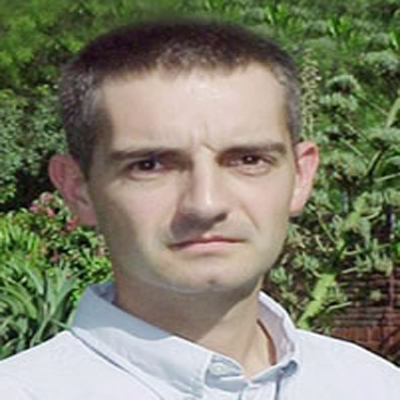
    Paul Danahar
    Speaking about the award Danahar said, “I’m pleased to accept this award on behalf of the BBC team because I think it recognises the importance of journalists being on both sides of conflicts like the Iraq war.”

    BBC News World News Editor Jonathan Baker, on hearing the news, congratulated Danahar saying, “no-one deserves this more than he (Paul) does. His leadership in difficult and dangerous circumstances was outstanding. They (The team) all demonstrated great resilience, professionalism and courage throughout, and it is fantastic to see their efforts recognised and rewarded in this way. Many congratulations to Paul and his team.”

    Paul Danahar is, at present, based in India as BBC’s first-ever South Asia Editor. He will shoulder editorial responsibility for BBC’s entire news operation in India, Pakistan, Sri Lanka, Bangladesh, Nepal, Bhutan, Maldives, Afghanistan and central Asia.

    Danahar’s earlier experience in South Asia includes his stint in BBC as a senior world affairs producer in Delhi between 1996-2000. During that time he covered all the major news in the region, from the Kargil conflict, the coup in Pakistan to the Orrissa cyclone and the Bangladesh floods. He also travelled extensively in Afghanistan during the Taliban era. Danahar then spent two years working for the BBC in Africa, which included coverage of events in Sierra Lone, the Congo, Zimbabwe and South Africa.

    Immediately after the 9/11 attacks Danahar was deployed to work with BBC correspondents – Rageh Omaar and John Simpson, in the run up to the fall of Kabul to American-led forces. He returned to Delhi to take up his present position as Bureau Editor in August 2002.