Tag: IPTV

  • STB cos in India, China enhancing features, providing customised solutions, Technavio enlists top vendors

    STB cos in India, China enhancing features, providing customised solutions, Technavio enlists top vendors

    MUMBAI: The global STB market is characterised by intense competition as the market is saturated in developed countries. The market share of these players is declining because of the entry of new players. The STB companies are enhancing the features of STBs and providing customised solutions to retain their market share.

    Technavio, a technology research and advisory company, has enlisted the top five leading vendors in their recent global set-top box (STB) market report. This report also lists 45 other prominent vendors that are expected to impact the market during 2017–2021.

    There is a high demand for pay-per-channels used by customers who use gateways and multiscreen devices. The ongoing shift to the HD format contributes to the growth of the market. Digitisation in China, India, and Brazil contributes significantly to market growth. The ongoing shift from analogue to the digital platform in China and India has created the demand for HD STBs in these countries.

    Competitive vendor landscape: “The global STB market is characterised by intense competition as the market in developed is expected to be stagnant in future. The market is fragmented owing to the presence of a large number of small players. The entry of new players intensifies competition and reduces the profit margins of other vendors. The players are enhancing the features of STBs and providing customised solutions to retain their market share,” says Ujjwal Doshi, a lead consumer electronics research analyst from Technavio.

    The growth of the global STB market is driven by digitisation that has been taking place in developing countries, such as Argentina, Brazil, China, and India, since 2010.

    ARRIS International: ARRIS International offers STBs, digital video and IPTV distribution systems, broadband access infrastructure platforms, and associated data and voice equipment. The wide portfolio of the company offers end-to-end solutions that offer service providers a variety of choices to customize their approach to IP transition. The company focuses on expanding its product and solutions portfolio through organic development, partnerships, and acquisitions.

    Broadcom: Broadcom offers a range of consumer electronics products including STB, central office broadband access equipment, residential gateways, and stand-alone broadband access modems. Global service providers introduce new technologies and services in STBs such as HD content, transcoding, digital video recording, and increased networking capabilities.

    Pace: Pace provides technology solutions and caters to the subscription-based TV services providers and broadband industries. It offers a wide range of media servers, STB, gateways, software, optical transport and access control network solutions, and highly specialized services.

    Roku: Roku focuses on manufacturing streaming entertainment devices. The first product launched by the company was designed to secure movies from Netflix and feature them on TV with the help of the Internet. The streaming players can be connected directly to the user’s TV and grant access to movies, TV shows, games, music, and extra channels.

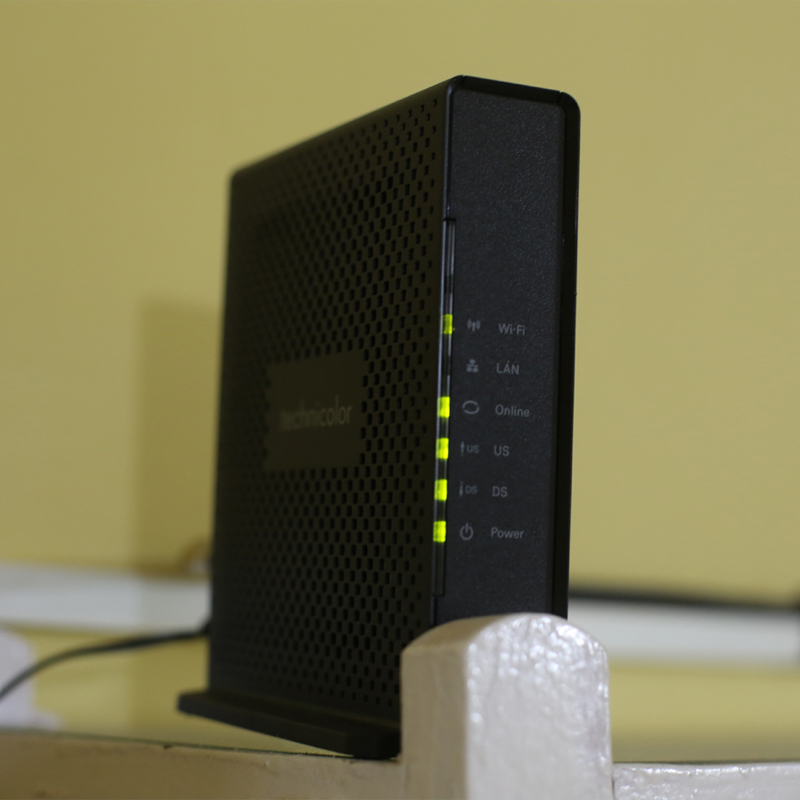
    Technicolor: Technicolor provides production, post-production, and distribution services to content writers, network service providers, and broadcasters. The company offers film processing, visual effects, and animation services along with the manufacture and distribution of digital video disks, Blu-ray disks, STB, and gateways.

    The emerging markets offer opportunities for growth to vendors as the developed countries have reached saturation, according to Technavio. The availability of affordable STBs fuels growth in the market.

    ALSO READ :

    IDOS 2017: Tech needed to integrate different media in a single box

    Dish TV presses HD button; introduces new cardless set top box

    BARC India to TRAI and MIB: Tweak legislation to make data tamper-proof

    TRAI workshop on interoperable STBs later this month


  • India, China focus of report on ‘bundling interactive services with IPTV content delivery’ to accentuate market

    India, China focus of report on ‘bundling interactive services with IPTV content delivery’ to accentuate market

    MUMBAI: Interactive Services are being bundled with Internet Protocol Television (IPTV) content delivery to accentuate market. QYResearchReports.com has announced the addition of a new market intelligence report, titled “Global Internet Protocol Television (IPTV) Market Research Report 2021”.

    The research provides a granular analysis of major factors shaping the consumer demand and preference in various regions such as North America, Europe, and Southeast Asia, with a focus on India, Japan, and China.

    The intensifying demand for services to deliver standard or high-definition television signals over the internet in real time is a key factor driving the evolution of IPTV. The growing popularity of IPTV for streaming media to access TV channels is attributed to several distinct advantages it offers over traditional cable and satellite pay-TV services. Over the past few years, cable operators and satellite broadcasters in developing and developed channels are increasingly using IPTV to provide additional channels to their subscribers. This is a key factor accentuating the market.

    The rising demand for customizable TV content and the pressing need for improving quality of service (QoS) for content providers are key trends expected to stoke the demand for IPTV. The unique advantage of IPTV to subscribers to view programs that they want and at their convenient time is a key factor propelling the demand for IPTV in various parts of the world.

    The growing popularity of video-on-demand (VoD) and time-shifted TV is a prominent trend catalyzing the growth of the IPTV market. Recent advances made in broadband infrastructure in several developing and developed nations and the advent of robust video compression technology are key factors expected to accentuate the IPTV market.

    The ability to bundle a variety of hybrid services with IPTV services is a key factor bolstering their demand across various industries for creating targeted advertising-on-demand video (AVoD). The offering of interactive services has further boosted the IPTV market. In recent years, IPTV has offered exciting avenues for a number of telecommunication companies exploring new revenue streams to improve their profitability in developing and developed nations. The rising internet penetration in several developing economies and the rising adoption of wireless communication technologies are key trend expected to fortify the IPTV market in the foreseeable future.

    However, the lack of viable communication infrastructure in less developed regions is a key factor likely to hinder the growth of the IPTV market. Furthermore, the high cost of setting up dedicated network architecture and platforms for delivering high-quality TV over the internet is a vital factor likely to hamper the adoption in several countries.

    The need for high bandwidth requirement is also likely to hinder the demand in less developed regions. The growing popularity of OTT services in developed regions is also anticipated to negatively impact the market to an extent. Nevertheless, the prominence of wireless-based distribution networks in various developing and developed countries is a key trend expected to create lucrative avenues for market players in the coming years. In addition, the demand for premium content to be delivered over IPTV is gaining significance, thereby unlocking exciting opportunities in various regions.

    Prominent players operating in the OTT market, according to the report, include PCCW Limited, NTT Plala, Neuf Cegetel, Deutsche Telekom, BT Group plc., UTStarcom, Bharti Airtel, AT&T, Orange S.A., Verizon Communications, and China Telecommunications Corporation.

  • Govt steps helping APEJ STB market, global sales may expand at 7.5pc CAGR

    Govt steps helping APEJ STB market, global sales may expand at 7.5pc CAGR

    MUMBAI: Owing to increase in penetration of television and TV services within rural areas as well as urban areas, the set-top box market will receive a boost all across the APEJ region. Disposable incomes are on a rise in India and China, and this is helping the set-top box (STB) market turnover to grow, according to Reportlinker study. In China and India respectively, governments have taken initiatives to focus on HD pictures, HD channels and decline in TV prices. This has led to the growth of the set-top box market in the APEJ region.

    The global set-top box market is estimated to be valued at US$ 22,269 million in 2017 and is projected to reach US$ 46,091 Mn by 2027 end. Sales revenue is expected to increase at a CAGR of 7.5 per cent during the forecast period (2017–2027), the Reportlinker report added.

    Increasing demand for TVs from rural areas boosting the set-top box market in the APEJ region: Due to increase in penetration of television and TV services within rural areas as well as urban areas, the set-top box market will receive a boost all across the APEJ region. In the Asia Pacific region, consumers are more aware about the features, quality and pricing of the set-top box, helping the market achieve greater growth and acceptability.

    Increasing demand for IPTV STBs is fuelling the market for set-top boxes in North America: Increasing demand of 4K TVs is expected to provide support to the growth of the set-top box market in North America. It has been observed that the demand for IPTV based services has increased by 12 per cent and operators are viewing IP-based services as an opportunity to differentiate their products. IP transmission recording features and higher storage specifications are anticipated to support steady revenue growth of the North America set-top box market.

    Domestic production and low-cost products hampering the market growth in APEJ: In the Asia Pacific region, domestic production of set-top boxes by local companies is leading to an increase in price competition with global set-top box manufacturers. Emerging companies are acting as competitors to the established players in the market, thus making the smooth operation of this market difficult.

    Focus on HD videos and powerful interfaces with technology a growing trend in the global set-top box market: It has been observed that set-top box vendors are focussed on supporting devices that enable seamless rendering of high-quality video on a powerful user interface and set-top box vendors have started manufacturing operation systems and app based set-top boxes. The global market is moving towards the 4K android customised set-top box and smart set-top boxes. It has been observed that in the past few years, set-top box manufacturers have shipped a large number of 4K set-top boxes in the APEJ region, and consumers are more aware about the technology and features of set-top boxes in this region.

    Flexible policies and government support encouraging the use of set-top boxes in the APEJ regional market: In November 2015, the Chinese government banned 81 third party apps that allow users to turn television sets into internet streaming devices. The Chinese State Administration of Press, Publication, Radio, Film and Television proposed a rule for governing set-top boxes. In China and India respectively, governments have taken initiatives to focus on high definition pictures, towards HD channels and decline in TV prices. This has led to the growth of the set-top box market in the APEJ region. Manufacturers in this region have also utilised e-commerce retailers such as Alibaba, Ali Express, Amazon, Flipkart etc., and this has propelled the growth of this market.In terms of value, the North America set-top box market is projected to be the most attractive regional market in the global set-top box market during the forecast period

    However, the APEJ market is also poised to register high Y-o-Y growth rates throughout the forecast period. In terms of value, APEJ is anticipated to register a CAGR of six per cent during the forecast period. In 2016, the APEJ market was valued at US$ 6,067.4 Mn and is expected to witness sustained growth in terms of revenue throughout the forecast period.

  • STBs, VoDs & IPTV will soon have high-end TV content via Tata-V-Nova tech

    STBs, VoDs & IPTV will soon have high-end TV content via Tata-V-Nova tech

    MUMBAI: V-Nova Ltd., a leading provider of video compression solutions, and Tata Elxsi, a leading provider of specialised broadcast and communications engineering services, have announced a partnership that enables operators to deploy V-Nova Perseus technology at an accelerated pace.

    – Strategic partnership offers broadcasters and operators unique solutions and know-how for TV delivery to connected devices and set-top boxes.

    – Joint offering leverages Tata Elxsi’s system integration expertise to enhance performance, simplify deployment and reduce operating costs.

    – Customers will benefit from faster time to market with V-Nova Perseus-based solutions.

    Tata Elxsi has already integrated V-Nova’s award-winning technology within the set-top-box (STB) of a satellite TV operator in Europe, enabling rapid deployment and immediate benefits.

    V-Nova Perseus offers the benefits of next-generation codecs, on available encoders and decoders, at the same time providing substantial reductions in processing power requirements. Compatible with Commercial Off The Shelf (COTS) hardware, including both legacy and the latest generation of STBs, PERSEUS provides optimum performance at the operating points that are key for service delivery.

    The benefits are particularly suited to (VoDs) video-hungry services, from HD and UHD TV to social media applications, across all delivery networks. V-Nova Perseus is compatible with existing h.264/HEVC workflows irrespective of DRM, streaming protocol such as HLS and DASH, ad-insertion and other processes.

    Perseus has been deployed in a number of applications, from contribution to IPTV and OTT delivery in multiple countries worldwide.

    V-Nova CEO Guido Meardi said: “Together with Tata Elxsi, we can help operators turbocharge the performance of their services with the rapid deployment of V-Nova Perseus 2 on custom integrations across a wide range of client devices, including legacy and new cable, IPTV and satellite STBs.”

    Using its extensive domain depth, product design and integration expertise, Tata Elxsi will provide fast and reliable delivery of V-Nova PERSEUS-based solutions for broadcasters, Pay TV operators, content owners and video service providers. With a backing of over 25 years of experience in technology, systems integration and consulting, Tata Elxsi can maximize the benefits of the deployment of V-Nova Perseus within operator specific head-ends, ad-servers, cloud environments and set-top-box middleware, while minimizing time to market.

    Tata Elxsi VP and head of broadcast business unit KP Sreekumar said: “V-Nova Perseus 2 is a natural fit for our broadcast and communications clients, and we look forward to work closely together to maximize existing services and enable new use cases.”

    The joint offering, combining the performance of V-Nova Perseus with Tata Elxsi’s know-how, will be readily available to operators and broadcasters looking to maximize the potential of video services across connected devices and set-top boxes.

    ALSO READ :

    Tata Elxsi provides CoE for Airtel Internet TV

    IBC2017: Imagine to show seamless transition to next-gen architecture

    APAC may lead US$ 6-bn b’cast equipment market growth by ’23

    Hotstar tech partner Prime Focus signs deals with Turner & sports broadcasters


  • Broadband: Futuristic policy to deal with communication & entertainment challenges

    NEW DELHI: The communications ministry has initiated a move to relook at the current telecom policy as data is going to drive the industry rather than voice in view of the exponential increase in broadband usage and smartphones which were vehicle of both communication and entertainment.

    The minister Manoj Sinha said over the weekend that this will be done through public consultation, as the need of the hour is to ramp up for the Digital era.

    Sinha said his ministry was dealing with an extremely dynamic industry and progressive market which is evolving at an extremely rapid rate.

    Speaking at the 10th Anniversary Celebrations of IPTV Society here, Sinha said whether it is broadband spectrum, Internet adoption/availability, data protection, or cyber security, what was applicable five years back is no more relevant in today’s context, and new policies will need to be futuristic.

    They will also need to be capable of dealing with India’s challenges and figuring out ways to deal with those challenges, he added.

    The minister said while the buzz today is 4G, the government is already gearing for introduction of 5G. and so “we need to think of and prepare for an ecosystem where Internet of Things (IoT) and Artificial Intelligence (AI) are mainstream, and connectivity is seamless, designed to improve the quality of e-governance and education, as well as to enable financial inclusion, smart cities, and an intelligent transportation system amongst other things”.

    Quoting experts, Sinha said India along with North America, will lead the way in numbers of 5G subscriptions by 2022, and that 5G will speed up the digital transformation in a number of industries, enabling new use cases in areas such as IoT, automation, transport and big data.

    He said broadband is of vital importance to India, as indeed to all customers globally, to ensure digital connectivity as this is the stepping stone to higher productivity as is proven in many developed economies. “It enhances commerce, improves banking facilities, improves administrative facilities and empowers the public as a whole. Broadband development is the cornerstone of Digital India and every Indian and remotest location will be empowered through the Digital India initiative.”

    He lauded the Broadband India Forum for bringing out credible research documents from time to time in the form of white-papers and reports, independently or in combination with reputed research agencies on relevant issues which are of value to all stakeholders and for the future of broadband in India.

    The minister released a paper by Broadband India Forum and ICRIER which he described is of economic significance for the digital economy concerning ICT Applications.

  • 170 TN companies start providing Arasu Net, IPTV plan under way

    MUMBAI: In all 170 Tamil Nadu companies have started providing Arasu internet services in the state. For providing IPTV (Internet Protocol Television) service, a detailed project report was under process.

    Arasu Cable TV had floated expression of interest (EoIs) to become business partners on revenue-sharing basis and about 392 applications were received. At present, 2,577 subscribers use the leased line internet connectivity. Tamil Nadu state government’s proposal to expand internet service connectivity has received a healthy response, PTI reported.

    Directions had been issued to 170 applicants for starting the internet service and about 24,750 households are expected to be provided with the internet service under this initiative.

    The TN government had floated a SPV (special purpose vehicle) ‘Tamil Nadu FiberNet Corporation’ to implement it. Telecom major Vodafone was selected by the Arasu Cable TV Corporation under the open tender process, an IT department policy note said.

    For the sake of cable TV digitisation, a global tender was floated in May for procuring 60 lakh standard and 10 lakh HD (high definition) STBs (set-top boxes). Tenders had been received from various companies and are being scrutinised. The number of cable television connections provided by Arasu rose to 70.52 lakh as of 1 May this year, as compared to 4.94 lakh in 2011.

    Also Read :

    37 new MSOs in 45 days takes total to 1421, seven among 59 cases sub-judice

    Arasu gets a month’s extension to go digital

    Arasu gets provisional MSO licence subject to analogue switch-off in three months

    TRAI keeping watch over Arasu, TN MSO extends digital hardware bids deadline

  • CAS market may reach $ 4.7 bn by ’22, highest growth in A-Pac

    CAS market may reach $ 4.7 bn by ’22, highest growth in A-Pac

    MUMBAI: Conditional access systems (CAS) refer to content security solutions used to restrict unauthorized subscribers from accessing paid digital broadcast services. The Conditional Access Systems (CAS) market is expected to reach US$ 4.73 billion by 2022, a TMR study found.

    Content security using CAS is achieved by encrypting/scrambling digital signals while broadcasting and then decrypting them at the user’s (authorized) end. Conditional access systems, also referred to as revenue security solutions, are mounted on set-top boxes or other receiving devices at the subscribers’ end. Conditional access systems are the most significant components used by service providers for protection against revenue loss.

    The most significant factor responsible for conditional access systems market growth is the rising penetration of digital/pay television, globally. Apart from pay televisions, CAS are also used for content protection in digital radio broadcast, internet protocol television (IPTV), and other internet-based subscription services.

    The market for conditional access systems is segmented, based on the type of solutions, into smartcard-based CAS and card-less CAS. Smartcard-based CAS are the traditional systems that include additional hardware such as chip/smartcard with embedded conditional access software. This hardware is mounted on the set-top box in order to enable content security by providing access to authorized users. Due to the prolonged existence of smartcard-based CAS, this type of CAS currently has the highest penetration in global conditional access systems market. Card-less CAS, also called as software-based conditional access system, requires no hardware and the software is embedded directly onto the set-top box. The most significant advantage of card-less CAS is their low operating and upgrading costs as compared to smartcard-based CAS. In addition, software-based CAS offer better security against hacking than smartcard-based CAS.

    The global conditional access systems market is also driven by the growing penetration of internet-based services such as internet protocol television (IPTV), on-demand video and others in different geographic regions. The demand for conditional access solutions in these applications is mainly fueled from the developed regions having large penetration of IPTV and on-demand video services. Further, the global conditional access systems market is predicted to witness strong growth due to various advancements in the conditional access solutions. Most of the companies are now focusing on development of advanced solutions such as cloud-based conditional access systems, multi-screen CAS and others.

    The global conditional access systems market is segmented into type of solutions, application and geographic regions. On the basis of solution type, the market is segmented into smartcard-based CAS and card-less CAS. In 2014, the smartcard-based CAS segment accounted for the largest share, in terms of revenue and adoption, in the global conditional access systems market. This was majorly due to the prolonged existence of these solutions in the market. However, the card-less CAS segment is estimated to witness the highest demand during the forecast period.

    This is attributed to high advantages such as low costs, easy upgrading and maintenance offered by these solutions over smartcard-based CAS. Another factor driving the growth of card-less CAS segment is its less susceptibility towards hacking. Furthermore, on the basis of applications, the global conditional access systems market is segmented into television, internet services and digital radio. The global market for conditional access systems was dominated by the television segment in 2014. The highest market share of television segment is attributed to the rapidly growing penetration of digital television worldwide. In addition, the television segment is predicted to hold its dominant position throughout the forecast period due to ongoing digital television transition in countries such as China, India, Brazil, Argentina, Mexico and others.

    In 2014, North America accounted for the largest share of over 31 per cent, in terms of revenue, in the global conditional access systems market. This is due to the high penetration of advanced digital television services such as high definition (HD) television and substantially growing adoption of Ultra HD (UHD) television. However, the global conditional access systems market is estimated to witness the highest growth in Asia Pacific during the forecast period. This is due to the rapidly increasing adoption of digital television in China and South Asia.

    The major companies in the global conditional access systems market include Cisco Systems, Inc., Nagravision SA (Kudelski Group), China Digital TV Co., Ltd., Verimatrix, Inc., Irdeto, Inc., Austrian Broadcasting Services GmbH & Co. KG (ORS Group), Viaccess-Orca (Orange Group), Coretrust, Inc., Latens Systems Ltd., Wellav Technologies Ltd. and Alticast Corporation. The global conditional access systems market is highly consolidated in nature with top three players namely Nagravision SA, Cisco Systems, Inc. and China Digital TV Holding Co., Ltd. accounting for over 70% of the market share. Other important players in this market include Irdeto, Inc., Viaccess-Orca and Verimatrix, Inc.

  • Tripleplay to provide Atlético de Madrid stadium tech solution

    MUMBAI: Tripleplay, a leader in the development of Digital Signage, IPTV and Video Streaming Solutions, has been chosen by Atlético de Madrid to implement its technology at the brand new, 68,000 capacity, Wanda Metropolitano Stadium in Madrid this July.

    Wanda Metropolitano, located in East Madrid, will be one of the most impressive stadia in the world when it is opened in September 2017. It has been designed to be at the forefront of stadium technology and also set to meet the highest standards of visibility, comfort and security for fans.

    In total, there will be over 300 screens of Tripleplay digital signage delivered on LG’s WebOS system-on-chip solution and a further 500 screens of IPTV will be deployed with Tripleplay’s Interactive IPTV Portal. Digital Signage and live TV streams will be delivered throughout the state-of-the-art stadium and will work alongside the venue’s other technology platforms, ensuring that the club has an engaging and modern IP digital media solution.

    Tripleplay GM Europe Carlos Amoros commented, “Tripleplay has deployed its technology at some of the world’s biggest and best known stadia, working with our clients to deliver a solution worthy of their venue. At Atlético de Madrid we will deliver a modern, engaging and professional solution to match the design of the incredible new Wanda Metropolitano Stadium.

    “To be selected for such a prestigious project is a great validation of our solution and again shows why Tripleplay has become the industry’s preferred choice for a professional Digital Signage and IPTV solution.”

    Tripleplay’s Digital Signage and IPTV platform has already been deployed across the globe at venues including Wimbledon AELTA, Twickenham Stadium, Croke Park, Daytona International Speedway and The SSE Arena, Belfast and at Chelsea FC, Spartak Moscow, Manchester City, Chicago Cubs and Fenerbahce SK.

  • Willow TV acquires exclusive US media rights for IPL ’17

    MUMBAI: Willow TV, the primary broadcaster for cricket in North America, has acquired the exclusive media rights in the United States for the VIVO IPL 2017 Twenty20 tournament.

    The IPL (Indian Premier League) is the world’s leading professional cricket tournament, with record-breaking fan attendance and multimedia consumption. Willow previously broadcast the IPL in 2014, at the time setting cricket viewership records in the United States.

    “Willow is delighted to bring exclusive live coverage of the VIVO IPL 2017 to our viewers across television and digital platforms,” said Willow CEO Vijay Srinivasan. “Viewer interest for cricket in the US stands at unparalleled levels, as over 1.4 million households watched the ICC World Twenty20 on Willow in 2016. We look to continue to set new all-time high ratings this year. The IPL is the crown jewel of professional Twenty20 tournaments, and cricket fans in the US are in for a treat when the tournament kicks off on 5 April.”

    The 10th season of the VIVO IPL 2017 starts on 5 April with the defending champions Sunrisers Hyderabad against last year’s runner up Royal Challengers Bangalore. The tournament features 60 matches, played over 47 days in multiple venues across India. Willow will provide live coverage of all 60 matches, culminating with the final on 21 May.

    Willow, which is part of Times Internet (India’s largest diversified digital group), is one of the fastest growing sports networks in the U.S, and the only channel that is dedicated solely to cricket. The channel, along with its “TV Everywhere” service, is distributed by the largest satellite, cable, IPTV and OTT platforms in a variety of subscription packages.

  • Exponential OTT growth: Shemaroo inks licensing deal with Viu

    MUMBAI: Shemaroo Entertainment Ltd, one of the leading content houses in the country, has inked a content licensing deal with Vuclip’s premium OTT video on demand service, Viu.

    Through this deal, Shemaroo Entertainment’s catalogue of contemporary full length Hindi movies like Sarkar, Black, Ishqiya, Traffic Signal, Bheja Fry 2, and The Dirty Picture can be enjoyed by subscribers of Viu which can be accessed from www.viu.com or by downloading Viu’s Android and iOS apps.

    Shemaroo director Jai Maroo said, “OTT services are growing exponentially in India. Given the dynamics of the OTT space, content has become the key driver for subscriber acquisition and growth. We are pleased to join hands with Vuclip’s premium OTT video on demand service. Viu in our ongoing efforts to reach out to the digital consumer.”

    Commenting on the partnership, Vuclip India head Vishal Maheshwari said, “Our subscribers see great value in content that is high in quality and freshness. Our content partnership with Shemaroo plays a part in delivering this value to our highly engaged viewers.”

    Shemaroo Entertainment is an established Filmed Entertainment “Content House” in the country, active in Content Ownership, Creation, Aggregation and Distribution with a large content library of over 3000 titles. Shemaroo is engaged in the distribution of content for satellite channels, physical formats and emerging digital technologies like the Mobile, Internet, Broadband, IPTV and DTH among others. Vuclip, a PCCW Media Company, is a leading premium video-on-demand service for emerging markets with 10 million subscribers per quarter. The company’s premium OTT service Viu is currently enjoyed by consumers in Hong Kong, Singapore, Malaysia, Indonesia, Egypt and India.

    Also Read:

    http://www.indiantelevision.com/cable-tv/multi-system-operators/premium-vas-shemaroo-hathway-tie-up-170216

    http://www.indiantelevision.com/dth/dth-services/powered-by-shemaroo-ptc-videocon-d2h-adds-two-vas-services-170117