Tag: IPTV

  • In the brave new digital world, content could really be king

    In the brave new digital world, content could really be king

    “If content is King and distribution is God, then God save the King!” That was Prasar Bharati CEO KS Sarma speaking at a recent industry seminar.

    In these times of increasing channel influx onto already overloaded analogue cable systems, the distribution God is certainly making the content king do the merry carriage dance. Reminds one of the ever-worsening infrastructural mess that is Mumbai actually, where people are paying more and more for less and worse but with a big difference. Mumbai’s is a story that is looking more hopeless by the day, while in this case there is much optimism about the future.

    True, for the short to medium term, it will be the distribution God in whose hands will lie the fate of the content King. But once the dust has settled on all of this and the new platforms like digital cable, DTH, IPTV and mobile TV have reached critical mass, then it will be content that will hold sway, and how.

    True, for the short to medium term, it will be the distribution God in whose hands will lie the fate of the content King
    _____****_____

    Disney’s ABC network is already pointing one of the ways forward with its new online service of free programming. As part of a two-month-long experiment, Disney-ABC Television Group will be offering ad-supported, full-length episodes of four ABC primetime series online at www.abc.go.com.

    What’s the logic working here? Is ABC getting Get ‘Desperate’ and ‘Lost’ as regards its online strategy. Not at all. It all makes sense if we keep in mind that if there is one place where the dominant culture is to access content for free, it is the Web.

    So if ABC is trying to transpose the “traditional advertising driven network model” onto the Web there is already an inbuilt advantage over television. It is that while the whole TiVo, time-shifting, DVR mentality is now carrying over to the Web, the consumer cannot zap out the ads. And since many of the ads will be interactive, advertisers will be guaranteed even greater value.

    The content creators that stay ahead of the curve and the distribution platform providers most alive to the challenges and opportunities that the digital world offers will be the ones who will reap the benefits
    _____****_____

    Closer to home, companies like Reliance and Airtel expect to start IPTV services by the end of this year. And for a basic package they are promising rates as cheap as your current cable TV charges. No one is trying to say there won’t be teething problems (and knowing the ground realities here, these would probably be pretty severe). In India the biggest problem is going to be unbundling of the so called last mile, which basically means that incumbent operators like BSNL or MTNL should allow other operators to use their copper wires.

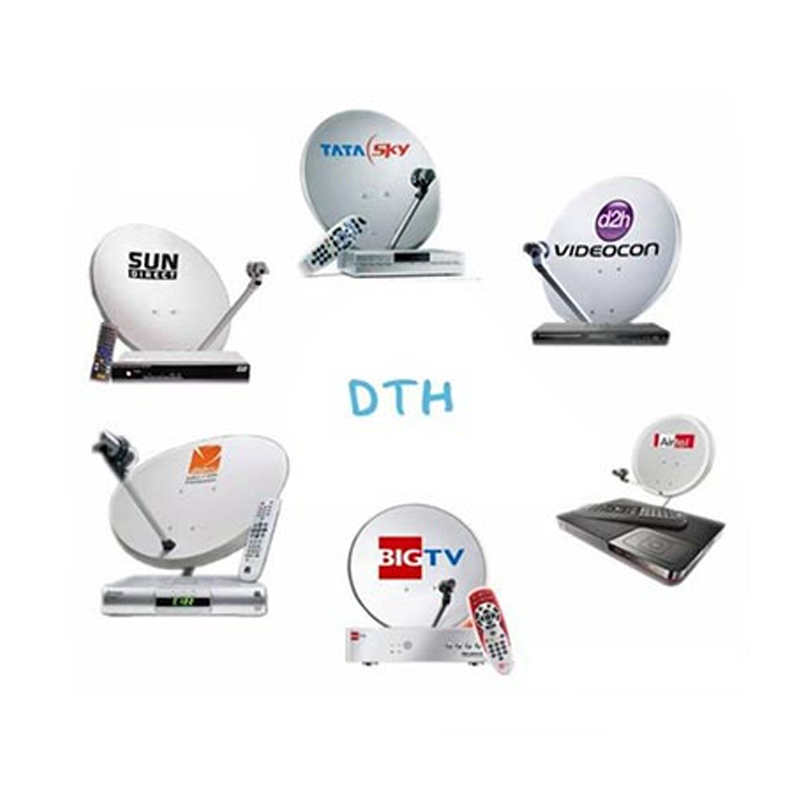
    With the imminent arrival of Tata-Sky DTH, Zee’s Dish TV ramping up and the big telecom players aggressively pushing ahead with IPTV and mobile TV, the value of quality content can only go up. We see some sort of shakeout — both on the content as well as the technology side by 2008.

    In the meanwhile, the content creators that stay ahead of the curve and the distribution platform providers most alive to the challenges and opportunities that the digital world offers will be the ones who will reap the benefits.

    There could well be a lesson in this for the cable fraternity too. Market forces could soon make the whole CAS debate irrelevant and the MSOs may well end up “missing the addressability bus”.

    Maybe MSOs should instead be focussing their efforts on attractively packaging and marketing CAS to their direct points to begin with and concurrently convincing their franchisees of the need to get CAS going, government or no government.

    The cable fraternity has a huge first mover advantage vis-?-vis pushing addressability because they own the last mile. Maybe they should as aggressively be chasing market-driven addressability as they are the mandating of CAS. A twin strategy would better cover their bases one would think.

    As for the content game, to quote John Hendricks, chairman of Discovery Communications Inc, from a recent report: “Newly empowered TV consumers will drive networks to improve their offerings, putting a ‘great squeeze’ on ‘marginal quality content’. They’re in control now.”

    Not in India, they’re not. But they will be. Of that nobody need have any doubt.
  • Content remains major issue for IPTV providers: seminar

    NEW DELHI: The industry is hyping IPTV in India as the next revolution, but has actually done little on the content side, said former member of Telecom Regulatory of India (Trai), DPS Seth.

    Speaking here today at IPTV India 2006 conference, organised by Bharat Exhibitions, Seth disagreed with some of the speakers before him saying that people who have been talking about IPTV have “failed to address the issue of content,” which could be delivered through IPTV.

    A certain section of the industry, especially the telecom companies have touted IPTV as a technology ready to ready to change the way Indians have been watching television.

    With its advantages over the current cable and satellite TV technologies, IPTV can be typically bundled with other services like video-on-demand (VOD), voice over IP (VoIP), or digital phone, and Web access, which are collectively called triple play.

    But, asked Seth, not many have given a thought to the type of content that should be generated to be delivered over this triple play platform.

    Seth¡’s argument was that unless the content issue is addressed — especially as in this segment content has to be customized — IPTV may languish.

    A report by Multimedia Research predicts that IPTV adoption worldwide will grow from 1.9 million users in 2004 to 25.3 million in 2008 and that the service provider revenue from IPTV is likely to jump from $ 635 million to 7.2 million by 2008.

    Various speakers at today’s IPTV seminar harped on strategies to tap this opportunity in India as the consumer is getting increasingly demanding.

    Some of the pertinent questions that were raised during the day-long conference were the following:

    What should be the policy framework that will govern IPTV in India?
    How will the interdependence between various service, technology and hardware providers work?
    Will it require further expansion of broadband spectrum?
    What are the operational challenges that would be faced by service providers in transforming their existing businesses models to the one suiting IPTV?

    Key panelists included Airtel CTO (mobility) Jagbir Singh, Sun Microsystems director (telecom) Kapil Sood, URStarcom director sales K K Peringhat, Alcatel South Asia Ltd vice president and head of sales, India, Fixed Communications Group Anuj Kapur, BSNL director (planning and new services) RL Dube and Siemens Public Communication Networks (Pvt.) Ltd MD Michael Kuehner.

  • MSO’s should be marketing CAS now: Sameer Nair

    MSO’s should be marketing CAS now: Sameer Nair

    MUMBAI: The cable fraternity is wasting the huge first mover advantage they already have in hand vis-a-vis pushing addressability in chasing the mandating of CAS, feels Star Entertainment India CEO Sameer Nair.

    Reiterating Star’s well documented opposition to mandated CAS, Nair asserts that the MSOs are seriously missing a trick on the matter in their “all-consuming” focus on getting a mandate out that will fix a time frame for the rollout of CAS.
    Nair drew attention to the latest reports circulating indicating that it could be anywhere between six to eight months at the minimum for the mandated CAS rollout to take off (if at all).

    According to Nair, even as big corporate players were preparing the ground for different addressable delivery platforms to roll out, the cable fraternity were only focussed on getting a cut-off date in place for the rollout of CAS.

    Nair is of the view that with the imminent arrival of Tata-Sky DTH, Zee’s Dish TV ramping up and the big telecom players aggressively pushing ahead with IPTV, market forces would soon make the whole debate irrelevant and the MSOs may well end up “missing the addressability bus”.

    Nair averred that MSOs should instead be focussing their efforts on attractively packaging and marketing CAS to their direct points to begin with and concurrently convincing their franchisees of the need to get CAS going, government or no government.

    Another issue he raised was on the inability of many cable ops to deliver on CAS even if it was mandated. He said that barring a few big MSOs, most operators were simply not ready for CAS. Neither did they have the set top boxes nor the subscriber management systems in place to get it off the ground.

    According to Nair, in such a scenario, the likely result would be a blackout of pay channels in many areas, as had been witnessed in Chennai. But the difference here, he pointed out, was that unlike in Chennai, where there was no great demand for pay channels, in this case it would more likely be because of inability to deliver.

  • IPTV India 2006 to be held in New Delhi on 7 April

    IPTV India 2006 to be held in New Delhi on 7 April

    MUMBAI: New Delhi will host a conference IPTV India 2006 on 7 April. It will witness key global industry players with a sharp focus on Indian market to examine the range of technology issues, alternatives and challenges facing the industry today as well as successful business strategies & solutions for the future.

    The inaugural session will discuss IPTV in India: Opportunities & Challenges. Session I will focus on Why IPTV: Market & Business Drivers and session II will talk of IPTV: Examining & Implementing Best Practices in India. And, Session III will discuss Operational Challenges Facing The Service Providers In Transforming To An IPTV Business.

    Some key speakers at the conference include Trai fromer member Dr Devendra PS Seth, Airtel CTO Mobility Jagbir Singh, Sun Microsystems Telecom director Kapil Sood, BSNL planning & new services director RL Dube, DoT, ministry of communications & IT Sr. deputy director general, Telecommunication Engineering Centre R N Padukone.

    UTStarcom Inc. MD South Asia Vijay Yadav, Siemens Public Communication Networks (Pvt.) Ltd. MD Michael Kuehner, Alcatel South Asia Ltd. Vice President & Head Sales – India, Fixed Communicatins Group, Anuj Kapur are few other speakers participating in the conference.

    In an ever changing scenario service providers are fast realising the importance of shifting from a voice-centric model to an IP centric model in which video and other content rich interactive services play a key role.

    Service providers and leading global players are aggressively eyeing the booming Indian market for delivering the triple play of voice, video and data services in an integrated wireless context.

    At the seminar, various issues will be analysed including DRM, security, billing and the acceptable business model for all the parties involved in Indian context, from access networks to services control and delivery to QoS and customer experience to content and multimedia applications.

    Insights to Indian content owners and aggregators to understand their requirements for putting premium video on the Indian service provider’s broadband network and examining the developed India specific success factors for the IPTV value chain will be given.

    The seminar will also analyse different India specific IPTV service delivery models, concerns and requirements of the Indian content industry for working with the Indian service providers.

  • TVHead licenses Tetris for interactive TV

    TVHead licenses Tetris for interactive TV

    MUMBAI: Capitalising on a truly global game phenomenon, TVHead has secured the worldwide interactive TV rights for Tetris – including cable, satellite and IPTV – through 2010. The games-on-demand television network will provide the game to cable and IPTV subscribers as part of its premium offerings.

    With its user-friendly interface and addictive appeal, Tetris is believed to be the world’s best selling electronic game, due to its wide availability on almost every modern computer and game system available.

    “Tetris is more than just a game… it’s a phenomenon with a level of consumer loyalty and awareness equal to top TV programs. Not only is Tetris the number one downloaded wireless game by a large margin, but it has also been incredibly successful on every other platform on which it has been introduced. We are thrilled at the opportunity to provide Tetris to TV audiences because television is the perfect casual games platform. By offering such a consumer-demanded blockbuster, TVHead enables operators to keep their game playing subscribers happy and in front of the TV,” said TVHead CEO and founder Sangita Verma

    TVHead will offer two versions of Tetris: Tetris Classic and Tetris Battle. In the classic Tetris puzzle game, players must clear horizontal rows to score points by creatively rotating and aligning falling blocks while the action accelerates with every move.

    Additionally, Tetris Classic will include high scores, multiplayer and advance play modes. Tetris Battle, a new multiplayer version currently in development, begins when a player submits his or her ‘best of’ game as a challenge to others. Competitors can then select to play against this game—being dealt the same pattern and speed of falling blocks—to see if they can best the score. Highest scores continue to move up the ranks with postings on leader boards and prizes for obtaining high-score benchmarks. Rankings span first local, then regional, and finally national status.

    TVHead is also working with Blue Planet Software Inc., the exclusive worldwide licensing agent for The Tetris Company, to create a consistent multi-platform game experience in which players are able to compete against each other using television and PCs.

  • BroadcastAsia2006 to focus on latest technologies

    BroadcastAsia2006 to focus on latest technologies

    MUMBAI: BroadcastAsia 2006, the Asian International Electronic Media Technology Exhibition & Conference, will take place from 20 June to 23 June 2006 at the Singapore Expo.

    Organised by Singapore Exhibition Services (SES), the event promises a bigger and more comprehensive platform for India to source for the latest broadcast technologies and solutions to meet the growth of its media industry. IPTV, HD Technologies, and digital audio broadcasting (DAB) will be the highlights of this year’s show.

    Indian participation at this year’s BroadcastAsia2OO6 exhibition include All India Radio, Monarch Computers, Essel Shyam Communications and Cicada Broadcast Solutions.

    Geared to meet India’s demand, BroadcastAsia2OO6 is expected to gather over 750 international companies, with nine group pavilions from countries such as China, France, Germany, Italy, Korea, Spain, Singapore, UK and USA.

    Highlights at this year’s exhibition include the latest in Professional Audio Technology, IPTV, computer graphics and animation, HD Technology, broadcasting to handhelds, video on demand, personal video recording, and digital audio broadcasting (DAB).

    Director and CEO of Cicada Broadcast Solutions Pvt Limited Prasanta kumar Ghatak said, “It is our desire to extend our reach beyond India and obtain a foothold in the Asia Pacific region. We believe that our participation in BroadcastAsia2OO6 will give us the opportunity to reach out to our target customers effectively. Cicada Broadcast Solutions is committed to bringing the same quality of service and dedication to customers beyond our shores, and BroadcastAsia2OO6 is a fantastic platform from which to do so.”

    In view of this, animation buffs will not be disappointed as ComGraphics&Animation2006 (CGA), held in conjunction with BroadcastAsia2OO6, will feature the latest hardware, software and services designed especially for the computer graphics and animation industry, film and motion picture industry. A number of conferences and masters classes will also be held for developers and professionals to exchange ideas & expertise learn and network.

    “With India’s healthy growth in movie and film output, significant market opportunities are now available for those within the broadcasting industry. BroadcastAsia2006 complements India’s remarkable industry growth by offering not only the latest, but most relevant technologies and solutions to meet the media expansion plans that are set to take place in India” said Jackson Yeoh, project director with event organiser Singapore Exhibition Services.

  • CAS: IBF to push for level playing field

    CAS: IBF to push for level playing field

    NEW DELHI: The Indian Broadcasting Foundation (IBF) has decided to exhort the government to mandate all other addressable systems in the country like DTH and IPTV, for example, as was being done with CAS or conditional access system.

    This suggestion was one of the many that were discussed today by the board of IBF, an apex body of broadcasting companies operating in India, during a debate to help formulate a stand on the issue of CAS, which can be taken to the government by 7 April.
    Another issue that the IBF would note down in a communication to the information and broadcasting ministry, which is holding meetings with industry stakeholders to finalise a rollout plan for CAS, is the pricing of such addressable services.

    Though the exact words are still to be formalized, IBF sources told Indiantelevision.com it was suggested that the government should be petitioned to follow a recommendation of the sector regulator on the pricing mechanism of addressable systems like CAS, DTH and IPTV with an aim to provide a level playing field to broadcasters vis-à-vis the cable fraternity.
    In a set of recommendations on addressable systems made in 2004, Telecom Regulatory Authority of India (Trai) had suggested that since addressable services depend on offering a choice to consumers, unlike non-addressable system like present-day cable TV services, pricing should be allowed to be formulated by market forces and not mandated.

    Another issue that is likely to find its way in the letter for the government involves the free-to-air bouquet of channels and its pricing.

    The IBF board feels that since the scenario has undergone a change from the time CAS was mooted in 2003 when the free-to-air (FTA )bouquet was to comprise 30 channels and priced at Rs. 72 (exclusive of taxes), more channels should now be added to the FTA package for consumers in a CAS-enabled regime.

    The argument in favour of increasing the number of channels to at least 50 is backed by the fact that the subscription-free DTH service of Doordarshan will also carry more than 50 FTA channels from May. This was announced by DD today at a press conference.

    The IBF board is also likely to express its reservation against providing a la carte pricing of channels as it might be against consumer interest.

    Though such a line of thought had been forwarded by the broadcasting industry in the US to the American regulator, the Federal Communications Commission recently put out a statement saying that the earlier report on a la carte pricing was lopsided and individual pricing of TV channels actually works to the benefit of consumers. This too is being contested by broadcasters in the US.

  • US conference to focus on IPTV broadcast technology

    US conference to focus on IPTV broadcast technology

    MUMBAI: American firm IQPC will host a conference focussed on the IPTV industry in the US. IPTV and Beyond: The Future of Broadcast Technology will take place from 18 to 20 April in San Diego, California and will feature best practices from companies that have actually completed successful IPTV deployments.

    The conference aims to help attendees capitalise on IPTV by showing them how to implement it, how to identify the potential for their organization, how to develop a content strategy for their services, and how to understand the economic benefits and challenges related to IPTV.

    Companies that will participate include Accord Media Group, ACN, Advanced Media Strategies, Alcatel, HBO Latin America Group, Motorola, MTV Attendees will learn about the economic benefits of delivering IPTV over RF in FTTP networks as well as how to differentiate IPTV from standard TV to customers.

    Speakers will dwell on the significant platform and technology trends affecting IPTV carriers going forward as well as why content protection is so important and how it can protect revenue for the service provider.

    A report from Infonetics says that IPTV is set to skyrocket to 53.7 million subscribers, $44B in service revenue by 2009. In 2004, service providers worldwide spent $304 million on IPTV-related services infrastructure, growing to almost $4.5 billion in 2009.

    The number of IPTV subscribers worldwide will grow to 53.7 million in 2009. The number of IPTV subscribers in North America will increase 12,985 per cent between 2004 and 2009. According to IP Television Magazine in the 1st quarter 2005 there were: 2.1 million IPTV users worldwide, 150 million broadband users worldwide, more than 240 carriers providing IPTV services, and more than 25 manufacturers producing IP set top boxes.

  • IPTV still at seeding stage

    IPTV still at seeding stage

    MUMBAI: Even as the framework of the digital landscape is being drawn by the various industry stakeholders, the most prepared seem to be cable TV and direct-to-home (DTH) service providers.

    Telecom operators who have plans to offer IPTV are grappling with last mile and technology issues at this stage.

    IPTV is at the seeding stage and will take 1-2 years for a serious rollout in India, according to Bharti Tele-ventures new technologies head Sriram TV.

    “Broadband has just begun. IPTV can be used as one often acquisition tools for increasing broadband penetration,” Sriram said while speaking at FICCI-Frames 2006 on TV NexGen.

    Though IPTV still lacks large subscriber base across the world, the technology for its mass deployment is in place. Telecom giants like Verizon, British Telecom and SBC are in various stages of deployment.

    “IPTV is the horse that we are backing,” said Microsoft TV group product manager Hemang Mehta.

    Elaborating on the advantages of IPTV, Mehta said the delivery platform had the ability to offer personalised content. Unlike cable TV and direct-to-home (DTH), consumers could select devices rather than be forced to buy set-top boxes (STBs) from the service operators. “The next generation of TV sets will be enabled for IP and broadband. Consumers need not buy the STBs,” he pointed out.

    On being queried by Indiantelevision.com on whether IPTV STBs were expensive, Mehta said they were available at below $100.

    As for big daddy Reliance Infocomm, the bet is on mobile TV around which the digital story will ultimately converge. This was the view expressed by Reliance Entertainment president Rajesh Sawhney.

    Speaking at the session, HTMT executive vice president Ashok Mansukhani said cable TV was well geared to meet the challenge from DTH and IPTV with its digital service. “Cable TV will offer the lowest cost digital platform. It also has the ability to offer over 300 channels,” he pointed out.

    Zee Group vice chairman Jawahar Goel said new delivery platforms were emerging which would provide choice to consumers.

  • Wake up call for broadcasters: Jain, Kalle

    Wake up call for broadcasters: Jain, Kalle

    MUMBAI: “My time is prime time. Today consumers want to watch television at their own time, place and convenience. The scenario is moving from a phase when the broadcaster used to define prime time… now it’s the consumer who takes the call,” said The Walt Disney Company India managing director Rajat Jain.

    Jain attributed this phenomenon to the changing times, dynamic technology, the changing consumer, changing media scenario and rise in consumer friendly technological devises.
    He also stressed on the three screens that will gain importance in the future: television, mobile and computer. “India has 80 million phones, 37.5 million internet and broadband users, 4.3 million computer and 473,000 laptops. The buying power among Indians is also on the rise and there is an emergence of a new tribe ‘Technobabies’ who are born to be wired and tech savvy. They do their homework online and also buy CDs and books online,” he said.

    Jain reiterated the point that technologies like IPTV, DTH, TiVo and broadband will make the environment more dynamic with interactivity coming in. He gave examples of BBC and ITV teaming up in a “multicasting” trial to broadcast their main channels over the Internet for the first time.

    Jain emphasized on the breakthrough iPod technology, wherein television shows could be downloaded on the iPod for 99 cents. However, Sony Pictures Television International vice president international networks Superna Kalle pointed out that while it was brilliant that people were downloading and watching shows on the iPod; but it also meant that they were not watching them on their television sets and hence broadcasters and advertisers were both losing out. “These disruptive technologies are reshaping the broadcast landscape. Broadcasters have to rethink their strategy,” Kalle emphasized.

    She further added, “Channel brands do not matter anymore as most people in the US are using the TiVo technology where you can zap ads and watch what you want to watch. It is the shows that are becoming a brand now.”

    Kalle also pointed out the various opportunities in digital broadcast. “Do not alienate existing audiences but continue to march towards the inevitable future. Each approach requires a different device and each changes viewers in a different way. Emerging digital technologies can be an opportunity or a threat for broadcasters,” she concluded.

    “Consumers today want seamless availability of content for their personalized viewing. They want control over time and place of viewing content and pay per view could well be the new norm in the near future,” Jain said.

    He signed off by quoting The Walt Disney Company CEO Robert Iger as saying, “Technology also powers creativity and innovation. Across our company, we are using technology to improve our product and remain on the leading edge of entertainment offerings. We firmly believe in a platform agnostic approach to distribution. Applying technology to enhance our content and extend its distribution enables us to get closer to our increasingly more sophisticated customers worldwide.”