Tag: IPTV

  • Kasenna announces IPTV services innovation

    MUMBAI: The Indian arm of IPTV firm Kasenna Incorporated – Kasenna India today announced PortalTV 2.0, a suite of integrated products sporting a user interface and a Web services architecture designed to integrate the Internet and television.

    The “dynamic HTML-based smart client enables service providers to brand, control and differentiate their IPTV service experience and offerings,” a company release claims.

    “PortalTV 2.0 is based on open platforms and systems, enabling service providers to reduce their capital and operating expenditures by incorporating the standard server hardware and operating system of their choice – there are no proprietary integrations to work around,” said Kasenna CEO Kumar Shah.

    The PortalTV 2.0 suite comprises Kasenna LivingRoom 2.0 (IPTV middleware), LivingRoom Smart Client 2.0.1 (IPTV STB client), MediaBase 8.2 (the video delivery platform), vFusion 1.3 (video network management system), and content from ViewNow, a Kasenna company. Together, this suite of products – running on any industry-standard server – enables service providers to deliver an end-to-end system for interactive television, the release states.

    “PortalTV 2.0 has delivered to our telco customers the ability to be the first in offering next-generation MPEG-4 high-definition television,” said Hirendra Gupta, Managing Director and VP – Kasenna India and South East Asia.

    In India as well as throughout Asia, the future of IPTV lies in its ability to make programming come alive with interactive features such as gaming, quizzes or voting, or with the ability of users to click anywhere on the screen to buy or receive more information on a product or service. Kasenna is taking a leadership position in helping service providers roll out feature-rich interactive-TV services today, while providing a platform for marketing new services rapidly as they become available.

  • Visiware releases IPTV game channel

    Visiware releases IPTV game channel

    MUMBAI: Visiware has announced the release of its IPTV game channel, a turnkey solution with portals, back office and the Playin’TV catalog of casual games, available on Flash and HTML.

    This channel is fully compatible with Playin’TV triple play game offering, allowing players to continue to play and compete on TV, mobile and Internet.

    More than 25 games are already available, all of them specially made for the big screen experience and remote navigation. Visiware has already provided IPTV networks such as UCC in Kuwait and T-Online in Germany, asserts an official release.

    Visiware chairman Laurant Weill said, “This is a great opportunity for networks to generate new revenues and for Visiware to reach new markets. We will not only provide technology and content but also a 10 years expertise in successfully marketing iTV games.”

    “Agreements with major IPTV partners raises the bar for compelling IPTV games which are missing from most current IPTV offers usually ported from the net, but on the web this is a very different experience and human interface. We are looking forward to deploying on many more markets within the next months,” he added.

    The triple play offer includes specific advantages: cross-platform contests and leaderboards, ranking and offering a game to a friend, adds the release.

  • ‘A revolutionary year that was also one of the government’s total failure to control the broadcasters’

    ‘A revolutionary year that was also one of the government’s total failure to control the broadcasters’

    One healthy thing is that the industry is moving… maybe slowly in some areas, but it is definitely moving, which was not there earlier. The manufacturers lobby which had become stagnant are looking forward again. Fibre optical networks are spreading.

    New technology is coming, and words we had never used two years ago, like IPTV & Mobile TV, are now common usage. DTH has been launched already and this will give competition to the cable sector and they will be bound to improve their services. HITS is on the way and if it is operated on C band then it will be good for the cable industry, but if it is put on Ku band, that will kill the cable industry. That will be a disaster.

    If it is on C band, digitalisation will become faster, but if it is on Ku band, all the DTH players would start giving out their signals, because they are already on Ku band. And the consumer will also suffer because one after another DTH players will come and ask for money for their channel bouquets if the subscribers want them, so this will hurt the latter’s interests.

    But I must say that Trai has given importance to the last mile operator, and this has been a major positive this year, they have realised the worth of the LMO and understood that it is the last mile people who have created the industry. They know now that the LMO is the one who gives the connection and actually works in the field.

    Thus, to get 25 per cent to carry pay channels on the network was worthwhile. That was not there at all and that is a great achievement. You can say this is only in the CAS area, but a beginning has been made, that these people ought to get this much, which is a model now. So now we can take this forward and at least demand what we deserve. When voluntary CAS is extended to the 55 cities, we shall at least get some margin for letting them use our networks, based on this model.

    Again, Trai for the first time has worked out the pay channel rates. Rs 5 for CAS areas and even for the non-Cas areas they have set an upper cap and declared the prices. Yes, of course the broadcasters will protest because they do not want to be controlled. The problem for the cable operator is that he never, before this, knew what he was going to charge the customer, who also never knew what he was being charged for and at what rate.

    But the best came from the High Court, the order that CAS had to be rolled out. The courts, whether TDSAT or High Court or Supreme Court has been acting only in public interest, and two of the major decisions related to fixing the price of a sports channel, when Neo wanted to charge an astronomical price but was not allowed, and when the court upheld the government Act on sharing sports events of national importance with Doordarshan.

    But beyond the rosy developments, the two worst things that happened this year were failure to extend CAS, and the failure to control the broadcasters. And in fact non-extension of CAS is mainly due to resistance from broadcasters lobby. They have earned too much of money in a non-addressable system and wants the market to stay that way.

    I feel sad also that the government this year did not heed to our demand, the only demand, that we be given funds for going digital, which would have really helped, but that was turned down. It is small money and the government should have facilitated the LMOs by telling banks to make it easy for them to get small loans to facilitate digitalisation.

    For the government this was a year of failures on several fronts, I am a member on three government committees, and all three here failed to deliver because of lack of will of the government and the most dangerous development is vertical integration, creating absolute monopolies, and the governments failure to implement cross-media restrictions.

    As far as CAS is concerned, extension, even under voluntary effort will be good for the industry. But even if an LMO, say in a place like Kota in Rajasthan ushers in voluntary CAS, the broadcasters will not give him the decoders under one pretext or the other, saying that his SMS or some other system is not accurate and he is still under-declaring his subscriber base. The government has thus squarely failed to reign in the broadcasters on all fronts.

    In passing, I must say one thing: the image of the LMOs so far had been that we are rowdy, uncontrollable. But in a series of meetings the government has seen who is rowdy, the journalist broadcasters or cablewallahs and officials are now saying, at least the LMOs have some dignity! That is why the goodwill for us has increased in the government quarters.

  • ‘Rolling out of Cas has been the most significant development’

    ‘Rolling out of Cas has been the most significant development’

    Lots of consumer centric stipulations have been made in the said Regulations which, among other things, include establishment of call centres by DTH operators, redressal of consumer complaints within stipulated timeframes and the concept of Nodal Officers to be appointed by DTH operators.

    Trai has also issued Interconnect Regulations for DTH services mandating the Broadcasters to come out with Reference Interconnect Offer (RIO) for DTH operators and provision of channels on a la-carte basis by broadcasters to DTH operators under the said RIO.

    Trai has also come out with a Tariff Order for non-Cas areas whereby not only the price freeze, which was already in operation, has been continued, but now even the ceiling in respect of cable rates have also been provided at the retail level.

    In addition, Trai has also stipulated the provision of a la carte channels to MSO/Broadcasters in non-Cas areas. The order has created a lot of hulchul in the industry.

    Cross media ownership issue and restriction in holding shares within electronic media and distribution sector may act as an impediment to the overall growth of the sector
    _____****_____

    No previous order/Regulation of Trai had generated as much heat and controversy as the present Tariff order for non-Cas areas. While the MSO and cable operators have welcomed it, the broadcasters on the other hand have severely criticised it, as in their view their commercial interest have not been adequately taken care of by Trai. The broadcasters are arguing that the present tariff order would benefit only one segment – the MSOs as no a la-carte choice can be provided to consumers in non-addressable analog environment because of technological impediments. Their grievance is that the Regulator has not addressed the problem of “under-declaration”. The matter is currently sub judice in the TDSAT.

    The Trai is in the process of issuing its recommendation to the government on IPTV and Mobile TV which would give further impetus to the proposed digitisation.

    The Cable and Satellite Television sector is the only sector where both Service Tax and Entertainment Tax are levied at present which amounts to double taxation. It may be mentioned that levy of both service tax and entertainment tax ultimately make the services costlier for the consumers. It is pertinent to point out that when a movie/ film is shown in a cinema, only entertainment tax is levied and no service tax is charged for screening the movie in a cinema theatre.

    Both DTH services and cable services are at present reeling under the heavy burden of multiple taxation and levies (such as license fee, service tax, entertainment tax, VAT on customer premises equipment which cumulatively add up to as high as 56 per cent) which are acting as an impediment to the growth and development of these services. Such a high multiple taxation and other levies vis-?-vis other sectors has resulted in these services becoming costlier and unaffordable for the masses.

    Accordingly, to ensure proper growth and development of this sector, the multiple levies/ taxation structure needs to be rationalised.

    Similarly, the customs duty structure on STBs and other equipments which are quite crucial for digitization also needs rationalisation in line with IT and Telecom sectors.

    It is imperative that to promote the growth of digital platforms, duty structure/concession applicable to IT and Telecom sector be extended to the broadcasting industry to provide a level playing field
    _____****_____

    All in all, year 2007 has been excellent for the Broadcast, DTH and Cable sector, and would be remembered as the year in which the solid foundations have been laid for digitisation and to create an environment enabling the broadcasting and distribution sector to takeoff and move towards the path of growth and development at an accelerated pace.

    In the present era of convergence the distinction between Broadcasting, Telecommunication and Information Technology is disappearing very fast. It is therefore imperative that in order to promote the growth of digital platforms, duty structure/concession applicable to IT and Telecom sector be extended to the broadcasting industry and it is treated as part of telecom infrastructure to provide a level playing field.

    The need of the hour is to create the same kind of conducive environment by the government by creating level playing field and granting fiscal incentives and concessions to the sector as has been done for the telecom sector and this sector would also register phenomenal growth in coming years.

  • ‘Rolling out of Cas has been the most significant development’

    ‘Rolling out of Cas has been the most significant development’

    The Olympic motto `Citius Altius Fortius’ a Latin phrase when translated means Faster-Higher-Stronger. We see strong parallels between the motto and the Indian Entertainment & Media (IEM) Industry. India is among world’s largest media consuming and content creating markets. Paradoxically, IEM is just 0.7 per cent ($10 bn) of the global $1.4 trillion industry. Till now, poor policies, fragmented markets, low investments and leakages have kept the moolah remarkably elusive. However, with sweeping changes in distribution, convergence and integration of models, we see IEM growing to $21 billion by 2010. We are bullish.”

    The above mentioned observations of SSKI research aptly sums up the present upbeat scenario on the television and distribution sector in India. 2007 has been full of various significant developments in the television industry, which have laid the foundation for technological convergence, digitisation and addressability, thus ushering a new era in the sector which would revolutionalise the television viewing experience in the ensuing years.

    The most significant and landmark development of the year has been the successful implementation of Conditional Access System (Cas) in notified areas of Delhi, Mumbai and Kolkata. This is being regarded as a big leap towards migration from analogue regime to digital regime. The regulatory framework is acting as a catalyst in the process of digitization. Trai has already recommended to the government for extension of Cas in remaining areas of these three Metros.

    Trai has also submitted to the government a report of the Group on digitization for introduction of voluntary Cas in 55 more cities in a well defined time frame. It is now up to the information & broadcasting ministry, to trigger off the said process by laying down a clear cut road map.

    Prior to 2007 the digitisation rollout in cable was virtually negligible. However, now we expect it to be happening at an accelerated pace. It is estimated that by 2010, the total C&S homes are likely to increase to 90 million from present level of 68 million. It is expected that out of those homes, 37 million would be digitised.

    In October 2007, Trai had also sent its recommendations to the I&B ministry on the policy framework for licensing and issues pertaining to headend-in-the-sky (HITS), which too is a digital distribution platform. The ministry is examining them and once a final decision is taken on these recommendations, it is expected that the digitization in the cable segment will take off at a faster pace as HITS has potential of digitising the entire country within a short span of time.

    In addition to various benefits of digitization such as capacity augmentation and provision of Value Added Services (VAS) to consumers, digitisation also results in bringing transparency in the cable sector, which not only leads to better tax compliance and realisation of due taxes by revenue authorities, but also ensure equitable distribution of revenue across the value chain.

    The government is the biggest beneficiary of the shift from analogue to digital cable, as digitisation releases significant spectrum. The spectrum can be utilised for other services like telecommunications, defence, emergency, interactive platform and value added services. This is possibly what is driving the government to take the steps necessary for the evolution of digitisation.

    For instance, in Germany, the government subsidised Set Top Boxes for the low income group, whereas in Ireland, the government launched a company (Digico) to introduce digital terrestrial services.

    Digitisation in the cable segment will take off at a faster pace as HITS has potential of digitising the entire country within a short span of time
    _____****_____

    Similarly in DTH distribution, the market is going to witness fierce competition amongst five to six players. In addition to the existing DTH operators DD Direct, Dish TV and Tata Sky, new entrants Bharti, Reliance, Sun TV and Videocon are also expected to launch their services shortly. It is expected that by 2010 the DTH segment would also have about 16 million digital subscribers.

    Similarly, IPTV and Mobile TV both emerging digital technologies are also expected to register an impressive growth by 2010.

    The year 2007 also witnessed lot of activities and developments on the content front. Though already about 270 channels are existing yet, unfazed by the large number of existing channels, several new channels of different genres were launched during the year.

    However, on account of bandwidth constraints on analogue network, the new channels are required to spend heavily on carriage fee in order to ensure their placement on the visible band in the cable network. The existing channels also witnessed intense competition and the entertainment/current affair channels were mainly dominated by “reality shows”.

  • Anil Ambani plans foray into TV channel business

    Anil Ambani plans foray into TV channel business

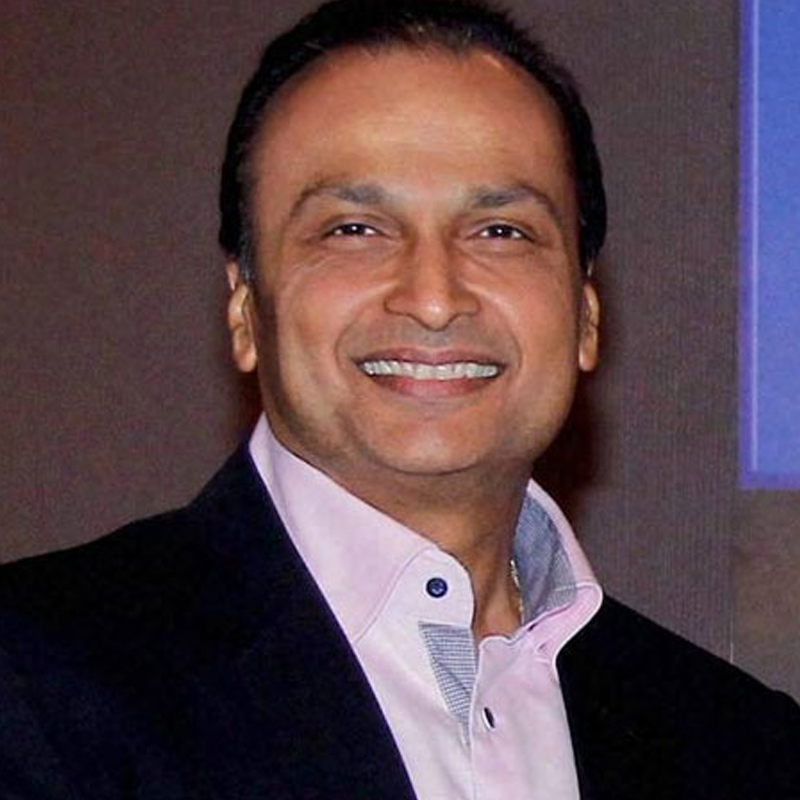
    MUMBAI: Anil Ambani is planning to make an entry into the broadcasting business, the final piece in the media chain where he had so far stayed out.

    On his radar is the launch of an entertainment business channel through Adlabs Films, the listed company where he acquired a majority stake in mid-2005.
    “We are considering it and have given the proposal for the launch of an entertainment business channel. But the board has to approve of it,” Adlabs chairman and managing director Manmohan Shetty tells Indiantelevision.com.

    The idea is to capitalise on the contacts that Shetty has with the film industry and synergise content with Adlabs’ film production business. The channel would also provide information on the gross earnings from box office collections and other financial data.

    Shetty, however, did not wish to talk on the content front, saying “it was too early to talk about anything” till the go-ahead signal was given for launching the channel.

    Adlabs already has a presence in film processing, production and distribution business. The company is also stepping into TV content production and has bought out majority stake in Siddharth and Anita Basu’s production house Synergy Communications Pvt Ltd. Ambani has ventured into the FM radio sector with aggressive bids for stations.

    “The acquisition process is not completed yet. We would be pumping money into the content business after that. We will be making content for other TV channels through this company,” says Shetty. Synergy has produced popular shows like Kaun Banega Crorepati or KBC (an Indian version of the popular western game show Who Wants To Be A Millionaire) for Star and Jhalak Dikhla Jaa (a local adaption of Dancing With The Stars) for Sony.

    Adlabs has ambitious plans for animation. In the pipeline is a 3D feature film, Superstar, with Southern actor Rajnikanth’s Ochre Studios which is slated for release in April 2008. The second animation project is a feature based on the characters Gini & Jony, who represent one of the top brands in children apparel in India.

    “The first film will cost Rs 310 million and we will have a worldwide release. We haven’t finalised the budget for the second film as we are not ready with the script yet,” says Shetty.

    Rounding up the media cycle will be the foray into the broadcasting space. Ambani has already announced his plans for IPTV and a direct-to-home (DTH) service.

  • IOL Broadband to soft launch IPTV services on BSNL network in Mumbai

    IOL Broadband to soft launch IPTV services on BSNL network in Mumbai

    MUMBAI: IOL Broadband Ltd is set to soft launch its IPTV services on the state-owned Bharat Sanchar Nigam Ltd (BSNL) network in Bangalore on 14 January.

    The company, which has a non exclusive tie up with BSNL for setting up the content delivery network, has already started trial runs in Bangalore. “We are also looking at launching in Kolkata, Chennai and Bhopal,” says IOL Broadband executive director Oberai.

    IOL is yet to make a commercial launch of its IPTV services in MUmbai, the first city where it kickstarted operations on the MTNL network. “We will make a commercial launch when we are able to offer 100 TV channels. We are currently offering 40 channels and have signed up with Star,” says Oberai.

    The company has also signed a revenue share agreement for its IPTV service with Anytime, a consortium of major Hollywood Studios comprising Disney, Fox, Warner, and Universal which will provide access to Hollywood movies.

    Bennett Coleman & Co Ltd (BCCL), which is the holding company of the Times Group, has picked up a small stake in IOL Broadband for Rs 50 million.

  • 63 mn IPTV subscribers by 2010: Study

    MUMBAI: California-based market research firm iSuppli has released a study that predicts that the number of subscribers to Internet Protocol Television (IPTV) services worldwide is expected to nearly triple in 2007.

    This will help drive a strong increase in sales of wired communications equipment and related semiconductors for the year.

    Global IPTV subscribers will reach 14.5 million in 2007, up 192.4 per cent from 4.9 million in 2006, iSuppli predicts. By 2010, worldwide IPTV subscribers will amount to 63 million

    The study notes that in the long run, the Asia Pacific region will lead the global revolution in IPTV in terms of subscribers, service revenue, infrastructure etc. The region’s broadband penetration, supportive regulatory framework, will fuel the growth.

    China has potential; The US will be a difficult market for IPTV: Worldwide IPTV service revenue is forecast to reach $ 38 billion in the year 2009. The worldwide IPTV subscribers are forecasted to reach 53 million in the year 2009. The Americas and Western Europe are expected to be the biggest markets in terms of revenue per user basis.

    IPTV market potential varies highly across the world depending upon the local Pay-TV market and regulatory conditions. China will be the future IPTV dragon due to rapid urbanisation, fast growing economy and expanding middle class.

    The US will be a more difficult market for IPTV, due to high existing pay-TV penetration, and stiff price and service competition that is likely to come from the entrenched operators in the cable and satellite sectors. Consumer familiarity with IPTV service is very low although youth today are much more aware of it when compared with people belonging to other age groups. In terms of the principal barriers to IPTV adoption, the cost is by far and away the most significant factor across all countries and age groups.

  • ‘An outlook towards the future of Television’

    In this article, penned for Indiantelevision.com, Media e2e chief evangelist Atul Phadnis is of the view that the media landscape is changing rapidly and new distribution technologies would alter business models.

    As 2006 comes to an end, some of us, who had embarked on a new journey of creating a new thought within our industry, feel vindicated. The key changes that we had envisaged, envisioned and expected are taking place rapidly within our media & entertainment (M&E) environment. These changes are in terms of distribution platforms, newer business models, interactivity, new content formats and experimentation. This piece looks at the change catalysts and an outlook on how things would continue to develop within our space.

    End of distribution platform insulation

    Before we look at the current and future, a quick glance at the past. The history of TVs popularity among consumers can be gauged from the amount of advertising on satellite TV chasing consumers. As veteran industry folk would recall, the early 90s was all about DD when only experimental advertising monies would come onto satellite channels. In the mid-90s substantial chunks of budgets were diverted into satellite channels. By the late 90s and early 2000s, the satellite TV environment had reached a level of stability and maturity. Here’s where the story takes an interesting u-turn. The legislation changed and allowed newer distribution technologies on the scene. These new technologies ended the technology insulation that persisted in India vis-?-vis other Asian markets like Hong Kong, Korea and Japan.

    Distribution: set to change the ground rules

    Globally, whenever distribution channels explode, it sets off a chain reaction in terms of market segmentation, newer revenue opportunities, newer pricing models. The hectic activities since early 2000 to present day on laying cables, dishes, optical fibre, upgrading cable facilities, are today creating competition among satellite TV platforms such as DTH, HITS, IPTV, CAS, and even traditional cable.


    Creating the ‘Long Tail’

    For those who have read Chris Anderson’s book The Long Tail: Why the Future of Business is Selling Less of More (2006) would immediately associate that phenomenon with what’s happening with our television today. The Long Tail phenomenon occurs when distribution platforms become very large helping the smaller products collectively gain market share rivaling that of market leaders!

    The TV business has been growing a long tail as niche content offerings are getting acceptance in small pockets. Take the example of television news. Already, the kids channels are going the same way as the news channels. Animated, non-animated, teens, tweens, pre-teens! The good news – each of the niche segments that have been launched has shown Viewership.

    If the current trend continues and if distribution platforms get more and more addressable, one can imagine channels aimed at extremely niche communities. Surgeon’s channel, lawyers channel, chartered accountants channel to weather news channel, celeb news channel to even a Mumbai traffic channel! Considering that some of these formats exist in other economies expecting that in our environment seems fairly reasonable.

    Specialization to Segmentation

    The specialization in this industry is already segmenting the market. Groups of consumers who are watching specialist programming are extending the long tail of content. The specialist content has an impact on TV programmers and the TV production houses as resistance to experimentation could lead to certain death or marginalization. This impact should mostly be felt immediately post the universe adjustments of the TV ratings panels to latest estimates.

    Applications, on-demand

    Our environment is also critically poised to propel demand for applications that satiate this new consumer thirst for content which is typically instant and on-demand. Considering that for a bulk of Indian consumers, TV-watching emerges in the Top-5 daily activities, it’s not impossible to imagine the lengths to which consumers could go to better that experience. Gadgets like Digital Video Recorders (DVRs), Video on Demand (VoD), Personal Video Recorders (PVRs) can do exactly this if the pricing gets it right.

    Content mobility, malleability

    The consumer need for on-demand content in other Asian markets has made content both mobile and malleable. Content mobility is to do with being able to record and transfer content off television onto your phone, laptop or desktop. The last few months I have been an amazed, animated user of Bluetooth and the possibilities that emerge from being able to transfer data, music, and video from one device to another. Content malleability is something that TV, music and film companies would have to learn else the consumer is going to teach them a thing or two!

    Newer contact points via localization

    The newspaper business in the last 3 years has been growing faster on ad revenues than television. It’s done so on the back of distribution changes and reform that has resulted into micro editions. That has in turn propelled localized advertising through a slew of first time advertisers on print. The same is bound to happen to television. The only question is the timeframe. Local pizza stores, restaurants, banks, grocery and electronic retail, multiplexes would all jump in if micro-reach was possible via TV. It’s not as if all that is not possible today via local cable and regional stations. It’s possible and it’s happening. But while regional channels still score, there are questions on quality and popularity of local cable advertising.

    Branded Entertainment : winds blow stronger

    The Branded Entertainment Awards 2006 held in Mumbai have demonstrated a new industry-wide vision in this space. The promise that this specialist stream holds is that in a perpetually fragmenting media scene, TV could be used via innovation, integration and multimedia support. Activation is the powerful new word in this area and it’s expected to be initiated by regional channels. Activation would derive tremendous strength either from channels promising micro-reach or distribution platforms undertaking sampling/ contact programs. One of my recent favorites is a DTH company distributing sample set-top boxes to school children preloaded with education channels!

    Distant possibilities

    What seems to be now distant in our market but is very prevalent in the West and some parts of Asia is CGM or Consumer Generated Media (such as Blogs, and home or personal videos). This is a current rage even in the US if one is to see the popularity of sites such as YouTube. Low penetration of capture devices in India would typically see this as fairly futuristic. Having said that we are seeing news channels in India currently test this through Viewer reported stories.

    Finally in conclusion – expect key changes in television that’s bound to affect all stakeholders. These changes are expected to alter business models, revenue models as well as content formats.

    And the creatures aren’t too far away from us now. Stop! I hear the door creaking open. Wait! I can hear them growl…


  • Nasa chooses Optibase IPTV system

    Nasa chooses Optibase IPTV system

    MUMBAI: Optibase, which works in the field of advanced digital video solutions, has announced that it is providing its advanced IPTV solution to US space oprganisation Nasa.

    Optibase MGW 1100 carrier-grade IPTV streaming platforms have been successfully deployed at the Nasa Dryden Flight Research Center, Nasa’s premier flight research and test organisation for the validation of high-risk, pioneering aerospace technology, space exploration concepts, and the conduct of science mission observations.

    The MGW 1100 provides H.264 video and audio, in combination with an Optibase PC soft player application and display manager for streaming of content over the internal IP NASA base network. The content includes TV channels such as news and weather channels as well as NASA-generated channels such as live flight test footage and other events.

    The system is controlled by Optibase’s Cluster Manager, which enables intuitive and simple management of multiple Media Gateway platforms and hundreds of channels from one centralized application. For enhanced control and viewing options, the solution includes the Optibase Display Manager, which enables the display of multiple video streams on a single PC screen. In addition to PC streaming, the content will be streamed to Set-top-boxes for display on TV monitors and plasma screens across the base.

    Optibase president Adam Schadle says, “We are delighted with the success of our IPTV system at NASA. This system is a prime example of carrier-grade IPTV systems for the military and government markets. Optibase prides itself on providing a complete end-to-end IPTV solution, which is tailored to the customer’s specific requirements. As a veteran supplier of video technology solutions to military and government, Optibase is well equipped to provide reliable streaming solutions for mission-critical and high-grade video applications.”