Tag: IPTV

  • Telefónica, Microsoft to deploy global video platform

    Telefónica, Microsoft to deploy global video platform

    MUMBAI: Telecom company Telefónica‘s subsidiary Telefonica Digital and Microsoft have announced a multi-year strategic agreement to create a new global video platform (GVP) for all video entertainment services across Telefónica‘s Operating Businesses.

    Based on key Microsoft technologies including the Microsoft Mediaroom platform, the GVP is unique in delivering TV services over both managed (IPTV) and non-managed (over the top) networks, at global scale, to a range of consumer devices.

    The first GVP deployments are taking place in Brazil, Chile and Spain, and Telefónica anticipates extending the deployment of TV services based on the GVP to a number of its other Operating Businesses over the next few years.

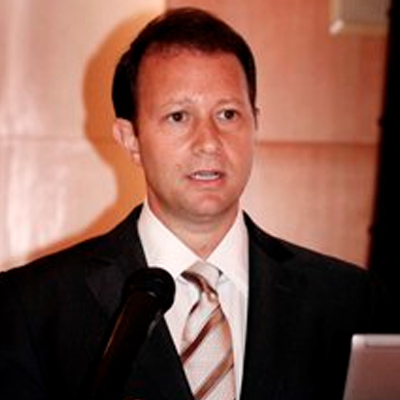
    Telefónica Digital director of digital services Vivek Dev said, "Video is a fast-growing market, and we already play a leading role in delivering Pay TV services to customers in Europe and Latin America. This new platform allows us to reflect the deep and rapid changes happening in this market. It offers the ease and convenience of a global, convergent platform while maintaining flexibility over content for our local businesses. Most important, it allows us to meet customer demands for access to video content on an ever-expanding range of devices".

    The GVP, and its use of Mediaroom, will enable Telefónica to deliver to consumers high-performance, differentiated and feature-rich TV services over both its managed high-speed broadband networks as well as "over-the-top" nonmanaged broadband networks. It provides a range of advanced features to TV subscribers, including time-shifting and multiscreen among others, enabling Telefónica to take advantage of its multidevice capabilities.

    Microsoft corporate VP, Operator TV Business Tom Gibbons said, "Telefónica is a close partner to Microsoft, and the Global Video Platform, based on the Microsoft Mediaroom platform, will enable them to grow their business and reach new audiences. This new agreement focused on Telefónica‘s GVP further extends our alliance in the world of TV and video entertainment to a range of screens throughout the home and on the go, and the benefits will be enjoyed by many millions of people globally. Through its use of IP-based broadband networks and the Microsoft Mediaroom platform, Telefónica‘s next-generation TV services are poised to delight and entertain millions of consumers across their markets in Europe and Latin America."

    These services can be enjoyed by consumers on a range of devices inside and outside the home, including set-top boxes, Xbox 360, tablets and smartphones. Because the Mediaroom platform includes key technologies such as Microsoft PlayReady, Internet Information Services Smooth Streaming and Microsoft Silverlight, the delivery of TV services across these various networks and to multiple screen types can all be done via one common technology infrastructure. This is expected to result in significant efficiencies for Telefónica in time to market, cost of delivery and overall scale.

    Earlier this month, Telefónica launched its premium Internet Protocol television (IPTV) service in Brazil, which follows a similar launch in Chile in October. Both services, Vivo TV Fibra in Brazil and Movistar IPTV in Chile, are the first IPTV deployments that take advantage of the new GVP platform and its capabilities, offering an exceptional user experience for their Fiber to the Home customers. In November 2011, Telefónica and Microsoft launched the first service enabled by the GVP: Movistar Imagenio on Xbox 360. It provides subscribers with 12 linear channels focused on sports, including the Spanish First Soccer League (Liga BBVA) under Canal+ Liga Channel.

    During the past 14 months, the Microsoft Mediaroom platform has continued to scale its deployments and services, surpassing 11 million consumer households and 22 million set-top boxes across the Americas, EMEA and APAC, further securing its position as the world‘s most deployed IPTV platform.*

  • Eros sells film telecast rights to Korea Telecom

    Eros sells film telecast rights to Korea Telecom

    MUMBAI: Eros International has sold the telecast rights for 50 films to Korea Telecom (KT).

    The South Korean company will be able to exploit these films across various platforms including IPTV, mobile and Internet.

    The deal includes titles like Yamla Pagla Deewana, Chalo Dilli, Housefull, No Problem, London Dreams and De Dana Dan among others.

    “Considering the huge fan following Bollywood movies have in South Korea and with our library of over 2,000 movies, we thought this was an ideal opportunity to exploit our content,” Eros International senior vice president, business development Kumar Ahuja said.

    All the selected titles will be shown on KT’s Olleh TV platform.

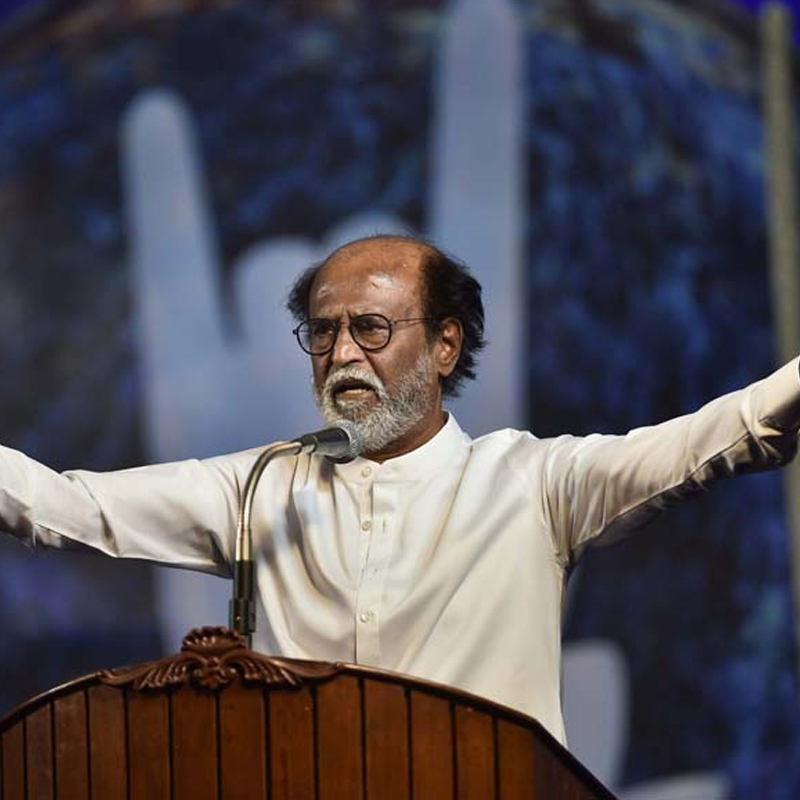
    Eros has also signed a deal with Korea’s Inyoung Trading for the theatrical release of Tamil blockbuster Endhiran (Robot) that stars Rajnikant and Aishwarya Rai-Bachchan.

  • Marketers have to be accountable for business consequences

    Marketers have to be accountable for business consequences

    MUMBAI: Marketers have to be accountable for business consequences and not just idea executions, experts in the industry said.

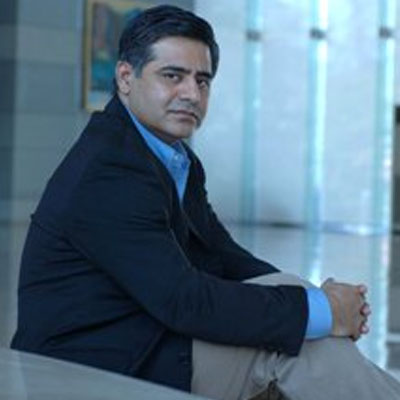
    “There has to be an analytical correlation. If Rs 100 million is being spent, the marketer must know by how much he has moved the needle of market share. There has to be a target. A brave CFO (chief financial officer) works with his gut after getting an idea from his marketing team. Marketers should have the courage to put their necks on the chopping block and own the idea,” said Reliance DTH and IPTV CEO Sanjay Behl, while speaking at the Mindshare Brand Equity Compass.
    Spatial Access Managing Partner Meenakshi Madhvani bemoaned the fact that big money is chasing mediocre ideas. “90 per cent of advertising consists of mediocre ideas. So marketers feel that they have to shout louder as the idea is mediocre. We are on a mediocrity spiral as often there is not enough time for creative. Every brand manager feels that a bigger budget leads to a stronger market position.”
     
    Madhavani made the point that advertising shies away from accountability as there is no long term perspective. This is the same reason why a marketer will not want to invest in developing an accountability matrix.

    Lowe chairman and chief creative officer R Balki denied suggestions that there is no accountability for a creative agency. “If that was the case and we kept failing, then why would we keep getting business? We get a retainer fee. There are also incentives which are not much anyway. The rewards and amount kept for success are not linked to performance. What we do is in line with the objective of a campaign. Is it to change perception or to sell?
     
    There is a need to have ROI modeling embedded in the minds of marketers. Behl noted that Cricket offers immediate reach and impact. It is more measurable than any other media tool. Techniques are advanced and it can be known which game gave better economic value.

    Madhavani said that cricket is good if you have just launched a product and want lots of people to know about it in a short period of time. “However if you have been doing a sustained campaign for your product over months, then you might not need cricket. Also for involvement, cricket reaches a small group. Advertisers are being misled by the fact that women watch the IPL. But IPL is not cricket. It is a tamasha. Generally women do not watch cricket.”
     
    Obviously if one is getting higher value, then one will spend more. The question is what is the premium you have to pay and how much more value is the client going to get. Clients and agencies must also have a vision.

  • ‘We are entering into an era where capital will be scarce’ :  Citi Venture Capital International managing director India region head PR Srinivasan

    ‘We are entering into an era where capital will be scarce’ : Citi Venture Capital International managing director India region head PR Srinivasan

    There may be pressure on Citigroup Inc. to remove the flab with the US government agreeing to infuse $20 billion of capital as part of a rescue package, but Citi Venture Capital International (CVCI) is drawing up plans to make acquisitions at attractive valuations. Out of the $4.5 billion fund, it is yet to invest $3 billion, almost a third of which will pour into the Indian market.


    Though CVCI has made only one media investment in You Telecom, a broadband and cable TV company, it is also eyeing the direct-to home (DTH) and Hindi entertainment broadcasting space.


    In an interview with Sibabrata Das, Citi Venture Capital International managing director India region head PR Srinivasan talks about the opportunities of investing in various sectors including media at a time when capital is going to be scarce.


    Excerpts:

    Being in the midst of an unprecedented global economic turmoil, how comfortable is Citi Venture Capital International (CVCI) in its funding structure to grab buying opportunities in Indian media companies?
    We have a $4.5 billion fund, out of which $3 billion is yet to be invested. We have already invested $500 million in India. We are likely to pump in a further $750 million-$1 billion in this market while the balance will be put in China, Eastern Europe, etc. You Telecom has been our only investment in the media and entertainment sector. But as asset prices come down, we are open to picking up stakes in other verticals within the media sector.

    Have you initiated talks with any of the media companies?
    We see a good investment opportunity in DTH and are talking to one player. We may also start looking at TV channels in the Hindi general entertainment space, if they come at attractive valuations and are managed well. Even if we are headed for a slowdown, the truth is that people will still want entertainment. Since we have already acquired You Telecom, we are not looking at parallel investments in the cable TV sector. We would expand and make further acquisitions through You Telecom.

    Since CVCI has a running investment in a broadband and cable TV company through You Telecom, why is it that you are eyeing a competing distribution platform like DTH?
    There is space for all three forms of carriage – DTH, cable TV and IPTV. No form of distribution is superior or dominates over the other. In the US, both cable and DTH enjoy substantial market shares. The only country which has a single dominant platform is UK where DTH has a content advantage in form of exclusive sports telecast rights. India, however, has a content-neutral policy. The regulatory framework is also in favour of independent distributors and is neutral to broadcasters. The DTH sector also has a 20 per cent equity cap for broadcasting companies.


    The main cost in DTH is advertising. Unlike cable which has a capex requirement in the distribution architecture, DTH doesn’t have a wired cost. If you get scale in DTH, you will become profitable. The expense mix will change with volumes. But in India with so many players getting into the business, not all will get the scale.

    When CVCI bought out British Gas’s broadband business, was the investment attractive because the infrastructure of You Telecom could be used for cable TV service?
    You Telecom had world class network built to FCC standards. We were clear that we would buy this asset and wait for both competition and regulation to fall in place so that this can be developed into a last mile home entertainment network. When the government came out with Cas and DTH became active, digitalisation got a push. For the cable TV business to grow, there was need for competition, the right market, and the right regulation. We are in that environment today. India is in the early stages of having second TV – so we could have a situation where we have both cable and DTH.

    Were you not in discomfort because the cable TV sector has too many players and there is very little of last mile ownership with the multi-system operators (MSOs)?
    In terms of reaching homes, cable with 80 million does much better than telecom. The sector needs to get more organised; it is only a matter of time before this happens. The cable industry in India is a marathon and not a sprint. Though there is a capex requirement and last mile is still not under control of the MSOs, the mix looks good once you have a base of one million digital subscribers.

    ‘For the cable TV biz to grow, there was need for competition, the right market, and the right regulation. India is in the early stages of having second TV – so we could have a situation where we have both cable and DTH

    Why did You Telecom take so long in moving into cable TV service?
    Our efforts to do the video business evolved with the DTH industry. We acquired a 50 per cent stake in Bangalore-based Digital Infotainment, a small-sized cable network, to make our foray into the cable TV business. We also took a majority in Scod18 Networking, an association of cable TV distributors in Mumbai. We have cable TV operations in Mumbai, Bangalore, Vizag and Dharwad in Maharashtra.

    In You Telecom, CVCI has 85 per cent stake. How did you restructure the equity structure as the government allows only 49 per cent FDI (foreign direct investment) in a cable TV company?
    We floated Digital Outsourcing, the company that would handle cable TV business. Tulsi R Tanti and his family members, promoters of Suzlon Energy Ltd, have acquired 49 per cent stake in this company. You Telecom India owns 36 per cent while the rest is held by high net worth Indian individuals.

    How much is You Telecom investing to expand its business?
    You Telecom plans to pump in Rs 4 billion over the next two years to expand its cable TV and broadband business. If we decide to go for Headend-In-The-Sky (HITS), we will require another Rs 1.5 billion. We have 1.3 million cable TV subscribers and expect this to go up to three million. We have seeded 60,000 digital set-top boxes and expect to touch one million in the next 18 months. The cable business will grow through setting up own headends, acquiring networks and forming joint venture partners in different geographies. There is a lot of entrepreneurial talent in the cable community and we want to tap into that.

    Do you have an aggressive plan in acquiring last mile operators?
    The challenge in cable is to get direct points. We bought 5000-7000 points. Our strategy is to own last mile, but all in good time. Our plan is to own a headend and then acquire the last mile. The valuations for last mile were inflated because people thought there was abundant capital available.

    Have the valuations dropped drastically?
    For the last three years, there has been abundant capital and liquidity. Though we purchased at 18-24 months revenue, there were MSOs who bought at 30-40 months turnover. That kind of money is not available; we will not get financing for making purchases like that any more.


    Most of the mid caps have fallen over 80 per cent. The last mile business has to follow along those lines. People are not going to bid prices up. It is only a matter of time before people accept the new world realities. We are entering into an era where capital will be scarce. Business plans will have to evolve accordingly.

    Do you see yourself in an advantageous position because you are sitting on cash at a time when the credit markets are frozen and capital is hard to get?
    Money is not going to be available on tap. This will impact the way the new financial system is going to be reshaped. Every sector will feel the jolt. As new broadcasters need to raise capital, MSOs who have planned carriage revenues over the next 2-3 years to support their business models will find the going very hard. Many of them will have to redraw their plans.


    It is a good time to have cash. For those who are investing now, the returns will be higher than the previous years.

  • ‘The commercialisation of IPTV will happen as we have a policy in place now’ : Sujata Dev – Time Broadband Services Pvt. Ltd co-founder, CEO & MD

    ‘The commercialisation of IPTV will happen as we have a policy in place now’ : Sujata Dev – Time Broadband Services Pvt. Ltd co-founder, CEO & MD

    Having stitched a deal with state-owned telecom major Bharat Sanchar Nigam Ltd (BSNL), Time Broadband Services Ltd (TBSL) is preparing for an IPTV roll out in 20 cities across Uttar Pradesh and the eastern region of India.


    Armed with an investment from Dubai Investment Group, the company has worked out on the technology front with H.264 AVC, Verimatrix encryption system and Amino set-top boxes.


    In an interview with Indiantelevision.com’s Gaurav Laghate, TBSL co-founder, CEO & MD Sujata Dev talks about the challenges that are in store for IPTV operators in India and the company’s growth plans.


    Excerpts:


    Why has a serious IPTV roll out not happened in India despite telecom majors like Reliance, Bharti and Tatas showing an interest in it for the last few years?
    The commercialisation of IPTV will happen now as the legislation has thrown some clarity on the policy issue. The Telecom Regulatory Authority of India (Trai) has also given its recommendations. When these were still dark areas, the telcos were in the trial stage. A proper IPTV roll out should happen within the next six months.

    Aren’t there areas of concern as the government is yet to give the nod to some of Trai’s recommendations?
    The policy is not clear whether IPTV providers can downlink directly or it has to be churned through the cable operator. Then there is the pricing issue. We need a similar policy like it is for DTH or digital cable in Cas (conditional access system) areas. If IPTV has to compete with other digital addressable delivery platforms, it has to have a level playing field. For the same content, you can’t have a different pricing.


    There is also the ‘must carry’ clause for eight Doordarshan channels while in case of cable it is four. This will occupy 16 mbps (2 mbps per channel). Copyright for IPTV is another challenging area.

    Time Broadband had a franchisee deal with MTNL for providing IPTV a few years back. Why no roll out happened since then while other players like IOL Broadband and Aksh Optifibre went ahead to launch their services?
    Since there was no IPTV policy, we didn’t want to launch commercially. There was no copyright definition for IPTV content. The technology was also evolving. Besides, MTNL worked out a different revenue sharing system with later franchisees like Aksh. We are sorting out our issues with MTNL.

    What was the roadblock on the technology front?
    We had decided on ADSL2+ technology. For a market like India where there is 2 mbps on the last mile, you will need H.264 AVC which was evolving as a technology. We have Amino set-top boxes (STBs) and Verimatrix encryption system.

    Since you were under arbitration with MTNL, what was it that attracted Dubai Investment Group (DIG) to take a 40 per cent stake in your company through its subsidiary Dubai Ventures?
    They were attracted by the knowledge base that we had acquired. DIG has a telecom and IPTV presence in many markets. Time Broadband will be the new technology company which will support their projects in different markets. We have launched IPTV over 2.5G mobile platform in Malaysia. They see us as futuristic telecom company.

    We are be profitable once we reach a 2.5 million subscriber base. For achieving this target, we will require an investment of around Rs 7 billion

    How much has DIG invested into the project and who are the other shareholders?
    The company has pumped in close to Rs 1 billion. DIG will continue to invest. We will become profitable once we reach a 2.5 million subscriber base. For achieving this target, we will require an investment of around Rs 7 billion. Aniyan Kutty Kunju, the chairman of Jai Hind TV (a Malayalam news channel), is another shareholder.

    How will you manage to have 2.5 million IPTV subscribers?
    We have signed up with BSNL to roll out IPTV on their network across 20 towns in Uttar Pradesh and the eastern region of India. We are also looking at MTNL. Unlike the private telecom operators, these two state-owned majors have the last mile connectivity. Besides, as content aggregators we have the advantage of even doing business with all the telcos. We are also optimistic about IPTV on mobile phones once 3G opens up in India.


    We have created a lot of content for mobile, as the screen and user habits are different. We have lifestyle, yoga, spiritual, music and sports content. We have tied up with IMI for music and different producers for other content.

    What makes you so bullish when the private telecom operators like Reliance, Bharti and Tatas have jumped into DTH as they feel IPTV can have slow growth in the Indian market, at least in the short run?
    The USP of IPTV is the interactivity which is not present in cable or DTH. IPTV has room for interactive and premium content. As for the telcos, they may work out a business model where they offer channels through DTH and rely mainly on interactivity for their IPTV success.


    In Korea, gaming has driven IPTV while in Hong Kong it is exclusive and premium content which has brought in subscribers. In India, interactive services and e-learning may drive IPTV.

    State-owned telcos BSNL and MTNL have gone in for non exclusive franchisees to develop their content delivery network. Do you see business feasibility for all of them?
    BSNL and MTNL are limiting their franchisees. Some of the franchisees may have entered to boost their value as they are listed entities. We are in as we see a serious business opportunity in IPTV. We realise that with low ARPUs (average revenue per user) and subsidy on STBs, profitability can come only after five years. IPTV is more part of telecom. We have a serious investor in DIG and have a business plan knowing the hardships of the Indian market.

    For acquiring content like movies, how successful have you been to work out revenue share arrangements with rights owners?
    We believe that is the best model to be in. We have done some deals along these lines. There can also be a MG (minimum guarantee) system for a certain number of subscribers, after which a revenue share model can be arrived at.

  • ‘Our business model in India will be driven by subscription revenues’ : Bruce Tuchman – MGM Networks executive VP

    ‘Our business model in India will be driven by subscription revenues’ : Bruce Tuchman – MGM Networks executive VP

    The English movie channel genre will have a new aggressive player in MGM. After making the channel available on Dish TV, the largest direct-to-home operator in India, MGM Studios has inked a five-year distribution deal with Star Den. The aim is to make the channel widely available across cable TV networks, DTH and IPTV platforms.


    MGM is looking at subscription revenues and will be advertising-free – at least for the time being. The channel is priced at Rs 6 for the cable TV market and Rs 3 for DTH.


    In an interview with Indiantelevision.com’s Ashwin Pinto, MGM Networks executive VP Bruce Tuchman talks about the expansion plans for the channel in India and other markets.


    Excerpts:


    Why did it take MGM so long to enter the Indian market?
    We have participated in India before through our licensing deals with Zee and Sony. We learnt a lot from that. India is a growing market and offers huge opportunities. We decided to come with a 100 per cent ownership so that we could control our destiny.

    Didn’t you realise the opportunity a bit too late as channels have to now contend with carriage fees not just on cable but on DTH as well?
    Some channels started operating in this market more than 10 years back. That may have been good. But it is also a great time now with digitalisation growing. India is also on a high-growth story.

    Why did MGM choose Star Den for distribution?
    We did our first deal with Dish TV independently. That will stay as it is. But getting meaningful and broader penetration would have been a real challenge if we were to do it ourselves. We decided on Star Den as they have a strong bouquet of channels. We have good Hollywood content and have a library of 4100 films. Star Den will represent us on cable TV, DTH and IPTV platforms.

    Will carriage fee not hurt the business in a genre that is not growing too fast?
    We do not plan to pay carriage. We have a brand and a track record that stands out. This puts us in a good position to occupy a lot of capacity without paying carriage.

    Would you look at presence on analogue cable and still not pay carriage?
    We are looking for as much distribution as possible. The subscription base is large and it will provide an attractive revenue base. Our business model here will be driven by subscription revenues.

    Our TG would be people who are interested in Hollywood movies and who have a connection with the MGM brand. We are not a channel that showcases blockbusters

    Will MGM carry advertising?
    Not for now. Globally we have advertising on some feeds. However our dominant source of revenue is subscription. Models will evolve and adapt though. We don’t know what we will do here in the future.

    In a genre that already has established players like HBO and Star Movies, what value does MGM bring to the table?
    We are the MGM brand. We have a deep connection with the glamour and aura of Hollywood. We do things like having celebrity testimonials, going behind the scenes of films, etc.


    Besides, digitalisation offers room for many players. In India there are tens of millions of people who want to watch Hollywood films. In the US there are scores of film channels and not just five or six. Consumers want this kind of choice. It is key to have a brand that people stick to and trust.

    Could you offer an overview of the programming strategy?
    We will handpick titles from our huge library. We do a lot of stunting. We do thematic programming nights. In the evenings, we focus on genres like comedy, action. We also focus on key stars and we try to be flexible and creative with what we do.


    Our channel caters to people who want to expose themselves to sophisticated and eclectic film choices. We are not looking to just get attention through new releases. While there is a value to that, people often watch that film and then forget about it. Our library is classic and modern. We have films from different eras.

    Will your core target audience be more elderly skewed?
    Our TG would be people who are interested in Hollywood movies and who have a connection with the MGM brand that is glamorous and well known. We are not a channel that showcases blockbusters that one soon forgets about. Our aim is to show films that define an era. Films that will be shown over the coming year include Woody Allen’s classic Manhattan, Network, A Passage to India, Midnight Cowboy, The Pink Panther Strikes Again and Mystic Pizza.

    Does MGM acquire movies from other studios to show on the channel?
    The MGM library is so large that it can be programmed forever in a manner of speaking. We are doing The Hobbit. We also have Bond films and the Pink Panther franchise. New movies are being made here. We also have the Rocky films.

    Would you look at a dubbed feed to expand penetration in India?
    We are in English at the moment. If we expand deeply and there is consumer demand for it, I would not rule it out.

    What kind of marketing activities are being planned?
    We have just entered into a distribution arrangement with Star Den. We have to sit down and figure out how we are to promote the channel. It could be through television, print etc. We will also do events.

    How has MGM gone about strengthening its worldwide TV distribution business?
    We are growing well. We keep adding new countries. Three weeks back, we announced that we had a great summer across Central and Eastern Europe. Just to give you a frame of reference, in 2002 we had no branded channel presence in Europe. Now we are in over 30 European countries. In June we launched in Italy on Sky Italia.
     

    In Asia we did not have a presence five years back. Now we are in most countries in Asia. We have three channels in South Korea. We are also present in Singapore, Malaysia, Vietnam and Indonesia, among other countries. Our aim is to be as widespread as possible. We will keep an aggressive pace of development.

    Outside the US, which are your key markets?
    We have penetrated Western Europe nicely. Italy, Spain, Germany are key markets.
    In the US, MGM has tied up with Comcast for an action-oriented VoD offering. How did this deal come about?
    There is big demand in the US for on demand content. Comcast is a leader in this space. It was a god idea and launched with fanfare. In Germany, the MGM channel is being distributed on the mobile. We want to get our content delivered across all forms of distribution.
    How has MGM stayed as an independent firm even after Sony took a 20 per cent stake in the company?
    A couple of years back, people were asking whether MGM was independent. We have clarified that MGM is a vibrant and independent entity. We were also innovative in our approach. We came up with an innovative partnership with Tom Cruise. We brought him in as a partner owner of United Artists. We are co-producing The Hobbit.
     

    We are also embracing new media. We are featured on itunes. We do not just have a legacy but are also vibrant and look to the future.


  • STBs apart, industry feels left in the cold

    STBs apart, industry feels left in the cold
     

    NEW DELHI/MUMBAI: While the 2008-09 budget has largely left the media and entertainment industry untouched, Finance Minister P Chidambaram announced some measures that are expected to benefit the cable, direct-to-home (DTH) and IPTV growth in the country.

    Mixed bag for DTH, Cable

    Dish TV MD Jawahar Goel feels the DTH industry has something to feel positive about. “At present there is zero duty on import of set top boxes. Now the Finance Minister has also removed duty on import of specified parts of STBs. This will provide leverage and opportunity for DTH players to evaluate the option of manufacturing STBs locally,” he says.

    Tata Sky MD and CEO Vikram Kaushik, however, doesn’t agree that there is too much for the sector. “The benefits are so insignificant that the impact will be almost homoeopathic,” he says.

    There is only a relaxation on some of the components for manufacture of the STBs. “We had expected much more, especially significant reduction on excise duty, which has been denied us,” Kaushik adds.

    The issue of double taxation, with the entertainment industry having to pay both entertainment as well as service tax, has been left unchanged.

    Goel, however, gives a more detailed rationale behind being upbeat. He argues that since the CVD (countervailing duty) is reduced from 16 per cent to 14 per cent, the cost of the Consumer Premises Equipment (CPE) will go down and will benefit the DTH operator who are already providing considerable subsidies to consumers.

    The new provision introduced by FM in Service Tax, stating that any item being provided under the “Right to Use” to the customer but not covered under VAT, will now be covered under ‘right to use.’ This is a move towards the Goods and Service Tax (GST) regime, Goel points out.

    He says this will partly address the issue of multiple taxation on the DTH industry, where presently along with the service tax, VAT was also being charged on the CPE, though these were being given on rental or lease models.

    “This will help the DTH industry to give more options to the consumers to acquire the CPE on rental, which has been stipulated by Trai in its Quality of Service requirements. It will benefit the industry by taking the CENVAT credit of the service tax paid, thus positively impacting the cash flow of the capital intensive businesses,” Goel says.

    The multi-system operators (MSOs) are more cautious. Says Hathway Cable and Datacom MD and CEO K Jayaraman, “It is too early to see how the STB vendors respond to the duty waiver of some components and set up manufacturing bases in India. This will succeed only if the foreign vendors start producing here. Local manufacturers will also feel encouraged but they have to comply with the conditional access vendor.”

    The MSO Alliance is not happy with the way the demands of the industry have been ignored, especially on the issue of rationalisation of taxes.

    Says MSO Alliance secretary Avnindra Mohan, “There is marginal benefit on some STB components; it would be of some use only when Indian companies start producing STBs on a large scale. As it is, 90 per cent of the STBs are being imported today,” he holds.

    The Cable Operators Federation of India (COFI) is deeply dissatisfied with the budget, saying there is nothing in it for the local cable operators.

    Says COFI president Roop Sharma, “There is no provision of making digital headends cheaper. The marginal help to STB manufacturing would only be good for the DTH players and also of IPTV. But there are only 500000 STBs in the Cas (conditional access system) notified areas. So it hardly makes any difference to us. What the cable industry needed was incentives for digital headends.”

    Broadcasters feel digitalisation should get the push

    Broadcasters, on the other hand, feel the budget is positive in what little it has to offer. Says Star India CEO Uday Shankar, “The incentives provided for STB manufacture is a welcome sign. In fact, anything that goes towards digitalisation is good because this country is a victim of choked distribution pipes on analogue systems.”

    Agrees Global Broadcast News joint MD Sameer Manchanda, “The government has done something for the STBs and also for the convergence equipment. Since this is good for digitalization, it is also good for us as broadcasters.”

    Sums up INX Media founder and CEO Indrani Mukerjea: “The budget has provided an impetus for growth to the Digital revolution – by reducing the duty on certain specific components of STBs to nil. I am also happy that duty on convergence products related to the media and entertainment industry has been halved. Of course, I wish there had been a reduction in corporate tax rates for the industry too.”

    Film industry feels left in the cold

    The film industry has mixed feelings. Speaking for the multiplex operators, E-City Ventures MD Atul Goel has this to offer. “The impact on the entertainment industry would be limited, except for the customs duty reduction on equipment from 10 per cent to 5 per cent. However, we are happy to note, from the Cenvat reduction, that there is a direction towards convergence of indirect tax rates from the existing inefficient regime. We sincerely hope that the Empowered Committee of Finance Ministers recommend a substitution of entertainment tax levied on cinemas with GST (to be rolled out by 2010).”

    Prime Focus CFO Nishant Fadia feels the Indian film and entertainment industry should have liked special tax concessions and a reduction in corporate tax. But, on the positive side, he says, reduction of CENVAT in import duties and customs duty on equipments are steps in the right direction.

    Nothing for FM radio

    FM broadcasters feel the budget has nothing specific to offer to spur the sector’s growth. Says Big FM COO Tarun Katial, “The service tax needed to reduce, especially since the radio industry is at its infancy and has great employment and media opportunities in the semi-urban and rural markets.”

    Radio City CEO and AROI president Apurva Purohit believes reduction in base rate of excise duty from 16 to 14 per cent is positive for the industry overall. But there is little for the sector. She says, “Development and supply of content for use in advertising purposes has been brought under service tax net. This is likely to see an increase in advertising cost bringing a slowdown in advertisement revenues to broadcasters and print media which will ultimately be passed on to the consumer.”

  • ‘Working on an umbrella brand strategy is a good way to build a presence in the entertainment space’ : Rajesh Sawhney – Reliance Entertainment President

    ‘Working on an umbrella brand strategy is a good way to build a presence in the entertainment space’ : Rajesh Sawhney – Reliance Entertainment President

    As 2007 comes to a close, Reliance Entertainment president Rajesh Sawhney is an apt choice for our year-ending interview, not necessarily in the context of what Anil Ambani’s company has done in the broadcast space this year, but because of the expectations from industry, going forward.


    On the television front, the journey of being a broadcaster starts next year with the launch of two movie channels (first Hindi and later English), a logical extension from Reliance ADAG’s existing film production and distribution business. The broadcast piece will add to a list that ranges from multiplexes to movies, home video, FM radio, direct-to-home (DTH) and IPTV.


    On radio, the aim is to consolidate its position. It will also be active in distribution with its DTH platform coming up. Thomas Abraham and Ashwin Pinto caught up with Sawhney to find out about the plans and the kind of impact that Reliance is looking to have on the entertainment space.


    Excerpts:

    Firstly, 2007 was the year when Reliance Entertainment sowed the seeds for what is to come. What were the landmarks for this year?
    We are a young player only two years old. Our journey into entertainment kicked off with the Adlabs acquisition. Then we moved into radio in 2006. We started rolling it out by the end of last year. Then we moved into other ventures like Zapak, our gaming portal. From my perspective, we are still in the incubation phase and the larger consideration is that the entertainment and media industry is where telecom was five years back. The media industry will be worth $25 billion in five years time. A lot of value creation will happen in the coming five years similar to what was seen in telecom.


    The second big thing will be the emergence of digital entertainment. Platforms are now set. This will be a large driver.


    The third thing is that with the economy growing at 10 per cent, the Indian consumer is spending more and more on entertainment. The first indication of this is the multiplex boom. Now even monies spent on entertainment at home like DVD rentals, pay per view are growing.


    The entertainment industry is worth $ 11-12 billion out of a trillion dollar economy, which means 1 per cent of the economy. Globally it is 3 per cent. In the US, it is 5 per cent. If we take the telecom parallel, revenue is 3-4 per cent. In India it is 2.5 per cent. India has a convergence deficit in this sense. This is where the real opportunity is going forward.


    I see Indian players having strengths in certain verticals. Some are strong in print, others in movies while others focus on radio. Nobody is building a comprehensive brand presence across media. This strategy would allow you to capture the three per cent deficit. This is what we are chasing.

    What is the kind of impact that Reliance is hoping to have on the entertainment space across the different verticals?
    Let us take the movie industry. It is on a huge cusp of change. If you go back 10 years there were no multiplexes, no DVD formats. Home entertainment will be the next value driver for the movie industry in the coming decade. DVD and home entertainment revenues are the biggest source of revenue for Hollywood. Here it is less than 10 per cent. We are going through the first phase which is theatrical revenues. Home entertainment will be the next phase.


    For this you need concepts like Big Flicks which will make organised retailing possible. It will make home entertainment delivery through broadband, DTH, IPTV possible. Pay per view revenues will be created for the Indian movie industry. Content in the long tail form across different platforms will offer more choice. The companies who are preparing for this will gain big time as far as the movie industry is concerned.


    The second revolution happening in the Indian movie industry is on the content side. So production values have risen. Talent is getting a huge amount of value which is getting aligned to global values. Content will get value from overseas markets, home entertainment, satellite markets. A $10 million movie has become the norm. I can see a situation where $100 million movie is viable but this will take time to happen. You will see Hollywood and Bollywood collaborating more.

    How will Reliance benefit from the synergy between Reliance Communication and Reliance Entertainment?
    Reliance Communication is building distribution capabilities on mobile, DTH, IPTV and broadband platform. Reliance Entertainment is building a presence and capabilities on the content side across different verticals – content, broadcasting, themed entertainment and new media.

    A large part of your plan involves targeting the youth across different verticals. How are you going about this?
    We are a youth focussed company. This has a commercial reason. We believe that youth drives entertainment. Youth is driving the movie consumption business. India has the best youth demographic platform in the world. We are the youngest country in the world. We keep youth in mind in whatever we do whether it is radio with Big FM or making movies or Zapak.

    The government should allow news and current affairs. This is why you do not have talk radio

    You have taken the brand name Big for your businesses like Big FM, Big Flicks. Is the aim here to convey to the consumer an idea about the size and scale of the brand?
    Unlike many companies that work with a house of brands strategy we believe that working on an umbrella brand strategy is a good way to build a presence in the entertainment space. The choice of the name is predicated on three reasons. Firstly it is simple to understand. Everyone, regardless of language, understands Big. The second reason is it is simple to communicate. A mass brand needs to be understood by everyone. And third, the brand name must give people an understanding of the scale at which we want to bring entertainment to consumers.

    How important is the broadcasting space for Reliance?
    It is very important for us. Our first investment has been in radio with Big FM. We won 145 licenses in 2006. We will take part in the next round of bidding when the government goes ahead. We are the largest radio station in the country with 40 stations. With the execution of radio we have shown a clear commitment by executing the fastest. In Delhi, Bangalore and Mumbai we have emerged as a top player. We have created a leadership position not just by the number of stations but also in the markets where they operate, including those that are entrenched. We want to consolidate our position next year.

    Radio needs to differentiate itself instead of just going after the widest lane with popular Hindi songs. Why isn’t this happening?
    I do not blame the private players for this. I blame government policy. The government should allow news and current affairs. This is why you do not have talk radio. Multiple stations should be allowed. At the moment only five to six stations are available in the Metros. The government should ensure that 30-40 stations are available. One company can run five channels in a state. The government should introduce policies to facilitate the next growth phase. Niche formats become viable if frequencies are made available at lower rates. Running a Gujarati channel at a license fee of Rs 30 crores (Rs 300 million) does not make sense in Mumbai.

    Are you also looking at online radio?
    Yes! In the West, radio is a mature industry. Online is a growth industry there. In India FM and online are coming at the same time. The biggest opportunity is in FM. It is hugely underserved India should have 10,000 FM stations. Now there are less than 300 stations. I can run stations in different languages in Mumbai with viability as long as I am allowed to do so. There is also an opportunity to serve the non resident markets.

  • ‘Around 20-25 per cent of our revenues in the Asian region come from India’ : Ricky Ow – SPE Networks Asia GM

    ‘Around 20-25 per cent of our revenues in the Asian region come from India’ : Ricky Ow – SPE Networks Asia GM

    This has been a busy year for Sony’s international channels AXN and Animax. The task has been to pace up to the market competitiveness while staying sensitive to content that the government views as being “indecent.”


    Realising a vacuum in the youth market segment, Animax has repositioned itself by adding live action into its programming mix.


    AXN, on the other hand, had to be taken off the airwaves by the government at the start of the year for its potrayal of indecent content. Since then, it has focussed on differentiating itself through original content and raising the bar on acquired shows.


    Indiantelevision.com’s Ashwin Pinto caught up with SPE Networks Asia GM Ricky for a lowdown on the content, revenue and digital plans for the two channels in India.


    Excerpts:

    India is transitioning to digitisation. What opportunities does this present for Sony Pictures Television?
    In the long run, the cost of technology will go down. It will help the overall penetration of pay television. For content providers this means that more viewers will have access to their offerings which will allow them to invest more.


    Digitisation gives us opportunities to launch more channels across the region. We recently launched three channels including one for women in Singapore on Singtel’s IPTV platform. English entertainment makes sense due to the great economies of scale.

    In terms of revenues, how important is India vis-?-vis the rest of Asia?
    India is a key market driver for us in the region. Around 20-25 per cent of our revenues come from here. India offers room for a lot of growth as it is not yet a mature market.

    Are you seeing growth on the advertising front?
    I would say that this year is better compared to last year. For our key partners, we will look at more branded content which will come through our original productions. On the mobile front, we are talking with a couple of firms for getting on board. We are looking to conceptualise content so that clients can be active participants and not just passive ones.

    The government has been acting against adult content. Was AXN’s late night content modified in any manner in India after the government took action earlier this year?
    We had a block called Hot N Wild which we had taken out long before the ban. We, however, still had shows on that which reflected the edginess of that time block. We air shows that offer the brand promise of action and adventure, but we are not pushing ourselves as being a sexy channel.

    Do you feel that the India should have a watershed hour like what the UK has?
    We follow the law of the land. We only ask for clearer guidelines and for more leeway. A watershed hour means that the regulator believes in the maturity of the people. The regulator believes that people can decide for themselves what is appropriate. Whether or not this happens in India is for the people to decide.

    The English entertainment space in India is getting more competitive. How is AXN improving its programming mix to maintain share?
    Our current template has been working fine for us. From abroad you have driver shows like the CSI franchise. Then we do two to three local productions. We will be doing The Amazing Race 2.


    This is a point of differentiation for us. We don’t just produce content for a single market. We produce it so that it can travel across the region. As Indians become more sophisticated in taste, our formula will grow in appeal over the years.

    Have you noticed any changes in viewership patterns in India and Asia over the past year?
    Earlier we used to rely more on movies to drive the channel. Then when movie channels launched, this kind of content started to play a lesser role for us. It was a blessing in disguise for us as it let us concentrate on high quality TV shows.


    We are seeing a trend in India where TV serials are getting more viewership than in the past where it was mostly English movies. There will an upward curve for them in the coming two to three years. While most of our viewership is male, the number of women tuning in has also gone up.

    How did the idea of doing a pan Asian version of The Amazing Race come about?
    We have been airing the US version for a number of years. Fans kept writing in, asking how they could participate. Obviously to participate in the American version you need a Green card. So we decided to do an Asian version of the show. We were the first broadcaster to do the show after CBS.


    The show is inspirational and we wanted to do a show that would reflect what our viewers aspire to be. This show celebrates the human spirit which is why it connects so well with our viewers. It is not just about a race per se. Luck plays a part as well. The budget for the show will keep growing as we do more editions of it.


    What is most interesting is that the most number of entries have come from India. Entry is not just about sending in an SMS or filling up a form. It is about shooting a video of yourself and the partner.

    There is a vacuum that exists in the youth market which Animax is looking to fill. Our aim is to make it grow in popularity by having more diversity in our line up

    What were the key challenges and learnings from the first season?
    Getting visas for the contestants is the biggest problem. This is exacerbated by the fact that they do not know which countries they will be visiting. The Indian team needs a visa for every place they visit and this is an uphill task. For the US version, you don’t need a visa for most of the places you visit.


    The other learning was that some viewers preferred the Asian version over the US one. The Asian version is competitive but not ruthless. It offers good drama and touching moments. In my view the Asian contestants are more sincere. One team will not try to destroy the other. If one team is down and struggling, then you could find them being given a helping hand by other participants.

    How did you cope with logistics?
    Everyday you have to move from one city to the next. The core production team comprises 70-80 people. They travel with the contestants. When they reach the next destination, there will be another 70-80 people waiting. Sometimes you plan for the race to end at say 3 pm in the afternoon, but some teams take so long they arrive at 3 am. This means that we have to organise lighting. Some of the production members have worked on the US version as well. So they have the experience.


    We also work with the local players in each place we visit. The partnership really helps. We also build relationships with the airline. This way we can move equipment a lot quicker.

    What are the key attributes that AXN is looking for in participants?
    Personality is important. They must be outgoing. I remember an Indonesian couple last time around. There was talk about when they would get eliminated but they lasted till almost the last round. For each edition we look for a different relationship between the contestants. For our second edition there will be surprises.

    When does the second season kick off?
    We are looking to do it towards the end of the year. Last time around, it was more Asia focussed. The time contestants will travel outside the region as well. In fact, more than half the show will be outside Asia.

    What are the other pan Asian reality concepts that AXN has in mind this year?
    Our aim is to look at a winning formula and produce a show for a multiple number of markets. Local channels find it difficult to do this due to the comfort level and costs involved. We are doing a local version of the boxing-based reality show The Contender.


    The Contender is being done out of Singapore. India, though, does not have a representative in this show. This show is not as big in India as it is in some of the other Asian countries. But we are hopeful that it will grow. In Asia boxing is seen as a form of exercise like Yoga.


    Another show we are looking at is called Ultimate Xtreme that we are casting for. This where friends recommend that a person take part in a show without his/her knowledge. It could be that the person has been working hard without a rest and so the boss feels that this might be a good way for the employee to take a break. It will be positioned as the ultimate experience for that person.

    In terms of foreign shows, what is coming up?
    We have a major show called Damages coming up. It was done by SPTI for the US and stars Glenn Close. It is a legal thriller set in the world of New York City high-stakes litigation. The series which provides a view into the true nature of power and success, follows the turbulent lives of Patty Hewes, the US’ most revered and reviled high-stakes litigator, and her bright, ambitious, protégé Ellen Parsons as they become embroiled in a class action lawsuit targeting the allegedly corrupt Arthur Frobisher, one of the country’s wealthiest CEOs. As Patty battles with Frobisher and his attorney Ray Fiske, Ellen Parsons will be front and center witnessing just what it takes to win at all costs, as it quickly becomes clear that lives, as well as fortunes, may be at stake.


    Last year Sony did a magic show abroad. We are looking to bring it to Asia and India. Acquisition costs have gone up and so we have to be more clever in terms of what we buy.

    Animax recently introduced live action. Is it fair to say that Animax was forced to go this route as Indian viewers feel that animation is for kids?
    That seems to be the perception in the market. That is not true actually. This move was done for Asia as well. Last year we changed our positioning from an anime channel to a youth oriented one.


    We needed to add components to make it more rounded. So we have gaming, movies. In some markets there are music shows. At the same time, we are not compromising on the anime content. 70-80 per cent of the content is anime. The response to the repositioning has so far been good.

    A lot of Indian broadcasters are launching youth targetted channels. How confident are you that Animax will be able to stand out from the crowd?
    Some youth targetted genres are struggling like the music ones. We are seeing that MTV has scaled down their operations in Asia. A channel must have content that viewers really want to watch. If you are a music channel it might not be a good idea to have reality shows as that can be had anywhere else.


    There is a vacuum that exists in the youth market which Animax is looking to fill. Our aim is to make it grow in popularity by having more diversity in our line up. The net savvy youth are more exposed to anime content than any other TG.

    How has Animax used interactivity and on-ground events to get closer to viewers in India and Asia?
    The Animax Awards have been successful for us. This is a scriptwriting competition. Each country has a winner. The competition then reaches the next stage and competes also with Japan. An Asian panel chooses the wining entry.


    I am impressed with the Indian entries as one always feels that Indians are relatively less exposed to animation compared with other Asian countries. We also connect on-air and on the ground through gaming. We were one of the first channels to use gaming as a platform in India. I think that gaming will become big especially in the metros.

    As far as new media is concerned, both Animax and AXN launched mobile offerings recently. How has the response been and how many telecom partners do you have?
    It is a question of finding the right partners to work with who understand and share our vision. It is not just a question of money. Right now the money in this sector is small but with our strategy the future is bright.


    AXN offers customised short form versions of shows like The Amazing Race. This you will not find on the channel. Animax will have long form programming. This means that you can catch up on episodes that you have missed on the mobile. It is still a learning phase for us.


    What we have learnt so far is that users will use our mobile content more if it is reasonably priced. This means that the content cost and airtime cost package have to be affordable. There is no point in having low priced content if the airtime cost to download the content is high. We have to be smarter in terms of how these two costs are packaged.

  • ”In the entertainment field there is nobody else who does what E! does’ : Kevin MacLellana – Comcast Entertainment Group, International president

    ”In the entertainment field there is nobody else who does what E! does’ : Kevin MacLellana – Comcast Entertainment Group, International president

    With the advent of digitisation in India, more international broadcasters are looking to launch channels in the country. A case in point is E! Networks. It runs E!, which focusses on Hollywood news, stories and features. It will also launch its fashion and lifestyle channel Style internationally later this year.


    E! Networks is looking to launch at least one, if not both of these channels before the end of the year in India. It is in talks with distribution networks to negotiate deals. Indiantelevision.com’s Ashwin Pinto caught up with Comcast Entertainment Group, International president Kevin MacLellan to find out more.


    Excerpts:

    Could you give me a brief overview of E!’s international business and the content it offers?
    E! has two sources of revenue. One is its programme sales. It has been selling foreign programming into foreign markets as far back as 1992. This was after it launched in 1991. Then in 2002 we started to sell the E! Network into foreign markets in 2002. Over the last five years we have garnered 46 million subscribers in over 100 countries.

    How important is Asia in terms of content consumption and revenue vis-?-vis Europe and the US? Which are your top three markets in this region?
    It is very important. The 46 million subscribers that I mentioned did not exist till five years ago. Over a third of E! Networks subscribers come from outside the US. Malaysia, Indonesia and Singapore are the top three markets in Asia. They account for 65 per cent of viewership in Asia.

    We have 12 feeds globally not including the US. In Asia there are three feeds.

    India is going through a period of digital transition with Cas and DTH. How do you view this market in terms of potential and has a timeline been set to launch E! and Style?
    The Indian market has always been extremely interesting to me. I was part of the team that helped launch Sony in the 1990’s. India has been interesting on account of the success of HBO. I was quite skeptical about how it would fare as I felt that Bollywood would be the programming that everybody wanted to see.

    Now it has become apparent to me that due to the upper echelon of Indian society in terms of the wealthier people with larger disposable incomes they have a significant interest in Hollywood films. From our perspective, India is a big market to reach for in Asia. The problem was that E! launched internationally pretty late in the game in 2002-2003. Analogue was pretty full by then.

    We had to find other platforms that had available capacity. We are so pleased to see DTH, IPTV taking off in India. We believe that the audience that has the money to invest in these platforms has a strong interest in Hollywood. We would like to launch E! and Style by the end of this year.

    The English entertainment and lifestyle segment in India is getting more competitive. What is E!’s USP that you feel will help it stand out from the other players?
    In general, entertainment and lifestyle programming is becoming more popular everywhere. In the entertainment field there is nobody else who does what E! does. We are the experts in Hollywood. We are not experts in Bollywood and to try and pretend to be anything we are not is a big mistake. We have learnt that by going into many markets, whether it is the UK, Italy, Japan, Malaysia.

    We cover Hollywood better than anybody else and this is what sets us apart. To find out everything on Hollywood and see it done in a high quality rich looking channel is what viewers expect from us.

    From Style’s point of view there are many lifestyle channels out there from the likes of Discovery and Scripps. Most of those channels appeal to 25-49 year old females. The Style channel has been successful in the US as it appeals to a younger female crowd. You are talking about a 12-34 year old female. Women at that age are just setting their buying trends. They are choosing brands that they will use for the rest of their lives. Style targets a young, technologically savvy woman. E!’s target is 18-49.

    The similarity between the two networks is that we are appealing to what we call the ABC1 demographic. This refers to a high income, highly educated, metropolitan audience.

    Over the last three years how has E! gone about creating awareness in Asia?
    Our aim was to go into each market and secure sophistication. There is no point in marketing unless you are strong in distribution. So what we have done is countries like Thailand, Hong Kong, Singapore, Indonesia is spending money with the local operators. Due to the limited distribution in all Asian markets doing general marketing like ads in newspapers makes very little sense. It is important to market to viewers who can access the channel.

    A good way to do that is to do marketing campaigns with the operators themselves. We do outdoor campaigns and it helps that E! has famous faces appear on the channel. We can do ads in print magazines with pictures of Brad Pitt, Angelina Jolie, Jennifer Aniston. The A-list names grab people’s attention a lot more than say an ad for a documentary would.

    In India you have licensing deals with broadcasters like Zee and Star. When you launch, will this side of the business get affected?
    Yes! I believe that there is an important mix between sales and channels. While we do sell content to channels it is important for the viewers to know that the main place to get E! content is on the channel itself and not on other networks. Viewers must know that the best place to get news on Hollywood is E!.

    However, to go back to the marketing issue, it helps to put a little of your content on the bigger networks with a broader reach. It helps familiarise the audience with the E! brand. I am sure that there will be a reduction in the content we sell once we launch.

    Right now, we do volume deals with Indian broadcasters where we sell 200-250 hours of programming. This will change. The number of hours sold will come down.

    Apart from India, China is a key market for most channels but has proven difficult to crack. What is your gameplan there?
    We have been lucky in China. We shoot the content ourselves. We own the rights. Other studios have financing partners and they all have some rights. We produce 1100 hours of programming. We do not acquire programming nor do we commission very much. We own our content across multiple platforms. We have the flexibility to be more realistic in doing deals in China.

    What has prevented some studios and production firms from being able to have a business in China is that they are inflexible in terms of what they are willing to do with their rights. We can sell 700 hours each year to multiple channels. On CCTV for instance there is an hour of content. CCTV can also use this content as they expand their broadband and mobile businesses.

    The disappointment in China is not our ability to sell there. It is to have our brand be available. However the good thing about China is that the rules for online are not as restrictive. So we can sell our content on television and maintain a brand presence online.

    What is the split between advertising and subscription revenues? What targets have been set?
    In Asia it is all affiliate revenues. There is no advertising. In Australia and New Zealand we have a significant amount of ad revenue – 35 per cent. In Latin America most of our revenue comes from advertising as is the case with the US.

    Our biggest goal is to launch Style later this year globally and to increase the subscription revenue of E!


    Are you looking at working with retail firms as well with Style as it is about fashion and accessories?
    What is good about Style is that it comes built in with a bunch of cross-promotional exercises. In the US the network has a lot of high-end brands. We have worked out global ad sponsorship deals. For instance, we do a programme that focusses on the Versace fashion shows.

    To what extent has E! Networks’ programming budget gone up over the last couple of years?
    It has gone up hugely by over 50 per cent in the past five years. Most of this is due to the amount of money being spent on high end reality shows. There was a time when reality shows were inexpensive. They are now becoming almost as expensive as scripted drama and comedy. Talent has become more expensive. In general I would say that there is more creativity in the reality genre.

    There was point when you had elimination reality shows and home based reality shows (like Big Brother) where you lock people in a house. Now you see reality shows that are based on game shows that are on mockumentary formats. This would be a hybrid scripted reality show. You will see more shows like MTV’s Laguna Beach, which is partially scripted and partial reality.

    I believe that there is an important mix between sales and channels. While we do sell content to channels it is important for the viewers to know that the main place to get E! content is on the channel itself and not on other networks.

    What are the new shows that E! is developing?
    There is a show called Paradise City, which is similar to Laguna Beach. It follows the biggest performers of Las Vegas. One character can be a playboy bunny. Another one can be a rock star.

    Another show Sunset Tan looks at Beverly Hills, Malibu beach life. The wealthiest mansions and homes in the Summer become vacant. They rent for $30,000 a week from June till the end of August. Rich families from across the world come in. Their kids hang out in nightclubs, drive sexy cars.

    We are doing a show on the New York socialite scene. Our aim is to expand beyond Hollywood. We will look at other wealthy people who are becoming a part of what we call pop culture.

    I believe that you are creating original content for Asia. Could you shed light on this?
    We will premier a show called Young Hot Asia. This is a documentary about 15 of the hottest young Asian stars. They are making a mark not just in Asia but also in Europe and the US. There have always been the Jackie Chans. Chow Yun Fats and Michelle Yeohs but in the last three years you are starting to see Asian talent that nobody had heard of before making a noise
    overseas.

    We will do specials on film festivals held in Asia. We will look at how Asian content is influencing television content in the US and in Europe. Ideally with India there should be 70:30 mix of
    Hollywood and Bollywood content. We can also have the Indian perspective on Hollywood. We can shoot in India and focus on people who are fascinated with Hollywood.

    The problem is that since we are launching on digital tiers it cannot support a great deal of local production.

    You recently hired American Idol host Ryan Seacrest. How has he helped boost the channel’s profile?
    He has become more than just our news anchor. He is also our Red Carpet host like for the Oscar Awards. He is pretty much the spokesman for the channel now. Our news ratings have risen by 50 per cent.

    The median age for our news has dropped to 32 from 38 which is very low. It is also rare. National broadcast news tends to have a viewer age above 50. Ryan is bringing the younger American Idol audience with him.

    What are the challenges in doing celebrity news vi-a-vis regular news?
    Access is a challenge. The audience has an unending desire for gossip and for paparazzi type footage of celebrities. They want to celebrities particularly when they are not on the Red carpet all beautiful and made up. There is huge interest in looking at celebrities when they are not prepared. With E! our main source of content are celebrities and their publicists and agents.

    We have to ride the line to feed the audience what they want. A lot of people cover celebrities in a mean spirited way. We need to avoid that and provide the audience with what they are looking for. When cover celebrity news you have to remember that the publicists are very powerful. Unlike other kinds of news where you are just reporting the facts here you have publicists and PR agents who are constantly trying to skew the way we cover things.

    Don’t you get accused of pandering to the stars to get access?
    (Laughs) We are not a news company like CNN whose aim is to report in an unbiased manner. We pander to the stars on some shows but there are others where we do not. We have a documentary series E! True Hollywood Story that looks at stars who have fallen due to factors like drug use, sexuality, extra marital affairs.

    We are doing one on Kirsten Dunst who am I sure is not going to be happy about everything that is on the show. We did not get information by talking to her but through sources. It is covered in a very realistic, unflattering way. On the other hand Celebrity Profile celebrates stars. So we do both types of programming. We don’t apologise for it.

    What are the other channels in E!’s portfolio?
    We have a channel called Versus. It focusses on outdoor sports like skiing, hockey, snowboarding. It is not about extreme sports but sports that viewers are very familiar with. The other channel is G4 and it focusses on videogames. Its target group is boys 12-29. We will not launch Versus in Asia right away.

    That is because you buy sports regionally. So it is difficult to have a pan regional network for it. I am more interested in launching G4 in Asia and India. Internationally G4 will launch late next year.


    In India the government has banned FTV for two months. A similar fate had fallen on AXN at the start of the year. I would appreciate your views on government regulation.
    India is not quite as strict as Malaysia and Singapore. We have a feed for those two countries and the content is not as open as what we air in Australia and New Zealand. We could air the Malaysia and Singapore feed in India.

    This feed is more on the conservative side. As India grows I would eventually look at having a feed just for India. At the moment though the digital platforms in India do not make it economically viable to have a feed just for this country. Any international broadcaster who is planning to enter India and have a separate feed just for it has no plans to breakeven. When subscribers grow for our channel in India then we would look to have a separate feed and we would be looking for more leeway compared to Malaysia and Singapore.


    One challenge for media firms in the digital age is re-purposing of content for mobile and the Internet where consumption is increasingly taking place anytime, anywhere. How is E! going about this task?
    We have done well in this regard as we own all our content. Normally people who make films, dramas and comedies do not own the rights to their properties. We do not face this difficulty. Broadband and mobile can be done on a region-by-region case. We have group called Short Programming and New Media Content (Spanc).

    They launched a year and a half back and already everyday we put 90 minutes of streamed content up for mobile. It is a cut down version of the shows we make and the news that we provide. Operators can also take 20-25 minutes of clips either on a VoD basis or on a SVoD basis. Some operators only take the streamed content while others only take the VoD content. Some take both.

    Online we have a broadband channel called The Vine. It is available at E! Online. The site has 80 editorial people. The Vine is streaming video. One popular section is called Planet Gossip. It has video stream segments from gossip columnists all over the world.

    What role are merchandising and DVDs playing in helping E! diversify its revenue streams?
    I am just launching a DVD business. E! has never released DVDs overseas. We will be coming with an international DVD called Beverly Hills Plastic Surgery Secrets. It features 10 of the top plastic surgeons in Beverly Hills talking about the best way to do procedures. It looks at what procedures leave scars and which ones do not.

    How has E! Online boosted its content offerings?
    We cover entertainment news from an aspirational perspective. Other sites only have a section for entertainment news. Some sites cover entertainment from a paparazzi, lowest common denominator view.

    We were profitable through the dotbomb era and it is still profitable. Our site has been profitable for the last seven years.

    E! Online 2.0 will launch this Summer. This will have social networking. So people can chat about their favourite stars. They can go into our library, find photos of their favourite stars and swap them with each other. One can upload one’s photo of a star if one has a digital camera. Taking photos of stars is happening more frequently in Los Angeles.