Tag: Ipsos Study

  • Click, cart, buy: The digital shopping tsunami sweeping India

    Click, cart, buy: The digital shopping tsunami sweeping India

    MUMBAI: Remember the days of long checkout queues, last-minute cash crunches, and the dreaded ‘No change, sir’ at the cashier? Well, those relics of the past are fast disappearing. The Ipsos Shopper Insights study, “Clicking into the Future – Trends Driving India’s Online Shopping Surge”, proves that e-commerce and q-commerce are not just trends—they are full-scale revolutions reshaping the Indian shopping experience.

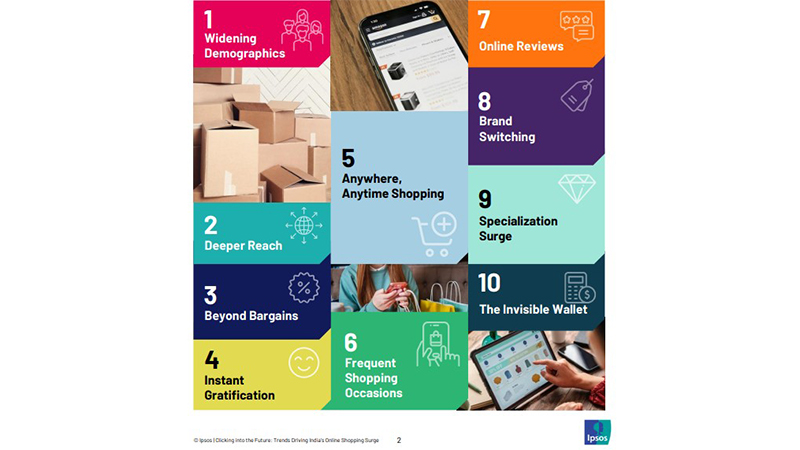
    And here’s the billion-dollar question: how does this online shopping surge compare to traditional retail? Brace yourself—while India’s total retail market is valued at $1.3 trillion, e-commerce and q-commerce together make up $100 billion, a fraction of the pie but growing at an unstoppable pace. With a mix of primary and secondary research, the study highlights ten key trends that will determine the winners and losers in this digital shopping sprint.

    Who’s clicking more?

    Move over, men! Online shopping is no longer their exclusive playground. The report finds that 53 per cent of online shoppers are male, while 47 per cent are female, proving that shopping carts are now evenly divided. And it’s not just Gen Z making impulse purchases—Gen X shoppers (19 per cent) are getting in on the action, while millennials (23 per cent) and Gen Z (30 per cent) continue their love affair with online retail.

    India’s digital shopping boom expands beyond big cities. E-commerce is no longer an exclusive club for city dwellers. The study finds that 45 per cent of internet users live in rural India, and 20-25 per cent hail from small towns and non-metro areas. In fact, 2 in 10 shoppers from these regions are clicking their way through digital aisles, proving that online retail has bulldozed past geographical barriers.

    And what’s in their carts? Urban shoppers stack up on groceries, but tier 2 and 3 town shoppers are all about fashion statements—because who says small-town swagger isn’t a thing? A big shoutout to Jio for spreading free 4G like wildfire, ensuring that buffering is no longer an excuse for not indulging in retail therapy.

    Convenience wins over discounts—Yes, really! Deals are great, but 68 per cent of consumers say speed and convenience are now the primary reasons for shopping online. Discounts remain important, with 61 per cent still swayed by offers, but convenience has taken the lead. Gen X shoppers (75 per cent) and women (73 per cent) prioritise ease over price cuts, while men remain equally influenced by both convenience (64 per cent) and discounts (64 per cent).

    Ipsos India country service line leader, market strategy & understanding & lead shopper insights Archana Gupta said, “We are witnessing an unprecedented shopper traffic towards online shopping, across demographics and length and breadth of the country, across big towns, small towns with e-commerce, getting a further impetus through q-commerce, highlighting a heightened emphasis on convenience and speed. There is also the increasing emerging trend among online shoppers of choosing alternate brands, in the absence of preferred brands, bringing the focus on building consumer loyalty, re-stocking and replenishments and analysing consumer choices during peak hours of browsing.”

    Shoppers are increasingly impatient, with 31 per cent finding online shopping faster than visiting a store. This trend is strongest among Gen X (41 per cent), who appreciate not having to leave their sofas to get what they need. And if your favourite item is out of stock? Too bad! Stockouts are seen as lost opportunities, making real-time availability and pop-up deals crucial for conversion.

    The 24/7 shopping culture is here to stay. Unlike traditional brick-and-mortar stores, online shopping never sleeps. 31 per cent of consumers love the ability to shop anytime, anywhere, with Gen X (39 per cent) leading this trend. Q-commerce platforms and food delivery apps have taken this a step further, fulfilling orders at midnight and beyond, ensuring consumers get their cravings met on demand.

    Impulse buying is now a lifestyle. 66 per cent of q-commerce users shop at least once a week or more frequently, leading to changing stock-up behaviours. Smaller SKUs and instant availability are now key as shoppers opt for quick replenishments instead of bulk purchases.

    Forget window shopping—today’s consumers read before they buy. 54 per cent of shoppers always check reviews, while 40 per cent do so sometimes. Without the ability to touch and feel products, reviews and influencer recommendations have become the new trust signals, guiding purchasing decisions.

    Brand Loyalty? Not So Much

    With so many choices at their fingertips, consumers are brand-hopping more than ever. 60 per cent of apparel shoppers and 55 per cent of grocery shoppers say they will switch brands if their preferred one is unavailable. To stay relevant, brands need to ensure seamless availability and work harder on loyalty strategies.

    Why browse a cluttered marketplace when you can shop on a niche platform? 60 per cent of consumers use q-commerce sites like Blinkit, Zepto, and Swiggy Instamart, with most using multiple platforms. Brands must ensure they have a clean, clutter-free presence across all platforms, with AI-powered recommendations to capture customer attention.

    The ease of online shopping comes with a catch—48 per cent of consumers admit they have no idea how much they are spending online. With digital payments removing the psychological barrier of handing over cash, budgeting tools are now more critical than ever.

    “The online shopping landscape presents both opportunities and challenges for marketers. Shoppers are highly impatient, switching brands and looking for instant gratification. The online channel provides wider reach, overcoming the hurdles posed for physical distribution through traditional channels,” said Ipsos Shopper Insights research director Shruti Patodia. As brands navigate this fast-changing landscape, staying ahead of emerging trends will be the key to winning consumers’ hearts—and carts.

  • India continues to be the second most economically confident nation: study

    India continues to be the second most economically confident nation: study

    MUMBAI: India continues to be the second most economically confident nation globally on the back of improved performance by industry and services sector, according to a report by global research firm Ipsos.


    According to the ‘Ipsos Economic Pulse of the World’ study, Saudi Arabia (94 per cent) solidified its position at the top of the national economic assessment in February 2015, followed by India (80 per cent), Germany (76 per cent), Sweden (73 per cent), China (71 per cent), and Egypt (61 per cent).


    The lowest average global economic assessment this month is in Italy (eight per cent). Close behind are France (10 per cent), Brazil (12 per cent), Spain (12 per cent), South Korea (13 per cent) and Hungary (16 per cent).


    One in two (50 per cent) Indians believe that the local economy, which impacts their personal finance is good, a sharp drop of five points.


    Indians are very hopeful that the Narendra Modi-led NDA government will continue making progress on its domestic reforms agenda and encourage investments that will trigger economic growth and create more jobs; with more than six in ten (64 per cent) people expecting that the economy in their local area will be stronger in next six months, a rise of two points making India the most optimistic country globally.


    “The Indian economy is reviving, aided by positive policy actions by the government that has improved investors’ confidence and lower global oil prices. However, India needs to revitalize the investment cycle and fast-track structural reforms to speed up growth further,” said Ipsos managing director – India Amit Adarkar.


    “India – Asia’s third-largest economy is expected to grow faster than China in the next few years backed by strong GDP growth, low inflation and stable development focused government at the center,” added Adarkar.


    The online Ipsos Economic Pulse of the World survey was conducted in February 2015 among 18,235 people in 24 countries.


    Starting the New Year on a positive note, the average global economic assessment of national economies surveyed in 24 countries is down one point as 40 per cent of global citizen’s rate their national economies to be ‘good’.


    Countries with the greatest improvements in this wave: Saudi Arabia (94 per cent, +7 pts.), Belgium (39 per cent, +6 pts.), Japan (26 per cent, +3 pts.), Argentina (24 per cent, +3 pts.), Mexico (22 per cent, +3 pts.), France (10 per cent, +3 pts.), Russia (28 per cent, +2 pts.), Sweden (73 per cent, +1 pts.), South Africa (27 per cent, +1 pts.) and Spain (12 per cent, +1 pts.).


    Countries with the greatest declines: China (71 per cent, -9 pts.), Egypt (61 per cent, -6 pts.), Germany (76 per cent, -5 pts.), Brazil (12 per cent, -5 pts.), Canada (59 per cent, -4 pts), the United States (47 per cent, -4 pts.), Australia (56 per cent, -2 pts.), Great Britain (44 per cent, -2 pts), Turkey (43 per cent, -2 pts), and Poland (25 per cent, -1 pts.).


    Saudi Arabia (68 per cent) regains the top position in the local economic assessment, which impacts their personal finance. Sweden (59 per cent) is in the distant second, followed by China (53 per cent), Germany (53 per cent), Israel (51 per cent), India (50 per cent) and Canada (40 per cent). Small minority assess their local economy as ‘good’ in Italy (11 per cent) followed by Hungary (12 per cent), South Korea (13 per cent), Spain (13 per cent), France (15 per cent), Japan (15 per cent) and Mexico (15 per cent).


    India (64 per cent) remains in the lead of the future outlook assessment, followed by Saudi Arabia (60 per cent), Brazil (51 per cent), China (44 per cent), Egypt (44 per cent), Mexico (38 per cent) and Argentina (32 per cent). Once again, only a fistful in France (five per cent) expect their local economy to be strong six months from now, followed by Israel (eight per cent), Belgium (10 per cent), Sweden (10 per cent), Hungary (11 per cent), South Korea (11 per cent), Italy (12 per cent), Poland (12 per cent) and Japan (14 per cent).

  • Modi effect: India’s economic confidence upbeat, reports Ipsos

    Modi effect: India’s economic confidence upbeat, reports Ipsos

    MUMBAI: The Lok Sabha elections of 2014 were won on the promise of ‘achhe din aane wale hai’ (good days are going to come).


    And riding on that hope, Indians are very confident that Narendra Modi-led NDA government will carry on making progress on its domestic reforms agenda and encourage investments that will trigger economic growth and create more jobs.
     
    With more than seven in 10 (71 per cent) people expecting that the economy in their local area will be stronger in next six months, makes India the most optimistic country in the world.


    Indians have emerged as the second most confident people about their economy globally by end of 2014. This is on account of falling inflation due to lower oil prices, government’s commitment to contain fiscal deficit, promote investment and economic development, according to a report by global research firm Ipsos.

     
    According to the ‘Ipsos Economic Pulse of the World’ study, India’s economic confidence level has shot up to 81 per cent in December 2014, a very significant rise of 29 points over the past 12 months.

    More than half, 53 per cent Indians believe that the local economy, which impacts their personal finance is good. “The repo interest rate cut by RBI on Thursday from 8 per cent to 7.75 per cent is expected to boost economic confidence and add further momentum to economic growth,” said Ipsos India managing director Amit Adarkar.


    “The decision was primarily guided by dip in inflation, a sharp fall in global crude prices and expectations that the government would be doing enough to keep the fiscal deficit in check,” he added.


    The online Ipsos Economic Pulse of the World survey was conducted in November 2014 among 19,152 people in 24 countries.

     
    The clear winners in economic confidence recovery over the past 12 months in 2014 include India (+29), Great Britain (+19), China (+17), Russia (+12, but with a precipitous slide over the past four months (-18)), Poland (+11), United States (+11), Spain (+10) and Saudi Arabia (+5). The clear losers include Brazil (-11), South Korea (-11), and Argentina (-7).

     
    Those countries with marginal positive movement include Belgium (+2), Italy (+2), Egypt (+1), France (+1), Germany (+1), Hungary (+1) and Mexico (+1). Countries on positive watch include China (although it may have peaked), Great Britain, Poland, Spain and the United States.

     
    Those countries with marginal negative movement include Canada (-1), South Africa (-1), and Turkey (-2). Countries on negative watch include Argentina, Belgium, Brazil and Sweden.


    After showing slight improvement in November 2014, the average global economic assessment of national economies surveyed in 24 countries is down one point as 40 per cent of global citizen’s rate their national economies to be ‘good’.


    Despite two point decline, Saudi Arabia (85 per cent) remains at the top of the national economic assessment in December 2014, followed by India (81 per cent), China (78 per cent), Germany (74 per cent), Canada (67 per cent) and Sweden (67 per cent). At the other end of the assessment, only a small minority rate their national economy as good in France (6 per cent), followed by Italy (8 per cent), Spain (10 per cent), South Korea (11 per cent), Hungary (13 per cent) and Romania (16 per cent).


    Gaining momentum since last sounding, China (63 per cent) takes the lead in the local economy assessment ratings, which impacts people’s personal finance, followed by Saudi Arabia (61 per cent), India (53 per cent), Germany (52 per cent), Canada (47 per cent), Sweden (47 per cent) and Australia (40 per cent). Only one in ten (9 per cent) in Spain agree that the state of the current economy in their local area is ‘good’, followed by Italy (10 per cent), Japan (10 per cent), Romania (10 per cent), France (12 per cent), South Korea (13 per cent) and Hungary (14 per cent).


    Once again, India (71 per cent) holds the lead in the future outlook assessment rating. The rest of the highest-ranking countries are: Brazil (58 per cent), China (53 per cent), Saudi Arabia (50 per cent), Egypt (46 per cent), Argentina (34 per cent) and Mexico (31 per cent). The lowest-ranking country this month is France (4 per cent), followed by Italy (9 per cent), Japan (10 per cent), Belgium (11 per cent), Hungary (11 per cent), South Korea (11 per cent) and Germany (15 per cent).


  • Indians Optimistic About Future: Ipsos Study

    Indians Optimistic About Future: Ipsos Study

    MUMBAI: 50 per cent Indians are optimistic about Indian economy and expect that the economy will be stronger in next six months, a rise of two points, according to a report by global research firm Ipsos.


    According to the “Ipsos Economic Pulse of the World” study, India’s economic confidence level has declined to 58 per cent in March 2014, a decline of three points. However, India continues to hold sixth position as the most economically confident country in the world after Saudi Arabia, Sweden, Germany, China and Canada.


    Only 35 per cent Indians believe that the local economy which impacts their personal finance is good, a drop of two points.


     “Inflation in India increased on account of higher food costs in March, breaking a three-month easing trend, this would give RBI little scope to support the economy amid fresh signs of slowdown,” said Mick Gordon, CEO, Ipsos in India.


     “However Indians are hopeful that the new central government which will come to power with fresh mandate in May will bring in stability, push economic growth and build investor confidence,” added Gordon.


    The online Ipsos Economic Pulse of the world survey was conducted in March 2014 among 18,675 people in 25 countries.


    Holding steady for a second month in a row, the average global economic assessment of national economies surveyed in 24 countries remains unchanged this month as 38 per cent of global citizens rate their national economies to be ‘good.’


    Saudi Arabia (86 per cent) remains the top-ranked country on this measure, but runner-up countries are not far behind: Sweden (80 per cent), Germany (76 per cent), China (69 per cent), Canada (66 per cent) and India (58 per cent). Those least likely to rate their national economies as ‘good’ are in Spain (6 per cent) and Italy (6 per cent) followed by France (10 per cent), South Korea (16 per cent), Hungary (17 per cent) and Argentina (18 per cent).


    Countries with the greatest improvements in this wave: Sweden (80 per cent, 11pts), Russia (39 per cent, 7pts), South Africa (21 per cent, 4pts), Canada (66 per cent, 3pts), Hungary (17 per cent, 3pts) Germany (76 per cent, 2pts) and France (10 per cent, 2pts).


    Countries with the greatest declines: Egypt (36 per cent, -20pts), South Korea (16 per cent, -7pts), Japan (25 per cent, -4pts), Argentina (18 per cent, -3pts), Poland (22 per cent, -3pts), Australia (54 per cent, -3pts) and India (58 per cent, -3pts).


    Six in ten Brazilians (58 per cent) indicate they predict their local economies will be stronger in the next six months. The rest of the highest-ranking countries are: India (50 per cent), Saudi Arabia (49 per cent), Indonesia (42 per cent), China (36 per cent), Argentina (33 per cent) and Egypt (33 per cent).


    Only one in twenty (5 per cent) of those in France expect their future local economies will be “stronger” in the next half year, followed by  Belgium (8 per cent), Hungary (12 per cent), Poland (14 per cent), and South Korea (14 per cent).

  • IPSOS Study: Watching ‘Live TV’ mainstay, but other forms of viewing catching on

    IPSOS Study: Watching ‘Live TV’ mainstay, but other forms of viewing catching on

    BENGALURU: Though a majority of Indians prefer watching ‘live TV’, other forms of content viewing such as streaming or downloading from a computer, internet TV, etc., are catching up reflect a new online poll of 15,551 adults in 20 countries conducted by Ipsos OTX – the global innovation centre for Ipsos, a global market and opinion research firm.


     “With so many new ways to view television programming, it might come as a surprise that 82 per cent of TV watchers in India still watch their shows “live on TV” – that is, on a regular television at the time they are programmed to appear. The indication, then, would be that television is still a prime venue for marketers to advertise,” said Ipsos in India head marketing communication, Biswarup Banerjee.


     “That is, of course, unless those couch-comfortable viewers are attached to their remote control devices and start surfing every time commercials come on or if they reach for their mute buttons when commercials are airing. What is clear is that while new televisions are capability-packed, most people watch TV as they are used to watching it – live,” added Banerjee.


    Most (82 per cent) Indian respondents who watch TV indicate they usually watch TV programming “live”, although other popular modes of watching are catching on like streaming or downloading from a computer (40 per cent), streaming from the internet to TV (23 per cent), using a DVR or other recording device attached to a TV (16 per cent), and on mobile device (21 per cent) says the study.


    Traditional ‘live’ TV watching is significantly more popular among Indian respondent’s ages 50-64 (89 per cent) compared to those 35-49 (88 per cent) and under 35 (76 per cent). Other modes of watching TV programming are more popular among younger respondents: on computer and laptop – under 35 (35 per cent), 35-49 (25 per cent), 50-64 (17 per cent); streaming from the internet – under 35 (20 per cent), 35-49 (16 per cent), 50-64 (11 per cent); on mobile device – under 35 (15 per cent), 35-49 (10 per cent), 50-64 (5 per cent). Using a DVR or other recording device attached to a TV is most popular with those 50-64 (18 per cent) compared to 35-64 (16 per cent) and under 35 (15 per cent).


    TV watching across geographies

    Live TV

    Those most likely to choose watching TV programming on live TV are from France (93 per cent), Spain (93 per cent), Germany (92 per cent), Turkey (90 per cent), Argentina (89 per cent), Sweden (89 per cent), and Australia (89 per cent). Those rounding out the middle of the pack are from: Brazil (89 per cent), Italy (89 per cent), South Korea (87 per cent), Great Britain (83 per cent), Mexico (82 per cent), Poland (82 per cent), and India (82 per cent). Those least likely to watch TV programming live are from: Japan (82 per cent), Russia (81 per cent), South Africa (81 per cent), United States (81 per cent), China (80 per cent), and Canada (77 per cent).


    TV on computer or laptop

    Watching TV on computer or laptop is chosen most often by those from: China (52 per cent), Russia (43 per cent), Turkey (42 per cent), India (40 per cent), Sweden (35 per cent), South Korea (31 per cent), and Great Britain (29 per cent). Those clustering around the center of the list are from: Poland (27 per cent), South Africa (26 per cent), Canada (26 per cent), Germany (24 per cent), Mexico (24 per cent), Spain (23 per cent), and Brazil (21 per cent). Those from Argentina (20 per cent), the United States (20 per cent), Australia (19 per cent), Italy (17 per cent), Japan (14 per cent) and France (12 per cent) are least likely to watch TV on computer or laptop.


    Streaming from the internet

    Streaming from the internet to TV is most popular among those in Turkey (44 per cent), Russia (36 per cent), China (33 per cent), South Korea (25 per cent), India (23 per cent), Sweden (19 per cent), and Great Britain (17 per cent). Those in the middle of the pack are from: Canada (17 per cent), the United States (17 per cent), Brazil (15 per cent), Mexico (13 per cent), Spain (12 per cent), Italy (11 per cent), and Australia (10 per cent). Those from South Africa (9 per cent), Argentina (9 per cent), Poland (7 per cent), Germany (5 per cent), France (5 per cent), and Japan (3 per cent) are least likely to choose streaming from internet to TV.


    DVR or other recording devices attached to a TV

    Those who are most likely to use a DVR or other recording devices attached to a TV are from Japan (45 per cent), the United States (40 per cent), Canada (32 per cent), Great Britain (31 per cent), South Africa (27 per cent), and Australia (25 per cent). Those in the middle of the pack are from Poland (18 per cent), India (16 per cent), Germany (11 per cent), France (11 per cent), China (10 per cent), Mexico (9 per cent), and Sweden (8 per cent). Respondents from Turkey (7 per cent), Brazil (7 per cent), Spain (7 per cent), Italy (7 per cent), Argentina (6 per cent), South Korea (5 per cent), and Russia (4 per cent) are least likely to use a DVR or other recording devices.


    TV on mobile device

    Watching TV programming on mobile device is most popular among respondents who are from South Korea (26 per cent), China (25 per cent), India (21 per cent), Turkey (20 per cent), Mexico (13 per cent), Great Britain (12 per cent), and Sweden (12 per cent). Those in the middle are from the United States (10 per cent), Australia (9 per cent), Spain (9 per cent), Brazil (8 per cent), Canada (7 per cent), South Africa (7 per cent), and Italy (7 per cent). Least likely to watch TV on mobile device are respondents from Argentina (7 per cent), Japan (6 per cent), Poland (5 per cent), Russia (5 per cent), Germany (4 per cent), and France (4 per cent).

  • 69% Indians feel SMS is an easier way to express than in person: Ipsos Study

    69% Indians feel SMS is an easier way to express than in person: Ipsos Study

    MUMBAI: Seven in ten (69 per cent) Indians admit they say things in that they would not say voice-to-voice or person-to-person; compared to 43 per cent globally, finds a new poll conducted by Ipsos OTX – the global innovation center for Ipsos.


    “Text or Email is comparatively an impersonal medium and people feel less hesitant to speak their mind. Perhaps that is the reason why majority of Indian would rather avoid saying things in person or over phone,” said Ipsos – head marketing communication Biswarup Banerjee.


    “For example people prefer to share sensitive comments like – “I love you.” “Our relationship is over.” “You are fired.” “I failed in exam.” in writing rather than saying over the phone or face-to-face to avoid embarrassment when they are physically involved,” added Banerjee.


    Demographically in India, age appears to be the most significant variable as those under the age of 35 (75 per cent) are considerably more likely than those aged 35-49 (67 per cent) and those 50-64 (52 per cent) to text/email things they won’t say out loud. Education is also a significant factor as seven in ten (69 per cent) of those with a high level of education say they do so compared with 100 per cent among those with low education. Both Indian women (70 per cent) and men (68 per cent) feel more comfortable texting or emailing sensitive subject rather than voicing it out.


    Strong majorities in China (90 per cent) and South Korea (80 per cent) say they text or email things they would not say over the phone or in person. Seven in ten of those in Indonesia (76 per cent), India (69 per cent) and Saudi Arabia (67 per cent) say so. Following next are Turkey (58 per cent), Brazil (48 per cent), Japan (46 per cent), South Africa (45 per cent), Argentina (42 per cent), Mexico (42 per cent) and Russia (39 per cent). Only three in ten or less in most of the countries surveyed say they reserve some communication for text or email: Canada (34 per cent), Australia (33 per cent), France (33 per cent), Great Britain (32 per cent), Poland (32 per cent), Belgium (31 per cent), Italy (31 per cent), United States (30 per cent), Germany (25 per cent), Hungary (24 per cent), Spain (24 per cent), Norway (22 per cent) and Sweden (22 per cent).


    Ipsos conducted this study among 18,502 adults in 25 countries in the month of August.