Tag: IPSOS

  • JioStar rolls out the red carpet for brands with its CTV playbook

    JioStar rolls out the red carpet for brands with its CTV playbook

    MUMBAI: JioStar Entertainment is turning up the volume on India’s Connected TV (CTV) revolution with the launch of its first-ever CTV Playbook — a glossy, data-rich guide to decoding the premium, couch-loving consumer.

    At a time when the nation’s living rooms are morphing into digital-first, high-attention arenas, the playbook unpacks how brands can ride the CTV wave to deliver deeper stories, smarter targeting, and sharper results. Built in partnership with research giant Ipsos, the report combines national survey insights with platform analytics from June 2025 to offer a panoramic view of India’s CTV surge.

    At the heart of the playbook is the R.A.C.E. framework — Reach, Attention, Connection, and Effectiveness — a four-step mantra that helps brands move beyond vanity metrics into full-funnel firepower. Think targeted storytelling that doesn’t just get seen, but remembered and acted on.

    Watch time on JioHotstar’s CTV platform has exploded by 85 per cent, with 40 per cent of all streaming now happening on the big screen. Average daily CTV viewing stands at over 100 minutes — that’s 1.5x more than mobile. What’s more, co-viewing on JioHotstar clocks in at a staggering 3.1x, with 70 per cent of users watching with family and 66 per cent doing so together.

    And it’s not just quantity, but quality. The report reveals 90 per cent of CTV viewers come from affluent homes, 81 per cent are NCCS AB, and over 60 per cent live in India’s top 8 metros. In short, CTV is where the money is — and where the marketing should be.

    The content ecosystem packs a punch too: 22,000+ titles across 19 languages, 250+ originals, 7,000+ global hits from 10+ international studios. Impressively, 91 per cent of JioHotstar Specials’ CTV viewers are paid subscribers — that’s 50 per cent higher than the platform average.

    “Connected TV is no longer just a screen—it’s becoming the new center of gravity in India’s digital households. With co-viewing at 3.1X, 90 per cent of audiences being affluent, and an 85 per cent surge in watch time, the scale and quality of engagement on JioHotstar’s CTV platform is unmatched. This Playbook is a strategic response to this shift—built to help marketers harness the full-funnel potential of big-screen storytelling. From lean-in attention to measurable business outcomes, CTV offers an unmatched canvas for brands to move beyond impressions to impact. At JioStar, we’re excited to lead the charge in shaping this premium, intent-rich space into a high-performance marketing platform for the future”, said JioStar head of revenue, entertainment & international, Ajit Varghese.

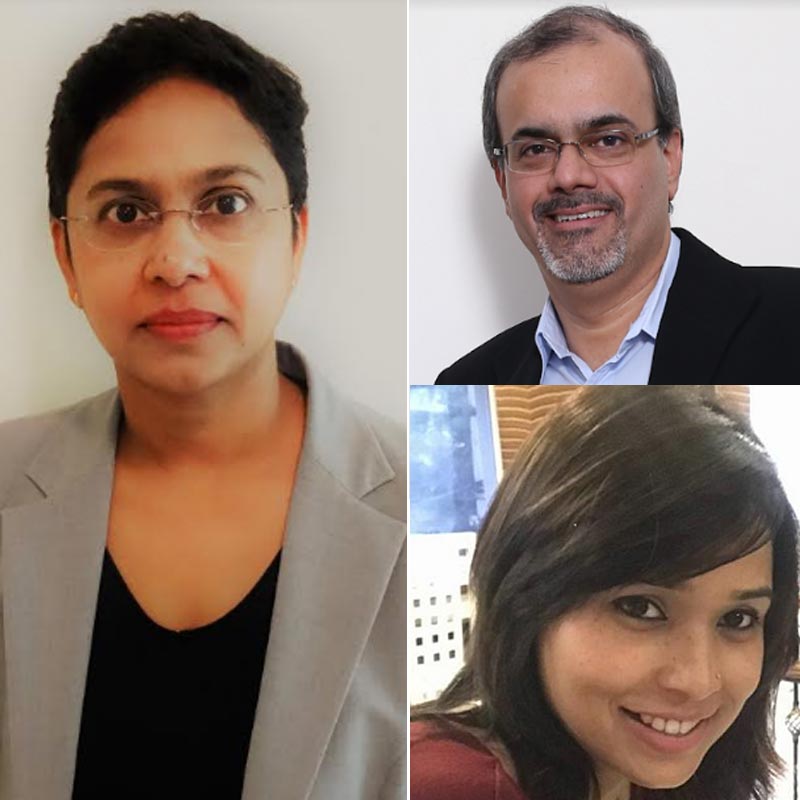
    “The shift toward CTV within the digital ecosystem is a behavioural shift in how families consume, co-view, and even co-decide. Our research with JioHotstar supports what the data shows: CTV audiences are more premium, and more likely to recall and act on brand messaging delivered in a big-screen environment,” said Ipsos managing director – research, Jyoti Malladi.

    Regional storytelling is having its moment too. While Hindi and English dominate, regional languages especially Malayalam are breaking barriers, with over 80 per cent of Malayalam CTV viewers coming from outside the community.

    With the living room now centre stage for digital India, JioStar’s playbook gives advertisers the cues they need to own it, encouraging marketers to #ThinkCTVThinkJioHotstar.

    jiostar

    (If you are an Anime fan and love Anime like Demon Slayer, Spy X Family, Hunter X Hunter, Tokyo Revengers, Dan Da Dan and Slime, Buy your favourite Anime merchandise on AnimeOriginals.com.)

  • Ipsos buys into behavioural brilliance with The BVA Family acquisition

    Ipsos buys into behavioural brilliance with The BVA Family acquisition

    MUMBAI : Ipsos has officially acquired The BVA Family, ticking off all regulatory boxes and marking a major move to bulk up its capabilities in customer experience, behavioural science, and public sector research. The deal, finalised after consultations with employee reps in France and competition greenlights, adds muscle not just at home, but also in the UK and Italy.

    With this acquisition, Ipsos gains a sharp edge in point-of-sale behaviour analysis and government services research — areas where BVA has carved a name for itself. Of particular note is BVA’s behavioural science-led approach and its globally respected packaging research arm, Prs in Vivo.

    Ipsos CEO Ben Page stated, “We are delighted to welcome The BVA Family teams to Ipsos. They now benefit from our global infrastructure, and the opportunities our scale brings them, while our clients will have access to new, innovative solutions. With our strong cultural fit and complementary set of services, we are poised to deliver even greater value to the businesses and organizations we serve.”

    The BVA Family chairmen Gerard Lopez and Pascal Gaudin added, “We are pleased to join forces with Ipsos, one of the world leaders in market research. This partnership allows us to leverage its international presence and solid competencies, significantly enhancing our capabilities to provide cutting-edge analysis and understanding of society and markets to our clients.” Ipsos France will now operate under the name Ipsos Bva, while the teams in Italy will use the name Ipsos Doxa. In the UK, BDRC will operate under the Ipsos brand.

    The acquisition allows Ipsos to scale up BVA’s methodologies and deploy them across its wider international footprint, signalling a serious intent to lead in the evolving landscape of human-centric research.

    (If you are an Anime fan and love Anime like Demon Slayer, Spy X Family, Hunter X Hunter, Tokyo Revengers, Dan Da Dan and Slime, Buy your favourite Anime merchandise on AnimeOriginals.com.)

  • All access pass Ipsos unlocks Total Access for a fuller view of Indian consumers

    All access pass Ipsos unlocks Total Access for a fuller view of Indian consumers

    MUMBAI: If data is the new oil, Ipsos just laid the pipeline. Global research and advisory giant Ipsos has launched Total Access in India, a sweeping new initiative that promises to crack the complexity of India’s consumer landscape with a one-roof data collection model that is as vast as it is versatile. With India’s diversity often leaving marketers data-drunk but insight-parched, Total Access combines five key modes mobile, online, hybrid, multi-mode and offline to serve a wider, deeper, and more inclusive view of the Indian consumer. And it’s going live immediately.

    “Total Access addresses client concerns around consumer representation,” said Ipsos India CEO Amit Adarkar. “It’s about transformational scale, with responses from across socio-economic classes, towns big and small, languages, literacy levels, and even internet access. And yes, every response is human verified.”

    Clients will now have access to a whopping 3.5 million-strong panel base, India’s largest, according to Ipsos. From mobile-first surveys and multilingual outreach to DIY capabilities, AI-based transcription, moderation and dashboard-based reporting, Total Access is basically research-as-a-service, turbocharged.

    “Earlier, clients would need to juggle multiple vendors to access diverse demographic data across formats. Now, all modes are integrated providing a more holistic and representative picture,” added Ipsos India chief client officer Geeta Lobo.

    In short, Ipsos is no longer just gathering data, it’s bringing the whole country into the room, whether you’re in a boardroom in Mumbai or a village in Manipur. With Total Access, the days of skewed sampling and fragmented insights may finally be numbered.

  • Ipsos launches AI-powered video ad evaluation tool in India

    Ipsos launches AI-powered video ad evaluation tool in India

    MUMBAI:  Global market research giant Ipsos has unveiled Creative|Spark AI, a cutting-edge advertising evaluation solution that delivers insights on video advertisements within minutes, hitting the Indian market today alongside 23 other countries.

    The revolutionary tool combines human intelligence with artificial intelligence to predict viewer reactions to advertisements across linear TV, YouTube and social media platforms. Built on Ipsos’ existing Creative|Spark assessment framework and trained on 18,000 human response cases from the past five years, the solution operates on the company’s secure Gen AI platform, Ipsos Facto.

    “This is a game-changer for advertisers juggling tight budgets and pressing deadlines,” said Shaun Dix, Ipsos’ global leader of creative excellence. “Particularly with the enormous spend flowing into social media advertising, brands can now evaluate single ads or hundreds of creatives in as little as 15 minutes.”

    Ipsos India head brand health tracking and creative excellence Shalini Sinha emphasised the tool’s significance for the Indian market: “Creative|Spark AI offers an efficient, budget-friendly solution that’s particularly valuable for sectors not yet fully embracing creative assessment but eager for actionable insights.”

    The platform doesn’t simply analyse advertisements—it provides predictive insights at “a fraction of the cost of consumer surveys,” according to Ipsos India creative excellence and creative/Spark AI head Shrutika More. 
    She highlighted the tool’s ability to help marketers “optimize testing budgets, increase campaign ROI, and deliver results at the speed and scale demanded by today’s market.”

    The solution is immediately available in five Asia-Pacific markets—Australia, India, Japan, South Korea and Vietnam—as either a self-service option on Ipsos Digital or through full-service engagement with Ipsos teams. The company plans to roll out the tool across additional markets throughout 2025.

    For India’s rapidly evolving advertising landscape, this AI-powered solution promises to deliver what many marketers have long sought: lightning-fast creative assessment with the precision of human insight at scale.

  • Indians among most progressive on gender equality, Ipsos survey finds

    Indians among most progressive on gender equality, Ipsos survey finds

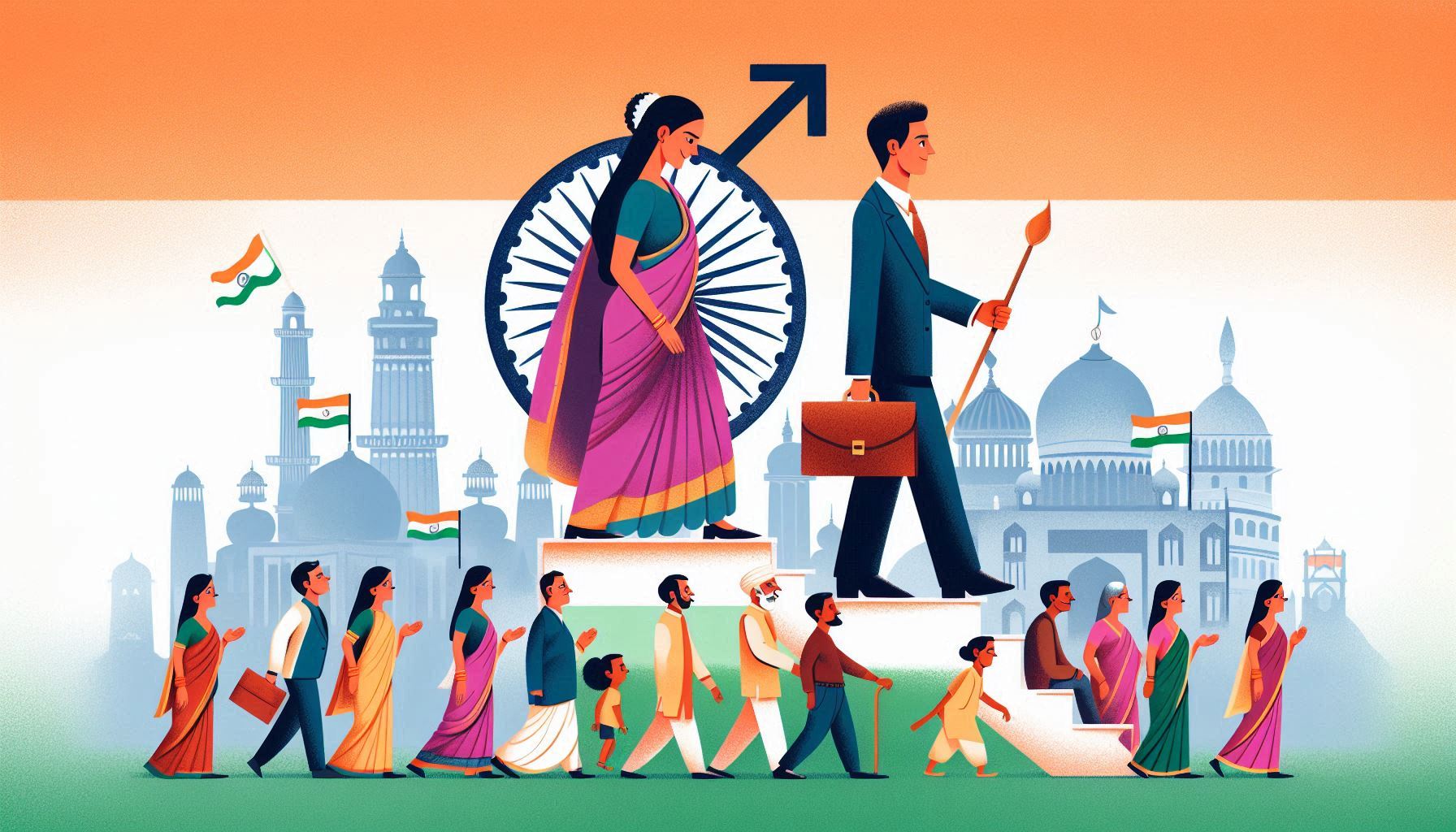
    MUMBAI — Indians rank among the world’s most progressive citizens in their views on gender equality, with 78 per cent believing in the importance of achieving gender parity, according to a new global survey released ahead of International Women’s Day 2025.

    The 30-country study by Ipsos reveals strong alignment between Indian men (77 per cent) and women (80 per cent) on gender equality issues, contrasting sharply with more polarised views in South Korea (52 per cent) and the Netherlands (54 per cent).

    Nearly half of Indians surveyed (48 per cent) perceive domestic responsibilities such as housekeeping and cooking as shared obligations rather than gender-specific tasks. Only 28 per cent attributed these responsibilities solely to women, while 18 per cent associated them with men.

     Ipsos India chief executive officer Amit Adarkar  noted the significance of these findings in light of the World Economic Forum’s projection that full gender parity remains over a century away.

    “According to the WEF, at the current rate of progress, it would take until 2158—roughly five generations from now—to reach full gender parity,” said Adarkar. “It is heartening to see that both men and women in India are aligned in their views on equal treatment and opportunity for women.”

    The survey, conducted in alignment with the International Women’s Day 2025 theme of #AccelerateAction, identified several key findings about Indian attitudes:
    * 69 per cent believe women holding positions of responsibility in business and government is crucial for accelerating gender equality
    * 66 per cent perceive increased pressure on men to support gender equality
    * 64 per cent feel that in promoting gender equality, men are sometimes discriminated against
    * 60 per cent consider men who stay home to care for children as “less of a man”—a view that has become more pronounced since 2019, when only 39 per cent held this opinion

    Regarding gender stereotypes, the survey revealed increasingly progressive attitudes in several areas. For unpaid family care, including childcare and looking after elderly relatives, 53 per cent of Indians attributed responsibility to both genders. Similar balanced views were expressed on gender-based violence (48 per cent), physical assault (48 per cent), parental leave (48 per cent), and healthcare access (52 per cent).

    Adarkar attributed these progressive shifts to changing family structures and government initiatives.
    “Urban Indians would be by far more progressive in their views on gender equality versus those residing in rural India. With urban pressures of work and home responsibilities, parents are showering their love on their child minus gender bias. Even rural India is witnessing progressive shifts with projects like Beti Bachao, Beti Padhao and Lakhpati Didis,” he said.

    The Ipsos survey interviewed 24,269 people across 30 countries between 20th December 2024 and 3rd January 2025. The India sample comprised approximately 2,200 individuals, with 1,800 interviewed face-to-face and 400 online.

  • Golden Key Awards unlock excellence in market research with top honours

    Golden Key Awards unlock excellence in market research with top honours

    MUMBAI: The world of market research and insights had its moment in the spotlight as the Market Research Society of India (MRSI) hosted the Golden Key Awards 2024 on 21 February in Mumbai. Recognising trailblazers, innovators, and rising stars, the awards celebrated excellence across research, analytics, and storytelling—shedding light on the game-changers shaping business intelligence.

    From emerging talent to technological breakthroughs, the event honoured individuals and organisations that are redefining the way data drives decisions. Aadya Sinha (Third Eye Integrated Services) clinched the Best Researcher Under 30 title, while Datamatics Global Services took home The Most Humane Organisation Award for its people-first approach. Kantar made a double impact, winning Best Operations Team of the Year and Best Client Servicing Team of the Year, reinforcing its stronghold in research operations. Meanwhile, Flipkart & Myntra earned the title of Best Client Insight Team of the Year for their prowess in consumer analytics.

    Adding strategic depth to the evening, Indian Chess Grandmaster Viswanathan Anand took the stage in a riveting conversation with Shafali Arora (Hindustan Unilever Limited), drawing parallels between chess and leadership. Anand’s insights on decision-making, precision, and long-term vision offered the audience a masterclass in critical thinking.

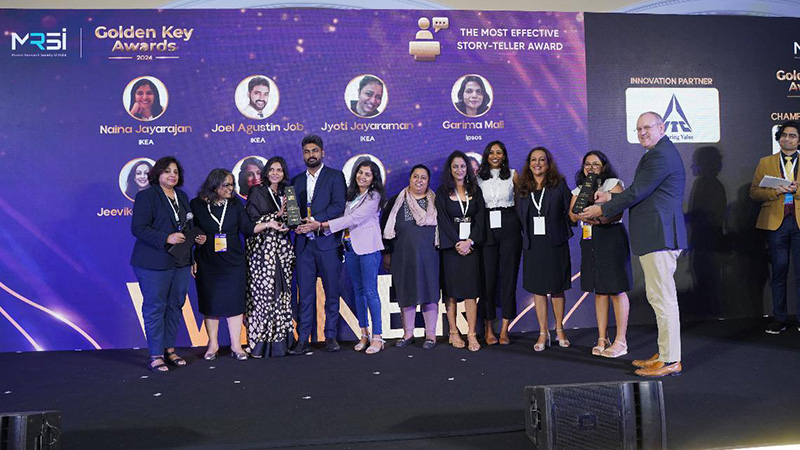
    The second segment of the awards, powered by ITC, recognised pioneering research and innovation. Ipsos & Ikea bagged The Most Effective Storyteller Award, while Metrix Research & Analytics took home Best Data Collection Innovation. Hindustan Unilever Limited secured Best Research Methodology Innovation, and Datamatics Global Services was awarded Best Use of Technology for its AI-powered research solutions.

    A lifetime of contributions to the market research industry was honoured with Lifetime Achievement Awards presented to C.K. Sharma and Ashok Das, while Lalit S. Kanodia received a Special Award for his pioneering role in analytics and technology-driven insights.

    The final category, powered by Kantar, saw Hindustan Unilever Limited emerge as a dominant winner, securing multiple titles, including Best Work in Emerging Sectors, Best Business Impact Through Analytics, and Best Business Impact Through Research. Ipsos was recognised for Best Developmental Research, while Flipkart Internet Pvt. Ltd. clinched Best Communication Crafting Research for its excellence in shaping brand narratives.

    With support from industry giants like Hindustan Unilever Limited, Nestlé, ITC, Amazon, Datamatics, NielsenIQ, and TATA Consumer Products, the 6th edition of the Golden Key Awards was more than a night of recognition, it was a celebration of research’s transformative power. As the market research field continues to evolve, MRSI remains committed to fostering innovation and excellence, ensuring that data-driven insights continue to steer the future of business strategy.

  • Ipsos secures dual honours at MRSI Golden Key Awards

    Ipsos secures dual honours at MRSI Golden Key Awards

    MUMBAI;  Global market research firm Ipsos has won two prestigious accolades at the Market Research Society of India (MRSI) Golden Key Awards 2024.

    The company shared “the Most Effective Storyteller” award with Ikea for their work creating immersive consumer engagement narratives that helped Ikea’s workforce better understand customer needs. The collaborative effort was led by Naina Jayarajan from Ikea and Garima Mall from Ipsos.

    Ipsos also claimed “The Best Developmental Research” award for its socio-economic survey of the marginalised Putthrai Vannar community, conducted for the Directorate of Adi Dravidar Welfare. The research, led by Tripti Sharma’s public affairs team, will inform future welfare policies and interventions.

    Ipsos India  CEO Amit Adarkar said: “Our endeavour is to deliver impactful work that achieves clients’ goals of topline growth and healthy bottomlines. Being recognised at this prestigious industry forum encourages us to keep enhancing our client delivery.”

    The MRSI Golden Key Awards recognise excellence in India’s market research and insights industry. Ipsos operates in 90 markets globally with over 20,000 employees.

  • Ipsos knows ‘where-to’ go with Aussie public research move

    Ipsos knows ‘where-to’ go with Aussie public research move

    MUMBAI: It’s a ‘where-to’ next for Ipsos in Australia! The global research giant has strengthened its foothold in the public sector with the acquisition of Whereto Research, a leading player in public policy and government communication evaluation.

    Whereto, based in Melbourne, is well-known for its expertise in assessing public sector strategies. Ipsos, which has been in Australia for over 25 years, now combines this local expertise with its international capabilities. The acquisition promises to offer a wider range of solutions to clients in both federal and state governments.

    Ipsos, ceo, Ben Page stated: “Whereto Research’s expertise in public sector and federal research in Australia, combined with Ipsos’ international presence in this space, will allow us to offer a broader range of solutions to our Australian clients. We look forward to collaborating with the Whereto Research teams to build the best business in Australia serving national and state governments’ research and evaluation needs.”

    Whereto Research, co-directors, Catherine Boekel & Penny Burke added: “Joining Ipsos is a tremendous opportunity for Whereto Research. Integrating into a leading international market research group will enable us to accelerate our development and offer our clients global solutions. We share the same passion for excellence and innovation with Ipsos, and we are convinced that this collaboration will create value for our clients and employees.”

    Ipsos is a global market research and polling company, operating in 90 markets and employing over 20,000 people.

  • Indian citizens trust defence forces and the PM the most: Ipsos survey

    Indian citizens trust defence forces and the PM the most: Ipsos survey

    MUMBAI : The news is not so good for all of us who are part of the media. Our tribe ranks even below the police in terms of the trust that the general public places in it, if one were to go by the results of the quarterly survey, the Ipsos IndiaBus Trust in Institutions, conducted by global research company’s Ipsos India..

    If the fourth estate is held in such low esteem by its primary customer,  the  Indian citizen, do media owners need to go back to the drawing board and do a rethink about their raison d’etre ? That’s question that begs an answer! An honest answer!

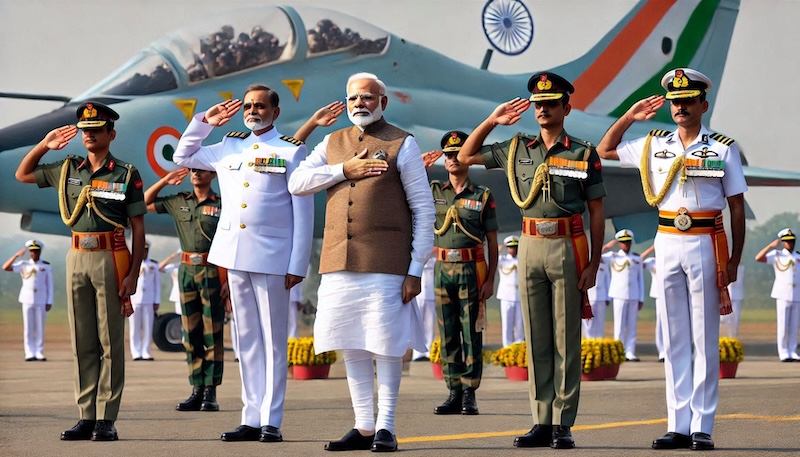
    The Ipsos survey revealed that the defence forces (army, air force and navy) are the most trusted  with a score of 56 pr cent, followed by Indian prime minister Narendra Modi who scored 45 per cent positive responses. The RBI came third with a 44 per cent score, followed by the supreme court. 

    Interestingly, all these institutions have improved their scores over the last quarter (in September) and have shown that the citizens have the highest faith in these institutions, as they continue to serve the nation with exemplary dedication and ethical work practices, says a press release issued by Ipsos India. To be fair even us media folks improved our trust score from 24 per cent in September 2024. But we are a far cry from the 36 per cent we notched up in June  2024.


    Trust list


    Politicians (20 per cent), political parties (21 per cent), community leaders (22 per cent), and religious leaders (24 per cent), have even more reasons to be worried as they continue to lead in the distrust list.

    The survey displayed certain pockets where the most trusted institutions have higher equity among the citizens.

    The defence forces have received higher trust scores among the tier1 citizens (71 per cent), the north zone (69 per cent), the west zone (68 per cent), the employed (67 per cent), tier2 (63 per cent), metros (62 per cent) and males (61 per cent) etc.  

    The PM of the country received highest scores in the north zone (62 per cent), tier1 (57 per cent) and tier 2 (57 per cent) cities, the west zone (52 per  cent), the employed (51 per cent) and males (48 per cent). Whlle the RBI was trusted most by the west zone (61 per cent), tier1 (59 per cent) and tier2 (54 per cent) citizens, the north zone (53 per cent) and the employed (52 per cent). Across these three institutions, they have a common thread of supporters with high trust – though only in the case of the RBI, trust is high in the west zone, Mumbai being the commercial capital of  India.
     

    Parijat chakrabortyIpsos India group service line leader, public affairs, corporate reputation, CSR & ESG Parijat Chakraborty pointed out that the topper  institutions are the backbone of the nation with their word being sacrosanct.  “After all, they have stood the test of time in serving the nation with transparency, equality and justice. All these institutions command respect – whether our defence forces, PM of the country, the RBI, the supreme court of India, the parliament – and their reputation has been built over years of impeccable delivery and service to the nation,” he elaborated.

    According to him politicians, political parties, community leaders, and religious leaders, are institutions that need to win the trust of the masses through greater transparency and fulfilment of their promises to the electorate and patrons on one hand and managing their reputation through visibility around their achievements via communication, not leaving anything to speculation. He highlighted one positive outcome from the survey for them. ”We see recovery in scores to the previous levels, after a dip in September,” he said.

    (For the doubting Thomases who doubt the survey’s authenticity, at least use it as a guide post. Ipsos IndiaBus is a monthly pan India omnibus – which also runs multiple client surveys-  that uses a structured questionnaire and is conducted by Ipsos India on diverse topics among 2200+ respondents from Sec A, B and C households, covering adults of both genders from all four zones in the country. The survey is conducted in metros, tier one, tier two and tier three towns, providing a more robust and representative view of urban Indians. The respondents were polled face to face and online. We have city-level quota for each demographic segments that ensure the waves are identical and no additional sampling error. The data is weighted by demographics and city-class population to arrive at a national average. )

  • Two in three Indians claim to be happy in August 2024: Ipsos IndiaBus Happiness Monitor

    Two in three Indians claim to be happy in August 2024: Ipsos IndiaBus Happiness Monitor

    Mumbai: Ipsos IndiaBus Happiness Monitor maps happiness quotient of Indians along the length and breadth of the country, across target groups, cohorts and demographics shows, largely Indians are a happy bunch. The torrid times notwithstanding, with extreme weather flare-ups and impact of rising cost of living, two in three Indians (65 per cent) claim to be happy in August 2024, though there has been a significant drop in happiness consecutively for two months: minus five per cent in Aug and previously of minus five per cent drop in July.  

    Citizens of the west zone (88 per cent), tier one (85 per cent), metros (74 per cent), the north zone (73 per cent), SEC A (72 per cent), tier 2 (70 per cent), high education (68 per cent), employed – part time/ full time (68 per cent), females (67 per cent), 18minus 30 years (67 per cent), full time parents/ homemakers (66 per cent), students/ pupils (65 per cent), 45 plus age group (65 per cent), SEC B (65 per cent), 31 minus 45 years (64 per cent), males (64 per cent), low education (64 per cent) were seen to be the happiest. Citizens in tier three (43 per cent), the east zone (44 per cent) and the south zone (46 per cent) reported lowest happiness levels.

    Elucidating on the findings of the survey, group service line leader, public affairs, corporate reputation, ESG and CSR – Parijat Chakraborty said, “Prima facie, while there is a significant dip in happiness levels from July, let’s not miss the woods for the trees – majority of Indians are in a happy state of mind, though the monsoon has wreaked havoc and adversely impacted several regions of India. We also see blips of dip in happiness levels across demographics, but once again majority of our citizens polled claim to be happy. The tragic rape and murder of a young doctor in Kolkata and the unrest in Manipur has seen happiness levels drop by minus 21 per cent in the East zone. Natural calamities have impacted  the southern region and the lower strata of society. On the other hand happiness has surged for the metros, tier1 cities and the west zone.”  

    Biggest contributors to happiness

    The survey further delved deeper to understand some of the areas that added most to happiness. Though we see dip around all of them compared to the previous month, but their contribution to happiness was seen to be immense. The trend chart shows the trend line across all attributes.

    Biggest contributors to happiness

    Family (73 per cent) continues to be the biggest source of happiness in August 2024, followed by health (65 per cent), friends’ circle (65 per cent), colleagues/ business associates, employer or work (64 per cent) and neighbours (57 per cent) etc. Further happiness also depended on macro minus situations impacting the psyche of citizens. For instance, economic and financial conditions (53 per cent), situation in the country (53 per cent) and the situation in the world (49 per cent). All three areas have seen a significant decline in happiness of minus six per cent, minus 4 per cent and minus 4 per cent respectively.

    “Happiness isn’t just a state of mind. The Ipsos IndiaBus Happiness Monitor, month minus on minus month highlights the areas that drive happiness and depending on a plethora of areas and being defined by close family ties, personal well being, social fabric, work situation and colleagues; one’s economic and financial condition has a significant bearing on happiness and likewise the macro areas of situation in the country and the world. Global turbulence or violence in the country can upset citizens and likewise financial squeeze, after all it is often said, money can buy happiness. Definitely retail therapy elevates happiness, likewise discretionary spends are done when the immediate economic needs are met, like eating out, shopping etc,” added Chakraborty.    

    The chart below shows happiness has yominus yoed over the months. But a minor dip here and there does not take away the significant contribution each area is making to drive happiness. 

    happiness

    The Ipsos IndiaBus Happiness Monitor is a monthly, pan India omnibus (which also runs multiple client surveys), that uses a structured questionnaire and is conducted by Ipsos India on diverse topics among 2200+ respondents from SEC A, B and C households, covering adults of both genders from all four zones in the country. The survey is conducted in metros, tier one, two and tier three towns, providing a more robust and representative view of urban Indians. The respondents were polled face to face and online. There is city minus level quota for each demographic segment that ensures the waves are identical with no additional sampling error. The data is weighted by demographics and city-minus class population to arrive at national average. Data collection is done every month and the results are calculated on two minus months’ rolling sample.

    Follow Indiantelevision.com on WhatsApp channel for the latest updates: https://whatsapp.com/channel/0029VaiosNqGE56fCGRIuX1Z