Tag: IPRS

  • IPRS to host a webinar on ‘Getting organized during Adversities’ in association with Music Plus

    IPRS to host a webinar on ‘Getting organized during Adversities’ in association with Music Plus

    In the wake of current pandemic, many sectors and industries been adversely impacted resulting in widespread uncertainties. There are growing concerns over livelihood and people are looking for direction and support to survive the economic downturn.  The importance of being represented as a community whichever be the sector is felt now more than ever.  Rallying behind, the music creation fraternity, IPRS has been organizing a series of workshops and webinars to address various issues and offer solutions during the lockdown phase. As part of this sustained effort, The Indian Performing Right Society Ltd. (IPRS) will host a webinar titled ‘Getting Organized during Adversities’, in association with Music Plus on Wednesday, 27th May at 4pm. The session will be LIVE on Music Plus and IPRS social media handles. 

    In this session, some of the finest minds in the music creation space from India and abroad, will be discussing best practices and ways & means to have a sustainable and rewarding future.

    The panelists of the session include luminaries from the music industry such as Mr. Horace Trubridge, General Secretary Musicians’ Union; Mr. Ratish Tagde, President Musicians Federation of India (MFI) and Mr. Vijay Benegal, Sound Engineer and the session will further be moderated by Mr. Atul Churamani, MD Turnkey Music & Representative of IPRS. 

    Commenting on the initiative Mr. Rakesh Nigam, CEO of the IPRS said, “With the boom in distribution and consumption of content, there had been a surge in music creation as well.  However, the sudden halt, owing to the pandemic has resulted in a situation of great uncertainty for the entire music fraternity comprising of music creators, performers, technicians, and the labour force.  Hence through the webinar, IPRS is bringing together the stakeholders from different sectors of the industry to highlight the impending crisis and recommend ways to streamline the work process, thus paving the way for a rewarding future for music and the community as a whole.”

    Mr. Atul Churamani, Founder and MD of Turnkey Music & Publishing and Publisher Member of IPRS said, " We haven't had a crisis like this in our lifetimes and the financial havoc it will wreak is yet to be fully understood. However, there are already people and sections of the music industry that are in distress. Action needs to be taken now, to both tackle this crisis and anyone that may crop up in the future. This panel should throw forth a lot of ideas that can be acted on swiftly".

    Mr. Horace Trubridge, General Secretary Musicians’ Union commented, “This terrible pandemic has hit the international music community particularly hard. Organizations like mine are working flat-out to provide musicians with the support advice and guidance that they need to see them through this crisis and musicians’ representatives all over the world need to work together as we plan for recovery”

    Mr. Ratish Tagde, President Musicians Federation of India (MFI) said, "This global pandemic has caused financial insecurities across the world and various sectors. The Indian Music industry is no exception to that. We need to unite, fight this together, and explore opportunities."

    Mr. Vijay Benegal, Sound Engineer mentioned, "Most people know of the many singers, lyricists and composers that are involved in the production of music. Not many are aware of the time and effort put in by sound engineers and technicians who work behind the scenes to create the magic. COVID19 has introduced severe uncertainties that our industry has never before experienced. Moving forward, it is essential for us to come together and create suitable platforms that voice our professional concerns and support each other.”
  • IPRS announces emergency relief package for its members

    IPRS announces emergency relief package for its members

    MUMBAI: The creative community has been hit hard by the COVID-19 crisis. Creators whose earnings arise from individual projects have been left reeling from this unprecedented crisis which has now been compounded by an equally unprecedented lockdown aimed at keeping all Indian citizens indoors and safe. The lockdown has a significant human cost in terms of lost earnings and the consequent inability of many creative community members to sustain themselves and their families during the next three weeks.  

    The Indian Performing Right Society Ltd (IPRS) is mindful of the stark concerns faced by its author and music composer members and as a responsible copyright society mandated by the government of India is determined to do its bit to help its members across the country.  

    Accordingly, IPRS has declared an Emergency Relief Package to support its members, who are facing significant financial pressure during the Corona pandemic. The money will be paid to around 3150 author and music composer members across various geographies, to meet their basic needs for the next three weeks as we battle the virus. 

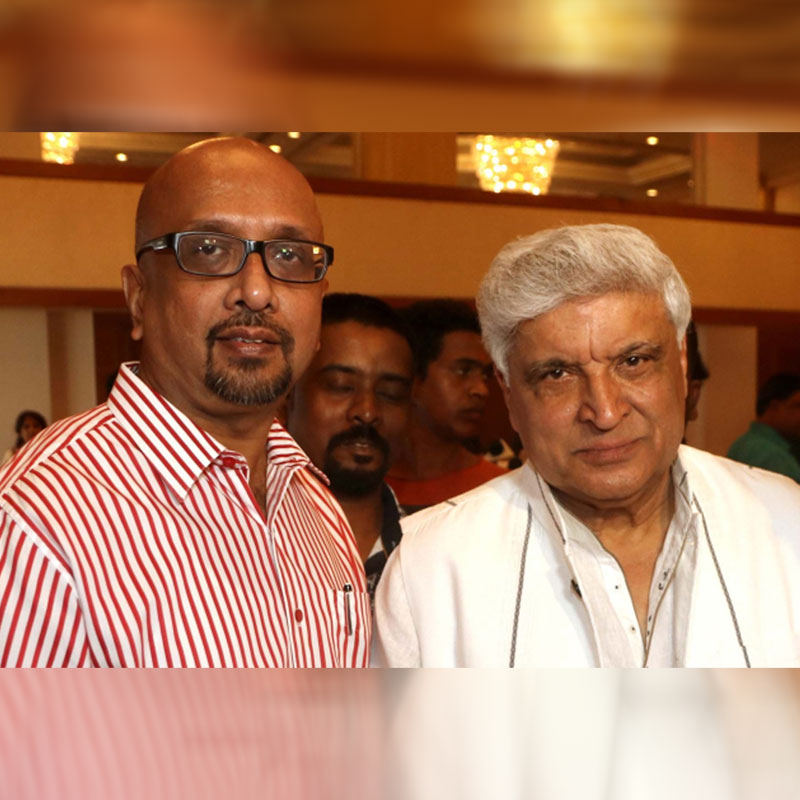
    IPRS chairman Javed Akhtar said, “It is our duty to support the call made by our prime minister Narendra Modi for society to support each other through this 21-day lockdown period. IPRS is what it is because of all its members. In these challenging and trying times, IPRS as a custodian of its creator members stands shoulder to shoulder with all its members. This payment by IPRS is our contribution for the time being to help our creator members tide over this period of the 21-day lockdown to be able to purchase basic necessities”.

    IPRS CEO Rakesh Nigam said, “It is in times like these that bodies like IPRS can provide much-needed help and succour to its members. I am glad that we can contribute in this fashion to our members. I want to convey our Chairman Javed Saab’s message to all our members, that IPRS is there for them in this time of crisis.”

    IPRS will be reaching out to its members to facilitate disbursement of the relief amounts on an immediate basis.

  • Sony Pictures Networks India partners with The Indian Performing Right Society

    Sony Pictures Networks India partners with The Indian Performing Right Society

    MUMBAI: Sony Pictures Networks India (SPN), has entered into a licensing agreement with The Indian Performing Right Society (IPRS), thereby being able to mine the IPRS music bank for its broadcast and digital business verticals in India.

    With access to music comprising millions of works from authors, composers and music publishers, SPN has taken the lead in promoting an organized music licensing industry in the country.

    The IPRS is India’s only copyright society, registered under the Copyright Act of 1957, authorized to carry out the copyright business for musical and literary works (lyrics), associated with members comprising authors (lyricists), music composers and music publishers.

     Sony Pictures Networks India general counsel Ashok Nambissan said, “With this licensing agreement, we fortify our endeavor to remain a
    network of choice for the creative workforce in our country.”

    IPRS chairman Javed Akhtar said “This is welcome news. I would like to congratulate both SPN and IPRS for working collaboratively. The creative community welcomes Sony Pictures Networks India (SPN) to IPRS as a licensee and I look forward to this relationship being
    strengthened further.”

    IPRS CEO Rakesh Nigam adds “We welcome Sony Pictures Networks India into the IPRS family of licensees. We are excited about our new partnership. We commend SPN’s mature approach to doing business and look forward to a successful partnership. IPRS is committed to working
    cooperatively and closely with its licensee partners, their continued success is important for IPRS and all its members.”

  • IPRS grants music license to Google for India

    IPRS grants music license to Google for India

    MUMBAI: The Indian Performing Right Society Limited (IPRS) has granted a license to Google, enabling the company to utilise IPRS members’ Indian works repertoire in India across YouTube and related services.

    IPRS is the registered copyright society in India authorised to carry out the copyright business in respect of musical works and literary works (lyrics), associated with musical works and members comprising of author (lyricists), music Composers and music publishers.

    IPRS CEO Rakesh Nigam stated, “The IPRS agreement with Google is nothing short of historic. IPRS and its members will benefit greatly from the arrangement with Google. IPRS licensing reach has significantly increased  as a registered copyright society and its mandate to function efficiently and transparently vis-à-vis licensees, members and the public. This is another step to ensure IPRS’ standing as the preeminent copyright society in India”

    YouTube global head of music licensing Christophe Muller said, “This is yet another step in YouTube’s ongoing commitment to ensuring that writers, composers and publishers continue to be paid fairly, and that our users are able to enjoy their favorite songs and discover new music on YouTube.  We’re extremely pleased to have reached this important agreement with IPRS that will bring more value to songwriters and artists, and deliver an incredible experience to music fans in India.”

    Saregama India Ltd CEO IPRS director Vikram Mehra said, “This is an extremely positive development. The deal between IPRS and Google for its YouTube and other related services will surely strengthen the copyright ecosystem in India. Indian Artistes will recognise value from the exploitation of their creations and this arrangement will yield more value for all IPRS members.”

    IPRS chairman Javed Akhtar said, “The IPRS-Google agreement is a historic milestone for Indian authors and music composers as well as music publishers. I congratulate and thank Google for backing Indian artistes, music publishers and the creative fraternity in such a strong way in India. This is the beginning of a very strong relationship with Google. IPRS is determined to ensure that these relationship augers well and proves beneficial to the creative fraternity in India. YouTube has a strong and pioneering role to play in encouraging creators and connecting them with markets and users. This deal between IPRS and Google for its YouTube and other related services will provide benefits to creators and members of IPRS in a tangible and meaningful way.”

  • Javed Akhtar revamped IPRS’s new chairman

    MUMBAI: Fresh elections were held after more than a decade in the revamped IPRS, in which both the authors (music composers and lyricists) and publishers (music labels) participated. These elections have the backing of the author and publisher community in India. Renowned poet and writer, Javed Akhtar, was unanimously elected as the chairman of the new board.

    The revamped IPRS has adopted a new working constitution and is fully in sync with the Amended Copyright Act. The primary objective of this constitution is to ensure rightful royalty flow to all the rights owner, while simplifying licensing process for the end users.

    Akhtar said, “IPRS has turned over a new page and a new chapter has started, where there is no WE and THEM, only US. Writers, composers and publishers have risen above the past conflicts and have a taken a pledge to work together for the enhancement of Indian Music Industry’s reach and prosperity.”

    “This is a historic moment for the music industry, and will act as catalyst of growth for all stakeholders. We look forward to IPRS achieving new heights under the leadership of Javed saab,” said Saregama India managing director Vikram Mehra.

    The newly elected members on the board are Javed Akhtar, Shridhar Subramaniam, Aashish Rego, Kumar Taurani, Rajinder Singh Panesar, Devraj Sanyal, G.V. Prakash Kumar, Ganesh Jain, Anupam Roy, Mandar Thakur, Sahithi Cherukupalli and Vikram Mehra.

    The Indian Performing Right Society Ltd. (IPRS) owns, administers and currently controls the Performing Right in Musical Works and Literary Works assigned to it by its owner members.

  • Court orders stay on music licensing societies from collecting royalties ahead of New Year

    Court orders stay on music licensing societies from collecting royalties ahead of New Year

    MUMBAI: It’s a judgment that has taken some time a-coming. For long Indian event organisers and agencies have been battling with the music licensing in various courts – the IPRS and PPL and Novex Communications – on their legal standing to collect royalties for music that is played out during ground events that the former organise. While the first two represent the interests of writers, authoris, composers and almost all Indian and international music labels, the latter collects royalties from event organisers for music from the YRF and Zee Music stable.

    With many parties and gigs planned by many event organisers planned for the new year – which is a plum time for these three bodies to collect revenues for live events and parties – the Event & Entertainment Management filed a petition with the Delhi high court on 21 December. It named the Indian government, the Copyright Off ice and PPL, IPRS, and Novex Communications as respondents to the case.

    The petition highlighted that despite the fact that currently neither of the bodies issuing ‘licenses’ are infact registered copyright societies – PPL / IPRS and Novex – however they still continue to grant licenses and continue to be in the business of granting licenses.”

    Two days later, on 23 December 2016, Justice Sanjeev Sachdeva issued an order which reads. “..the respondent Nos.3 (PPL) to 5 (IPRS and Novex Communications) are restrained from acting in contravention of Section 33 of the Act and the respondent Nos.1 and 2 (Union of India and Copyright Office respectively) are directed to take action in accordance with law for any breach of provisions of Section 33 by the respondent Nos.3 to 5.”

    According to the EEMA , this effectively means that the three bodies have been barred from collecting money for music licensing for events until the next hearing which is scheduled for 24 April 2017.

    “The Music Licensing lobby (PPL / IPRS / Novex) has been engaged in illegal issuance of licenses since over two years now and flouts all laws by openly threatening venues to stop events unless the license is procured,” says EEMA secretary (legal) Ankur Kalra: “Venues in turn pressurise event managers to do the same who despite knowing that it is wrong are forced to procure these licenses in order to safeguard their events. The music licensing ‘societies’ today are private limited companies operating purely for profit and very little or no money actually reaches the artists. It has become an organised syndicate and when we highlighted the same to the court we got an injunction almost immediately. We will take this battle forward and ensure that all event managers, venues and police departments are educated on this matter so that they are not part of the exploitation.”

    Adds EEMA legal counsel Abhishek Malhotra: “The music industry has been going through a flux. While the law clearly provides that issue and grant of licenses can be done only through a registered copyright society, these three entities have been effectively carrying on this business in violation of the clear legal provisions. This order as well as the government of India’s endorsement of the issues facing the users of music is therefore a welcome development. “

    We contacted several senior professionals from the music industry. Most were in the dark about the Delhi high court injunction order. However, the IRPS head Rakesh Nigam exclaimed that the order does not concern “the IPRS as it has been functioning under section 30 of the Copyright Act. The High Court’s verdict concerns bodies working under section 33 of the Act.”

    (courtesy http://www.radioandmusic.com/biz)

  • Court orders stay on music licensing societies from collecting royalties ahead of New Year

    Court orders stay on music licensing societies from collecting royalties ahead of New Year

    MUMBAI: It’s a judgment that has taken some time a-coming. For long Indian event organisers and agencies have been battling with the music licensing in various courts – the IPRS and PPL and Novex Communications – on their legal standing to collect royalties for music that is played out during ground events that the former organise. While the first two represent the interests of writers, authoris, composers and almost all Indian and international music labels, the latter collects royalties from event organisers for music from the YRF and Zee Music stable.

    With many parties and gigs planned by many event organisers planned for the new year – which is a plum time for these three bodies to collect revenues for live events and parties – the Event & Entertainment Management filed a petition with the Delhi high court on 21 December. It named the Indian government, the Copyright Off ice and PPL, IPRS, and Novex Communications as respondents to the case.

    The petition highlighted that despite the fact that currently neither of the bodies issuing ‘licenses’ are infact registered copyright societies – PPL / IPRS and Novex – however they still continue to grant licenses and continue to be in the business of granting licenses.”

    Two days later, on 23 December 2016, Justice Sanjeev Sachdeva issued an order which reads. “..the respondent Nos.3 (PPL) to 5 (IPRS and Novex Communications) are restrained from acting in contravention of Section 33 of the Act and the respondent Nos.1 and 2 (Union of India and Copyright Office respectively) are directed to take action in accordance with law for any breach of provisions of Section 33 by the respondent Nos.3 to 5.”

    According to the EEMA , this effectively means that the three bodies have been barred from collecting money for music licensing for events until the next hearing which is scheduled for 24 April 2017.

    “The Music Licensing lobby (PPL / IPRS / Novex) has been engaged in illegal issuance of licenses since over two years now and flouts all laws by openly threatening venues to stop events unless the license is procured,” says EEMA secretary (legal) Ankur Kalra: “Venues in turn pressurise event managers to do the same who despite knowing that it is wrong are forced to procure these licenses in order to safeguard their events. The music licensing ‘societies’ today are private limited companies operating purely for profit and very little or no money actually reaches the artists. It has become an organised syndicate and when we highlighted the same to the court we got an injunction almost immediately. We will take this battle forward and ensure that all event managers, venues and police departments are educated on this matter so that they are not part of the exploitation.”

    Adds EEMA legal counsel Abhishek Malhotra: “The music industry has been going through a flux. While the law clearly provides that issue and grant of licenses can be done only through a registered copyright society, these three entities have been effectively carrying on this business in violation of the clear legal provisions. This order as well as the government of India’s endorsement of the issues facing the users of music is therefore a welcome development. “

    We contacted several senior professionals from the music industry. Most were in the dark about the Delhi high court injunction order. However, the IRPS head Rakesh Nigam exclaimed that the order does not concern “the IPRS as it has been functioning under section 30 of the Copyright Act. The High Court’s verdict concerns bodies working under section 33 of the Act.”

    (courtesy http://www.radioandmusic.com/biz)

  • IPRS secures injunction against Hello FM

    IPRS secures injunction against Hello FM

    MUMBAI: The Indian Performing Rights Society (IPRS) has secured an injunction against Hello FM Radio (Malar Publications Limited) from the Delhi High Court restricting Hello FM Radio from playing music without obtaining a license from the IPRS.

    This order would technically mean that Hello FM would either have to stop broadcast, obtain a license, or both. Lawyers Praveen Anand, Ameet Datta, Bhagwati Prasad and Shrawan Chopra represented IPRS.

    The IPRS says that this order comes as a warning to all such establishments operating without a license that they are not above the law, and they will not be allowed to continue functioning. IPRS is a non-profit making company authorised under section 33 of the Copyright Act 1957 to operate as a copyright society for Musical Works and Literary works performed along with the Musical Works. It is a body that has more than 1500 members who are local composers, lyric writers and publishers and also represents International Music.

    IPRS adds that all users of music including radio stations, television channels need to obtain a license for public performance whenever they broadcast or perform /play these Literary and Musical Works, the license must be obtained prior to the event/broadcast else it is a violation of the Copyright Act, 1957.

    IPRS CEO Rakesh Nigam said, “The consumption of entertainment is changing and so will the earning pattern of artists. Newer forms of entertainment need to compensate artists adequately. such ruling will set the correct bench mark ”

    IPRS says that with the advent of the FM Radio industry starting in India there have been numerous Court Cases wherein the radio stations have tried to circumvent the rights of the Copyright Holders. However, the Hon’ble Courts in the Country have always upheld the rights of the Copyright holders.

    Hon’ble Justice Pradeep Nandrajog of the Delhi High Court has said in his order dated 15-11-2006, “Restrained the Defendants (Hello FM – Malar Publications Limited), their Servants, Agents, Director, Subsidiaries, and all other acting on their behalf from causing the broadcast or broadcasting / performing or communication to the public, literary and / or musical works of the Plaintiff Society or those of the foreign sister societies of the Plaintiff or broadcasting any works of the Plaintiff by any means without obtaining a license from the Plaintiff thereby amounting to infringement of the Plaintiff Society’s Performing Rights and communication to the public rights in the same.”

  • I&B ministry helpless on high music royalty

    I&B ministry helpless on high music royalty

    NEW DELHI: The government has literally washed its hands off radio FM players’ plea on high music royalty fee.

    In the absence of a single collection agency for music rights fee from FM radio stations, mangers of the 287-odd new FM frequencies had asked the government to intervene and help form a single company for music rights collection as this vexed issue was threatening to throw many a business model off gear.

    An official of the information and broadcasting ministry said, “The issue relates to IPR, which is in the domain of the human resources development (HRD) ministry. We cannot intervene on every aspects of a business.”

    The official added that the concerns of the private radio FM operators have been conveyed to the HRD ministry and now it’s up to it to do address the issue.

    Explaining further the I&B ministry’s helplessness in this regard, the official said, “Our business is to frame a regulatory framework. We cannot really help if other aspects of the business (in this case FM radio) fall within the jurisdiction of other government agencies.”

    Why is the music rights issue snowballing into a major controversy? First, multiplicity of organizations that claim to be protecting the rights of performing artistes and their works and second, the absence of a regulator, which could go into such matters in details quickly to come out with feasible solutions.

    For the FM radio companies, the music rights fee could well range between Rs 1.2- Rs. 1.5 billion this year and could touch Rs 7 billion by 2010 as operations expand and new programming lineups are rolled out.

    The new FM operators have also urged the I&B ministry to help rationalise the music right rates for A+, A, B, C and D category cities on the lines of target population as opposed to the fixed fee regime currently practiced.

    According to the Association of Radio Operators of India (AROI), since the levels of operations would differ from city to city, paying a flat fee for music rights for smaller players would not make business sense.

    According to AROI convenor Rajiv Misra, if a FM operator with a licence in Hissar (population approximately 150,000) in Haryana state, for example, pays Rs. 5 million as music royalty for basically film and Indipop songs, the “overheads would increase dramatically.”

    AROI had suggested in a petition to the I&B ministry that music fees should be graded on the lines the cities had been graded for licences, depending on socio-economic factors.

    Presently, to access music, fees have to be paid to the Phonographic Performance Limited (PPL) for sound recordings, Indian Performing Rights Society (IPRS) for musical works and T-Series, a music company that has a huge library of film and devotional music.

    Because most FM radio stations depend heavily on film music, T Series, which began as a small company manufacturing cover versions of popular Hindi film songs, commands the leading market share of over 50 per cent.

    The I&B ministry official while expressing helplessness in intervening in such issues, said these are commercial deals that the industry players should try to sort it out themselves instead of approaching the government.

    Meanwhile, the ministry also made light of AROI’s protest against satellite radio operator WorldSpace seeking clearance for technology that would help it to broadcast terrestrially.

    Pointing out that the government is looking into the issue of WorldSpace, the ministry official said, “Private FM radio operators had existed earlier also and had competed well against satellite radio service. Why is this hue and cry now suddenly when the government hasn’t given any clearance to WorldSpace (to broadcast in the terrestrial mode)?”