Tag: IPR

  • Govt launches IPR toolkit for enforcement agencies

    Govt launches IPR toolkit for enforcement agencies

    NEW DELHI: In a bid to sensitise law enforcement agencies and the public in general about intellectual property and copyrights, Indian government has launched an IPR Enforcement Toolkit for police.

    The toolkit has been jointly prepared by Cell for IPR Promotion and Management (CIPAM) and Federation of Indian Chambers of Commerce and Industry (FICCI). The latter is also helming a broadcast and cable industry initiative to fight online piracy of content via formation of Copyright Force that will have its first meeting later this month.

    Aimed at being a reference point for police officials across the country in dealing with IP crimes, specifically trademarks counterfeiting and copyrights piracy, the toolkit will have details of offences under various laws. It provides for checklists for registering a complaint and conducting investigations, apart from laying down general guidelines in case of IP-related crimes. This toolkit will be provided to all state police departments across the nation.

    CIPAM, an organisation under Ministry of Commerce & Industry, has launched several initiatives to ensure effective implementation of the National IPR Policy 2016, which recognizes that awareness and respecting IPRs is crucial for a healthy ecosystem.

    Catch them young also seems to be the government’s aim. To inculcate in children respect for IPRs, CIPAM is collaborating with the International Trademark Association (INTA) to launch an IPR awareness campaign for school kids in a creative and engaging manner through use of presentations and creatively illustrated posters and pamphlets that will cover basics on IPRs and its need to be protected.

    CIPAM, which has also organized seven batches of training programmes for police officials in States of Andhra Pradesh and Uttar Pradesh, is actively facilitating international engagements in the field of Intellectual Property Rights. Two agreements on IPRs were recently signed with the UK and Singapore.

    ALSO READ:  Copyright Force finally here to fight online piracy

  • FICCI keen on IPR awareness & enforcement to encourage innovation

    FICCI keen on IPR awareness & enforcement to encourage innovation

    NEW DELHI: Department of Industrial Policy & Promotion joint secretary Rajiv Aggarwal has said India’s IP framework was in the midst of a paradigm shift following the announcement of the National IPR Policy.

    Chairing a session on India’s IPR Policy: A Roadmap to Robust IP Ecosystem in India in a meet organized by FICCI, he said while the Department was spearheading the overall policy, specific recommendations listed in the policy were being taken up for action by concerned ministries and departments.

    He elaborated on the initiatives undertaken by DIPP and the Cell for IPR Promotion and Commercialisation (CIPAM) set up by the Government to implement the seven objectives which formed the basis of the National IPR Policy, besides bringing forth the industry’s role in ensuring the effective roll-out of these initiatives.

    FICCI, in its drive to spur growth in the Indian industry, specially manufacturing, organised in association with the International Chamber of Commerce (ICC) India, the International Conference on ‘IP: Key Enabler to Growth & Innovation’ here.

    FICCI IPR Committee chairman Narendra Sabharwal who is the former convener of Think Tank on IPR Policy and former deputy director-gneral in World Intellectual Property Organisation (WIPO) said that FICCI had a particular interest in supporting and encouraging innovation for the benefit of industry and economic growth. Consequently, FICCI was working with all stakeholders towards creating awareness about IP, its adequate enforcement, besides ensuring the effective implementation of India’s National IPR Policy recommendations.

    He said India’s IP policy gives IP the prominence it deserves as it is for the first time that IP has been brought into the mainstream of the growth process. He underlined the need to raise awareness amongst businesses on how to use IP as a tool to raise competitiveness and foster growth. While the IP policy provides the overall direction, the rest of the economic and social policies need to be tweaked to bring them in sync with the IP policy.

    Sabharwal enumerated the objectives of the IP policy as promotion and awareness of IP issue, generation of IP, legal and legislative framework, administration and management, commercialisation of IP, enforcement and adjudication and creation of human capital.

    He recommended that all industries and businesses should undertake a baseline IP survey to assess where we are and how do we move forward. He also suggested that there was need for a study on the economic contribution of IP such as a copyright-related industries survey on contribution of GDP.

    ICC Commission on Intellectual Property chairman David J Koris underlined the need of creating an ecosystem that nurtured and promoted intellectual property to fulfill its potential as a tool to spur innovation and creativity, and economic growth.

    Through its awareness-raising and advocacy initiatives, the Commission on Intellectual Property promotes the positive role of the IP system, gives guidance on how the system can be made more efficient and cost effective, helps policy makers adapt the system to new challenges, and promotes the use of IP as a business tool. It also actively contributes on issues arising from the areas of interface between intellectual property and other areas, such as the digital environment and the Internet, the environment, health, development, and competition policy.

    Koris said that for meaningful support to countries in the markets where they operate, the key imperatives were: uniform belief in the rule of law, good regulations and laws and focus on infrastructure.

    He said IP is a key driving force for growth in many companies and economies today, as the different types of intangible assets of a business are becoming increasingly important and valuable in relation to its tangible assets. The IP Commission produces publications and organizes events to support the ICC network of business organizations and chambers of commerce in their efforts to help companies use the IP system to increase their competitiveness.

    ICC India president Prashant Modi highlighted the important role of intellectual property in promoting innovation and technology diffusion, and the way technologies were disseminated in different sectors and countries globally. He observed that IP was a dynamic and constantly evolving field, which was closely tied to technological, economic, political and social changes, and the vital role that intellectual property rights (IPRs) – copyrights, patents, trademarks and similar rights upon which the lion’s share of creative and innovative products and services relied – had in helping the economies of developed and developing countries all over the world grow.

    Dr. K. S. Kardam, senior joint controller of patents and designs at Indian Patent Office, observed that, in the recent years, India was paying increasing attention to facilitate the ease of doing business in the country. With the significance of IPR as a foremost enabler now being increasingly recognized, the government was making efforts to address the concerns that the industry had in conducting business in India, and to work with the industry and other stakeholders to identify solutions towards further enhancing India’s business landscape.

    ICC India vice president Subhrakant Panda said protection of IP rights had become more important than ever following the new economic reforms initiatives introduced by the government. Innovation, he said, was the cornerstone of economic development and emphasised that India had a robust IP regime and a strong judicial system for recourse for settlement of disputes.

    The delegates at the conference deliberated on important developments in intellectual property like India’s recently announced National IPR Policy and the subsequent initiatives undertaken by the government e.g. setting up the Cell for IPR Promotion and Commercialisation (CIPAM) to oversee the implement the policy recommendations, besides bringing froth Industry’s views and perspective on these initiatives.

    Discussions also focussed on other IP-specific issues including constraints that India was facing on account of Counterfeiting and Piracy and the sustained actions needed among the stakeholders to effectively combat this global threat; the concerns of industry in areas such as CRI Guidelines, TRAI Regulations for broadcasting sector, issues with regard to SEP & FRAND terms – among other.

    One of the conference sessions was dedicated to a comparative outlook of India’s IP ecosystem vis-a-vis other jurisdictions, where the panelists undertook an assessment of where India stood on IP matters in comparison to the global standards and practices, whether India could incorporate certain relevant international IP best practices and where the country should be positioning to figure in the emerging global IP framework.

    The Conference brought together a number of leading policy makers, professionals, government officials and IP expert from India and from across the globe. A number of members of the International Chamber of Commerce (ICC) attending the ICC IP Commission meeting in India also participated in the conference, both as speakers and delegates.

  • FICCI keen on IPR awareness & enforcement to encourage innovation

    FICCI keen on IPR awareness & enforcement to encourage innovation

    NEW DELHI: Department of Industrial Policy & Promotion joint secretary Rajiv Aggarwal has said India’s IP framework was in the midst of a paradigm shift following the announcement of the National IPR Policy.

    Chairing a session on India’s IPR Policy: A Roadmap to Robust IP Ecosystem in India in a meet organized by FICCI, he said while the Department was spearheading the overall policy, specific recommendations listed in the policy were being taken up for action by concerned ministries and departments.

    He elaborated on the initiatives undertaken by DIPP and the Cell for IPR Promotion and Commercialisation (CIPAM) set up by the Government to implement the seven objectives which formed the basis of the National IPR Policy, besides bringing forth the industry’s role in ensuring the effective roll-out of these initiatives.

    FICCI, in its drive to spur growth in the Indian industry, specially manufacturing, organised in association with the International Chamber of Commerce (ICC) India, the International Conference on ‘IP: Key Enabler to Growth & Innovation’ here.

    FICCI IPR Committee chairman Narendra Sabharwal who is the former convener of Think Tank on IPR Policy and former deputy director-gneral in World Intellectual Property Organisation (WIPO) said that FICCI had a particular interest in supporting and encouraging innovation for the benefit of industry and economic growth. Consequently, FICCI was working with all stakeholders towards creating awareness about IP, its adequate enforcement, besides ensuring the effective implementation of India’s National IPR Policy recommendations.

    He said India’s IP policy gives IP the prominence it deserves as it is for the first time that IP has been brought into the mainstream of the growth process. He underlined the need to raise awareness amongst businesses on how to use IP as a tool to raise competitiveness and foster growth. While the IP policy provides the overall direction, the rest of the economic and social policies need to be tweaked to bring them in sync with the IP policy.

    Sabharwal enumerated the objectives of the IP policy as promotion and awareness of IP issue, generation of IP, legal and legislative framework, administration and management, commercialisation of IP, enforcement and adjudication and creation of human capital.

    He recommended that all industries and businesses should undertake a baseline IP survey to assess where we are and how do we move forward. He also suggested that there was need for a study on the economic contribution of IP such as a copyright-related industries survey on contribution of GDP.

    ICC Commission on Intellectual Property chairman David J Koris underlined the need of creating an ecosystem that nurtured and promoted intellectual property to fulfill its potential as a tool to spur innovation and creativity, and economic growth.

    Through its awareness-raising and advocacy initiatives, the Commission on Intellectual Property promotes the positive role of the IP system, gives guidance on how the system can be made more efficient and cost effective, helps policy makers adapt the system to new challenges, and promotes the use of IP as a business tool. It also actively contributes on issues arising from the areas of interface between intellectual property and other areas, such as the digital environment and the Internet, the environment, health, development, and competition policy.

    Koris said that for meaningful support to countries in the markets where they operate, the key imperatives were: uniform belief in the rule of law, good regulations and laws and focus on infrastructure.

    He said IP is a key driving force for growth in many companies and economies today, as the different types of intangible assets of a business are becoming increasingly important and valuable in relation to its tangible assets. The IP Commission produces publications and organizes events to support the ICC network of business organizations and chambers of commerce in their efforts to help companies use the IP system to increase their competitiveness.

    ICC India president Prashant Modi highlighted the important role of intellectual property in promoting innovation and technology diffusion, and the way technologies were disseminated in different sectors and countries globally. He observed that IP was a dynamic and constantly evolving field, which was closely tied to technological, economic, political and social changes, and the vital role that intellectual property rights (IPRs) – copyrights, patents, trademarks and similar rights upon which the lion’s share of creative and innovative products and services relied – had in helping the economies of developed and developing countries all over the world grow.

    Dr. K. S. Kardam, senior joint controller of patents and designs at Indian Patent Office, observed that, in the recent years, India was paying increasing attention to facilitate the ease of doing business in the country. With the significance of IPR as a foremost enabler now being increasingly recognized, the government was making efforts to address the concerns that the industry had in conducting business in India, and to work with the industry and other stakeholders to identify solutions towards further enhancing India’s business landscape.

    ICC India vice president Subhrakant Panda said protection of IP rights had become more important than ever following the new economic reforms initiatives introduced by the government. Innovation, he said, was the cornerstone of economic development and emphasised that India had a robust IP regime and a strong judicial system for recourse for settlement of disputes.

    The delegates at the conference deliberated on important developments in intellectual property like India’s recently announced National IPR Policy and the subsequent initiatives undertaken by the government e.g. setting up the Cell for IPR Promotion and Commercialisation (CIPAM) to oversee the implement the policy recommendations, besides bringing froth Industry’s views and perspective on these initiatives.

    Discussions also focussed on other IP-specific issues including constraints that India was facing on account of Counterfeiting and Piracy and the sustained actions needed among the stakeholders to effectively combat this global threat; the concerns of industry in areas such as CRI Guidelines, TRAI Regulations for broadcasting sector, issues with regard to SEP & FRAND terms – among other.

    One of the conference sessions was dedicated to a comparative outlook of India’s IP ecosystem vis-a-vis other jurisdictions, where the panelists undertook an assessment of where India stood on IP matters in comparison to the global standards and practices, whether India could incorporate certain relevant international IP best practices and where the country should be positioning to figure in the emerging global IP framework.

    The Conference brought together a number of leading policy makers, professionals, government officials and IP expert from India and from across the globe. A number of members of the International Chamber of Commerce (ICC) attending the ICC IP Commission meeting in India also participated in the conference, both as speakers and delegates.
  • India ready for data revolution with 350 million plus Net users: Minister

    India ready for data revolution with 350 million plus Net users: Minister

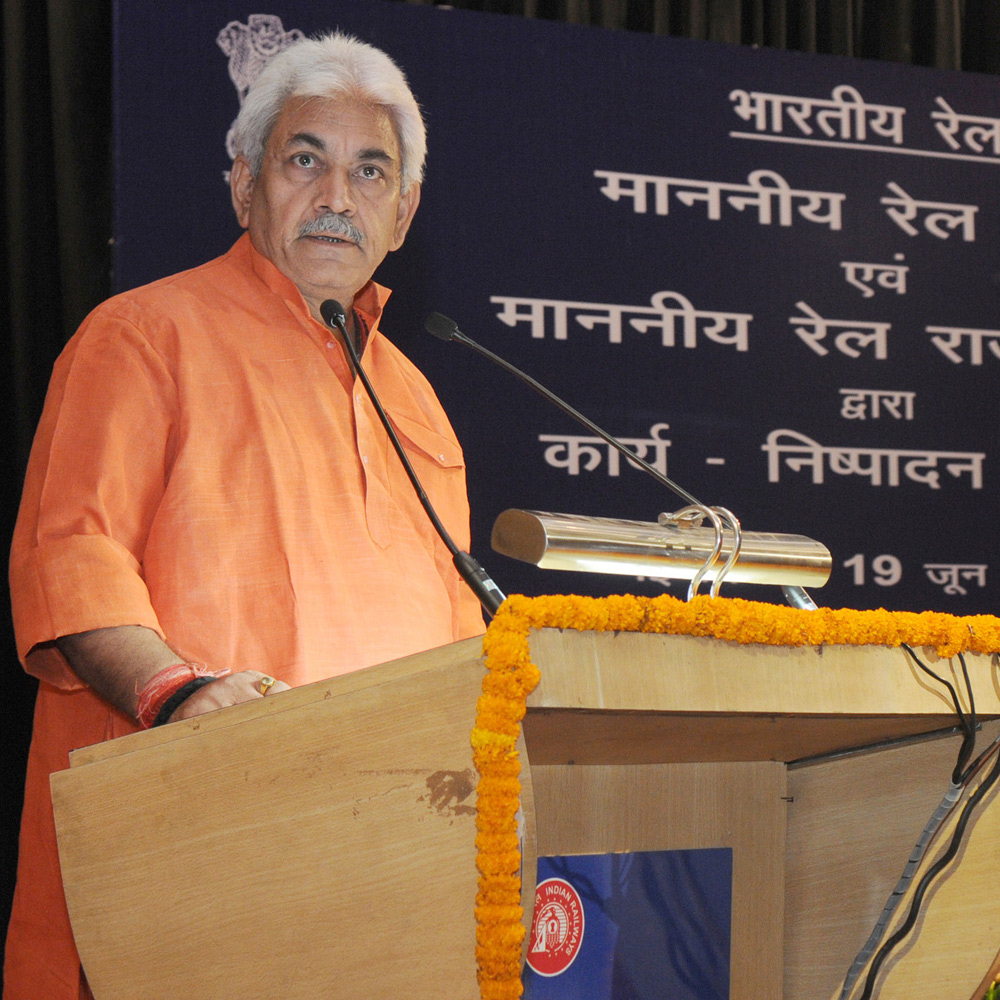
    NEW DELHI: India’s Telecoms minister Manoj Sinha has said the sector had been growing at a phenomenal pace and was considered as the fastest growing telecom market in the world with the second largest subscriber base with more than 1060 million connectivity, 160 million broadband connections and 350 million plus internet users.

    India is ready for another digital and data revolution, the minister said while inaugurating the 8th Telecom Export Promotion Council’s Buyer-Seller meet earlier this week here.

    (India’s mobile phone revolution has been spurring many media players, global and domestic, to enter the OTT space despite challenges. It is also expected that, with the introduction of 4G technology, the market for streaming video will grow in India.)

    Sinha said the rapid growth of the telecoms sector has fuelled the demand for telecom equipment, including mobile phones, which was worth about $ 20 billion in 2015-16 and is estimated to exceed $ 30 billion by 2020.

    Sinha added that India has all the ingredients of a globally competitive telecom industry like a large domestic market, world class talent, focus on R&D and IPR creation, beside a robust framework for electronic manufacturing, including set-top boxes used in a variety of telecoms and broadcast services.

    According to the Minister, Indian manufacturers have already made significant strides in exports of IT and telecom products to several countries and established that Indian IT and telecom products are of world-class quality and globally competitive on technology and price.

    The massive thrust on ‘Make in India’ and ‘Digital India’ initiatives offers a large opportunity for creation of innovative products and services and India is poised for another digital and data revolution.

    Sinha told the representatives from 28 participating countries from South Asia, South-East Asia, the Caribbean, Latin America and Africa that India holds the distinction of being the fastest growing telecom network, especially with advent of increased broadband penetration.

    Meanwhile, joining issue with his colleague, Electronics and IT minister Ravi Shankar Prasad said that, during the last fiscal ending March 2016, the sector recorded an export of $ 108 billion, which is around 45 per cent of services export from India. The sector gave direct employment to 3.7 million people and around 200,000 additional employment was created in just the past year.

    Prasad said the prime minister Narendra Modi’s government was determined to create a knowledge-based society to “improve effeciency and reach of the services.”

    He said unlike industrial revolution (that India missed), the country was all set to take lead in the ongoing digital revolution.

  • India ready for data revolution with 350 million plus Net users: Minister

    India ready for data revolution with 350 million plus Net users: Minister

    NEW DELHI: India’s Telecoms minister Manoj Sinha has said the sector had been growing at a phenomenal pace and was considered as the fastest growing telecom market in the world with the second largest subscriber base with more than 1060 million connectivity, 160 million broadband connections and 350 million plus internet users.

    India is ready for another digital and data revolution, the minister said while inaugurating the 8th Telecom Export Promotion Council’s Buyer-Seller meet earlier this week here.

    (India’s mobile phone revolution has been spurring many media players, global and domestic, to enter the OTT space despite challenges. It is also expected that, with the introduction of 4G technology, the market for streaming video will grow in India.)

    Sinha said the rapid growth of the telecoms sector has fuelled the demand for telecom equipment, including mobile phones, which was worth about $ 20 billion in 2015-16 and is estimated to exceed $ 30 billion by 2020.

    Sinha added that India has all the ingredients of a globally competitive telecom industry like a large domestic market, world class talent, focus on R&D and IPR creation, beside a robust framework for electronic manufacturing, including set-top boxes used in a variety of telecoms and broadcast services.

    According to the Minister, Indian manufacturers have already made significant strides in exports of IT and telecom products to several countries and established that Indian IT and telecom products are of world-class quality and globally competitive on technology and price.

    The massive thrust on ‘Make in India’ and ‘Digital India’ initiatives offers a large opportunity for creation of innovative products and services and India is poised for another digital and data revolution.

    Sinha told the representatives from 28 participating countries from South Asia, South-East Asia, the Caribbean, Latin America and Africa that India holds the distinction of being the fastest growing telecom network, especially with advent of increased broadband penetration.

    Meanwhile, joining issue with his colleague, Electronics and IT minister Ravi Shankar Prasad said that, during the last fiscal ending March 2016, the sector recorded an export of $ 108 billion, which is around 45 per cent of services export from India. The sector gave direct employment to 3.7 million people and around 200,000 additional employment was created in just the past year.

    Prasad said the prime minister Narendra Modi’s government was determined to create a knowledge-based society to “improve effeciency and reach of the services.”

    He said unlike industrial revolution (that India missed), the country was all set to take lead in the ongoing digital revolution.

  • Indo-Vietnamese venture brings Greymatter into filmmaking

    Indo-Vietnamese venture brings Greymatter into filmmaking

    NEW DELHI: Local content generated through creative storytelling. ‘Sut’ (meaning ‘shoot’ in Vietnamese) set to release in November 2016 is the first venture into film production by the content solutions company Greymatter Entertainment Pvt. Ltd.

    Developed in collaboration with Vincent Ngo of the “Hancock” fame, the film is a coming-of-age story of two brothers set against the background of the sport, football. It has been directed by Vietmax, one of the most successful directors in Vietnam.

    Greymatter Founder and CEO Chandradev Bhagat said, “We have always been excited about films. ‘Sut’ is a project that came together quite magically. Having worked on and delivered projects across geographies, the idea was to bring together creative talent, international work flows and storytelling abilities from around the world to create strong local content. This marks the beginning of some of our exciting plans ahead”.

    Greymatter has been doing some pathbreaking work in both, sports and non-fiction content, including Premier Futsal League and Pro-Wrestling League in the live sports space. It has also developed the hit series ‘The Remix’. In the last year and a half, ‘The Remix’ has been sold in 15 countries. It has been nominated as the top 25 formats in the world at MIPTV – in fact making it the first Asian format to ever feature in the list.

    Greymatter is strategically focused on creating IPR (Intellectual Property Rights) properties and churning out creatively distinguished content. It is currently one of the few Indian companies to have sold original formats globally and is a recipient of multiple nominations and awards in India and the A-Pac region including the EMVIES, Spikes Asia and Asian Television Awards.

    The agency has worked with some of the biggest brands including Ten Sports, Sony Six, Star Sports, Disney, Viacom Colors and VH1 to name a few on the broadcast end and brands like Google, McDonalds, Tata and Idea in the branded content space.

  • Indo-Vietnamese venture brings Greymatter into filmmaking

    Indo-Vietnamese venture brings Greymatter into filmmaking

    NEW DELHI: Local content generated through creative storytelling. ‘Sut’ (meaning ‘shoot’ in Vietnamese) set to release in November 2016 is the first venture into film production by the content solutions company Greymatter Entertainment Pvt. Ltd.

    Developed in collaboration with Vincent Ngo of the “Hancock” fame, the film is a coming-of-age story of two brothers set against the background of the sport, football. It has been directed by Vietmax, one of the most successful directors in Vietnam.

    Greymatter Founder and CEO Chandradev Bhagat said, “We have always been excited about films. ‘Sut’ is a project that came together quite magically. Having worked on and delivered projects across geographies, the idea was to bring together creative talent, international work flows and storytelling abilities from around the world to create strong local content. This marks the beginning of some of our exciting plans ahead”.

    Greymatter has been doing some pathbreaking work in both, sports and non-fiction content, including Premier Futsal League and Pro-Wrestling League in the live sports space. It has also developed the hit series ‘The Remix’. In the last year and a half, ‘The Remix’ has been sold in 15 countries. It has been nominated as the top 25 formats in the world at MIPTV – in fact making it the first Asian format to ever feature in the list.

    Greymatter is strategically focused on creating IPR (Intellectual Property Rights) properties and churning out creatively distinguished content. It is currently one of the few Indian companies to have sold original formats globally and is a recipient of multiple nominations and awards in India and the A-Pac region including the EMVIES, Spikes Asia and Asian Television Awards.

    The agency has worked with some of the biggest brands including Ten Sports, Sony Six, Star Sports, Disney, Viacom Colors and VH1 to name a few on the broadcast end and brands like Google, McDonalds, Tata and Idea in the branded content space.

  • Online pirates beware, Copyright Force on way

    Online pirates beware, Copyright Force on way

    MUMBAI: Red alert for online pirates of TV content and movies. Copyright Force is on its way.

    In a move to fight online piracy, major broadcasters, studios and the recently set-up Telangana  Intellectual Property Crime Unit (TIPCU) are joining hands with Motion Pictures Association of America (MPA)’s Indian chapter for strengthening and effective implementation of regulations.  
    Tentatively named Copyright Force, the industry alliance’s main aim is to set an agenda on Intellectual Property Rights (IPR) policy and engage with the government.

    “When you talk about Digital India, the government will have to put out a strong message on curbing online piracy. There are just not enough teeth in existing laws to tackle online piracy. Hence, the industry is exploring an industry alliance to sensitise the government and judiciary of the issue,” Viacom18 general counsel Sujeet Jain explained to indiantelevision.com.

    Confirming the move Uday Singh, Managing Director-India, MPA, however, clarified the move was a positive one but needed more deliberations.

    The alliance is looking at getting broadcasting companies, studios and other industry organisations like MPA under one roof.

    “There are many organizations with larger objectives. The Copyright Force’s (or its formal version) sole purpose would be to push copyright issues,” Jain added.
    According to industry sources, initial exploratory meetings on the issue were attended by the likes of Viacom18, Star India, Walt Disney, Zee, Turner, Sony Pictures Networks, Sun TV Network, Eros International, Reliance and TIPCU.

    Earlier, speaking on the issue of Digital Content Economy and Robust Enforcement Model at an event organised by FICCI here today, Jain said, “You cannot fight online crime with offline measures. Online enforcement has to happen.”

    According to him, the Copyright Act and IT Act have to be updated so the issue of online piracy is addressed directly and helps the judiciary to properly interpret relevant laws to pass judgements on cases relating to online piracy.

    In recent time, the issue of piracy has gained currency in India with mostly film-makers taking John Doe orders in an effort to safeguard against online leaks of films before formal theatrical releases.

    However, the content industry feels such cases don’t properly address the growing menace of online piracy.

    But taking a leaf out of the UK’s PIPCU (Police Intellectual Property Crime Unit), run by City of London Police, the Telangana government has set up country’s first anti-piracy unit called Telangana Intellectual Property Crime Unit (TIPCU).

    The reason for TIPCU formation was effective lobbying by the Telugu Film Chamber of Commerce with the state government on behalf of the local film industry that is reported to have suffered losses in excess of Rs 361 crore because of online piracy.

    Telugu Film Chamber of Commerce honorary chairman, governing council, anti video piracy cell, Rajkumar Akella said, “As we have been witnessing in recent days, the problem of online piracy is most urgent. The greatest threat now has become the pre-movie release leakages. Without real time interventions from the government and the industry, it will go out of control.”

    According to him, TIPCU, an initiative brought to life by the Telangana government, the Telugu film industry and MPA India, was a very significant step. “The unit will be making optimum use of technology besides policy enforcement and outreach,” Akella added.

    MPA regional director, online content protection, Oliver Walsh said, “The Indian film and TV industry supports 1.8 million jobs which are at risk because of rising online content theft. The future of legitimate content delivery platforms depends on effective enforcement measures supported by Indian State governments.”

    Pointing out that TIPCU was a great example of a dedicated law enforcement unit to tackle organized online film piracy, Walsh said such an approach will go a long way in significantly reducing online infringement of films and television content. 

    Jain also pointed out that there is a need to develop dedicated digital courts in the country where the issue of online piracy is addressed exclusively.

  • Online pirates beware, Copyright Force on way

    Online pirates beware, Copyright Force on way

    MUMBAI: Red alert for online pirates of TV content and movies. Copyright Force is on its way.

    In a move to fight online piracy, major broadcasters, studios and the recently set-up Telangana  Intellectual Property Crime Unit (TIPCU) are joining hands with Motion Pictures Association of America (MPA)’s Indian chapter for strengthening and effective implementation of regulations.  
    Tentatively named Copyright Force, the industry alliance’s main aim is to set an agenda on Intellectual Property Rights (IPR) policy and engage with the government.

    “When you talk about Digital India, the government will have to put out a strong message on curbing online piracy. There are just not enough teeth in existing laws to tackle online piracy. Hence, the industry is exploring an industry alliance to sensitise the government and judiciary of the issue,” Viacom18 general counsel Sujeet Jain explained to indiantelevision.com.

    Confirming the move Uday Singh, Managing Director-India, MPA, however, clarified the move was a positive one but needed more deliberations.

    The alliance is looking at getting broadcasting companies, studios and other industry organisations like MPA under one roof.

    “There are many organizations with larger objectives. The Copyright Force’s (or its formal version) sole purpose would be to push copyright issues,” Jain added.
    According to industry sources, initial exploratory meetings on the issue were attended by the likes of Viacom18, Star India, Walt Disney, Zee, Turner, Sony Pictures Networks, Sun TV Network, Eros International, Reliance and TIPCU.

    Earlier, speaking on the issue of Digital Content Economy and Robust Enforcement Model at an event organised by FICCI here today, Jain said, “You cannot fight online crime with offline measures. Online enforcement has to happen.”

    According to him, the Copyright Act and IT Act have to be updated so the issue of online piracy is addressed directly and helps the judiciary to properly interpret relevant laws to pass judgements on cases relating to online piracy.

    In recent time, the issue of piracy has gained currency in India with mostly film-makers taking John Doe orders in an effort to safeguard against online leaks of films before formal theatrical releases.

    However, the content industry feels such cases don’t properly address the growing menace of online piracy.

    But taking a leaf out of the UK’s PIPCU (Police Intellectual Property Crime Unit), run by City of London Police, the Telangana government has set up country’s first anti-piracy unit called Telangana Intellectual Property Crime Unit (TIPCU).

    The reason for TIPCU formation was effective lobbying by the Telugu Film Chamber of Commerce with the state government on behalf of the local film industry that is reported to have suffered losses in excess of Rs 361 crore because of online piracy.

    Telugu Film Chamber of Commerce honorary chairman, governing council, anti video piracy cell, Rajkumar Akella said, “As we have been witnessing in recent days, the problem of online piracy is most urgent. The greatest threat now has become the pre-movie release leakages. Without real time interventions from the government and the industry, it will go out of control.”

    According to him, TIPCU, an initiative brought to life by the Telangana government, the Telugu film industry and MPA India, was a very significant step. “The unit will be making optimum use of technology besides policy enforcement and outreach,” Akella added.

    MPA regional director, online content protection, Oliver Walsh said, “The Indian film and TV industry supports 1.8 million jobs which are at risk because of rising online content theft. The future of legitimate content delivery platforms depends on effective enforcement measures supported by Indian State governments.”

    Pointing out that TIPCU was a great example of a dedicated law enforcement unit to tackle organized online film piracy, Walsh said such an approach will go a long way in significantly reducing online infringement of films and television content. 

    Jain also pointed out that there is a need to develop dedicated digital courts in the country where the issue of online piracy is addressed exclusively.

  • Govt  aims at plugging loopholes that enable copyright theft

    Govt aims at plugging loopholes that enable copyright theft

    NEW DELHI: The Government has approved an Intellectual Property Rights (IPR) policy aimed at creating a strong legal framework to protect IPR and create public awareness about the economic, social and cultural benefits of IPRs among all sections of society.

    Policy approved by the Union Cabinet has seven objectives which include IPR Awareness: Outreach and Promotion; Generation of IPRs; Legal and Legislative Framework; Administration and Management; Commercialization of IPRs; Enforcement and Adjudication; and Human Capital Development. The National Intellectual Property Rights (IPR) Policy will endeavor for a “Creative India; Innovative India’.

    The Policy recognises the abundance of creative and innovative energies that flow in India, and the need to tap into and channelise these energies towards a better and brighter future for all.

    The National IPR Policy is a vision document that aims to create and exploit synergies between all forms of intellectual property (IP), concerned statutes and agencies. It sets in place an institutional mechanism for implementation, monitoring and review. It aims to incorporate and adapt global best practices to the Indian scenario. This policy shall weave in the strengths of the Government, research and development organizations, educational institutions, corporate entities including MSMEs, start-ups and other stakeholders in the creation of an innovation-conducive environment, which stimulates creativity and innovation across sectors, as also facilitates a stable, transparent and service-oriented IPR administration in the country.

    The Policy recognizes that India has a well-established TRIPS-compliant legislative, administrative and judicial framework to safeguard IPRs, which meets its international obligations while utilizing the flexibilities provided in the international regime to address its developmental concerns.  It reiterates India’s commitment to the Doha Development Agenda and the TRIPS agreement.

    While IPRs are becoming increasingly important in the global arena, there is a need to increase awareness on IPRs in India, be it regarding the IPRs owned by oneself or respect for others’ IPRs. The importance of IPRs as a marketable financial asset and economic tool also needs to be recognised. For this, domestic IP filings, as also commercialization of patents granted, need to increase. Innovation and sub-optimal spending on R&D too are issues to be addressed.

    The broad contours of the National IPR Policy are a Vision Statement about an India where creativity and innovation are stimulated by Intellectual Property for the benefit of all; an India where intellectual property promotes advancement in science and technology, arts and culture, traditional knowledge and biodiversity resources; an India where knowledge is the main driver of development, and knowledge owned is transformed into knowledge shared.

    The aim is to stimulate a dynamic, vibrant and balanced intellectual property rights system in India to  foster creativity and innovation and thereby, promote entrepreneurship and enhance socio-economic and cultural development; and focus on enhancing access to healthcare, food security and environmental protection, among other sectors of vital social, economic and technological importance.

    The action by different ministries/ departments shall be monitored by The Department of Industrial Policy and Promotion (DIPP) which shall be the nodal department to coordinate, guide and oversee implementation and future development of IPRs in India.

    Welcoming the policy, NASSCOM also appreciated the decision to hand over IPR to the Department of Industrial Policy and Promotion. This single umbrella approach will help leverage linkages between various IP offices. The proposed Cell for IPR Promotion and Management (CIPAM) to be constituted under the aegis of DIPP, would be an important connection with the inventors and innovators.

    NASSCOM had in its interaction with the think tank highlighted  difficulties that companies face in monetizing intangibles like IPR and the proposal to create a ‘simple loan guarantee scheme to encourage start-ups’ based on IPRs as mortgage-able assets; financial support and securitization of IP rights for commercialization by enabling valuation of IP rights as intangible assets. 

    NASSCOM said the IT industry is committed to partner with the DIPP in the modernization efforts. Further, Periodic reviews and updates of  IP related rules, guidelines, procedures will ensure an effective IPR regime and NASSCOM is committed to work closely with the DIPP as the policy is implemented to support an innovation led Industry in India.