Tag: IPR

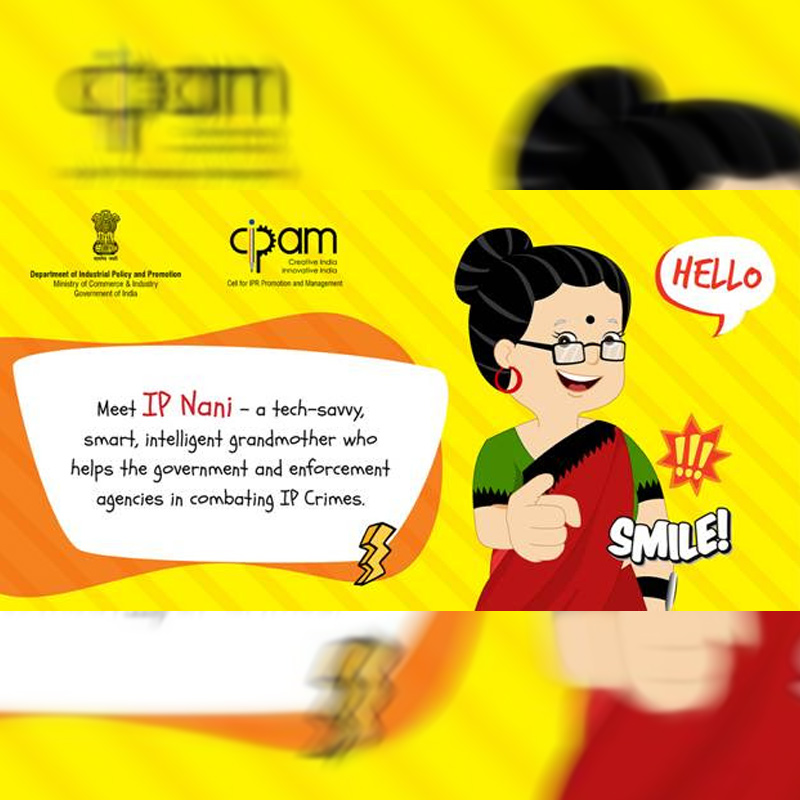
  • India gets its own IPR mascot ‘IP Nani’

    India gets its own IPR mascot ‘IP Nani’

    MUMBAI: India’s intellectual property (IP) mascot – IP Nani – was launched by Commerce and Industry minister Suresh Prabhu over the weekend.

    Speaking on the occasion, Prabhu said that the protection of IP rights (IPR) is critical for building a knowledge-based society adding that mere legal provisions are not sufficient for its protection but their strict implementation is equally required. He underlined that piracy is a serious crime which should not go unpunished. He even called for creating awareness against stealing IPR and stressed on the need for participation of society in the effort.

    Mascot IP Nani is a tech-savvy grandmother who helps the government and enforcement agencies in combating IP crimes with the help of her grandson ‘chhotu’ aka Aditya. The IP mascot will spread awareness about the importance of IPRs among people, especially children, in an interesting manner.

    This character is also in line with the World Intellectual Property Organisation’s campaign for the World IP Day which celebrates the brilliance, ingenuity, curiosity and courage of the women who are driving change in our world and shaping our common future. It also highlighted that how a strong IP system can support innovative and creative women.

    The Cell for IPR Promotion and Management (CIPAM), a professional body under the Department of Industrial Policy and Promotion collaborated with the European Union Intellectual Property Office to produce a series of animated videos on IPRs for children with IP Nani as the central character.

    CIPAM has been conducting IPR awareness workshops for school students since April 2017. For the first time ever IPRs have been exclusively included in the NCERT textbook for class 12 school syllabus. These efforts are aimed at inspiring the next generation of creators and innovators to become proud IP owners.

    Also Read :

    World IP Day celebration in Delhi and Mumbai

    Owning IP not priority for Big Synergy

  • Govt launches interactive IPR website

    Govt launches interactive IPR website

    NEW DELHI: A website has been launched by the government to effectively implement the National Intellectual Property Rights (IPR) Policy.

    The official website for the Cell for IPR Promotion and Management (CIPAM) of the Department of Industrial Policy and Promotion (DIPP) was launched by Minister for Commerce and Industry Suresh Prabhu here today. Secretary DIPP Ramesh Abhishek was also present.

    The website is interactive providing regular updates on all upcoming events including awareness and sensitization programs being conducted, as also information on all Intellectual Property Rights. It would make available resource material on IPRs specially curated for various levels: schools, universities, industry and enforcement agencies.

    One can read the latest news and updates, specially curated feed on all latest happenings in the world of IP, insightful and educational blogs by CIPAM and IP experts.

    The website provides regular updates on the latest IP trends – statistics on applications filed, examined, grants and disposal for various IPRs. It would provide information on the various initiatives being taken by the Government to strengthen the IPR regime in the country.

    The website can be reached on www.cipam.gov.in or follow CIPAM on Twitter at @CIPAM_India for updates.

  • IPR awareness: Govt launches #LetsTalkIP SM campaign

    IPR awareness: Govt launches #LetsTalkIP SM campaign

    NEW DELHI: A social media campaign to promote Indian geographical indications (GIs) has been launched by the Cell for IPR Promotions & Management (CIPAM) with #LetsTalkIP hashtag, which is an ongoing movement initiated by the government to make more people aware about the importance of Intellectual Property Rights (IPRs).

    In recent times, the government has been pro-active on the IPR front. For the media and entertainment industry, online piracy is a big menace causing huge amount of revenue loss to the industry and tax revenues for the government.

    A geographical indication or a GI is a sign used on products that have a specific geographical origin and possess qualities or a reputation that are due to that origin. Such a name conveys an assurance of quality and distinctiveness which is essentially attributable to its origin in that defined geographical locality.

    Functioning under Department of Industrial Policy and Promotion (DIPP) in the Ministry of Commerce and Industry, CIPAM has launched interesting facts and stories related to GIs from across the country on its Twitter handle @CIPAM_India and Facebook Page @CIPAMIndia using #LetsTalkIP hashtag. The government will also be coming up with various other initiatives to promote registered GIs in the future.

    ALSO READ :

    Comment: War on online video piracy, which matters, is here for India to fight

    Animated videos developed to spread message of anti-piracy

    TRAI to discuss IPR of data generated on apps


  • Viacom18 & govt announce anti-piracy partnership

    Viacom18 & govt announce anti-piracy partnership

    NEW DELHI: In a step highlighting seriousness of stakeholders, Viacom18 has forged a partnership with the Cell for IPR Promotion and Management or CIPAM, a professional body under the Commerce Ministry, to launch an anti-piracy awareness campaign laying stress on the importance of IPRs.

    “A possible solution to the problem of piracy lies in creating awareness about intellectual property rights (IPRs) among the masses. It is pertinent that one of the main objectives enshrined in the national IPR policy is creating awareness about IPRs to build a healthy IP ecosystem in the country,” Commerce Ministry’s Department of Industrial Policy and Promotion (DIPP) joint secretary Rajiv Aggarwal said.

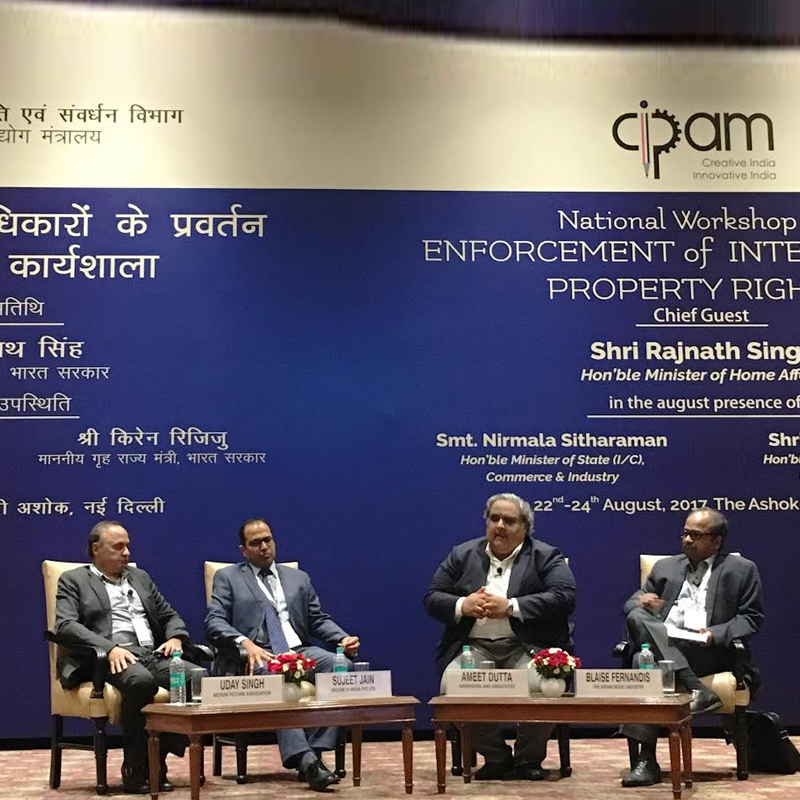
    Aggarwal, speaking on the partnership that was announced during an ongoing three-day national workshop on enforcement of IPRs, lauded the industry’s contribution in taking a lead to rally around the cause of IPR protection.

    According to Viacom 18 Media group general counsel and company secretary Sujeet Jain, “When it comes to consumption and circulation of pirated content, there is limited knowledge about its economic and social impact. Through this partnership with CIPAM, we hope to raise awareness amongst youth and children about the perils of piracy and the need for the protection of IPRs.”

    Content piracy, especially online, is a menace that has started to cause serious dent to revenues of content owners and also the Indian government in terms of taxes. And, it is high time that the industry and the government collaborated on a war-footing to create awareness about IPRs and anti-piracy measures being undertaken.

    As part of the association with CIPAM, Viacom18 has created a behavior change awareness videos, involving popular animated characters of its flagship kids’ channel Nickelodeon and Sonic (Motu-Patlu and Shiva, respectively), spreading the message that content piracy was equivalent to stealing.

    The campaign will see CIPAM and Viacom18 airing these videos across schools, colleges and various educational institutions, in addition to the network’s kids channels.

    Because IPRs are increasingly becoming crucial drivers of social and economic growth in the 21st century DIPP has organized a meet here, which was inaugurated by Home Minister Rajnath Singh in the presence of Minister of Commerce Nirmala Sitharaman and Minister of State for Home Kiren Rijiju. Sessions on various aspects of IPR, its protection, existing laws and anti-piracy measures are scheduled to be discussed by industry and government representatives.

    Singh said that counterfeiting and piracy activities give rise to serious organized crimes and police officials should be equipped with proper knowledge and training so as to curb and restrain IPR breaches.  

    The workshop is designed to help police officials and prosecutors to understand their role in effective enforcement of IPRs. It will also provide an opportunity to the officials to share their experiences, exchange best practices and coordinate effectively with each other.

    Sitharaman, while emphasizing that people need to understand  ways to create and protect their intellectual property for a secure future, said the World Intellectual Property Organization (WIPO), in collaboration with CIPAM, was setting up two technology and innovation support centres  in Punjab and Tamil Nadu.

    Meanwhile, a statement from Viacom18 added that it was not the first time that Viacom18 was championing the cause of IPR protection. Earlier this year, along with the Bombay High Court, the media group conducted a crack-down on counterfeit merchandise of their licensed character Dora the Explorer.

    This initiative was primarily targeted to protect children from hazards of using inferior quality products under the impression of them being original Viacom18 merchandise. The company, which also owns film production unit Viacom18 Motion Pictures, had previously led a campaign against film piracy too.

    ALSO READ:

    Comment: War on online video piracy, which matters, is here for India to fight

    Indian online video to grow to US 1.6 bn at 35 percent CAGR by 2022

    MPA forecasts Asia Pacific online video opportunity at US$35 billion by 2021

  • Comment: War on online video piracy, which matters, is here for India to fight

    Comment: War on online video piracy, which matters, is here for India to fight

    “There’s only one war that matters. And it is here”.

    So reads the caption of HBO’s official trailer for the blockbuster sixth episode of ‘Game of Thrones’ season seven that is scheduled to be aired next week. Even as Daenerys Targaryen’s Unsullied Army took up position outside the walls of King’s Landing, the online leaks of the TV series continued with unfazed pirates threatening not only to up the ransom figures, but also breach more episodes—Khalessi and dragons, notwithstanding.

    But the caption of the trailer does resonate with the Indian media and entertainment (M&E) industry as well as the government and policy-makers. The war that matters – the battle against online pirates — is certainly here and worth fighting for.

    As the online video market grows around the globe, India being no exception, so has the fear of online piracy and loss of revenues to content owners.

    The leak of an episode of GOT that recently happened in India, courtesy Prime Focus Tech, Indian host broadcaster Star India’s technology vendor, brought to the fore that the menace is closer home and will grow in coming days. And it happened just in the week – or after Hotstar – started a high decibel media campaign  urging  viewers to stop downloading torrents and go for originals on the streaming VOD service. The comnsumer – it seemed – was cocking a snook at its suggestions, though the leak happened through its vendor-partner. 

    Earlier, it was primarily the Indian film industry that was battling online pirates through John Doe court orders and blocking of some websites. But now, it seems, the whole entertainment industry needs to come together with policy makers to put up a joint front against piracy. More importantly, admission of the fact that the scourge has arrived on Indian shores and will spread in the coming years more aggressively, will only help drive anti-piracy initiatives.

    It’s not that initiatives against piracy are not taking place, but they are individual acts. “There are various industry bodies operating in the M&E sector in India and since there can’t be divergent views on tackling piracy, it’s high time a single coalition is formed by all industry stakeholders in partnership with government, which will help align business interests in a common mission,” said Viacom18 Media group general counsel and company secretary Sujeet Jain, one of the industry execs at the forefront in the fight against piracy.

    Why the fight against online piracy is imperative and India must start taking counter measures to safeguard against revenue losses?

    Sample some figures. Singapore-based market research firm Media Partners Asia (MPA) recently estimated that the Indian online video industry generated approximately $ 230 million in total sales in 2016 and could reach approximately $340 million in 2017. Online video revenues, including net advertising and subscription fees, will grow at a 21 per cent CAGR across the Apac region between 2017 and 2022, climbing from US$17.6 billion in 2017 to US$46 billion by 2022, MPA reported.

    Data revenues across fixed and mobile networks in Apac will reach $318 billion by 2022 and average mobile broadband penetration will reach 73 per cent per capita by 2022 versus 59 per cent in 2017, with some of the biggest growth coming from India, Indonesia, the Philippines, Thailand and Vietnam.

    Indian regulator TRAI’s figures state till May-June this year India had 282 million wireless and 18.33 million wired broadband subs.

    While acknowledging the potential of the Indian online video market and its weaknesses for breaches, a TV exec, on the condition of anonymity, pointed out that lack of cohesion and unity is stopping various industry associations to come together under one umbrella for anti-piracy activities. The need for finances to keep such an initiative afloat is an impediment too.

    For example, a body called Copyright Force was announced last year with much fanfare with few Indian and foreign industry associations promising to collaborate on anti-piracy measures. But, recently a senior government official in the Ministry of Commerce, which oversees IPR-related policy-making, told indiantelevision.com that he had not heard about Copyright Force, but some individual media companies were in regular touch.

    Writing a blog on the need to uphold IPR, Viacom18’s Jain very aptly had pointed out programs such as Digital Bharat may not achieve the  desired results if online piracy is not curbed as IPR enforcement for the M&E industry was no less important than IP assets emerging from innovations and R&D from other sectors and for India to be globally successful, it must ensure safeguards against IPR breaches.

    While the government admits India is a big and complex market, officials also point out efforts are on to evolve an ecosystem where IPR is respected  and online piracy is arrested, if not totally demolished as even more developed markets are finding it difficult to plug such loopholes – leakage of GOT episodes from various parts of the globe being an example.

    A senior government official also told indiantelevision.com that the Commerce Ministry is in touch with organizations like the Ministry of Information and Broadcasting, Ministry of Electronics and IT and Ministry of Law to amend some of the existing relevant legislations (The Cinematograph Act, 1952, the IT Act and the Copyright Act, for instance) to update them in the modern context.
     
    However, the government also expects the Indian M&E industry and related industry associations to give it exhaustive and cohesive feedbacks and suggestions to help framing of futuristic legislations to fight piracy and uphold sanctity of IPRs. Probably, such a united approach is not coming forth from the industry, even while piecemeal suggestions are being given to the government.    

    That raises another question: how is the issue of IPR piracy is being sought to be addressed in other parts of the world?

    The UK has PIPCU or the Police Intellectual Property Crime Unit, which is funded by the Intellectual Property Office and run by the City of London Police to combat this criminality, with a special focus on offences committed online. Australia has a controversial, but stringent law against piracy. In Asia, various countries have different standards, but collaborate with media associations like Hong Kong-based CASBAA to crack down on pirates through jointly funded legal recourse and high-pitch anti-awareness campaigns.

    In June this year, 30 global content creators and on-demand entertainment companies launched an industry coalition called Alliance for Creativity and Entertainment (ACE) dedicated to protecting the dynamic legal market for creative content and reducing online piracy.The worldwide members of ACE include Amazon, AMC Networks, BBC Worldwide, Bell Canada and Bell Media, Canal+ Group, CBS Corporation, Foxtel, Grupo Globo, HBO, Hulu, Lionsgate, MGM, Millennium Media, NBCUniversal, Netflix, Paramount Pictures, Sky, Sony Pictures Entertainment, Studio Babelsberg, STX Entertainment, Twentieth Century Fox, Univision Communications Inc., Village Roadshow, The Walt Disney Company and Warner Bros Entertainment Inc with Star India being the lone Indian member.

    A spokesperson of ACE told indiantelevision.com that though it’d welcome more Indian companies (apart from Star), it has no India-specific initiative on its agenda at the moment. One wonders why not? Certainly ACE with its money and influencing power – some of its supporters do have large business exposure in the Indian market – can contribute a lot in terms of international practices that could help the Commerce Ministry in framing and pushing more effective anti-piracy measures; the existence and contribution of TIPCU or Telengana Intellectual Property Crime Unit or Maharashtra’s online Cyber  crime division, notwithstanding.

    If, according to MPA, India, Japan, Australia, Korea and Taiwan will emerge as the markets (apart from market leader China) with the most scale in online video revenues and distribution, can the pirates be far behind back home?

    Jain conservatively estimated large and medium sized pirate networks in India can generate between $2-6 million per annum, but another Indian M&E industry exec said the loss due to piracy could be in high double digit millions of dollars. Incidentally, the Indian government doesn’t have a figure of revenue losses due to online piracy. If it has, that figure hasn’t been made public.

    So, if there’s one war that the Indian M&E industry and the government need to take cognizance of – it’s already here – it could very well be the fight against online piracy.

    Certainly, piracy cannot be bandied as an achievement of the government’s much touted Make In India and/or Made In India programmes.

    ALSO READ :

    Indian online video to grow to US 1.6 bn at 35 percent CAGR by 2022

    MPA forecasts Asia Pacific online video opportunity at US$35 billion by 2021

    FICCI Frames ’17: Maharashtra to form IP crime unit to fight online piracy

    Online pirates beware, Copyright Force on way

  • IPR case: HC issues summons to Republic TV, hearing on 26 May

    MUMBAI: “Times Now” Channel owner Bennett Coleman and Company Limited (BCCL), owner of, on Thursday, filed a suit against Arnab Goswami’s “Republic TV” in the Delhi High Court for infringement of intellectual property and violation of contract of employment. After a hearing, the matter was scheduled for next hearing on 26 May.

    The court however questioned BCCL as to why, for over two years, they had not telecast these stories themselves even though they had the information, now allegedly used by Republic TV. Justice Manmohan stated that these stories were of national interest and public disclosure of such stories was important, Bar and Bench reported.

    BCCL said that Arnab and his team were using intellectual property at Republic TV, which they had acquired during the course of their employment with Times Now. BCCL showed the court a few clippings of “Republic TV” telecast regarding the circumstances of Sunanda Pushkar’s death.

    BCCL advocate Rajiv Nayyar stated that Republic TV must not act contrary to the clauses of the contract of employment. He also mentioned that BCCL had already filed a police complaint in Mumbai under sections 378, 379, 403, 405, with sections 406, 409, 411, 414 and 418 of the IPC, besides Section 66-B, 72 and 72-A of the IT Act, alleging theft, criminal breach of trust, misappropriation of property and infringement of intellectual property.

    High Court justice Manmohan issued summons to the defendants Republic TV and observed that it was well settled that an employee had to maintain confidentiality after he left the employment. He also observed that misuse and misappropriation of trade information would amount to infringement.

    However, stating that it was a preliminary stage, and he could not proceed against Republic TV without hearing them, Justice Manmohan questioned BCCL as to why they had not given a notice to Republic TV before marching to court. He also observed that the evidence produced before the court was insufficient, the Bar and Bench report added.

    Justice Manmohan maintained that if it was proved later that there was a misuse of data by Republic TV, appropriate relief would be granted.

  • FICCI FRAMES: Legitimate screens, stricter laws, best practices for IPR

    MUMBAI: A National Intellectual Property Rights policy is a healthy prescription for the creative industry that seeks to provide an enabling framework for monetisation, protection and enforcement of copyright, but this can only succeed if there is robust law enforcement in addition to more punitive provisions.

    This was the gist of “Own, Convert and Protect Intellectual Property as a Driver of Innovation and Growth” at the FICCI FRAMES 2017.

    It is equally necessary for creative minds to understand their intellectual property rights globally, and constant amendment of relevant laws, apart from better co-ordination among all stakeholders in the media ecosystem.

    Solstrat Solution advisor S Rama Rao in his special address that set the tone of the discussion explained the difference between tangible and intangible assets such as intellectual property, which, he said was a human right with legal entitlement. He quoted Article 27 Para 3 of the United Nations Charter which underlined the significance of IP.

    However practically, the creative industry’s on lack of understanding of the value of IPR combined with inadequate enforcement mechanism and an inconsistent regulatory framework that stands in the way of the industry’s growth aspirations.

    Saikrishna & Associates senior partner Ameet Datta moderated a discussion where four participants gave their views on different aspects of IPR in India and globally.

    Among the leading lights of the industry who elucidated on the blueprint for translating policy into practice, the Paris-based International Federation of Film Producers Associations (FIAPF) chief representative Benoit Ginistry said a robust law-enforcement system needed to be in place to ensure intellectual property rights are protected.

    Lauding the Indian IPR laws, he said it was a positive step. Globally, he said, IP laws needed to be updated. Ratification and implementation of the laws was important, and technical performance measures (TPM) needed to be secured, he said.

    Ginistry suggested that one needed to protect investments and licences, and one needs to go beyond the copyright laws. India must join anti-piracy groups and campaigns in Europe, Japan and South Korea.

    Whether administrative measure or enforcement was vital to control IPR violation because of proliferation of streaming sites, MPA V-P Asia-Pacific Hank Baker half-jokingly commented that the world today does not allow the creator the leisure of creating and sharing creativity at will. “People are inclined to steal somebody else’s work,” Baker regretted.

    Appreciating the Indian government efforts and laws to protect IP, Baker said that around 42 countries were following “Best Practices” (also including site blocking and watermarking) in the creation and protection of IP. “The shelf life of a movie is a few weeks, but as soon as it is released, a cat and mouse game begins,” Baker complained. Decrying the existence of a transnational pirate network, he said that the ecosystem and the legal framework must be prepared to deal with any IP infringement.

    Baker was sad that the industry had never been as vulnerable as it was now. Censorship and limited number of screens to showcase new films were the other impediments. “People want to see when they want to see – no matter what,” Baker said matter-of-factly. There needs to be wider approach to support the industry.

    Reiterating the United States’s US$ 250 billion annual loss owing to violations, US consul-general to Mumbai Thomas L Vajda said IPR was a huge priority as the world was moving to a knowledge economy. Giving information about the formation of an IP working group two years ago, Vajda said US government was working with a number of state governments in India including Maharashtra towards protection of IPs. For the sake of IP protection, he said co-operation of different sectors was needed. “It’s not just the role of police to help protect IPs, different ministries must be involved in protect original content,” Vajda said.

    Vajda supported the ideas of spurring more innovation, protecting ideas and promoting more investments, but “a genuine intent is important.”

    Speaking about the protection of music IPs, Sony Music Entertainment president – India and Middle East Shridhar Subramaniam said IP laws had been gradually tweaked and a lot of finesse achieved. Although happy about the national policy and amendment to copyright laws in the last couple of years, Subramaniam said he was unhappy about the (monetary) value loss owing to violations by hiding behind safe harbour laws. The primary intent of the laws was to protect the interest of the creator, he added.

    Effectively checking piracy was a court-driven process, he said. Other measures that were being taken were blocking pirate sites and taking down rogue apps, Subramaniam said.

    The Sony Music executive recommended expanding the scope of licencing vis-à-vis radio, broadcasting and internet. He suggested trying and passing on benefits of innovation to the users. National registry and documentation help grow businesses, he felt, but lamented that there was no control over piracy originating from neighbouring markets.

    Music was tech-enabled consumption, Subramanian said, adding that there was a need to foster an environment of licencing. “Our input cost is not regulated,” he said. Although music legitimately belongs to the rights holders, some were using methods disguised as innovation. While ranking the federal states, Subramaniam opined, one could consider IP-friendliness as one of the primary criteria for selection.

  • MIB’s Ajay Mittal allays media industry fears, paints positive picture

    MUMBAI: Ministry of Information and Broadcasting (MIB) secretary Ajay Mittal today expressed faith in the strength of Indian institutions to withstand the challenges in the Indian media sector that have arisen out of fringe elements at play.

    Pointing out that MIB and the other government departments have taken several positive initiatives for the upliftment of the Indian media and entertainment sector, Mittal said, “Have faith in the strength of the Indian Constitution and various institutions to take on the challenges created by fringe groups (on creative freedom).”

    His comments on informal and fringe censorship issues came about as they were raised by Star India Chairman and CEO and Ficci Entertainment & Media Committee chairman Uday Shankar in his theme address earlier. Shankar criticized the fringe elements trying to bring about parallel censorships and media curbs in a modern India and which was detrimental to realizing the dream of Digital India.

    Mittal, who was delivering the Inaugural Address at the 18th edition of the Ficci-Frames 2017 here, said that while the country’s rich traditions have ample scope to provide base for varied content, it’s time for distribution and monetization of content to step in and take industry’s growth to the next level.

    The Indian M&E sector’s CAGR of 14.3 per cent by 2020 would be “almost double the growth” of global trends, Mittal reeled out some figures in his address, saying that the government is fully aware of the importance of the digital media that has shown a growth of 35 per cent.

    The secretary also pointed out that to further ease doing business in India, the government has created a separate category of visas for foreigners under ‘film visa’ so more films, etc could be shot in India.

    Dwelling on IPR and taxation issues, two vexed matters of the media industry, Mittal said that the government’s endeavor was to work with various stakeholders so IPR could be adequately and effectively protected. “Apart from IPR, we have also held discussions with various State governments on tax matters,” he added.

    As part of MIB initiatives, Mittal listed out work on digitization, radio FM, incentivizing film production, streamlining government support for print medium, amongst many other achievements, firmly adding that the government’s effort to “liberalize” media industry “cannot be denied.”

  • IPR: DIPP allocation increased after copyright shift from HRD

    NEW DELHI: With the entire bogey relating to copyright having shifted to it, the budget for intellectual property in the allocation for the Department of Industrial Policy and Planning has jumped up to Rs 1,700 million from Rs 1,112 million in 2016-17.

    After the announcement made in early April last year that copyright issues would be dealt with by DIPP, revised estimates for 2016-17 had shown a jump to 1550 million, necessitating a higher budget for this sector.

    Consequently, the allocation for Human Resource Development which had until now been primarily responsible for this sector shows a blank and the budgetary document says this is because the sector has moved to DIPP.

    Of the total allocation, the highest share has been allocated for modernization and strengthening of Intellectual Property office – Rs 757.8 million, followed by Rs 520.1 million for the Controller General of Patent Designs and Trademarks.

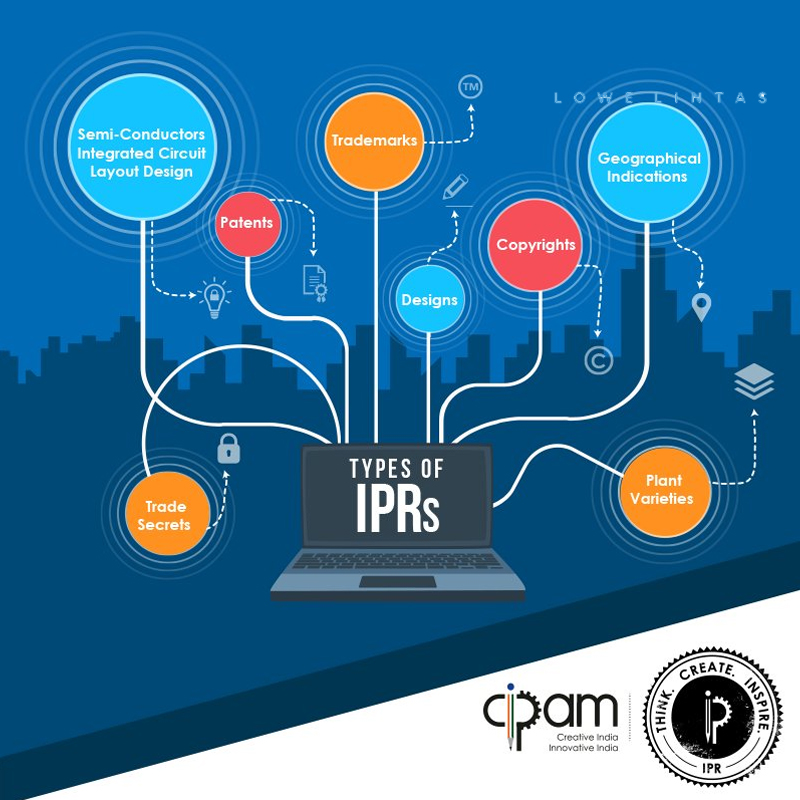
    Several offices have been allocated budgets for the first time: Semi-conductor Integrated Circuit Layout Design Registry (Rs 10 million), Semi-Conductor Integrated Circuit Layout Design Board (Rs One million), Cell for Promotion of Intellectual Property and Management (CIPAM) with Rs 109.9 million, Copyright Office (Rs 36.5 million), Copyright Board (Rs 33.5 million, and  Promotion of copyrights and IPR (Rs 60 million).

    Of these, the last three had been given some allocation in the revised budget. Interestingly, there is no explanatory for these six departments in the budget document.

    In addition to the IP budget, there is an allocation of Rs 6.5 million for the World Intellectual Property Organization (WIPO) as part of support to autonomous organizations.

    It had been announced early in the financial year 2016-17 that issues of copyright had been shifted to the DIPP of the Commerce and Industry Ministry, which became the nodal department to deal with all issues related to copyright in the country.

    (Copyright had until then been the preserve of the Human Resource Development Ministry and the film, music and television industries had always grudged this as they felt it should be with the Information and Broadcasting Ministry.)

    Also Read: 

    Tariff order: Don’t notify without SC nod, TRAI told; Madras HC case to continue

    Copyright Force finally here to fight online piracy

  • Govt launches IPR toolkit for enforcement agencies

    Govt launches IPR toolkit for enforcement agencies

    NEW DELHI: In a bid to sensitise law enforcement agencies and the public in general about intellectual property and copyrights, Indian government has launched an IPR Enforcement Toolkit for police.

    The toolkit has been jointly prepared by Cell for IPR Promotion and Management (CIPAM) and Federation of Indian Chambers of Commerce and Industry (FICCI). The latter is also helming a broadcast and cable industry initiative to fight online piracy of content via formation of Copyright Force that will have its first meeting later this month.

    Aimed at being a reference point for police officials across the country in dealing with IP crimes, specifically trademarks counterfeiting and copyrights piracy, the toolkit will have details of offences under various laws. It provides for checklists for registering a complaint and conducting investigations, apart from laying down general guidelines in case of IP-related crimes. This toolkit will be provided to all state police departments across the nation.

    CIPAM, an organisation under Ministry of Commerce & Industry, has launched several initiatives to ensure effective implementation of the National IPR Policy 2016, which recognizes that awareness and respecting IPRs is crucial for a healthy ecosystem.

    Catch them young also seems to be the government’s aim. To inculcate in children respect for IPRs, CIPAM is collaborating with the International Trademark Association (INTA) to launch an IPR awareness campaign for school kids in a creative and engaging manner through use of presentations and creatively illustrated posters and pamphlets that will cover basics on IPRs and its need to be protected.

    CIPAM, which has also organized seven batches of training programmes for police officials in States of Andhra Pradesh and Uttar Pradesh, is actively facilitating international engagements in the field of Intellectual Property Rights. Two agreements on IPRs were recently signed with the UK and Singapore.

    ALSO READ:  Copyright Force finally here to fight online piracy