Tag: IPO

  • Digitisation to propel pay-TV revenue to $17 billion by 2017 , MPA report

    Digitisation to propel pay-TV revenue to $17 billion by 2017 , MPA report

    MUMBAI: Propelled by the government’s digitisation drive, pay TV revenues in India are projected to reach $17 billion by 2020 as opposed to the $7.8 billion in 2012, according to a new report by Singapore-based pay-TV research firm Media Partners Asia (MPA).

    According to India Pay-TV & Broadband Markets, pay TV revenues are expected to grow at a compounded annual growth rate (CAGR) of 11.4 per cent from 2012-17 and 10.2 per cent between 2012 and 2020.

    MPA forecasts indicate that total digital pay-TV homes will grow from 47 million in 2012 to 110 million by 2017 and 130 million by 2020.

    The digital penetration of total pay-TV homes in the country is expected to double to almost 70 per cent by 2020 from 35 per cent in 2012. The digital pay-TV penetration of TV homes in India will grow from 28 per cent in 2012 to 54 per cent by 2017, and reach 60 per cent by 2020.

    On the other hand, the total pay-TV homes are expected to grow from 128 million 2012 to 167 million by 2017, and 183 million by 2020. Pay-TV penetration of TV homes will grow from 80 per cent to 85 per cent between 2012 and 2020, adjusted for multiple connections in a household.

    This implies that the pay-TV industry will remain in a prolonged investment mode, with significant capital intensity. With two more phase of digitisation to go, both DTH and cable operators already have high levels of debt. The majority of additional funding will have to come through equity, via IPOs and M&A, the MPA report states.

    “A successful start for the roll-out of digital addressable systems (DAS) has revived interest in pay-TV among strategic and financial investors,” says MPA executive director Vivek Couto.

    “The real benefits will become clearer in 2H 2013 and beyond, as multi-system operators (MSOs) drive addressability and work with last mile local cable operators (LCOs) to ramp up tiering, billing and collections. Regulators are committed to curbing delays in the next phases of DAS, while the DTH industry is keen to revive growth by capitalising on digital transition.”

    Cable impact: Over the medium term, the majority of cable investments will be directed towards digital infrastructure, helping to build operator scale and improved addressability. In the long run, investments will be more focused towards acquiring primary subscriber points and the expansion of high-ARPU products such as broadband and HDTV.

    According to MPA, the total proportion of cable households with DAS climb from 15 per cent in 2012 to 50 per cent by 2020.

    DTH growth: In the DTH space, concerns focus on the growth of active subs (i.e. paying customers, net of churn and subscriber suspension), which has moderated in recent times. MPA says that the growth in active subs will rebound however, as more markets undergo analog switch-off. MPA forecasts indicate that active DTH subs will grow from 32 million in 2012 to 64 million by 2017, and 77 million by 2020.

    Broadcasters: Subscription fees for pay-TV channels crossed US$1 billion in 2012, driven by the growing strength of aggregators. This growth has yet to factor in digitalisation, which will result in a bigger share of subscription revenue for broadcasters. Operating margins will remain under pressure in the short-to-medium term, due to heavy investments in content for existing channels and gestation losses on new channel launches.

    MPA expects total pay-TV channel revenues, including advertising and subscription to grow from $3.6 billion in 2012 to $6.6 billion by 2017 and to $8.6 billion by 2020. The pay-TV ad market is expected to grow at a 10 per cent CAGR over 2012-20, while broadcaster subscription revenues are expected to grow at 15 per cent over the same period.

  • VTB Capital acquires minority stake in Russia’s Tricolor TV

    VTB Capital acquires minority stake in Russia’s Tricolor TV

    MUMBAI: VTB Capital acquired a minority stake in National Satellite Company, the largest Russian satellite TV operator operating under “Tricolor TV” brand.

    With its subscriber base over 12.4 million (registered subscribers) including paying subscribers of 9.12 million as of 25 March, Tricolor TV is the leader of Russia‘s pay TV market and one of the largest pay TV providers in Europe.

    VTB Capital as a global investment bank and a financial investor will help Tricolor TV to increase value of its assets and get prepared for an IPO in few years.

    VTB Capital Global Head of Private Equity and Special Situations Tim Demchenko noted, “Investment in Tricolor TV is further step in implementing VTB Capital‘s private equity strategy to invest in consumer-related industries in Russia. We believe its strong market position and countrywide footprint will enable the company to capitalize on opportunities in rapidly growing Russian pay-TV market and successfully complete IPO in the next few years.”

    National Satellite Company CEO Alexander Makarov said, “Partnership with VTB Group is a strategic step which will allow the Company to get prepared for the next level of Company‘s development.”

  • Videocon’s DTH arm plans to raise Rs 7 bn via IPO

    Videocon’s DTH arm plans to raise Rs 7 bn via IPO

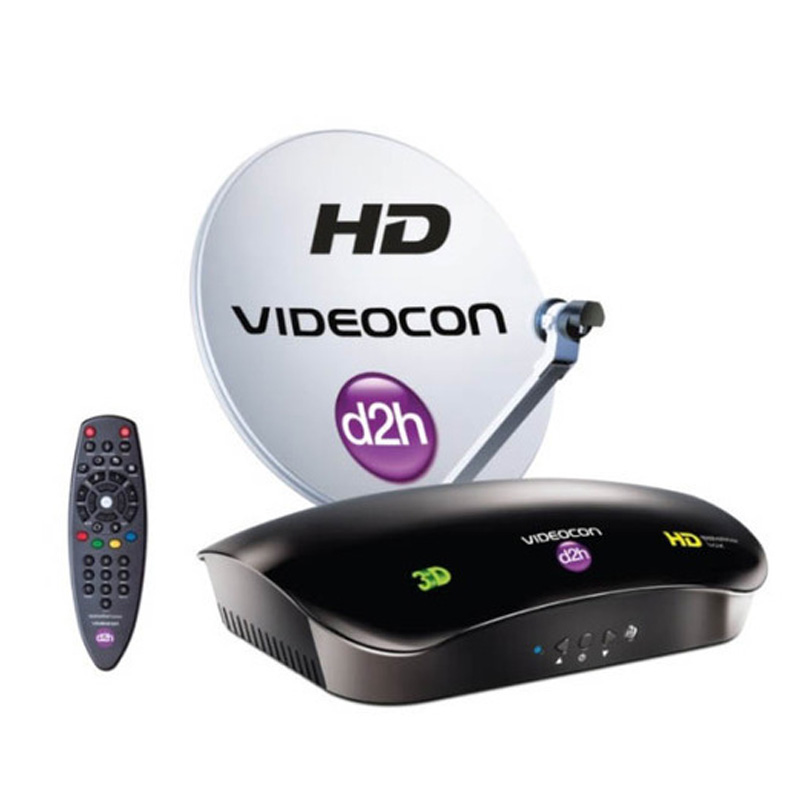
    MUMBAI: Videocon has taken the leap to list its direct-to-home (DTH) arm, Bharat Business Channel Ltd, to cash in on the digitisation wave.

    Bharat Business Channel Ltd, which operates its DTH business under the Videocon d2H brand, is planning to raise Rs 7 billion through an initial public offering (IPO). The company has filed its documents with market regulator Securities and Exchange Board (Sebi).

    The company is also looking at raising Rs 500 million through a pre-IPO placement of its shares to institutional investors.

    The promoters (the Dhoot family) had earlier issued rights issue at Rs 50 a share. A similar IPO pricing would lead to a 36 per cent dilution, pegging the value of the company at Rs 19 billion. But the promoters, it is understood, are looking at a higher valuation as they tap the capital.

    Starting operations in July 2009, Bharat Business Channel has a gross subscriber base of 6.62 million as of 30 September 2012.

    The company has a negative net worth of Rs 5.90 billion as of 30 September 2012, reporting net loss of Rs 11.40 billion in the last three fiscals. In the first half of this fiscal, it had a net loss of Rs 2.70 billion on revenue of Rs 4.93 billion.

    The government has mandated digitisation across the country by 31 December 2014, leading to a huge funding requirement among cable TV operators and DTH companies.

  • ‘Buyout valuations will now be decided in terms of ARPU rather than carriage growth’ : IMCL MD and CEO Ravi Mansukhani

    ‘Buyout valuations will now be decided in terms of ARPU rather than carriage growth’ : IMCL MD and CEO Ravi Mansukhani

    IndusInd Media and Communications Ltd (IMCL), the media subsidiary company of Hinduja Ventures Ltd, plans to raise $100 million, a major chunk of which will be used to fund acquisitions.


    Operating its cable TV business under the InCablenet brand, IMCL had earlier planned an initial public offering (IPO) but changed its stance as the newly listed cable TV entities, Den Networks and Hathway Cable & Datacom, dropped in market value.


    Even on the acquisition front, IMCL has changed gears. Earlier, the focus was to buy small-sized cable TV networks and expand geographies. Now it targets big-ticket acquisitions, expecting the sector to consolidate as the government chalks out a schedule for digitisation across the country.


    Slow on the broadband path, IMCL is experimenting on new technologies where it will not have to entirely overhaul its network to load on broadband capability.


    In an interview with Indiantelevision.com’s Sibabrata Das, IMCL managing director and chief executive officer Ravi Mansukhani talks about how the acquisition game is going to move from carriage calculations to valuations based on ARPU (average revenue per user) growth as the cable TV sector transitions into the digital era.


    Excerpts:

    Why is IMCL taking so much time in readying its IPO?
    We are in the market to raise $100 million ahead of the IPO and have mandated Deutsche Bank for this. We want to first build a solid valuation base. We believe the value of the top-rung MSOs will get a significant boost once the government fixes up a schedule for digitisation. We want to also expand on our size before we go for a public float.


    We have separately raised Rs 1 billion of debt from General Electric. So funding is being taken care of. We are getting ready to move into top gear.

    Have you finalised on how you are going to raise this amount?
    We are weighing various options. We are looking at mezzanine structures. The final structuring will depend on what fund-raising instrument we select.

    Are we going to expect acquisitions or a drive to greater digitisation?
    We plan to use three-fourth of the amount raised for acquiring cable TV networks. We are looking at small and big-ticket acquisitions. We believe there is going to be consolidation in the industry. For digitisation, we have a separate funding plan to meet the capex requirements.

    Why has there been a change in stance as the earlier focus was to buy small-sized cable TV networks and expand geographies?
    We see an opportunity out there as the other leading MSOs like Hathway Cable & Datacom and Den Networks are not on a buying spree. The valuations have dropped and we are ready to make big-ticket acquisitions ahead of the government‘s digitisation schedule. The acquisition focus now will be not on expanding into new geographies but on consolidating and growing in existing operational cities.

    Will the acquisition game change even as the government lays out a roadmap for digitisation across the country?
    The game will definitely change. A few years back, when the pace was set by new entrants such as Den and Digicable, acquisitions were based on carriage calculations and TRP cities were favoured. Now, as digitisation creeps in, buyout valuations will be decided in terms of ARPU growth. So we have decided to consolidate and expand in areas where we already exist like Maharashtra. There is no point in spreading lean.

    “We are in the market to raise $100 mn ahead of the IPO. We want to first build a solid valuation base. We believe the value of the top-rung MSOs will get a significant boost once the govt fixes up a schedule for digitisation. We want to also expand on our size before we go for a public float”

    Do you see MSOs fighting amongst each other once the digitisation programme is announced?
    MSOs would rather consolidate and expand where they are strong; their focus would be on digitising their existing network. MSOs can‘t create a fight today without being attacked; too much is at stake.

    How will MSOs counter the DTH invasion?
    India will remain primarily a cable country. Yes, in a diversified and fragmented market, DTH will have space. But being the incumbent player, cable TV has a distinct advantage. Besides, it is cheaper priced, bandwidth is no issue and it can be interactive. MSOs will also start launching server-based local channels as in the digital era, space will open up for more channels. There will be need for local news and events. DTH can‘t offer these channels.

    How much of IMCL‘s network is digitised?
    We have over half a million digital set-top boxes (STBs) installed. Out of the 28 cities that we operate in, we provide digital services in 17 cities via 10 digital head-ends.


    If the government‘s digitisation plan is on stream, we will deploy close to two million additional boxes in Phase 1. We are going to fund our digitisation through lease and vendor financing.

    Why is IMCL‘s broadband story yet to emerge?
    Our focus has not been on broadband in the past because the franchisee operators have been providing it. Though we provide broadband in nine cities, our revenues from this segment stood at just Rs 50-60 million in FY‘11.


    We plan to have a strong broadband story once the digital path is properly spelt out. We are currently experimenting on new technologies where we will not have to entirely overhaul our network to load on broadband capability.


    We won‘t have a problem building up broadband revenues once we have pushed the digital STBs in. The script will change after the government announces the sunset date for the digitally notified areas. It is companies like You Telecom who will need to grow their cable TV presence in order to provide broadband.

    Hathway has announced it would launch its HD service in June. When are you getting into this segment?
    Our first priority is to offer digital service. We will then graduate to HD. The market is still not ready for it. HD boxes are on the anvil and we will introduce them into the market in the next few months.

    IMCL‘s total income jumped 23 per cent to Rs 4.03 billion in FY‘11. What growth do you estimate in FY‘12 and what is the outlook on carriage income?
    We expect revenue to grow between 20-25 per cent. This will be higher if we raise capital fast and make big-ticket acquisitions.


    We saw 18-20 per cent growth in carriage income in FY‘11. We expect strong growth from this stream as more and more channels get launched in the fiscal.

  • ‘We are considering an IPO’ : Venus Records & Tapes director Ratan Jain

    ‘We are considering an IPO’ : Venus Records & Tapes director Ratan Jain

    Venus Records & Tapes director Ratan Jain is a busy man, collecting box-office feedback from his new release De Dana Dan.


    Built on Rs 670 million with Eros as an equal partner, the movie is crucial to Jain‘s expansion plans. He is readying a movie with Priyadarshan and another with Abbas-Mastan after having stayed away from film production for a brief while due to an unrealistic rise in prices.


    Venus has one-third of its revenues coming from music. With a correction in prices, the company plans to swing back into acquisition of titles.


    Venus is also considering an initial public offering (IPO) to fund its expansion plans.


    The company expects to clock a revenue of Rs 1.20 billion this fiscal on the back of a big movie release and the music business.


    Cutting across his busy schedule, Jain speaks to indiantelevision.com‘s Sibabrata Das and Ashish Mitra about the need to be cautious in an overheated movie market.


    Excerpts:


    Why has Venus been slowing down on movie production and acquisition of music rights for the last couple of years?

    The prices skyrocketed and we decided to stay outside the ring. Some companies wanted to scale up and actors and technicians jacked up their rates to an unrealistic level. The movie industry went haywire. The same thing happened to the music industry. For the films that we released, we, however, kept the music rights. But it did not make business sense for us to acquire music rights at such inflated prices.


    Do you see the prices having fully corrected?

    They have definitely corrected to a large extent and things have come to some state of reality. But some actors and technicians are still looking at extremely high rates. Despite a fall in the cost structure, there is a scale down in the number of movies being produced this year.


    Venus has swung back into action with a big budget movie De Dana Dan. Has the co-production with Eros come at the right time for you?

    The movie is made on a budget of Rs 670 million and it is a 50:50 joint venture project with Eros. While Eros has kept the home video and international distribution rights, we have the India distribution and satellite TV rights. Baba Arts is handling the distribution for us. Early indications from the box office show that the movie is going to be a hit.


    Priyadarshan makes out-and-out comedy films. De Dana Dan also marks the return of all three protagonists of Hera Pheri – Akshay Kumar, Suniel Shetty and Paresh Rawal.


    Will this movie spur you to scale up particularly as it comes after a gap of more than a year since your last film Maan Gaye Mughal E Azam?

    Yes, Maan Gaye… released on 22 August 2008. And I rolled the shooting of De Dana Dan on 26 November last year, the day the terrorists struck in Mumbai. I remember when we were in a middle of a shoot, we got a call from a friend of mine that terrorists were firing at CST.


    As far as my film goes, we do a research of at least six months and then go in for shooting. This film has taken exactly a year.


    I don‘t see Venus doing more than two movies a year. We could also be doing smaller movies but it is difficult to market and release them. We have two projects in the pipeline – one with Priyadarshan in August and the other with Abbas Mastan.


    Will you go for a syndication model or sell outright the satellite TV rights for De Dana Dan?

    We are in advanced negotiations to sell the rights. Syndicating the movie to multiple broadcasters is good for channels but not for us. It takes time to recover money. And it has worked when you have big hits like Jab We Met and Singh is Kinng which can have many runs across channels. Syndication also works when you have a basket of films.


    ‘We expect to clock Rs 1.20 billion in FY‘10. Venus is not just surviving on movie releases. We have a strong music business. We also trade in satellite TV and video rights‘


    Have prices for satellite rights slumped this year?

    Prices have fallen compared to last year. Internal competition and entrants have spoilt the market. We had fictitious prices ruling the market.


    Has the downturn affected your revenues?

    There is no recession in the entertainment business. We clocked over Rs 1 billion last fiscal and are expecting to have a turnover of Rs 1.20 billion in FY‘10. Venus is not just surviving on movie releases. We have a strong music business. We also trade in satellite TV and video rights.


    What steps are you taking to boost your revenues from the music segment?

    Music accounts for 30-40 per cent of our total turnover. Besides mainstream Bollywood, we bring out music CDs of all kinds including ghazals, regional languages and bhajans. We are exploiting the digital and mobile platforms. A major chunk of our revenue comes from downloading.


    But you haven‘t been acquiring music rights aggressively in recent years?

    With the prices going berserk, we largely stayed out of it. But we have a vast library, holding over 3000 music titles. While 600 are film music titles, the remaining are non-film music titles.


    On the movie front, we have negative rights of 50 movies.


    Zee had shown interest in acquiring 60 per cent stake in Venus in 2006. What went against the deal?

    There were commitment issues. While at that time we thought of that as an expansion route for us, now we are not looking at such alliances.


    Are you looking at other ways of raising capital to fund your expansion plans?

    We are considering an initial public offering (IPO). We were not ready for a public listing then. Now we have taken the necessary steps. We could also be looking at a pre-IPO placement. But we haven‘t frozen our plans yet.
     

  • Indiantelevision.com’s interview with You Telecom CEO EVS Chakravarthy

    Indiantelevision.com’s interview with You Telecom CEO EVS Chakravarthy

    Citi Venture Capital International-owned You Telecom India has resized its investment plan amid the economic downturn.

    The trimmed-down plan will mean a fresh investment of Rs 2.5 billion over two years, instead of Rs 4 billion as earmarked earlier.

    Narrowing down the spread, the expansion plan will focus on depth and consolidation of the business in the cities where You Telecom runs operations.

    The redrawn map will mean that You Telecom stays as a niche player in the market for at least two years, shunning away from a frenzy among many multi-system operators (MSOs) to land grab and build scale.

    You Telecom is in talks to rope in Indian investors for Digital Outsourcing, its cable TV arm. Tulsi R Tanti and his family members, promoters of wind power company Suzlon Energy Ltd, hold 49 per cent stake in the company. You Telecom has 36 per cent stake while the balance is held by high net worth Indian individuals.

    In an interview with Indiantelevision.com‘s Sibabrata Das, You Telecom CEO EVS Chakravarthy talks about how important it is for cable TV companies to work on their business models, stay away from reckless acquisitions, conserve capital and penetrate deeper into last mile services.

    Excerpts:

    Two MSOs are in the process of tapping the capital market. Do you think the cable TV sector has reached a stage of maturity for listing?
    The two preliminary draft prospectus filings are the first in the cable TV sector of significance for raising money from the capital market. The outcome of these two IPOs will send strong signals for the future. Investors will watch carefully the pricing of the issues, the intrinsic value of the business it captures and the sustainability of it. Hathway Cable & Datacom and Den Networks need to do everything to make sure that the sector becomes attractive for current and future investors.

    How does this impact companies like yours?
    We are not in a hurry to capitalise on the high valuations in the market today. We want to see if this is sustainable. We prefer to go to the market as a profitable company with a strong business model and management bandwidth. We want to time the IPO appropriately.

    Are you saying that Hathway and Den are in a hurry to raise money via the IPO route?
    Both the MSOs expanded aggressively through acquisition of cable networks. They need further capital to fuel their growth.

    Will these two listings aid digitisation?
    Consolidation will happen faster than digitisation. As a process of consolidation, I wouldn‘t be surprised if Hathway buys Den – or the other way round. Besides, more and more cable companies will get listed.

    Will the climate be favourable for foreign strategic investors like Comcast?
    Foreign strategic players will still stay away because no single Indian cable TV company has built that scale. Post consolidations, they will show interest. For Comcast and others to come, it is 3-5 years away.

    ‘Post listing of the two MSOs, consolidation will happen faster than digitisation. As a process of consolidation, I wouldn‘t be surprised if Hathway buys Den – or the other way round‘

    Since the IPO is throwing open early exit options for private equity firms, won‘t they find the cable TV sector attractive?
    Some of them came into the sector with the hope that the government-mandated Cas (conditional access system) will spread to other cities. That has not happened. Still the sector attracted further private equity investments as everybody saw an opportunity in the distribution business. New PE players will wait to see if the market price of the listed companies is sustainable. The calls that they will take now will be more informed due to the last two years of collective experience of the industry.

    You Telecom had plans to expand in the bull phase and had decided to invest Rs 4 billion over two years. What made you scale back your investment plans?
    We have decided to pump in Rs 2.5 billion over the next two years to boost our cable TV and broadband business (the investments for cable TV are made through a subsidiary company, Digital Outsourcing). Our focus will be on depth and consolidation of the business in the cities where we run operations. We had earlier planned to expand into 15 new cities, including 10 for cable TV services. But in a capital scarce scenario, we will go to six more cities in the first phase. For cable service, we will be adding 2-3 cities to our existing operations in Mumbai, Bangalore and Vizag. After that, we will rework on our fund requirement.

    So you plan to stay as a niche player in the market for at least two years?
    We have seen how some MSOs have been pursuing a high-growth subscriber universe by recklessly acquiring cable networks. Having a large universe can become a liability. The capital has dried up for them and there is no change in their business models. It is important to be consistent, strong, stable and profitable.

    We are looking at an optimum size of 4-5 million in the first phase, up from our current reach of two million. You can‘t just focus on the reach universe when there is just a 20 per cent revenue share (due to under-reporting). Our focus will be to penetrate deeper into last mile services.

    But if government announces a policy for HITS (Headend-In-The-Sky), will you scale up?
    When the regulation comes, we will be one of the applicants. We are ready as far as the rest of the infrastructure is concerned. We will partner with Cisco on technology; we already have an existing head-end infrastructure with them. We have also signed an MoU for the transponder. We plan to invest an additional amount of Rs 1.5 billion for HITS.

    Will Tulsi R Tanti and his family members (Suzlon promoters) commit investments for such expansions?
    They currently hold 49 per cent stake in Digital Outsourcing and stand committed. We might also bring in other Indian investors.

    You Telecom acquired a majority stake in Scod18 Networking to have a cable TV presence in Mumbai. What are the expansion plans under this entity?
    Scod18 has been a Mumbai-centric MSO. We will continue to be a significant player with a significant market share in Mumbai. We will expand in areas around Mumbai and in parts of Maharashtra along with them, if and when we get the right opportunities. Our focus will be on digitisation and other value-added services like on-demand and TV-commerce.

    And for Bangalore?
    We acquired a 50 per cent stake in Digital Infotainment, a small-sized local cable network, and our investments in this venture so far has been Rs 500 million (out of a total investment of Rs 5.5 billion). We will expand in Bangalore and other areas in Karnataka through this joint venture.

    Will acquisition be the only growth route for you?
    Yes, that is how we will grow. We are planning to offer stock in lieu of last mile acquisition. This is how Cisco grew from a $2 billion to a $22 billion company – by offering stock. Pragmatic cable companies, after all, have to start a trend. But for this listing is important.

    Having taken the position of a niche player, how important is it for you to launch premium products to drive in higher ARPUs (average revenue per user) as a strategy?
    The market today is not matured for premium products. The content cost is exorbitant and pricing is a big issue. The MSO that could have monetised on value-added services is Hathway Cable & Datacom as it has a million digital subscribers. But as this has not been a focus area for them, there must be compelling reasons for this.

    What will the focus area for MSOs this year?
    MSOs will have to make sure that they have enough capital with them.

  • ‘We plan to raise Rs 5 billion’ : Ravi Mansukhani – Indusind Media & Communications CEO and MD

    ‘We plan to raise Rs 5 billion’ : Ravi Mansukhani – Indusind Media & Communications CEO and MD

    Hinduja-owned IndusInd Media & Communications Ltd (IMCL) has survived the scare from a wave of new multi-system operators (MSOs) that threatened to land grab even in the lucrative market of Mumbai.

    IMCL has expanded its footprint to 27 cities and thrived on a hefty carriage revenue that helped the MSO turn profitable. In FY‘09, carriage made up for almost 50 per cent of IMCL‘s turnover as broadcasters coughed out Rs 1.4 billion to place their channels on the network.

    The media subsidiary company of Hinduja Ventures Ltd plans to list through an initial public offering (IPO). Ahead of that, it is in talks to rope in an investor. The total fund-raising agenda: Rs 5 billion.

    Operating its cable TV distribution business under the Incablenet brand, IMCL has agreed to dilute one per cent stake to Ashley Investments at a valuation of $644 million. As part of this exercise, 0.22 per cent has been diluted.

    The MSO has aggressive plans to grow in the digital environment. IMCL is also gearing up to grow its fledgling broadband business, after upping its primary connections to 200,000 that would give it access to the last mile.

    In an interview with Indiantelevision.com‘s Sibabrata Das, Indusind Media & Communications CEO and MD Ravi Mansukhani talks about the MSO‘s growth plans.

    Excerpts:

    IMCL is planning to take the IPO route. How much are you going to raise?
    We are out in the market, looking to raise money. We may get an investor before we possibly do the IPO. We feel this is the best route to take. But if there is no match on our valuations, we will go on our own. We plan to raise Rs 5 billion to fund acquisitions and our digital cable TV expansion. But we are not in a hurry. We want to list with the right fundamentals and the future for digitisation.

    Why are cable TV companies suddenly rushing to list?
    DEN (Digital Entertainment Networks)a late entrant, is planning an IPO this year. There are media reports also about Hathway Cable & Datacom readying to tap the market. Wire & Wireless India Ltd (WWIL) is in the process of raising money through a rights issue. The fact is that cable TV companies are looking at expansion as they feel there is a huge potential left open. Unfortunately, DTH has not been able to fight analogue cable because of the pricing. And with digital cable growing slowly, DTH has not grown to everybody‘s expectations.

    But is it not true that all the DTH operators are mopping up subscribers very aggressively?
    DTH is growing either in cable dark or bad cable areas. In urban India, they have made penetration in mostly multiple TV homes and, thus, co-existed with cable. A very small percentage has come at the expense of the cable TV operators, perhaps because the ARPUs (average revenue per user) are low.

    A wave of new MSOs have entered the market. How has this affected Incablenet?
    In the urban areas, this led to ground warfare as the entrants wanted to grab territory. Subscription rates, undoubtedly, got affected as we had to retain our base. This was particularly felt in case of franchisee fees. But we held on – and are slowly getting back the old rates.

    We have actually grown in revenues as we expanded through acquisitions. We are present in 27 cities, up from 12 a couple of years back. We have laid more infrastructure and have over 6000 km of hybrid fibre network. We have posted a 45 per cent growth year-on-year over the last two years. We have also turned around and become profitable.

    Wasn‘t this largely because of the steep growth in carriage fee which accounted for almost 50 per cent of IMCL‘s FY‘09 revenues?
    Yes, the placement charges helped to a large extent for IMCL turning profitable. But we are no more stuck as just a cable MSO. Though video is the mainstay of our business, we have laid infrastructure and will now aggressively push for broadband.
    ‘This is a good time to make acquisitions as the cost per point has come down. In prime locations, valuations have fallen by a quarter and in other areas by almost 50%‘

    The company has been talking about broadband for the last few years but very little has happened. The revenue from broadband for FY‘09, in fact, was under Rs 50 million. So what changes this time?

    The three bottlenecks that hindered our broadband growth are now behind us. Bandwidth costs have fallen. Secondly, we have merged the broadband company with the cable outfit, so that saves us from paying out any network charges. The third and the most important fact is that we have grown our primary points from 50,000 to 200,000 and, as we own the last mile here, we don‘t have to pay commissions to franchisee operators. We are targeting to double our revenues from broadband this year. We will also get into commercial clients as it will give us higher ARPUs. In the retail segment, our ARPU stands at Rs 400

    Was there a conscious decision to acquire more of primary points?

    When we went in for acquisitions, we ensured that we got into good ARPU areas. We also took care that we acquired 30 per cent of primary connections from the cable networks that we snapped up.

    Were you driven to new geographies because of the carriage market and also because of a land grab situation from new competition?

    The older MSOs like us expanded into new cities because of the promise of digitisation which would lead to transparency and ensure that we carve out a commission system for ourselves. The new MSOs came under the plank of carriage fees. Undoubtedly, placement charges helped all MSOs to survive and grow – including the digital business.

    The economic slowdown is hurting broadcasters and they are pulling down their carriage costs. How is this going to affect IMCL‘s growth this year?

    Carriage revenue will not dip but flatten for us this year. There are new channel launches but they are not of that scale as last year‘s. This will be a consolidation year for us.

    How much is IMCL investing this year?

    We had invested Rs 1 billion in FY‘09, equally split between acquisition, digitisation and laying of infrastructure. For this fiscal, we plan to invest a similar amount. We will add two digital headends to our existing eight. We will also supply digital feed to four more cities during the fiscal, in addition to the four that we have currently linked up.

    We have so far seeded 350,000 digital set-top boxes (STBs) across eight cities. We haven‘t got fresh STBs this fiscal as the government has imposed duty on the import of boxes. But we have placed orders and expect supplies to arrive in November. Our target is to add 150,000-200,000 boxes during the fiscal. The Commonwealth Games in Delhi also could act as a big boost if the government comes out with a digitisation policy to coincide with that event.

    Will you be aggressive on acquisitions this year?

    We will continue to make acquisitions where we see an opportunity being thrown on us at the right value. This is a good time to buy as the cost per point has come down. In prime locations, valuations have fallen by a quarter and in other areas by almost 50 per cent. Operators need the support of bigger MSOs because of the huge subsidy in digital boxes. We will consolidate in states where we are already present.

    And there will be more disturbance on the ground?

    Warfare for territory will reduce as the new MSOs will not be that aggressive. Money is drying up and they are back in the market trying to raise funds.

    Is there a drive to restructure the content business under associate company Planet E-Shop Holdings India Ltd?

    The movie business is moving into Planet E-Shop. This is also housing the distribution of channels for retail and commercial. We are distributing ESPN in Mumbai and are in talks with two other major broadcasters. We have also taken up marketing and distribution of foreign channels like Arirang and Miracle Channel that seek downlinking in India. We are looking at signing up three more foreign channels this year.

    Will the cable movie channel, CVO, move into this company?

    The channel is part of IMCL and there are no plans as of now to shift this out. We may make it a pay channel down the road as the digital environment grows. We have bought 100 movies this year and are planning to add 300-400 more as prices have fallen. The revenues are getting squeezed for cable movie channels. But we have a library of 700 movies and later may create thematic channels for digital subscribers.

    What plans do you have to grow the content side of the business?

    We will create server-based local channels when the time is ripe. Cable news channels in metros may not be viable as it makes more sense to get placement fees than run your own channel in a choked analogue environment. The situation can be different in smaller towns. Our interest is to create these server-based local channels that do not depend on advertising but pay revenues.


    Will the cable movie channel, CVO, move into this company?
    The channel is part of IMCL and there are no plans as of now to shift this out. We may make it a pay channel down the road as the digital environment grows. We have bought 100 movies this year and are planning to add 300-400 more as prices have fallen. The revenues are getting squeezed for cable movie channels. But we have a library of 700 movies and later may create thematic channels for digital subscribers.

    What plans do you have to grow the content side of the business?
    We will create server-based local channels when the time is ripe. Cable news channels in metros may not be viable as it makes more sense to get placement fees than run your own channel in a choked analogue environment. The situation can be different in smaller towns. Our interest is to create these server-based local channels that do not depend on advertising but pay revenues.
  • ‘Media and entertainment sector has lost a whopping Rs 640 billion of market value since last year’ : Sadanand Shetty – Kotak Securities vice president

    ‘Media and entertainment sector has lost a whopping Rs 640 billion of market value since last year’ : Sadanand Shetty – Kotak Securities vice president

    Media and entertainment companies have been riding the market boom to expand and fund their diversified ventures. But the tide has turned against them and they are faced with a scarce capital situation.

    Being in the equitties market for over 14 years, Kotak Securities vice president Sadanand Shetty knows best how rough the path is going to be for media companies to tide over the slowdown phase. Managing money on behalf of investors, he is one of the few fund managers to have caught early the trends across verticals within the media and entertainment sector.

    In an interview with Sibabrata Das, Shetty talks candidly about the massive erosion of values media companies have seen over the last one year and how grim the real world is for most of them.

    Excerpts:

    Aren’t these companies seeing a massive skid in valuations?
    The media and entertainment sector has lost a whopping Rs 640 billion of market value since last year due to the global economic meltdown. There is a massive collateral damage to the wealth of media owners. Valuation corrections for most of these companies are far greater than the broad market.

    Most media companies fall under mid cap and small cap categories. These categories have lost much more in stock value than the large cap companies. September ’08 has been the worst quarter in recent times for most media companies that are part of the broad-based BSE 500 Indices. The profits of aggregate listed companies are down by 60 per cent for the said quarter, including losses of new Hindi GECs (general entertainment channels). Slowdown in revenue and rising costs have hit earnings.

    The market has not even spared large companies like Zee Entertainment Enterprises Ltd and Sun TV Network Ltd; they together have lost market value of close to around Rs 160 billion (as of 10 January 2009 over the year ago period). The broadcasting space has alone lost market value of nearly Rs 280 billion. Economic slowdown in general has impacted the advertising revenues of the sector. Subscription revenues, to some extend, provide the much needed cushion to falling profitability of the broadcasting companies.

    Why were media valuations so unrealistic?
    Being emerging businesses, the Indian media and entertainment companies commanded higher valuations. Most media companies have demonstrated robust sales, expanding margins and rapid growth in profits in recent times. The stock market rewards high growth with high valuations. A favourable equity market has also helped companies to raise large funds and command these valuations.

    Weren’t companies stretching themselves too thin in a market hype situation?
    Still, I wouldn’t call these moves as mistakes. Expansions were planned in a growth environment, which now, though, is hitting the speed breakers. But certainly in some cases large capacities have been created ahead of demand curve and investors are suffering in those ventures.

    The industry also witnessed entry of new players with other objectives. For some it was pure market capitalisation as easy money poured into the sector. Investors – foreign and local – have jumped the gun and funded some of the unviable projects. Shortsighted foray into ‘new media’ business verticals that some companies have ventured into will be hard hit.

    What are the lessons to be learnt from this?
    This is the first true slowdown that the industry is witnessing today. It would be interesting to see how managements of the media companies respond to the situation. In general, business plans built on easy liquidity do not sustain for long. Vision, commitment and excellent execution do. Media, like any other services business, is people driven. Backing the right talent with appropriate incentives will yield large gains.

    ‘Economic slowdown will force companies to focus on few verticals. They will have to maintain their market share without burning too much cash

    Have media companies become dependent on foreign capital?
    Global media companies except perhaps News Corp. were late to react to opportunities in India. But today almost all the top studios of the world have their presence in India across different media verticals. Favourable economic growth and rapid rise of domestic companies have compelled the global media giants to look at India. For some of these companies, Indian operations have started contributing majorly to their profits in the Asian region.

    We are also witnessing rapid rise in FDI (foreign direct investments) and portfolio investments in media companies. You, after all, can’t ignore the second fastest growing economy of the world. India is also in a sweet spot today because of its huge youth population.

    What are the challenges the Indian media companies face due to slowdown?
    Slowing ad spend, increase in operating costs (specially distribution), and tight liquidity will impact the industry in the medium term. The sector will also have to grapple with excess inventories that have been created in the last few years. Most importantly, economic slowdown will force companies to rethink on their expansion plans and focus on few verticals. Companies will have to maintain their market share without burning too much cash in the process.
    The process of consolidation will also accelerate. I expect incumbents with sound financials to take advantage of the current dismal valuations to further their business interests. Venture capital and private equity participation can’t also be ruled out. We have already seen certain GECs feel the heat. Consolidation in regional markets is also happening and expansion plans have been put on hold in some cases.

    Overall, the economic slowdown will impact the growth plans of most of the companies. Priorities have shifted to consolidating the existing businesses; expansion can wait.

    It is testing time for media companies. There will be no better time to demonstrate the strength of their respective market/channel shares as we expect ad spend to consolidate towards the top.

    TV content companies have suffered for long due to their fractured business model. Lack of revenue visibility and pricing power have impacted them. There is also lack of long term relationship between content and broadcasting companies

    Will news channels have a free fall as they operate in a highly cluttered environment?
    News channels in India have grown significantly over the last few years. But for most companies, it has not significantly added to their profitability due to high operating costs (including distribution). Lack of robust subscription revenues have also impacted the bottom lines of many of these companies. Noise value has gone up due to entry of players with other objectives. We have witnessed the entry of so many non-serious players in the market that I think most of them will fold up in the next two years.

    Only few news channels with strong brand equity and distribution network would be able to make reasonable profits. Companies with strong balance sheets will survive. Rest all will fade away.

    What do you think of the television content companies?
    TV content companies have suffered for long due to their fractured business model. Lack of revenue visibility and pricing power have impacted them. There is also lack of long term relationship between content and broadcasting (who own the IPR) companies. The benefit of new distribution platforms has not reached most of these companies.

    Unless there is substantial change in the current business model, I do not see real scalability coming to companies. TV content companies also suffer from fragmentation. Having said that, this year has been particularly good for content companies as some of the dominant incumbent players have witnessed loss of market. New players have emerged and done well. I expect few credible players to emerge in the future.

    Do you find the cable industry attractive?
    Institutional investors have shown interest in the sector in recent times. Investments have flown into the large incumbents and fledging entrepreneurial-led companies. Investors are betting on eventual consolidation and digitalization of last mile to unlock huge value in the sector. Investors seem to be willing to wait for the interim painful process to unlock long term value. We expect increased investments will go into infrastructure creation and customer acquisition.

  • ‘IPL has aspirations to evolve into a major league like the EPL’ : Ravi Krishnan- Rajasthan Royals vice chairman

    ‘IPL has aspirations to evolve into a major league like the EPL’ : Ravi Krishnan- Rajasthan Royals vice chairman

     After succeeding in the first edition of the Indian Premier League (IPL), Emerging Media-owned Rajasthan Royals has big plans to develop the franchise into a global brand. Part of the agenda is to do a variety of lucrative commercial deals and break even before three years.


    Emerging Media is looking at raising around $20 million by selling 10 per cent of its stake. The company is in the process of appointing bankers to find a private equity partner, ahead of an initial public offering (IPO).


    In an interview with Indiantelevision.com’s Ashwin Pinto, Rajasthan Royals vice chairman Ravi Krishnan spells out the franchise’s future strategies.

    Excerpts:

    The IPL franchisees are said to have recovered close to 80 per cent of the money they paid to the Board of Control for Cricket in India in the first year. Does the huge success of the first edition of IPL mean that Rajasthan Royals will break even faster than the earlier three-year target?
    We are revising our plans positively, though I can’t comment exactly on the figures. We spent less on acquiring the franchise and invested judiciously. We did not sign an expensive contract with a Bollywood star; nor did we spend heavily on advertising campaigns. I have never seen Chicago Bulls run an ad campaign; it is PR-led and builds value from the success that it enjoys. You could focus on the peripheral stuff as well, but the IPL at the end of the day is a sporting competition.

    Since we played well and won the inaugural IPL tournament, this has opened up more opportunities for us like playing in the Champions T20 League. We will, thus, be in a position to rake in more money.

    What are the commercial opportunities that have opened up for you after your success?
    We are scouting for strategic partnerships. There are some obvious ones like sponsorships on the shirt, etc. Then there are those that are not so obvious that will showcase the success of our franchise. We will be announcing more details later.

    What are the plans in the licensing and merchandising arena?
    We are in discussions with different parties for tie ups. We have a very broad licensing and merchandising programme, which would cover a range of goods and services.

    Would it be a challenge for franchisees to get sponsors at high value because of the global economic downturn?
    Even if some sectors have been affected by the downturn, other clients will come on board. When the tobacco embargo came in and Wills stopped sponsoring cricket, there were predictions of doom. However, other companies stepped in. Advertisers can’t ignore the IPL. I do not think that there is cause for any of us to panic.

    Why are some franchisees including Rajasthan Royals looking at raising funds by divesting stake. Isn’t this coming too soon and at a time when there is a global downturn?
    There are different reasons for selling a stake. For us, the aim is to fund the development of the franchise.

    We will be diluting a small part of the equity and are looking at the private equity route. We are in the process of appointing bankers

    Are you looking at private equity investors as it is a bad time to go for an IPO?
    We will be diluting a small part of the equity and are looking at the private equity route. We are in the process of appointing bankers.

    Up next for the Rajasthan Royals is the Champions T20 League. How do you see this developing as a property?
    I think that it will be as significant for cricket as the Champions League is to soccer. In tennis you have the year-end Masters Cup where only the best of the best get to play. The Champions T20 League will occupy a similar mind space. It is being held for the first time and so there is some uncertainty among some parties; but I think it will do really well. It will be the icing on the cake when you talk about global domestic competitions.

    One of the things that EPL (English Premier League) clubs have done is to market themselves through foreign tours. What plans do you have in making Rajasthan Royals a major brand?
    You have to remember that the EPL and its clubs are 100 years old. IPL has just finished its first year. While it is new, the IPL has aspirations to evolve into a major league in world sport like the EPL.

    What role will Rajasthan Royals play in helping Emerging media become a player to be reckoned with on the global stage?
    I think that the success of Rajasthan Royals will provide a platform for the company to enter into other areas. However at the moment, we are going into the Champions T20 League, which will be followed by another IPL season next year.

    What is your strategy going to be when the trading window opens on 15 December?
    We are looking at various permutations and combinations. The fact is that our team had seven nationalities. The public loved seeing Shane Warne, Sohail Tanveer and Graeme Smith on the same team. This lent freshness to the proceedings.


    The trading window is an innovation that fans look forward to. Who is going to be in the team? Who will not be there? Who will be traded? There will be a lot of drama around this. This is what happens in the US with college drafts for baseball and basketball. The composition of some teams in the IPL will change which will cause speculation and excitement.

    What were the things discussed at the recent meeting in Bangkok to improve the IPL?
    We had a conference in Bangkok to debate on the areas where we can improve upon. It was a three-day session that looked at different things – from organisation to ticketing to hospitality.

    Hospitality as you mentioned is an area that could be improved upon. What are Rajasthan Royals’ plans in this?
    We recently launched our membership programme. We benchmarked this against other membership programmes globally. It is a five-tier programme and also includes kids. Creating a community can contribute to the financial success of the franchise as they would buy tickets, merchandise products and also attend special events. We are the first IPL franchise to launch a structured membership programme.


    Our membership programme could create life-long fans for the franchise. I have supported a football club in Australia since I was five years old. I am a repeat buyer of their jerseys and other club merchandise. It is about building a community and then finding ways to get them excited. Giving them special offers is one such way.

    What is the impact that IPL will have on world cricket and on the business of sports marketing?
    Let me take the second point first. In terms of sports marketing, it is providing a viable platform for companies to get involved with cricket. It could be through attaching themselves to the league itself or to a franchise or getting visibility on the broadcasting platform. The fact that there is also a Bollywood element to it has made the IPL an interesting marketing platform.


    The IPL has also brought in opportunities for service providers like ticketing companies, ad agencies and firms that specialise in hospitality.


    As far as the world of cricket is concerned, the IPL has found its place. English and Sri Lankan players badly want to play in it. The IPL offers players the chance to make the most out of their short career spans. While the Future Tours Programme might make it difficult for all players to take part, the way the BCCI and other boards are dealing with the issue is good.


    The IPL has also upped the ante as far as careers in sports go for Indians. Cricketers who were unheard of, can make more money here than from playing the Ranji Trophy.

    As a sports marketer, do you feel that there is danger of Test cricket and ODIs getting devalued as T20 grows in importance?
    This sport has had its origins in Test cricket and it would be wrong if the people in charge of the future of cricket, were not concerned about this format losing its lustre. The gatekeepers need to ensure that there is enough opportunity for the various formats to survive. The administration has to see to it that no format is overplayed or underplayed.
    Would the league franchise model for another sport like hockey or soccer work?
    A lot of things have to be pulling together in the right direction for this to succeed – the sports administration, the broadcast platform, the corporate community and the players.
  • Global Broadcast doubles on debut

    MUMBAI: Global Broadcast News, owners and operators of English news channel CNN-IBN and Hindi news channel IBN-7, opened big and closed even bigger – at more than double its issue price of Rs 250.

    The scrip opened on the Bombay Stock Exchange today at Rs 417.10, touched an intraday high of Rs 524, and closed at Rs 510.10 with over 13 million shares changing hands.

    On the National Stock Exchange the share closed at Rs 505.90, with volumes of over 18 million shares, after opening at Rs 425.

    GBN entered the capital market with an initial public offering (IPO) of equity shares aggregating upto Rs 1.05 billion. The issue was oversubscribed 48.74 times.

    GBN is part of the Television 18 Group, which owns and operates leading business channel CNBC TV18 as well as consumer business CNBC Awaaz.

    The company proposes to utilise the net proceeds of the IPO issue to finance acquisition of land, meet construction cost and repayment of loans.

    The book running lead managers to the issue were ICICI Securities and Kotak Mahindra Capital Company. The co-book running lead managers to the issue were JM Morgan Stanley and IL&FS Investsmart.