Tag: iPlayer

  • UK based broadcaster BBC plans to build ‘digital-first’ focused services

    UK based broadcaster BBC plans to build ‘digital-first’ focused services

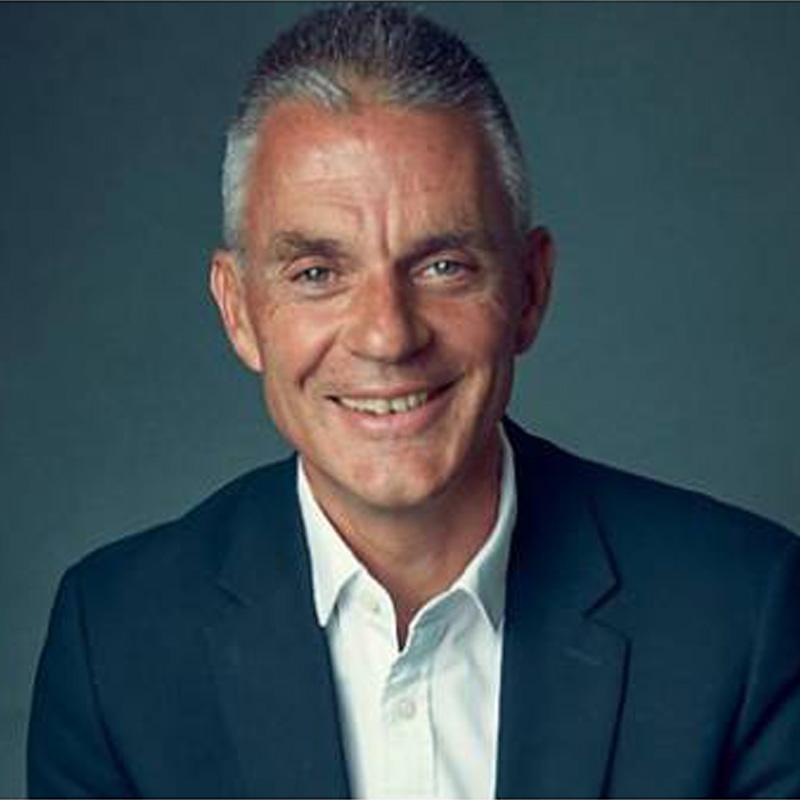
    Mumbai: UK pubcaster BBC director-general Tim Davie shared his plan to build a “digital-first” British Broadcasting Corporation (BBC). The plan will see the broadcaster prioritising its apps and websites over traditional broadcasting channels, said in a company statement.

    In the statement, BBC revealed closing its children-focused channel CBBC and art-skewing BBC-Four including slashing 1,000 jobs over time while putting more investment into digital services like iPlayer.

    Davie also said, “Quite simply, the success of our online services is the success of the BBC over the next five years. Each needs to be in the top two or three in their market in the UK, with our online services growing globally too.”

    Elaborating on iPlayer he said, “Today, iPlayer reaches less than 50 per cent of BBC viewers on average per week. Our ambition is to grow this to 75 per cent. We’ll do this by re-allocating significant amounts of money every year into video that delivers on iPlayer, across a broad mix of genres.”

    “We will propose to Ofcom to expand boxsets and archive, to have more BBC series available on demand. And we want to ensure that news and current affairs is as important to iPlayer as it is on broadcast, which means new on-demand content and formats to build new audience habits.”

    “We will continue to personalise iPlayer to make it much more relevant to every age group and different parts of the UK.”

    While speaking about budget slashing he said, “What we are laying out today is a £500 million plan for the next few years. This is made up of two things: £200 million a year of cuts which are necessitated by the two-year licence fee freeze. This represents the majority of our £285 million a year challenge by 2027-28. £50 million of this £200 million is already baked into our current budgets. The rest is delivered by stopping things and running the organisation better where we can. Then there’s a further £300 million a year which is about moving money around the organisation and delivering additional commercial income. This means that we are not just cutting money everywhere but making choices where to invest.”

    He also said that the plan is not to simply deploy flat savings targets across every department but to act more deliberately. “Focussing resources on frontline areas where we can maximise the value we deliver to those that pay for us.”

    Davie is clear that the future is digital. “The market challenge is clear. Though broadcast channels will be essential for years to come, we are moving decisively to a largely on-demand world. Today around 85 per cent of the time people spend with the BBC is with linear broadcasts. Too many of our resources are focused on broadcast and not online. And less than 10 per cent of our usage is signed in, so we can’t offer a properly tailored service, unlike all our global competitors. If we do not respond faster to these changes we will cede too much ground to those who are not driven by public service values.”

    “The vision is simple: from today we are going to move decisively to a digital-first BBC. We have a chance to do something that no-one else is doing: build a digital media organisation that makes a significant positive impact, culturally, economically and socially. A global leader driven by the search for truth, impartiality, outstanding creativity, and independence.”

    So what will happen to linear broadcast with the enhanced focus on digital? “As we move money into digital, we will inevitably have to spend less on linear distribution. But we will do this with great care – our big channels will be popular for the next decade, at least, and they are incredibly powerful.”

    Davie added: “We do plan to stop scheduling separate content for Radio 4 Long Wave, consulting with partners, including the Maritime and Coastguard Agency, ahead of the closure of the Long Wave platform itself. 5Live on medium wave will also close no later than December 2027, in line with a proposed industry-wide exit from the platform.”

    “Over time we expect to consolidate and share more content between services, and expect to stop broadcasting some of our smaller channels on linear. This will include services like BBC Four, CBBC and Radio 4 Extra. But we won’t do this for at least the next three years because for the moment they are still delivering value to millions of viewers and listeners, at low extra cost.”

    He further said that when it comes to network TV, the UK pubcaster will reduce the volume of hours commissioned a year by around 200. “We’ll still offer thousands of originated hours and a very broad range, but fewer hours will mean we are not constantly thinning programme budgets.”

    “We will focus our money where we are distinctive and more uniquely BBC. We will make tough choices about titles which may be performing on linear but are not doing enough to drive viewers to on-demand. A number of them will be cancelled this year. Importantly, higher-impact content will attract more investment from third parties to make our money go further.”

    “And while we will continue to play a vital role in classical music in this country, we must be realistic about the resources we use. We will continue to support the classical music sector, invest in Radio 3 and improve our educational impact. However, we will look to reduce licence fee funding in our performing groups – preferably by looking for alternative sources of income where possible.”

    In terms of news one of the things he mentioned was that putting digital first applies just as much to its international news services. The world service he pointed out is critical to the BBC, and its growing digital reach means bigger impact with audiences, more brand value for the BBC and the UK, and bigger opportunities for commercial growth.

    “Broadcast services will continue to play a vital role but unfortunately the licence fee settlement means that we cannot offer every service on all the platforms we do today. So we propose to move some of our broadcast radio and television services off linear where digital provides the better future route to audiences. This builds on the model we’re already using in Latin America and parts of Europe. Of course, we will protect broadcast services where that’s likely to remain the best way of reaching people in the long term.”

    He said that the government’s commitment to extend its £94 million annual funding for the world service for a further three years is very welcome. But he also noted that UK licence fee funding for the world service, which has been around £254 million in recent years, is now running at over £290 million including world news – a level that is unsustainable following the licence fee settlement.

    “We will set out plans in the coming weeks for how we will initially reduce licence fee spending on the World Service by around £30 million by the start of 2023/24, while protecting the full breadth of languages.”

    “At the same time, our strategic review will identify the right longer-term model for a digital-first world service and lay out a strong case for more investment from the government over the coming years. This case for a strengthened world service is compelling but we can only expect UK licence fee payers to fund so much.”

    One of the challenges in digital is that on the tech front there is work to be done. “Around 30 million UK adults come to BBC online on average per week, and 200 million globally on digital platforms. We are now up to over 45 million UK accounts, with over 25 million signed in monthly. But we have much work to do to be a leading-edge player in functionality, user experience and data.”

    “We’ve already begun investing more in product development, with an extra £10 million this year. From 2025 we expect to be investing up to an additional £50 million per year, transforming our level of personalisation and our use of real time data, and making our services as easy to use as possible.”

    “In news, we will fully roll out and continuously improve the new News app as a signed-in experience. We will grow our live news pages and transform the quality, prominence and impact of local news.”

    “In sounds, we will continue to improve our on-demand music offer. We will showcase some of the best non-BBC podcasts from British creators and host more of our podcasts on sounds first, before distributing more widely. We want to deliver local and network news better across Sounds and ensure we are securing distribution in connected cars.”

    He concluded by saying, “This is our moment to build a digital-first BBC. Something genuinely new, a Reithian organisation for the digital age, a positive force for the UK and the world. Independent, impartial, constantly innovating and serving all. A fresh, new, global digital media organisation which has never been seen before. Solely driven by the desire to make life and society better for our licence fee payers and customers in every corner of the UK and beyond. They want us to keep the BBC relevant and fight for something that in 2022 is more important than ever. To do that we need to evolve faster and embrace the huge shifts in the market around us.”

    “I believe in a public service BBC for all, properly funded, relevant for everyone, universally available, and growing in the on-demand age. This plan sets us on that journey.”

  • BBC TV undergoes reorganisation; Charlotte Moore made controller, TV channels & iPlayer

    BBC TV undergoes reorganisation; Charlotte Moore made controller, TV channels & iPlayer

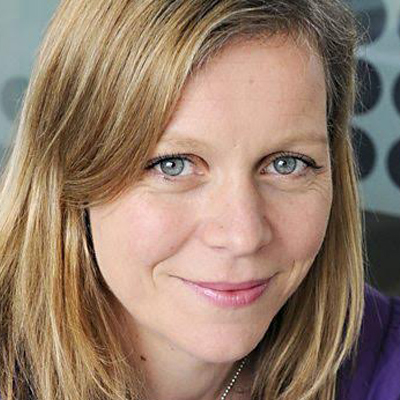
    MUMBAI: As part of a reorganisation that will offer a simplified and more co-ordinated strategy across BBC Television’s channel portfolio, the BBC has appointed Charlotte Moore as controller, TV Channels and iPlayer.


    In the newly created role, Moore – currently Controller of BBC One – will become the creative, editorial and strategic lead for BBC One, BBC Two, BBC Four and BBC iPlayer, ensuring the channels work in a complementary way while enhancing their distinctive positioning.


    The reorganisation will support new, creative approaches to programming and scheduling that reflect changing audience behaviour and the growing role of BBC iPlayer, as well as encouraging greater collaboration and allowing simpler movement of ideas and talent across the portfolio. It will also create a more streamlined commissioning system, with a single point of contact and faster decision-making.


    Moore will report to BBC acting director of television Mark Linsey, and will continue to sit on the TV Board.


    Linsey says, “Charlotte is an outstanding leader and has done a brilliant job making BBC One both distinctive and popular. This role will allow her to take a view across channels to drive distinctiveness, quality and risk-taking even further, whilst offering a single point of contact for programme-makers and ensuring audiences get the best programmes, however and wherever they choose to watch.”


    Moore adds, “I’m honoured to lead the BBC’s channel portfolio into the future at such a significant time. The creative opportunities this new approach brings will ensure the BBC keeps pace with our rapidly changing media industry. It is more important than ever for audiences and programme-makers that we have a clearly defined sense of purpose for each channel, to ensure we deliver even higher quality and more distinctive content. A united vision across the portfolio will encourage greater ambition and diversity of output, more creative freedom and quicker decision-making. I’m passionate about the BBC and committed to making this a place where the best creatives want to work, and having the right teams working together is key.”


    The appointment follows an internal recruitment process, and continues the BBC’s progress in creating a simpler and more efficient structure.


    Moore will take up her new responsibilities on 25 January. She will continue to lead BBC One and, within the new structure, will manage the heads of iPlayer, Daytime and BBC Four, as well as the new role of editor, BBC Two.


    Following the internal recruitment process, Kim Shillinglaw has decided to leave the BBC and, as a result of the reorganisation, the post of Controller BBC Two and Four will be closed.


    BBC Two and Four channel executive Adam Barker will take up the post of BBC Two acting editor, while recruitment for the new role takes place.


    Linsey adds, “Kim has led BBC Two and Four with great creativity, bringing viewers an amazing range of programmes including edgy documentaries like Meet The Ukippers, innovative comedy in Boy Meets Girl, ambitious TV experiments like Are Our Kids Tough Enough? Chinese School and distinctive treats like The Dresser, as well as re-energising factual entertainment and drawing younger audiences with The Real Marigold Hotel, Phone Shop Idol, Hell Week and Let’s Play Darts. She has modernised BBC Two’s identity, winning awards for the channel’s use of social media and the revamp of on-air, and refreshed the schedule with Monday’s clever quiz hour, box-set factual and comedy double bills back at 9 pm, whilst creating new commercial funding models in factual entertainment and natural history. She has been an outstanding leader of BBC Two and Four and I will be very sorry to see her go, but am incredibly grateful for her contribution.”


    Shillinglaw says, “I wish the BBC, Mark and Charlotte every success with the many changes BBC TV needs to make. I’ve loved modernising BBC Two and Four over the last two years but when you don’t get the big job it’s time to move on. And I’m looking forward to another big challenge.”


    The reorganisation follows other recent moves to simplify structures at the BBC, such as the appointment of Matthew Postgate as chief technology officer, bringing together BBC Digital, Engineering and BBC Worldwide roles.

  • BBC TV undergoes reorganisation; Charlotte Moore made controller, TV channels & iPlayer

    BBC TV undergoes reorganisation; Charlotte Moore made controller, TV channels & iPlayer

    MUMBAI: As part of a reorganisation that will offer a simplified and more co-ordinated strategy across BBC Television’s channel portfolio, the BBC has appointed Charlotte Moore as controller, TV Channels and iPlayer.


    In the newly created role, Moore – currently Controller of BBC One – will become the creative, editorial and strategic lead for BBC One, BBC Two, BBC Four and BBC iPlayer, ensuring the channels work in a complementary way while enhancing their distinctive positioning.


    The reorganisation will support new, creative approaches to programming and scheduling that reflect changing audience behaviour and the growing role of BBC iPlayer, as well as encouraging greater collaboration and allowing simpler movement of ideas and talent across the portfolio. It will also create a more streamlined commissioning system, with a single point of contact and faster decision-making.


    Moore will report to BBC acting director of television Mark Linsey, and will continue to sit on the TV Board.


    Linsey says, “Charlotte is an outstanding leader and has done a brilliant job making BBC One both distinctive and popular. This role will allow her to take a view across channels to drive distinctiveness, quality and risk-taking even further, whilst offering a single point of contact for programme-makers and ensuring audiences get the best programmes, however and wherever they choose to watch.”


    Moore adds, “I’m honoured to lead the BBC’s channel portfolio into the future at such a significant time. The creative opportunities this new approach brings will ensure the BBC keeps pace with our rapidly changing media industry. It is more important than ever for audiences and programme-makers that we have a clearly defined sense of purpose for each channel, to ensure we deliver even higher quality and more distinctive content. A united vision across the portfolio will encourage greater ambition and diversity of output, more creative freedom and quicker decision-making. I’m passionate about the BBC and committed to making this a place where the best creatives want to work, and having the right teams working together is key.”


    The appointment follows an internal recruitment process, and continues the BBC’s progress in creating a simpler and more efficient structure.


    Moore will take up her new responsibilities on 25 January. She will continue to lead BBC One and, within the new structure, will manage the heads of iPlayer, Daytime and BBC Four, as well as the new role of editor, BBC Two.


    Following the internal recruitment process, Kim Shillinglaw has decided to leave the BBC and, as a result of the reorganisation, the post of Controller BBC Two and Four will be closed.


    BBC Two and Four channel executive Adam Barker will take up the post of BBC Two acting editor, while recruitment for the new role takes place.


    Linsey adds, “Kim has led BBC Two and Four with great creativity, bringing viewers an amazing range of programmes including edgy documentaries like Meet The Ukippers, innovative comedy in Boy Meets Girl, ambitious TV experiments like Are Our Kids Tough Enough? Chinese School and distinctive treats like The Dresser, as well as re-energising factual entertainment and drawing younger audiences with The Real Marigold Hotel, Phone Shop Idol, Hell Week and Let’s Play Darts. She has modernised BBC Two’s identity, winning awards for the channel’s use of social media and the revamp of on-air, and refreshed the schedule with Monday’s clever quiz hour, box-set factual and comedy double bills back at 9 pm, whilst creating new commercial funding models in factual entertainment and natural history. She has been an outstanding leader of BBC Two and Four and I will be very sorry to see her go, but am incredibly grateful for her contribution.”


    Shillinglaw says, “I wish the BBC, Mark and Charlotte every success with the many changes BBC TV needs to make. I’ve loved modernising BBC Two and Four over the last two years but when you don’t get the big job it’s time to move on. And I’m looking forward to another big challenge.”


    The reorganisation follows other recent moves to simplify structures at the BBC, such as the appointment of Matthew Postgate as chief technology officer, bringing together BBC Digital, Engineering and BBC Worldwide roles.

  • Sky adds 4oD catch-up service to NOW TV Box

    Sky adds 4oD catch-up service to NOW TV Box

    MUMBAI: Channel 4’s 4oD has become the latest terrestrial catch-up TV service to launch on Sky’s NOW TV Box, which already offers access to BBC iPlayer and Channel 5’s Demand 5.

    Shows such as Homeland, Marvel’s Agents of S.H.I.E.L.D. and Made in Chelsea as well as box sets from classic series such as Black Books, Father Ted and Peep Show are now available on demand for owners of the NOW TV Box. This adds more than 3,000 hours of content to the service for customers to enjoy at no extra cost. NOW TV also offers catch-up entertainment from Sky Atlantic, Fox, Discovery and Comedy Central.

    NOW TV director Gidon Katz commented in a report: “The NOW TV Box provides millions of people with the opportunity to transform their regular TV into a Smart TV for less than a tenner. There is now even more to watch. The launch of 4oD means the NOW TV Box delivers an even bigger choice of on-demand TV. It’s available alongside flexible pay-as-you-go access to must-see sport, the latest movies you missed at the cinema and the TV shows everyone’s talking about. Offering convenient, contract-free accesses to such outstanding content, no wonder that NOW TV Boxes have been flying off the shelves.”

    Channel 4 director of commercial and business development Laurence Dawkin-Jones added: “Bringing 4oD on the NOW TV Box represents the latest device launch in a busy year for Channel 4 that has seen us extend our content reach to many new platforms. We’re always looking for new places we can ensure our viewers can enjoy our popular on-demand service, and are delighted to add this to the portfolio.”

  • BBC News plans life amid cost cuts

    BBC News plans life amid cost cuts

    MUMBAI:BBC aims to preserve the public‘s trust in its impartiality and keep its news independent from political and commercial pressures.

    In a speech delivered at VLV Annual Spring Conference, BBC News director Helen Boaden said as long as it holds on to the principles that have guided the BBC since 1927 – to tell the truth as we see it, to the people who need it, independent of government and commercial influence – then BBC News should be in the right shape to meet the difficult challenges of the future.  
         
      “In a robust, deep-rooted democracy like ours, I think our relationship with politicians is a bit like a tug of war. It‘s right that each side should pull. In fact, it‘s part of the democratic process. Testing those in power but being accountable for it. So when it came to the government‘s comprehensive spending review, it was right that we set out to examine the policies and the consequences – and right that our coverage came under scrutiny.”

    Scrutiny in different shapes and sizes. Sometimes it‘s a polite letter from an MP. Sometimes it‘s a phone call from a Government Special Advise, or even a Minister – to an Editor. Those calls are often at varying degrees of volume and politeness. “We‘ve even had very public advice from the pposition! As I say, it‘s their prerogative to complain. But it‘s ours, to defend our independence and make the case for our coverage, “ said Boaden.

    There should be a balance right between explaining the government‘s plans, why it says they‘re needed – and examining their impact.

    “That‘s why we ran wide coverage – across the whole of BBC News, in the nations and the regions – under the heading “The Spending Review: Making It Clear. It seems to me that all politicians, of whatever party, embrace the BBC‘s independence in theory – but have occasional difficulties in practice, especially when they‘re in power. So I‘m afraid that as Director of News, I‘ve got used to the sound of incoming fire,” Boaden said.

    She said there was plenty of it when the BCC ran a Panorama programme alleging corruption among Fifa officials – ahead of the World Cup vote. The pubcaster was accused of being “unpatriotic.” But afterwards 80 per cent of the public backed the BBC for broadcasting the programme. And even a member of the 2018 bid team said that the BBC had been right to do it when they did.

    “It‘s important to do the right thing – whatever the pressure. That way, you build your reputation for independence and impartiality.”

    Last year, the BBC News channel had record audiences for many major news stories. It recorded the highest reach of any UK news channel 7.4 million – on the day that Gordon Brown resigned and David Cameron became prime minister. The day after the general election, 7 million watched, and 6.9 million watched the rescue of the Chilean miners.

    More recently, on 11 March, the channel reached a new record of 8.5 million for the Japanese earthquake. On the same day, the BBC website, too, had record traffic internationally with 15.8 million unique users.

    Boaden said audience research suggests that the ratings for trust and impartiality have also improved over the last three years.

    “Well evidence collected by the BBC Trust shows impartiality to be an important factor in determining an audience‘s choice of broadcast news provider. And in a major survey published last year, Ofcom found that 91 per cent of people thought it was important or very important that “news in general is impartial”.

    “So if partisan reporting is allowed under a new Communications Act – and there are detailed arguments for and against – then the BBC will do everything it can to maintain and strengthen its tradition of impartial journalism.”

    That will be the UK pubcaster’s guiding principle for the future. But there‘s a more immediate challenge – money.

    With less money available, BBC News needs to row back. “Of course, we are never going to give up on the big stories that matter: covering the uprisings in the Middle East and Africa for example, with a team of specialist journalists. Ensuring we have the best possible Specialist Editors like Nick Robinson, Robert Peston, Stephanie Flanders and Jeremy Bowen,” said Boaden.

    However this year, to cut cloth, the BBC only sent one person to the Oscars rather than a full team – and used specialists in London for background coverage on the website.

    “We have to try to match our journalism to our budget and to our audience‘s expectations. And that will be hard,” Boaden clarified.

    Doing more for less in tough financial circumstances isn‘t new for the BBC – in fact since the Nineties when the BBC started moving into the digital era, it has brought running costs down from 24 per cent of the licence fee to around 12 per cent today – and to nine per cent or less by the end of the Charter period in 2016. These savings have been invested back into programmes and services for the public, including the BBC News website and the development of the iPlayer.

    Though the pubcaster needs to do fewer things, the stress is to be a position so that it can do them better. The World Service will be merged with BBC News in 2014. “We believe that the protection of the Licence Fee will be of benefit to the World Service. It will destroy once and for all any idea that because the World Service is funded directly by the Foreign and Commonwealth Office, it is omehow not entirely independent. It will protect it from arbitrary cuts as part of the Comprehensive Spending Review when it can lose out to louder voices at the Foreign Office,” said Boaden.

    Last year, the Government decided that World Service funding would decline by 16 per cent in real terms over four years. These cuts will bite deeply. Over the next three years, a quarter of the World Service workforce – 650 posts – will go.

    “We need to find savings of ?46 million. We can‘t do it all through being more efficient. We need to stop doing things – and that‘s why we‘ve reluctantly called a halt to five language services. There are programmes we are cutting too. This is not being done indiscriminately, however painful it might be. There is a rationale behind the decisions we have made,” Boaden said.

    Overall, the changes will result in loss of audience – the pubcaster estimates that there will be an immediate drop of several million.

    In order to sustain its services and to cope with the savings, the BBC has decided to share content more effectively.

    “For many of our audiences – for instance in Somalia and Burma – we will continue to produce a highly localised offer. But in other markets, the BBC delivers global newsgathering and expertise – which local news providers can‘t do. So a significant shift to a greater proportion of global journalism makes audience and economic sense,” Boaden said.

  • Lifespan of content is opening up in every direction: BBC’s Roly Keating

    Lifespan of content is opening up in every direction: BBC’s Roly Keating

    MUMBAI: The linear TV channel – even as actual viewing habits shift – can continue to hold its place as what you might call the central organising principle of broadcasting, for audiences and professionals alike, the engine of instant, incremental scale and impact.

    But either side of that moment of premiere transmission, something weird is happening to one’s sense of time. It seems to be stretching and bending in unexpected ways. It’s no longer enough to ask of a particular programme ‘when is it on?’, because the lifespan of content is opening up in every direction.

    This was the message that BBC Two controller Roly Keating had for attendees at the Broadcast Digital Channels Conference 2008 in the UK. He notes that increasingly, for instance, the public life of a programme is beginning long, long before the moment of transmission, or even the start of its marketing campaign.

    “In the case of Ewan MacGregor’s and Charley Boorman’s Long Way Down adventure, we took a decision to open for business pretty much as soon as the show was commissioned, with a continuously updated website giving full details of the unfolding journey and regular blogs from the presenters. We didn’t just let it sit on the web either – we advertised the fact on air.

    “I can’t pretend that this didn’t freak me out a bit. To effectively disclose in advance the whole narrative of a series like this ran counter to most of my established assumptions about the sanctity of first tx. Isn’t it insane to effectively tell people the whole story before we’ve even broadcast?

    “But of course the opposite was true: the series massively outperformed expectations, bringing a pre-built audience of addicted fans who’d been spreading word of mouth and building expectation across the web.”

    The BBC he notes has been doing something similar with Bruce Parry’s new series Amazon. The official process of promotion hasn’t remotely begun yet – it’ll be a highlight of our new season launch next month and won’t be on air till the autumn. 

    “But for nearly a year now on the web we’ve been effectively broadcasting an evolving, on-demand version of the whole adventure, which in the real world concluded a couple of days ago.” While this stretching forward of the timeline of programmes ahead of their broadcast is significant enough, but it’s nothing compared with what’s beginning to happen at the other end of the process he explains.

    “The idea that a programme only has real value at its moment of transmission has been on life-support since the invention of the VCR, but – in our small universe at least – it feels like it died once and for all on Christmas Day last year with the full consumer launch of iPlayer.”

    He says that next week the BBC’s iplayer will have broken through the barrier of 100 million requests to view. It has indisputably, and almost instantly, made itself an icon for a new way of viewing.

    But one of the ironies about iPlayer is that – unlike the Tardis – it’s really bigger on the outside than the inside.

    “What I mean is that for something which has had such impact on people’s habits and imaginations, the actual volume of content it can make available at any one time is pretty small by the standards of what’s about to hit us in the new world of non-linear media.

    “As consumers have already learnt, most content disappears after a week and even with the new ‘series stacking’ provisions – which will keep a selection of series available for the duration of their run – iPlayer by itself will only ever boast a strictly limited inventory of programmes. Users will continue to encounter messages like this, apologising for the unavailability of a particular piece of content.”

    Commercial sites such as the proposed Kangaroo venture will of course go some way to meeting the pent-up demand, but our whole way of thinking about this kind of programme access is still based around a ‘windowing’ metaphor.

    He says that the concept of the ‘window’ has a long pedigree. It’s the basis on which the secondary market has flourished, and it’s the key mechanism by which producers have benefited from the value of their work and distributors and multichannel broadcasters in particular have built their businesses.

    Broadcasters he says need to keep in mind that while windows are not about to disappear, but they were only ever a device built to suit the nature of linear channels and the managed scarcity they represented. “I’d say that we’re just beginning to see the first tremors of a new way of thinking about value – commercial and public value – in the aftermath of transmission.

    “The internet has made us all greedier and more demanding for information and content of all kinds. Put it simply, if something’s published people increasingly want and expect it to stay published. Whether it’s ad-funded, subscription, licence-fee funded or whatever is important, of course, but in some ways it’s a second-order issue: first and foremost they just want to be able to find it – and by and large they’ll expect it to remain accessible to them indefinitely.

    “Whether you call it the principle of permanence, or perpetuity, or continuous availability, this feels like an emerging rule of media, and it’s something that will gradually affect all the key decisions we make about platforms and programmes.

    Some of our most common terms will change their meaning: ‘transmission’ will evolve into ‘release’, which in its turn is becoming something not unlike ‘publishing’.”

    He adds that free and in the public domain, the cumulative mass of information has the potential to become a great public resource – especially when we find ways to link it as seamlessly as possible with all the data we have in the Catalogue about the previous 80 years or so of BBC content.

    And as possibilities emerge to link them in turn to programmes themselves – whether in the commercial domain or the public – the potential contribution to knowledge building is almost unlimited.

    He offers the example of the India Pakistan season on BBC Two, where as a trial experiment the new programmes on air were supplemented online with a range of carefully selected audio and video archive content from more than six decades of broadcasting, covering everything from art and architecture to cooking and cricket.

    “The prize here is the chance for TV to become, at last, a medium with a mature relationship to its own past – as opposed to one that either knows nothing about it at all, or keeps harking back to imaginary golden ages. It will also be a sure way to identify content with really lasting value, while in commissioning there’ll be an increasing premium for programmes that are genuinely built to last.”