Tag: IPL

  • IPL is the name of the game

    Three decades after Kerry Packer revolutionised cricket with the World Series, cricket stands on the threshold of another potentially disruptive revolution. On 18 April, the Board of Control for Cricket in India (BCCI) will unveil the Indian Premier League (IPL), a format the Indian board hopes will change the way Indians watch the game.

    Instead of cheering the country, one will cheer city-based leagues. Eight teams – Jaipur, Mumbai, Mohali, Chennai, Hyderabad, Kolkata, Bangalore and Delhi – will take the field.

    Can this work? The answer is yes if one looks at the experience of the first mover in India – Essel Group’s Indian Cricket League. The ICL is currently holding its second event and is getting good visibility as matches are also being aired on Ten Sports. The on-ground attendance has also been decent, showing that if an event is well marketed there is scope. Considering that ICL has managed all this in the face of a take-no-prisoners onslaught by the Indian cricket board, what the officially sanctioned event might well deliver boggles the mind.

    One must also note at the outset that IPL and ICL are possible because of the success of the T20 format. Initially there was some cynicism even within the BCCI as to how the new format would fare. The T20 World Cup, though, changed all that. With India winning, the viewership grew and the final scored a ratings of 9.81 TVR (Tam data, C&S 4+).

    Broaden the game’s appeal: The aim of the IPL is to broaden the appeal of the game. Since matches will take place in the evening, the hope is that families including women and children will turn up in large numbers.

    The IPL has also brought corporates closer to the game. Companies like Reliance Industries now own a team. This is expected to inject professionalism and also entrepreneurship. The larger aim is to push cricket at the grassroots and domestic level.

    The IPL is conceived as a city-based league format. With the base price set at $50 million for the city-based franchisees, the teams were bought for well above that.

    The prices paid show that after a lot of due diligence, corporate India views the IPL as being a serious business venture. Reliance Industries, for instance, paid $111.9 for Mumbai while Dr Vijay Mallya’s UB Group shelled out $111.6 million for Bangalore.

    The IPL will have flair and flamboyance when you consider that Bollywood also got into the act. Shah Rukh Khan paid $75.09 million for Kolkata. Preity Zinta took Mohali for $76 million. On the other side, we have Emerging Media, an expert in organising sport, paying $67 million for Jaipur.

    The broadcaster’s viewpoint: The BCCI hit the jackpot when the Sony-WSG combine bought the ten-year broadcast rights to the IPL for $918 million. Compared to this, the price that ESPN Star Sports (ESS) paid for ICC rights looks like a good bargain.

    While many have questioned the financial wisdom of such a huge payout for an as yet untried format, the numbers do not look quite so daunting when the fine print of the deal is examined. The guaranteed payout commitment by Sony-WSG is $306 million for the first five years. The remaining $612 million, to be paid out in the second half of the deal, comes with an exit clause built in.

    Sony president network sales, licensing and telephony Rohit Gupta is gung ho about the IPL, noting that T20 is the game’s future. “If you see the scene for the last four years, ratings for ODIs have been steadily falling. T20 brought the game back in a big way. The stickiness is far higher than it is for the other forms of the game.”

    Marketing is of paramount importance: The main challenge for IPL is for the franchises to build up fan clubs. After all, Indians are not used to cheering at a local level. As Gupta notes, the key challenge for each of the franchisees is getting fans of that state to identify with the team.

    The first step in that direction was to have names that reflect the city. So Emerging Media christened the Jaipur team as Rajasthan Royals. The aim is to convey the pomp and regal splendour of the city.

    Reliance has called their team Mumbai Indians to show the character of this city. They, like the other franchises, will run a 360-degree marketing initiative with a strong local flavour.

    Glamour is also an important quotient in the marketing strategy. Cricket and Bollywood are two religions in India. Mix them and the result is potent. For instance, Bangalore has roped in actresses Katrina Kaif and Deepika Padukone for a music video to promote their Royal Challengers.

    A push for domestic talent: One of the great things about the IPL is that it gives youngsters the chance to prove themselves. At the second auction, a draft for the Under 19 was held. This was to ensure that in a few years time India will have a young talent pool who are experts in this format of the game.

    RoI: There are several revenue streams available for franchisees. There are central revenue streams, which include a share of the TV rights. The franchisees will get 80 per cent of TV revenues in the first five years and 60 per cent from the next five. They will also get 60 per cent of sponsorship revenues. The franchisees get all local revenues.

    The revenue will come from many sources including gate revenues, franchisee shirt sponsorship, local sponsorship, licensing programme and uniform merchandising.

    Reliance and Emerging Media are looking at a three-year time frame to break even. If, however, the IPL takes off, then that period could be sooner.

    Gupta adds that corporate involvement is the best thing that could have happened. “Now you will see more accountability from the players. If a corporate house has paid over a million dollars for Dhoni, then he better perform. It can no longer be a case of doing well in one match and taking it easy for the next three.”

    Performance is key in brand perception and each franchise will be doing its utmost to ensure that perception is not hurt by a lack of on-field performance.

    Infrastructure will get a boost: Corporates will back infrastructure creation like academies and training camps since these are the places where talent will bloom.

    Mindshare’s Hiren Pandit says that Deccan Chronicle is looking at grassroots activities. There are plans to take this concept to schools and colleges. Therefore, there is a larger picture at stake.

    A mix of caution and optimism: As far as advertiser interest is concerned, DLF, which lost out on the franchise bid, has taken the IPL title sponsorship. Hero Honda is the co-sponsor.

    Sony Entertainment Television (Set) India, which has telecast rights for the matches, has closed its advertising sales. Set India CEO Kunal Dasgupta says ad sales revenues have already crossed Rs 2 billion.

    Pandit says that companies that get involved with the IPL early will reap the benefits in the long run. When asked about the mix of sports and entertainment, he says that for IPL it is important that while the entertainment quotient like the opening ceremony is good, the cricket played should be serious.

    “It should not be treated as a tamasha. Otherwise you lose out on both,” warns Pandit.

    Lodestar Universal CEO Shashi Sinha, though, has doubts over whether the high rates of sponsorship are worth it for clients. In his opinion, it might be over-priced. “If the IPL does not live up to expectations of advertisers, there will be losses,” he cautions.

    IPL could boost globalisation of cricket: What IPL might do is globalise the game. T20 is, in fact, the best way to get new countries like China involved with the game. Since it is only three hours long, it is easier to get new audiences to sit through it. Adam Gilchrist seconds this view saying that it is important that other nations start playing the game.

    Gilchrist also says that IPL should be given time to grow. It is important not to be pessimistic about it straight away. One will get an idea of how it is faring after a few years, he adds.

    Conclusion: BCCI VP and DLF IPL chairman and commissioner Lalit Modi is very confident that the IPL will mark the dawn of a new era in Indian cricket. One would, however, be better served by not getting bowled over by all the hype and hoopla that is surrounding what could well be termed the ‘gentleman’s game’ on steroids. The maidens may be bringing in sex appeal to the new format but how the event fares over the next three years will be the real test to assess where the IPL, and for that matter ICL, stand.
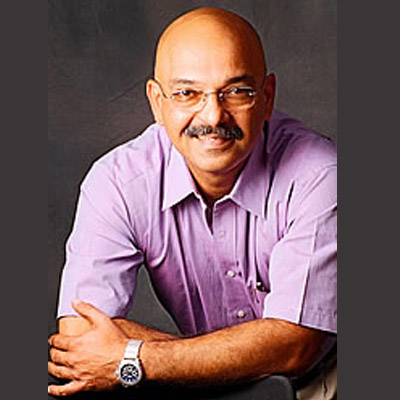
  • ‘We look at the IPL as a business and a media investment’ : Hiren Pandit- GroupM ESP managing partner

    ‘We look at the IPL as a business and a media investment’ : Hiren Pandit- GroupM ESP managing partner

    Being a regional player in the media business, Deccan Chronicle saw an opportunity in IPL to grab the national platform in line with the company’s strategy to step into new markets. It bought the Hyderabad team franchise which was named as Deccan Chargers while GroupM ESP played the consultancy role.


    Indiantelevision.com’s Ashwin Pinto caught up with GroupM ESP managing partner Hiren Pandit to find out about the plans for IPL, its usefulness as a brand-building exercise and the progress that has been made so far.


    Excerpts:

    What progress has GroupM ESP made since launch?
    We work in the areas of entertainment, sports and partnerships. We have broken the entertainment business into two spaces – film and TV content. We have done over 250 hours of branded content programming on TV. One of them was for NGC’s Genius where we got in Lufthansa as a partner for that show.


    In the film space, we help with in-film placements and also with partnerships. We do 25-30 in-film placements and partnerships a year. We got Reebok involved with Goal. Reebok launched a range of Goal products in their stores.


    Another innovation was helping Virgin Mobile partner with Channel (V) for the first live movie shot. Richard Branson actually danced on stage. We also worked with the Johnny Walker Golf tournament. Now we are working on the IPL with our partner Deccan Chronicle. We act as a consultancy for them.

    What is the aim when you are providing solutions to clients?
    We look for long-term strategic solutions. It is about creating a consumer connect in an increasingly fragmented market. Consumers spend time on different things at the same time. The effectiveness of the 30-second spot is reducing. Spends are going towards non-traditional media. We need to be present in this space. We give clients solutions that are out of the box and go beyond conventional media buying. Media is anything that consumers relate with and our aim is to provide solutions to clients that consumers can relate to. The Goal deal was one such example.


    In the partnership space we have deals for content creation, sales. We partner companies with implementation capabilities. The thinking, planning is what we do. The implementation is sourced. We are looking at a partnership for the marketing of sporting events and sports products. We also work with production houses. We worked with Miditech for the NGC show. The client requirement is our priority. A partnership is driven by a client need.

    What role does the IPL play in the overall scheme of
    things?

    We look at the IPL as a business opportunity. The intention was to see if we could do something substantial in that space with a partner. Deccan Chronicle loved the idea. We helped them bid for the team, players, seating, corporate boxes. We believe that it is a team that we also own.


    There are two poles of thinking. Some feel that it will not work. We feel that it will work. It is already a $2 billion industry straight away. The industry has been created overnight. The way the top players come in shows that the boards back it strongly. IPL is about cricket first and then entertainment. You cannot let the two merge. If it does, then the event will not do well. The cricket element should not be touched. As long as the quality of that is high, everything will fall into place.

    How does IPL help Deccan Chronicle from a brand
    building perspective?

    It gives Deccan Chronicle a platform on the national stage. It has two editions – in Andhra Pradesh and Tamil Nadu. They are looking to launch in other markets. They are also looking at a business daily. The IPL gives them visibility across the nation.


    While Deccan Chargers is a separate business, it can be used as a platform to build awareness for Deccan Chronicle. Markets like Delhi and Jaipur will get to know of Deccan Chronicle through the IPL which otherwise would not have been possible. It makes it easier for them to enter new markets.


    At the same time they have put in a lot of money to get the team and we have to make sure they get their money back.

    What was the strategy you followed in bidding for
    Hyderabad and the players?

    Initially we wanted to launch two to three teams. However the IPL rules did not allow that. So we decided to have a franchise in either Hyderabad or Bangalore or Chennai. Hyderabad was our first priority. We did a lot of homework in terms of different revenue streams. We predicted the kind of revenue television would bring in. We also predicted local revenues.


    We were, thus, able to figure out the bidding range we should be at. There were other players like GMR who are Hyderabad-based and so we needed to ensure that we came out on top to keep them out of Hyderabad. We got what we wanted. As far as the team is concerned, it took us two weeks of work to form a strategy. We gave ourselves five options of teams each of which were unique by themselves. They took into account the IPL rules as well as the local talent available in Orissa, Hyderabad and Andhra Pradesh.


    There was $5 million available. $17 million was the total base bid price of all players. Since the total purse that could be spent was $40 million, $23 million was the possible variation. We listed what we believed players would be bought at. Some players were given at 25 per cent or 50 per cent or 80 per cent depending on their availability to play. So you had more money to play with. VVS Laxman was graceful enough not to take icon status so that we would have more money. We followed a batting order process to select players we wanted. Some players were got reasonably but we did not overprice ourselves with any player.


    We looked at it from a T20 perspective. We wanted players who can bat up and down the order like Afridi. Gibbs can also do the same. Gilchrist has a dual role of a batsman and wicketkeeper. Symonds is also a match winner.


    Ladbrokes has rated us as one of the top teams to win the IPL. The onus is for the players to make sure it happens. The job of delivering a good side has been done. It is now a question of on-field delivery.

    Could you talk about the team’s positioning?
    The name of the team is Deccan chargers. We are not a team of stars. We are a unit and this needs to come across. We are there to play hard and win. We do not want superstars. We want players who will operate as a team. We are a bunch of individuals playing as a team. Deccan Chargers are all about Deccan. Hyderabad Deccan is associated with royalty. The charging bull, red eye, gold colour all stand for certain attributes.

    What plans are there to attract women and children?
    We have certain plans. One of them is a school programme. In the stadium, we are looking to create a family enclosure so that women can come. We had thought about having a women’s only enclosure but that may be some time way. We are trying to create a family entertainment atmosphere. You need to make it pleasurable outing for the family. The venue has to be comfortable.


    We started communicating with people from the day that we got the Hyderabad franchise. We ran an ad asking what people would want the team to comprise of. The build up started from there. We are doing activities in malls and multiplexes in Hyderabad. We have made a huge bat so that people can sign wishing the team good luck.

    What about creating a fan base? How long will it take
    to create one like say a Manchester United following?

    It will take at least two to three years. This is our second task. We need to make sure that fans know that it is a privilege for us to be associated with them. This year time has been too short to start the process of building a fan base. The only fan following we have as of now is on our website where half the hits come from the US.


    They already want a T-Shirt and so build up is happening. We are looking at privileged dinners, special ticketing offers, T-shirts, player interaction as time goes by. People at the moment are not used to a city-based team that has players from different loyalties. That connection has to be built up by the franchisees. Today fans relate to cricket with the country but over time people will root for their city. They will believe that an Andrew Symonds can play with VVS Laxman in the same time. This is when fans will start to bond with teams.

    IPL gives Deccan Chronicle a platform on the national stage. It makes it easier for them to enter new markets

    How is the team doing in terms of sponsorships?
    We have structured our deals differently from other franchises. Everybody is selling logos on T-shirts – front and back.


    We will have a team partner. That partner will have ownership of the team. The logos on the team will go to the partner.


    The second partner is entertainment. Anything to do with entertainment from cheerleaders to fours and sixes hit goes to that party. The third partner is the performance partner. This is for things like man of the match, six sixes in an over etc. Then there is a partner for pre game entertainment. The fifth partner is the apparel partner. Each association is distinct and has clear value. We do not want to be like a F1 car.


    The entertainment partner has to be related to entertainment. The performance partner has to be known for performance. Otherwise you mix things and brands get associated with things that do not fit with what they stand for. We have structured our partnerships so that we leverage the value. We will announce deals in this regard next week, as that is when our players will be together.


    Since we are a newspaper we advertise in it. Other teams would have to buy ads. SRK uses the PR route and has also tied up with Telegraph locally. Our media costs come down since we are a media owner. We look at the IPL as a business and a media investment. If someone is losing money it could be that he is using it as an investment for his own benefit. In this case you need to look at it as a media investment and not as a revenue opportunity.


    If you treat it as a business you can make money in the first three years. In three years we expect to make money and it could be for our pocket and also for media investment opportunities.

    One of the challenges is to keep the brand alive after
    the event ends. What plans does Hyderabad have?

    It is not just about a fan base for us. It is also about giving back to cricket. Deccan Chronicle wants to be associated with cricket at the grassroots level. We will start coaching camps, academies. Our partners will also be involved here. This is the difference between just being a sponsor and being a partner.


    Our involvement with cricket is not just about IPL. We will tie up with the Hyderabad Cricket Association, Orissa Cricket Association to see how we can get involved with their tournaments and bring value. We are also looking to get involved with other sports.

    What about taking the team abroad for matches?
    That might be an option as long as the sanctity of the on field play is not compromised. If it is a charity game for instance, then it has to be clear.

    If a team fares poorly in the IPL and finishes eighth,
    will the franchise suffer?

    It depends on the quality of play. If the matches were close and hard fought, then fans will not mind. If, however, the team consistently played badly and failed to compete, then not only will the fans ask questions but so too will the sponsors. It will also be a challenge to fill up the stadium as you go forward. There will be a chain reaction.


    As far as players are concerned, if one plays badly then the news will travel and the player will be dropped. It is about delivery. A lot of money has exchanged hands on account of expectations. The effort needs to be put in.

    What on-air and mobile plans do you have?
    Our site is already up and running. There are lots of forums and debates. On the mobile we will look at it in terms of ticketing and SMS. But the real fun will come when 3G applications come in and they will impact how people view cricket. This will be in the form of streaming video.
    What about tying up with channels for content related
    to the Hyderabad team?

    We are in talks with channels that want to do off-cricket coverage of our team. We will do this in conjunction with our players.
    With the IPL trying to attract women and children, do you see this helping other forms of the game in expanding the viewer base?
    I don’t see it affecting test cricket. It might help ODIs after a period of time. T20 means a faster rate of scoring which will be transferred to ODIs. If you score six to seven an over in T20, you will see the same rate in ODIs. When a lot of action is going on in terms of high scoring, we have noticed that more women tune in.
     

    On the negative side the kind of stroke play that takes place should not deviate from what quality cricket is. Technique should not suffer due to T20.

    GroupM ESP also has a tie up with John Abraham. What
    is the nature of this deal?

    We have got into the celebrity endorsement and management space. We look after his sponsorships and endorsements. We are looking at other celebrities. The celebrity space has blown apart with Dhoni and Yuvraj and MGs (minimum guarantees) being the norm. We are not sure about taking that route.
     

    The celebrity management space is different in India. Abroad, companies manage this sphere. In India, though, individuals manage it. The Indian model must evolve. There is no valuation process in place to see if the return on investments are good. It has to be a win-win situation between the celebrity and the client. Right now, this is a cluttered space.


    The brands that John has endorsed like ESPN and Wrangler stand for values that fit John. You need to keep in mind the sentimental values of individuals. Many celebrities, though, endorse brands where there is no fit. The association is unreal and nobody believes it. Consumers are not dumb.

    How do cricket and Bollywood stack up against each
    other?

    Celebrities have to be careful about the brands they endorse. If they make a mistake, then they pull their own brand value down. Bollywood is less risky. If an actor has a flop, his value does not go down. If a cricketer, however, gets dropped from the national side, there is a huge difference. Brands that he is endorsing will not get full value. The young cricketers are coming in at scary price points. I am not sure how many brands can afford them. If he is not in the team six months later due to in injury, the
    brand is in trouble. The valuation equation should make sense.
  • ‘We will breakeven after the third year’ : Fraser Castellino- Emerging Media CEO

    ‘We will breakeven after the third year’ : Fraser Castellino- Emerging Media CEO

     The Indian Premier League (IPL), which kicks off next month, has brought in $2 billion into the Twenty20 format over a 10-year period, involving big corporates like Reliance Industries and Bollywood Badshah Shah Rukh Khan.


    Emerging Media, which has two other shareholders in Sporting Investment Group and Lachlan Murdoch, has bought the Jaipur team franchise for $67 million and is hoping to rake in profits after the third year.


    Indiantelevision.com’s Ashwin Pinto caught up with Emerging Media CEO Fraser Castellino to find out about his plans for the team and the impact IPL will have on the game.


    Excerpts:

    What prompted Emerging Media to be involved with the IPL?
    We have been in the sports business since 2005. Our first venture into cricket was when we bought the management rights for the Leicestershire County Cricket Club. Then we did an international T20 tournament that people today call the Champions Tournament.


    We came into India in 2006 and launched the reality show Cricket Star based on the T20 format. We are looking for the next Indian superstar. We saw IPL as a big opportunity as we also have experience in running clubs.

    What is the IPL trying to achieve?
    The IPL is BCCI’s attempt to bring in funds and get corporates involved with the development of cricket. The Board is trying to improve the infrastructure and facilities available to players who participate at a domestic level.


    By whipping up support for city-based league teams, the BCCI is also trying to bring new fans into the stadiums.

    The tradition of supporting a regional team is not present in India. Do you feel that this will be a hindrance in terms of the IPL taking off?
    I don’t think that there is a hindrance. Everything about the IPL represents an opportunity to grow the game. The challenge particularly for us is to create a fan base that supports the Rajasthan Royals.

    Another issue is that the BCCI wants the IPL to be for India what EPL is for English soccer. At the same time, the players are with EPL for several months each year and there is no conflict with an international schedule. How will IPL manage to do this?
    One of the challenges franchisees face is taking the IPL team that participates in the tournament for 45 days and stretching it across the year. The international calendar is packed. We are working with the IPL Governing Council to see how the tenure can be extended. We have a squad of 22 players. While all may not always be available, we need 11 players at any given point in time. We are looking to take the Rajasthan Royals to play in other countries including Australia and England.

    Having bought the Jaipur franchise for $67 million, what breakeven period is Emerging Media looking at from IPL?
    We will be investing $12 million in the first year which includes the payout for the team franchise, player costs, marketing, etc. Our assumption is that the business will breakeven after the third year. If IPL picks up, the breakeven can happen before that.

    How much will Emerging Media spend towards marketing?
    We will spend close to $2-3 million on this. A 360-degree campaign will break shortly. O&M has put this together. There will be a TVC, radio spots and outdoor activities. There will also be a school, college and mall activation campaign. This will happen in Jaipur, Delhi NCR, and in Gujarat.

    What brief was given to the agency?
    The brief is that the campaign must appeal to people at a local level. It must make people want to be supporters of Rajasthan Royals. It must inspire people to either switch on the television or come to the stadium.

    Have you tied up revenue deals?
    We are in advanced talks with companies for sponsorship deals. We also have merchandising and licensing activities. Besides, there are central revenue streams including ad and broadcast rights.

    Is there any chance that Emerging Media might sell a stake in the IPL team?
    Not in the first year. We might sell a stake later if we want to inject fresh capital into the company.

    ‘One of the challenges franchisees face is taking the IPL team that participates in the tournament for 45 days and stretching it across the year

    What is the strategy you followed in selecting your team?
    Our strategy was clear. We knew that there would be at least two auctions. The first auction had the stars. We knew that there was also a lot of talent that was not a part of that auction.


    During the first auction, we picked players and also set price points at which we felt that they had good value for us. If they exceeded these price points, we let them pass.


    We did our research, and went after certain players. Now when you look at my team, they are at least as good as the others if not better. And we have spent $3.5 million while the others have burnt $5 million.

    Are performance and marketability of players of equal importance?
    Performance is more important. You can have glamour and entertainment, but at the end of the day we are here to win matches. Marketability has its place but it is not the primary determining factor for us.

    Could you talk about the branding of the team and how your star player Shane Warne will be used?
    When we selected Jaipur, we were clear that we wanted to be in the state of kings. The name “Rajasthan Royals” reflects the characteristics of that state.


    Shane Warne was a strategic choice that many people do not understand. He has an incredible record in county cricket. When we signed him as both captain and coach, other teams who have specialist coaches were surprised. Specialist coaches are fine but Warne transformed the fortunes of Hampshire in county cricket. He took them from being a non-performer to a team to be reckoned with.


    The IPL is about youth and developing domestic cricket. Now that he has retired, Warne is keen to come in and give back to the game by helping youngsters. The IPL is the perfect platform for him to do just that.

    Has Emerging Media also appointed a consultant to help its IPL team form a cohesive unit?
    We have a support team in place that includes physiotherapist John Glocter and assistant coaches. We believe that our team will be inspired by our captain and the support structure, and become a cohesive unit.

    Has T20 brought sports and entertainment closer?
    The emergence of T20 has been interesting because as working life has become more hectic, people are increasingly looking for instant gratification.


    In India, while it has not been played often, we feel that this format will be well accepted. Since the IPL games will be played in floodlit stadiums in the evening, it will attract more women and families to enjoy an evening out.

    How will IPL broaden the corporate involvement with cricket overall?
    One of the things that will happen is that IPL will support academies, coaching centres, etc. These are feeder systems into T20 cricket.
    How did the idea of doing Cricket Star come about?
    We wanted to be a body that works with the BCCI but at the same time goes off into areas where it has not managed to find talent. We believe that there are people who, while possessing talent, do not have the money to turn up at the BCCI’s coaching camps. We give them the chance to spend just two days with our experts and decide if they are good enough or not. If they are good enough, the sky is the limit.

    How have you grown the event over the years and how successful has it been in uncovering hidden talent?
    I think what Cricket Star lacked in the first season was the gratification platform. It wasn’t clear what would happen with the chosen talent. Today anybody who is selected gets a contract with the Rajasthan Royals. The format has not changed much in terms of the testing process.


    We are clear in terms of what we look for in a T20 cricketer. Last year, we found two boys who were very good. But we had restricted entries to those who were absolutely fresh and had not played first-class cricket. They had never been part of an under 15 or under 17 squad. This year, we have opened it up for everybody.

    Finally, are you looking at other sports?
    Yes! We are interested in soccer, tennis and golf. There is potential for these three sports to grow in the country. We are looking at different options in terms of how to go about it. In terms of whether we do a reality show around these sports, it depends on the level of interest. There are many things that can work in sport provided you are willing to invest and watch it grow gradually.

  • ‘Once digitalisation happens, let a thousand channels come’

    ‘Once digitalisation happens, let a thousand channels come’

    It is not looking so high-priced now because T-20 was not a factor in that purchase and now it’s there as a very high value part of that.
    T-20 is the best thing that happened to Indian cricket.

    It completely re-energised sport and completely reignited interest in it. Now between ICL and IPL, it has really brought the sport back. But the price points, because there is no distribution revenue in this model of note, it’s not robust at all.

    The lament is that distribution channels are clogged and yet we have all these channels launching? Isn’t that a big contradiction?
    Well distribution and then everything that will happen as a result. Some people look at this business and they say that, ‘Oh so many new players are launching there is no space.’ On the one hand we talk about how the market is growing, the media sector is growing. The other version is that it is growing but there is no space for new players, which is actually the exact opposite of growth. You know its like saying that the movie industry is growing but let’s any not make any more movies.

    They are completely contradictory terms. So once digitalisation happens, whichever version they choose to refer it by, I’d say let a thousand channels come. Because water finds it own level, and people decide what they want to see, when they want to see, how they want to see and what they want to pay for and it all sorts out in the end.

    But saying let not a thousand channels come, is not progress at all. It does not mark progress for consumers, or for operators. or for anyone as a matter of fact.

    The TV business needs is one nice kick in the butt, like the telecom business got. This is what will help it really surge forward. So far it has been sort of ambling along.

    Everybody is expecting that Reliance will give that kick. Reliance is launching DTH this year, Bharti is launching.
    This is why 2008 will be a year to write home about. We hope that 2008 will be the year for the industry to really surge forward and make that big leap forward. That the big leap forward had much been spoken about but has not actually occurred for many years.

    Each year we talk of the big leap forward, but it’s not happened. 2004, 2005, 2006. You know few things occurred here and there, like suddenly in 2006 the cricket purchase was big. But the rest of the industry didn’t keep up. The whole $ 612 million price point was based on some assumptions, and those assumptions didn’t really come through.

    The fact is that all of business is predicated over some basic parameters, which is that people will go to movies, people will buy movie tickets. People will pay their cable bills. Advertisers do need to reach to consumers and they will buy advertising. That’s basic, and our problem is that we don’t have this in the TV part of the business. We don’t have this one little basic matter about people will pay their cable bills which will then be passed on.

    So it leaves a lot of things in the air when you talk about the television business.

    You are talking about pricing, subscription?
    It is already priced. Subscription is priced. But when you try and compare talk time, in the telecom context to TV, that doesn’t really work. Because the input cost on TV for example is not talk, it is real cash. If people play cricket, make movies, shows, that is like a real cost. It is not talk time. So when you say that every home will pay Rs 5 per month for a channel to see movies and serials, at some point the mathematics are not going to add up.

    So it is just that these things will get sorted out as it goes along. As more players get into it I think that the industry itself will sort it out.

    But there is also the theory that the government will not allow the market to determine costs of TV (and cricket) because other forms of entertainment are becoming too expensive for too many. Multiplexes for example are out of reach for many. So there is only TV. This would mean that tomorrow the IPL will be termed as being of national importance and will become free to view?

    You must note that there is no such thing as a free lunch ever, so somebody has to pay the bill. What’s been happening in the last so many years is that the advertisers have been paying the bill. The advertiser is the ultimate God who is paying for everybody’s lunch.

    Currently there is a combination of private equity money and advertisers who are footing the bill. But eventually, the bill will have to be paid by the consumers, who consume content in whatever manner or the price points will have to come down. So either all the price points return to normalcy by which market settles and everything will sort, or you will have to pay the bill.

    Anywhere in the world in a mature TV / entertainment business, you have the twin model (advertising / subscription). That’s the way the business works. For us, it’s always been immature, fully lopsided towards the one side. Do you know any other market which boasts of 300-400 channels which are all essentially ad supported because distribution as a model is all over the place.

    You go to any other country where it is supported this way, you will find 5-10-15 channels. So that’s something which has to be sorted. It is not like players have to think that India is unique. And I think this has to happen.

    It is just a functional evaluation. This is what it needs, that leap forward. The input cost is going through the roof, return is coming down, and for the majors it is flattening their margins.

    For others what would be the plan be then? So that, I think that has to happen and as they see that as the defining moment. Whether you define a moment or the moment defines you, in any case the industry will have to define the way forward. Whether it is collective or individual something has to happen.

    That is exactly the contradiction in this. That it is true. But it needs resolution. Otherwise a lot of these contradictions can co-exist for a long time. Things can go round and round and circle and circle without imploding or exploding.

    Something has to give?

    Over the last 6-8 months, and with the spate of these new announcements in the last 2-3 weeks, there has been more addition into the TV space. This is obviously going to create enormous amount of pressure on the current infrastructure, obviously we are all new, we wish to make a mark for ourselves, so everyone will do things to try and make a good impression. There will be the existing players, who will obviously look to protect their turf.

    But it is at an interesting point because there is pressure on the system. Now this has never happened before, that there have suddenly been so much, forget new channels, so many new platforms that are all coming at the same time. There is this huge interest in the movie business all of a sudden. In the last year and a half all that has happened.

    Screens are opening up…

    Screens are opening up, It’s happening. So, as the pressure increases, obviously people will find newer and newer ways to do things. New minds enter into it, lots of different people, younger people, coming out with even cleverer ideas. It has to go through a change.

    So 2008 has a lot of potential?

    We hope, though these predictions have been made many times in the past and have sorely let you down. But 2008 seems to have a chance than most years to make a real impact.

  • IPL’s Bangalore Royal Challengers unveils logo

    IPL’s Bangalore Royal Challengers unveils logo

    BANGALORE: Vijay Mallaya’s UB group which won the Indian Premier League (IPL) franchise for Bangalore unveiled its team logo late last night. The team has been named Royal Challengers (RC).

    As has been reported earlier, the team has Charu Sharma as the CEO and Rahul Dravid as the team captain. Martin Crowe, whose role is to focus on the strategic aspects, is the Chief Cricket Officer. Venkatesh Prasad is the team coach and Evans Speachley of South Africa is the physiotherapist with Muthu Kumar of Bangalore as assistant.

    The RC team has tied up with Reebok for the sporting uniforms and Louis Phillippe for formals. Monoviraj Khosla has designed the special uniforms for the cheer leaders.

    During the second round of the IPL player auction, RC netted Pakistan batsman Misbah-ul-Haq and India under-19 captain Virat Kohli. New Zealand batsman Ross Taylor, Bangladesh left-arm spinner Abdur Razzaq and India U-19 wicket-keeper batsman Shreevats Goswami were the others who came to Bangalore.

    The team has a blend of batsmen, bowlers and all rounders. The batsmen are: Rahul Dravid; Shivnarine Chanderpaul; Misbah-ul-Haq; Ross Taylor, Wasim Jaffer; Virat Kohli; Jadessh Arunkumar; Bharat Chipli. The bowlers are: Dale Steyn (reportedly the fastest bowler in world cricket at present); Zaheer Khan; Nathan Bracken; Balachandra Akhil; Anil Kumble; Sunil Joshi; Abdur Razzak; KP Appanna; Praveen Kumar. The all rounders are: Jacques Kallis; Cameron White; Vinay Kumar. The wicketkeepers are Mark Boucher; Shreevats Goswami; Devraj Patil.

    An official statement indicates that the UB group is in talks with several partners in the online space to tap young fans, create virtual clubs, explore mobile space and leverage new media potential for marketing the team. Sale of merchandise and on ground activations will be used to reach out to the Royal Challengers fan flowing.