Tag: IPL

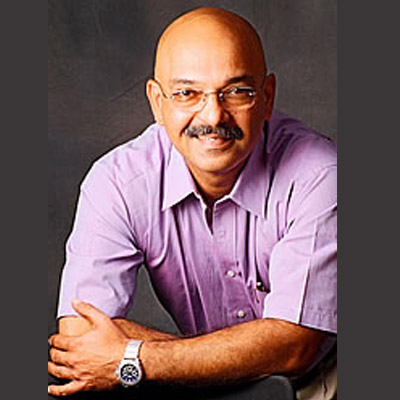
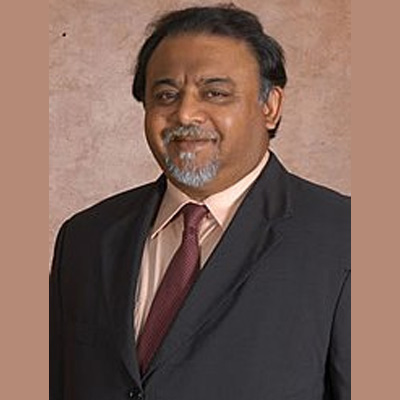
  • ‘IPL has aspirations to evolve into a major league like the EPL’ : Ravi Krishnan- Rajasthan Royals vice chairman

    ‘IPL has aspirations to evolve into a major league like the EPL’ : Ravi Krishnan- Rajasthan Royals vice chairman

     After succeeding in the first edition of the Indian Premier League (IPL), Emerging Media-owned Rajasthan Royals has big plans to develop the franchise into a global brand. Part of the agenda is to do a variety of lucrative commercial deals and break even before three years.


    Emerging Media is looking at raising around $20 million by selling 10 per cent of its stake. The company is in the process of appointing bankers to find a private equity partner, ahead of an initial public offering (IPO).


    In an interview with Indiantelevision.com’s Ashwin Pinto, Rajasthan Royals vice chairman Ravi Krishnan spells out the franchise’s future strategies.

    Excerpts:

    The IPL franchisees are said to have recovered close to 80 per cent of the money they paid to the Board of Control for Cricket in India in the first year. Does the huge success of the first edition of IPL mean that Rajasthan Royals will break even faster than the earlier three-year target?
    We are revising our plans positively, though I can’t comment exactly on the figures. We spent less on acquiring the franchise and invested judiciously. We did not sign an expensive contract with a Bollywood star; nor did we spend heavily on advertising campaigns. I have never seen Chicago Bulls run an ad campaign; it is PR-led and builds value from the success that it enjoys. You could focus on the peripheral stuff as well, but the IPL at the end of the day is a sporting competition.

    Since we played well and won the inaugural IPL tournament, this has opened up more opportunities for us like playing in the Champions T20 League. We will, thus, be in a position to rake in more money.

    What are the commercial opportunities that have opened up for you after your success?
    We are scouting for strategic partnerships. There are some obvious ones like sponsorships on the shirt, etc. Then there are those that are not so obvious that will showcase the success of our franchise. We will be announcing more details later.

    What are the plans in the licensing and merchandising arena?
    We are in discussions with different parties for tie ups. We have a very broad licensing and merchandising programme, which would cover a range of goods and services.

    Would it be a challenge for franchisees to get sponsors at high value because of the global economic downturn?
    Even if some sectors have been affected by the downturn, other clients will come on board. When the tobacco embargo came in and Wills stopped sponsoring cricket, there were predictions of doom. However, other companies stepped in. Advertisers can’t ignore the IPL. I do not think that there is cause for any of us to panic.

    Why are some franchisees including Rajasthan Royals looking at raising funds by divesting stake. Isn’t this coming too soon and at a time when there is a global downturn?
    There are different reasons for selling a stake. For us, the aim is to fund the development of the franchise.

    We will be diluting a small part of the equity and are looking at the private equity route. We are in the process of appointing bankers

    Are you looking at private equity investors as it is a bad time to go for an IPO?
    We will be diluting a small part of the equity and are looking at the private equity route. We are in the process of appointing bankers.

    Up next for the Rajasthan Royals is the Champions T20 League. How do you see this developing as a property?
    I think that it will be as significant for cricket as the Champions League is to soccer. In tennis you have the year-end Masters Cup where only the best of the best get to play. The Champions T20 League will occupy a similar mind space. It is being held for the first time and so there is some uncertainty among some parties; but I think it will do really well. It will be the icing on the cake when you talk about global domestic competitions.

    One of the things that EPL (English Premier League) clubs have done is to market themselves through foreign tours. What plans do you have in making Rajasthan Royals a major brand?
    You have to remember that the EPL and its clubs are 100 years old. IPL has just finished its first year. While it is new, the IPL has aspirations to evolve into a major league in world sport like the EPL.

    What role will Rajasthan Royals play in helping Emerging media become a player to be reckoned with on the global stage?
    I think that the success of Rajasthan Royals will provide a platform for the company to enter into other areas. However at the moment, we are going into the Champions T20 League, which will be followed by another IPL season next year.

    What is your strategy going to be when the trading window opens on 15 December?
    We are looking at various permutations and combinations. The fact is that our team had seven nationalities. The public loved seeing Shane Warne, Sohail Tanveer and Graeme Smith on the same team. This lent freshness to the proceedings.


    The trading window is an innovation that fans look forward to. Who is going to be in the team? Who will not be there? Who will be traded? There will be a lot of drama around this. This is what happens in the US with college drafts for baseball and basketball. The composition of some teams in the IPL will change which will cause speculation and excitement.

    What were the things discussed at the recent meeting in Bangkok to improve the IPL?
    We had a conference in Bangkok to debate on the areas where we can improve upon. It was a three-day session that looked at different things – from organisation to ticketing to hospitality.

    Hospitality as you mentioned is an area that could be improved upon. What are Rajasthan Royals’ plans in this?
    We recently launched our membership programme. We benchmarked this against other membership programmes globally. It is a five-tier programme and also includes kids. Creating a community can contribute to the financial success of the franchise as they would buy tickets, merchandise products and also attend special events. We are the first IPL franchise to launch a structured membership programme.


    Our membership programme could create life-long fans for the franchise. I have supported a football club in Australia since I was five years old. I am a repeat buyer of their jerseys and other club merchandise. It is about building a community and then finding ways to get them excited. Giving them special offers is one such way.

    What is the impact that IPL will have on world cricket and on the business of sports marketing?
    Let me take the second point first. In terms of sports marketing, it is providing a viable platform for companies to get involved with cricket. It could be through attaching themselves to the league itself or to a franchise or getting visibility on the broadcasting platform. The fact that there is also a Bollywood element to it has made the IPL an interesting marketing platform.


    The IPL has also brought in opportunities for service providers like ticketing companies, ad agencies and firms that specialise in hospitality.


    As far as the world of cricket is concerned, the IPL has found its place. English and Sri Lankan players badly want to play in it. The IPL offers players the chance to make the most out of their short career spans. While the Future Tours Programme might make it difficult for all players to take part, the way the BCCI and other boards are dealing with the issue is good.


    The IPL has also upped the ante as far as careers in sports go for Indians. Cricketers who were unheard of, can make more money here than from playing the Ranji Trophy.

    As a sports marketer, do you feel that there is danger of Test cricket and ODIs getting devalued as T20 grows in importance?
    This sport has had its origins in Test cricket and it would be wrong if the people in charge of the future of cricket, were not concerned about this format losing its lustre. The gatekeepers need to ensure that there is enough opportunity for the various formats to survive. The administration has to see to it that no format is overplayed or underplayed.
    Would the league franchise model for another sport like hockey or soccer work?
    A lot of things have to be pulling together in the right direction for this to succeed – the sports administration, the broadcast platform, the corporate community and the players.
  • ‘Course correction will happen from a commercial, team management, and player angle’ : Hiren Pandit – GroupM ESP managing partner

    ‘Course correction will happen from a commercial, team management, and player angle’ : Hiren Pandit – GroupM ESP managing partner

    For franchisees the inaugural edition of the IPL has been a learning experience. The Hyderabad franchise is no different. While Deccan Chargers finished at the bottom of the table, the franchisee is confident that the investment will pay of in the long term. At the same time, the event was more difficult logistically and also physically than anybody imagined.


    GroupM ESP acts as a consultant for the Deccan Chronicle, which owns the Deccan chargers. Ashwin Pinto caught up with GroupM ESP managing partner Hiren Pandit to find out his views on the event


    Excerpts:

    How has the IPL experience been for Deccan Chargers?
    It has been a big learning curve. At the same time companies that did not get in will be furious at having missed out. The franchisees have all seen the potential of this event. We now know that this can be built up over the years. The IPL will be of the biggest benefit for those who want long-term gains.

    Overall what have the learnings been?
    There have been many. Sponsorship needs to be approached in a more effective manner. We were not able to do this earlier due to time constraints. Most of these deals have been for one year and so plans can be revised depending on what the team’s standing is. It is still early days. The way television has taken to it has been big. Next year, sponsorship rates will go through the roof.


    I believe that the IPL is looking for $ 7 to 8 million for ground co-sponsorship rights. Pepsi will go in for associate sponsorship as they want to block out Coca Cola. Each franchise and sponsor has had more than his fair share of learnings that will have to be put in place.


    A lot of course correction will happen. This will be from a commercial angle, team management angle, player angle.


    For the next three weeks people will lie low and detox from the IPL frenzy. Then they will start addressing issues. There will be a session with the IPL governing body to do a Swot analysis. Teams will look at their overall structure and check to see if all is right or if it needs to be re-looked at. Some problems may be common.

    What were the logistical challenges?
    The travel schedule was awful. I had no idea about the days. There was no concept of weekdays and weekends. It was just one haze of cricket matches and cities.


    Hats off to the players for performing. We played a match against Chandigarh. The next day we reached Hyderabad at 9:30 at night. The next day there was a match. Where is the time for player recovery? Players luggage also became an issue. It has to be at the airport. These logistics were more complex than had been first imagined.


    Then there is media pressure. Several people want to interview a certain set of players at any given point of time. This needs to be scheduled better.

    The trading window will be key but the guidelines are not clear

    For Hyderabad what have the learnings been?
    There have been many. Right from stadium management, which we managed well. The ticketing part was an experience. We were not sure initially as to whether we would have 46,000 seats or 38,000. The stadium was under construction. We had to keep in mind media sessions.

    Not just us, but everybody will handle this differently next time. We sold out tickets for many matches but we have to still understand the pattern in which ticket sales happen. With sponsors there was confusion due to outfits not being ready on time. For the first week we struggled to get a comprehensive photo of the team. Clothes designs and delivery were a challenge. It took us 15 days to do this. If we had time this would have been planned better.

    Is it fair to say that the ones who did well did not have big stars?
    I don’t think so. The ones who did well played as team. They looked up to one individual. Rajasthan looked up to Shane Warne. The passion with which they played as a unit was terrific. Dhoni inspired Chennai. If a team came together it struck.

    Did attitude play a role?
    Yes! There were some players who acted as though the IPL was a holiday. So the franchise had a problem. Some players who were in a high profile position prior to the event were stripped clean. The trading window will be key but the guidelines are not clear. Franchisees can get rid of some players and acquire others. The support staff structure will also be looked at in terms of coaches, physios etc.

    Why did Hyderabad not fare better?
    We had a weak bowling attack. We went on past performance. Some players let us down here. This put additional pressure on the batsmen to add 20 more runs. A team like Rajasthan had the perfect batting and bowling balance. With Delhi we always felt that if the top three batsmen failed we were in with a chance. However they constantly fired until the semi final. Sehwag and Gambhir got out cheaply and they collapsed against Rajasthan.

  • IPL lived up to the hype

     
    IPL lived up to the hype
     

    Still hung over. That is what many of those directly involved in putting together the greatest pop cricket spectacle ever staged are still feeling even a week after the first edition of the Indian Premier League (IPL) championship came to its heady climax.

    The biggest cricket show on earth more than lived up to the expectations of those who invested in it. The public took to it, the corporates were sold on it, telecaster Sony hit pay dirt and the key individual behind it all – IPL chairman and commissioner Lalit Modi -won the grudging admiration of even his worst detractors. The fact that the event created a $2 billion market without a ball being bowled has been simply amazing.

    Realms have already been written on how the perfectly packaged blend of highly competitive sport, merged with heady doses of ‘celebrity and entertainment masala‘, had the cinema, television and retail industries collectively reeling.

    And the hype that was emanating out of India had its ripple effect across the globe. One could argue that it is linked to the fact that the Indian economy is increasingly being written and spoken about in the global press, but it is no small matter that virtually every big international publication did in-depth stories on the IPL speaks for itself. In Australia a million people watched the first match although it was past midnight there. UK‘s Setanta declared that its subscriber base has risen between 17-20 per cent on the back of the IPL. These are just some of the heady stats that the IPL has thrown up.

    Read on for a reality check on the IPL from the point of view of the four key constituents – Sony, team owners, BCCI and the public.

    Sony home safe and dry:

    Ratings were what Sony was tracking and they held up throughout, delivering above expectations more often than not.


    Click for complete data

    Before the IPL started there was scepticism about how the event would fare. Even when the event initially delivered strong numbers there were doubts on whether the momentum could be sustained. Naysayers carped that the novelty might wear off, Australian players leaving would prove to be a dampener, etc.

    This data though should silence them. Tam data c&s 4+ all India shows that the IPL managed to achieve an average of 4.7 over 57 matches on Max. This shows that viewer interest did not flag. The opening match between Kolkata and Bangalore got the highest rating of 7.19. Next came a crucial match between Chennai and Mumbai which managed a rating of 6.58. A match between Kolkata and Delhi as the race for the semi final spots hot up managed a rating of 6.27. Both the semi finals also got ratings of over 6.

    This though, is less than half of the ratings that the semi final and final of the T20 World Cup got. India‘s semi final against Australia managed to get a rating of 13.4 while the dream final against Pakistan managed an astronomical 15.9. What this shows therefore, is that there is still plenty of room for improvement as far as the IPL is concerned.

    An average of 31 million people tuned in for each of the IPL semi finals. The figure is the same as that for the 2007 World Cup final that was played between Australia and Sri Lanka. One must keep in mind though that the World Cup also aired on DD. For the T20 World Cup final on ESPN, the reach figure was 48 million. IPL reached 99 million viewers throughout its duration.

    It is also pertinent to note that the importance of matches also played a role in the IPL ratings. For instance Mumbai‘s last match against Bangalore only got a rating of 2.13. This was because the Reliance owned franchise was out of semi final contention by then.

    The kind of ratings numbers that the IPL has delivered for Sony also means that it is ahead of the curve on its revenue targets as well.

    Of the first year payout commitment of the $ 59 million to the BCCI for telecast rights, Sony‘s share was $ 55 million. Sony had built in a $ 4 million shortfall in the first year into its calculations. That seems to have changed with Sony president network sales, licensing and telephony Rohit Gupta expressing confidence that the network will at least be on break-even point once final calculations have been done. This is largely on the back of the huge response the event got from the viewing public. After its main inventory was sold out, the channel was able to jack up rates for the 200 seconds that it had in the bank for each match. “For the semi finals and final we sold at Rs 8-10 lakhs per 10 seconds. We have set a benchmark pricing for the second season,” asserts Gupta.

    That assertion only reinforces the confidence Set India CEO Kunal Dasgupta essayed in an interaction with Indiantelevision.com before the IPL kicked off when he stated, “In the first five years we will make $100 million in profit. In the next five we will make half a billion. My ad sales will treble after five years.”

    Team owners ahead of delivery curve:

    For this year, the average expenditure per franchisee, according to Indian television.com calculations, was $ 17.5 million (the least being Jaipur‘s Rajasthan Royals at $ 15 million and the most being liquor tycoon Vijay Mallya‘s Bangalore Royal Challengers at $ 20 million). Considering that most team owners began this exercise factoring in the possibility of having to take a hit of anywhere between $ 3-7.5 million hit in Year 1, all of them (bar one) would be more than satisfied with what they have managed and the response the IPL has garnered thus far.

    As of now, and depending on who you talk to, it is either Kolkata or Chennai that have likely hit break-even.

    Kolkata was far and away the best managed as far as brand associations and merchandise sales were concerned but it was Chennai that was the most successful in terms of gate receipts.

    Breaking down the numbers, GroupM ESP (consultants for Hyderabad‘s Deccan Chargers) managing partner Hiren Pandit states: “The franchises have received around $ 7.5 million from central revenues. In terms of local revenues (prize money, local sponsorship, gate receipts) Kolkata would have earned the most at $ 11 million while Punjab would have got the least at $ 5 million. Where Kolkata did really well was in sponsorship where it got $ 7 million.

    “Bangalore would not have made much here as the UB Group was using it to push their own brands. In terms of losses I estimate that Bangalore lost around $ 10 million.” This loss, Pandit, is quick to point out, needs to be weighed against the kind of brand activation opportunities that will be available to the UB Group, going forward.

    As for the smaller teams like Punjab and Jaipur, they would have struggled the most on both brand associations as well as gate receipts (as their grounds are small).

    Public are loving it:

    The response in the stadia was what no one was sure about, but by all accounts it has proved a big hit all across, even in the smaller centres.

    Interestingly, it was Mumbai that had to go the furthest in its efforts to attract crowds. Why is that? Because Mumbaiites are the most spoilt for choice, in terms of avenues for entertainment. Additionally, commute times are the longest in Mumbai so for potential ticket buyers, logistics also plays a big part.

    A stadium like Hyderabad on the other hand, gets to host a One Day International once in two years, if it is lucky. The IPL more than anything else is offering access to a whole new form of entertainment and the public is lapping it up.

    What will clearly not work for any team though, is the traveling fan concept. Home games means just that – home games. India‘s geography simply does not allow for fans to travel with their teams.

    The Future:

    So what next for the IPL? Where does it go from here? At this stage it is all more talk than concrete plans but the intention is clearly to take the IPL global.

    IPL governing council member IS Bindra, has been quoted as saying that the IPL is just the first step of a “grand vision” that will eventually lead to the birth of a network of similar franchise-based models across the major cricket-playing nations. That is something that WSG South Asia CEO Venu Nair endorses wholeheartedly. Going forward, Nair is in favour of cricket going the soccer route. In soccer, leagues are more important than countries. “Cricket should follow the same route to survive. At the moment you have some events like the Champions Trophy, which are useless.”

    “You could (instead) have a World Cup preferably in the T20 format once in four years. The rest of the time league cricket could be played in different countries. What this would mean though is that other countries would have to set up strong leagues of their own. This would ensure that all the boards make money, which could then be used for the development of the game.. At the same time players would benefit, as financially there would be no need for most of them to play for more than five years. The current theory that one needs a 15 year career is outmoded. The ICC‘s role would still be to govern the game. Nobody loses out.”

    An issue that franchisees will have to look at is to build loyalty among fans for a set of players. Another key thing for franchisees is gate receipts. Nair feels that more attention has to be paid to premium seating. “Abroad premium seating accounts for 40 per cent of gate revenue. At the moment though, only Chennai, Jaipur and Punjab have adequate facilities for premium seating. The rest of the franchisees will have to invest in this along with the state associations. The lack of adequate facilities and a high quality experience for those in the premium seating area is why Reliance reduced prices for the semi finals in Mumbai.”

    In conclusion, whatever may be the postmortems different agencies engage in now that the event is done and dusted, it would be difficult to argue that any of the parties that chose to be associated with the event did not get more than their money‘s worth.

    Team owners ahead of delivery curve:

    For this year, the average expenditure per franchisee, according to Indian television.com calculations, was $ 17.5 million (the least being Jaipur’s Rajasthan Royals at $ 15 million and the most being liquor tycoon Vijay Mallya’s Bangalore Royal Challengers at $ 20 million). Considering that most team owners began this exercise factoring in the possibility of having to take a hit of anywhere between $ 3-7.5 million hit in Year 1, all of them (bar one) would be more than satisfied with what they have managed and the response the IPL has garnered thus far.

    As of now, and depending on who you talk to, it is either Kolkata or Chennai that have likely hit break-even.

    Kolkata was far and away the best managed as far as brand associations and merchandise sales were concerned but it was Chennai that was the most successful in terms of gate receipts.

    Breaking down the numbers, GroupM ESP (consultants for Hyderabad’s Deccan Chargers) managing partner Hiren Pandit states: “The franchises have received around $ 7.5 million from central revenues. In terms of local revenues (prize money, local sponsorship, gate receipts) Kolkata would have earned the most at $ 11 million while Punjab would have got the least at $ 5 million. Where Kolkata did really well was in sponsorship where it got $ 7 million.

    “Bangalore would not have made much here as the UB Group was using it to push their own brands. In terms of losses I estimate that Bangalore lost around $ 10 million.” This loss, Pandit, is quick to point out, needs to be weighed against the kind of brand activation opportunities that will be available to the UB Group, going forward.

    As for the smaller teams like Punjab and Jaipur, they would have struggled the most on both brand associations as well as gate receipts (as their grounds are small).

    Public are loving it:

    The response in the stadia was what no one was sure about, but by all accounts it has proved a big hit all across, even in the smaller centres. 

    Interestingly, it was Mumbai that had to go the furthest in its efforts to attract crowds. Why is that? Because Mumbaiites are the most spoilt for choice, in terms of avenues for entertainment. Additionally, commute times are the longest in Mumbai so for potential ticket buyers, logistics also plays a big part.

    A stadium like Hyderabad on the other hand, gets to host a One Day International once in two years, if it is lucky. The IPL more than anything else is offering access to a whole new form of entertainment and the public is lapping it up.

    What will clearly not work for any team though, is the traveling fan concept. Home games means just that – home games. India’s geography simply does not allow for fans to travel with their teams.

    The Future:

    So what next for the IPL? Where does it go from here? At this stage it is all more talk than concrete plans but the intention is clearly to take the IPL global.

    IPL governing council member IS Bindra, has been quoted as saying that the IPL is just the first step of a “grand vision” that will eventually lead to the birth of a network of similar franchise-based models across the major cricket-playing nations. That is something that WSG South Asia CEO Venu Nair endorses wholeheartedly. Going forward, Nair is in favour of cricket going the soccer route. In soccer, leagues are more important than countries. “Cricket should follow the same route to survive. At the moment you have some events like the Champions Trophy, which are useless.”

    “You could (instead) have a World Cup preferably in the T20 format once in four years. The rest of the time league cricket could be played in different countries. What this would mean though is that other countries would have to set up strong leagues of their own. This would ensure that all the boards make money, which could then be used for the development of the game.. At the same time players would benefit, as financially there would be no need for most of them to play for more than five years. The current theory that one needs a 15 year career is outmoded. The ICC’s role would still be to govern the game. Nobody loses out.”

    An issue that franchisees will have to look at is to build loyalty among fans for a set of players. Another key thing for franchisees is gate receipts. Nair feels that more attention has to be paid to premium seating. “Abroad premium seating accounts for 40 per cent of gate revenue. At the moment though, only Chennai, Jaipur and Punjab have adequate facilities for premium seating. The rest of the franchisees will have to invest in this along with the state associations. The lack of adequate facilities and a high quality experience for those in the premium seating area is why Reliance reduced prices for the semi finals in Mumbai.”

    In conclusion, whatever may be the postmortems different agencies engage in now that the event is done and dusted, it would be difficult to argue that any of the parties that chose to be associated with the event did not get more than their money’s worth.

    (Graphics and design by Kavita Sangoi)

    Also Read:

    Sony reaps IPL rewards for innovation, concerted effort

    Indiantelevision.com’s interview with GroupM ESP managing partner Hiren Pandit
  • Sony reaps benefits of innovation concerted effort

    Sony reaps IPL rewards for innovation, concerted effort
     

    The Indian Premier League‘s success has exceeded everybody‘s expectations, including that of broadcast rights holder MSM India‘s Max channel.

    While no one will argue against the fact that the kind of success IPL‘s inaugural edition has enjoyed could never have been anticipated, even by the most die-hard optimist, due credit must be given to the broadcaster on two fronts – innovation and a concerted marketing effort.

    Logistical challenges: Max business head Sneha Rajani notes the IPL was an innovative format to begin with. So everything done was innovative by default. “At the same time, though we needed to do a lot of things in two months, we sat together with the team owners to put it all together.

    “It was a day and night task. It was logistically more difficult that the World Cup. Mind you for the 2007 World Cup we had two years to plan things. The IPL had more crowds, more flight movements and more equipment – all of which had to be dealt with. I feel that it is a miracle that everything went off so smoothly.”

    Innovation: After five years of success with its wrap around show Extraaa Innings, Max decided to completely revamp it. “We wanted to refresh it and turn it on its head. We did not want to continue with the same format. It became a one hour show. We went from a remote central studio to a studio that was based on the ground closer to the action.”

    It also introduced young faces as anchors. 600 people were auditioned. Rajani explains that the aim was to have faces that the youth could relate with. “Mandira Bedi is an icon, a superstar. It is difficult for the youth to relate to her. So while the auditions made life more difficult for us we were determined to do it. We went with fresh young male faces.

    “We needed multiple anchors to be the main presenters in the studio and the roving reporters on the ground. We found the six anchors and the format was tweaked to make it crisper. We even conceived a song for Extraaa Innings Karo Ya Maro.”

    She asserts that after the channel introduced Mandira Bedi five years back, many channels started to copy the formula. “The best form of flattery is imitation. As we are leaders, we then decided to turn it on its head for the IPL. Nobody anticipated that we would go with youthful guys.”

    Astute marketing: Sony president network sales, licensing and telephony Rohit Gupta says that one of the main reasons for the IPL‘s success was the marketing effort that was done by all the parties involved. “The activities began well before the event kicked off. Different people marketed different properties. This generated huge interest among the media. As a result people sampled it. They stayed on thereafter as great cricket was on offer.”

    Rajani adds that at the start the broadcaster sat down with the franchisees to set up a blueprint in terms of who would be doing which activities and at what period of time. At the start the IPL did its campaign. This was followed by campaigns by the different team owners. Finally Max did its own marketing in the four-week lead up to the event.

    “A chart was drawn out as to who would be doing what and at what stage. The timelines were met. The IPL‘s campaign Cricket ka Karamyud was distinct. The owners had concepts reflecting their personalities. Preiti‘s for instance, had a North Indian Punjabi feel.”

    Max‘s IPL campaign slogan was Manoranjan kA Baap. Rajani explains that last year, when Max had made a presentation to the BCCI, they wanted to position the event as the greatest spectacle there is as far as cricket is concerned. The channel‘s team stuck to that positioning throughout. “We knew that the campaign had to stand out. We gave the campaign a 70‘s movie feel with a lot of melodrama. This was key as we were competing with the soaps and serials bang on. Our message was that the IPL was something that would break the shackles of the soaps and movies, which have been ruling the roost.

    “The feedback to our campaign stunned us. People understood what we were trying to say. Our message was that IPL is a quick fix reality show. It takes the same time as a film to complete.”

    Less is more: What is interesting is that Max did just one major interactive initiative for the IPL. This was in association with Godrej and through SMS one could win a fully furnished flat worth Rs 10 million. The aim was not to have a cluttered environment. Also the three-hour duration of a match does not give one too much time to do things.

    The Ad Scene: There was scepticism prior to the event that the cricket would not be serious. The fear was that huge money would dilute the game. All that though was hogwash and high quality cricket won in the end. “The T20 format is powerful. Ratings were above 7 among males 15+. This is what cricket advertisers target,” explains Gupta.

    On the revenue front, Gupta notes that Sony expects to at least be on the break-even point once final calculations are done. Earlier, the expectation was that there would be a shortfall of around $ 4 million in the first year. However, since the response was huge, the channel was able to scale up rates for the 200 seconds that it had in the bank for each match. “For the semi finals and final we sold at Rs 8-10 lakhs per 10 seconds. We have set a benchmark pricing for the second season,” asserts Gupta.

    The pricing for season two will be aggressive. In fact Sony is looking to do deals by mid-July. This would give the sponsors eight to nine months to plan activities. “Our existing clients are keen to return. We want to give brands enough time to get their act together so that they get full value from it,” says Gupta.

    Plans going forward: In terms of the rub off effect, Gupta notes that the IPL has given the broadcaster a good platform to launch Dus kA Dum. “We were able to promote our big shows well. Something similar happened in 2003 post the World Cup.”

    And what is life like for Max, now that it has returned to being a movie channel? Rajani explains that on 2 July, the day after the IPL finished, the channel started a film initiative Great Pictures Lagaataar (GPL). This is a festival of blockbusters that air from Monday to Friday at 8 pm. Max will also premier films this month like No Smoking and Gandhi My Father.

    In terms of the IPL the plan is to do activities with the franchises to keep the brand alive. In a few weeks time Max will sit down with the franchises and discuss initiatives that could be done. This could include specials on the teams, focus on key players etc. There would also be a retrospective on the first season. “People will not sit and wait for the next event that happens next year,” notes Rajani.

  • Hindi GECs take a beating from IPL

    The Indian Premier League onslaught is beginning to hurt Hindi general entertainment channels.  With an average TVR of 5 (Tam data for week ended 26 April, All India, C&S 4 +), the heat is now on for the GECs to retain its prime time viewership.

    Star Plus and Sony have lost a chunk of their audiences, while Zee TV has made up with a focus on afternoon programming. NDTV Imagine is looking more battered at this stage while 9X has marched ahead to occupy the third spot.

    Sample this: Kyunki … which was enjoying a TVR of 5.3 in week 15 (week ended 12 April) fell to 4.18 TRP on week ended 26 April (when IPL was on for the whole week).

    Kahani… slipped from 4.36 TVR (week 15) to below 3 in week 17. And when Star Plus launched its high voltage Shah Rukh Khan show Kya Aap Paanchvi Pass Se Tez Hain? on 25 April, it fetched a TVR 4.61 which could, perhaps, have soared higher.

    Star‘s Bidaai, one of the top five shows in the Hindi GEC, has lost considerable TVRs to fall on 4.41 (week 17) from a high of 5.5 (week 15).

    Zee‘s Saath Phere fell from 4.76 (week 15) to 3.96 (week 17) while Kasam Se touched 3.3 (week 17) from 3.92 (week 15).

    Zee TV business head Tarun Mehra says, “All the GECs have lost viewers to the IPL matches. However, all the channels were prepared for a general beating on the score card”.

    Market leader Star Plus with 345 GRPs in week 15, fell to 297 GRPs in week 16. In week 17, Star Plus managed 300 GRPs (even after the launch of Panchvi…).

    Star Plus VP marketing and communication Prem Kamath says, “Definitely IPL has had its effect on GECs. However, the space is very unpredictable. So you might see a different story next week. A week or two‘s data does not give the full picture.”

    Despite IPL matches, Zee TV has grown in terms of GRPs. From 212 GRPs in week 15, it has increased to 218 GRPs (week 16). And in week 17, it finished with a high of 220 GRPs, standing second to Star Plus.

    HSM GRPs
    Channel WK 15 Wk 16 Wk 17
    Star Plus 345 297 300
    Zee TV 212 218 220
    9X 77 72 80
    NDTV Imagine 88 92 79
    Sony Entertainment TV 84 79 68
    Sahara One 68 63 63
    Star One 66 54 60
    DD1 40 34 34
    Star Utsav 36 35 32
    SAB 35 32 31
    Zee Next 10 9 10
    Source: TAM Peoplemeter System TG: CS 4+

    So how has Zee TV managed to weather the storm? Says Mehra, “No doubt IPL has eaten GECs viewers in the prime time slot. But instead of concentrating on the prime time, we are focusing on the afternoon programming and movies.”

    To combat IPL match ratings, Zee TV has pumped up its weekends with a special attention on the afternoon programming. During the week ended 26 April, Zee TV has shown the movie Vivaah which fetched a TVR of 3.29. It has also launched a TV series Vivaah at 7 pm and 11 pm (week days), besides an hour-long episode of Nagiin… and a special episode of Banoo Main Tere Dulhann.

    Zee TV is also planning to strengthen its line up. The channel will launch a new crime series Hadsaa on weekends. Besides it is pumping up the weekends with special events like Zee Cine Awards and Idea Rocks.

    A few rungs down the line, NDTV Imagine (79 GRPs) lost its third spot to 9X with 80 GRPs.

    While sibling channel Max has hogged all the limelight with the telecast of the IPL matches, Sony has plunged from 84 GRPs in week 15 to only 68 GRPs in week 17.

    “We have got affected marginally but as a network we have grown phenomenally,” says Sony Entertainment television creative head Sanjay Upadhyay.

    Sony, in fact, is trying to use the IPL hype to promote its new show launches. Reality shows like Waar Pariwaar, Naye Roop Nayi Zindagi and Yeh Shaam Mastaani were unveiled during the IPL time.

    Explains Upadhyay, “We are building up these shows around IPL. One should also not forget that IPL is a short term event and after it is over we expect our shows to pick up. Apart from that a lot of cross channel promotions are happening on both Max and Sony.”

    Soon after IPL gets over, Sony will place its big ticket reality show Dus Ka Dum with Salman Khan as host at prime time to mop up audiences that have deserted the channel.

    A similar tale follows the other GECs. From 68 GRPs (week 15), Sahara One fell to 63 GRPs (week17) while Star One dipped from 66 GRPs (week 15) to 60 GRPs (week17).

    A micro look into the IPL ratings on weekdays

    The IPL is holding firm in terms of viewership even on weekdays.

    Tam data C&S 4+ shows that matches played from Sunday 20 April to Saturday 26 April have managed an average TVR of 5.

    In fact the match between Chennai Super Kings and Mumbai Indians which took place on 23 April and went down to the wire nearly touched a TVR of 6.

    The contest between Chennai Super Kings and Kolkata Knight Riders on 26 April fetched the lowest ratings during the week with a TVR of 3.6.

    Not surprisingly the crucial match between Mumbai and Bangalore on 20 April touched a TVR of 5.9. The match between Rajasthan Royals and Deccan Chargers that took place on Thursday had a TVR of 5.5.

    In Gujarat where IPL has fared the best, the matches averaged a TVR of 7.14 while in Andhra Pradesh where IPL has not done well the matches managed a TVR of 2.77.

    Tam also did an analysis on the visibility that the teams got through their TV promos in the month before the IPL kicked off.

    From 18 March to 17 April the Kolkata Knight Riders had 46 per cent of promo time and got 41 per cent of GRPs. The Mumbai Indians had 33 per cent of promo time but their GRP contribution was only 19 per cent.

    The Decan Chargers, on the other hand, had only 10 per cent of promo time but GRPs delivered were 22 per cent.

    Women continue to be interested in big cricket but their share has come down slightly. During the 2003 World Cup women contributed 41 per cent of viewership. This came down to 38 per cent for last year‘s World Cup. For IPL, women contribute 36 per cent of viewership.

    The audience age profile has been consistent over the years. For the 2003 World Cup, the 35+ age group contributed 39 per cent to viewership. For the IPL it has contributed 38 per cent.

    Growth, however, has come for the 15-24-year-olds. Their share in viewership has grown from 21 per cent for the 2003 World Cup to 27 per cent for the IPL. Observers attribute this to the fast-paced nature of T20.

    Tam data also shows that city loyalty has already set in. During the first match, Kolkata viewers increased their interest in the match right till the end of the contest despite knowing in the early stages that their team was going to win.

    Bangalore, on the other hand, started losing interest as the match proceeded towards the finish line. The other four metros, more or less, maintained the same amount of interest in the match right till the end.
    Tam also explains that matches that feature top quality sides will always draw the most viewership. Fans will watch their side more when they play a top side.

  • ‘With IPL you have the power of 10’ : Kunal Dasgupta – Set India CEO

    ‘With IPL you have the power of 10’ : Kunal Dasgupta – Set India CEO

    The Indian Premier League (IPL) has got off to a solid start. The ratings have been positive and crowds have thronged the stadiums. For Sony the IPL marks their return to cricket. Set India CEO Kunal Dasgupta offers Thomas Abraham and Ashwin Pinto his views on what he expects IPL to do for the game, telecast channel Max, as well as the importance of sustaining the brand.

    Excerpts:

    As a broadcaster what do you expect?
    T20 is a made for television format. When India played a T20 match against Australia at the Wankhede stadium, ratings touched 20. I am looking for a rating of 4 or 5, which is possible, given that ICL, which has retired players, got 2.5. This is a good base for us to take off from.

    The format will mean that besides country against country, one will also view it as being team versus team. This is what exists in other sports like soccer, hockey, and baseball.

    IPL is being pushed as being the ultimate in reality television. In that case how do you get that competitive environment?
    The prize money (Rs 48 million goes to the winner) will ensure this. This is much more than you get for playing for the country and so the players will go all out. The matches will be hard fought. Here all the teams are evenly balanced and so you do not know the result. It will be unpredictable and matches will go down the wire. All teams have a good mix of batsmen, bowlers and youth.

    What are you hoping for in the first year as the telecast partner?
    Ideally I would want the IPL to be a successful brand that has a long term play. After June, I will continue to do promotions to keep the team brands alive. This was one of the conditions on which we bid.

    We will do shows around the IPL. You could see teams (franchises) practicing and discussing strategies for the next season.

    The trick for us is not getting ratings for the first season. The challenge is to sustain the excitement after that

    But wouldn’t an ideal situation be for a franchise to build a brand without the big names who might be on national duty?
    This might happen. Apart from April-May, you cannot have another period where all the stars are available. What will happen is that once the league is built the new players who are playing will become the core. You can then have matches in different parts of the world to popularise the game there using these new players.

    The trick for us is not getting ratings for the first season. This will happen as a matter of course because of the way the IPL has been hyped. The challenge is to sustain the excitement after that and it is here where we will have to take a leaf out of the book of the EPL. Teams have marketed themselves and have thus become iconic brands.


    So Mallya for instance, will use the Royal Challenger brand name to go out there and create opportunities for exhibition matches. They can do charity work in Bangalore and build a fan base. Each franchise will have its own website where clips will be available. They can create merchandise.

    Sony will pitch in through magazine shows. Otherwise it will just be a flash in the pan. As we come closer to the next season you will see transfers and there will be speculation.

    New heroes will be born. It is possible that the likes of current heroes like Glenn McGrath, Kumble, and Saurav will not play beyond two seasons. Once that happens, then the brand will live outside the big names.

    One of the aims is to broaden the viewer base is to get in more children, women, But for that you have to create marketing that speaks to those demographics. What is Sony planning?
    One of the major attractions will be the presence of big Bollywood stars. Akshay Kumar will perform for Delhi. SRK will perform for Kolkata You will see proper Bollywood entertainment.

    We have even tweaked the timings of some of the matches to accommodate our entertainment specials. One match was supposed to start at 4 pm but we have pushed it back to 5:30 pm. We will even have stand up comedy for Extraaa Innings. On air we have gone in for fresh faces. We did not want Mandira (Bedi) for this. She is more suited for ODI cricket. I want 20-year-olds in T20. We also did not want Kapil Dev, Gavaskar. We wanted anchors who represent today’s kids. With the ICC World Cup we broke the mould and brought in females. Now we are breaking the mould back

    What is the distribution upside from IPL?
    This is a question mark. We are supposed to have a dip but we will retain the same level. There is no minimum guarantee now. Had Ten Sports still been present it would have been difficult to determine the value of IPL. Our team is happy as they are closing deals for the year and it is one of the distribution cornerstones.

    At $ 59 million in Year 1 and an average of $ 61 million over five years, IPL was literally sold at floor price. Wasn’t that a great deal?
    It was. Most of the payout ($ 612 million) is from the next five years. ESPN’s bid was $150 million for the first five years. They had put in conditions that the top players should be there. We did not put in any conditions.

    Anyway, the way it has turned out, all the top players are taking part.

  • “With IPL you have the power of 10”

    “With IPL you have the power of 10”

    It’s the festival of lights. And for many the festival of noise courtesy exploding fireworks. In the hope of reducing the number of those belonging to the latter tribe, we, at indiantelevision.com, decided to put a display of firecracker articles for visitors this Diwali. We have had many top journalists reporting, analysing, over the many years of indiantelevision.com’s existence. The articles we are presenting are representative of some of the best writing on the business of cable and satellite television and media for which we have gained renown. Read on to get a flavour and taste of indiantelevision.com over the years from some of its finest writers. And have a happy and safe Diwali!

    Written By Thomas Abraham


    Posted on 28 April 2008


    The Indian Premier League (IPL) has got off to a solid start. The ratings have been positive and crowds have thronged the stadiums. For Sony the IPL marks their return to cricket. Set India CEO Kunal Dasgupta offers Thomas Abraham and Ashwin Pinto his views on what he expects IPL to do for the game, telecast channel Max, as well as the importance of sustaining the brand. Excerpts:


    As a broadcaster what do you expect?
    T20 is a made for television format. When India played a T20 match against Australia at the Wankhede stadium, ratings touched 20. I am looking for a rating of 4 or 5, which is possible, given that ICL, which has retired players, got 2.5. This is a good base for us to take off from.


    The format will mean that besides country against country, one will also view it as being team versus team. This is what exists in other sports like soccer, hockey, and baseball.


    IPL is being pushed as being the ultimate in reality television. In that case how do you get that competitive environment?
    The prize money (Rs 48 million goes to the winner) will ensure this. This is much more than you get for playing for the country and so the players will go all out. The matches will be hard fought. Here all the teams are evenly balanced and so you do not know the result. It will be unpredictable and matches will go down the wire. All teams have a good mix of batsmen, bowlers and youth.


    What are you hoping for in the first year as the telecast partner?
    Ideally I would want the IPL to be a successful brand that has a long term play. After June, I will continue to do promotions to keep the team brands alive. This was one of the conditions on which we bid.


    We will do shows around the IPL. You could see teams (franchises) practicing and discussing strategies for the next season.


    ‘The trick for us is not getting ratings for the first season. The challenge is to sustain the excitement after that’

     
    But wouldn’t an ideal situation be for a franchise to build a brand without the big names who might be on national duty?
    This might happen. Apart from April-May, you cannot have another period where all the stars are available. What will happen is that once the league is built the new players who are playing will become the core. You can then have matches in different parts of the world to popularise the game there using these new players.


    The trick for us is not getting ratings for the first season. This will happen as a matter of course because of the way the IPL has been hyped. The challenge is to sustain the excitement after that and it is here where we will have to take a leaf out of the book of the EPL. Teams have marketed themselves and have thus become iconic brands.


    So Mallya for instance, will use the Royal Challenger brand name to go out there and create opportunities for exhibition matches. They can do charity work in Bangalore and build a fan base. Each franchise will have its own website where clips will be available. They can create merchandise.


    Sony will pitch in through magazine shows. Otherwise it will just be a flash in the pan. As we come closer to the next season you will see transfers and there will be speculation.


    New heroes will be born. It is possible that the likes of current heroes like Glenn McGrath, Kumble, and Saurav will not play beyond two seasons. Once that happens, then the brand will live outside the big names.


    One of the aims is to broaden the viewer base is to get in more children, women, But for that you have to create marketing that speaks to those demographics. What is Sony planning?
    One of the major attractions will be the presence of big Bollywood stars. Akshay Kumar will perform for Delhi. SRK will perform for Kolkata You will see proper Bollywood entertainment.


    We have even tweaked the timings of some of the matches to accommodate our entertainment specials. One match was supposed to start at 4 pm but we have pushed it back to 5:30 pm. We will even have stand up comedy for Extraaa Innings. On air we have gone in for fresh faces. We did not want Mandira (Bedi) for this. She is more suited for ODI cricket. I want 20-year-olds in T20. We also did not want Kapil Dev, Gavaskar. We wanted anchors who represent today’s kids. With the ICC World Cup we broke the mould and brought in females. Now we are breaking the mould back


    What is the distribution upside from IPL?
    This is a question mark. We are supposed to have a dip but we will retain the same level. There is no minimum guarantee now. Had Ten Sports still been present it would have been difficult to determine the value of IPL. Our team is happy as they are closing deals for the year and it is one of the distribution cornerstones.


    At $ 59 million in Year 1 and an average of $ 61 million over five years, IPL was literally sold at floor price. Wasn’t that a great deal?
    It was. Most of the payout ($ 612 million) is from the next five years. ESPN’s bid was $150 million for the first five years. They had put in conditions that the top players should be there. We did not put in any conditions.


    Anyway, the way it has turned out, all the top players are taking part.

  • ‘We expect ICL to break even in two and a half years’ : Himanshu Mody – Zee Sports business head

    ‘We expect ICL to break even in two and a half years’ : Himanshu Mody – Zee Sports business head

     When Zee launched the Indian Cricket League in the face of a take-no-prisoners campaign of opposition from the Board of Control for Cricket in India last year, there was scepticism galore on whether the Subhash Chandra-backed league would bat it out. Particularly after the the BCCI announced plans for its own league shortly thereafter.


    ICL, however, successfully staged two events despite all the hurdles thrown in its way. The Indian Premier League kicking off on 18 April notwithstanding, Zee Sports business head Himanshu Mody is confident that his cricket endeavour will hold its own.


    Indiantelevision.com’s Ashwin Pinto caught up with Mody to ascertain his views on the progress made and future plans.


    Excerpts:

    Firstly, congratulations on having been able to deliver the second edition of the ICL despite the best efforts of the BCCI to skewer you. How has the experience been different from the first edition?
    It was much better. The first one was with six teams in one venue. There were 20 games. For the next event we added two more teams and had three venues. Lahore came from across the border. The event was held on a larger scale.

    What were the learnings from the event that you will take, going forward?
    We learn every day. Despite the pressure and resistance that we face, I think that we are set on a path to success. We have good players and have built on the ground infrastructure. We have 250 members, 80 of whom are Indian players. The rest are foreigners – coaches, players support staff, etc.

    How is the event being expanded upon this year?
    From April to September it is summer and then the monsoon season. There is not we can do in this period. We will hold an event later this year. We could include ODIs as well. We had a non televised ODI tournament in January which was played in Chennai and Hyderabad. What we come out with will depend on the commercial viability.

    How succesful have you been thus far in infrastructure and grassroot talent development?
    The Indian players come from various small towns and cities like Jammu, Srinagar, Assam, Indore and Bhopal. The Indian players come from 58 cities. We have a diverse mix in this sense. We also have talent scouts in each Zone where they have gone out to find emerging talent. We will now be setting up a central Academy for our boys.

    A notable feature this time round was that there was an increase in spectators in the stadia. Has some sort of a spectator/viewer connect with the state teams happened?
    This is starting to happen. The event is a family viewing experience. People are supporting the local team. In the final, Hyderabad Heroes had a lot of local support. At the same time support depends on performance as well, which is what has hampered Mumbai.

    Simulcasting the event on Ten Sports and Zee Sports has ramped up viewership quite significantly. What have been the average combined ratings? Have they been up to expectations or have they exceeded your brand partners’ expectations?
    The ratings have exceeded our expectations. We managed an average of 1.5. Ratings peaked at 3.5, which is more than India Test cricket and some ODI ratings.

    Was it a challenge to get sponsors on board given the BCCI stance?
    The establishment tried everything they could to prevent us from getting a start. They tried to resist sponsors from coming on. Also, to be fair, for the first event sponsors were reluctant as they did not know what to expect. The first event was a solid start.


    The second event has been a big hit and on the back of that we launched a tri series between an Indian XI and a World XI. We sold most of our inventory for this. The likes of Pepsi, HUL and Vodafone have come on board.

    And what of the other cricket boards? Do you see a softening of their stances vis-a-vis the ICL and what could be the catalyst for it?
    The other cricket boards have to realise that more than ICL, it is the IPL that presents the biggest threat to them. I think that they are starting to realise this. We do not ask any existing players to break their contract. At the moment the IPL presents that dilemma to current players as to whether they should play for their country or IPL club. We have taken players who are on the fringe or who do not have a central contract with their respective boards.


    The international governing body needs to take a call on what is more important. In soccer for instance, club soccer contributes more revenue as opposed to countries playing against each other. Cricket must decide if it wants to go down this route. If that happens, then country versus country matches will have to come down. If, however, it decides that the country format is more important, then the IPL could be limited in terms of matches played.

    How has ICL fared businesswise? Could you offer any idea of the kind of investments that have been pumped in?
    I cannot talk about numbers. However the business is robust. Earlier when we started this last year, we had given ourselves a breakeven period of three years. Now we expect that to happen in two and a half years.

    The other cricket boards have to realise that more than ICL, it is the IPL that presents the biggest threat to them

    Where have the revenues come from and how does it compare with the inaugural edition?
    We have several revenue sources. We have ground sponsorship, associate sponsorship, ticket sales sponsor, advertising on television, broadband rights.


    ICL was aired in several countries including UK, US, Pakistan, the Middle East, Africa, Southeast Asia, Australia and New Zealand. We did deals with international broadcasters for ICL including Showtime in the Middle East, Starhub in Singapore and Astro in
    Malaysia.

    The ICL is unique in that everything – whether it be telecast rights, teams, stadia – is owned by the promoters. Therefore, by extension, it’s Essel that has to spend on development, promotion and marketing of every aspect of the event. With IPL as a rival, in effect you’re confronting the power of 10 – not just a powerful cricket board but eight strong franchises as well as an established television network for share of mind. Doesn’t that become a huge challenge?
    We took satisfaction from the fact that the IPL format has duplicated ICL. The economics of the whole thing differs from product to product. We knew what the marketing plan would be and what would be enough to cover the country. We are on track. If we incur all costs and do it ourselves, then all revenues belong to us. We do not have to share them with anybody on a
    80:20 or 60:40 basis.


    If there is no India cricket in a certain period, then the ICL becomes a strong proposition. If you can have many news channels, I don’t see why two leagues cannot co-exist. We can have as many events as we like with all our players.

    Actor Mithun Chakraborty has picked up a stake in the Kolkata ICL team. What are the future opportunities for stakes in teams?
    We are talking with a few corporates. We chose not to sell teams initially as we wanted to show people the value that we bring to the table and what our delivery is. Having done this, we can now command a premium for our teams for strategic partners. It is not just a question of money. We are looking for partners who share our vision and who can bring synergies to the table that will help the ICL grow.


    We will, therefore, be selective about whom we choose to partner. We need to know the drive they have and what their objective to invest is.

    With the BCCI’s league being launched next week, what impact will this have on ICL in terms of retaining both local and international talent and viewer interest? In the present context, the ICL has a shelf life as a low-cost, lower value alternative to the IPL. But if these eight franchisees are going to expand in a big way, what will be left over for the ICL to pick up might just be the crumbs. Are some of these fears being expressed?
    I don’t think that it is a fair comment. There is enough local and international talent to go around. We have contracts with our players and I know that the satisfaction level they have is high. We are a closely-knit family. I don’t see substantial movements happening.


    A mature sports market allows for trading, though. The players have contracts with us and if somebody wants them, then they will have to pay us accordingly. That is how sports clubs operate globally. A player cannot simply break his contract. Our stated objective has been to have talent at the grassroots level. So we did not go out and try to get the likes of Sachin, Dravid.


    What we do is in line with what Zee does if you look at shows like Sa Re Ga Ma or India’s Best (Cinestar Ki Khoj). We short-listed 15 Indian players who we felt were the best. They played in the tri series. The fight they showed was commendable against a global bowling attack.

    The flip side to ICL is that many cricket boards, including Pakistan, are peeved that cricketers were taken. Do you feel that this will negatively affect your ability to go after their TV rights?
    I do not think that there is a conflict over here. The businesses are separate. If our bid is the highest, then it will come to us. A good price is what any board would look for. The best man wins. I don’t think that the board will be concerned about who offers the highest.

    How is the relationship with Ten Sports working out?
    We have been partners for a year and a half. It is working well. There is content sharing. We distribute Ten Sports. They handle our ad sales. The FPC is made by a central team. If there are clashes, then the programmes get split between the two channels.


    The Uefa Champions League sometimes has two games at the same time. So we air one match. In fact, we started doing this before we partnered with them. This offers the power of two.

    You are also doing an initiative Goal 2010. How did this idea come about and what progress has been made?
    This came about when Fifa president Sepp Blatter came down to India. This sport has a huge potential. We are putting money into this sport and in a couple of years, we will start seeing the results. We do a lot of school soccer tournaments.


    Our focus is at the grassroots level. We need to emerge as champions at the Asia level by 2010. We should be among the top five teams in Asia. Ten Sports airs domestic football in the Middle East. We are also working with the AIFF at tweaking the format of domestic football.

    Is the appeal of soccer moving beyond the three states of Goa, Kerala and West Bengal?
    Yes. It is getting popular in parts of states like Gujarat and Maharashtra.
    Do you think corporatisation will help sports like soccer and hockey to move forward?
    It can certainly help soccer. Hockey, however, is on a downturn not just in India but also abroad. In soccer, you have 32 teams playing the World Cup. In hockey just seven or eight teams play the event. Even in those countries the popularity is not as high as it should be.
    How is Zee Sports faring on the distribution front?
    The ICL has done us a lot of good. We have achieved 50 per cent connectivity. This rose from 25 per cent over the last three months.

    What property acquisitions were recently made?
    Zee and Ten Sports acquire things together. We renewed the West Indies cricket rights. We have the US Open tennis event for the long term.


    India is a unique country in that there are several sports channels but only one sport dominates. In other countries there are only two sports channels but multiple sports are followed. This is why the price of rights are going up dramatcially in India due to
    competition.

    Finally on the advertising front brands at the moment are not sure about how to use sport beyond cricket. Do you see this changing in the near future?
    It is changing already. A lot of advertisers are going to Golf. Once the Indian advertisers start to understand the true value of sponsorship that goes beyond just TRP, things will change. The best example is what the EPL has done for Barclays.


    This, though, has been built over several years. Indian companies are realising that they should invest in sport over a long term. The advertiser has to invest with the sports federation.

  • IPL resolves dispute with news broadcasters

    IPL resolves dispute with news broadcasters

    NEW DELHI: Five and half minutes of news footage of the Indian Premier League will now be available on all the news channels as the News Broadcasters Association (NBA) and IPL authorities have met and resolved the issue.

    The channels will have to pay nothing for up to that duration to the IPL match footage, sources said.

    Some of the news channels today, when the blackout entered its second day, started making the visual announcement in faded fonts across the screens, that IPL news will now be available.

    Times Now CEO Chintamani Rao, who is the chief negotiator for the NBA on this issue, told indiantelevision.com, “NBA and IPL have met and resolved the issues. The negotiation ended last night.”

    Asked whether the IPL authorities have agreed to give the news clippings footage free of cost, Rao refused to divulge the arrangement. “All I want to say is that we have resolved all issues and the case is closed. IPL news will be back on the news channels,” Rao said.

    However, industry sources said that though the news channels had demanded seven minutes of free news clips per match, and the IPL had refused anything gratis, the final agreement is that the news channels will get five and half minutes of free footage from all IPL matches

    This followed a protracted negotiation that lasted more than two days after the NBA went blank on IPL news from the midnight of 15 April.

    IPL had already agreed to the terms and conditions of the newspapers and news agencies regarding use of photographs taken by them at the mega sporting event.

  • NBA threatens TV blackout for IPL from midnight

    NBA threatens TV blackout for IPL from midnight

    NEW DELHI: The News Broadcasters Association has decided that it will blackout all news on the Indian Premier League (IPL) from midnight tonight as the League officials have not reacted to their demand for giving news clips free of cost, sources in NBA told indiantelevision.com.

    When contacted IPL chairman and commissioner Lalit Modi said: “NBA is not my problem, talk to Rohit Gupta at Sony. He is dealing with this.”

    But Gupta could not be contacted. Rajiv Shukla’s mobile was switched off.

    The News Broadcasters Association has issued a warning to the Indian Premier League that unless it reconsiders its prices for news coverage and concedes the NBA demands within business hours today, it will take “concrete action.”

    The warning ended around 6 pm this evening. Though NBA did not want to offer details on what “concrete action” implied, IPL sources told Indiantelevision.com earlier in the day that they have already warned of boycotting the event, which means a possible news black out on the electronic media.

    All the top brass of the electronic media met last evening to come to a decision on this.