Tag: IPL

  • Ormax Media to measure effectiveness of cricket advertising

    Ormax Media to measure effectiveness of cricket advertising

    MUMBAI: In the lead-up to the two big cricketing events, World Cup 2011 and IPL 4, media research and consulting firm Ormax Media has launched its cricket advertising effectiveness research – Day After Cricket (DAC).

    DAC is a syndicated cricket advertising effectiveness research, conducted across nine cities, with a sample size of over 15,000 respondents. The research includes two phases – “day-after” tracking during the events and “post-event ad effectiveness research”.

    Ormax Media co-founder and director Vispy Doctor said: “Cricket advertising is very cluttered, with more than 100 brands vying for limited consumer attention spans. With huge investments at stake, it becomes important for an advertiser to know if their brand has managed to make an impact, and whether this impact is short-term or long-standing. DAC allows an advertiser to understand if their campaign has delivered on the marketing objectives.”

    DAC will take a brand’s performance on various parameters, including ad recall, ad likeability, innovations recall and a series of brand attributes defined as a part of research.

    Over 60 brands will be tracked during each of the two events. Data will be reported every alternate day, making the findings directly actionable during the two long events. Subscribers will also get access to post-event analysis, which can be used as inputs into planning for future cricket events.

    Ormax Media co-founder and CEO Shailesh Kapoor added: “DAC aims to be the definitive cricket advertising research product in India. It handles every aspect of cricket advertising, including sponsorships and innovations. Very importantly, it isolates the impact of non-cricket advertising, allowing a brand to measure the specific benefits gained from cricket investments. Its model has been tested over several cricket events, including last year’s IPL and the current India-South Africa series. The large scale research aims to be the industry currency on cricket ad effectiveness this year, and the future.”

    The study will be available for subscription to advertisers, media planners and broadcasters.

  • Godrej joins MSM’s sponsorship roster for IPL 4.0

    Godrej joins MSM’s sponsorship roster for IPL 4.0

    MUMBAI: Multi Screen Media (MSM) has added Godrej as an associate sponsor for the 2011 edition of the Indian Premier League (IPL).
     
    That brings the number of sponsors to 10, keeping one associate sponsorship slot vacant. It is talking to companies like Airtel for the last sponsorship slot.
     
    The broadcaster will then start the process of selling spot buys.

    MSM president network sales, licensing and telephony Rohit Gupta says that as was the case earlier, there is no category exclusivity for spot buys. “A spot buyer can take 80 per cent inventory of what the sponsor has if they are in the same category,” he adds.
     
    As had been reported earlier by Indiantelevision.com, MSM is targeting revenues of Rs 9 billion from the event.

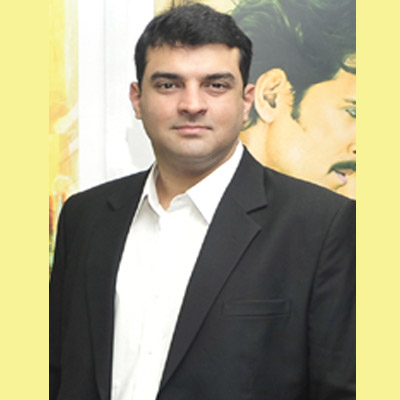
  • ‘The ability to de-risk is more now’ : UTV Motion Pictures chief executive officer Siddharth Roy Kapur

    ‘The ability to de-risk is more now’ : UTV Motion Pictures chief executive officer Siddharth Roy Kapur

    UTV has expanded its movie slate for the fiscal and is eyeing a revenue of Rs 4.5 billion from this segment, up 43 per cent from the year-ago period.

    Upping its operations over the years, UTV has a roster of 12 movies this fiscal. UTV‘s scale-up goal: to have a peak pipeline of 15 movies a year.

    Narrowing its risks, UTV has indulged in a high element of pre-sales activities. The environment has been conducive as prices for satellite TV telecast rights have ballooned with Viacom18 planning the launch of a Hindi movie channel next year. The syndication model, widely popular last year, is being thrown out of the window.

    After delisting from London‘s Alternative Investment Market (AIM), UTV Motion Pictures is not looking at raising further capital as the business has reached a self-generation mode.

    In an interview with Indiantelevision.com‘s Sibabrata Das, UTV Motion Pictures chief executive officer Siddharth Roy Kapur talks about the balance film studios need to perfect between scale and a de-risked strategy.

    Excerpts:

    Indian movie studios were talking of scale a few years back. Now de-risking seems to be the mantra. Is it because in the process of scale some of the studios burnt their fingers?
    Building scale and de-risking are not parallel processes. It is just that the ability to de-risk is more now with the overall slate of movies going up.

    But the trend is to lock in the music and satellite television telecast rights before the theatrical release of the movies. Haven‘t studios increased the pre-sales deals this fiscal?
    The opportunities have definitely increased as the market for satellite TV rights has heated up with a broadcaster planning to launch a Hindi movie channel. The syndication model, widely popular last year, is being thrown out of the window. As broadcasters are chasing exclusive rights, the rates have gone up. This is working out well for the broadcasters and the producers.

    Also, with a diversified and expanded slate, studios have been able to derive higher values. We at the early part of the fiscal, for instance, had locked in Rs 2.37 billion from pre-sales of different rights.

    Aren‘t you in the process sacrificing an upside potential?
    We are offered a premium even before the movie is out. And if we foresee a significant upside potential, we do not go for pre-sales. We decide on a film-to-film basis.

    We have also come out with new models. In case of Raajneeti, we did a satellite deal based on the theatrical performance of the film. We looked at higher slabs based on the performance index.

    But don‘t you have a de-risking approach for each movie?
    We have developed the ability to de-risk on each movie. As a strategy, we look at de-risking on the satellite and music rights front. On the theatrical distribution front, we prefer to handle it ourselves.

    With pre-sales opportunities on the rise, aren‘t you tempted to scale up further?
    We have managed to scale up to 12 movies a year and have a diversified slate in terms of genre and talent. We have a mix of movies ranging between as low as Rs 30 million and as high as a blockbuster can cost. We have the ability to release in 45 countries.

    As for the future, we are looking at a 12-15 movie slate. We feel that it is not a feasible model to scale up more if you are to maintain the same level of quality control.

    Around 50 per cent of the slate will be through co-productions. UTV will, however, handle the marketing and distribution of these movies.
    ‘We are looking at a 12-15 movie slate a year. We feel that it is not a feasible model to scale up more if you are to maintain the same level of quality control‘

    So are we going to see a slower growth in the top line?
    We are on course to achieve a turnover of Rs 4.5 billion this year (up from Rs 3.15 billion). There will be organic growth and we will also do bigger movies.

    With more multiplexes and digitisation coming up, there will be growth in theatrical revenues. We also don‘t see a softening in rates for satellite TV rights in the near future as broadcasters have planned for their growth.

    Our focus, though, will be on profitability. We are confident of posting a 20 per cent year-on-year bottom line growth for the next three years.

    UTV Motion Pictures delisted from London‘s Alternative Investment Market. Is it now looking at raising funds for its movie business?
    We are pretty much well funded and have no fund raising plan. The business has reached a self-generation mode.

    Is the slate firmed up for the next fiscal as well?
    We are sitting in a pretty position and expect to see strong growth in the next fiscal. We have only 3-4 titles to lock up. Our pre-planning is well in place. As a studio, we stand in a unique position as we are a producer and not a content aggregator.

    Is UTV looking at aggressively producing movies in regional languages, particularly Tamil and Telugu?
    We are keeping watch on how the regional play is emerging. But our focus will be totally on the Hindi slate. Strategically, Bollywood is our core business. We may do a one off movie in the regional space on a tactical basis.

    In the south, the game is riskier and the ability to de-risk lower. The theatrical dependence is huge in the south. The sensibilities are also different.

    In the revenue mix, how much does theatrical account for?
    The box office accounts for 55 per cent of the revenue mix, while 20-25 per cent comes from sale of satellite TV rights. Music accounts for 5-7 per cent, overseas for 7-10 per cent; home video for 3-5 per cent and the remaining comes from new media. Going ahead, theatrical will fall to 50 per cent while new media will increase.

    Piracy impacts our overseas home video revenues. We see that compensated over the years by the growth in the new media space. The launch of 3G in India will also augment our new media revenues.

    Has there been a correction on the cost front?
    Costs have fallen to a suitable level for the industry as a whole, but a lot more needs to be done.

    UTV has expressed concern over the rise in marketing costs. How far has the industry come together on this issue?
    There has been a 10-15 per cent increase in promotion and publicity expenses over last year. The industry spends around 50 per cent of the theatrical revenue for domestic marketing, if one calculates the net distributor share to each of the producers. Due to the competitive framework and the increase in media options, we tend to out-shout each other. We are advertising more than we need to.
    A meeting took place among some film producers and everyone seems to be committed to see that this gets corrected as it is affecting our profit margins. It is work in progress and a solution, hopefully, should be on sight soon.

    UTV has shied away from releasing films during the IPL Indian Premier League). Will you be more conscious to plan the movie releases in such a way that bumpiness does not happen from quarter to quarter?
    UTV will have some releases during the IPL this time. While we are looking at ways to ensure that bumpiness does not take place, the right release date is our top priority.

    Yash Raj Films is trying to create a segment for youth films. Do you think the industry has matured for a segmentation approach?
    The first task is to find a great story. This may or may not include some target groups. But the secret to success is working on interesting scripts. Working backwards is not always the solution.

  • MSM eyes Rs 9 bn of ad revenue from IPL 4.0

    MSM eyes Rs 9 bn of ad revenue from IPL 4.0

    MUMBAI: Controversies, lawsuits! None of that has made an impact on the willingness of advertisers to cough out the big bucks for the Indian Premier League (IPL).

    Sources say Multi Screen Media (MSM) is eyeing an ad revenue of Rs 9 billion, down from Rs 10 billion, as the extra teams will not be added in the fourth edition of the IPL. This will be 20 per cent up from the previous season of IPL.

    Indiantelevision.com had earlier reported that MSM was looking at Rs 10 billion ad revenue from IPL 4, despite the ICC cricket World Cup preceding it.

    Says Multi ScreenMedia (MSM) president network sales, licensing and telephony Rohit Gupta, “We are eyeing a 20 per cent revenue growth this year. Clients have shown firm belief in the value of this property. Many companies have returned. Vodafone and Videocon are back as co-presenting sponsors. The associate sponsors are Samsung Mobile, LG, Hyundai, Tata Photon, Pepsi. New sponsors joining us this year are Cadbury‘s and Havells. Earlier Havells used to take spots. To accomodate the new sponsors we have decided to include one more sponsor.” 

    Gupta, however, refused to spell out the exact revenue MSM was targeting.

    MSM has roped in nine advertisers for the event and is looking at 11 sponsors in total, one more than last year.

    MSM is also talking to companies including Godrej, HUL and Airtel to come on board as sponsors. The sponsor rate is Rs 500,000. The co-presenting sponsors will shell out Rs 550 million each while the rate for associate sponsors is around Rs 400 million.

    Spot buys start at Rs 550,000. “When we close out 80 per cent of inventory, then we will start hiking the spot rates. Extraa Innings will have around six sponsors and will give us Rs 360 million. We sell at Rs. 100,000 per 10 seconds here. By January, we would have sold out everything,” says Gupta.

  • Havells to spend Rs 150 mn in Q3 on promotions during cricket telecast

    Havells to spend Rs 150 mn in Q3 on promotions during cricket telecast

    BANGALORE: Electrical and power distribution equipment manufacturer Havell’s India Limited (Havells) plans to spend Rs 150 million during the October-December quarter towards brand building and mass media communications.

    A major portion of these spends will be towards TVCs’ during cricket telecast – more specifically during the forthcoming India-New Zealand Test match and cricket series for which it is one of the co-sponsors.
     
    Overall, during the current fiscal to 31 March 2011, the group plans to spend Rs 1 billion towards three of its existing line of products manufactured by three of its sub-brands – Havells, Crabtree, and Standard.

    In February 2011, the company plans to launch products under another sub-brand- Havells Sylvania in India. The group spent around Rs 600 million towards brand building during the first edition of IPL, a major portion of it on TVCs, revealed a source at Havells.
     
    “We may allocate further funds towards the Sylvania brand and some of the other products that we plan to launch over the next few months,” revealed the source.
     
    “A major portion of our mass communication spends are cricket based, since 80 per cent of the Indian population is hooked on to cricket. We do spend for TVCs on some news and regional channels such as TV9,” he added.
     

  • ‘Our biggest challenge is raising the low yields in the Hindi movie channel genre’ : Star Gold GM Sameer Rao

    ‘Our biggest challenge is raising the low yields in the Hindi movie channel genre’ : Star Gold GM Sameer Rao

    Star Gold general manager Sameer Rao is known to be a numbers man. A chartered account and an MBA in finance, Rao has a 19-year career graph that spans stints in UBS and Arthur Andersen.


    His baptism in media took place at Star in cable TV distribution, followed by the internet, the commercial department and then finally to his current posting. He was given additional charge of Star Utsav in end 2009.


    Indiantelevision.com’s Ashish Mitra spoke to Rao about the changes he has brought at Star Gold and the prospects for the channels he heads.


    Excerpts:


    How large is the Hindi movie channel space? What is the lay of the land?

    Our estimates are that all the movie channels put together make it a Rs 5,200 million ad revenue market. No doubt, Zee Cinema is the leader followed by MAX, and we are at the No 3 slot. For about six to eight weeks every year, because of the IPL and cricket, MAX steals ahead and then it goes back to the previous ranking.


    Raising the low yields in this channel genre is the biggest challenge. The inventory is keeping on growing with new channels launching: UTV Movies, for instance, entered the fray with two channels. GRPs of movie channels used to be much higher a year ago than is the casenow. There are times the ratings race becomes a big issue with us when competing with the likes of GECs such as Sony, Sab and Imagine as they are in the same GRP range as us. But the realisations by these channels for commercial time are higher.

    Can you gives us your analysis of the Hindi movie channel genre?

    The movies genre, if you aggregate consumption across movies channels, movies on Hindi GECs and movies on cable channels, is as big as the Hindi GEC slice. However, perception wise, it is regarded as much smaller, possibly because it is acquired content as opposed to original programming.


    On the supply side, satellite buyers have emerged as key players in the Hindi film industry and are critical to the viability of any Hindi film project. With some changes both on the buying and selling side, it is possible that movie channels will be able to offer much more value to all stakeholders – film producers, advertisers, viewers – while remaining a healthy and profitable business for the broadcast networks.

    You were looking after commercial for Star Plus when you were called to take charge of Star Gold and Star Utsav. What was your analysis of the two channels and your health report for them?

    I was responsible for programming commercial for the Hindi language channels at Star between March 2007 and November 2009. I took over as Star Gold general manager in March 2008 and Star Utsav general manager in late 2009. Star Gold is a healthy and growing business and Star Utsav is stable but a lot more could potentially be achieved.

    What changes did you initiate at Star Gold to fast pace its growth amongst its competing players ?

    My fundamental approach towards programming on Star Gold was to build slots that delivered on a defined content promise to a movie consumer. The slots were developed based on research inputs on content themes that audiences wanted to see on a movie channel.


    Thus, we built permanent action, comedy and kids slots apart from the Hollywood dubbed slot, which we had launched several years ago.


    Apart from this, we also incorporated slots for thematic movie festivals through the year, which would run from one to six weeks. For example, one of these, Sabsey Favourite Kaun, culminates in a big scale televised award show, India’s only audience polling driven movie awards.


    Hence, once we had the slots ready, we acquired movies designed to develop and grow the slots. All these initiatives helped us narrow the gap between us and the genre leaders.

    Star Gold was not being marketed aggressively. How have you changed this in terms of above the line and below the line activity?

    Marketing for the channel is in line with the programming strategy of building up slots and festivals. A lot of it happens outside Mumbai as our biggest consuming markets are Uttar Pradesh, Gujarat, Delhi and Maharashtra.

    We are just four GRPs behind Zee Cinema and 16 behind MAX. If we do the right things we can overtake the leader.

    Your list of acquisitions and syndications.

    Last year, we acquired films aggressively. We got the Salman Khan-starrer Wanted, the Amitabh Bachchan-starrers Aladin and Paa, the Akshay Kumar-starrers De Dana Dan and Housefull and the Ajay Devgn-starrer Atithi Tum Kab Jaoge. Besides Wanted, all other acquisitions were on an exclusive basis. Some runs of Wanted have been reserved for Sahara because they co-produced the film. We also have the non-exclusive rights of the latest RGV film Rann along with Life Partner and Luck.


    As far as syndication goes, we continue to syndicate with Zoom and UTV Movies. But this exercise entirely depends on the type of films the other channel wants to have.

    What are your plans for Star Gold?

    We’d like to lead the genre by the end of this calendar year. The network is building the catalogue through a mix of judicious new and library acquisitions and we continue to refine our slot-based programming and marketing strategy. I believe we need to acquire close to 20-25 more movies over a period of time. We are just four GRPs behind Zee Cinema and 16 behind MAX. If we do the right things we can overtake the leader. Our challenge is to have the right mix of old films, new films and blockbusters. We can’t buy the most expensive ones only; otherwise the low yields could erode our margins.

    Which are the major category advertisers for the channel?

    FMCG continues to be the biggest category. We are an important platform for male brands because of our deliveries in that demographic. We get the bulk of our advertising resources from the package of festivals. Going forward, several new acquisitions that we have gone into will boost the advertising pattern of our channel.

    Please highlight the milestones of Star Gold over the decade.

    Starting off in 2000 as a classic movie channel, we showed black and white films. We then switched on to telecasting coloured films from the post 70s. Rapidly, we turned into a channel with a modern look in terms of popular and critically-acclaimed cinema.

    Then in 2002, we launched the popular Sabsey Favourite Kaun (SFK) that first started as an award show. Then in December 2006, SFK went international. The show’s popularity can be measured well as last year, we received a whopping 17 million votes through SMS and internet in addition to the physical votes we received from people to select their favourite stars. This exercise lasted for over a period of two months.


    As for showing Hollywood dubbed content, we have excelled in showing the latest Hollywood films and rank above all other channels.


    Going forward, we hope to see Star Gold as a channel that boasts of new Hindi films.

    What has been the change in the channel perception over the years?

    The first major change in our channel was when we changed from a classic movie channel to a channel that specifies in several genres as far as films are concerned. Based on this, currently, we have a higher proportion of viewers. Our channel is driven around comedy films and of course Hollywood films. We want to build on the perception.

    You took charge of Star Utsav in 2009. What was your assement of the channel then and what changes have you brought in?

    Basically, Star Utsav is a channel that caters to repeat content. After I took over, I found that there were more repeats of shows of two distinct genres – mytholology and kids programmes. This was of course in addition to shows from the Star network.


    After I joined the channel, rationalising the schedule was my biggest priority.


    And now, we are looking at various opportunities keeping the taste and preference of the semi urban and rural markets in mind and devising a new strategy for Star Utsav. This will be implemented in the coming months.

    What were the ratings of Star Utsav when you took over and what are they now?

    The ratings are the same now comapred to when I hadn’t taken charge. It remains stable.

    What about advertisers? Have they been attracted to the channel?

    There is a potential beyond what the channel is currently generating in terms of advertiser participation and we are looking actively to tap such an opportunity.

  • ‘IPL franchise ownership seems to be driven by celebrity rather than commercial reality’ : Intangible Businesses valuation director Richard Yoxon

    ‘IPL franchise ownership seems to be driven by celebrity rather than commercial reality’ : Intangible Businesses valuation director Richard Yoxon

    The Indian Premier League (IPL) defied financial gravity at a time when the world was struggling to fight the menace of recession. Even as capital became scarce, the world’s hottest cricket property managed to renegotiate a nine-year broadcast deal in 2009 for a whopping $1.6 billion. The earlier agreement, signed a year ago, had valued the TV rights for $1.03 billion over 10 years.


    The temporary refuge in South Africa was a welcome aberration, establishing the IPL as a global property. In 2010, the IPL became bigger and better as it attracted larger audiences, costlier sponsorship deals and fatter franchise bids, growing the cricket economy.


    Then came the Lalit Modi saga and charges of match-fixing, rigging of bids, financial irregularities and betting. The architect of the IPL is now suspended and a clean-up exercise has begun.


    A parallel has often been drawn between the IPL and the English Premiere League (EPL) that houses some of the world’s iconic soccer clubs including Manchester United.


    The IPL, however, has a big mountain to climb. Its TV rights, the main revenue supply for the entire structure including the teams, went for much less. Last year the EPL‘s TV rights bundles were acquired for $2.6 billion for 3 years. And it‘s not just a big difference in value. More importantly, the EPL‘s TV rights will be renegotiated twice before the IPL‘s current deal expires.


    But the IPL is just three years old and has seen a stupendous growth. It can learn important lessons from the EPL as it scales up, including doing shorter term TV deals in future as the property gets well established.


    The IPL team owners should also be cautious in not repeating the mistakes committed by their EPL counterparts. Some of the EPL club owners have funded their acquisitions through huge debt and have gone on to pay unrealistic amounts to purchase players. In fact, the EPL clubs are popularly known as the ‘rich boys‘ toys‘ that appeal to the owner‘s ego and vanity.


    In an interview with Indiantelevision.com‘s Sibabrata Das, Intangible Businesses valuation director Richard Yoxon talks about the challenges that sports properties face as they grow up to be run like big commercial businesses.


    Excerpts:
     
     
    Will it be right to compare the IPL as a potential sports property that can grow to the scale of the EPL in future?

    I think the IPL has more in common with the American franchise sports such as NBA and NFL than with the EPL. The success of English football was built on interest from local communities and commercialisation came a lot later. American sports and the IPL, on the other hand, were created and driven by commercial objectives.


    Football is the major sport in most countries. NBA, NFL and baseball are only major sports in the US while India is the only major economy where cricket is the number one sport.


    Can the IPL leapfrog?

    On the basis of global appeal, the IPL will never come close to the EPL. Commercially it‘s possible due to the size and growth of the Indian economy, but I think it‘s unlikely except in the very long-term as in a global context cricket is small beer compared to football.


    In a renegotiated deal in 2009, the IPL‘s TV rights went for $1.6 billion for 9 years. In contrast, last year the EPL‘s TV rights bundles were acquired for ?1.7 billion ($2.6 billion) for 3 years. A very big difference. More importantly, the EPL‘s TV rights will be renegotiated twice before the IPL‘s current deal expires.


    England has 3 professional leagues below the EPL and over 90 professional clubs!


    The Indian economy (2009 GDP $1,235 billion) will need to be multiple times bigger than the UK economy (2009 GDP $2,184 billion) for the IPL to leapfrog the EPL.


    Several EPL clubs are sunk in debt while the IPL has run into controversies very early in life. Do you see sports businesses being in trouble across the world?

     Not many football clubs currently or historically make a profit. It is often suggested that the clubs are ‘rich boys‘ toys‘ that appeal to the owner‘s ego and vanity. Football clubs are trophy assets rather than profit centres. This is a key similarity as I think IPL franchise ownership seems to be driven by celebrity rather than commercial reality.


    Are the allegations of match-fixing, rigging of bids and betting going to impact the IPL as a brand?

    The events are certainly not helpful but the impact will be minimal in the long-term if the BCCI acts promptly and transparently to address the problems. The Indian public loves Twenty20 cricket and the competition‘s format. This love affair with the game is not going to change as long as the game is cleaned up commercially. What‘s the alternative? I can‘t imagine the Indian public switching to football, hockey, kabaddi or even test cricket with equal fervour and enthusiasm.


    What is the IPL worth in value after 3 years of existence and how does it compare with the EPL?

    I think there is nothing wrong with the progress made to date by the IPL. I think the BCCI / IPL has done amazingly well in a short space of time.


    But we haven‘t valued either brand. Brand Finance valued the IPL brand at $4.13 billion, but I struggle to understand how the brand of a business whose main source of income is a 9-year TV deal for $1.63 billion can be worth so much.
     

    ‘IPL franchises certainly do need to scale up to justify the high franchise fees. The amount they need to scale up in the time available appears unrealistic‘


    But you have valued the IPL franchises and they are much below that of Brand Finance‘s estimates. Why?

    Brand Finance is, perhaps, more optimistic than us. Regarding the IPL, they have more ambitious growth rate projections and are less conservative in discounting.


    But if you look at our valuations, the top four teams are almost having similar values (Royal Challengers Bangalore at $37.7 million to Chennai Super Kings‘ $36.1 million). There can‘t be any particular team breaking too far ahead at this stage because there is no big difference among them. The difference is mainly due to the size and level of interest in the IPL franchise‘s catchment areas. Rajasthan Royals ($27.5 million) is distinctly disadvantaged compared to Royal Challengers Bangalore and Mumbai Indians (5th at $32.7 million).


    Do you see revenue streams a big problem with the IPL teams?

    They certainly do need to scale up to justify the high franchise fees. The amount they need to scale up in the time available appears unrealistic.


    As far as licensing and merchandising revenues go, the IPL franchises can tap their growing fan base. There will be a limitation, though, if you compare it with EPL clubs like the Manchester United where the shirts are even bought by the Japanese or the Chinese. The IPL team merchandise will find it difficult to cross the global boundaries and communities outside the Indian diaspora.


    What are the lessons the IPL needs to learn from the EPL?

    The IPL needs to negotiate shorter TV deals. I suspect that the IPL‘s 10-year deal (renegotiated deal after a year is for 9 years) was driven by necessity as the concept was unproven at the time of the negotiation. A longer deal was probably needed to get to potential franchise owners on-board by providing the assurance of guaranteed revenues and media coverage over a sufficient period to justify the initial franchise setup costs.


    The IPL is a closed shop. There‘s no promotion or relegation. Teams should earn the right to play in the IPL rather than buy their way in. The British public loves an underdog (hence I follow Rajasthan Royals in the IPL) and it is great for the sport when a small team gains promotion to the EPL on a shoestring budget and even beats one of the big names (Burnley won promotion to the EPL last year and beat Manchester United in their first home game).


    It is equally interesting when the big teams face the threat of relegation despite significant investment in players (Newcastle relegated last year). Relegation also maintains interest for longer; once teams are out of contention to win the IPL there‘s little to play for. It would be good to see the IPL develop feeder leagues to give smaller cities the opportunity to develop teams and aspire getting a sniff of the big time.


    When did the EPL commercialise?

    Football is a fabric of British society; it has been developed over 120 years. But the first big step towards commercialisation was when TV deals were renegotiated in 1992. Twenty top clubs separately negotiated for TV rights, which became the main driver for their increase in revenues. Previously, the TV rights were negotiated collectively for all the 90 clubs.


    Merchandising is a huge income for certain big clubs like the Manchester United. But for most of the clubs, the main income is from TV. Portsmouth, for instance, reported a total income of $60 million last season, out of which $40 million came from TV.


    Why has the enterprise value of the EPL come down recently?

    The same reason as any other market or business. Recession! Leisure and entertainment expenditure is cyclical. It‘s to be expected that consumers spend less on leisure and entertainment during recessionary times. In the medium and long-term, leisure and entertainment is a fast growing but highly competitive market.


    Why have the EPL clubs amassed huge debt?

    Two reasons. First, leveraged buyouts. Manchester United and Liverpool were bought by Americans using debt finance which was pushed onto the club‘s balance sheets. The clubs did not create these debts.


    The second reason is bad management – spending more than the club can afford in the hope that any resulting success will pay for the gamble.


    Is there a current crisis?

    What crises? The EPL is as popular as ever. Football clubs going bust is nothing new. The fans suffer in the short-term but the club survives.


    There are no major threats to the EPL. It‘s been going on since 1888 (rebranded in 1992); it‘s survived two world wars and hooliganism in the late 1970‘s / 1980‘s. The current exchange rate and increased income tax rates make playing in England less appealing financially for the world‘s top footballers. This has yet to have an effect but this summer I expect we‘ll see less big name players than usual moving the EPL in favour of Spanish, Italian and German leagues. This will not affect popularity in the UK but may have an impact on global interest in the medium term.


    Have foreign owners contributed to the financial mess?

    International investors have actually made the EPL economy much bigger. The problem has been with the buyouts being funded by debt and the purchase of players at a very high price. 
     

    Does the EPL need a restructuring?

    No. Some clubs need probably restructuring but the EPL is a profitable business. The supporters of several clubs would like new owners (Manchester United, Liverpool). Overtime, I suspect and hope that we will see more clubs owned by supporter‘s trusts, similar to the Barcelona model.

  • ‘One individual is not capable of running IPL’s complex business ecosystem’ : Brand Finance India managing director Unni Krishnan

    ‘One individual is not capable of running IPL’s complex business ecosystem’ : Brand Finance India managing director Unni Krishnan


    The Indian Premier League (IPL) is caught in the midst of a storm with dark clouds hovering over team ownership issues, sources of funding, corruption and match-fixing charges.


    Lalit Modi, the architect of the IPL, is being accused of holding hidden stakes in some of the franchises. Income-Tax sleuths have broadened their probe into the financial details of the IPL by conducting nationwide raids cut across Multi Screen Media (MSM), World Sport Group and the franchise owners.


    So how will these chain of events affect the brand value of the IPL pegged at $4.13 billion?


    In an interview with Indiantelevision.com‘s Sibabrata Das, Brand Finance India managing director Unni Krishnan says the risks for brand value erosion are significant if the IPL does not quickly put in place proper management systems and processes.


    Excerpts:


    With controversy swirling around the IPL, is there a need now to downgrade the brand?

    It is too early to take a call on this. The probe has started and we will have to wait for the government to come out with a final report on the investigations before we can comment on whether the IPL brand is fractured.


    But in our February report, we had cautioned that the IPL branded ecosystem is rapidly approaching an inflexion point. We had predicted this to happen in the next 6-10 months. This has come sooner than that.


    Surely, there are definite weaknesses regarding brand value governance and transparency, management systems and processes. But have we got a revised value of the IPL brand? Not yet.


    Does this mean that there is no brand erosion at this stage?

    The risks for brand value erosion are significant if things are not managed swiftly and the stakeholder relationships start weakening. But the truth is that the IPL is a very valuable brand created in a very short period of time. The wealth that can be created by the brand is going to be substantially significant for many stakeholders. A conducive ecosystem has to be created to move the brand to the next level.


    But will it be safe to say that the IPL brand has got tainted?

    The fault is not with the IPL brand. Some people are commenting that the property be nationalised. That is not how you run a global commercial property like the IPL. Iconic brands such as the IPL are national assets and a source of wealth creation. The question is whether we have the capability and determination to put systems and processes in place to manage one of the best brands we have produced. If we fail to do so, and all the allegations also turn out to be true, the brand will take a big knock.


    Enough dirt is thrown on Lalit Modi, the architect of the IPL. Now it looks like the man who created and built the IPL property would be thrown out. Will that not damage the IPL brand?

    Let us not confuse the individual called Modi with the business and the brand. One individual is not capable of running such a complex business ecosystem like the IPL. The need is to fix the weaknesses.


    Are you suggesting a proper balance of power system?

    As the architect of IPL, Modi has done a great job. But for such a large-scale property, we need 10-12 key members. We are not sure if the IPL governing council acts as a rubber stamp. We need to go through these questions urgently if are to create a sustainable brand property.


    The IPL brand is a set of complex relationships with fans, franchises, sponsors, business houses and players. This can create huge value in future if properly managed – not by one individual but by a system.

      
    ‘The IPL is a global commercial property produced from India. The unfortunate part is that if we don‘t do a clean-up action, we would be destroying it not due to any competition but because of our own action‘


    A fundamental problem being raised is that the revenues do not match the sudden flood of investments that have gone into the IPL. Are you worried about a possible nexus between the IPL organisers, the politicians, the big corporates and the Bollywood celebrities?

    There is an entry price to every business. Substantial investments are required and the revenue potential is huge. If there are misconducts like match-fixing and betting, then obviously the guy watching the game will turn off. So will sponsors. Years ago, when the first match-fixing charges were made, there was a brief period of lull. But that does not mean that cricket has died in India. The key question is governance and transparency.


    Is there inherent strength at the IPL franchise level?

    There has to be transparency at the ownership level too. Media reports are suggesting murkier deals. We don‘t know at this stage what is the truth. But sporting properties have to be run like proper businesses. Look at how the English Premiere League (EPL) has hurt itself. The club owners chased iconic players and made unrealistic purchases through a huge load of debt. Sports businesses can be lucrative but proper regulations have to be in place.
     

     Is the IPL an overheated economy?

    Is there value to be created? Yes. There are strong revenue and marketing opportunities.


    Most of the clubs, however, have not yet put the systems and processes in place to manage these opportunities. Take the licensing and merchandising (L&M) business which is pegged globally at $108 billion. This is not a Mickey Mouse number. Manchester United has 25-30 per cent of its revenues coming from L&M. But in India, this revenue stream is not visible in many of the clubs. We have to build the requisite bandwidth to monetise these opportunities.

     
    Is this a struggle between the old and the new India?

    As a country, we need to move away from intrigues and corrupt systems to a phase where we develop international properties. We can‘t run these properties with the same baggage as we move from a developing to a developed country. The tussle between the old and the new India will lead to pain and tribulations. But the fact is that we have created a positive property in the IPL which can provide sustainability in the long run for various stakeholders.


    People are seeing a new India through the IPL. This goes much more than cricketing business; it is about brand India. On a much broader level, IPL has demonstrated the coming of age of India‘s commercial prowess on a global stage.

     
    Does this remain as a dream at this stage?

    The developed world is looking at the IPL as a global property produced from India. The IPL has changed the very perception of India in the global stage. The unfortunate part is that if we don‘t do a clean-up action, we would be destroying IPL not due to any competition but because of our own action. The moment of truth has arrived for us. We have to face it with independence and courage. Can we live up to the expectations that we have created? It will be a sad essay if we don‘t deliver.

     
    How do we move the IPL up from one-third its value ($4.13 billion) to a level that it can sit along with the EPL ($12 billion)?


    That is only an indicative figure we have given to compare a property developed in one part of the world with another that has achieved maturity status. The IPL has hardly scratched the surface. It has a long way to go and a considerable value to realise before it lives up to its full revenue and brand potential.

     
    Brand Finance has more than doubled the brand value of the IPL from its first evaluation. What are the reasons for this?

    We are seeing a remarkable increase in revenues from broadcasting (as deal was renegotiated) and sponsorship. We have also considered the IPL‘s capability to draw in fans and viewership.

     
    Why have you upgraded Chennai Super Kings (CSK) to the top as the most valued IPL franchise (Rs 2.24 billion, up 35.5%)?

    There are 3-4 breakaway clubs. We have looked at teams who have managed cricket as a product and blended this with marketing and commercial excellence. The two performances have to be done simultaneously.


    CSK is beginning to put the various pieces together, synergising between their enterprise (India Cements) and their IPL business. We are also seeing Mumbai Indians show a remarkable revival this year, both in performance on the field and in their commercial activities.

     
     Why has Kolkata Knight Riders (KKR) slipped in your latest brand value estimate (Rs 2.13 billion, up 20.6%)?

    KKR topped in our first round as it has an iconic brand like Shah Rukh Khan. This gives it an undue advantage. But they are not able to exploit this to the maximum. Their performance as a cricket team has also been bad. If this trend continues over the next few seasons, then it will seriously erode the brand value of KKR.

  • ‘Break even will take five to six years for new franchises’ : GroupM ESP managing partner Hiren Pandit

    ‘Break even will take five to six years for new franchises’ : GroupM ESP managing partner Hiren Pandit

    Bigger, better, richer. That is what the franchises hope the Indian Premier League (IPL) will grow into year after year.


    In an interview with Indiantelevision.com’s Ashwin Pinto, GroupM ESP managing partner Hiren Pandit talks about the vast revenue opportunities that are waiting to be tapped as the IPL grows into a sporting spectacle.


    Excerpts:

    How is GroupM ESP involved with the IPL this time around?
    We do deals with franchises on behalf of our clients. There are logos on T-shirts and also innovations that have not been done before. We create revenue opportunities for the client as well as the franchise. This is in the form of licensing and merchandising.

    Are franchises able to fetch better rates this year with the economic situation somewhat improving?
    Keep in mind that last year local activation could not take place due to the shift to South Africa. This year, some amount of rationalisation has taken place. There is measurement in place. You know whether you should pay Rs100 or Rs 150. Most team sponsorships have been sold.

    In terms of local revenue, how will franchises fare this year as per your calculations?
    It will increase by around 20 per cent for each franchise. Revenues on T-shirts are anywhere from zero for Bangalore (The UB Group uses its own brands) to Rs 400 million for Kolkata. Delhi and Chennai will each earn Rs 330 million. Mumbai, Rajasthan and Punjab will individually earn Rs 300 million. Hyderabad will earn around Rs 200 million. The big difference is the logo on the right chest which will add Rs 30-50 million in revenue. Licensing and merchandising is just starting to happen. So this will take time to grow.


    Kolkata will get hit in terms of gate receipts as the two large stands that seat the most number of people is being reconstructed. Mumbai’s matches will happen in the CCI and DY Patil. Ahmedabad should boost Jaipur’s gate receipts. I, however, do not know the extent to which Dharamshala as a venue will help Punjab. The question that remains is Hyderabad. There needs to be some clarity on where the matches will be played.

    If you include the central pool, how much revenue will franchises earn?
    It will be a 25 per cent growth overall. Each franchise will earn $12-14 million from the central pool. The local pool will contribute around $8-10 million. Revenues from theatres, YouTube and Colors will also kick in. This will add a certain amount but it will not be dramatically different.

    Will Hyderabad’s revenues be hit due to the venue being shifted?
    I am not so sure that Hyderabad sponsorships will get hit as it depends on TV exposure. On the back of that, activation will be done. In-stadia activity, though, will be hit. But licensing and merchandising may stay unharmed. It depends on the kind of deals that they will do. It remains to be seen how much revenues come from ticketing.

    Franchises will see a 25 per cent growth overall. Each franchise will earn $12-14 million from the central pool. The local pool will contribute around $8-10 million. Revenues from theatres, YouTube and Colors will also kick in

    Is there a danger of sponsorship getting cluttered?
    From what we gather, the number of brands on IPL was 40 in the first season and 68 in the second. We expect the number to touch 80 in the third season. It is clutter but since it is at home, clients can do more activation. There needs to be innovation done by companies in terms of their campaigns. You cannot do what was done earlier unless you are sure that it will stay fresh. It needs to be different. Just keeping a logo on the T-shirt is not enough.

    Could you give me a couple of examples where team sponsors have successfully leveraged the IPL?
    Idea Cellular did something different with the Mumbai Indians in the second season. Their users could have conversation with players. Wrigleys did something different by associating with all teams. Vodafone did the Zoozoo campaign which was a wake up call to competition. Sprite did the unique ‘Seedhi Baat, No Bakwaas‘ campaign with Kolkata.

    What is the key to a successful licensing and merchandising campaign?
    Both parties have to make money. The distribution platform has to be solid and give access to all potential buyers. Under licensing and merchandising, the franchisee gets a flat amount and then a share on revenues – depending on sales. It will be a slow burner, though. And it will not kick in from day one. A substantial amount of promotions will be needed.


    Licensing and merchandising is different from having a logo on a T-shirt. People are still struggling to figure out what is the difference between advertising and licensing and merchandising. These two categories are separate but are getting mixed up. That actually helped Wrigleys who did a smart number on franchises. They did a partnership at a low cost and signed up most franchises for three years. From what I understand, Wrigleys can now milk the value of its deals to such an extent that franchises feel that they did not get the value that they were looking for. I don’t think that Wrigleys shares revenues of its products. Franchises now realise that the deal might have been a mistake for them.

    Have the franchises got it right on ticket pricing?
    I assume that they would have learnt from the first season. They will know what works and what does not. You need to analyse in detail what was done in the first season – what was right and what was wrong. If they have not done that the same mistakes will be made again. You also need to do activities to make fans come to the stadiums. The in-stadia experience will be far better this time. Catering is centrally managed. There are now turnstiles and so the number of people entering and leaving can be checked.

    Will the break even period elongate for the new franchises as the IPL has set a fourfold increase in base price?
    The revenue opportunities have grown. The break even position, however, depends on how one manages costs and the revenue generation potential of a city. Some cities will perform better than others. But generally, it will take five to six years for the new franchises to break even. The time taken to break even is also a question of how innovative can the new owners be in generating revenues. Local revenues should rule over the earnings from the central pool. Anybody who can do this will have a model that will set themselves up to making money that would justify the price tag.

    Who has fared the best in this area so far?
    The closest that anybody has come to achieving a great model is Kolkata. The fact that Shah Rukh Khan has lent himself to his sponsors like Nokia and Sprite has worked. He has extracted more revenues as a result. So instead of charging Rs 40 million, this franchise can charge Rs 70 million. Other teams also have values but I am not so sure that they are using it to their maximum potential. No franchise is optimising local sponsorship the way that they should.


    Also, keep in mind that with more teams coming in, costs and revenues will go up. The impact will be felt across the board. Player costs, travel and stadium maintenance costs will rise. Sponsorship revenues will also go up. All this has to be taken into account by whoever is bidding.

    Another issue is that current franchises will be allowed to retain some key players even after the third season. This could limit the pool of payers who are available to the new franchises. How do you see things panning out?
    A middle ground will have to be found. This is a sticky issue. On one hand, you have India Cement saying that since they have invested in Dhoni and have built their team around him, he must be retained. Otherwise the team’s value will be affected. On the other hand, the new franchises need to have a solid pool of players to pick from or else they might decide not to play. A balancing act will have to be performed by the IPL Governing Council.

    Rajasthan Royals has tied up with other cricket clubs globally. Is this the trend for the other franchises as well?
    If you have world class players who can play in different countries and fill a stadia, then it forms another revenue stream. The IPL guidelines state that Rajasthan Royals cannot play against Kolkata in, for instance, England. So by doing this kind of a tie up, they avoid that situation. Events can take place all over and more money flows in. There is an opportunity here.
    Do you see the IPL playing out well in cinema theatres?
    This year it will be a tried and tested concept. The concept looks very impressive. You will have high definition which makes a big difference. The 16:9 screen size will allow you to see more ground. This is the summer and people might want to go to an air conditioned place and enjoy it together. It is about the quality of experience. If it is good, then word of mouth will spread.

    How important is the YouTube deal in spreading the IPL brand globally?
    It is fantastic on two levels. In India, you can sit in the office and watch matches. It is a question of bandwidth. I would expect people to avail of the highlights package for matches that happen between 4-7 pm the next day. Then there is the Indian diaspora who want to watch the IPL but have no access.


    The question is how YouTube is going to monetise the IPL property. Will YouTube become pay for international markets? Today they have said no. They can continue to say no if there is enough ad support.

    The Champions T20 League got off to a slow start. Where do you see it going from here?
    I was surprised that it got off to such a slow start. But if people thought that the Champions Twenty20 League would do as well as the IPL, then they were wrong. The IPL and Champions League are about clubs. The club culture has not yet come in the country. It will take time. The second reason is that the three Indian teams did poorly in the Champions League. The interest among audiences fizzled out.


    The franchises and the IPL need to start developing a club culture. Nobody says that they want to go for an IPL match to see a particular franchise play. They simply go for great cricket. That has to change. You need to create a fan base that is passionate about the team per se, even if it comes last. Franchisees need to invest money in creating a club culture.

  • Cricket has no losers in 2009

    Cricket has no losers in 2009

    MUMBAI: The Indian Premier League (IPL) emerged as a clear winner in 2009, but fortunately for sports broadcasters cricket had no losers. The three formats – Twenty20, ODIs and Tests – continued to have their relevance, particularly when the game engaged India.

    In a year hit by severe slowdown, sports broadcasters posted growth and raked in an advertising revenue of Rs 11 billion. The heavy load of sporting events in 2010, including T20 World Cup, the soccer World Cup and the Commonwealth Games, holds out more hope for sports broadcasters in India.

    Multi Screen Media (formerly Sony Entertainment Television) collected close to Rs 4.5 billion from the IPL telecast, setting the ball rolling for the tourney to emerge bigger. The company is already targeting an advertising revenue of Rs 7 billion this year, an almost 50 per cent jump from the second edition of the IPL.

    The IPL saga, in tune with the BCCI‘s (Board of Control for Cricket in India) propensity to extract the maximum value from its properties, had many twists and turns during the course of the year. MSM had to get back the broadcast rights from the cricket board after settling to pay more. The deal, running through till 2017, was signed for $1.6 billion and includes World Sport Group‘s global and other media rights.

    The IPL also had to seek temporary shelter in South Africa as the tournament window coincided with the general elections in India. Though this involved more costs, the brand got an international exposure. TV ratings stayed high with Max, the telecasting channel, enjoying a TVR of 4.2 from the event.

    Says Lintas Media Group Planning Sciences director Atrayuee Chakraborthy, “IPL2 in the first 20 days had captured a significant 82 million viewers as compared to 85 million in the year-ago period. TVRs had dropped because of reduced time spent as quite a few matches were scheduled on weekdays and in off-prime time. But, as per our estimates, a significant 26 per cent watched IPL2 matches out of home, which can‘t get reflected in TV household panel ratings of Tam.”

    The IPL will get more exposure in 2010 with Dubai-based Dar Capital picking up the theatrical rights. The third edition of the tournament will be screened in cinema theatres across the country.

    While the IPL has done well, the Twenty20 format does not always work. A case in point is the Champions Twenty20 League. ESPN Star Sports, which had paid $975 million for the rights, would not be happy with the ratings that the first edition got. Luckily for ESS, the Twenty20 World Cup did better with a rating of 3 although India exited early. Even the Champions Trophy did not do too badly with a rating of 1.6.

    Essel Group‘s Indian Cricket League (ICL), IPL’s poor rival, disappeared from the act. In 2009, the ICC denied the ICL official recognition. The ICC said the Board went through the application carefully, including assessing it against the criteria within the ICC regulations for approving such events. It also maintained that the event did not meet its criteria for approving as ‘unofficial cricket’.

    The BCCI, which had been waiting all along for this decision, then allowed ICL players back into its fold if they severed ties with the rebel league. Several months later, ICL responded by sending a legal notice to the ICC, BCCI and the English Cricket Board. If the ICC is toeing the BCCI‘s line, then one cannot put too much blame on them as over 80 per cent of the game‘s revenue comes from India. Financial reasons were behind the English Cricket Board’s decision to scrap plans for P20. Australia, New Zealand and South Africa are, however, looking at a joint league from 2011.

    Meanwhile the ODI and Test Cricket formats are holding their ground, at least when it comes to bilateral series featuring India.

    As far as television rights are concerned, Nimbus protected its turf by renewing its deal with the BCCI for another four years. The new deal is said to be worth Rs 20 billion but the rights do not include mobile and the Internet. The broadcaster also has to submit a bond by January 2010.

    ESS, meanwhile, renewed its rights for the English Premier League. Also, Ten Sports extended its deal for the Uefa Champions League for three more years.

    New channel launches

    On the back of the IPL, MSM is planning to launch a sports channel. With major cricket properties being locked up for the long term, it remains to be seen how MSM can build a channel with the IPL and New Zealand cricket rights.

    The sports broadcasting genre could get at least a couple of new entrants in 2010. ESPN Star Sports is waiting for permission to launch a sports news channel. Taj Television, meanwhile, has sought permission for three more channels including a Golf channel.

    Overdose of cricket can have negative impact

    Cricket’s organising bodies like the BCCI will have to decide on how much cricket is healthy and where to draw the line. An overdose can kill the golden goose.

    Advertisers are preferring bilateral rather than tri-series as the ratings are more consistent in such tournaments. Says Chakraborthy, “Test cricket is still effective in building brand saliency among the hard core cricket fans. However, the Twenty20 format allows you to target a far wider audience including the family. As the IPL gets bigger, it will suck out more money from sports advertising. Companies who spend the most on cricket come on the IPL. So while the number of categories that invest in cricket has grown over the past couple of years, other tournaments could find it hard to get in similar big outlays from other companies who do not spend as much on cricket.”

    A case in point is what happened with the BCCI team sponsorship rights. The board was forced to extend its deal with Sahara for another six months after the tender that it floated failed to get a single bid. The BCCI was looking at a price of Rs 30 million per match while Sahara is currently shelling out Rs 20 million a match.

    Some analysts say that the board went overboard in the price it was asking for. But with so much cricket happening, sponsors‘ budgets are getting cleaned out quickly and there is small space to make substantial investments in other properties.

    So what are the challenges that the bat-and-ball game faces in its aim to get in more ad revenues? Chakraborthy says that simple FCT consumption and logo exposures in cricket may not help in the long run. “Brand message integration and audience engagement are the other aspects that the game needs to crack to garner ad revenue as they move forward,” she adds.

    And what about other sports? The biggest beneficiary seems to be soccer as the appeal is spreading beyond just Goa, Kerala and West Bengal. Viewership of this sport in the metros is on the rise and it is becoming an effective medium to reach the upper class male particularly for events like the English Premier League and the Uefa Champions League. However sports like tennis and Golf are still niche in nature.

    The Piracy Menace

    Another issue that is concerning stakeholders is that of piracy. The BCCI, along with the other boards, has set up a consortium to fight against it. The areas that need to be addressed are trade mark infringement, Internet piracy and footage violation.

    Sports broadcasters, in particular, have a grouse against news channels who they feel repackage footage beyond what should be allowed. The cricket boards are also looking to work with the Sports Rights Owners Coalition (SROC) to form a legal framework for the different boards.

    2010 will see the unveiling of cricket‘s next six-year plan of fixtures, crucial to the survival of formats like Test cricket.