Tag: IPL

  • Arjun is a visual delight

    Arjun is a visual delight

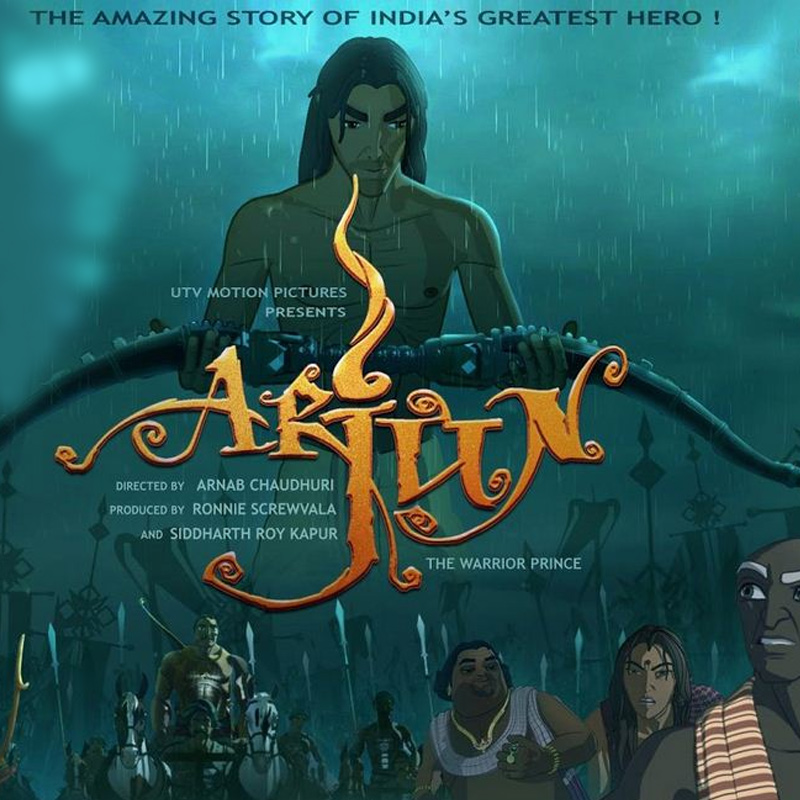
    MUMBAI: Now that mythological films can no longer be made for mainstream, they provide ample material for animation films. Indian mythology is full of heroes so there is no need to create more. Arjun is one such here. Here the character has been singled out from the five Pandavs and the Mahabharat to tell his story alone.


    Producer: Ronnie Screwvala,Siddharth Roy Kapur.
    Director: Arnab Chaudhuri.

    The cousins, Pandavs and Kauravs, are under the tutelage of Guru Drona in mastering the art of warfare. During the archery lessons, the guru wants a bird roosting on the tree to be shot through the eye. While Arjun has only the bird‘s eye in his target, the rest of the pupils are not so committed. This, while establishing Arjun‘s mastery and his future as a great warrior, also shows the jealousy and deceit of Kauravs. In another contest, a chariot race, Duryodhan, the lead Kaurav, tries to kill Bheem, Arjun‘s brother.

    The film proceeds to tell the story of the Pandavs‘ banishment from Hastinapur to a barren place where they go on to build a beautiful kingdom called Indraprastha. But they are driven away from there too following a gamble in a game of choupad. They are banished to 12 years in exile and a year further incognito when they should not be recognised by anyone. In this duration, Arjun takes up a challenge at the Draupadi swayamvar and wins her as his bride.

    While building Indraprastha, the Pandavs have Lord Krishna by their side protecting them against evils perpetuated by Kauravs. The crucial time comes when Pandavs are on the last phase of their exile and Duryodhan tries all his guile to make them surface and be recognised so they can be exiled for a further 12 years. His ploy is foiled with the help from Krishna. The great battle of Mahabharat is not dealt with here.

    The story is told in a patchy manner. Also left out are parts about Kunti asking all brothers to share equally what they have brought home, which happens to be Draupadi. She is projected here as belonging only to Arjun. Also left out is the sequence about Draupadi‘s cheerharan. The other characters apparently do not merit introductions, as it is assumed that the viewer knows about them. The visuals are delightful. Musical score is functional.

    Arjun has its best chance at the box office over the weekend with IPL final game on Sunday being a formidable opposition to face.

    Noble effort falls short


    Producer: Hemendra Aran.
    Director: Gitanjali Sinha.
    Cast: Raghubir Yadav, Raj Tandon, Anaya Anand, Yashpal Sharma, Manjusha Godse, Kishor Nadalskar,
    Nitin Kerur, Aditya Sidhu, Gulshan Pandey.

    Yeh Khula Aasmaan deals with the dilemma of a teenager whose parents have gone abroad for work. The boy is left to find his own way in his pursuit of education, entry to IIT and life generally. Juxtaposed with this is the lonely grandfather who thinks the boy also needs to enjoy life in native India and tries to imbibe in him all things Indian, including the family passion of kite flying.

    Raj Tandon has to fulfil huge expectations of his UK-based parents, Yashpal Sharma and Manjusha Godse, who prefer the colour of the pound sterling over the rupee and migrate to UK. Tandon fails to get into IIT and also gets poor grades in high school. Dejected, he seeks solace under the care of his paternal granddad, Raghubir Yadav. This gives a purpose to the granddad, who has been leading a lonely life in Bhagalpur in a huge haveli ever since his son left.

    Raghubir Yadav picks up from where he left off when he used to dote on Raj Tandon as child. He wants his ward to wander in the wildness and enjoy the open skies. He puts him in the care of neighbourhood girl, Anya Anand. As the duo enjoy small town life and become closer to each other, the traditional kite flying competition and the running family rivalry between Raghubir Yadav and Gulshan Pandey resurfaces. Initiating Raj Tandon into kite flying and finally giving him the confidence to win is what Yeh Khula Aasmaan is all about.

    Even as the intentions are noble, the identification with today‘s metro generation is limited. Also the kite flying part is too long in an era of ‘instant‘. Gitanjali Sinha, who has embarked on a mission to promote films which find a balance between art and masala, has to make sure that her film caters to the money-spending viewer in cities. Alas, kite scenes don‘t pass the scrutiny of the lover of this sport. Nonetheless, her eye for details of small town life is praiseworthy.

    Music by Anand Milind is soothing but short of haunting. Dialogue is sensible. Editing needed to be crisper.

    Rakhtbeej is amateur on all counts


    Producer: Om Sai Jyoti Films.
    Director: Anil Balani.
    Cast: Maanas, Sayantani Nandi, Mansi Dovhal, Rajesh Khattar, Tinu Anand, K Jeeva, Sanjay Gagnani, Julia Dutta, Amanjot, Yatin Karyekar.

    Rakhtbeej seems to be one from the cottage industry of films that are made by an individual with his own resources to promote himself. Manas would normally pass for a trader or a shopkeeper but here he plays parallel roles of Abhay Singh Jatav and Ajay; the former a simpleton turned dacoit and latter as his son, a celebrity CEO in Mumbai (if such creatures do exist in corporate world). Though a few decades apart, both stories are told simultaneously.

    Ajay cracks the telecom domain deal for his company, which is distressing for the head of a rival company. Ajay has stolen a march over his rival by quoting zero charge for talking on cell phone since he expects his company to reap the benefits accruing out of other growing markets like tele-banking, SMS and so on. This makes Ajay not only win over his boss and boss‘ daughter‘s heart but also headlines in national dailies. The boss, Rajesh Khattar, appoints Ajay the new CEO of the company, in the process earning him an enemy in Dharam, a colleague.

    While the boss‘s daughter, Mansi Dovhal, may love Ajay, her love is one-sided because he has fallen deeply in love with Priya, a model he met on an ad shoot. He is unaware that Priya is a honey trap set up by Dharam to belittle Ajay in the eyes of the boss.

    The story of Abhay Jatav is on similar lines. He joins a dacoit gang after his father is killed and he is humiliated. When he sees the gang leader ill-treat other members who actually do all the hard work, he can‘t bear it. He kills the leader and is duly proclaimed the new leader by Julia Dutta, a fellow gang member, who loves him. However, Abhay Jatav has met and fallen in love with Amanjot.

    Both, father and son share same fate. But while the father‘s detractors succeed in backstabbing and killing him, the son Ajay is spared that fate. He survives and finds his lost love as well as the ‘celebrated CEO‘ post.

    Rakhtbeej is an amateur attempt on all fronts. Moreover, there is no glamour or beauty on screen and an item number by Rakhee Sawant only adds to the torture. It is an exercise in self-gratification.
  • IPL season 5 sees drop in ratings and TV ad rev

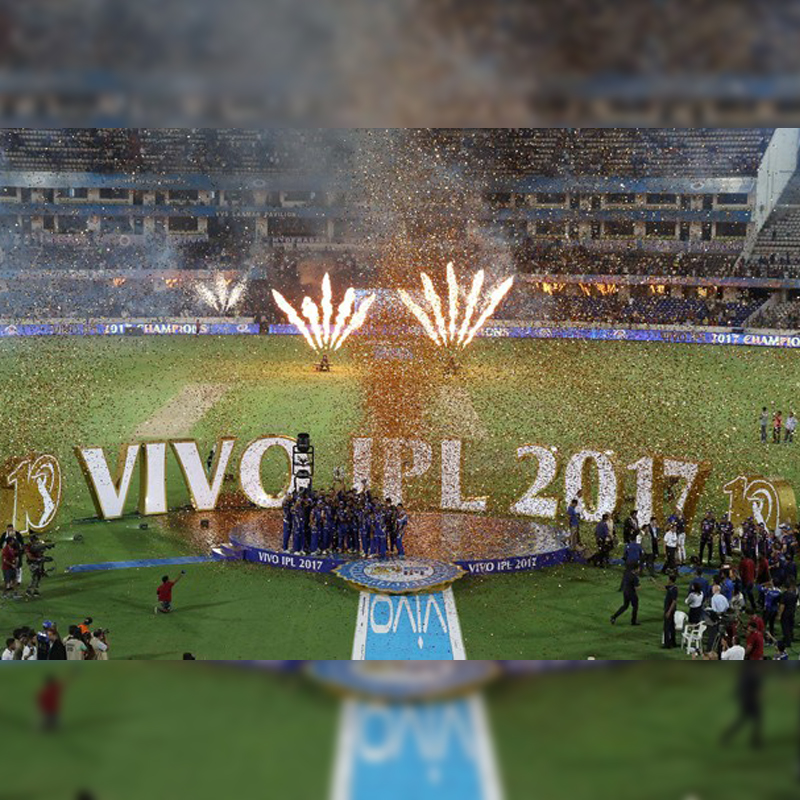
    MUMBAI: The drop in IPL ratings and inability to protect advertising rates has put Multi Screen Media (MSM), the broadcast rights holder, under pressure to take stock of the situation.

    The sixth edition of the IPL next year might be even more challenging for MSM as the television viewership for Indian Premier League has refused to go up despite several close encounters and record turnout at the stadium. When the IPL season began this year, Max had just six sponsors who had come on board at last year’s rate of Rs 500,000 per 10 second spot with Karbonn Mobiles being the only addition to the roster.

    However, the drop in viewership has led advertisers to ask for a cut in rates. Parle had reportedly bought ad spots for its new cookie brand, Happy Happy, at a 25 per cent discount over the premium of Rs 500,000.

    Even late joiners have cut deals at rates that are lower than last year‘s, implying that they are not disturbed advertising on the IPL despite a ratings fall. The sponsors who came on board have also benefited as they got a clutter-free exposure.

    Says Reliance Communications head marketing and branding Sanjay Behl, “There was no premium on ad rates for the IPL this year. We are happy with the RoI that we have got on our investment, although there has been an 8-10 per cent reduction in ratings. We had discounted ratings by 20 per cent before making our media plan.”

    The company had bought spots to promote Google-endorsed Android smartphone which is being distributed exclusively in India by RComm.

    The average viewership of the tournament is 3.27 TVR for 68 matches compared to 3.39 TVR last year, as per Tam data for C&S 4+ All India market. The cumulative reach is 159 million for the current season, less than the 160 million last year.

    For the first 57 matches, the average viewership stands at 3.3 TVR while the first 46 matches had notched up 3.4 TVR. The expectation was that the ratings would pick up as the tournament progresses but that has not been the case.

    “We will sit down once the event is over and analyse why the viewership has fallen. However, the event has more or less held up compared to last year. It has been the 4 pm matches whose ratings got affected,” says MSM president network sales, licensing and telephony Rohit Gupta. He, however, refuses to give any details about the ad inventory consumption.

    MSM has used a chunk of the ad inventory to promote its sister channels including Sony Six, the newly launched sports entertainment channel. The strategy is not to let the rates fall deep as MSM holds the IPL rights till 2017.

    Industry estimates place MSM‘s ad revenue from this season of the IPL at somewhere in the range of Rs 7-7.5 billion. In the previous edition, the IPL had fetched MSM Rs 9 billion from advertising. Gupta did not want to talk about the financials at all.

    According to a top level executive at a leading media buying agency, the IPL ad rates decreased by 10-15 per cent over the last year and the spot rates remained flat at Rs 425,000-450,000 per 10 second spot.

    Another media buyer estimates the broadcaster to earn upwards of Rs 7 billion as it has managed to sell its inventory as the tournament progressed.

  • IPL ratings stand at 3.3 TVR for 57 matches

    IPL ratings stand at 3.3 TVR for 57 matches

    MUMBAI: The fifth edition of the Indian Premier League is seeing a fall in ratings as the matches reach the middle cycle of the tournament.

    Data from Tam Sports C&S 4+ All India market shows that the event has got average viewership of 3.33 TVR for 57 matches compared to a 3.44 TVR for the same period last year and 4.65 TVR in 2010. The reach is also lower at 155 million compared to 157 million a year ago.

    For the first 46 matches, the rating was 3.4 while the reach was 151.8 million.

    Lodestar UN COO Nandini Dias said the agency expected the performance of this year’s edition to be lower.

    “The delivery of cricket over the past six to eight months has not been that high and we had expected the IPL to continue this trend. We were aware that the ratings would be lower than last year but we still went ahead and used the property. The performance has been in line with what we expected,” Dias said.

    The IPL this year is continuing the trend of previous years where the start is good but there is a lull in the middle. The expectation is that during the final stretch it will pick up momentum.

    Dias also feels that the recent allegations of illegal dealings at the IPL would have no impact on the tournament.

    “In the past also there have been controversies. But people have continued to watch the game. What has been seen in the past is that despite a controversy there is no loss in viewership. Indians love cricket,” she added.

  • ‘GEC programmers need to understand IPL viewing behaviour’ : Ormax Media co-founder and CEO Shailesh Kapoor

    ‘GEC programmers need to understand IPL viewing behaviour’ : Ormax Media co-founder and CEO Shailesh Kapoor

    Ormax Media, the consumer knowledge and consulting firm for the media and entertainment industry, has entered into its fourth year of operations with plans to expand its product offerings and business. 

    Launched jointly by research specialist Vispy Doctor and former Filmy business head Shailesh Kapoor in July 2008, the company boasts of growth across sectors, including television, radio and media agencies.
     

    In an interview with Indiatelevision.com‘s Gaurav Laghate, Kapoor talks about the trends in entertainment television across genres – GEC, Sports, English entertainment and infotainment.

    Excerpts:

    What are the significant changes you are witnessing in the Hindi GEC space, both in terms of programming and marketing?
    There has been a definite movement towards light-hearted treatment of content. Stories may still be based around families and social change, but the treatment is less heavy and emotional than what it was before. Meanwhile, reality shows are going through a tricky phase, with no new ideas coming up, except Satyamev Jayate. We seem to have saturated the formats available to us.

    How do you see GECs getting affected from IPL this year?
    There is definitely diversion of viewer attention, but like Bollywood, GECs too have realised that at some point, they will have to take the IPL on. The key is to identify which programmes to focus on during IPL and which to duck. Understanding of IPL viewing behaviour becomes critical for that.

    What do you think of all the sports entertainment properties that are coming up…like Super Fight League? Will they gain traction?
    Mixed Martial Arts, being presented through UFC and SFL, is a very popular International sport. It should surely find its audience.

    What are the trends in sports viewership? Are non-cricket sporting events growing?
    Yes, the growth is there, but slow. Marketing is the key. I‘m glad that a new channel (Sony Six) has launched, as any channel launch always gives impetus to sports in general.

    ‘Language feed is the way forward as C&S penetration will continue to increase in smaller towns. Subtitling has helped English language channels a lot, and so have language feeds for English infotainment‘

    Your view on declining viewership of IPL?
    All trends and data we have suggest IPL viewership is actually 20 per cent higher than last year. I will not like to comment on the ratings.

    Is too much cricket causing viewers’ fatigue?
    A lot of it depends on India‘s performance. Having said that, we have a fairly lean period over the next few months, so cricket should be back in its full glory later this year.

    What are the trends in English infotainment and niche programming? Do you see language feeds getting more eyeballs?
    Language feed is the way forward as C&S penetration will continue to increase in smaller towns. Subtitling has helped English language channels a lot, and so have language feeds for English infotainment.

    And what about programming trends in the English general entertainment space?
    The genre needs some Indian programming desperately. The issue is – are the costs affordable. But a good Indian show, especially comedy or non-fiction, can definitely prove to be a game changer.

    What do you think about English music channels – now three… Will they manage to get viewers share without appointment viewing?
    The genre is very niche and its business model is based largely on imagery, perception, innovations and client servicing. So viewership doesn‘t matter that much.

    How has been the year for Ormax Media in terms of revenue and business growth?
    2011-12 has been an excellent year. We showed 62 per cent growth in our revenue, and added 24 new clients. Our proprietary product line now stands at 19 in number. Film research has been a big growth area for us last year, and should continue to grow this year too. But overall, growth has been across sectors, including television, radio and media agencies.

    What all new clients and new tools and products the company has launched or is launching in the near future?
    We recently launched the third edition of our IPL ad tracking study, Day After Cricket. Our music countdown product ‘Heartbeats‘ is now available in a Kolkata edition also, where we track Hindi and Bangla music in the Kolkata market. Our flagship products Cinematix and Showbuzz recently went through major market expansions. Cinematix expanded from 6 cities to 16 cities, while Showbuzz expanded from 6 to 14 cities. In the coming months, we have a huge product launch lined up. Without revealing much, we can say that it will be a product every advertiser and media agency will find extremely useful and relevant.

  • IPL ratings remain flat at 3.4 TVR for 46 matches

    MUMBAI: The viewership for the first 46 matches (44 matches excluding two abandoned matches) of the Indian Premier League remained flat at 3.40 TVR, despite the improved quality of matches and several close encounters.

    The cumulative reach of the current season of IPL matches stood at 151.58 million, according to Tam data for CS 4+ TG All India market.

    The season 4 of the IPL had garnered an average viewership of 3.54 TVR with a cumulative reach of 152.72 million. The season 1 of the tournament followed by season 3 had the best performance garnering 4.72 and 4.53 TVR respectively.

    The IPL ratings have gone down below the 3.5 TVR for the first time, marking a new low in its viewership.

    Earlier, the IPL had notched an average viewership of 3.41 TVR for the initial 36 matches with a cumulative reach of 144.9 million.

    The first 27 matches of the IPL had managed a viewership of 3.53 TVR, down from 3.88 TVR a year ago. Even the cumulative reach has taken a beating, down from 140 million last year to 137 million.

    The average viewership for the first seven matches was 3.76 TVR which further fell to an average of 3.65 TVR for the 16 matches.

    Explaining the falling viewership of the IPL, Percept Media Lab had released an analytical report according to which the IPL viewership has stabilised after going through a ‘level shift‘ or sudden drop in viewership.

    The report also stated that the viewership has dropped since the initial attraction and draw of sports combined with glamour has worn off, and there is no longer a ‘novelty’ around the IPL concept.

    It also established that the share of Female viewers for SEC ABC has dropped to 10 per cent from 13 per cent in IPL season 4 even as it retained its core Male TG.

  • IPL sees drop in female viewership: Percept

    MUMBAI: The viewership of the Indian Premier League has stabilised after going through a ‘level shift‘ or sudden drop in viewership, according to an analytical report by Percept Media Lab.

    Although the initial three weeks of IPL season 5 have attracted slightly lower ratings/GRP as compared to IPL season 4, the trend and statistical norms seem to suggest that any further steep fall or increase in viewership will be arrested and it is likely to stabilize around 30-35 GRPs/match.

    This is normally seen with any time-series data, the report added.

    During season one, the IPL generated an average ratings of 45 GRPs per match. Currently, the same figure for the same period for IPL-5 stands at 32 GRP’s.

    The report states that the viewership has dropped since the initial attraction and draw of sports combined with glamour has worn off, and there is no longer a ‘novelty’ around the IPL concept.

    While the IPL has retained its core Male TG, the share of its Female audience has shrunk considerably. The share of Female SEC ABC has dropped to 10 per cent from 13 per cent in IPL-4. In fact, the gap between GEC shares at 8 per cent and IPL shares have narrowed down considerably.

    For Male SEC AB segment, the IPL still accounts for 20 per cent of their viewing time (Channel shares), higher than the cumulative shares of the GEC genre, the report stated further.

    There has also been a decline in both, advertisers and the ad volumes in the last two IPL seasons.

    The report reveals that IPL season 4 saw only one per cent growth in ad volumes and 10 per cent growth in advertisers compared to IPL season 3, whereas IPL season 5 has witnessed a drop of 18 per cent in volumes and 31 per cent in advertisers.

    The increasing cost of advertising coupled with downward level shift has also kept advertisers away.

  • Indian cricket fans have tribal passion akin to mature soccer markets: Study

    Indian cricket fans have tribal passion akin to mature soccer markets: Study

    MUMBAI: The cricket fan base in India is very homogeneous, making it easier for advertisers to address a mass nationwide reach.

    There is another deeper benefit for marketers taking to cricket, a research by Octagon Worldwide pointed out. Unlike the UK where Test and T20 cricket had inherent brand images that are diametrically opposed, in India the perceived image profile of T20 is very much aligned with Test cricket. This makes it easier for Indian sponsors to create an effective and efficient consumer-relevant pan-cricket activation plan.

    Test cricket fans have a similar tribal passion that is found in mature European and South American football markets. The overall Test cricket fan profile proved to be very tribal, with a clearly defined hierarchy of factors.

    Said Octagon Worldwide chief strategy officer Simon Wardle, “Team devotion is the primary factor behind the passions of India‘s Test cricket fans. In fact, in many ways it is similar to the tribal Passion Drivers profiles that we have found for football in mature European and South American football markets. However, it was very different to the Passion Driver factors revealed by similar studies in England, South Africa and Australia where there was no dominant factor.”

    Cricket offers tremendous activation opportunities that Indian marketers can leverage upon. “We identified four different types of cricket fans and three of those four fan typologies had Team Devotion as the number one factor. This high indexing of the Team Devotion factor is good news for Indian marketers using test cricket as a marketing platform since it suggests activation strategies leveraging team assets and equities will resonate best with test cricket fans,” said Simon Wardle.

    Research among India‘s avid cricket fans conducted recently by sports marketing firm Octagon Worldwide aims at increasing the understanding of the cricket fan base and offers positive, actionable insights for marketers using the sport as a platform to reach their consumers.

    The latest findings result from Octagon‘s Passion Drivers research initiative that enables sponsors to develop compelling and relevant sponsorship leveraging programmes based on a quantified understanding of why fans are so passionate about their favorite sports.

    Wardle, the creator of Passion Drivers, said that the research examined both Test cricket and the Indian Premier League (IPL).
    Cricket‘s ability to attract corporate sponsors is not surprising. Said  , “By understanding what drives cricket fans‘ passions and how that, in turn, shapes their attachment and desire for products, corporate cricket sponsors can focus not just on generic fans, applying â€?one-size-fits-all activations, but can focus on the factors that will truly motivate fan behaviour.”

    Octagon began its proprietary research into sports fans‘ passion seven years ago and has since studied some 75,000 avid fans of over 30 sports in 13 countries. The Team Devotion factor is one of 12 primary factors that drive fan passion for sports, and is defined as, fans‘ love for their team bordering on obsession and unquestioned loyalty.

    Other factors include:

    Active Appreciation: Fans‘ ability to call upon personal experience playing the game now or at some point in their lives.

    All Consuming: Power of the sport to draw the fan in to the point where nothing else matters while the game is being played.

    Gloating: Appeal of reveling in the agony of rival fans when their team loses.

    Personal Indulgence: Sport is seen as a selfish reward—an excuse for “me time.”

    Player Affinity: Fans‘ interest in relating to sports stars as people. Player Excitement: Pure hero worship and admiration for their
    athleticism and skills.

    Love of the Game: Pure enjoyment of the sport and competition regardless of who is playing or who wins or loses.

    Nostalgia: Combines the history of the sport and personal recollections of watching the sport growing up.

    Sense of Belonging: Being part of a group of like-minded fans (of the same team).

    TV Preference: How fans prefer to follow the sport. TV often provides a more satisfying experience than attending in person or participating.

    Talk and Socialising: Sport as a topic of conversation and a means to build friendships.

    The importance of these factors in terms of the degree to which they contribute to fan passion varies significantly from sport to sport and based on this study, Octagon has discovered that a sport‘s fan base in a particular country can include fans that follow the sport for very different reasons.

    “With this new insight, corporate sponsors of cricket in India can build unique, relevant compelling leveraging programs that connect to the passions of their customers,” Wardle concluded.

  • 36 IPL matches notch 3.41 TVR

    MUMBAI: The IPL ratings have gone down below the 3.5 TVR for the first time, marking a new low in its viewership.

    According to TAM data (for CS4+ TG, All India market), the IPL has notched an average viewership of 3.41 TVR for the initial 36 matches with a cumulative reach of 144.9 million.

    Comparably, the average ratings for first 37 matches in IPL season 4 was 3.67 TVR despite the event happening in the backdrop of a largely successful ICC World Cup, which India won after 27 years.

    In 2010, the rating for the league was at its high with the first 38 matches garnering 4.61 TVR. The inaugural edition of the IPL was the most successful with an average rating of 4.84 TVR for the first 38 matches.

    The first 27 matches of the IPL had managed a viewership of 3.53 TVR, down from 3.88 TVR a year ago. Even the cumulative reach has taken a beating, down from 140 million last year to 137 million.

    The average viewership for the first seven matches was 3.76 TVR which further fell down to an average of 3.65 TVR for the 16 matches.

  • ‘No concrete offer has come from Jain Group’ : Rajasthan Royals CEO Raghu Iyer

    ‘No concrete offer has come from Jain Group’ : Rajasthan Royals CEO Raghu Iyer

    Rajasthan Royals recently grabbed media attention for a reported $200 million offer from Kolkata-based Jain Group of Industries to acquire majority stake. The deal failed to fructify and the Indian Premier League (IPL) franchise is busy working out its future growth plans.


    Amid controversies over shareholding issues, Rajasthan Royals has furiously pursued its low cost model and is one among the few franchises who have broken even. It has kept its costs under control even as revenue from central pool and team sponsorship has grown year-on-year.


    Despite being profitable, the franchise has had its fair share of challenges, the biggest one being the termination of franchise agreement by the BCCI. While the franchise was reinstated into the IPL after winning the legal battle, the arbitration with the BCCI is still on.


    In an interview with Indiantelevision.com‘s Ashwin Pinto, Rajasthan Royals CEO Raghu Iyer shares the franchise‘s journey and its plans to become a successful sporting franchise.


    Excerpts:

    Q. Is it true that Rajasthan Royals was offered $200 million for diluting majority stake?Are you now waiting for the BCCI‘s permission before cashing out?
    Many offers keep coming our way. Interested parties come and talk to franchise owners. One of them was from the Jain Group, but it is not on the table anymore. So far no concrete offer has been made. We are not waiting for the BCCI’s permission to sell the franchise.

    Q. Has Rajasthan Royals broken even?
    We have. We run a tight ship and are in the black. We have not gone berserk on buying players, which is a big cost area. You need to spend only where it is necessary.

    Q. Does the arbitration process with the BCCI make it harder to plan long term?
    No, the arbitration process continues. Our operational business also moves along.

    Q. Are Lachlan Murdoch and Suresh Chellaram silent investors or are they active in the team‘s functioning and operations?
    We are a professionally managed franchise and owners don’t get into day to day activities.

    ‘Very seldom does a property come and take over the entire playing field. The IPL has changed the business of sport. It is one of the largest brands that India has created and is one of the largest sporting brands globally‘

    Q. What impact has the IPL had on the business of cricket and sports marketing?
    Very seldom does a property come and take over the entire playing field. The IPL has changed the business of sport. It is one of the largest brands that India has created and is one of the largest sporting brands globally. If you look at the various stakeholders, everybody has gained significantly from it.


    The most important part is that the domestic cricketers have a platform to perform and also an opportunity to earn a very decent living. You can earn between Rs 1-3 million which is a decent amount of money for somebody who five years back would have struggled to make good money. Next comes the broadcaster Max who is very happy and has really raked in the moolah. Sponsors have been happy like DLF.


    The franchisees bought into the league and did not think that it would grow so much. The growth has been helped by the investment that each franchisee has put in. The paying public are also happy. One thing that is significant for this year’s IPL is that all the stadiums are pretty much full. Our home matches have been sold out. Barring one odd match here and there, most matches are full.

    Q. But the ratings this year are showing a downward trend. Is this because the IPL has lost some of its novelty sheen and matured as a property?
    I wouldn’t call it a downward trend. The cumulative reach has plateaued at the 140 million level. In terms of ratings, even the average of 3.6 is a success. Name one property on television that delivers this rating day in and day out – whether it is at 4 pm or 8 pm. Of course, if you compare it to the initial years where the IPL managed a 4.8 rating, it is low. I will give you the example of KBC which launched with a rating of 20 and then settled down at a rating of 5-6. Even soaps like Kahaani had a rating of 10 and then settled down.


    I wouldn’t say that the IPL has matured as other leagues have been around for 40-50 years. The IPL is still a baby. The fact of the matter is that with so many ups and downs, it is still delivering ratings and advertisers are coming in for the teams, Max (the official broadcaster) and the BCCI. This shows that the IPL is heading in the right direction.

    Q. In hindsight was adding two more teams a possible mistake as a longer tournament means increasing the danger of viewer fatigue? 
    I don’t think that there is a viewer fatigue at play. Fans are flocking to the stadiums for tickets. A rating of 3.5 is not fatigue. There are other factors – perhaps, there is fragmentation of media. And it is not that ratings have dropped drastically – it is a marginal drop in the initial period. The number of close matches has increased and if you observe the buzz, people are following the league.

    Q. Do you feel that it might be a mistake to hold an auction every few years which leads to confusion among fans regarding who is playing in their team?
    I wouldn’t call it a mistake. Having an auction is so that the teams have an even playing field. The idea of the auction and a salary cap was that all the franchises taking part would have an equal opportunity to pick up players and build decent teams. In order to address viewer confusion, the IPL introduced player retention. As a franchise what we would want is for the fans to remember Rajasthan Royals for the brand of cricket that we play.


    That is the challenge that is not unique to us. It is present for all teams. Our motto is find a way to win from anywhere. We did this under Shane Warne. This character was shown in the match against the Deccan Chargers when we chased down an almost impossible score. We want fans to remember our brand of cricket rather than this being Shane Warne’s team or Rahul Dravid’s team.


    The underdog story was something that people identified with. People thought of us as underdogs. We have built on this story. We have romanticised the story of us winning from nowhere. Over the last four years from research, we realised that fans remember that we have the X factor that is mercurial at times and can surprise the opposition. This is something we want to build on.

    Q. Is it fair to say that Chennai and Mumbai are at an advantage in terms of fan following because they have managed to retain the nucleus of their sides?
    These teams along with Bangalore are at an advantage due to the cities. The people in those cities are loyal and passionate about their team and this is evident from how the local film industries are passionate about their team. The fans there are more loyal than the fans in some of the other cities. Player retention was allowed to all the teams. Some franchises chose to retain. We chose to retain Warne
    and Watson as we felt that those were the two players around which the Rajasthan Royals name was pretty synonymous with.

    Q. Does the IPL Governing Council need a franchise representative?
    It would be nice if the IPL governing council had franchise representatives. Having said that, the IPL has interactive workshops with the franchises. As long as the IPL Governing council is addressing our problems, it is fine. The IPL makes it a point to ensure that franchises points are addressed.

    Q. One thing that is plaguing the IPL is the lack of fan engagement activation being done by franchisees during the off season. It is just about two months and then it is forgotten. Why isn‘t more being done
    in this regard?

    This issue has been brought up in the workshops. To be fair to the IPL, they have taken cognizance of this and have promised to address this. One challenge is the lack of availability of players. There is the Champions Twenty20 League but the franchises who have not qualified have to think of interesting things to keep their brand alive. We tied up with a school in Jaipur and ran a school tournament in November.


    Then in January we tied up with the Jaipur Marathon. Ideally it would be great if we could have Rajasthan Royals B and C teams playing cricket. This would keep the younger boys well oiled. Bit cricketers have commitments. They either play in the Ranji Trophy, Duleep trophy or the national side. It is not an IPL issue; it is a cricket issue. Franchises try to get around this. Delhi Daredevils has a soccer tournament. KingsXI Punjab does a talent hunt.

    Q. What marketing initiatives have the Rajasthan Royals been doing to boost fan loyalty this season?
    We started off with Rahul Dravid as the captain. Once he retired, his brand value shot up to a different level. We piggy backed on this to some extent. Locally in Rajasthan we did on-ground activities. The aim was for the fans to meet and greet players. We also had a huge bunch of local Rajasthan players in the team which was not there earlier like Pankaj Singh and Ashok Maneria. Along with Dravid, we took them to hangouts like malls where they could meet fans.


    In terms of above the line we always look at support from our sponsors. There is an HDFC ad which is about the values that Rajasthan Royals brings to the table. It is about promoting youth, it is about Dravid increasing the challenges to the youth within the team. It is about how the youngsters rise to the challenge. We are a team that promotes youngsters. We have 19 partners, up from 17 last season. Each one activates it in a different manner. TCS is doing a different activation for instance.

    Q. What was the brief given to FoxyMoron?
    Social media is growing in importance. All franchises have focussed on this area this season. This is the best way to keep in touch with fans and get responses. Post the player auctions, we got fan responses about whether they were happy or not happy with our picks. Post the sale of Ross Taylor, some fans were disappointed and wrote in.


    We are number four among IPL teams in terms of social media. So for a Mumbaiite if the first most popular team isMumbai Indians, the second is Rajasthan Royals. FoxyMoron’s role is to ensure that content remains fresh.

    Q. Has this been a challenging season in terms of mopping up revenues due to the economic slowdown?
    We have a hard working team and have managed good results. We have got a 15 per cent hike in sponsorship revenue. To be honest, it did take some amount of selling to get in the sponsors. We have 19 partners brands on board including Ultratech, Puma, Pepsi, and HDFC Life who have come back as sponsors. There was a question mark initially about how good the IPL would be after last year. But this year we are happy about how things have gone so far.

    Q. How do you break through the clutter to offer maximum returns to sponsors?
    Creative initiatives come from the clients as they want to break clutter in their category. For example, Ultratech Cement is with us and in their category there is only one company associated with another franchise in a smaller manner. In life insurance, HDFC Life is with us and I don’t see any brand in that category in the IPL. They take the trouble to do some really good advertising. Clients are with
    us not just as advertisers but also to gratify their sales force and distributors.


    Another important thing is that four local brands have tied up with us which is something that was not there last year. This shows the penetration that the IPL and Rajasthan Royals give. Bikajee is with us as a snack partner and it was a matter of prestige for them to tie up with us. They are doing good stuff in the interiors of Rajasthan which will in turn grow our brand.

    Q. What is the split in the local revenue streams?
    The trading window is starting to generate good revenue. It can become a significant area if teams look at this in a serious manner. Ticketing has been fantastic. Sponsorship, though, accounts for 60 per cent of revenue, followed by ticketing. Licensing and merchandising is the item that should show exponential growth this area. It is waiting to explode. I don’t think that it has done that for any franchise so far. To go back to your earlier question on how to keep the brand alive throughout the year, this is it: L&M has to come into play.

    Q. What is the split between central and local revenue and by when will local revenue dominate?
    55 per cent of our revenue comes from the central pool. The key is licensing and merchandising. Once that takes off, then local revenue will go past what we make from the central pool. The healthy share of television revenue will hopefully still be there. It will take four years for licensing and merchandising to grow.

    Q. What are the plans in terms of growing licensing and merchandising?
    The first plan is to keep the franchise brand alive across the year because if you sell merchandise for just two months, then it will not work. It has to be available for at least 10 months in a year. The second issue is to make merchandise more affordable.


    Teams come out with Jerseys for Rs 800-1000. I don’t think that Indians can afford this. It has to come down to Rs 200. For the next season, we want to tie up with a merchandise partner. Puma has been our merchandise partner and they have been pushing our brand, but the challenge is to penetrate into the interiors of the market to ensure that merchandise is sold.


    There are different reasons why franchises have not turned licensing and merchandising into a serious revenue stream so far. In the first year, nobody knew about the IPL and in the second edition, the IPL went to South Africa. This is the first year where franchises have been able to sit down properly and think about how they want to go about things. Licensing and merchandising is a long term play.

    Q. Have you approached ticketing and hospitality in a different manner this time?
    We brought down the ticket prices starting at Rs 200 for stands that are price sensitive. Some of the hospitality tickets are at Rs. 4000-5000 compared to previous years when it was only Rs 30,000-40,000. For the first four matches, we really stripped it down. We needed to see what the off take would be. We have done well.

    Q. After this year, central revenue contracts (like DLF‘s deal) come to an end. How do you see the BCCI faring in terms of stitching together new deals with more value, given that viewership has fallen?
    The IPL is a unique property and platform. It is something that people will be willing to pay a premium. I don’t see the BCCI not being able to get in sponsors at the value that they are forecasting.

    Q. Champions Twenty20 League doesn‘t seem to be going anywhere in terms of viewer interest despite getting Bollywood stars to promote it. What is the reason?
    It will take some more time to deliver as far as ratings are concerned. The quality of cricket is excellent. They will get in ratings when the same foreign teams play in it more often.


    Then the local audience will identify with those teams. One team that will get a big fan following is Trinidad and Tobago. They have been coming and doing pretty well. This season will be their third season. If a team comes in three to four times, fan following will go beyond the IPL teams.

  • IPL’s ratings make it tough for Max to post ad rev growth

    MUMBAI: The fifth season of the Indian Premier League is settling down to lower ratings than its previous edition, making it tough for Multi Screen Media to protect its ad revenue of Rs 9 billion from the telecast of the event on Max.

    The first 27 matches of the IPL have garnered a viewership of 3.53 TVR compared to 3.88 TVR a year ago, according to Tam data (for CS4+ TG, All India market). The cumulative reach has also gone down from 140 million last year to 137 million.

    Despite improvement in competitiveness with several close finishes, the ratings for the IPL have gone down. For the first seven matches, the viewership was 3.76. This further fell to average TVR of 3.65 for 16 matches.

    The IPL, however, continues to be a profitable property for MSM and cricket‘s highest revenue earner. “Media may file whatever they want to, but if you look at the top 10 programmes you will get your answer,” said IPL CEO Sundar Raman.

    According to GMR Sports marketing head Hemant Dua, the drop in viewership is a natural progression in the life of a sporting league. He also believes that people have unfair expectations from the IPL.

    “I think the IPL is maturing as a league and there will be times when the ratings will plateau a bit or will increase but overall the IPL has done well this season and attendance for matches has been good. The expectation from the IPL is high but one should understand that the ratings are strong enough,” said Dua.

    The fragmentaion of the Indian media landscape has not helped the IPL to better its ratings this year. According to MEC South Asia COO Shubha George, the IPL ratings have been in line with expectations.“We had predicted a drop in viewership, but if you look at the ratings they are still better. After all, which property will give you a viewership of 3.5 TVR and a pan-India reach,” he said.

    MSM has, however, stayed firm in not dropping the rates as it fears that it will make it difficult to up the rates next year if the benchmark is set low this time. Max has six sponsors on board who are forking out between Rs 450,000-500,000 per 10 second spot. The broadcaster has managed to sell only 70 per cent of inventory with a large part of the FCT being used for self-promotion.

    Attempts to reach MSM president network sales, licensing & telephony Rohit Gupta proved futile till the time of filing this report.

    For MSM to substantially boost its ad revenues from the IPL, ratings will have to improve. “They won‘t command a premium on average rating of 3.5. But the IPL as a property still remains a valuable proposition,” said a media analyst who did not want his name to be revealed.