Tag: IPL

  • Hungama Digital Services to manage SunRisers’ digital activities

    MUMBAI: Hungama Digital Services (HDS) will be working on the complete online and social media content for SunRisers, an IPL team owned by Sun Group.

    Incidentally, JWT, which won the creative duties of the new team, earlier this year acquired HDS and works with them to offer digital marketing and social media solutions to its clients.

    Sun Group, the owner of the Hyderabad IPL franchisee, unveiled the name and logo of its Hyderabad IPL team, designed and conceptualized by JWT. The Sun Group named its IPL team, ‘SunRisers‘ symbolizing birth of a new life.

    JWT India has designed the Hyderbad team‘s logo, team identity and will be working on the entire 360 communication for Team SunRisers. The jersey launch will be closer to the IPL season.

    JWT Chennai VP and general manager M L Raghavan said, “The brief to the agency was simple. ‘The name and logo of the team is being revealed on the 20th at Hyderabad. How best can you bring this alive?‘ Senthil and his team came up with the wonderful idea of using silhouettes to bring alive the power of the sun and the soaring eagle. Once the idea was cracked, the film was completed in a record four days along with digital initiatives like getting the website up and running, creating the Facebook page and a Twitter account.”

    According to the agency, the ‘SunRisers‘ logo depicts an eagle soaring high, looking into the core of a rising sun, absorbing the colors of the bright star to become ‘one with the sun‘. “The new identity encapsulates the valor, chivalry, endurance, independence and fearlessness of the eagle synthesising with energy and radiance obtained from sun,” the agency said.

    Sharing his thoughts on the conceptualisation and execution of ‘chanthem‘, the first brand film for SunRisers JWT India NCD Senthil Kumar, said: “The chanthem, is a visual idea amplified by a rocking chant created by Swarathma The Band. “Shooting in the morning magic light hours only i.e. shoot only when the sun is rising between 5am and 7am for a few days until we got the right shots but since time was limited we captured a combination of natural light and studio light and put this film together with some intense post production. It was a step up moment for the production team as well.”

  • ‘Our goal is to make UFC the No. 2 property for Six after IPL’: UFC Chairman and CEO Lorenzo Fertitta

    ‘Our goal is to make UFC the No. 2 property for Six after IPL’: UFC Chairman and CEO Lorenzo Fertitta

    Founded in 1993, the Ultimate Fighting Championship (UFC) has gone on to become the largest Mixed Martial Arts brand in the world. Having established itself in markets like US, Canada, and Brazil, the UFC has made its first big push in India through a broadcast deal with Sony Six.


    Apart from having a television presence in the country, UFC also plans to build the sport with on-ground activities and talent hunt initiatives. Its ultimate aim: to make UFC the second biggest property for Sony Six after the cash-rich Indian Premier League (IPL).


    Indiantelevision.com‘s Ashwin Pinto caught up with UFC Chairman and CEO Lorenzo Fertitta to find out the organisation‘s plans for India and the strategy it will be following to grow the sport in the country.


    Excerpts:


    Q. When you bought UFC in 2001 what was the aim and to what extent has this been achieved?
    A. At that time what we wanted to do was create a combat sport organisation that had some structure and brand around it. We looked at boxing as we have always been boxing fans. Big fights occur in Las Vegas.


    But what we found is that boxing was very fragmented. There was no brand and structure which a lot of times prevented the sport from putting on the fights that fans wanted to see. So we saw an opportunity in the UFC to take combat sport to a new level because there would be an organisation, structure and a brand.


    Our vision was to take the UFC from a niche sport to a global brand. We wanted to create a great entertainment product for the fans. We have accomplished our aim. We are the largest combat sport organisation. We are broadcast in 150 countries to a billion homes in 22 languages.


    Q. You once said that when you bought UFC it was the worst brand in the US because of all the negativity. Could you talk about the strategy followed that helped the company turn things around?
    A. Firstly we developed rules and regulations that we now call Unified Rules of Mixed Martial Arts. We worked with various state governments to have them recognise those rules and UFC as a sport. The third thing was really promoting the athletes and presenting them as being world class. The previous owners really focussed on the violence and spectacle of the sport.


    We focussed on the athleticism of the fighters and the competition. The aim is to have athletes compete in a safe way. The sport is a combination of martial arts like Judo, Jujitsu, Boxing and Taekwondo.


    Q. As per research how is the UFC brand perceived in India and globally today?
    A. Globally we are looked at as the market leader in mixed martial arts. We are seen as the premier organisation. In India it is too early to tell. I don’t think that there is a lot of awareness in India about mixed martial arts. I think that people are intrigued about the success that we have had around the world. The question is can we replicate that success here?


    Q. What would you say is your USP vis-a-vis other events like Bellator and boxing?
    A. Relative to other sports, what we do is put on fights that fans want to see. All fighters are contracted by us. It is easy to put matches together. Our aim is to never have a mismatch. So we put fighters in an event who are evenly matched. Most fights don’t go to a decision. Matches are fast paced and you have outcomes that are very definite and defined.


    Boxing is one dimensional. In the UFC, on the other hand, you can grapple, kick, punch and put the opponent in a submission hold. It is interesting from a strategic standpoint and more fast paced. That is why younger people like it. In 2006 UFC overtook boxing as the biggest provider of pay per view events. Last year in November over nine million Americans watched a heavyweight fight on Fox. Bellator would be lucky to get 90,000.

    ‘We liked the approach that Sony was going to take. We also liked being affiliated
    with the IPL. And we wanted to be on a sports channel‘

    Q. So is MMA more mainstream compared to a decade ago?
    A. Without question! In the markets where we have a presence in, it is a mainstream sport. We produce more than 30 live events in a year.


    Before we acquired the UFC mixed martial arts was a fringe attraction, largely unregulated and unable to appear even on pay per view platforms. All that has changed.


    Q. MMA like soccer is a sport that works everywhere, unlike cricket which works in some markets, NFL which is only present in the US and baseball which is only present in the US and Japan. Is that because viewers can identify with the aggression and competitive nature of the fighters?
    A. I think the reason is that it is simple and easy to understand. A lot of other sports have rules. If you have not grown up watching cricket or the NFL, you will never understand how the game is played.


    When you put two athletes in the Octagon and make them compete everybody gets it. It is not hard to explain.


    Q. Is there an entertainment quotient in the UFC or is the focus just on the sport?
    A. The way we present the product is very important. We spend a lot of money putting on a big show. At the end of the day it is the fighters, the action and the quality of the fights that sells. We broadcast all our events in HD. We have aired some events in 3D. We look at emerging technologies to make the viewer experience better.


    Q. What revenue growth does UFC expect this year and how much comes from television fees?
    A. Sixty per cent comes from television fees. Then you have live ticket sales. Beyond that you have sponsorship.


    The US accounts for over half our revenue. Canada would be second, Brazil third and Europe next.


    Q. Which are the top three markets for UFC?
    A. The US is number one. Canada is number two and Brazil is number three. We see a lot of similarities between Brazil and India. Both are emerging economies. There is a growing educated class of younger people who are looking for a new and exciting sport. We think that is what the UFC represents.


    Q. How big is Europe?
    A. Europe is big, particularly the UK as well as the Baltic states like Sweden and Denmark where the UFC is very popular. We are just starting in Italy, France, Spain and Germany and we plan to bring events to
    Central Europe sometime next year.


    Q. Where does Asia fit in the scheme of things?
    A. 2013 and 2014 are important years for us in Asia. We did our first event in February in Tokyo and it was a success. Our second event was in Macau in November. Then we want to do events in the Asian capitals like Shanghai, Singapore, Taipei, Hong Kong and Kuala Lumpur.


    Q. How did the deal with Six come about and what are the terms of the deal?
    A. This is a four-year deal. Hopefully we will be able to extend it and make it a long term relationship. Our goal is make UFC the number two property for Six after the IPL.


    We came to India two years ago. We started looking here and have worked for a long time. We have had interest expressed from every major media company here. We have had discussions with companies like Zee, NDTV and Star.


    We liked the approach that Sony was going to take. We also liked being affiliated with the IPL. And we wanted to be on a sports channel.


    Q. What is the gameplan to grow the UFC brand in a country where WWE is hugely popular?
    A. When we started the UFC, WWE was popular in the US. But people figured out quickly that while we were real, the WWE was fake. We were, thus, able to migrate a lot of fans over to the UFC.


    In India, we see the same thing happening, particularly with the younger demographic base. Once they see how exciting the UFC is and that it is real, they will migrate from WWE.


    The gameplan is firstly using the distribution of Six and airing live events. They also use our library to educate fans on what is going on in the UFC. Then there is the reality show ‘The Ultimate Fighter’.


    This will develop Indian fighters and is the most important thing for us. In order to be successful, we have to have Indian fighters that can compete at an international level. We appreciate Sony‘s dedication in producing ‘The Ultimate Fighter: India’ with us.


    Q. Could you talk more about Ultimate Fighter?
    A. This is a reality show which is in its 17th season. We have done versions in the US, Australia, Brazil and the UK. It is about 16 young fighters who live in a house together. They train together. At the end of each episode there is a fight and the winner progresses. The event takes place over 13 weeks.


    The Indian edition takes place next year. The two semi finalists fight together to determine who gets the UFC contract.


    Q. When does the first season kick off?
    A. We are looking at a time frame of September next year. We will spend the next six months looking at different fighters around the country and do casting calls. In terms of venues, Mumbai and Delhi will be important. We will be looking at facilities that a city can provide.


    Q. How did the idea of doing reality television come about?
    A. When we bought the brand, it was tarnished. People associated it with violence. We knew that we needed to do something that was different that explained why it was not about violence and why these athletes were so special.


    We created the reality show so that people were not just watching a fight. They were watching how these guys lived, interacted, what their background was, their family life, and how they train. It helped change the perception of the sport. This show has changed the face of mixed martial arts.

    ‘When we started the UFC, WWE was popular in the US. But people figured
    out quickly that while we were real, the WWE was fake. We were, thus, able to migrate a lot of fans over to the UFC. In India, we see the same thing happening, particularly with the younger demographic base‘

    Q. Is there cross viewership happening between UFC and WWE as athletes like Brock Lesnar and Ken Shamrock have competed in both?
    A. There is some cross viewership. Our TG is males 18-34. WWE skews a little bit younger – teenagers. I see UFC’s appeal spreading across India including in the wrestling belts in the rural areas.


    Q. Has UFC considered launching its own TV channel?
    A. Not yet! We felt that we needed to make an investment and grow the brand before making this move.


    Q. What growth has there been in the amount of content UFC offers in the past three years?
    A. We have increased it significantly. A lot of this is driven by our television deal in the US with Fox. We went from being on a one cable channel which was Spike TV to being on the Fox platform which includes programming for four networks that they own. Our programming has tripled year on year.


    We felt that there was a demand that people wanted to see more fights. We wanted our product on multiple platforms in the US. We are on a free to air channel Fox, on a cable channel FX and on a smaller sports cable channel which is called Fuel TV. Hitting every tier within the US media market was important to help us continue to build our brand.


    Q. What challenges does the economic slowdown pose for UFC?
    A. We have been fortunate that we have not been affected very much by the economy. The reason for that is that no matter how bad things are, people still want to consume entertainment. All sports whether it is
    the UFC, NFL, NBA are doing well.


    Q. Sports entertainment outfits like Super Fight League have come in. How do you think it will push the sport in the country?
    A. It will boost popularity. Competition is a good thing. We come in as a premier organisation which if we succeed will help other leagues.


    Q. There is a view that UFC has followed NBA’s approach to grow which lies in buying rival promotions. Is that a fair assessment?
    A. I don’t know that we are following anybody’s strategy. We have over time acquired a number of leagues to get their athletes over to the UFC. We also got their library. Strategically it made a lot of sense. The biggest acquisition was Pride Fighting Championship which was based out of Japan.


    We also bought Strikeforce which was based in the US. Female fighters take part here. We could license these rights to Six as well. There is potential for that. As all these athletes are under one company it allows us to put on fights that fans want to see.


    Q. How do you view new media platforms like Internet and mobile?
    A. Our core customer base is very proficient online. They consume a lot of their entertainment on YouTube. They are on Facebook and Twitter; it is important to our strategy. We have a large portion of our library online. You can subscribe and go back and watch fights, interviews, updates etc. We try to use Facebook, Twitter to market UFC and spread the word about the upcoming fights.


    Q. Has China been a difficult market to crack due to government regulation?
    A. We are taking it very slow. We have not had any issues or any problems. China is the birthplace of martial arts. There is a huge appetite for this sport there.


    Q. Where do you see the UFC in India five years down the line?
    A. I think that we could be the number two sport after cricket. In Brazil we are not just the number two sport but are also getting close to the popularity of soccer. Many times we get more viewership than the Brazilian national soccer team does.
  • Push Integrated to handle creative biz of Celebrity Cricket League

    MUMBAI: Celebrity Cricket League (CCL) has awarded its creative duties to Push Integrated Communications for 2013.

    The mandate includes creative development and execution of the advertising campaign across multiple media platforms.

    This year CCL will be telecast on the Star network. Eight channels of Star in eight languages will take this league to the audience. Starting 19 February, the league will air at 10 March.

    According to the official communiqué, CCL is Rs 3 billion super league and the advertising spends will be in the region of Rs 100 million.

    Push Integrated MD and CEO V.A. Shrikumar said, “CCL is the next generation entertainment. It will bring larger audiences to the field of entertainment and sports. We are charged and ready to package this product in a way that is going to set a new trend in the industry”.

    CCL founder and managing director Vishnu Vardhan Induri said, “CCL is larger than life with its popularity challenging even the IPL. Push Integrated has brought alive the Blockbuster appeal of the competition. Their creative visualisation and ability to dovetail the communication idea into different media platforms is truly noteworthy”.

    CCL is a 20-20 league cricket property involving stars from the feature film fraternity. It is a competitive league involving teams from Mumbai, Tamil Nadu, Andhra Pradesh, Karnataka, Kerala and West Bengal. Two new teams have been added from the Marathi and Bhojpuri regions.

  • Intex to spend Rs 50 million during cricketing season

    MUMBAI: Intex Technologies, the Delhi-based IT accessories, mobile phones and electronic products company, has signed up as on-ground sponsor for England, Pakistan and Australia bilateral series.

    As part of this collaborative effort, Intex Aqua smartphones will be displayed throughout all 19 matches (Test, ODIs & T20) being played across various cities in India.

    Alongside, the brand will be prominently placed on 28 giant digital boards encircling the grounds and two life-size screens placed strategically inside the play ground.

    Intex Technologies general manager for mobile business Sanjay Kumar said that the company will spend Rs 40-50 million on sponsorship as well as activations through hoardings and retail point promotions.

    The company believes that the branding exercise will help to create brand recall among sports enthusiasts visiting the stadiums as well as watching the matches live on their television sets.

    “Intex has been promoting cricket through its various associations in the past. This is yet another step to reaffirm its commitment to the game. We have been key sponsors for various cricket series including IPL-Season 5 in the recent past. With this association, we are confident to take brand ‘Intex‘ to the next level. It is therefore our honour to associate with this power packed series,” Kumar said.

    The company was earlier associated with Rajasthan Royals as official partner.

  • BCCI invites tenders for IPL title sponsorship

    MUMBAI: With the Delhi-based real estate firm DLF declining to renew its deal as the title sponsor of the Indian Premier League (IPL), the BCCI has floated a fresh tender for awarding title sponsorship.

    The title sponsorship rights will be awarded for a period of five years, from 2013 to 2017. DLF had held the title sponsorship rights of the tournament from 2008 to 2012 and had paid Rs 2.5 billion. Now the BCCI is said to be looking for at least double that amount.

    The IPL title sponsorship tender document will be available from 27 October 2012 at the BCCI, Cricket Centre, Mumbai.

    The cost of the tender is Rs 200,000. DLF in the past had said that any deal that it does has to make business sense. The last date for renewal of the contract was 28 July and the company did not do it.

  • ‘Sun will breake ven from the first year of IPL operations’ : Sun TV Network CFO V.C. Unnikrishnan

    ‘Sun will breake ven from the first year of IPL operations’ : Sun TV Network CFO V.C. Unnikrishnan

    Kalanithi Maran-owned media conglomerate Sun TV Network has won the Hyderabad Indian Premier League (IPL) franchise putting in the highest bid that was 23 per cent more than the second bid for the same team.


    Sun bid Rs 850.5 million a year while the next bid was for Rs 690.3 million from PVP Ventures.


    Sun will get to own the franchise for a period of five years till 2017 paying Rs 4.25 billion as franchise fee to the Board of Control for Cricket in India (BCCI).


    Sun plans to invest in the region of Rs 1.3-1.4 billion in a year and bets on leveraging its popular television and FM radio stations to make a success of the newly acquired IPL property.


    In an interview with Indiantelevision.com‘s Ashwin Pinto, Sun TV Network chief financial officer V. C. Unnikrishnan talks about what led the company to bid for the IPL team and how it plans to profitably run this new line of business.


    Excerpts:


    Q. Sun TV Network‘s bid at Rs 850.5 million was 23 per cent higher than the other bidder PVP Ventures. In hindsight, do you think you bid a bit higher?
    We are comfortable with the price that we bid. Our strength is in the south market. Our ability to leverage the property on TV and radio is much higher. We are confident that we will be able to make money.


    Q. How much does Sun plan to invest annually in the IPL property?
    A. We know our franchisee fee amount but other expenses like the IPL players are not frozen yet. Our early estimate is that our spends would be in the region of Rs 1.3-1.4 billion a year. Even given that broad number, I don‘t think that making ends meet would be an issue for us at all.


    Q. Does that mean that you will breakeven right from the start?
    We expect to breakeven from the first year itself. The profits may be small but will grow as we go along. We have proven our track record when we have entered into other lines of business like movie production. The major difference between us and the other players is that we have stepped into different domains quite successfully. We have strength in other areas of entertainment. IPL is just another major area of entertainment that we have stepped into.


    Q. For an IPL team franchise, there isn‘t much scope to drastically up the turnover. Will Sun stand to gain in valuation rise of this property say within the next three years?
    Sun has a market cap of Rs 140 billion and ended on a consolidated revenue of Rs 18.47 billion for the fiscal ended 31 March 2012. We won‘t depend on the IPL to add sizeably to our top line growth. The big growth driver will be digitisation. For every broadcaster, digitisation will trigger big growth.

    ‘We won‘t depend on the IPL to add sizeably to our top line growth. The big growth driver for us will be digitisation‘

    Q. The IPL franchisee purchase will also lead to a confidence among the investment community that Sun is going to be aggressive in its media business despite all the recent controversies. Do you see the share prices getting corrected because of the new IPL team purchase?
    The stock price getting affected is something of a market sentiment and perception. We were always very focused about our business. The IPL is a new line of business and we will draw in a lot of synergies. We are in the entertainment and media business. And cricket is entertainment.


    Q. Why didn‘t Sun bid for the Deccan Chargers when it came up for auction under the aegis of the BCCI? Was Sun waiting for a clean IPL francise?
    The BCCI came out with a tender. And we decided to participate in a direct offer.


    Q. Will Sun‘s team consist of players from the Deccan Chargers?
    We will take some players from that team. There are also some players that were not sold during the earlier auction but who have potential. We will look at them as well.


    Q. How will this process of getting players work?
    The BCCI has to decide on the modalities for the process and we will follow it. After the next season, the players go back for an auction.


    Q. In terms of revenue many franchises still heavily depend on the central pool. How do you plan to grow the local revenue pool?
    We have a clear business plan. It is too early to reveal details. But the business lines have been drawn.


    Q. Only two parties including you bid. Was this a surprise?
    It was a surprise. In the market the names of Videocon, Jaypee Group and Adani were floating.


    Q. Is Sun TV looking at making a play in the sports broadcasting business?
    We have no interest in entering the sports broadcasting genre. Sports channels are not profitable. That is why while we are present in a variety of genres, sports is an area that we have stayed away from. We are not interested in getting the telecast rights for any sports property. In any business decision, the aim is to make money.

  • Delhi Daredevils to kick off campaign for Champions League Twenty20 on 9 October

    MUMBAI: With the fourth edition of the champions Twenty20 League not taking place in India, IPL franchises are limited in terms of activities that they can do to build awareness. They need to be smart and tactical.

    A case in point is Delhi Daredevils. The franchise is focusing heavily on social media and is also using radio. Its campaign kicks off on 9 October. Television for them is covered as ESPN Star Sports is aggressively promoting the event across their channels.

    Delhi Daredevils head marketing commercial operations Hemant Dua said, “The theme of the campaign is Kaan Phaad De. Basically scream so loud for your team that you pierce the ears. The theme which has been developed keeping fans in mind has originated from the Delhi lifestyle, wherein the general behavior is to be loud (basically in style, speaking, cars, houses, etc). We are capturing the same thought, wherein Delhi Daredevils fans will be challenging the other team fans by being loud in their support compared to other teams. Radio stations Fever and Radio One 93.5 are being used”..

    The franchise is creating Youtube films which shall be on similar nature asking fans to conserve their energies for the loudest cheer and only do same when their team plays. “We will also be hosting and encouraging fans to come and cheer for Delhi Daredevils at Underdogs a sports bar at their two outlets. There will be special offers for fans there.”

    In terms of activities in South Africa, the franchise will be focusing on merchandise sales, which it shall do through a local vendor at stadiums and thru online portal of theirs. “We will have packaged offers for DD merchandise. We do see a scope and thus are making a humble attempt to see how far we can go for future activities in that market.”

    In terms of sponsorship deals, he says a new deal has been done with Raindrop Rice. The company will have a presence on the back of the helmet. Asked about the ratings of the event which have not been up to the mark so far Dua expects this year to be better as ESS is putting more effort.

    “The four IPL teams are getting good exposure. The ongoing World Cup is being used effectively as a platform. Ajay Devgan has been roped in. While India is our home base, South Africa gives us the opportunity to create a new fan base.”

    Asked whether an overdose of cricket is an issue Dua notes that different forms of cricket are being played. “You have three formats of the game. You also have club versus club in addition to country versus country. IO think that there is enough of an appetite.”

  • MEC predicts 25% fall in viewership for IGT

    MUMBAI: Reality television series India‘s Got Talent, which kicked off on Colors on 22 September, will see a 25 per cent fall in its opening viewership over last year, according to a forecast by MEC.

    The GroupM media and analytics agency has predicted the show to score a debut rating of 2.4 among the 15 years+ age group in SEC ABC compared to a TVR of 3.18 in the last season.

    The promo levels are currently similar to last year and, thus, there is nothing additional to drive viewership for a tight time slot, said MEC.

    MEC alongside Meritus Analytics India has extended the same methodology to estimate IGT ratings as was used during Indian Premier League (IPL) and Kaun Banega Crorepati (KBC) forecast.

    Earlier, the agency had predicted that KBC would clock 5.4 TVR in its opening weekend, 10 per cent higher than the previous edition.

    MEC national director, analytics and insight Geetha Shiv said there will be duplication of audiences between KBC and IGT.

    “Though the formats of KBC and IGT are completely different, both being reality shows there could be some duplication between audiences. With IGT being scheduled immediately after KBC in this season, there could be viewer fatigue which can lead to dip in rating compared to last season,” Shiv said.

    According to MEC, the key influencing factors remain the same for IGT as in the case of KBC, which are: Program promotions on the channel, network and other channels, promotions across other media platforms like radio and newspapers, search volume index as a measure of viewer buzz, the base channel share of the airing channel.

    The KBC and IGT were scheduled in non-conflicting time bands in the last season with KBC during weekdays and IGT during weekends.

    Meritus Analytics managing partner Sunder Muthuraman added, “In difficult times, planning investments and ROI is critical. Forecasting trends and results help in doing the right levels of investment and avoid over/under spending. This applies to media business (and any business) today. Meritus has tested frameworks to help forecast results with given inputs and help businesses plan for better ROI.”

  • Rajasthan Royals ties up with Fire in Babylon

    MUMBAI: IPL team Rajasthan Royals has tied up with documentary movie ‘Fire in Babylon‘, for its theatrical release in India. Fire in Babylon will release across key metros on 21 September in all PVR cinemas.

    The Rajasthan Royals saw an instant fit with the theme of the story and have engaged with Fire in Babylon to be a part of the release promotions of the movie.

    Fire in Babylon is a documentary directed and written by Stevan Riley about the great West Indies cricket team of the 1970‘s and 1980‘s. It highlights the struggles the West Indies faced as a country and how cricket acted as a unification factor in bringing the many islands, which were recently independent from the British colonial rule, together under the banner of a world class cricketing unit.

    Shot in a documentary style, it features the stories of Viv Richards, Malcom Marshal, Michael Holding and Andy Roberts.

    Speaking on the association, Rajasthan Royals CEO Raghu Iyer said, “We found an immediate connect with the amazing story of the legendary West Indies cricket team, and that of the Rajasthan Royals in the IPL. We are very happy to be associated with the movie and encourage our fans to step out and enjoy this beautiful and well told story.”

    Speaking on behalf of the Fire in Babylon team Sunaman Sood said, “We feel extremely privileged that the Rajasthan Royals have partnered us to promote the film. Having large fan base of cricket aficionados with a keen cricketing sense, The Royals form an ideal fit for us to showcase and build awareness for the film.”

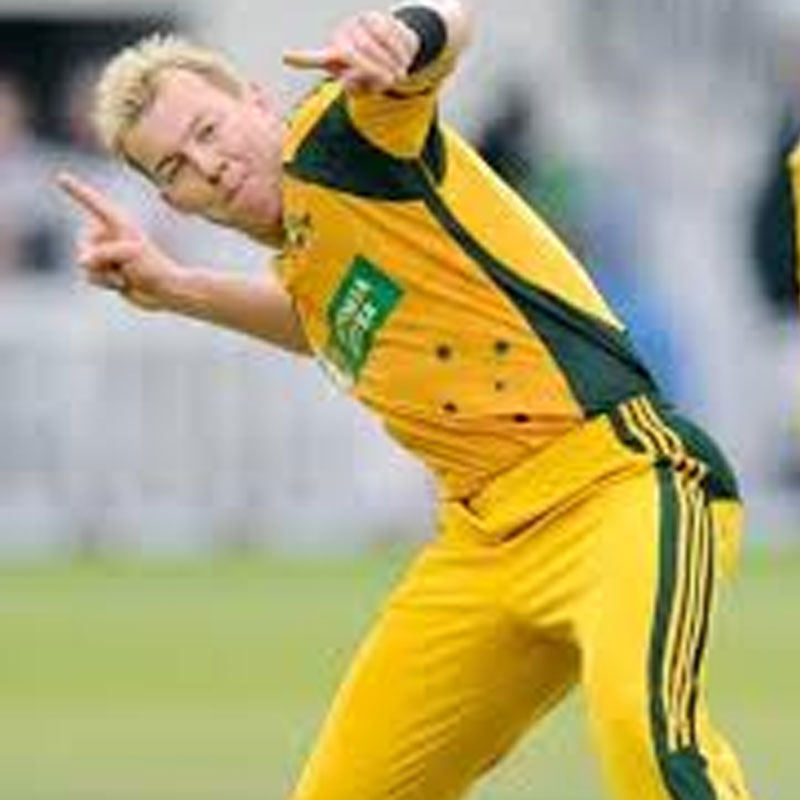
  • Brett  Lee bats for Tourism Australia

    Brett Lee bats for Tourism Australia

    MUMBAI: Former Australian cricket player Brett Lee will help push Australian tourism in India as a part of the ‘Friends of Australia‘ advocacy program by Tourism Australia.

    As part of his first stint as a Friend of Australia, Lee welcomed more than 70 of India‘s leading travel agents in Melbourne with a personalised tour of the Melbourne Cricket Ground and dinner at the cricketing stadium to share his career highlights. The agents participated in a six?day India Mega Familiarisation and Workshop (IMFW) being hosted in Australia until 6 September.

    The programme was jointly hosted by Tourism Australia and Tourism Victoria and it was the second time this business event was held in Australia. India represents a major visitor market for Australia and Victoria in particular. The participants will also visit a number of other Australian states as part of the familiarisation visit.

    Lee who recently retired from international cricket is a popular figure in Indian sports and culture, during both his cricketing career representing Australia and playing for Kolkata Knight Riders in the Indian Premier League (IPL), in addition to his music pursuits and growing his Mewsic Foundation in India.

    Tourism Australia managing director Andrew McEvoy said, “India is a market that continues to deliver steady growth for Australian tourism and we are delighted to have someone of Brett Lee‘s calibre to further raise the profile of Australia in India and to help us best align to our year 2020 target to secure higher visitor growth from this rising market.”

    India is currently Australia‘s 10th largest tourism market, worth Australian $0.8 billion in 2011 and delivering 152,000 visitors in the last financial year to 30 June 2012.

    McEvoy said, “India has great long term potential for Australian tourism and we continue to support its development via our recently launched India Strategic 2020 Plan to grow the Indian visitor market to Australia. Brett Lee has a huge profile in India, but also possesses deep credibility by demonstrating a high level of engagement and embracing Indian culture, as a result of his stellar cricketing career and ambassadorial and charity work in country. We are thrilled to have his support to tell more Indians why they should visit Australia for their next long haul holiday.”

    Lee said, “Having travelled to India some 60 plus times, I now look forward, as a Friend of Australia ambassador, to encouraging Indians to visit this wonderful country and experience all that Australia has to offer.”

    The travel agents and tour operators participating in the familiarisation visit are among the top sellers of Australian holidays in Mumbai, Delhi and other major secondary cities in India. During their time in Australia they have already experienced Sydney and the Hunter Region (NSW), the Gold Coast (Queensland), Perth and Fremantle (Western Australia), and will now disperse throughout Victoria.

    Following the Melbourne leg of their visit, where they are meeting with Australian tourism product suppliers, a number of agents will also visit The Whitsundays, Cairns and the Great Barrier Reef (Queensland), Adelaide, the Barossa Valley and Kangaroo Island (South Australia).