Tag: IPL

  • Nothing misses Amul’s target

    Nothing misses Amul’s target

    MUMBAI: Indeed, the pony-tailed and polka-dotted li’l girl of Amul fame has come to be an iconic part of the country’s socio-political and economic landscape, courtesy her cheeky yet responsible comments on issues ranging from IPL spot fixing to the more recent prosecution of Indian diplomat Devyani Khobragade in USA.


    When Amul approached Sylvester Da Cunha in 1966 to design a campaign for Amul Butter, little did the company imagine the ads would go on to become somewhat of a national tradition.


    With Sylvester’s son Rahul now in charge of all Amul ads, we ask him to reveal the secret behind such brilliant, pun-intended ideas week after week?


    “If I tell you, then I have to kill you,” laughs Rahul, attributing all the enthusiasm and creativity to the ‘raw material’ available in the country currently.


    “From Bollywood to politics to issues, there is so much happening in this country. I don’t think we would have been able to do what we are doing here in any other country. It is all because of the colorful characters we have,” he says.


    Rahul is part of a three-strong core team that works on the witty, topical ads. And while the trio is unafraid to take a stance on anything under the sun, there’s one topic it steers clear of – religion.


    “It’s dicey and too sensitive a topic to indulge in and we try to avoid it unless and until it has got to do with someone like Asaram Bapu,” says Rahul.


    At a time when most brands do not believe in commenting on ‘sensitive’ issues, Rahul prides himself on being part of a company that has never shied away from taking a stance. “It is our USP and others doing it is a rare case,” he adds.


    Not that all their ads have met with bouquets; there have been the occasional brickbats too, for example, Amul’s recent commentary on the Tehelka scandal, which didn’t go down well with a majority of the people. But that doesn’t deter the team from keeping up the good work. As Rahul puts it, “We don’t look back as we feel it is all part and parcel of the industry and we cannot make everyone happy.”


    As the year comes to a close, indiantelevision.com brings you some of its pioneering ads of 2013:


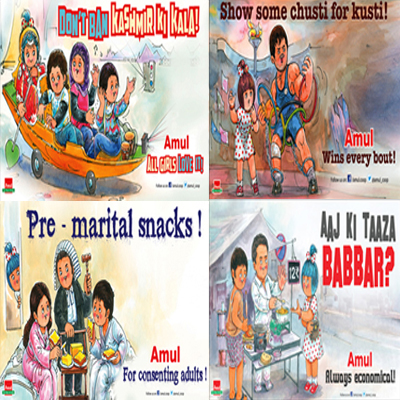
    The year began with Kashmir’s top clergyman issuing a fatwa against an all-girls rock band, reasoning music is banned in Islam and girls should imbibe ‘better values’ instead of vices.


    The IOC’s decision to drop wrestling from the Olympics came as a huge setback for fans and practitioners of the game. The only saving grace being it would be included in the 2016 Olympics.


    Around mid-year, the Madras High Court passed a judgment saying that an unmarried couple of the right legal age “indulging in sexual gratification” would be considered married and could be called “husband and wife”. An entire nation was shell-shocked by the forward-thinking pronouncement.


    Escalating prices and economic slowdown notwithstanding, some politicians were brazen enough to say food is cheap in this country. Congress spokesperson Raj Babbar went to the extent of saying it is possible to have a full meal for just Rs 12 in Mumbai even today. And the junta didn’t know whether to laugh or cry at this cruel joke…


    In a body blow to the LGBT (Lesbian, Gay, Bisexual and Transgender) community, the Supreme Court recently turned back the clock on Section 377 of the Indian Penal Code, which criminalizes any kind of sexual activity “against the order of nature” including homosexual acts. In a 2009 judgment, the Delhi High Court had decriminalized all such activity, leading many such people to live together.


    Meanwhile, at least one other Supreme Court judgment did not disappoint. The apex court ruled that persons in lawful custody – whether convicted in a criminal case or otherwise – cannot contest elections. The common man rejoiced even though the ruling does not apply to those on bail.


    When a colleague claimed founder-editor of Tehelka Magazine Tarun Tejpal had sexually assaulted her in an elevator during a fest organized by the publication in Goa, it went on to become the mother of all scandals. However Amul’s take on the matter attracted a lot of criticism, possibly because rape doesn’t lend itself to humor.


    The Aam Aadmi Party (AAP) was just that… till the unlikely hero of the Delhi Assembly Elections decided to take Congress support to form the government in the national capital.

  • IPL 2014 auction to be held on 12 February

    IPL 2014 auction to be held on 12 February

    MUMBAI: The seventh edition of the Indian Premier League (IPL) is all set to begin its auction early next year with eight teams in the fray. The Board of Cricket Control in India (BCCI) has announced that the auction for the new edition will be held on 12 February and if needed will be extended to 13 February 2014 as well. An embargo has been placed on franchisees approaching players from other teams before 11 January.

    A minimum of 16 players and a maximum of 27 players will be allowed to be auctioned to each of the eight teams in which only nine overseas players can be included. In a match, only four international players can play. Last year, franchisees could have 33 players including 11 from overseas.

    Players can stay in a franchisee for a year and then have an extension of a year or two as compared to the one year restriction that was imposed last year. This has to be exercised before 15 December. Maximum of five players from the 2013 squad can be retained before the auction that can include both capped and uncapped players, the contract for which must be submitted to the BCCI on or before 10 January.

    The first capped player who will be retained will be charged Rs 12.5 crore and Rs 4 crore for each uncapped player retained. These players will not be auctioned. The minimum requirement for catchment area players has been removed.

    The cap for the IPL fees for an entire squad is Rs 60 crore that will increase by 5 per cent per annum for 2015 and 2016 while the minimum would be Rs 36 crore. The fees will now be denominated in rupees for Indian players and international players can have it in their own currency. Last year’s entire squad cost $ 12.5 million.

    One addition has been made to the auction with ‘rights to match’ (RTM) available to a franchise depending on number of retained players. For five to three players, one RTM is allowed, for one or two, two RTM is given and three RTM will be given if no players from last year is retained. RTM will allow franchisees to have a final call on the bid price after which no other franchise can bid on it.

  • Amuls tasteless take on Tehelka

    Amuls tasteless take on Tehelka

    MUMBAI: For a brand as big as Amul, its ads too have come to be an iconic part of the country’s social-scape.


    From IPL spot fixing to the allegations of corruption that once swirled around Jagmohan Dalmiya, from Laloo Prasad Yadav’s arrest in the fodder scam to Raj Babbar’s atrocious comments with respect to Rs 12 meals; Amul ads have taken an unflinching stance, driving home the point cheekily, yet responsibly while almost always leaving the reader with a smile.


    This time round however, even Amul’s li’l moppet, of the polka dot fame, has been unable to save the day.


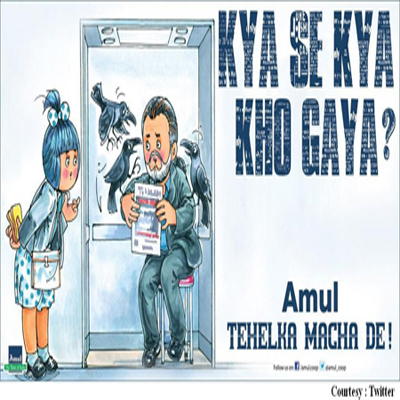
    The latest ad – a take on the Tehelka scandal – shows a Tarun Tejpal-like figure being pecked by crows (incidentally the crow is Tehelka’s mascot) while sitting on a stool inside what looks like an elevator, while the Amul girl stands outside with her bread and butter sandwich. The tagline reads: “Kya Se Kya Kho Gaya! Tehelka Macha De!”


    Tejpal, the editor of Tehelka, who has made a career out of his in-your-face brand of journalism, has been in the news for allegedly sexually assaulting a junior colleague, a friend of his daughter at that, in an elevator at a fest organised by the magazine earlier this month in Goa.


    The Amul poster, which takes a very obvious swipe at Tejpal, hasn’t gone down well with people and social media is abuzz with comments trashing the ad for its tastelessness.


    Writes columnist and writer Aseem Chhabra: “I find this Amul ad outrageous and offensive! Where is the humor in a rape case?” Tweets The Oddfather @TheOddfather1014h: “Sorry guys, just my personal opinion…I don’t think it’s very smart or creative using a molestation case in your ad #justsaying”. Posts Vijay @ohVijayJoshi3h wrote: “like idiots u came up to make fun of a sensitive topic can u do a fun ad on 26/11 & Arushi as well.. U r selling butter? Pathetic”.


    Clearly, the ad hasn’t cut ice with a majority of people unlike its previous ones. Whether they think it trivializes a serious issue or is just not witty enough or whether rape is a matter that just doesn’t lend itself to jokes; one can’t really point out.


    All said, adman Rahul Dacunha, the man behind all those witty Amul posters since 1993 is disappointed with people’s reaction.   “Am disappointed that you see this as a joke – it’s a satirical comment about the fall from grace of a man,” he tweeted.


    Ironically, Dacunha is the same guy who, in a column in Tehelka on the occasion of the 60th anniversary of Amul in 2009 wrote: “Today is Tuesday morning. Actor Shiney Ahuja makes the headlines – he may have just raped his maid. The question before the Amul creative team at Dacunha Communications is: Should Amul walk away or comment? And if we do, what angle do we take? What tone of voice? This is the dilemma we often face with Amul.”


    If this is what Dacunha thought four years ago, we wonder what made him change his mind this time round…

  • RCB signs a deal with Spoment Ventures

    RCB signs a deal with Spoment Ventures

    BANGALURU: To make itself a 365-day brand rather than one that is in the limelight just for 45 days, the IPL franchise – Royal Challengers Bangalore – has brought on board specialist sports management agency, Spoment Ventures, a Singapore headquartered agency that focuses on sports and entertainment business.


    The first property under the new deal has already been rolled out as RCB Corporate Cricket Championship, which will have many innovations that will differentiate it from other corporate matches. The final of the tournament will be played at the famed Chinnaswamy Stadium. To give the tournament an edge over others, one RCB player can be substituted for semi finals and finals.


    Spoment plans to make it an annual property which will keep growing in stature and size every year. This time, the trump card or super sub is legendary spin bowler Muttiah Muralitharan. Corporate teams will have the right to use Muralitharan for one over during the match if they wish.


    Spoment director Ashok Karanth said in a release, “To make RCB a 365-day brand, we will create numerous properties to engage with corporate audiences, youth and families using sports lifestyle as a platform.”


    The agency is also studying the ticketing and corporate hospitality business model of RCB to help the team increase its revenues from the operations.


    It seems the IPL teams don’t want to lose out on any front and thus they have already started creating the buzz before the next IPL season kicks off.

  • Kings XI Punjab joins hands with Events Experts for ACB 20-20

    Kings XI Punjab joins hands with Events Experts for ACB 20-20

    NEW DELHI: Kings XI Punjab, recently announced its association with Events Experts, a Chandigarh based full service events and marketing company for initiating ‘ACB 20-20’, an intra school, college and university tournament.

    The 20-20 big bash tournament will be played amongst the age group of 16 to 24 years across the catchment areas including Chandigarh, Punjab, Haryana, Himachal Pradesh, J&K, Delhi-NCR, Rajasthan, Uttrakhand and Uttar Pradesh. The registration for the tournament commenced 10 October.

    As a part of the tournament, trial sessions will be undertaken across 100 schools, 100 colleges and 20 universities in the catchment area. The distinguished selection panel consisting former Ranji players, IPL players and coaches like Amit Uniyal (IPL Fame), Sukhwinder Singh Bawa (Yuvraj Singh’s coach), etc will shortlist 120 players.

    The selected players will be divided amongst eight teams who will play a total of 15 matches (12 league matches, two semifinals and the Final) at Tau Devi Lal Stadium, Sector 3 Panchkula.

    The first round of trails was held at Malhan Cricket Academy, Jhajjar on 11 October followed by S.D. School, Rajiv Chowk Gurgaon on 13 October.

    Registration for Punjab region will commence on 16 October at S.D College Chandigarh followed by Rayat Bahra Group of Colleges on 17 October and SUSCET College Tangori on 18 October.

    Commenting on the occasion, Kings XI Punjab COO Col. Arvinder Singh said, “We are happy to partner with Event Experts to provide a suitable opportunity to budding cricketers from our catchment area to display their skills. We hope this activity goes a long way in providing a much needed platform to these cricketers. In the future too Kings XI Punjab shall continue to undertake such activities at various levels.”

    The winning team will be entitled for a cash prize, per player worth Rs 15,000 and runner-up per player Rs 10,000. Amongst other award categories, Man of the Match will be awarded with gift vouchers, best bowler & best batsman Rs 25,000 each and Man of the Series will be bestowed with Rs 50,000.

    Being a community driven team, Kings XI Punjab has undertaken this initiative to reach out to its discerning fans in the catchment area and give them a chance to realise their dreams into reality.

  • Astill’s study of India through cricket binoculars

    Astill’s study of India through cricket binoculars

    The book came out last month; but our review has found space on indiantelevision.com only in September. Readers, who have not yet got their hands on the book, would be wise to do so. I am a cricket fanatic and thoroughly enjoyed reading this fast paced close peek of the evolution of modern India. And would advice you to do the same if you love the game of the red cherry – or white one – if one looks at what’s in use in modern day cricket.

    James Astill

    James Astill, the Economist’s correspondent in India between 2007 and 2010, watched the rise of IPL. With cricket’s biggest shebang as the back ground, he has gone on to narrate a wider story of modern India.  Much of this story is known. Yet while Astill relies on previously published material, what makes his book exceptional is his first-hand reporting.

    The ‘tamasha’ of Astill’s title is a Hindi word meaning entertainment or show. As he tells the story, it was inevitable over time that the Indian public would forsake the extended dramas and longueurs of Test cricket for the shorter, more colourful and energetic forms of the game. This process began with India’s completely unexpected victory at the 1983 World Cup under the leadership of Kapil Dev, and has now reached its ultimate incarnation in the cat and mouse game also termed as the Twenty20 format and controversy’s favourite child the Indian Premier League.

    Astill is a keen follower of the game and says “the story of Indian cricket is not only about cohesion and success, but is deeply pathetic.” He has very objectively and figuratively described the poor state of infrastructure in the country; a place where millions of children aspire to wear the Indian jersey someday. But the harsh truth is they are unlikely to even get a chance to play an organised version of the game, with a good bat and leather ball. One of the most touching stories is of the railway clerk in Rajkot who, using a concrete pitch and tattered nets, has coached several first-class cricketers, including his son – now a leading light of India’s Test team.

    Politics in democratic India, Astill observes, is “feudal, corrupt and vindictive”, and the administration of cricket is no more than an aspect of politics. Money was everything in the establishment of the IPL, the cricket itself almost incidental. More than $700 million was paid for the first franchises. The Indian captain, Mahendra Singh Dhoni, is reckoned to earn $21 million a year from the game. Foreign mercenaries such as Kevin Pietersen and Shane Warne were bid for like prize bulls at a livestock market. At some matches the players’ salaries were flashed up on the scoreboard alongside their batting averages; going on to emphasis the fact that the sport has been portrayed in a completely different light.

    Astill seems to have talked to everyone who is anyone involved in this deeply unattractive business – including Lalit Modi, the now-disgraced founder of the IPL, whose capacity for intrigue was exceeded only by his genius for making enemies. Almost equally disconcerting is the formidable Sharad Pawar, who combines the job of India’s agriculture minister with controlling the Indian Cricket Board and being president of the International Cricket Council.

    In comparison with the corporate (read: administrators) and the Bollywood stars who keenly follow the action from the boundary’s edge, the players seem considerably more likeable. Astill tracks down the inspirational Warne, former captain of the Rajasthan Royals. Warne speaks up expressively on behalf of Twenty20, before innocently sabotaging his case by admitting that “for me it’s always about Test cricket”.

    The striking thing about most of those in charge of the IPL is their lack of real passion for cricket itself. They are in it to seek exposure, to sell advertising, to exercise power. Almost none of the money filters down to fund coaching or grass-roots facilities. As for the games themselves, Astill’s judgment is that most lack tension and the real edge of competition.

    Astill relentlessly highlights all this and comes to the sad conclusion that India may end up killing the great traditions of cricket. And yet Astill finds that in the streets and on patches of waste ground in the slums and villages of India, (during his stint in the Indian-subcontinent) the game is furiously alive, uniting millions in the simple desire to hurl a ball fast or spin it with conniving intent, and to hit it far. “This is where Indian cricket resides,” Astill writes eloquently, “far from the elite, the corrupt politicians and turkey-cocking film stars who have laid claim to it.” And therein lies the hope that this most beautiful of games will survive.

  • TenTenTen to work with BCCI to extend the IPL Fantasy League to CLT 20

    TenTenTen to work with BCCI to extend the IPL Fantasy League to CLT 20

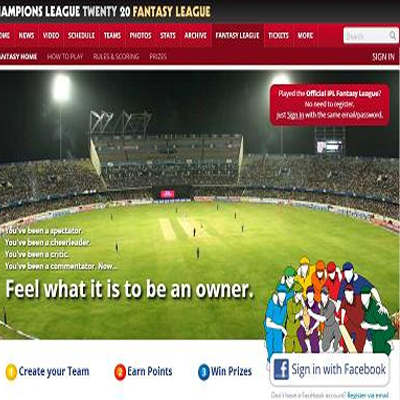
    BENGALURU: Champions League T20 is not just about to kick off cheering wars among cricket fan tribes across cricketing nations, but is also extending the frenzy online with the immensely popular IPL Fantasy League. Pitched battles among virtual teams created by fans, saw over 500,000 people play the fantasy league during IPL 2013. Now, fans get to replay this excitement for the latest CLT20 as well.

    The official Fantasy League was conceptualised, created, designed, implemented and managed by TenTenTen Digital Products. “The objective of the product was to increase the reach of the IPLT20 website and to increase the involvement of people in the tournament. The game is now being extended to CLT20 to add stickiness to it,” said TenTenTen founder Ramesh Srivats.T

    The digital products company says that the CLT20 Fantasy League has been updated with new features such as the opportunity to pick variable role players and locking of teams only after the first ball is bowled. The CLT20 Fantasy League is expected to add more fun to the tournament and bring in more international ‘players’ to the fantasy league.

    TenTenTen says that the IPL Fantasy League had over 500,000 users and saw nearly 15 million site visits and over 100 million page views in its very first year. The success of the league and the social buzz that it generated has led to the game being extended to CLT20.

    The winners of the CLT20 league stand a chance of winning tickets to the matches, official team jerseys, special cricket bats signed by the players of the winning team and CLT20 memorabilia.

  • Sibal scribes lyrics for a Dilli Gang

    Sibal scribes lyrics for a Dilli Gang

    Minister Kapil Sibal’s penchant for writing poems is well-known. He has now penned the lyrics for a Bollywood film based on the life of senior citizens. And will also appear on screen reciting his lines.


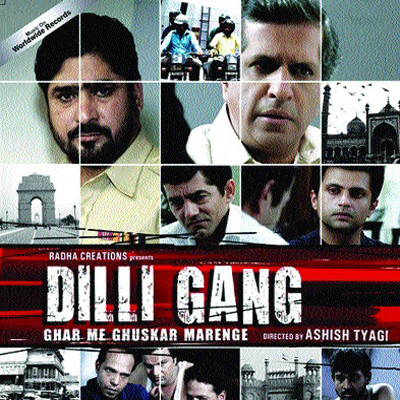
    After publishing a book of SMS poems, reciting his composition Aankh khuli aazad thi main as a tribute to women at the Star Parivaar Awards, taking on the murky side of IPL through writing, Sibal, through his poem, expresses his view on the issue of senior citizens’ safety in upcoming film Dilli Gang, which is based on true instances of crime against senior citizens, who sometimes get robbed or murdered when their children leave them.


    With a special poem composed for the film, which he recites in the beginning and towards the end of the movie, Sibal urges people to be compassionate towards their ageing parents. Karenge jo maa baap ki seva, Bhagwan unke saath rahega…, is what Sibal will be seen and heard saying in Dilli Gang.


    Talking about his compositions and poems, Sibal says social issues are his favourite subjects. “I have written poems on multiple social issues, especially on daughters. When the director and producer told me that the movie is about old people, I agreed to write a poem immediately. These topics touch my heart. The cultural transformation in our society, where children don’t respect parents and refuse to look after them, is a major issue to be addressed besides women’s safety,” he says.


    Sibal plans to continue his Bollywood innings. “Cinema is a medium which reflects the reality in society and is trying to raise hope. For people who think for the betterment of the society and want to express their views, Bollywood is the right channel. I am going to do more of this work,” he ends.

  • Zenga TV has high growth ambitions in the mobile TV segment

    Zenga TV has high growth ambitions in the mobile TV segment

    Everybody yearns for a big-bang entry when they start off their career. The same can be said about Zenga TV which decided to take the path one would rarely tread upon.

    At a time when most of the mobile TV platforms were approaching mobile operators to be carried, Zenga TV offered the first free 'live TV' service in the country. People scoffed and laughed but two years after a debut with IPL 2009, serving seven million viewers in over 140 countries, the company has turned profitable. Now, after adding more than 150 channels and 18,000 movies to its kitty, the platform will soon be venturing into delivering original content in 52 genres.

    Shabir Momin, who made Zenga TV from scratch, will look for investors in some years to scale up the free mobile TV platform's ambitions

    Out of these, production in four genres namely fashion, styling, comedy, fashion and cooking will be done by Zenga, itself while the rest will be aggregated from all over the world such as music, gaming, extreme sports, travel and other fashion. "These four genres need localisation," says Zenga TV founder, MD and CTO Shabir Momin.

    A technologist all his life, Momin and his friend Vikramjiet Ray invested about six to seven million dollars into this venture which started reaping profits within two years. Industry sources put it at anywhere between Rs 2-3 crore per annum.

    Starting off at a time when the minimum bandwidth was 20-25 kbps in India as compared to 78 kbps in other parts of the world, they developed a code to provide live streaming at 2.5G and at this low bandwidth. Even though 3G is being promoted, only 10 percent of Zenga TV's users are 3G users. The arrival of 4G will only enhance the picture quality, according to Momin.

    Zenga TV has a long list of Indian channels as well as 30 international ones which are genre specific. However, 70 per cent of the traffic comes from movies while 30 per cent from channels out of which Aaj Tak, Pogo, 9xm are some of the popular ones. Animated content being in the top ten has surprised even those at Zenga TV. Some of the other channels it streams live are NDTV Profit, Raj News Kannada, Focus TV, Big Magic, 9XM, Sahara filmy.

    One of the news channels on the portal which wished to remain unnamed said that two years ago when they got into a deal with Zenga TV it helped it because it targeted non-smartphone users, even though it had an application of its own. However, its expectations from the association has been only 'just met' and in order to have more control from its side it is looking at revaluating the contract and seek more opportunities outside of Zenga TV.

    "Zenga TV is not very viable because broadcasters do not want to lose big money from their DTH and cable operators who may object to live streaming for free on the internet at the same time making money on advertising," says media consultant Sanjeev Hiremath. This could be why Star, Zee, Sony etc are not part of the bouquet but are available on its competitors Ditto TV and Apalya. Demand for these channels is there; according to Momin, but since there is no ROI for it and so he opted to not negotiate with them. To date a 50:50 revenue share is maintained with all its channels. Market estimates varied from approximately Rs 25,000 to Rs 7-8 lakh per channel. 

    "I would rather give you exciting and intriguing content which is cost effective for me as well," states Momin.

    Speaking in terms of demographics, 45 per cent of viewership comes from rural India while 35 per cent comes from urban cities, Delhi and Mumbai being the larger chunk of it; the rest from tier II cities. Local retailers propose a data plan to customers which will let them watch free TV on mobile. This benefits the customers as a lot of times electricity isn't available to watch TV and the plan is approximately Rs 200 a month. It also means customers coming back to them every month.

    Abhishek Joshi joined the team a few months ago to spearhead the project from Mumbai The time when most traffic is on it is from 11:00 am to 2:00 pm. The average time span is 10 minutes per view and six to eight views per month each amounting to 250 million views per month. And is a male dominated area wherein 70 per cent viewers are men. The target group is 13 to 65 years but a majority of the viewers are the young audience between 18 to 35 years. About 85 per cent of viewers are from India while UK, US and UAE keep juggling in the top three spot from the international countries.

    It has an automatic system that adds servers to tackle unexpected increase in traffic, when it isn't manned and when traffic goes down, it automatically kills the servers. From two, the team now consists of 55 to 60 people in Delhi and Mumbai with an attrition rate of just 0.5 per cent most of the team being freshers who are brimming with ideas. Momin who was formerly the CEO, gave way to Abhishek Joshi to be the CEO in July 2012, marking the beginning of the Mumbai office. Bangalore and Kolkata are the next expansion destinations.

    At inception it was available on Windows, Android and iOS while Symbian 60 was added recently. Anybody with a browser could view. Everything is cloud based with seven Amazon servers across the world. It was only in 2012 that the app was created. Momin maintains that an app will not be made for Blackberry phones. It has over 10,000 fans on its Facebook page.

    Zenga TV works purely on advertising with more than 60 brands currently, most of them from India. It got its break when it bagged Pepsi during its telecast of IPL 2009. Cadbury, Red Bull, Aditya Birla, Fiat are some of the other brands it has deals with. Both video and banner ads are present but what is prevalent more is video ads that are either pre roll or mid roll. Industry sources put the CPT for a video ad at Rs 300- 350 and a banner ad at Rs 180-190. The annual revenue would be around Rs 13-14 crore per annum. Just like on television, depending on the customer's brand campaign the ads can be modified such as L-shaped ads or bugs. It can also be targeted based on content, channel and geography. A team of five works on ad sales.

    Media planners seem to be skeptical despite Zenga TV's claims. Ignitee digital media planner Saurav Kumar says that it is a good advertising platform if the client is targeting mobile phone customers. However, he adds that mobile phone commerce is still at a very nascent stage. "There is not much ROI on mobile advertising," points out Kumar. Lodestar Universal vice president Deepak Netram believes that Zenga TV is yet to gain critical mass but as an add-on, it is a great platform available.

    Money spent on mobile advertising is just five to ten per cent of the total as of now and the only way an increase can be seen is when the coverage of 3G increases and the price of 3G subscription decreases. In a mobile TV market of 30 million dollars, Momin claims Zenga TV owns about 60 per cent of it. "If you ask me, mobile TV advertising is the future," says Hiremath.

    Momin stated that he had initially approached mobile operators, which was the custom around 2007 but the business model was hitting a negative end for him so he decided to set up his own brand and connect directly with the users. It could have been a risky stance, but he decided to be his own master than be someone's slave (in this case the operators). "We are the only profitable company in this space. All the others are more than fifty points negative," he claims. "Most of my competitors work for operators," he says. Had Zenga TV decided to go the same way they wouldn't have been able to control price point.

    Apparently, not a single penny goes into marketing Zenga TV and everything was done by word-of-mouth. More than 50 per cent of users tend to come back and Momin attributes it to the fact that they have no system of registration or forcefulness.

    Changes have also come about since then. To increase content discovery, a search bar and index were added. Some football sports are being reviewed but only half of sports content is financially viable for it.

    Consumption patterns have changed from channel specific to genre specific viewership. 

    Predictions are that the current space of mobile TV advertising is about Rs 150 crore and in two years time it is set to multiply to Rs 3,000 crore due to better network. Zenga TV sets itself a target of doubling its viewership, profit and revenue and for the last three years they've surpassed their own predictions.

    As for the future, Momin says he might think of raising investors or IPO someday but he will not give up ownership of the company. "I didn't want to have investors initially because they have their POV and they drive it in a way you may not want to," he says.

    There is a general feeling that digital is the way forward. Zenga TV has achieved some success but still stays relatively unknown. In Momin's words, "Those who don't know Zenga TV don't use Zenga TV."

  • ESPN attempts to expand viewer base with IBL

    ESPN attempts to expand viewer base with IBL

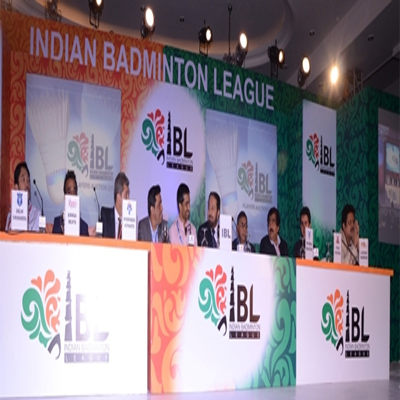
    MUMBAI: The shuttle is really going to fly around during the Indian Badminton League (IBL) for 18 days from 14 August as players belonging to six franchisees get ready to battle on the courts to wrest the winner’s trophy. All the action will be shown live on ESPN or Star Sports 2.


    Although badminton is still a niche sport, the channel says that it wants to build a multi-sport viewership much like what other channels are also aiming to do, such as Sony Six.


    “The idea is to create a portfolio of various sporting disciplines with in-depth programming in each of the categories. This will help expand the sports viewing fan base and help in creating habitual viewing amongst sports consumers,” says ESPN Software India CEO Vijay Rajput.


    We have all played various sports during school days apart from cricket, badminton being one of them and ESPN wants to build a base for sports that people have grown up with. Its previous stint was with the Hockey India League (HIL) but this venture didn’t seem to leave an impact on viewers. It feels that what is lacking is the manner in which alternative/niche sports are packaged, communicated and presented. The IPL (Indian Premiere League) has a robust marketing strategy every year apart from the fact that it has an existing huge fan following in the country.


    The crux of its marketing strategy for IBL is mainly dependent upon highlighting the fact that viewers will get to watch world class badminton players on the two channels. But firstly they need to ensure that new audiences familarise themselves with the players, if they want to lure new viewers . ESPN’s campaign therefore focuses on Indian players in the IBL such as Saina Nehwal, Jwala Gutta, Ashwini Ponappa and Jerry Chopra.


    “Our aim is also to build recognisable heroes within IBL,” says Rajput. Promos featuring these players will be on air soon.


    Badminton facts that are unknown to the layman will also be provided as part of the campaign, some of them being – a shuttle can leave the racket at a speed of almost 300 km/hour and that a badminton player can cover more than two kilometers in just one match. It is an attempt to get people to know more about the game and thereby tune in to the channel to watch it.


    However, it doesn’t seem to match the level that it did to promote HIL by roping in known names such as Prasoon Joshi from McCann Erickson India and ad director Nick Livesey from England.


    The matches will be aired during late afternoon and evening. Whether there will be a simulcast on both channels is still being discussed but if one of the host channels is occupied with another sport, the sister channel will telecast the live match. Sources said that Star Sports 2 will probably have commentary in Hindi.


    Talks with advertisers have just started and are expected to conclude in a few days. Earlier this month an auction was concluded in which India’s star player Saina Nehwal was bought by Hyderabad for $1,20,000 and the world’s top badminton player Lee Chong Wei went to Mumbai for a whopping $1,35,000.


    Matches will be played in the towns of the six franchisees namely Mumbai Masters, Delhi Smashers, Hyderabad Hotshots, Pune Pistons, Awadhe Warriors and Banga Beats. A total of 90 matches will be played in the form of two men’s singles and one women’s singles, men’s doubles and mixed doubles each.


    This isn’t the first acquisition for ESPN. It had previously also got hold of the HIL, English Premier League (EPL), Sri Lanka Premiere League (SLPL), Bangladesh Premiere League (BPL) and others. As of now, IBL and ESPN Star Sports have struck a deal only for the first edition of the tournament. How well it manages to garner audience attention will decide the future of the speedy sport. Seems like, ESPN has a thing for leagues, considering that it is a dominant player in its own league.