Tag: IPL

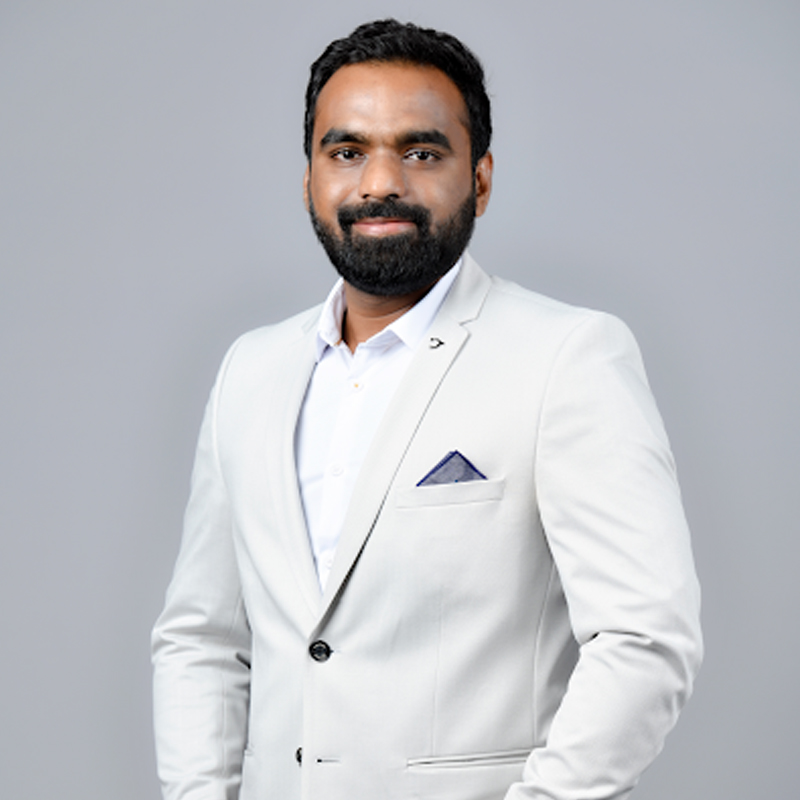
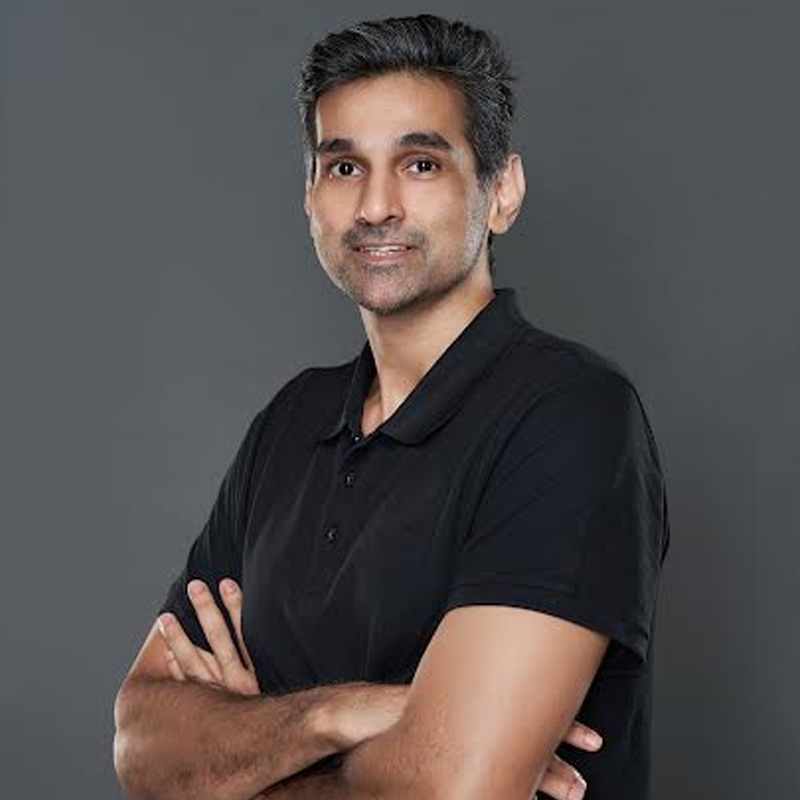
  • Mayank Dayal switches gears, takes the wheel at LA Knight Riders

    Mayank Dayal switches gears, takes the wheel at LA Knight Riders

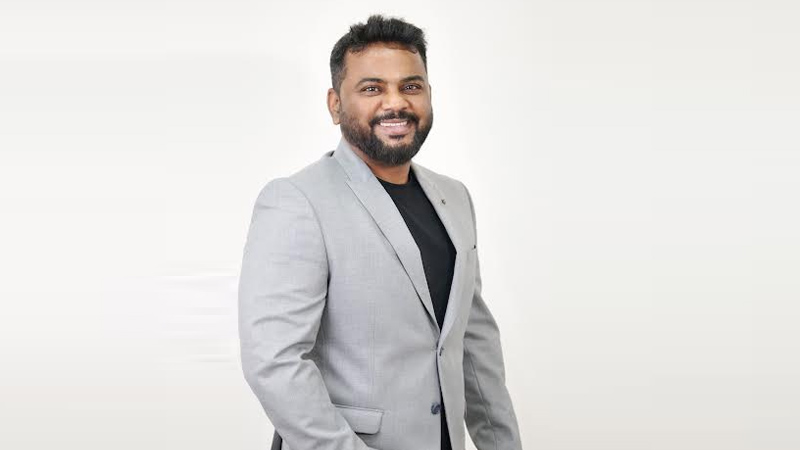
    MUMBAI: Mayank Dayal, a seasoned sports marketing whiz, has made a cracking move, transitioning from the dusty pitches of the Indian Premier League (IPL) to the sun-kissed shores of Los Angeles. He’s stepped into the role of business head – Los Angeles Knight Riders, a full-time gig with Knight Riders Sports, effective June 2025. This chap knows his onions when it comes to brand building and fan frenzy, having honed his skills across two decades in global sports, media, and entertainment.

    Just five months ago, Dayal was the head of marketing for Gujarat Titans, where he was instrumental in driving brand growth and whipping up fan engagement for the IPL franchise. Before his stint with the Titans, he was a key player at Sony Sports for nearly three years, leading award-winning campaigns for behemoths like the Fifa World Cup, UEFA Champions League, Olympics, and even the WWE. Talk about a versatile player!

    His career journey reads like a thrilling sports documentary. Dayal spent over six years at Sony Pictures Networks India, climbing the ranks to head – marketing, sports, after a four-year stint as associate vice president. Prior to that, he spent a considerable nine years and one month at Viacom18 Media Pvt Ltd, where he held various marketing leadership roles, including senior manager – marketing and director, marketing for channels like Comedy Central and Vh1.

    Dayal’s early innings saw him at Star India Pvt Ltd for nearly three years, where he served as an assistant manager and assistant manager – brand solutions, crafting innovative brand integrations. He also had a four-year, five-month spell as a manager – major accounts at Star News, where he was even awarded “The Best Sales Performer.” His foundational experience includes a brief stint as a trainee – marketing at Bharat Petroleum Co. Ltd and an executive trainee at Linterland – Rural.

    With a deep understanding of audience insights and digital media fandom, Dayal is all set to knock it out of the park for the Los Angeles Knight Riders. It seems his career is always playing on the front foot, driving brand, fan, and revenue growth in the global sports arena.

  • Salt with a side of sass Tata Salt revives its jingle with a sharp twist

    Salt with a side of sass Tata Salt revives its jingle with a sharp twist

    MUMBAI: Who knew a kitchen staple could hit all the right notes again? Tata Salt has turned up the flavour and the feels with a tuneful comeback. India’s No.1 iodised salt brand has rolled out a fresh take on its popular ‘Namak ho Tata ka… Tata Namak’ campaign, adding a modern spin to the jingle that once ruled Indian kitchens and TV sets alike. The reboot, a melodic mash-up of nostalgia, science, and family life packs in eight slice-of-life films with one unmissable message: iodine isn’t just essential, it’s brain food.

    Conceptualised by Ogilvy, the campaign brings back the catchy 80s-era jingle, now woven into lullabies, classrooms, wedding rituals and even kitty parties celebrating how Tata Salt quietly sharpens young minds across generations and geographies.

    “The jingle is a bridge between past love and present relevance,” said Tata Consumer Products president for packaged foods Deepika Bhan. “It’s not just salt. It’s Desh ka Namak, a promise of quality, trust and purpose that’s lasted four decades.”

    From a teacher humming it mid-lesson to a bride shedding a tear to its tune, the films reflect India’s cultural and linguistic diversity, Hindi heartlands, expressive Bengali families, and grounded Marathi homes. Whether it’s a mum feeding her child or a wedding caterer prepping a feast, Tata Salt is there, understated yet vital.

    Anurag Agnihotri chief creative officer Ogilvy added, “We took our iodine story, dressed it in 80s flair, and sent it dancing through vidaais, classrooms, and kitty parties. It’s a love letter to golden-age advertising, reimagined for today’s India.”

    The first four films were unveiled during the IPL, with the rest rolling out soon proving that when it comes to brand recall, sometimes all it takes is a pinch of salt and a perfectly pitched tune.

    Because if it’s Tata ka namak, it’s not just edible, it’s unforgettable.

  • Sun TV’s sparkle dims: Profit slips, revenues wobble IN FY25

    Sun TV’s sparkle dims: Profit slips, revenues wobble IN FY25

    MUMBAI: It was less sizzle and more fizzle for Sun TV network in FY25, as the broadcaster reported a dip in both revenues and bottom line, despite pulling in the crowds via its cricket franchises and digital platform Sun Nxt.

    The media powerhouse, led by managing director Mahesh Kumar Rajaraman, posted a standalone profit after tax of Rs 1,654.46 crore for the year ended 31 March 2025 – a near 12 per cent drop from last year’s Rs 1,875.15 crore. Revenue from operations came in at Rs 3,878.86 crore, down 6.5 per cent year-on-year, suggesting the sun isn’t quite blazing like it used to.

    Even its consolidated figures couldn’t bowl over investors. Group revenues dropped to Rs 4,015.09 crore from Rs 4,282.10 crore a year earlier, with consolidated EBITDA slipping to Rs 2,132.75 crore from Rs 2,638.11 crore – a 19 per cent hit.

    The company’s love affair with cricket, however, continued unabated. Its IPL baby Sunrisers Hyderabad and the CSA’s Sunrisers Eastern Cape contributed Rs 641.96 crore in revenue – a respectable innings – but expenses from the franchises ate up over half of that at Rs 351.04 crore. The broadcast business remains the real spinner in Sun TV’s line-up.

    On the quarterly scorecard, Q4 FY25 total income rose 7.4 per cent to Rs 1,135.86 crore, but that wasn’t enough to boost profits. PAT stood at Rs 362.18 crore, down from Rs 398.77 crore in the same period last year.
    One curveball in the results: an exceptional loss of Rs 73.52 crore on account of impairment in a joint venture – a cautionary tale on where not to bet.

    Meanwhile, the board kept investors sweet with four interim dividends through the year totalling Rs 15 per share (300 per cent). Yet, shareholders may be wondering whether that’s lipstick on a slightly fading star.
    Sun TV still boasts hefty reserves of Rs 11,450 crore, but the real question for FY26 is whether the network can reignite its programming mojo and OTT play to counter headwinds in the traditional TV and sports biz.

    With GenAI reshaping content creation and younger audiences tuning out, Sun TV will need more than prime time reruns and T20 thrills to keep shining.

  • Cricket and other sports pirates get the boot as broadcasters flex their legal muscle

    Cricket and other sports pirates get the boot as broadcasters flex their legal muscle

    MUMBAI: The International Broadcaster Coalition Against Piracy (Ibcap) has been rather busy playing digital sheriff, rounding up streaming rustlers and making pirates walk the legal plank. The coalition’s 2025 annual report, released at its Anaheim gathering  on 14 May, revealed a year of impressive swashbuckling against content thieves who’ve been helping themselves to premium programming without so much as a by-your-leave.

    The real crowd-pleaser was  Ibcap’s cricket crusade, where it showed that protecting live sports requires the reflexes of a wicket-keeper and the persistence of a tail-end batsman. During the 2024 Indian Premier League tournament, its analysts in India and America worked in real-time shifts, sending takedown notices faster than Jasprit Bumrah delivers yorkers. The result was spectacular: 6,723 streams disrupted over the tournament’s duration and more than 2.1 million Facebook Live views blocked worldwide. Its takedown rate on social media and mobile apps achieved a perfect 100 per cent—leaving pirates and would-be viewers equally frustrated.

    The highly popular cricket T20 World Cup saw similar success, with Ibcap’s laboratory removing 3,783 streams and disrupting over a million Facebook Live views globally. On set-top box and IPTV services, it knocked out 2,852 streams with a 77 per cent success rate, whilst web-based live streams suffered even more, with 5,940 removed at a 70 per cent clip. Social media and mobile apps once again proved no match for IBCAP’s digital fielding, maintaining that perfect 100 per cent takedown rate.

    Ibcap expanded it merry band of  crusaders with three notable additions: Japanese public broadcaster NHK, whose programming reaches 160 countries, joined the fray in June 2024, bringing protection for Japanese-language content into the fold. American video distribution heavyweight DirecTV followed suit in March 2025, broadening Ibcap’s reach into mainstream American programming. Most recently, Italy’s national broadcaster Rai signed up, dragging its popular channels Rai Uno and Rai Italia—home to variety shows, sports, and live Serie A football—under Ibcap’s protective umbrella.  With programming available across 174 countries on five continents, RAI’s addition proves that even the land of pasta and beautiful football isn’t immune to streaming skulduggery. Ibcap currently represents over 220 television channels from America, Europe, Brazil, the Middle East and South Asia. 

    The coalition hasn’t just been collecting members like Panini stickers. Its laboratory techies have developed a rather clever automated monitoring system that spots dodgy video-on-demand content on set-top boxes and IPTV services faster than you can say “buffering.” This proprietary digital bloodhound doesn’t just watch—it captures evidence, preserves it for legal proceedings, and fires off automated takedown notices to infringing services, content delivery networks, and hosting companies worldwide. The result? Illegal streams vanish quicker than a Test match in Perth. Ibcap is so pleased with this technological marvel that it’s considering offering the service to non-members and other organisations in the broader anti-piracy battle.

    Ibcap’s legal team has been throwing punches worth millions, building on its successful track record of making hosting providers pay for digital negligence. After pocketing a tidy $3m settlement from hosting provider Datacamp—a warning shot across the industry’s bow—it has trained its legal cannons on Virtual Systems and Innetra PC with lawsuits filed in October 2024 and May 2025 respectively.

    Virtual Systems’ behaviour was particularly brazen, operating what can only be described as a piracy paradise. The company allegedly ran a “DMCA ignored” policy—about as subtle as a brick through a window—advertising that “we ignore DMCA takedown notices” to potential customers. When Ibcap sent over 500 separate infringement notices, Virtual Systems treated them with all the respect of junk mail, allowing numerous pirate services to continue using its servers and network infrastructure to stream copyrighted content. The company’s reward for such cavalier attitudes? A lawsuit seeking over $41m in statutory damages plus a permanent injunction.

    Innetra PC proved equally troublesome, emerging as a major offender in Ibcap’s crosshairs after being identified as responsible for delivering approximately 15 per cent of unauthorised Ibcap member streams on set-top box and IPTV services during the first quarter of 2025. Its comeuppance: a lawsuit demanding more than $25m in statutory damages and, like Virtual Systems, a permanent injunction to stop hosting infringing content.

    Perhaps most satisfying was the legal thrashing handed to the operators of Lemo TV and Kemo IPTV in April 2025. These streaming scallywags had been particularly audacious, continuing to broadcast Ibcap protected content despite receiving approximately 100 infringement notices—roughly one for every boundary in a decent innings. During the first quarter of 2025 alone, the service accounted for almost 30 per cent of all unauthorised streams detected on set-top box and IPTV services monitored by Ibcap’s laboratory.

    The service’s persistence in piracy proved costly. The lawsuit seeks statutory damages exceeding $25m, plus profits from potentially thousands of unregistered works that were illegally distributed. But the legal punishment doesn’t stop at financial penalties—Ibcap wants a permanent injunction to shut down the operation entirely, an order forcing the transfer of domain names used by the service, and recovery of reasonable legal fees and costs. It’s the equivalent of not just getting bowled out, but having your stumps scattered across three counties.

    The message is crystal clear: content pirates may think they’re sailing in international waters, but Ibcap’s legal navy is patrolling every digital sea lane with an arsenal that would make admiral Nelson proud. With automated monitoring systems scanning the digital horizon, a growing fleet of broadcaster allies from five continents, and a track record of multi-million-dollar settlements, the coalition is proving that in the world of content protection, crime doesn’t pay—especially when it’s streaming someone else’s cricket match, Serie A fixture, or prime-time drama without permission.

  • The Gambling Strategy That’s Guaranteed to Make Money

    The Gambling Strategy That’s Guaranteed to Make Money

    Gambling has a rich cultural backdrop in India, from traditional games like Teen Patti and Rummy to modern online platforms offering cricket betting and casino games. The promise of a “guaranteed” gambling strategy that ensures profits is tantalizing, especially in a country where games of skill and chance captivate millions. One such strategy, the Martingale system, has lured countless gamblers with its apparent simplicity, only to be overshadowed by more sophisticated approaches like the Kelly Criterion. This article explores the Martingale strategy, its theoretical allure, and its fatal flaws, using examples rooted in popular Indian gambling scenarios.

    The House Always Wins

    Beneath the allure of trusted online casinos in India like 1Win or Parimatch, with their flashy IPL promotions and lucrative bonuses, the gambling industry in India is built on a foundation of mathematical precision designed to favor the house. Whether it’s a virtual roulette table or a Teen Patti game on a mobile app, operators ensure a statistical edge, slowly draining funds from unsuspecting players. Yet, mathematically inclined individuals have long sought to exploit loopholes in this system, using probability to tilt the odds in their favor.

    An anecdote from a 2019 betting conference in Goa illustrates this: when data scientists and statisticians gathered, local betting platforms reportedly saw their lowest profits ever. The rumor? These experts knew the ultimate strategy to beat the house: avoid gambling altogether. However, for those who engage, the Martingale system promises a way to outsmart the system; or so it seems.

    A Betting System Based on Probability

    The Martingale strategy hinges on the idea that, with enough bets, you’ll eventually win, theoretically guaranteeing a profit. Imagine betting on a simplified version of an online Teen Patti game or a cricket match outcome (e.g., Mumbai Indians vs. Chennai Super Kings in the IPL). The strategy assumes you can double your bet after each loss until you win, recovering all losses plus a small profit. For simplicity, let’s assume a 50-50 chance of winning, ignoring the house edge (e.g., platform commissions or rake in Teen Patti).

    The Martingale Strategy Explained

    Consider betting ₹100 on Mumbai Indians to win a match on an online platform like 10Cric, with even odds (2.0, meaning a ₹100 bet returns ₹200 if you win). If you lose, you double your bet and continue:

    ●    First Bet: ₹100 on Mumbai Indians. If they win, you gain ₹200 (₹100 profit). If they lose, you’re down ₹100.  
    ●    Second Bet: ₹200 on the next match. If you win, you get ₹400, covering the ₹300 total stake (₹100 + ₹200) and earning a ₹100 profit. If you lose, you’re down ₹300.  
    ●    Third Bet: ₹400. A win returns ₹800, covering the ₹700 stake (₹100 + ₹200 + ₹400) with a ₹100 profit. A loss puts you at ₹700 down.

    The pattern continues, doubling each time: ₹800, ₹1,600, ₹3,200, and so on. Each win recovers all previous losses plus a ₹100 profit. To scale up, start with a larger bet, say ₹1,000, and a win after several losses could yield ₹1,000 profit per cycle.

    The “Guaranteed” Profit Fallacy

    The Martingale system seems foolproof: since you’ll eventually win (e.g., Mumbai Indians can’t lose every IPL match), you’ll always profit. In a theoretical world with no house edge, the probability of losing every bet approaches zero as you play more rounds. Even with a real-world house edge (e.g., a 2–5% commission on betting platforms), there’s always a chance of winning, suggesting eventual success.

    The Problem With the Martingale System

    The Martingale strategy, while seductive, has been a siren song for gamblers since 18th-century Europe. In India, its allure persists among online bettors, from Teen Patti enthusiasts to cricket betting fans. Historical accounts, like those of European gamblers, echo modern tales of Indian players who’ve tried it on platforms like Bet365, only to face ruin.

    The Fatal Flaw in the Strategy

    The flaw becomes clear with an example. Suppose you start with ₹700 and bet on a 50-50 Teen Patti outcome online, with no house edge for simplicity:

    ●    Bet ₹100, lose: down ₹100.  
    ●    Bet ₹200, lose: down ₹300.  
    ●    Bet ₹400, lose: down ₹700.

    The chance of losing three bets in a row is 1/8 (12.5%). If you lose, you’re out of money. If you win any of the three bets (7/8 chance), you gain ₹100. Expected value: (7/8 × ₹100) + (1/8 × -₹700) = ₹87.50 – ₹87.50 = ₹0. The strategy breaks even on average, but the risk is asymmetrical: you’re far more likely to win small amounts frequently than to lose everything, but the losses are catastrophic.

    The “Guaranteed” Profit Depends on Unlimited Resources

    The Martingale system assumes infinite funds and no betting limits. In reality, Indian betting apps impose caps (e.g., ₹1,00,000 maximum bet on 10Cric for IPL matches). If you start with ₹1,000 and lose six bets (₹1,000, ₹2,000, ₹4,000, ₹8,000, ₹16,000, ₹32,000), you need ₹64,000 for the next bet. With only ₹10,000 initially, you’re bankrupt after four losses (total: ₹15,000). Even with a larger bankroll, exponential growth quickly outpaces affordability.

    Moreover, Indian platforms charge commissions (e.g., 5% on winnings), and the house edge in games like Teen Patti or roulette (with zero pockets) erodes profits. Cultural factors also play a role: gambling is stigmatized in many Indian communities, and chasing losses with Martingale can lead to financial and social ruin.

    The Challenges

    ●    Legal Ambiguity: The Public Gambling Act of 1867 doesn’t address online betting explicitly, but states like Goa and Sikkim permit certain forms. Offshore platforms operate in a grey area, and players risk account freezes or legal scrutiny.  
    ●    Bankroll Constraints: Many Indian bettors have limited disposable income, making the Martingale’s escalating bets impractical.  
    ●    Platform Restrictions: Online platforms may limit accounts showing Martingale patterns, suspecting bonus abuse or professional betting.  
    ●    Tax Implications: Gambling winnings above ₹10,000 are taxed at 30% under the Income Tax Act, 1961, reducing net profits.

    The Martingale strategy’s promise of “guaranteed” profits is a mirage in the Indian gambling landscape. While it may yield small wins in games like Teen Patti or cricket betting, the risk of catastrophic losses; coupled with India’s legal, financial, and cultural constraints, makes it unsustainable. Smarter approaches, like the Kelly Criterion, which balances risk and reward based on probability, offer a more disciplined path but require mathematical rigor beyond most casual bettors. The real lesson? The house always has the edge, and the only guaranteed win is not to play.  
     

  • The Script Room swings for the fences with 32 IPL ad films for Groww, PhonePe, My11Circle and PaperBoat

    The Script Room swings for the fences with 32 IPL ad films for Groww, PhonePe, My11Circle and PaperBoat

    MUMBAI: In a thunderous IPL innings, Bengaluru-based creative powerhouse The Script Room knocked it out of the park with 32 ad films across four marquee brands—Groww, PhonePe, My11Circle and PaperBoat—cementing its status as a storytelling ace in India’s busiest ad season.

    From small-town dreams to nostalgic sips and meme-worthy jingles, the indie shop blended creativity with cultural cues to deliver high-impact campaigns that stood tall amid the IPL blitzkrieg.

    Groww’s six-film campaign saluted New India’s many shades of progress—whether it’s moving cities or moving mindsets. Rooted in personal triumphs and quiet ambitions, the ads painted a relatable canvas of growth, far removed from the stock market ticker clichés.

    PaperBoat Swing, meanwhile, served up a refreshing double with two warm, wistful films that stirred up childhood memories and the simple joy of coconut water. The nostalgic whiff came with the poetic touch of Gulzar saab, no less—produced by the same team that gave the brand its soul years ago.

    PhonePe brought back its fan-favourite ‘PhonePe Girl’ with a 10-ad blitz, proving tech doesn’t have to talk like tech. Instead, it danced through daily life—charming its way through everything from paying bills to booking cabs. The 20-seconders were zippy, cheeky, and bang on brand.

    Then came My11Circle, crashing in with a “baith ja” banger. With a cheeky twist on the classic Aaja Meri Gaadi Mein Baith Ja, the campaign’s jingle “Aaja Meri Circle Mein Aaja” became an earworm—and a meme sensation. With 14 snappy spots and a swag-loaded positioning, it called out to the game-chasers and glory-hunters alike.
    The numbers? Millions of views, strong TV presence, digital domination, and social media amplification. My11Circle doubled down with influencers and celebs to push the pedal on reach.

    The Script Room cofounder Ayyappan Raj said, “IPL has always been super prime time for us. While it’s a big sporting event, it’s also India’s biggest media event. And since we are focussed only on films many clients reach out to us for sharp thinking, simple-yet-insightful stories, in short formats. We had a very good run this year at IPL with superb work for PhonePe, My11Circle, Groww and PaperBoat. My11Circle audio-track is a massive hit and is already part of meme culture. Groww story of a man choosing to work from a small town is one of my favourite films. Thanks to our collaborators Vinil Mathew, Vasan Bala, Shakun Batra and Shirsha Guha Thakurta, and our writing partners Sainath, Shivani, Mihul for bringing alive all of these stories in the best possible form.”

    The Script Room cofounder Ramsam added:  “IPL is all about capturing attention in the shortest possible time and that’s where our strength lies – storytelling that’s sharp, engaging, and quick. In fact, our very first IPL campaign in 2019 was a series of 10 short films for Netflix, played episodically over consecutive adbreaks.”

    He added, “Also most IPL briefs are quite focused, after all, it’s the most premium advertising slot. Over time, with repeated collaborations across IPL seasons, we’ve found our rhythm with brands. We focus on life insights, simplicity, and always try to think like the consumer, not just as advertisers. That helps the stories land better.”

    With directors like Vinil Mathew, Vasan Bala, Shakun Batra, Shirsha Guha Thakurta, and writers Sainath, Shivani, Mihul behind the camera, The Script Room’s IPL 2025 showreel is a mic-drop moment for India’s indie ad scene.

    Watch the highlights:

    Groww
    Film 1 | Film 2 | Film 3

    PaperBoat
    Film

    My11Circle
    Film 1 | Film 2

    PhonePe
    Film


  • Punit Thakkar brushes off the sugar for colgate’s digital strategy

    Punit Thakkar brushes off the sugar for colgate’s digital strategy

    MUMBAI: Talk about brushing up your portfolio, literally. After over three years of crafting digital strategies for chocolates, biscuits and beverages at Mondelez, Punit Thakkar has made a minty-fresh move. He now steps into the role of business director for Digital (Colgate-Palmolive) at Wavemaker India, leading full-funnel digital media planning for one of the country’s most iconic personal care brands.

    Having officially taken the reins in November 2024, Thakkar is now going public with the news classic digital marketer style, a few months fashionably late. “From chocolates to toothpaste, same performance mindset, just fewer cavities,” he quipped in his announcement.

    In this role, Thakkar oversees the digital planning team handling brand and commerce campaigns across Colgate verticals. His key focus? Using first-party data from CRM, sampling, and website engagement to build precise audience frameworks and drive sharper ROI. With strategies including lookalike modelling, exclusions, and sequencing, the goal is to optimise both awareness and performance campaigns through smarter targeting and media mix alignment.

    Before this, Thakkar led digital for Mondelez India, managing a glittering portfolio that included Cadbury Dairy Milk, Oreo, 5 Star, Silk, and Bournvita. He championed 1P data integration into festive, IPL, and seasonal campaigns, setting benchmarks for eCommerce alignment and funnel mapping across consumer journeys. Prior stints include leading digital for Vodafone Idea and driving performance marketing during his early years at Wavemaker.

    With a decade-long track record, Thakkar brings sharp thinking and full-funnel finesse to the oral care giant’s digital playbook now armed with the morning routine of an entire nation. Whether it’s a 7am swish or a late-night scroll, you can bet Punit Thakkar’s campaigns are ready to pop up on your screen, toothbrush in hand.

  • No strings attached as Livpure clears the air on purifier upkeep

    No strings attached as Livpure clears the air on purifier upkeep

    MUMBAI: Who knew ‘hassle-free hydration’ could be more than just a tagline? Livpure is making a splash minus the usual drip of maintenance woes. The brand has reimagined water purification with the launch of India’s largest range of maintenance-free purifiers, backed by a bold campaign reintroducing its iconic tagline: “Hathi Mat Palo”.

    Debuting during the IPL and across national and regional channels, the campaign tackles one of the biggest elephants in the room the Rs 5,000 annual cost of maintaining a water purifier. Livpure’s new range, including models like Allura, Sereno, Eterna and their premium variants, comes with up to 30 months of embedded maintenance service, sparing customers the pain of AMCs and surprise service bills.

    In a first-of-its-kind move for the Indian market, the brand has eliminated the need for add-on servicing entirely, allowing customers to experience purification without the pressure. It’s not just clean water anymore, it’s clean ownership.

    Speaking about this milestone Livpure managing director Rakesh Kaul said, “At Livpure, we are driven by a relentless commitment to enhancing the customer experience. The introduction of the embedded maintenance service marks a transformative milestone, offering our users effortless convenience and complete peace of mind. This initiative is more than just a feature, it’s a promise of trust, reliability, and long-term value. By eliminating the common hassles of water purifier maintenance, we aim to set a new benchmark in water purification and reinforce our dedication to making ownership truly seamless for our customers. This is a step towards reshaping water purifier industry standards and elevating the way water purification is experienced in India.”

    By embedding service directly into the product, Livpure is redefining what it means to be a category innovator. The company is eyeing a 60 per cent market share in this segment, fuelled by a mission to make water purification not just efficient, but effortless.

    In an era where convenience drives consumer decisions, Livpure’s refreshingly no-fuss offering may just be the sip of smart thinking the industry needed.

  • Sanjog Gupta pitches JioStar’s mega play: one fan, one individual feed, infinite screens

    Sanjog Gupta pitches JioStar’s mega play: one fan, one individual feed, infinite screens

    MUMBAI: JioStar chief executive of sports and live experiences Sanjog Gupta knows how to play it well. He took the SVG India Summit stage on 5 May and delivered a fiery address that was part state-of-play, part future manifesto, and full of pride. This was despite him recovering from a bout of flu. 

    From JioStar’s record-breaking cricket broadcasts to the turbocharged rise of JioHotstar, Gupta dropped numbers and punchlines in equal measure.

    “Since the IPL began, we’ve added three  million pay TV homes and scaled to 280 million digital subscribers,” he said. “That’s not a curve; that’s a rocket.”

    A year ago, Disney Star and Viacom18 were at each other’s throats. Today, they’re joined at the hip in JioStar—a media juggernaut Gupta calls the marriage of “Star’s creativity and Jio’s connectivity.”

    In under 90 days, JioHotstar was born, merging two massive platforms with 250 million monthly users each. Since then, it’s broken just about every sports viewership record across both TV and OTT, from Test series highs to the biggest-ever WPL and IPL starts.

    But this isn’t just about cricket. Gupta unveiled JioStar’s new vertical—live experiences—which aims to blend collective fan energy with next-gen storytelling and interactivity. “We don’t want to just serve today—we want to shape tomorrow,” he declared.

    He outlined JioStar’s four commandments for partners:

    1. Think consumer, night and day
    2. Be bold, nimble, and humble
    3. Chase creativity, not just ideas
    4. Execute relentlessly

    But the mic-drop moment came when Gupta demoed MaxView 2.0—a souped-up, AI-powered vertical viewing experience designed for mobile fans. Swipe up for bite-sized moments. Swipe left for alternate angles and HeroCam views. Tap once and you’re back in the live game.

    “Screens are getting smaller, but the experience is getting bigger,” he quipped. “One taxi driver watches it at red lights. One guy told me he watches in the office without anyone noticing. That’s what we call stealth sports.”

    Since MaxView’s rollout, JioHotstar has clocked 25 per cent higher engagement from users on mobile. The mission now?

    One fan, many feeds—a world where each viewer gets a bespoke experience tailored to their individual moods, moments and devices.

    As Gupta put it: “Not many fans as one, but one fan as many.”

    Clearly, that should sweep fans all the way to the boundary – with lots of glee.

  • College Vidya Bets on Education with ‘My Learning Circle’ Campaign

    College Vidya Bets on Education with ‘My Learning Circle’ Campaign

    MUMBAI: In a bold play to counter the growing trend of online betting and fantasy gaming among young Indians, College Vidya has rolled out a new awareness campaign that’s all about raising the stakes on education. My Learning Circle isn’t just another buzzword, it’s a cultural call to action aimed at teaching young minds to bet on the future, not the odds.

    With betting apps increasingly capturing the attention of youth, especially during the IPL season, College Vidya’s campaign dives deep into the often tragic consequences of compulsive gambling. Through a gripping series of five real-life stories, it sheds light on individuals who’ve faced immense financial, emotional, and even life-threatening losses due to online betting. It’s not all doom and gloom, though. The campaign’s goal? To swap those tragic tales for stories of empowerment, education, and responsible choices.

    “The aim is not just to create awareness but to build a positive movement toward informed choices and lifelong learning,” said College Vidya COO Rohit Gupta. “We’re using relatable storytelling, community participation, and rewards to drive home the message.”

    The stakes are high. With India witnessing an uptick in youth falling prey to the lure of quick wins, this campaign aims to redirect their focus from fleeting gambling profits to lasting knowledge and skills.

    As the betting world grows ever more enticing, My Learning Circle is a timely intervention. It’s a reminder that true winnings come from the power of education, not the gamble of chance.