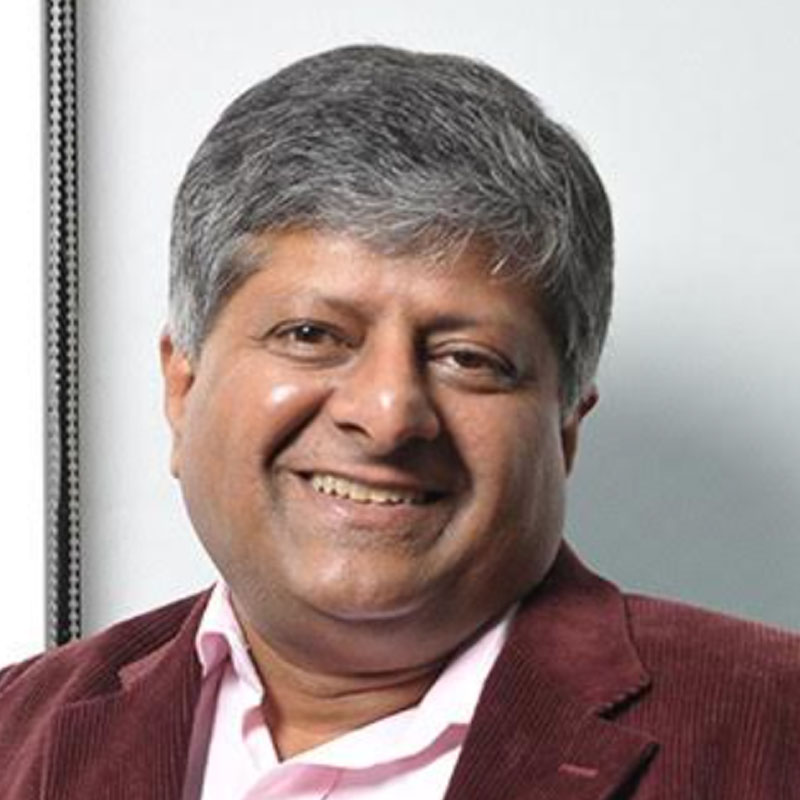
Tag: IPG Mediabrands

  • Shashi Sinha’s journey from a shy executive to the CEO-India of IPG Mediabrands

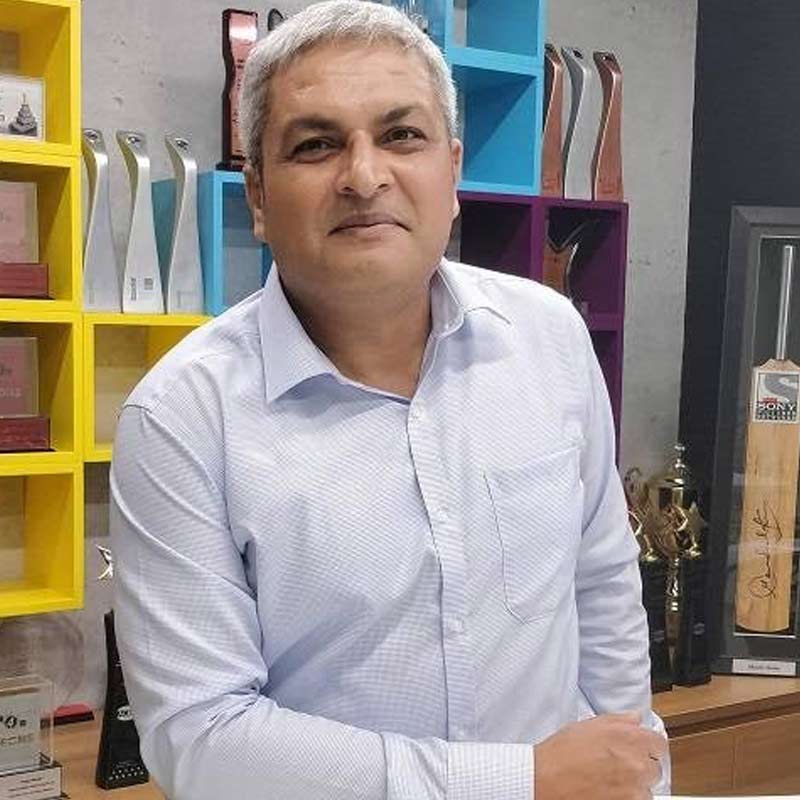
    Shashi Sinha’s journey from a shy executive to the CEO-India of IPG Mediabrands

    Coming from a sales background, Shashi Sinha had to actually take a pay cut to join the flamboyant team of Anil Kapoor at Ulka in the mid-80s, with the likes of Arvind Wable, Ambi Parameswaran, Niteen Bhagwat, and Nagesh Alai. The core team of the agency then, the men turned out to be the fortune turners for the agency, that was struggling to keep its boat sailing in those years, and Sinha gained prominence as one of the most revered minds within the industry, like all of his counterparts. 

    Today, after several decades, this soft-spoken, extremely shy yet confident man, sits on the chair of the CEO of IPG Mediabrands in India, the parent company, which bought the entire stake of Ulka in 2007, managing the second-largest media agency group that manages approximately 20 per cent of the overall media spends in the country. 

    In a virtual fireside chat with Indiantelevision.com founder, CEO, and editor-in-chief Anil Wanvari, Sinha shared his journey from being the part of the ambitious suited-booted team of Billy to leading the parent group’s functions in India and more. Edited excerpts follow.

    There have been two men in your life who have inspired you greatly; Dr Verghese Kurien and your boss Anil Kapoor, or Billy as you might call him. Please share with us the experience of working with the two. 

    The two definitely had a great impact on me. I met Dr Kurien when I was very young and worked for more than three decades with him. He taught me the importance of integrity, conviction, and self-belief. 

    But with Anil — I never called him Billy though as coming from an army background, I was taught from a young age that the boss is sir, and it took me quite some time to get used to calling him Anil too — it was a different experience. It would be far-fetched to say that he taught us marketing and advertising. But he taught us having guts. 

    He used to be very aggressive, very passionate about his work and I have seen him say such difficult words to clients, even to Dr Kurien for that matter, that none in the industry could even imagine saying. 

    To give an example, which was also our turnaround story, we were presenting to Air India at that time; JWT was the incumbent agency. Present in the room were (Subhash) Gupte and then minister of civil aviation, Madhavrao Scindia. As usual, we had prepared several designs and while we were presenting it, Scindia said that he is running short of time and Gupte asked us to quickly present what we had got. So, we started showing them the creatives without any logic, that’s when Anil (Kapoor) interrupted us and said, “…han han… aur dikhao… sab dikhao inhe…” (Yes, go on, show them everything you got).  He was visibly pissed. 

    But Scindia understood that this man is very passionate about his work and believes in the right campaign while we are forcing him to show more. The rest, as you say, is history. 

    There have been so many such incidents and imagine being an agency head so gutsy in those days. 

    Read about Shashi Sinha sharing his experience with Dr Kurien  

    Thanks for sharing that. You too have had quite a journey within the group. Did you ever imagine that you will reach here, where you are today? 

    I did not. Let me tell you a story, I have never shared it with anyone. So, I was working on the servicing side of Ulka, Ambi (Parameswaran) and I used to handle the Mumbai branch. It was in the late 90s that Anil asked me to take up media roles as well, and we began planning to set up Lodestar division. Kalpana Sathe Rao, Apurva Purohit, Arpita Menon, Ambi Parameswaran, and I worked together for it with ten other people. Apurva coined the brand name for us, and it was all going well. We were doing pretty good, we were winning awards, but we used to be very small, contributing hardly 5-6 per cent to the revenue. 

    Somewhere in the early 2000s, I was also expected to take a leadership role at a regional media agency that FCB was setting up, but that role was dismantled, and it was very painful. Then in 2004-05, Anil called me, Nagesh was also present in the room, and told me that since I have little exposure to media, why don’t I spin-off and start-up media as a separate company. 

    I discussed the proposal with some of my good friends then and they told me that probably Anil is trying to sideline me from FCB Ulka. They suggested that I start looking for other jobs. It was heartbreaking but I said, no if Anil is asking me to try something, he must be having a strong logic behind it. 

    I took the risk and just requested Anil to give us a separate office so we could create a separate entity altogether. He knew my independent streak and probably thought I will run away, but nevertheless, we moved from our Nariman Point office. 

    It took me some time to wrap my head around the job we were taking up and I was told by good friends, that we won’t be able to reach there as the job is about critical masses. But one of my good female friends told me that I don’t need to worry about profits as we are going to act as a service provider to a large agency.

    So, it all seems easy now, this decision was very difficult to take back then. But then luck played a big role. We got TATAs as clients, and then IPG started consolidating. UM was the first brand we acquired. We were working with them as partners for many years, since 2008-09. And then in 2013, the global company acquired it. 

    And then further acquisitions happened… Is your acquisition appetite over or we are looking at more, going ahead? 

    We don’t believe in acquisitions but believe in working as partners. Yes, there are multiple brands that we are consolidating, but the acquisition has been only for the digital agency, the story I just mentioned. 

    My personal belief is that acquisitions are all about merging with culture and managing them, which is not an easy task. That’s why around 80-90 per cent of acquisitions fail globally in the advertising industry because cultures do not match, entrepreneurs have different visions. I rather believe in partnerships and profit-sharing than having 51 per cent or higher stake. 

    And I am proud to say that we have been excellent in retaining our people. Even from the acquisition, we did in 2013, the core members of the team are still here with us. 
    Because you have retained your teams, is that the reason why your retention of clients is pretty high?

    I never thought like that. But as I speak now, I feel that the two are integrated but not related. Integrated in the sense that consistent teams and people understand the brand philosophy better and then they work as teams. 

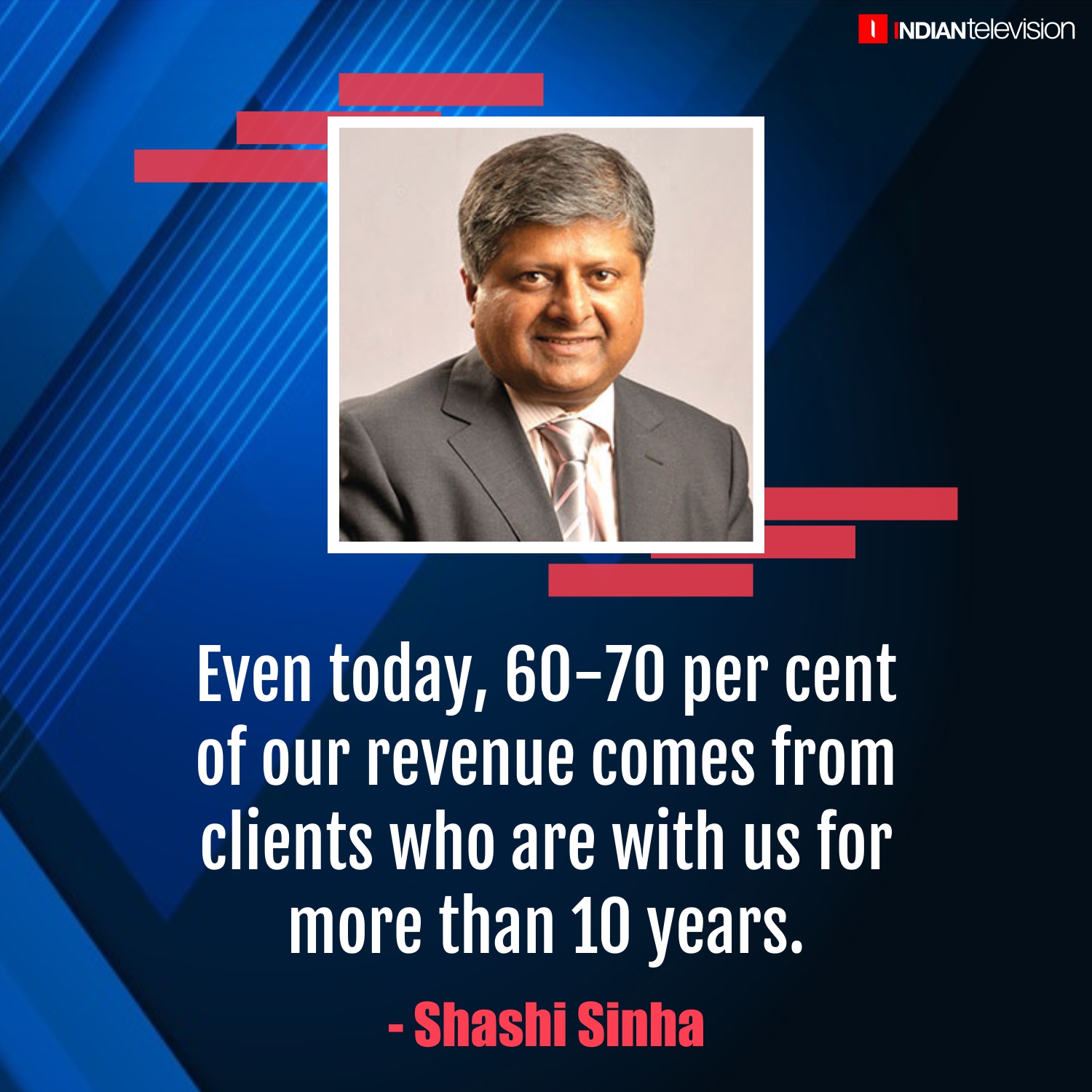
    Additionally, we are very hands-on with our clients and their queries. We are not in the advisory business, but we consult them. That keeps the relationships with clients going. Even today, 60-70 per cent of our revenue comes from clients who are with us for more than 10 years. 

    And how much is the Indian business contributing to the overall group revenues, globally?

    India is a strong market for IPG. If we look at it from the purchasing by the parity factor, we are amongst the top 2. 

    Also, the culture of American companies is very stock market-driven. So, they don’t look at your profits as such, but there is constant pressure to maintain margins. That’s what we have to focus on. 

    Read More news about Shashi Sinha 

    But maintaining the margins during this pandemic would have been challenging…

    Yes, there is always this fear of pay cuts or job losses when it comes to maintaining margins. It was difficult in the past few months. In April-May, our revenue went down by 30 per cent. But we are slowly getting back on track. Also, I am glad that we are hanging in there. We all took pay cuts, but I am happy that we did not have to let any people go. 

    And also at an overall agency level, as some of your counterparts have shared with us, the valuations are low, toplines are shrinking, and share prices are suffering. And with big data and tech companies posing as a threat, it might get difficult from here. What are your thoughts?

    I think we tend to undervalue ourselves. Yes, the advertising industry has faced losses to a certain extent, but having said that, each and every agency has taken some positive strides. All of them are making profits, they are earning money. 

    It’s very easy to say that big (tech) companies are coming in but see, we have a unique capability as advertising agents; we have service industry mindset and we also have analytical skills, which are different. No one can match our ability when it comes to price points. I think we will stumble initially, but we will make our own way surely. There are challenges in the business, but it is a business of fun and joy. We have given life to it and we will continue to do so. 
  • THROWBACK: Shashi Sinha remembers his days with Verghese Kurien

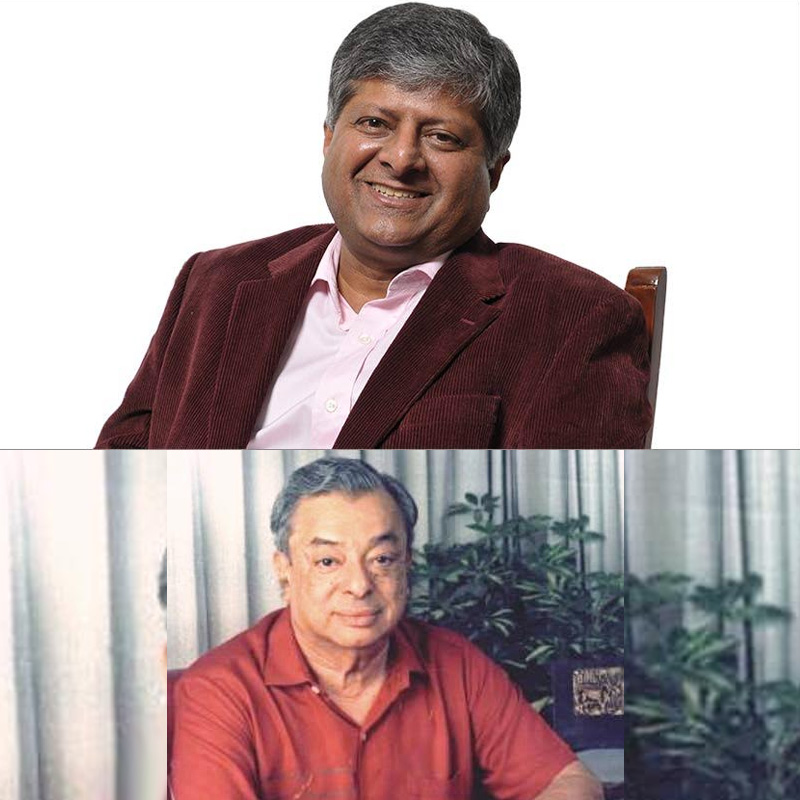
    THROWBACK: Shashi Sinha remembers his days with Verghese Kurien

    NEW DELHI: The father of White Revolution, Dr Verghese Kurien is a highly respected man in the business as well as the advertising world. Probably the only client who has given a free hand to all the agencies to follow their convictions and handle the business without worrying about making blunders, he has remained an inspiration to many.

    One such person who has admittedly learnt a lot from the firebrand leader and visionary is the IPG Mediabrands CEO–India Shashi Sinha. In a fireside chat with Indiantelevision.com founder, CEO, and editor-in-chief Anil Wanvari, Sinha reminisced about the golden days he spent working for Kurien and his iconic brand Amul.

    “It was the monsoon of 1986 when I had first met Dr Kurien. I was five-six months old at Ulka when he just showed up, with Vivek Matthai, at our agency’s reception to meet our boss Bal Mundkur. Our secretary did not know who he was and made him sit in the conference room while she looked around to find someone to meet the man. Luckily, I was the first person she saw,”  he shared with a smile.

    “Now, I had an idea who Dr Kurien was but I was still unaware of the scale of the business he was creating. I entered the room and he asked me where my boss was. I told him Bal Mukund was not around. It dawned on me how big a person was sitting in front of me when he invited our team to visit Anand. And I was at a loss of words suddenly, stuttering. Nevertheless, he put me at ease and asked why don’t I come over too,” he added.

    Sinha was stunned and also amazed at the fact that a client of his stature himself visited the agency to meet the team.

    After a week or so, a team from Ulka visited Anand, including Sinha, who was the junior most member of the cavalry.

    “I went there with my bosses, who were all very experienced senior people, who started introducing themselves to Dr Kurien sharing their background and experiences. And he suddenly said, ‘That’s the problem in our country. You people come and join brands and make a blue soap if that doesn’t work you make a red soap, and if that too doesn’t work, you make a green soap…’ Then he talked to us for an hour, very passionately about the cooperative movement and Amul,” Sinha quipped.

    Sinha himself was sitting in a corner at that time, smiling to himself thinking how lucky he was to be sitting in the farthest corner and not getting a chance to introduce himself.

    “Young man, why are you laughing,” Dr Kurien asked Sinha, who replied, “Because whatever you are saying is so nice and at the same time it is humorous we are on the wrong foot.”

    “If I may say so, that was the moment that Dr Kurien grew a liking to me,” Sinha proudly shared.

    He further shared another incident, about the first pitch Ulka took to Dr Kurien for Amulya powder.

    “He had called our team once and said that he doesn’t work on a project basis and works with long-time partnerships. Once I hire someone, they will be with me for life. But I will start with a small project. So, he gave us Amulya powder and asked us to come back a few days later with our ideas.”

    His team went with five creatives after fifteen days and presented them to the team, including Dr Kurien.

    “At the end, he asked us which one we recommended out of the five. Now, there was a painful silence in the room as everyone was so intimidated with a big man asking a question like that. So, I picked up a pack and he just walked out of the room. Everyone turned to me asking what I had done,” Shashi enthusiastically shared.

    “That day, he gave us a message that he trusts us as professionals. He expected all of us to come to the meetings with a point of view and stand by our convictions. He will obviously ask questions, but he won’t question our decision. The second thing he said to us is that every mistake is allowed and it won’t impact our partnership or financial integrity. And he stood true to that. We made hundreds of blunders and he pardoned us a lot. As far as the Amulya packaging is concerned, it is still there.”

    Sinha proudly shared that during his more than three-decade-long association with Dr Kurein he learnt a lot about life and work. “I am so happy that I crossed paths with a man like him at such a young age in my career. He taught me the value of strong focus and integrity. He taught me how important it is to have conviction and having the big picture. He always said that more than anything, it is important to be true to yourself.”

  • Virtual Fireside Series: A week of exploring the new world order in the marketing space

    Virtual Fireside Series: A week of exploring the new world order in the marketing space

    NEW DELHI: The world of advertising and marketing is going through a massive transformation as the new normal of the pandemic-era syncs in. A business that was based on millions of face-to-face meetings and gazillions of group discussions has gone digital almost completely. Now client relationships are being built across screens and internal meetings are getting virtual. A sea change in consumer behaviour is also expected as they learn to live on bare essentials. 

    All this has been leading to a change in client behaviour too. There is a more than ever increased focus on digital mediums, traditional mediums are expected to transform, and the changing consumer sentiments are leading to great creative transformations too. The publishers are also reworking on their strategies. 

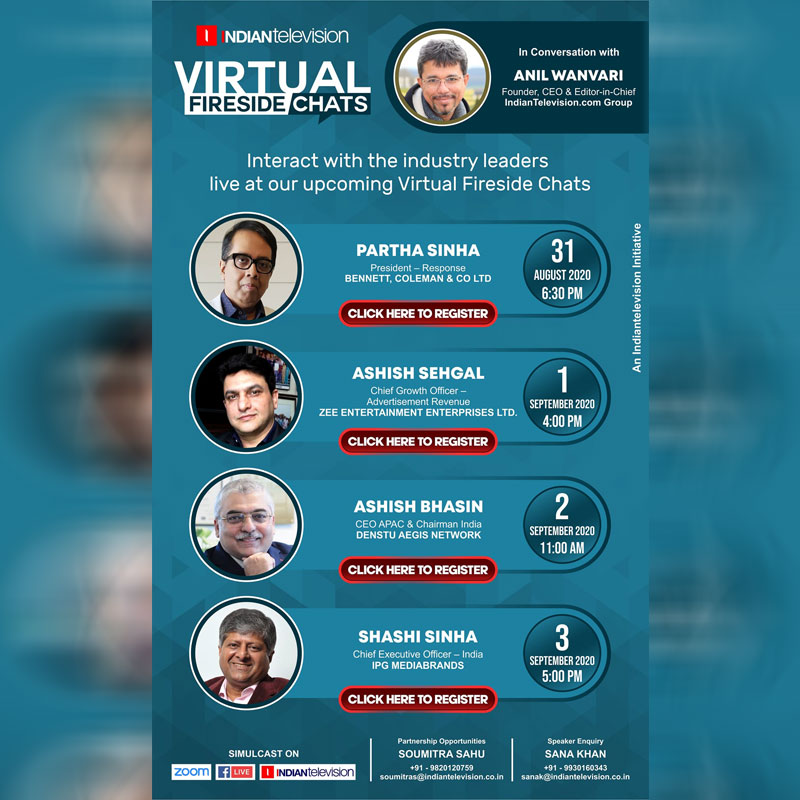
    To understand this new order of the marketing and advertising world, Indiantelevision.com will be hosting a series of fireside chats with the stalwarts of the industry, who will be answering some interesting questions by our founder CEO and editor-in-chief Anil Wanvari. The audience will also get a chance to directly interact with the speakers as the discussions will be live on our social media channels and website. 

    Starting today, the first live discussion will have Bennett Coleman & Co Ltd president-response Partha Sinha giving an overview of the print and digital publishing industry. It will go live at 6:30 pm and you can register for the same here.

    The next discussion scheduled for tomorrow 4:00 pm is with Zee Entertainment Enterprises Ltd chief growth officer advertisement revenue Ashish Sehgal. Register here

    On 2 September, we will be going live with Dentsu Aegis Network CEO APAC and chairman India Ashish Bhasin who will highlight the global perspective along with Indian market sentiments. You can register for the 11:00 am live here.

    The last episode, going live at 5;00 pm on 3 September will feature IPG Mediabrands CEO-India Shashi Sinha giving an extensive insight into the Indian market and changing scenarios. 

    Keep watching this space for more information. 

  • IPL and festive season to boost marketing sentiments: Experts

    IPL and festive season to boost marketing sentiments: Experts

    NEW DELHI: The Covid2019 has not only crushed the global economy, but it has badly impacted the live sporting events across the world. Every sporting event was canceled or postponed due to the virus, including the Olympic 2020. While some of the games resumed in Europe and the US, there has been a major upheaval in the sporting calendar.

    India's mecca of sports, Indian Premier League (IPL) is all set to take-off from 19 September in UAE, and cricket fans are eagerly waiting for this sporting event.

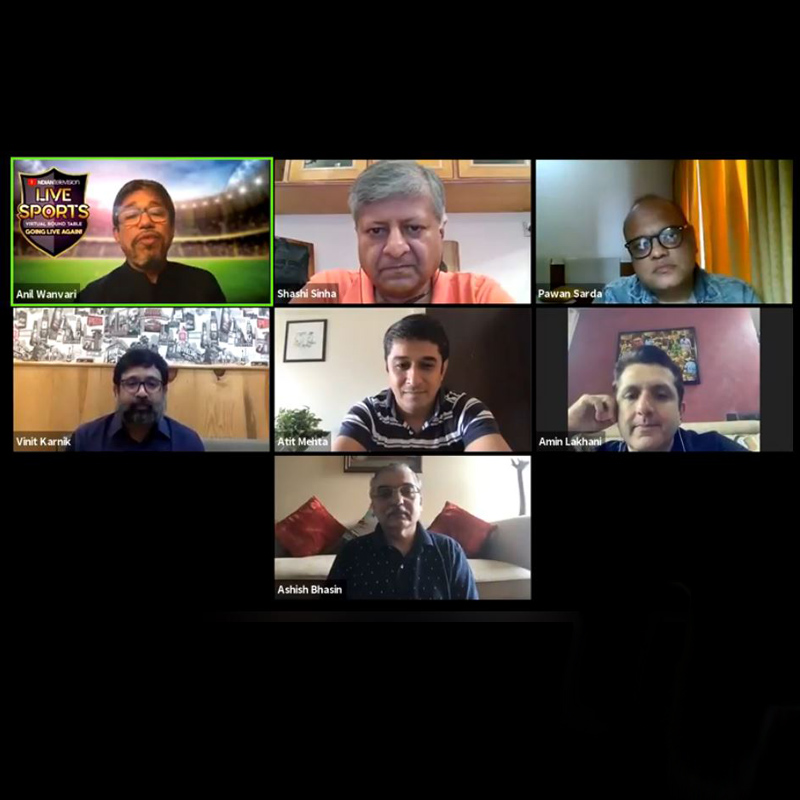
    Indiantelevision.com organized a virtual round table to discuss more on the current state and future of Live Sports in India. The round table witnessed several industry veterans sharing their opinions and insights on the subject. These veterans included – Mindshare South Asia, COO Amin Lakhani; Dentsu Aegis Network CEO APAC & Chairman Ashish Bhasin; Byju’s head of marketing Atit Mehta; Future Group’s group CMO (Marketing, digital, and e-commerce) Pawan Sarda; IPG Mediabrands CEO- India Shashi Sinha; Group M India business head (Entertainment, Sports & Live Events) Vinit Karnik. The discussion was moderated by IndianTelevision.com Group Founder, CEO & Editor-in-Chief Anil Wanvari.

    Hence, the question being asked is: will the IPL’s overlap with the festive season lead to a drop in viewership for the GECs and advertising dollars being sucked out from them towards the league?

    DAN CEO APAC & chairman Ashish Bhasin exclaimed, “It will depend on how much marketers are willing to shell out, and the next three months will disclose how marketers are going to make their next move. Covid2019 has taught us to be more adaptable. Decision-making has become more agile.”

    Talking about anti-china sentiments, he said, “I don't think there will be any impact on Chinese brands. I see it as a temporary blip, and it won't impact IPL significantly.”

    Experts hope that this festive season will bring back the cheer among consumers to buy, which will eventually help the brands. “IPL will be a great stimulator to the festive season,” shares IPG Mediabrand CEO – India Shashi Sinha.

    Group M India business head Vinit Karnik describes the upcoming months as very crucial. “From now, India will see three big festivals ­- Ganpati, Durga Puja, and Diwali. However, the fourth festival, in this pandemic, will be IPL. My optimism comes from the conversations we have had in the past 2-3 weeks, which have been very encouraging. People are willing to spend on this little festival, and that’s an opportunity for us.”

    Therefore, the question being asked is: Can we see marketers investing in spot buying instead of buying packages deals during this IPL?

    Mindshare South Asia COO Amin Lakhani affirms, “As we move forward, people are taking calculative decisions. The window is open till November end, and a lot of brands depending on their strategy will take a call, and these packages will make a bulk of consumption from the IPL perspective. There are a few clients who are evaluating their positions and want to be a part of it, but it depends on how the business shapes up.”

    He believes that IPL is a wonderful opportunity, and brands are willing to be a part of it. They are making initial strategies on how they want to participate.

    On brand sponsorship, Karnik says that this will have a huge impact on teams as most of the team sponsors rally with IPL for two reasons- brand saliency and activation. “With IPL going abroad, the activation point gets moot, and for team sponsorships, the numbers will be 12-25 per cent downward for team sponsorships point of view.”

    It has been widely reported that for this edition of IPL, Star India has set a target of Rs 3,000 crore in advertising.

    According to Sinha, “If the broadcaster reaches closer to last year's ad sales number, it will be a good sign. While the overall industry is still not doing well in terms of performance, but categories work in terms of sponsorship. It will not be as bad as people think.”

    Bhasin states that even the last two generations haven’t faced anything like this, so it is unfair to expect that this year is going to be the same as the last one. The context is where we are as compared to three years ago.

    He further says, "In this pandemic, digital consumption has reached its highest level. Digital companies have benefitted, and many of them are funded companies. They are in a much better position than many others."

    However, he believes that the only exception is live sports because you need a bigger screen. “The skew of ad spends is towards digital, but it is not at the cost of TV. Digital segment will just open up more opportunities.”

    It will be interesting to see how the next three months pan and will advertisers open up their purses.

  • What IPL comeback means to the entire industry?

    What IPL comeback means to the entire industry?

    NEW DELHI-. As numerous tournaments around the globe are making their comeback, the Indian Premier League (IPL) is going to bring smiles to cricket fans’ faces from 19 September. The game will be held in UAE this year and is one of the most sought after tournaments in recent history.

    If reports are to be believed, online gaming and sports firms are all set to spend big on television and digital platforms. With live sports back in action, the biggest question that is being asked is how the business of live sports would fare during the pandemic.

    Indiantelevision.com organized a virtual round table to discuss more about the current state and future of Live Sports in India. The round table witnessed several industry veterans sharing their opinions and insights on the subject. These veterans included – Mindshare South Asia, COO Amin Lakhani; Dentsu Aegis Network CEO APAC & Chairman Ashish Bhasin; Byju’s head of marketing Atit Mehta; Future Group’s group CMO (Marketing, digital, and e-commerce) Pawan Sarda; IPG Mediabrands CEO- India Shashi Sinha; Group M India business head (Entertainment, Sports & Live Events) Vinit Karnik. The discussion was moderated by IndianTelevision.com Group Founder, CEO & Editor-in-Chief Anil Wanvari.

    Mindshare South Asia COO Amin Lakhani mentions that since the day IPL was announced there has been a sense of positivity and it indicates that we are on the path to recovery. “There is a cautiousness in the market as the businesses have taken a huge setback in most of the segments. Many brands are looking it as an opportunity on how they can engage with IPL. The conversation with clients on IPL is three times more than what we were having with them around television ad spends in last couple of months,” shares Lakhani.

    IPG Media brands CEO- India Shashi Sinha believes that it is definitely an opportune moment for IPL to come in. “Metro cities contribute to nearly 35% of overall consumption in India. However, these cities have been most affected due to pandemic and IPL gets large traction from these regions. So, IPL is a good opportunity for brands catering to the audiences in these markets to come out from the negativity. We also feel that the sentiment is really good, and one should not compare IPL to the March – April but to what the mood was in June and July this year.”. 

    DAN CEO APAC & chairman Ashish Bhasin points out that the Indian market is more sentiment-driven as compared to any other market in the world. “If the mood is upbeat, both advertisers and consumers continue to open their purses. Last year, the economy was not doing as badly as it is doing now, but the mood was depressed. As a result, the advertising industry and many other brands were not doing well. We have already had 4-5 months of bad news, and sometimes we need an escape from it, and IPL has a potential for that. I think around the time of IPL, we will start approaching closer to normality, and once that happens, the universe will expand,” says Bhasin.

    Group M India business head Vinit Karnik opines that it’s completely unfair to compare 2020 with last year's performance. “This year has been a completely different experience for each and every sector, but still, I believe there is a reasonable amount of head-room for both GECs as well as the sports sector to survive. I think we have a decent amount of headroom to manage both,” he further adds.

    Future Group’s group CMO Pawan Sarda defines the last few months as a complete washout and believes that businesses are still struggling as they have not reached 30-40 per cent of the previous year. Says he, “It’s time to step back and observe how things will happen and then make a decision on our spendings. IPL is a platform that sets the mood for the country. A good amount of advertising is always good for healthy consumption, and since we are in retail, we tend to get the benefit from it. We are not committing anything right now.”

    During this lockdown, e-learning has performed exceptionally well. Byju’s head of marketing Atit Mehta shares, “For us, the past 4-5 months have been good in topline and bottom-line growth. We are optimistic and looking forward to the start of the festive season and every other opportunity that comes our way.”

    Says he, “As we have lost out our bid, we will now have to look at other options as far as IPL is concerned.”

    So, overall the mood is very upbeat within the brands and agencies as they keen to once again go out and reach their consumers.

  • Shashi Sinha thanks essential service providers, urges to stay safe

    Shashi Sinha thanks essential service providers, urges to stay safe

    MUMBAI: COVID-19 has forced the population to stay indoors; and industries are moving their functions to online. In this unprecedented situation,  citizens are counting on the essential service workers who are risking their health to  keep the society running smoothly. Some of them have been working silently without us realising that how important they are. Leaders from the media and entertainment industry express their gratitude to healthcare providers and other essential services personnel for their support during the  pandemic.

  • Republic Bharat has made a smashing entry into the Hindi News genre

    Republic Bharat has made a smashing entry into the Hindi News genre

    MUMBAI: The Week 1 performance means that in just 7 days Republic Bharat has made tremendous inroads and on boarded audiences that some established brands have taken many years to reach. The breathtaking start for Republic Bharat, which delivered exclusive after exclusive in novel formats within the hard news space, has not only shaken up the entire Hindi news genre with its thunderous entry but has also sounded the bell for all content players in Hindi news ahead of the crucial election.

    Coming on the back of storming into English news with Republic TV in May 2017, Arnab Goswami’s Hindi news brand’s Week 1 reach is unprecedented when compared to other launches within the Hindi Genre. The Highest reach genre which is Hindi Movies has seen 2 launches in last 3 years i.e. Rishtey Cineplex and Sony Wah andboth the channels launched with a reach of 5 Crs in its opening week and have grown today 3X of their entry reach numbers.

    Meanwhile, continuing his run of being the top-news anchor in the country, Republic Bharat’s editor-in-chief Arnab Goswami’s own 7pm debate show, Poochta Hai Bharat, on his newly launched Hindi channel has garnered the highest reach in the genre.

    “This is a brilliant start. Republic Bharat has beaten six channels and has a reach of seven crore plus in week one. No Hindi channel has had such a start and it's a matter of time before we hit no 1 now,” Republic Media Network editor in chief and managing director Arnab Goswami said.

    Bharat’s extensive focus on big stories within its first week of broadcast creative massive impact with #MamtaBlocksCBI  and #ShardaStings which not only delivered blockbuster impressions on social media but have also got Republic Bharat the #2 position in West Bengal.

    Republic Network CEO Vikas Khanchandani said, “We are extremely happy that Republic Bharat has opened the charts with a massive 73 Mn reach in its maiden week. Our distribution and content teams have worked very hard to give us this fantastic start within the mass reach genre. The reach garnered is the highest that any new hindi channel launch has delivered in its opening week in the last 3 years. I am extremely confident that with this magnificent start the channel will move into the top slot much faster than I anticipated. I am extremely grateful to our audiences and partners that have helped us with their support and acceptance within the Hindi news category.”

    With Republic Bharat leaping into the market and basing its content on bringing back hard news to Hindi news television right from Week 1, the large-scale debut of the channel clubbed with its unmatched launch-week reach means that the channel is all set to be a front runner in the category in the big election season.

    IPG Mediabrands CEO Shashi Sinha said, “The Republic team has worked hard to deliver a reach of 73 MN in its week of launch. They have given a repeat performance on their launch strategy by delivering big breaking stories and delivering massive reach. It's a very good start and will give them an opportunity to build reach and market share in the coming weeks as the news genre sampling is very high in the run up to Elections. The Hindi genre is seeing an entry of another strong brand after a long gap of 6 years.

  • Initiative appoints Alok Sinha as chief strategy officer

    Initiative appoints Alok Sinha as chief strategy officer

    MUMBAI: IPG Mediabrands has appointed Alok Sinha as chief strategy officer in line with the agency’s transformational vision merging legacy with new-age dynamism.

    In his new role, Sinha will be driving Initiative’s strategic planning nationally and will be working collaboratively with all clients of the agency, including Amazon, Reckitt Benckiser, Bajaj Auto, Dish TV, Too Yumm, Anchor Electricals, and Carlsberg, to name a few.

    Sinha moves from Ogilvy & Mather, where he headed strategy for the northern region as president – planning. 

    “Alok comes with multifaceted experience which is rare to find – research, consumer insight, tools, media strategy and account planning in a creative agency. His coming on board is a demonstration of our commitment to raising Initiative’s strategy, tools and product to a whole new level. I am delighted to have him on board,” says IPG Mediabrands CEO Shashi Sinha. 

    Armed with a bachelor’s degree in Physics and an MBA in Marketing, Sinha began his career as a trainee with Lintas (now Lowe) in Mumbai with its research wing, Pathfinders. He then moved to the Gallup Organisation, where he managed to transform its smallest revenue client into its biggest.

    Seeking a more well-rounded exposure, Sinha then moved to the creative side and joined Ogilvy & Mather as a planner, where he worked on brands like IBM, Unilever and Vodafone. His stint in Ogilvy was followed by a long period in media agencies, including Carat and Mindshare, in multiple roles ranging from communication planning & business development to strategy and tools and process both in India and the Asia Pacific region.

    Talking about his association with Initiative, he said, “I am back to Media where my heart belongs. Initiative is in a process of transformation and I am thrilled to be part of this change.”

  • Arun Sharma elevated to COO for Delhi business at Initiative

    Arun Sharma elevated to COO for Delhi business at Initiative

    MUMBAI: Initiative, which is a full-service media agency from IPG Mediabrands, has promoted Arun Sharma to the role of chief operating officer for Delhi business. 

    Prior to this, as senior partner of Initiative, Sharma played a pivotal role in spearheading one of the top clients of the agency, Reckitt Benckiser. Last year, Sharma was also given the additional mandate of IPG Mediabrand’s newly launched unit ‘Magna’ and was named managing director of the division.

    Initiative CEO Vaishali Verma says, “We couldn’t have found a better person for this position as he is one of our own and has been leading the RB business for the last 4 years with many industry and RB India firsts. Our approach to rapidly interpreting and acting on cultural data signals, creating relevant, long-lasting consumer connections that drive business results.”

    Talking about the new role, Sharma mentions, “Indian media industry is going through very exciting times. Initiative with its strong brand equity, perfect mix of large and reputed global and local clients, cutting edge tools and techniques, strong product offerings, talented and driven bunch of people is best poised to serve its client in this dynamic market scenario.” 

    In his dual roles as COO Initiative Delhi and MD of Magna, his key priority would be to help the clients grow their business by leveraging the company’s expertise, strategic use of tools, by implementing their global learning and dominant scale in media.

    Sharma started his career with Madison in 1998 as strategic planning supervisor for the Coca Cola Business. In 1999, he moved to Universal McCann as associate media director and handled businesses like Nestle, L’Oreal and Gillette. In 2003, he had a brief stint with Mediacom following which Sharma moved to the client’s side and joined Bharti Airtel as DGM Marketing. Following a stint of 11 years, in 2014, Sharma quit Bharti Airtel as VP marketing – head media (All Business, South Asia) and moved to Initiative as vice president to handle Reckitt Benckiser account as business head.