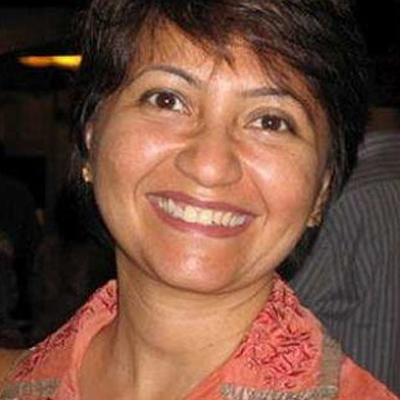
A vibrant and curious professional is what describes FremantleMedia India head of content Anupama Mandloi. Based out of Mumbai, Anupama joined the production house in 2010, which was then led by managing director S.K. Barua, who departed a little later. But since his departure she has been involved in furthering the India strategy, along with commercial and operations head Vidyuth Bhandary, of the subsidiary of German media firm RTL.
The affable and soft spoken but firm Anupama is best known for her nine-year stint with Sony Entertainment Television where she finally rose to head programming. She followed that up with a stint as the non-fiction head at Star India‘s Star Plus for two years.
Anupama loves taking the challenge of successfully setting up large entertainment properties and rolling out innovative concepts to television. She is currently creatively helming Indian Idol Junior which is being aired on Sony Entertainment Television. Indiantelevision.com‘s Seema Singh spoke to Anupama to get her insights and perspectives on the road ahead for FremantleMedia.
Excerpts:
Since you joined FremantleMedia, what are the changes that have been brought in the content? Elaborate on your experience with Fremantle?
My experience with FremantleMedia has been an eye opener. The work is truly enriching. The culture is extremely professional and the people are like-minded. We enjoy content. We take pride in what we do.
In every show, be it another season of an established format or creating indigenous content, the intent is always to push the envelope. We have introduced scripted reality shows in its true form and will be doing a lot more of that going forward.
What is the vision for FremantleMedia in India?
To be the best and to work with the best. We are also looking at creating more innovative and inspiring content. To create indigenous shows that travel worldwide.
Is non-fiction the only genre you want to cater to or are you looking at expanding into fiction and other genres as well? You seem to have a very good relationship with Sony? Have you been able to extend it to other broadcasters too? And other languages too?
We are in the business of content creation and this is not specific to any particular genre. We have not yet moved into daily soap production but we have been creating fiction and scripted reality like Savdhan India on Life Ok, Zindagi Ki Haqeeqat Se Aamna Saamna (four seasons) and have a couple more bi-weekly shows in the pipeline.
We enjoy good relations with all broadcasters. And yes, now that we have consolidated our space in content creation, we will be moving into drama as well but more on this front later.
Where would you rank FremantleMedia as a production house in India? And where do you see it going in terms of being amongst the top players in India? Do you have any competitors?
I would rank it amongst the top players. The day we establish our credentials in the daily fiction space we will be unbeatable with our teams, our international presence and content that we can carry across continents.
|
We are looking at it (the south) and while we do have licensed deals with some regional channels like Jaya TV and BIG, we have yet to get into production for regional channels
|
How did FremantleMedia fare in 2012? Did recession affect the production house in any way?
FremantleMedia started its India operation in 2010 with Indian Idol 5 and since then has produced a multitude of shows in various genres. The organisation has grown slowly and steadily and moving forward we have plans to build several verticals while strengthening the core. 2012 was a very good year for us.
What is FremantleMedia‘s core competence in India? How large is the team? How is it structured? How many shows is Fremantle working on currently? How many hours of production have you achieved across all your shows to date?
Our core competence is production and content creation. The internal team is lean but we work with freelancers on a project basis. We are particular about the people we work with and we focus on building talent.
Our belief is that shows are as good as the people who make them. So we focus more on building teams. To date we have created approximately 400 hours of content.
After six seasons of Indian Idol, what led to Sony choosing Indian Idol Junior? We know it failed in the US but has done well in Latin America? Why then go for it in India?
Why not? It was the next logical step in the format in India. The talent we have discovered this season is a case in point.

What are the limiting factors of doing production and the formats business in India? And what are the good points of doing production and the formats business in India? How important is FremantleMedia India in the Asian scheme of things and in the global scheme of things?
India is important in all schemes of things, globally or otherwise. Internationally, FremantleMedia, is not seen just as a production house. We are one of the biggest distributors of content worldwide. The formats that we own are adapted, produced and licensed worldwide. Our ability to get content to travel across the world is phenomenal.
We collaborate with boutique content companies, license content and develop as well as adapt and produce across territories.
In India, lack of IP while developing and producing indigenous content is a hurdle. It would be great to see shows developed locally being adapted in other countries as well. We would be able to do that with shows that have the potential to travel.
|
The day we establish our credentials in the daily fiction space we will be unbeatable with our teams, our international presence and content that we can carry across continents
|
Any new show that can be expected this year? Any new format deals on the anvil?
Yes. There are several new shows on the anvil as well as collaborations.
How are you using digital space to promote FremantleMedia production shows? Any apps that have been added to attract audiences? What is the response to these apps? How many downloads?
Our formats have merchandising as well as digital extensions. On Indian Idol Junior itself we have launched an app this season that has had approximately 70,000 downloads.
Sony is extremely receptive and keen to push the digital experience and we work collaboratively on that front. Internationally, the second screen phenomenon is huge and all our digital extensions are geared to fulfill the parallel TV viewing experience across our formats.
Are you also looking at extending your reach to the South?
We are looking at it and while we do have licensed deals with some regional channels like Jaya TV and BIG, we have yet to get into production for regional channels.
Are you open to licensing a format in your catalogue and having another production house produce the show for a channel? Has that worked? Why and why not?
No. That will not happen while we have our production set up in the country. It makes no sense.
Is the format licensing biz becoming interesting in India? Why and why not?
Yes it is. The reason it is interesting is that there is increasing recognition of the fact that production houses own shows that have already created an audience in other territories and are now available to a new market, that is, India.The challenge is to be able to create indigenous formats and retain IP that will allow us to take our shows outside.
What are the shows that FremantleMedia has produced so far?
* India‘s Got Talent – two seasons
* Indian Idol -three seasons
* X Factor – one season
* Zindagi Ki Haqeeqat Se Aamna Saamna – three seasons
* Aamna Saamna Investigative
* Savdhan India – two seasons / 44 episodes (part of a producer mix)
* Mission Cover shot – National Geographic
* Food Food Maha Challenge Assignment