Tag: IP

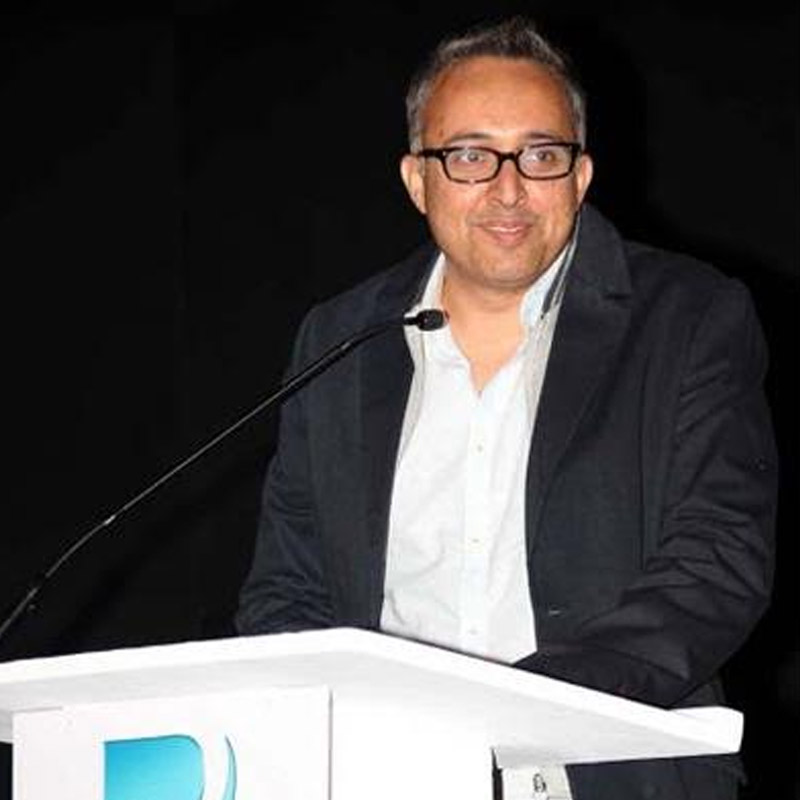
  • Kaushik Moitra elevated to partner & practice lead for regulatory, IP &TMT at Bharucha & Partners

    Kaushik Moitra elevated to partner & practice lead for regulatory, IP &TMT at Bharucha & Partners

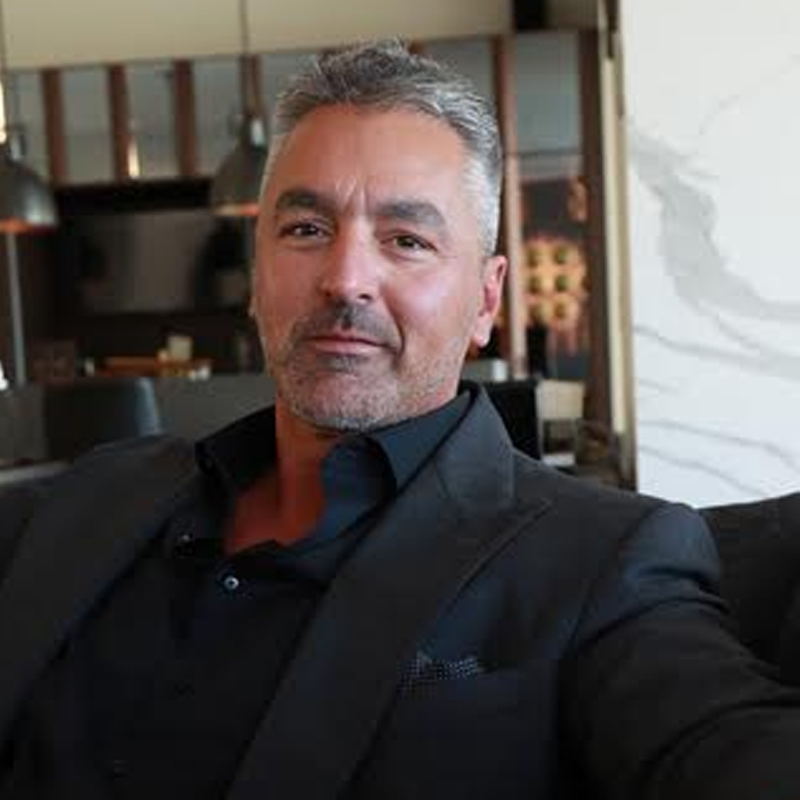
    MUMBAI: Kaushik Moitra, a seasoned legal practitioner with over 15 years in the technology, media and telecommunications sphere, has been promoted to partner and practice lead for regulatory, intellectual property and TMT at Bharucha & Partners.

    The Delhi-based lawyer, who cut his teeth at Bennett, Coleman & Co. Ltd before sharpening his legal claws at B.A.G Films & Media, has been with Bharucha since the firm’s 2017 merger with Arthe Law—itself a fresh-faced amalgamation at the time.

    Moitra’s ascension up the legal ladder comes as no surprise to industry watchers. Having spent nearly eight years at the firm, his expertise spans beyond mere regulatory matters to include private equity, mergers and acquisitions, and the ever-burgeoning start-up landscape.

    Before joining Bharucha, Moitra helped establish TMT Law Practice, India’s first boutique firm focused exclusively on technology, media and telecommunications—a legal niche that has since become a necessity in the digital age.

    The appointment reflects Bharucha’s continued commitment to strengthening its regulatory and technology practices as Indian businesses navigate increasingly complex digital waters. For Moitra, it’s simply another feather in an already well-decorated cap.

  • Something Special & TAICCA partner to co-develop and co-produce new unscripted IP

    Something Special & TAICCA partner to co-develop and co-produce new unscripted IP

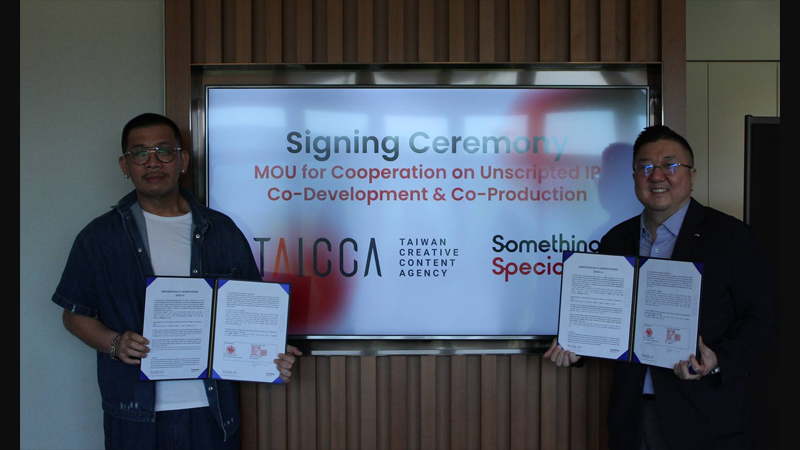
    Mumbai: Something Special, Seoul-based number one independent* international format agency, and the Taiwan Creative Content Agency (TAICCA) are excited to announce a dynamic partnership to co-develop and co-produce new unscripted intellectual properties (IP) over the next two years. This collaboration is set to begin by the end of June 2024.

    This strategic partnership was formalised with the signing of a Memorandum of Understanding (MOU) on 17 June 2024, during the LEAP co-development event in Seoul. This event was a result of a collaboration between TAICCA, Something Special, and AR Asia Productions (previously announced), aimed at enhancing Taiwanese unscripted creativity by mentoring Taiwanese producers and further developing their ideas.

    Under the terms of the MOU, Something Special and TAICCA will engage in discussions to develop Something Special’s own original paper formats IP for Taiwanese productions. The collaboration will explore diverse co-production opportunities, including working with Taiwanese producers and production companies, engaging Taiwanese celebrities and non-celebrities, and producing shows in Taiwan.

    TAICCA chairperson Homme Tsai stated: “Korean variety shows continuously innovate, providing fresh experiences. Their diverse content captures global attention and resonates with audiences. Taiwan also boasts its unique culture and creative talent. Through this collaboration, we hope to enhance the cultural and technical exchange between Taiwan and Korea. We are excited for more international audiences to discover Taiwan through audiovisual content, and to see more Taiwan-specific content shine on the international stage.”

    Something Special president & EP Jin Woo Hwang stated: “We are pleased to announce this collaboration with TAICCA, with our experiences working with government agencies and international partners, we are more than happy to take part in building the next step of Asian original content.”

  • Simon Cowell’s Syco Entertainment inks $125 mn Got Talent securitization deal

    Simon Cowell’s Syco Entertainment inks $125 mn Got Talent securitization deal

    Mumbai: Global media and entertainment investment bank ACF has recently advised Syco Entertainment, which resulted in Simon Cowell securitizing the “Got Talent” franchise by signing a groundbreaking $125 million deal.

    The Got Talent franchise includes America’s Got Talent and Britain’s Got Talent formats that have been commissioned in 72 territories worldwide, including in India on Sony.

    The deal will allow the company to use this war-chest to grow the business through a mixture of strategic acquisitions and organic growth projects.

    As advised by ACF and law firm Memery Crystal throughout the complex investment deal, Syco worked with their team in both the UK and US over a two-year period. The deal is the first of its kind as it includes securitization of various aspects of the Got Talent intellectual property, which comprise production margins and fees, digital income, franchise and original content sales, and sponsorship income. ACF’s innovative approach used a structure for the Got Talent format more commonly applied to the music industry’s royalty income streams.

    ACF founder & CEO Thomas Dey said, “ACF worked with Syco to formulate this financial strategy to support its plans and managed the entire process as the lead bank. Our brief was to create a structure to enable the company to maximise the full potential of its existing passive royalty income stream. ACF has created a winning formula using our extensive experience from across the media and entertainment industries. We are certain that this ground-breaking structure will be one that we will use for many media formats in the future.”

    Syco Entertainment director Ian Rosenblatt OBE said, “ACF’s certainly got talent. Their team, led by the ever-tenacious Thomas Dey, delivered on their promises and introduced the perfect partners to achieve our goals.”

  • Cosmos Maya’s glocalisation plan for animation in India

    Cosmos Maya’s glocalisation plan for animation in India

    MUMBAI: Cosmos Maya, a Singapore and India-based animation company, has revealed its plan to explore the concept of glocalisation. It believes there is a need for glocalisation to pave the way for new ideas, concepts and different styles of storytelling. The company is all set to experiment with four international co-owned IPs in the Indian market. It has already launched Atchoo in the name of Jaadu ki Cheenk on Amazon Prime Video and the other three – OPS will be launched by the name My Bhoot Friend, Leo Da Vinci will be launched as Aryan and Berry Bees as Dabanng Girls by end of this financial year.

    Cosmos Maya SVP revenue and corporate strategy Devdatta Potnis, in an interaction with Indiatelevision.com, spoke on the need for glocalisation. He said," We need glocalisation because we are so ingrained in our own style of storytelling. The kind of content that we have been consuming is the same. With the concept of glocalisation we will have new and different ideas coming in."

    Stating an example of Doraemon, which is a Japanese show on an American network and one of the popular shows in India, Potnis said, "The show is a classic example of glocalisation. It is one of the anchor shows of one of the biggest networks mainly because of tdevhe way it has been localised. So glocalisation is there by necessity. We are open to looking at these but we will try and present them in a different way.”

    He further informed, "We have four IPs and as the international market will open up, which I hope will in 2020, we will be on the verge of signing contracts." Out of the four international co-owned IPs one of them is out on Amazon- Atchoo is the English name and in Hindi it is Jaadu ki Cheenk. The other shows are in production."Today we have a bank of 104 half hours of international co-productions and it will be ready by the end of this financial year. There is going to be a slight change by the time, whether it is for a commercial reason or overall from an industry standpoint. We are going to be ready with shows," he said.

    Potnis believes that there is lot to learn from not only the western market but from the market in the east also. He shared his views on exploring the opportunities in China. He said, "If we look at the east, my current focus area is China; we have recently been interacting with a couple of Chinese companies. That market is so evolved and has quality offering for the domestic market."

    Giving an insight into the domestic front, Potnis said, "The beauty of this industry is that a lot of us cannot predict what is coming next.  Something becomes a success and then we try to reverse engineer saying this is what we want. It is upon us, the creative studio, to bring in such novelty and make it reach to such a destination that it is familiarity with novelty. It should be familiar as you want to sample it for that reason and it should be novel to prick your interest."

    Understanding the market trend, Cosmos Maya set up its 2D division after the 3D one to cater to the demand in the domestic market. "Generally that’s not how it works. Sometime back in 2014, our first 2D show went on air, which is Kisna with Discovery Kids and now we see a shift that there is so much demand for 2D. In fact, next year there is like a massive line-up of 2D shows,” he explained.

    He further said, "Initially when I go back to 2012- there was a demand from the pay-TV broadcasters that started out and the demand has been growing consistently. Of course, not everything can be continuously on an exponential growth track and yet have a CAGR which is very fancy. But then that would kind of taper when we had OTT come in 2-3 years ago. It’s still growing effectively as a quantum growth. When that demand has kind of tapered, our own OTT platform has grown. YouTube is doing really well for us; we have been looking at diversifying into other platforms. Every time there has been a growth trajectory, the level goes up automatically. We are foraying into the licensing and merchandising space as well, which will now be the next one. I think something or the other will keep coming in."

    While speaking on the opportunities, Potnis opined that there is a need to take something from India to the global market. He added that licensing & merchandising is another opportunity as is WowKidz. The company will also launch another IP called Bapu on 2 October. It had made an announcement in January that the show will be out on the 150th anniversary of Gandhiji.

  • IPL comes to Snapchat

    IPL comes to Snapchat

    MUMBAI: Snapchat has teamed up with Mumbai Indians, Rajasthan Royals, Chennai Super Kings and Kolkata Knight Riders this IPL season. The partnership will bring fans at home and in the stadium behind-the-scenes updates and the chance to show their support for their favourite team on match days through creative Augmented Reality Lenses, Our Stories and more.

    Follow your team

    Follow Mumbai Indians @mi_platan, Rajasthan Royals @rajasthanroyals, Chennai Super Kings @yelloveforever and Kolkata Knight Riders @kkrsnaps on Snapchat where they will be posting updates and behind-the-scenes highlights to their Official Account’s Story and opt-in to receive notifications when they post.

    In addition, from today CricTracker – the first cricket publisher on the platform – and Sportskeeda will launch on Snapchat’s Discover providing up-to-date news on all things IPL through their own Publisher Stories.

    Get creative

    Fans will also be able to celebrate key moments and show their support in creative ways – wearing their teams’ colours with special augmented reality Lenses as well as adding creative touches to their Snaps with a range of custom filters and stickers.

    There will also be Our Stories around the opening weekend games in Chennai, Mumbai, Jaipur and Kolkata celebrating the best submissions from fans across India, with the first going live on March 25th. Our Stories are collections of publicly submitted Snaps from events and locations around the world and curated by editors at Snapchat.

  • India gets its own IPR mascot ‘IP Nani’

    India gets its own IPR mascot ‘IP Nani’

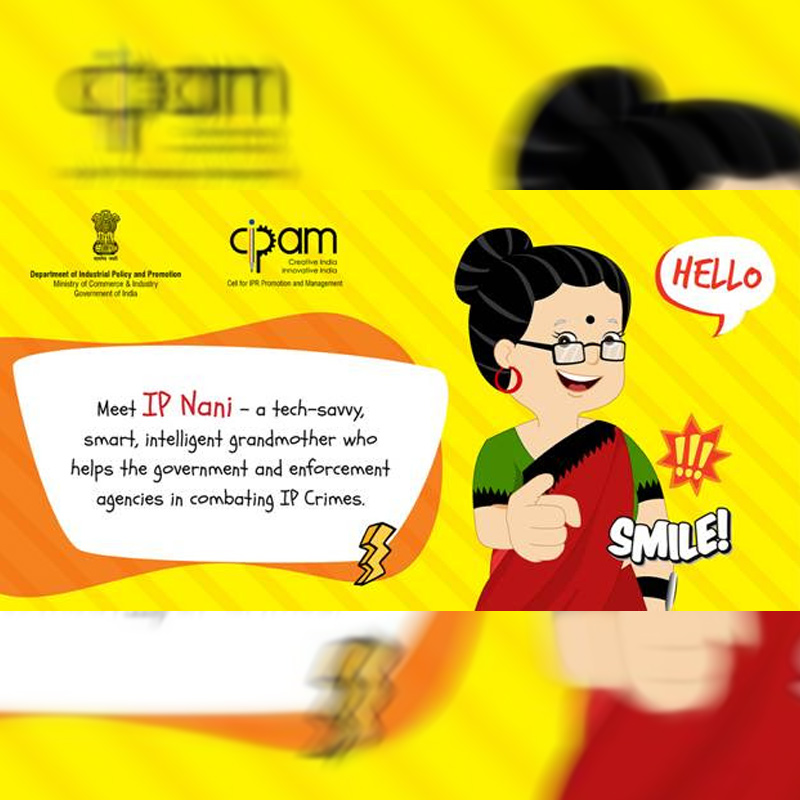
    MUMBAI: India’s intellectual property (IP) mascot – IP Nani – was launched by Commerce and Industry minister Suresh Prabhu over the weekend.

    Speaking on the occasion, Prabhu said that the protection of IP rights (IPR) is critical for building a knowledge-based society adding that mere legal provisions are not sufficient for its protection but their strict implementation is equally required. He underlined that piracy is a serious crime which should not go unpunished. He even called for creating awareness against stealing IPR and stressed on the need for participation of society in the effort.

    Mascot IP Nani is a tech-savvy grandmother who helps the government and enforcement agencies in combating IP crimes with the help of her grandson ‘chhotu’ aka Aditya. The IP mascot will spread awareness about the importance of IPRs among people, especially children, in an interesting manner.

    This character is also in line with the World Intellectual Property Organisation’s campaign for the World IP Day which celebrates the brilliance, ingenuity, curiosity and courage of the women who are driving change in our world and shaping our common future. It also highlighted that how a strong IP system can support innovative and creative women.

    The Cell for IPR Promotion and Management (CIPAM), a professional body under the Department of Industrial Policy and Promotion collaborated with the European Union Intellectual Property Office to produce a series of animated videos on IPRs for children with IP Nani as the central character.

    CIPAM has been conducting IPR awareness workshops for school students since April 2017. For the first time ever IPRs have been exclusively included in the NCERT textbook for class 12 school syllabus. These efforts are aimed at inspiring the next generation of creators and innovators to become proud IP owners.

    Also Read :

    World IP Day celebration in Delhi and Mumbai

    Owning IP not priority for Big Synergy

  • Owning IP not priority for Big Synergy

    Owning IP not priority for Big Synergy

    MUMBAI: Broadcasters today are experimenting with a new type of show ownership–that of allowing the creators to hold the intellectual property (IP) rights. Most recently, Swastik Productions decided to own 100 per cent of its magnum opus Porus, which airs on Sony Entertainment Television in India, setting a benchmark in the industry as it went around the world gathering new broadcasters in new countries.

    In an interaction with Indiantelevision.com, Big Synergy partner producer Namit Sharma, however, said that the concept of owning an IP was a very subjective conversation and not too relevant in present times. “A lot of people hype it to make themselves look good, so it makes you look like a kingpin when in actuality, the real monetary value of that IP could be nothing,” he said.

    “I feel that the whole conversation in the industry is overrated. We want to be careful about when we do it and how we do it. We are a production service company. If we wanted to own an IP, we would have started making films, raised Rs 800 crore and taken the risk,” he added.

    Digital players are furiously churning out new formats to attract the moving eyeballs of younger audiences. New formats, ideas, execution–you get it all. But TV isn’t far behind. TV today has innumerable reality shows to pick from and is not restricted to saas-bahu sagas, sitcoms and period dramas.

    Sharma, feels that the Hindi GEC genre will not be experimenting anymore but this will be the prerogative of the digital industry. “They [Hindi GECs] are going to try and stick to what they have, whereas now all the experiments will start happening in the over the top and regional. We have a lot of developments happening in both these spaces,” he said.

    Shedding light on his plans for digital space, he said that talks with industry daddies Amazon and Netflix are on. “As part of a two-year plan, we intend to focus on getting together with storytellers; they could be filmmakers, writers, book authors, film writers, and they could be people who may have never written anything.” Big Synergy will set the ball rolling in the regional market with South India.

    Big Synergy, a part of the Anil Ambani-led Reliance Group, had tied up with Phantom Films, led by Anurag Kashyap, to create entertainment content across television and digital media. Speaking about the partnership, he said that there wasn’t any phenomenal interdependence apart operational synergies between the two entities. Both production set-ups co-ordinate in interesting ways behind the scenes.

    Recently, Big Synergy produced a web series for Viu named Kaushiki that has garnered a lot of traction for the OTT platform. The production company is looking to produce five marquee web series, such as Bose: Dead/Alive, in the next one year along with its slate of regular shows for OTTs.  

    Also read:

    Sony Yay banks on originals with a slew of fresh content

    No reason for GECs to panic as IPL grabs eyeballs

    The era of dance reality shows

  • M&E items get GST relief from 15 November 2017

    M&E items get GST relief from 15 November 2017

    NEW DELHI: In a major relief to the media and entertainment (M&E) sector, the goods and services tax (GST) has been slashed on a large number of items including electrical apparatus for radio and television broadcasting from 28 per cent to 18 per cent.

    Although the government has failed to address the primary issue of entertainment tax which is a great dampener in view of the losses due to video piracy, the reliefs announced are a winner. The change in taxation is effective from midnight of 15 November 2017.

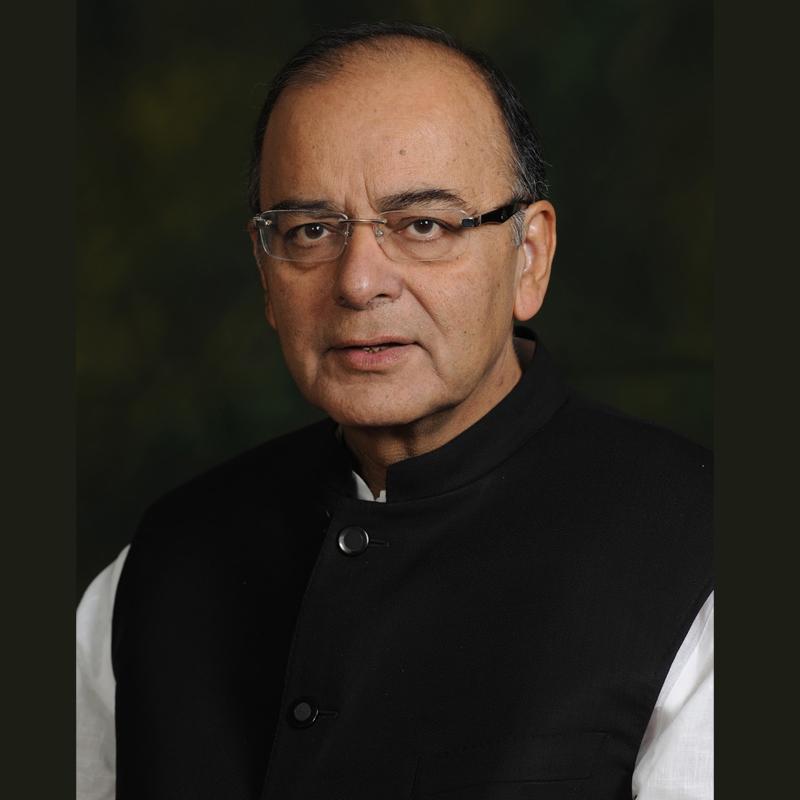
    In its last meeting held in Guwahati in Assam, the GST council under the chairmanship of finance minister Arun Jaitley agreed to cut the GST on several items in the M&E sector.

    Goods on which the council had recommended reduction of GST rate from 28 per cent to 18 per cent in the M&E sector are:

    1. Electrical apparatus for radio and television broadcasting

    2. Sound recording or reproducing apparatus

    3. All musical instruments and their parts

    4. Cinematographic cameras and projectors, and image projector.

    The cable TV sector may also get some relief as the relaxation also covers:

    5. Wire, cables, insulated conductors, electrical insulators, electrical plugs, switches, sockets, fuses, relays, electrical connectors

    6. Electrical boards, panels, consoles, cabinets etc for electric control or distribution

    Apart from this, the council announced exemption from IGST/GST in temporary import of professional equipment by accredited press persons visiting India to cover certain events, broadcasting equipment, sports items, testing equipment, under ATA carnet system. These goods are to be re-exported after the specified use is over.

    The council also said that in order to obviate dispute and litigation, it is proposed that irrespective of whether permanent transfer of Intellectual Property (IP) is a supply of goods or service:

    (i) permanent transfer of IP other than Information Technology software attracts GST at the rate of 12 per cent.

    (ii) permanent transfer of IP in respect of Information Technology software attracts GST at the rate of 18 per cent.

  • Half of video production may see greater RoI migrating to IP

    MUMBAI: Ooyala, a global provider of video monetization technology and services, and the Digital Production Partnership (DPP), the media industry’s business change network, launched the industry’s first report analyzing the benefits of adopting Internet Protocol (IP)-based processes and technologies in video production, “The Business Benefits of IP Production.” The findings show that by 2022, more than half of the video-production environments analyzed in the report will recognize greater business benefits, efficiencies and return-on-investment (ROI) by adopting IP.

    Surveying nearly 30 companies across the video supply chain, including ITV, Sky, BBC and Sony, the report shows where IP migrations will result in greater cost savings, cost avoidance, creative benefits and competitive advantages. Tracking against ten different production environments, five will see the greatest ROI by adopting IP, including:

    ● IP Distribution: Companies with internet-first distribution services, OTT

    ● Live Streaming: Companies distributing live content across devices and social
    platforms

    ● Single Camera Shooting: Companies accessing on-site footage via the cloud

    ● Media Management: Companies managing, moving and storing media

    ● Cloud Playout: Linear TV stations adopting cloud-based services

    The findings show media companies with online distribution at the heart of their business, particularly OTT services, will find the greatest value and ROI in adopting IP-based technologies. Other areas that IP disruption will impact are asset management, cloud playout and post-production, benefiting from technologies that reduce manual-labor costs such as automating metadata insertion.

    “The fact is, the move to IP has inherent benefits for many processes, but only specific environments will see the greatest benefits and highest returns today,” said DPP Managing Director, Mark Harrison.

    “Within a few years, IP infrastructure may be essential in doing business because of the impact it is having across media companies and distribution.” “As the first in the industry, the report brings to light the ROI opportunities for producers, broadcasters and media companies to adopt IP processes,” said Ooyala Co-founder and SVP of Products and Solutions, Belsasar Lepe. “Media logistics solutions like Ooyala Flex provide the ability to connect inherently disconnected and on-premise systems so companies can take
    advantage of IP benefits immediately or incrementally as needs change over time.”

    Ooyala and the DPP will host a special NAB morning event on Tuesday, 25 April at 8am PST in Ooyala’s booth, SV1000, to discuss the report and the future of IP production alongside BT Sport and PBS.

    Built with superior analytics capabilities for advanced business intelligence, Ooyala’s solutions help broadcasters, operators and media companies build more engaged and more profitable audiences, with personalized experiences across every screen.Vudu, Star India, Sky Sports (U.K.), ITV Studios (U.K.), RTL Group (Germany), M6 (France), TV4 (Sweden), Mediaset (Spain), America Television (Peru), and Media Prima (Malaysia).

  • TRAI’s Consultation Paper on VoIP can affect mobile TV, IPTV

    TRAI’s Consultation Paper on VoIP can affect mobile TV, IPTV

    NEW DELHI: Noting that unified IP based backbone and the benefits associated with the converged telecom access scenario has enabled service providers to launch more and more converged services such as Internet Telephony, IPTV, Mobile TV etc., the Telecom Regulatory Authority of India has sought to know the format of voice over internet telephony (VoIP) in India.

    In a Consultation Paper on Internet Telephony, TRAI has also pointed out that use of Internet Protocol (IP)-based networks, including the Internet, continues to grow around the world due to the multitude of applications it supports and particularly due to VoIP. IP-based networks are capable of providing real-time services such as voice and video telephony as well as non real-time services such as email and are driven by faster Internet connections, widespread take-up in broadband and the emergence of new technologies.

    The terms ‘IP Telephony’, ‘VoIP’, Internet Telephony and other variants often generates confusion as there are many different definitions used by various organizations. Some use them interchangeably while others give them distinct definitions. Further confusion is caused by using the terms to refer to both the IP-based technologies and the services that are enabled by these technologies.

    Convergence is primarily driven by increasing processing power, high capacity memory storage devices, reduced price, lesser power requirement and miniaturization of the devices. High-speed data transfer is now possible which is necessary for delivering innovative and advanced multimedia applications.

    Recent trends indicate that Telecom operators are adopting converged platforms to deliver multimedia rich applications containing voice, video and data. The separation of service provisioning and its management from the underlying network infrastructure in packet based networks is further increasing the acceptability of IP based Networks. It is now possible to separate provision of service contents, configuration and modification of service attributes regardless of the network catering such service. There has been enough evidence to suggest that in future IP networks will play much important role and may ultimately encourage migration of conventional networks towards Next Generation Networks or an All IP Network.

    In view of this, the Regulator has posed around fifteen questions asking stakeholders to send in their comments by 21 July 2016 and counter-comments by 4 August 2016.

    The regulator wants to know what should the additional entry fee, Performance Bank Guarantee (PBG) and Financial Bank Guarantee (FBG) for Internet Service providers be if they are also allowed to provide unrestricted Internet Telephony.

    It says the point of Interconnection for Circuit switched Network for various types of calls is well defined, and should the same be continued for Internet Telephony calls or there is need to change Point of Interconnection for Internet Telephony calls.

    TRAI has asked whether accessing of telecom services of the TSP by the subscriber through public Internet (internet access of any other TSP) can be construed as extension of fixed line or mobile services of the TSP.

    It wants to know whether the present ceiling of transit charge needs to be reviewed or it can be continued at the same level.

    The regulation has asked what the termination charge should be when call is terminating into Internet telephony network and whether an Internet telephony subscriber be able to initiate or receive calls from outside the SDCA, or service area, or the country through the public Internet thus providing limited or full mobility to such subscriber.

    Should the last mile for an Internet telephony subscriber be the public Internet irrespective of where the subscriber is currently located as long as the PSTN leg abides by all the interconnection rules and regulations concerning NLDO and ILDO, asks TRAI.

    It wants to understand the framework if number portability is allowed for Internet Telephony numbers.

    In case it is not possible to provide Emergency services through Internet Telephony, will it be enough to inform limitation of Internet Telephony calls in advance to the consumers, asks TRAI.

    Since the 1960’s when digital voice communication first emerged, the Public Switched Telephone Network (PSTN) has been supported worldwide as the primary means of voice communication. The PSTN is a connection-oriented, circuit-switched network in which a dedicated channel (or circuit) is established for the duration of a communication. Originally transmitting only analogue signals, the PSTN ultimately switched to digital communication, which offered solutions to the attenuation, noise and interference problems inherent in the analogue system. The modern PSTN uses Pulse Code Modulation (PCM) to convert all analogue signals into digital transmissions at the originating network and reverses the processes in the receiving network.