Tag: INX Media

  • Karti told to move petition relating to INX Media in Delhi High Court

    Karti told to move petition relating to INX Media in Delhi High Court

    NEW DELHI: Karti Chidambaram, son of former Union Minister P Chidambaram, will have to go to the trial court or the High Court in Delhi with his petition seeking to quash a Central Bureau of Investigation FIR in a bribery case involving INX Media.

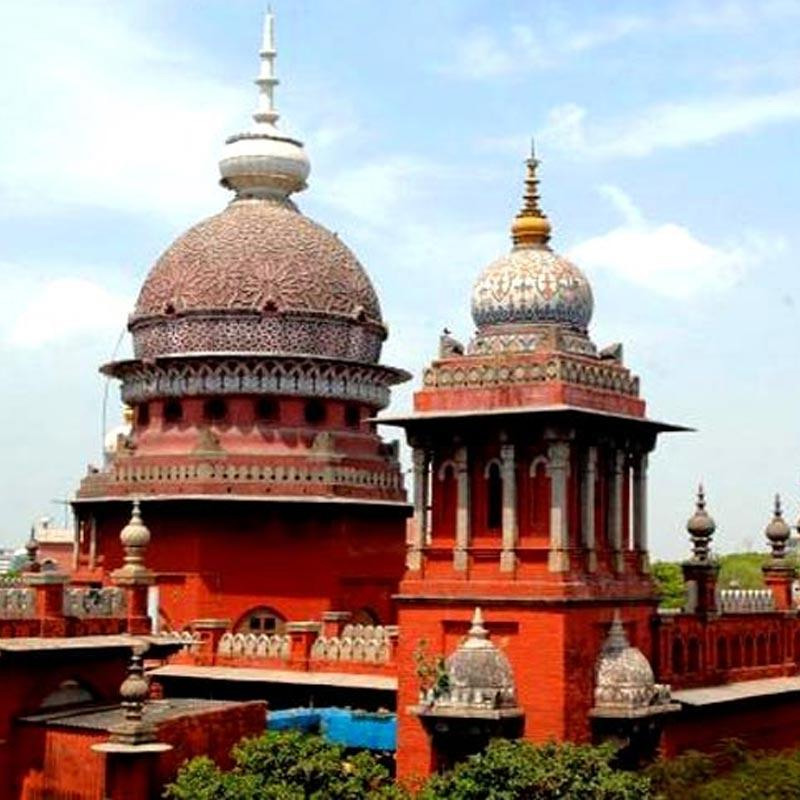
    The Madras High Court today said the case does not come under its jurisdiction and the Delhi High Court has territorial jurisdiction in this case.

    Karti had moved the court after a Supreme Court order asked him to appear before the CBI in its New Delhi office on 23 August, to help the investigating agency with its probe on the alleged kickbacks that his company, INX Media paid to get clearances from the Foreign Investment Promotion Board.

    Karti had told the Supreme Court that he is ready to appear before the agency today itself, but needs protection. While directing him to appear before the CBI, the SC told Karti to carry with him all documents necessary.

    The Madras High Court, in an earlier order this month, had stayed the Look Out Circular (LOC) issued against Karti and four others. The Supreme Court had later said that it would review the HC order cancelling the LOC issued by Foreigner Regional Registration Officer (FRRO).

    On 16 May, CBI raided the Chidambaram residence in Chennai, along with 13 other locations in New Delhi, Gurugram, Mumbai and Chandigarh. The raids were regarding a 2007 case in which INX Media had allegedly paid bribes to get an FIPB approval.

    While the clearance granted was only for Rs 40 million, the actual foreign investment was reportedly much higher. An FIR was filed against Karti, Indrani Mukherjee and Peter Mukerjea, who owned INX media.

  • Vir Sanghvi takes to YouTube to speak on Indrani Mukerjea & Sheena Bora murder

    Vir Sanghvi takes to YouTube to speak on Indrani Mukerjea & Sheena Bora murder

    MUMBAI: As the Sheena Bora murder mystery involving former INX Media CEO and co-founder Indrani Mukherjea continues to shock the nation with its developments, people are keeping their eyes glued to the news for any update that explains the possible motive behind this chilling murder. After all, the question of the hour remains, “What could lead a mother to killer her own child?” Those who can answer are also closely associated with the case, and hence are either keeping silent, or being kept away from the media by the police.

    Thus, conspiracy theories can hardly be kept at bay and those who knew the now infamous couple are coming up with their own version of why and how things might have chanced.

    One such person is popular journalist and current advisor in Hindustan Times Vir Sanghvi. Sanghvi served as INX Media news business CEO, which was floated by Peter Mukerjea and the accused Indrani Mukerjea.

    Through a short video titled ‘Curious Case of Indrani Mukerjea’ on his YouTube channel – Go Viral with Vir Sanghvi – the veteran journalist has shed light upon the psyche of Indrani Mukerjea with whom he has closely worked.

    In the video, Sanghvi draws parallels between ‘honour killings’ in villages under Khap Panchayat orders, the Arushi murder case which, according to him, still remains a mystery, and the Sheena Bora murder case, which he feels ‘is straight out of Chinatown.’

    Addressing people who have been asking him if Indrani seemed like a murderer to him, he says ‘No’ as there is hardly a way to tell a cold blooded murderer from their face. “But she did seem deranged,” he continues, “Indrani was a fantasist and the line between reality and what was in her head was blurred. I think that kind of person eventually becomes amoral,” adding with a hint that Indrani was money-minded to the core.

    He concludes the video by sharing how this incident has shaken him and how he won’t be able to look at other high profile personalities in the same way.

    Here’s a link to the video:


  • New Silk Route looking to encash part of 9X Media investment

    New Silk Route looking to encash part of 9X Media investment

    MUMBAI: The news of New Silk Route (NSR) approaching buyers to divesting a part of its stake in 9X Media is out. And Pradeep Guha, the managing director of 9X Media, who incidently also holds a small (15 per cent) stake in the group feels this could not be a better move for the network.

    “If more buyers come in with more money, then it is only going to benefit the group,” he says.

    However, he has not decided if he will be offloading his holding or keeping it. He feels that it is too early to discuss it and all depends on what happens next.

    Launched as INX Media, the company started operations with 9XM. It was renamed 9X Media in August 2010, with complete focus on its music business. (The assets and liabilities of the mother GEC 9X were absorbed by Zee Entertainment.) It currently operates five channels, 9XM (Hindi music channel), 9XO (international music), 9X Jalwa (classic Bollywood music), 9X Tashan (Punjabi) and 9X Jhakaas (Marathi).

    The NSR had invested in the network founded by Peter Mukerjea and his wife Indrani Mukerjee in 2007 and took over its reins in 2011. “We are a private equity fund so it was but obvious that at some point we will exit the venture,” says NSR Advisors partner Shantanu Nalavadi who clearly states that it is the company’s seventh year in the group as an investor.

    Nalavadi proudly proclaims that over the years, the group has become a great platform. “We are now known as a music group and we hope to be known as the music destination among our viewers.”

    He highlights that it will continue to invest in 9X Media because it has been showing 30 per cent growth year on year. “We didn’t take the decision overnight and are in talks with others over the past two years or so. And we will not leave it completely,” he clarifies.

    According to Mihir Date, a consultant with Ernst & Young says that with 100 per cent FDI allowed in non-news channels there will be many takers. He adds that the plan to sell it when the company is at a peak is a wise decision. “The position of 9X Media is good in the genre and its plans to expand are positive signals for any buyer.”

    That must be music to Guha’s ears.

  • ‘We are adequately funded by New Silk Route’ : 9X Media business head- new business Punit Pandey

    ‘We are adequately funded by New Silk Route’ : 9X Media business head- new business Punit Pandey

    9X Media has seen its share of ups and downs. Launched in 2007 as INX Media by Peter and Indrani Mukerjea, the company started with a Hindi general entertainment channel 9X, a music channel 9XM and later an English news channel NewsX.


    Then came the economic slowdown and coupled with problems at management level and fund crisis, the Indian promoters exited after selling off the English news channel.


    The new management had a huge task: to reduce debt and turnaround. INX Media sold off 9X to Zee and started focussing on its only success – 9XM.


    Today, with a new name, 9X Media, the company has four channels under its ambit. It has also relaunched in the UK.


    Indiantelevision.com’s Gaurav Laghate caught up with 9X Media‘s business head- new business Punit Pandey to talk about the turnaround of the company and how it plans to grow further.


    Excerpts:

    INX Media was into losses and your Indian promoters exited. Why did New Silk Route agree to fund the music channels while the Hindi GEC 9X was sold to Zee?
    The Hindi GEC did not work and we decided to concentrate all our energies, time and investments on 9XM as it was doing very well right from its day of launch. The turnaround story was around 9XM. NSR as a private equity partner, along with others, assured faith in not only the product but also in the management team.


    Fortunately for us and 9XM, they continued to show faith in us. And obviously, we are backed by a strong product and a strong revenue stream as a business model.


    NSR continues to partner and fund us and we have delivered on what we were supposed to. Today, we are a zero debt company and adequately funded.


    With their funding support, we have launched three more channels over the last seven months. We launched Punjabi music channel Tashan in August, first Marathi music channel Jhakaas in October and recently Jalwaa. We have also relaunched 9XM in UK.

    Weren‘t you planning to first launch the Bengali music channel in the regional space. Why didn‘t it happen?
    While you are at a business plan state, you obviously think of so many things. But if you look at it, we have managed to consolidate 9XM, which is our flagship brand. Then we have also launched three more channels and UK feed.

    And what about the performance of these channels?
    Well, the Punjabi channel has replicated 9XM‘s success across the PHCHP (Punjab, Haryana, Chandigarh, Himachal Pradesh) region and has achieved leadership status in the first week of its launch. So, it has become our second winning product.


    Jhakaas and 9XM UK also have been received well. And though Jalwaa was launched just last week, we are getting tremendous response not just from trade but also from consumers that it is looking well.


    So we have five operating products.

    But Marathi channel has not picked up yet?
    Jhakaas is not only Maharashtra‘s but India‘s first Marathi music channel. Since it is the only music player, it has been received well. But if your benchmark is going to be what Tashan has achieved in Punjabi, it is never going to be there.


    Maharashtra, as a region, is 800 GRP market, and bulk of it is from general entertainment – Marathi as well as Hindi. It is followed by movies and news. And if you see, we have not launched just a channel, but a genre. There was no Marathi music channel before Jhakaas.


    Being the first music channel, viewers have to get used to watching a music channel. Considering that, it is doing well as per our expectations. We are interacting with people, and they are liking it. To my view, it has opened well. There is scope to grow.

    West Bengal is a big market. So is Bhojpuri. But that doesn’t mean that we will launch everywhere. Let’s see, you will hear from us once we are ready to launch

    Talking about the business model, all your channels are FTA and only advertising lead. No plans for other revenue streams?
    India currently is an ad-led business model and this applies to our channels as well. A large part of our revenue is from advertising, but we have also ventured into selling our merchandise through ecommerce.


    We have to build the category. So, we have started merchandising and we have a very strong online presence.

    You have been very bullish on the digital front and all your channels have live streaming. Why?
    Currently, all our offerings and channels are in music space and large part of music consumption also happens on the online platform. So it is important that as a product we are present across all platforms, not just television but online and mobile also.


    The idea is to reach out to your consumers, whoever they are and wherever they are and online cuts across that bet.


    Online is a very important medium for us and is very visible. We are on Youtube, Facebook, Twitter, everywhere.

    But can it be monetised?
    As I said, we have already started ecommerce website; this is our first initiative. And as we move on, we will have revenue lines attached to it also.


    But yes, our business is driven by, and will continue to be driven by advertising.

    How will you differentiate between the business models of all the channels?
    Well, all our channels have a business plan and we ensure that we continuously monitor and follow it. That‘s how you see more new products.


    Each new product brings in a lot of confidence as to how the product is delivering from the content and business perspective. And that is how you move ahead.

    Which all regional markets you think have potential for another regional music channel? And when is the Bengali channel coming?
    Responding to important markets, we saw that Punjab is a good market and we got into that. Marathi is also a good market. We saw that there is a clear need gap for 25+ audiences, so we launched Jalwaa.


    Obviously, West Bengal is a big market. So is Bhojpuri. But that doesn‘t mean that we will launch everywhere. Let‘s see, you will hear from us once we are ready to launch.

    And what about English? 
    English is also an interesting space. I am not saying we are launching, but it should interest a music broadcaster.

  • Innovation the mantra in a time of increasing fragmentation

    Before embarking on a discussion about the marketing strategies used by Indian TV channels in 2007, it will be worthwhile to see what the picture could be in a few years.

    A recent report says that India will have 700 TV channels by the end of 2009. “Broadcasters will be forced to slash advertising rates and spend heavily on improving technology to ensure their channels are carried into homes, or face the prospect of being swallowed up by rivals,” the report adds.

    In fact, TV advertising was at its peak during the third quarter of 2007, with the food and beverages sector leading with 15 per cent share of overall TV advertising. The medium also saw a 33 per cent increase in volumes during January-September 2007, over the corresponding period the previous year.

    For sure, this predicted crossfire from newly launching TV channels has already brought about a number of changes in the marketing strategies of the channels. Generally speaking, these changes or trends may be summarized as follows:

    1. Increased fragmentation due to more channels.
    2. More money going into mobile marketing (SMS) stealing share from traditional media.
    3. Increased use of online social marketing strategies – Orkut, MySpace.

    SMS voting in TV shows is not a new phenomenon. Based on the premise that if a person can afford a mobile phone, s/he can surely be a potential voter, channels encourage viewers to remotely participate in the shows and support their favourite contestants.

    The numbers speak for themselves. 2005 was a record year when more than 350 million messages and phone calls were zapped on account of television. With the number of singing and dancing and acting competitions on TV channels increasing every month, and adding sms activity by the news channels, the number of messages sent this year is estimated to be in the region of 750 million.

    Speaking of new channels, it is in the dominant general entertainment genre, whose Hindi-language soaps and movies corner about 40 per cent of all TV ad revenues, where the most serious action is.

    One thing, therefore that is certain, is that the Indian television industry is no longer run by a few monopolies. Star India will face new launches from rival Zee Entertainment Enterprises as well as from NDTV, Viacom 18, INX Media and who knows who else.

    The Star Network has shown considerable ingenuity in their marketing initiatives. As Star Network marketing head Prem Kamath said, “In order to target a wider section of audience, we shifted focus to smaller towns and organized ground events. Since cricket has a unifying influence on the large bulk of Indian populace, we used cricket-centric programmes to attract a greater viewership and will build on our strengths next year.”

    Indeed, this year cricket has been among the more widely used means of attracting audiences for a number of channels. For example, INX News has roped in Sourav Ganguly as their brand ambassador. INX Media founder and CEO Indrani Mukerjea says, “Sourav is one of the most loved stars from India’s collective passion, cricket. We are proud that Sourav, too, has been keen to be associated with the INX Network.” INX News will be launching an English news channel NewsX in early 2008.

    In a recent interview, INX Media group director, brand and communications, Anthony Pettifer told indiantelevision.com that their marketing campaigns were chiefly aimed at “creating a buzz and a permanent platform as well as entertaining the target audience”. “Since we started from ground zero, we needed a logo and a motto to carve a niche in the mass market of Hindi GEC. Our original logo ‘9X,’ with the ‘X’ in eye-catching orange, has proved to be hugely successful, while our motto ‘9 times more entertainment’ is in complete accord with the logo. To dramatize our positioning, we made sure that our marketing initiatives incorporated two elements of Indian life – cricket and Bollywood. We strategically planned our channel’s launch with the release of Om Shanti Om and made use of cinema screens as a vehicle for communication. To be a leader from day one, we also organized innovative ground activities in retail malls across Mumbai and Delhi,” he added.

    There was of course Sony Entertainment Television (SET India), which had its spell of cricket action with its telecast of ICC Cricket World Cup in March. That India’s early exit skewered Sony’s plans was of course a beyond everyone’s control.

    Commenting on his channel’s marketing strategies, SET India executive vice-president, sales and revenue management Rohit Gupta says, “Our programming has been tailored to cater to a young target audience belonging to the 15-35 age group. This year, we have been successful in offering a unique content. Amber Dhara, for example, is a first-of-its-kind serial that tells the story of two conjoined sisters; no other TV channels have ever dared to deal with this theme. We are also committed to offering viewers a package of Hindi blockbusters on weekends.” To revive SAB TV’s flagging fortunes, the channel has introduced 10 new shows in the last two months. Moreover, the channel has organized a number of ground events to promote its hugely successful Indian Idol 2007. Asked about the channel’s innovations in the field of marketing, pat replied Gupta, “We pioneered the concept of client servicing in the TV industry.

    Zee TV is confident that newer marketing initiatives will take the channel even higher. Indeed, with ingenious marketing strategies, Zee’s newest scion Zee Next organised a number of innovative on-ground activities. “Our outdoor activities have been a great success. We plan to build on our strengths in accordance with the viewers’ response,” says Zee Next marketing head Tarun Mehra.

    However, media experts opine that newcomers like NDTV Imagine and INX Media are serious contenders as well, and needless to say, with the launch of Zee Next, Zee TV is faced with an unavoidable competition with itself.

    The road ahead may be exciting and promising for those who dare to compete in the Hindi GEC space, but it sure is going to get tougher and rougher than ever before. Marketing will be as much about innovating on the run as about using time tested strategies.