Tag: investors

  • Indian game makers unite under new industry body

    Indian game makers unite under new industry body

    MUMBAI: India’s game publishers and developers have found a single banner. A new industry body, the Indian Game Publishers and Developers Association (IGPDA), has been launched to give the sector a unified voice and global ambition.

    The association brings together studios, publishers, training outfits, facility providers, and investors. Its brief: to champion homegrown intellectual property, showcase Indian stories, and build skills across animation, VFX, gaming, and comics.

    Nine firms are on the founding roster, from Nazara Technologies (World Cricket Championship) and Gametion (Ludo King) to nCore Games (FAU-G: Domination), Reliance Games (WWE Mayhem), SuperGaming (Indus Battle Royale), Tara Gaming (The Age of Bhaarat), underDOGS Studio (Mukti), Aeos Games (Unleash the Avatar), and Dot9 Games (Apna Games).

    “For the first time, India’s developers and publishers have a unified voice,” said NCore founder and IGPDA chairman Vishal Gondal. “This is about more than games — it’s about building iconic IP and creating a cultural legacy for India.”

    IGPDA has already pitched a partnership with the Maharashtra government to position Mumbai as a global gaming hub through policy incentives. Its first event is slated for later this year in Mumbai.

    The launch comes hard on the heels of the Online Gaming Bill, which won presidential assent on 22 August. The law bans real-money platforms — betting, gambling, lotteries, card games with cash stakes, and fantasy sports — but draws a clear line between those and what it calls “online social games.”

    The government says it will promote esports and safe online gaming as a job creator, export booster, and innovation driver.

  • Role of ESG Factors in Stock Trading Decisions

    Role of ESG Factors in Stock Trading Decisions

    Have you ever wondered why some investors look beyond financial statements before picking shares? In recent years, ESG factors, environmental, social, and governance considerations, have become an integral part of stock trading decisions across the world, including in India.

    For participants opening their first portfolios or those planning to open a demat account for long-term goals, ESG is no longer just a niche topic. This article explains how these factors shape decisions and what investors need to understand in a practical, easy-to-follow way.

    What Are ESG Factors?

    ESG stands for Environmental, Social, and Governance. These three areas provide a framework for evaluating how responsibly and sustainably a company operates.

    Environmental

    ●    Covers how a company manages its environmental footprint.

    ●    Energy use and efficiency

    ●    Waste management practices

    ●    Carbon emissions reporting

    Social

    Refers to how a business manages relationships with employees, customers, and communities.

    ●    Employee welfare and diversity

    ●    Labour rights and workplace safety

    ●    Community engagement

    Governance

    Looks at the internal structures and decision-making processes of a company.

    ●    Board independence and structure

    ●    Transparency in disclosures

    ●    Ethical business conduct

    Understanding these pillars gives investors a clearer picture of how companies operate beyond numbers and financial ratios.

    Why ESG Matters in Stock Trading?

    For many investors, stock markets are not only about returns but also about aligning investments with values and long-term stability.

    Risk Management

    Companies that ignore environmental or social responsibilities may face penalties, reputational risks, or operational setbacks. Factoring ESG into stock trading helps investors identify such risks early.

    Market Perception

    ESG-conscious firms often attract more positive attention from institutional investors. This sentiment can influence demand for shares in both primary and secondary markets.

    Long-Term Considerations

    While short-term gains may appeal to some, others opening a demat account for retirement or wealth-building often view ESG as a marker of sustainable performance.

    Growing Importance in India

    The conversation around ESG has gained momentum in India over the past decade.

    Regulatory Push

    Indian regulators have encouraged companies to disclose ESG-related information. With more transparency, investors can evaluate how businesses address sustainability and governance concerns.

    Rising Awareness Among Retail Investors

    ●    Social media discussions around responsible investing

    ●    Broking platforms highlighting ESG-focused funds

    ●    Greater curiosity from new investors about ethical practices

    As a result, even retail investors exploring open demat account options now find ESG-friendly products available to them.

    How Retail Investors View ESG Factors

    For retail participants, ESG may appear as a complex concept. However, it is increasingly being integrated into decision-making processes.

    Practical Filters

    ●    Checking company sustainability reports

    ●    Reviewing governance scores from rating agencies

    ●    Observing industry-wide environmental practices

    Everyday Influence

    For example, investors may prefer companies with clear environmental initiatives or transparent governance structures when selecting shares for stock trading.

    ESG and Investment Products

    The Indian market has gradually introduced products catering to ESG preferences.

    ●    ESG-Focused Funds: Mutual funds and exchange-traded funds (ETFs) highlight their ESG orientation, making them accessible for individuals without requiring advanced research skills.

    ●    Direct Stock Trading: Retail investors may also apply ESG filters before applying for IPOs or purchasing shares through their demat accounts.

    ●    Balancing ESG with Other Factors: While ESG is important, it does not replace traditional financial analysis. Investors often combine both approaches.

    Common Approaches

    Here are the common things you can consider:

    ●    Analysing balance sheets and profit margins alongside ESG disclosures

    ●    Considering industry-specific risks (for example, energy vs. IT)

    ●    Comparing governance practices across competitors

    By doing so, participants achieve a more balanced outlook on stock trading decisions.

    Role of Technology in ESG Evaluation

    Digital platforms are making ESG integration easier for investors.

    ●    Online Tools and Research

    ●    Broking apps highlight ESG scores

    ●    Independent agencies publish ESG rankings

    ●    Digital reports summarise environmental and social data

    This enables even new investors who recently open demat account to access ESG-related insights without specialised knowledge.

    Benefits Observed by Investors

    While experiences differ, several themes often emerge when investors consider ESG factors.

    ●    Greater trust in company practices

    ●    Awareness of broader market trends

    ●    Opportunity to support sustainable industries

    These aspects add depth to stock selection beyond traditional financial metrics.

    Challenges with ESG Integration

    Despite its rising importance, ESG investing is not free from challenges.

    ●    Lack of standardised disclosure formats

    ●    Subjective interpretation of what qualifies as ESG-compliant

    ●    Limited historical data in certain sectors

    ●    Investors must stay aware of these limitations when making decisions in stock trading.

    The Future of ESG in Indian Stock Markets

    The role of ESG in investment decisions is expected to expand as markets evolve.

    ●    More companies adopting sustainability disclosures

    ●    Improved rating frameworks for governance and social factors

    ●    Growing participation from retail investors through demat accounts

    As awareness grows, ESG is likely to become a mainstream consideration rather than a niche approach.

    Tips for Retail Investors Exploring ESG

    For individuals interested in ESG-focused investing, a few practical steps can simplify the process.

    ●    Start small by reviewing sustainability reports

    ●    Diversify holdings with ESG-focused mutual funds

    ●    Use broking platforms that provide ESG screening options

    ●    Keep financial goals aligned with risk appetite

    By taking such measures, investors integrate ESG into their approach without making the process overwhelming.

    Conclusion

    The integration of ESG factors into stock trading is steadily shaping how investors think about the market. ESG awareness has been adopted included within the learning curve of many Indians who are pondering the idea of opening a demat account or not. Between challenges and the trend, there is a greater change in investor priorities.

    Instead of paying attention only to the short-term key performance indicators, market actors will pay more attention to the way companies engage with the society, the environment and their domestic governance. This responsibility-performance balance has been slowly reconstituting investment behaviour in India. 
     

  • Roles and Responsibilities of an Authorised Person

    Roles and Responsibilities of an Authorised Person

    In the financial markets, an authorised person plays an important role in bridging the gap between stockbrokers and investors. This person is registered under the guidelines of market regulators such as the Securities and Exchange Board of India (SEBI). An authorised person facilitates trade and improves the market reach by extending the broker’s presence to various geographical locations. In this article, we will discuss the important roles and responsibilities of an authorised person and the factors that influence their earnings. 

    Who is an Authorised Person? 

    An authorised person is an entity or an individual who is authorised by a stockbroker to act on their behalf in facilitating trade and other services for investors. The role of an authorised person is to build a business book of the stockbrokers by bringing in new investors and helping existing clients in reinvestment.  

    Key Roles and Responsibilities of an Authorised Person 

    The primary role of an authorised person is serving clients and aiding the operations of the stockbroker. The following are the key roles and responsibilities of an authorised person:  

    1. Client Acquisition and Support 

    An authorised person undertakes activities of identifying prospective investors and presenting them with opportunities on the stock exchange. They guide their clients on how to open trading and Demat accounts in union with an associated broker. An authorised person provides advisory services for clients to help in making informed decisions in investments. 

    2. Trade Execution 

    An authorised person facilitates the performance of buy and sell orders on behalf of clients. They also ensure timely and accurate trade placement to avoid differences. An authorised person stays updated on the latest market trends, policy changes, and technological advancements to serve clients better. 

    3. Market Education and Awareness 

    Authorised persons educate clients about market trends, investment strategies, and regulatory changes. They conduct workshops or webinars to improve financial literacy among investors. The authorised person provides clear information about brokerage fees, charges, and terms of service to clients. 

    4. Compliance and Reporting 

    They ensure adherence to the guidelines set by SEBI and stock exchanges. Their main role is also to maintain proper records of transactions, agreements, and client interactions. An authorised person submits periodic reports to brokers, ensuring transparency in operations. The major responsibility of an authorised person is to follow the rules and regulations laid down by SEBI and stock exchanges and avoid indulging in any fraudulent or unethical practices. 

    5. Ensuring Financial Integrity 

    They avoid unauthorised transactions and ensure funds are handled responsibly. Verify that sufficient funds or securities are available before placing orders. They protect client data and ensure that sensitive information is not misused. 

    6. Conflict Resolution and Customer Handling 

    An authorised person plays an important role in addressing and resolving client complaints. They act as a bridge between clients and the stockbroker, ensuring prompt responses to queries and issues. They mediate conflicts related to trades, account discrepancies, or other concerns, ensuring client satisfaction and maintaining trust. Additionally, they ensure that client feedback is communicated to the broker for service improvements.

    Factors Influencing the Earnings of an Authorised Person 

    Several factors may influence the monthly earnings of an authorised person. They include: 

    Industry and Sector 

    The earnings of an authorised person can vary widely depending on the industry they are in. For example, an authorised person working in the stockbroking industry might have different earnings compared to one working in the banking or insurance industry.  

    Qualifications and Certifications   

    The earning potential of an individual can be enhanced based on the qualifications or certificates they have like Chartered Accountancy (CA), Certified Financial Planner (CFP), or licenses from regulatory bodies such as the SEBI (Securities and Exchange Board of India)  

    Experience and Expertise 

    To determine the earnings of an authorised person, experience plays a significant role. An individual with years of experience may have higher earnings than a newcomer. Additionally, expertise in a particular niche or specialisation can also impact earnings. 

    Location 

    The location also influences the earnings of an individual. For instance, an authorised person who is working in a metropolitan city may have higher earnings compared to the one working in smaller towns or cities. 

    Conclusion 

    The role of an Authorised Person is indispensable in bridging the gap between investors and stockbrokers. By combining regulatory compliance with client-centric services, they contribute significantly to the efficiency and integrity of financial markets. In today’s digital age, many authorised persons use online trading app to provide seamless services to clients, offering real-time market updates, easy trade execution, and portfolio management on the go. These apps enhance accessibility and transparency, making it easier for investors to stay connected to the stock market.

  • Human bags creative design duties for SPAN Wealth

    Human bags creative design duties for SPAN Wealth

    Mumbai : Mumbai-based integrated agency Human, founded by Imran Khan and Chirag Raheja, has just signed on SPAN Wealth as their newest client.

    SPAN Wealth is a Mumbai-based wealth management company with over 500 crores of assets under management. The brand offers a gamut of solutions based on the stage of life an investor is in, and aims to partner them throughout their lifecycle of needs.

    The agency’s mandate includes creating a new identity for the brand, bringing in timeless sophistications, and creating an impactful, future-facing web presence for the brand.

    Commenting on the partnership, SPAN Wealth founder director Anish Vora said “I have known Chirag for a long time and have followed his work extensively. When he informed me that he is starting his own agency, I knew that there would be no one better to entrust with our rebranding needs. Both our companies, SPAN and Human, believe in keeping people at the heart of everything we do – so I hope that this is a long and fruitful relationship which will be beneficial for both parties.”

    Human co-founders and directors Raheja and Khan said “SPAN’s approach to wealth management is very refreshing, and their clients are testament to their abilities. More than product pushers, they are guardians of their clients’ wealth. They’re an idea whose time has come. So when Anish reached out to us with a brief, he really put the ‘happy’ in our new year wishes! We’re stoked to partner with SPAN, and can’t wait to deliver beyond their expectations.”

  • GUEST ARTICLE: 96% of NFT projects will fail, and why?

    GUEST ARTICLE: 96% of NFT projects will fail, and why?

    Mumbai: The year 2020 was unprecedented in many ways, but what was undeniably phenomenal was the rise of the crypto world, drawing new users to it. However, this dramatic escalation of the crypto world has seen another new market in the digital sphere-the NFTs, which has gathered much attention and somewhat spread like wildfire, which no one can stop. Nowadays, it can be seen that celebrities from around the world are getting into the NFT space and the press is flooded with success stories.

    It may seem that investing in NFTs is the quickest way to earn money. But, just like any other thrilling experience, there will definitely be challenges involved. As per various reports, it has been analysed that 95 per cent of investors lose money since they lack proper research and, therefore, they follow short-term projects which have no value. Amidst the crypto crash this year, it appears that the bloodbath in the crypto market has affected NFT sales too. According to a report in The Guardian, NFT sales reached a 12-month low mark in June 2022.

    Reasons why most NFT projects will fail

    A majority of NFTs (about 96 per cent) will come crashing down hard, not just temporarily, but permanently, because the creators lack experience in implementing their roadmap in the proper way or are unable to cope with emerging issues in order to establish a long-term and sustainable business. Several NFT projects are just a quick way to grab the cash with no real value or utility backing the digital asset. The main issue with the NFT marketplace is poor marketing strategy; the supply presently outweighs demand, as does the lack of actual value and utility backing NFTs, which in turn will affect the sentiment around the project.

    While large brands, companies, and innovators start exploring the NFT space and incorporating the technology themselves, they will soon begin to realise what a valuable NFT looks like when compared to all the useless NFTs presently overflowing the markets.

    The reality that modern-day NFT creators and investors fail to recognise is that, with the help of NFTs (a digital technological space), one can either build a brand from the ground up or increase the trust, value, and transparency of existing brands. In contrast, NFT creators have created nothing more than just a picture, which has little to no actual value or utility at all. The creators are not even building a brand or developing a strong intellectual property, failing to deliver quality, and even providing nothing to their customers besides the NFT itself. People need to understand that just because someone is an artist doesn’t mean the person will be a successful NFT project person.

    In addition to that, these days’ news regarding NFTs that are making headlines are mere stories about people making huge profits by selling and purchasing NFTs. These types of news tend to create the impression that either NFTs are a get-rich-quickly scam or that any NFT can easily make you a million dollar profit, while both are just untrue to a certain degree. It requires a lot of hard work and talent to benefit from the NFT business.

    There’s more to understand on NFTs!

    Going by the present market scenario, it seems that rug pulls have become the go-to scam of the NFT ecosystem, and as a result, several projects are facing difficulty in gaining the community’s confidence. Moreover, projects are failing due to a poorly organised team with no experts, poor synchronicity, and also a lack of adequate financial planning. Many NFT ventures are unable to maintain an engaged and vibrant community of supporters, which is probably the numero-uno factor behind building a project. Plus, there is a lack of uniqueness when a project is simply a copy of an existing one with the same features, benefits, and processes or if it does not grab the attention of the audience; thus, they are not able to make it to the live market.

    Currently, the NFT space is a perfect example of an overhyped market driven by greed. It’s not an easy task to head an NFT project, and in most cases, it is a tough grind to stand out and survive past launch. NFTs are just going to be another way of branding and marketing a business. Although most NFT projects are failing, that doesn’t imply that all of them are worthless. There are still some projects worth your attention, and you can definitely make profits if you understand the logic behind failing projects so that you can act in the opposite way.

    Therefore, the next time someone is thinking about purchasing an NFT, the advice is to do the research, don’t spend more money than you can afford to lose, and only purchase NFTs that spark interest. You must have the ability to build a legit business out of social media. All you need is to be extra careful when diving into this unregulated platform.

    The author of the article is JorrParivar creator, founder, and operator Digital Pratik.

  • Major League Cricket raises $120 mn funding, Microsoft CEO Satya Nadella among lead investors

    Major League Cricket raises $120 mn funding, Microsoft CEO Satya Nadella among lead investors

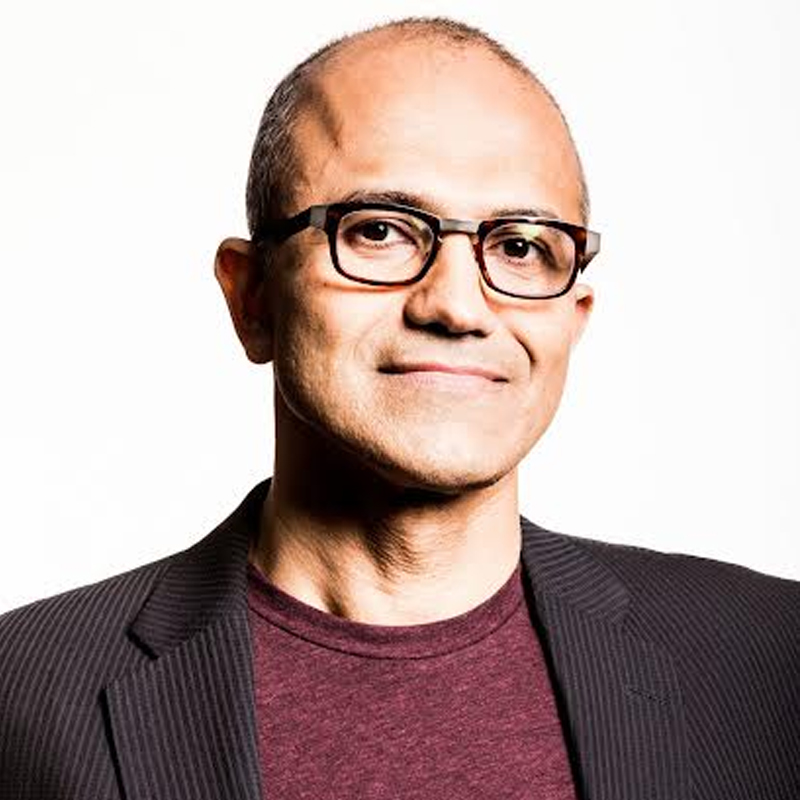
    MUMBAI: Microsoft CEO Satya Nadella is the leading investor in the $44 million Series A and A1 fundraising round by New York-based Major League Cricket (MLC), a T20 competition featuring six franchises that have been sanctioned by USA Cricket. The league is targeted to launch next year.

    With an additional commitment of $76 million in further fundraising over the next 12 months in place, MLC plans to deploy more than $120 million to launch the country’s first-ever professional Twenty20 cricket league and herald a new era for the world’s second most popular sport in the US, according to a press statement issued by MLC on Wednesday.

    “The significant funding committed by an outstanding group of investors will allow Major League Cricket to build first-class facilities and accelerate the sport’s development across the country, bringing world-class professional cricket to the world’s largest sports market,” MLC co-founders Sameer Mehta and Vijay Srinivasan said in a joint statement.

    “This investor group comprises leading business executives and successful tech entrepreneurs who have led some of the world’s most prominent companies. They bring tremendous experience and expertise in support of MLC’s plans to launch a transformative Twenty20 league and establish America as one of the world’s leading homes for international cricket events,” it further added.

    The other investors for MLC include the likes of Adobe CEO Shantanu Narayen, Madrona Venture Group managing director Soma Somasegar, founding partners at Milliways Ventures and Rocketship VC Anand Rajaraman and Venky Harinarayan, chairman of Infinite Computer Solutions Zyter Sanjay Govi and Perot Jain managing partner Anurag Jain, among others.

  • Good News Today to telecast ‘The Horses Stable’ from 11 December

    Good News Today to telecast ‘The Horses Stable’ from 11 December

    Mumbai: Hindi news channel Good News Today has announced a new show called “The Horses Stable: Jo Jeeta Wohi Sikander.” The show launched will be launched on 11 December every Saturday at 8 p.m and Sunday at 5 p.m.

    The series will feature entrepreneurs who will pitch their business models to a panel of investors and convince them to invest money in their ventures, said the channel in a statement. The format of the show will be akin to the great Indian derby, it added.

    The investors or ‘horses’ include marquee names like Freeflow Venture Builders founder and chief ideator Suraj Juneja, Angels Network CEO and managing director Nandini Mansinghka, Saha Fund founder Ankita Vashistha, angel investor Mandar Joshi, deal advisor and startup mentor Deeksha Ahuja. Uniting these stalwarts is award-winning actor, producer, businessman and serial entrepreneur Suniel Shetty.

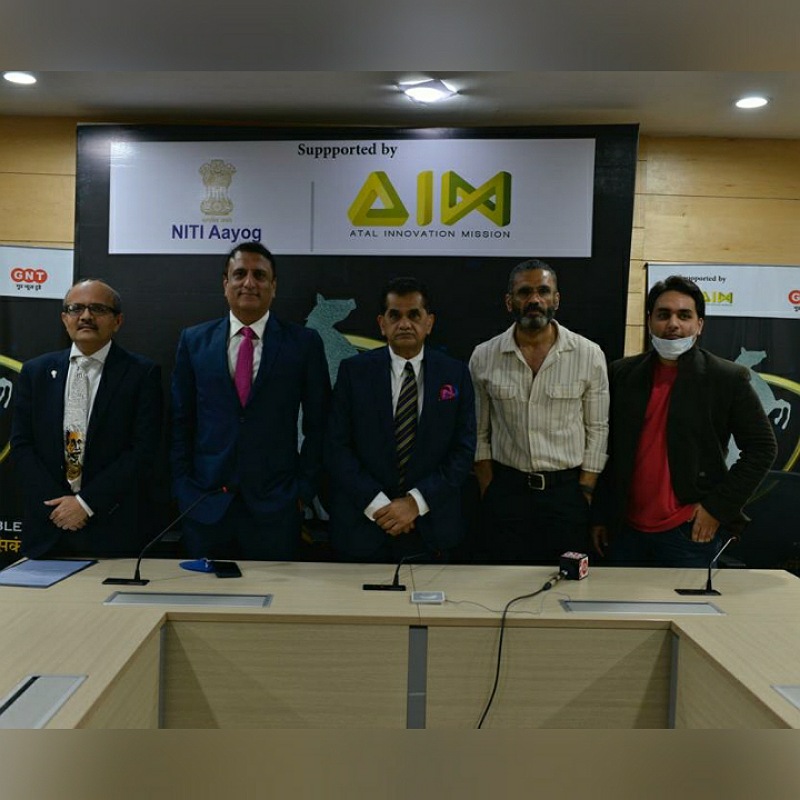
    The show is also sponsored by Vivek Bindra’s BadaBusiness.com and it is supported by the Atal Innovation Mission, NITI Aayog, and is a joint effort of Prashant Agarwal and Suniel Shetty. This initiative is also supported by MSH under the Ministry of Electronics and IT (MeitY).

    “We are proud to see what India’s brilliant business minds and entrepreneurs are able to bring to this country everyday, and the challenger startup ecosystem we have created on a global stage,” said India Today Group CEO television and radio business Rahul Shaw. “The India Today group has been tuned to the needs and aspirations of the nation for over 4 decades, and are thrilled once again to be able to provide a platform to let ideas of all shapes and sizes find the support they need to blossom and strengthen the momentum of India’s startup story. We are thrilled to bring this home on the Good News Today platform where it can reach and inspire more people than ever before.”

    The India Today Group officially launched the show on 6 December. The event was attended by Niti Aayog CEO Amitabh Kant, Atal Innovation Mission mission director Dr Chintan Vaishnav, HPPL founder Prashant Agarwal, FTC Talent and Entertainment Suniel Shetty and India Today Group CEO television and radio business Rahul Shaw. 

  • Bombay HC grants Zeel temporary relief from Invesco’s EGM notice

    Bombay HC grants Zeel temporary relief from Invesco’s EGM notice

    Mumbai: The Bombay high court has ruled in favour of Zee Entertainment Enterprises Ltd (Zeel) temporarily barring the requisition notice by its majority shareholder Invesco to call for an extraordinary general meeting (EGM).

    In another development, Zeel has also cancelled its board meeting scheduled on 27 October to discuss the unaudited financial results for the second quarter of the year ended 30 September citing lack of quorum. In the BSE filing, the company said that the next date of the meeting will be duly informed with fresh notice.

    “The decision taken by the hon’ble Bombay high court is a huge win for all the stakeholders of the company,” a Zeel spokesperson said in a statement on Tuesday.

    The National Company Law Tribunal (NCLT) hearing on a petition moved by Invesco on the EGM notice will be held on Wednesday. The NCLT is likely to follow the Bombay high court decision.

    The Zeel-Invesco tussle began when the media company’s two top investors Invesco Developing Markets Fund and OFI Global China Fund LLC who combined own 18 per cent stake in the company had sent a requisition notice to the company on 11 September to call an EGM even after two weeks, the investors moved to NCLT, citing provisions of company law, according to which the company is bound to call for an EGM within a specific number of days if stakeholder demanding it owns more than 10 per cent of the company.

    The investors had also sought the removal of long-standing directors and close associates of the Chandra family from the board. The two independent directors Ashok Kurien and Manish Chokhani have already submitted their resignations.

    The investors moved to have six nominees appointed to the board of Zeel, which included Surendra Singh Sirohi, Naina Krishna Murthy, Rohan Dhamija, Aruna Sharma, Srinivasa Rao Addepali, and Gaurav Mehta as independent directors of the board for a term up to five consecutive years. The notice was received by Zeel on 12 September, and it informed the stock exchanges on 13 September, adding that the appointments are subject to approval by the ministry of information and broadcasting (MIB).

    Zeel refused to conduct the EGM citing ‘shareholders interest’ and moved to Bombay high court on 2 October seeking to declare the requisition notice as “illegal and invalid.”

  • Investors seek removal of Zee TV board directors

    Investors seek removal of Zee TV board directors

    Mumbai: Invesco Developing Markets Fund and OFI Global China Fund LLC, shareholders of Zee Entertainment Enterprises Ltd (ZEEL) have sought the removal of long-standing directors and close associates of the Chandra family from the Board.

    Both Invesco Developing Markets Fund (formerly Invesco Oppenheimer Developing Markets Fund) and OFI Global China Fund LLC hold equity shares, which represent an aggregate of 17.8 per cent of the paid-up share capital of the Company. The change of guard comes two years after Oppenheimer bought the mortgaged shares of banks when Chandra defaulted on loans from banks.

    In a special notice sent under Section 169(21 read with Section 115 of the Companies Act, 2013, the investors have sought the organisation of an Extraordinary General Meeting (EGM) of shareholders to remove Punit Goenka, Manish Chokhani, and Ashok Kurien as directors.

    Both Chokhani and Kurien have held the positions since Zee TV’s inception, and have resigned with immediate effect. While Kurein was a member of the CSR committee and Stakeholders committee of the Board, Chokhani was a member of the nomination and remuneration committee and risk management committee.

    The investors have also sought the appointment of Surendra Singh Sirohi, Naina Krishna Murthy, Rohan Dhamija, Aruna Sharma, Srinivasa Rao Addepalli, Gaurav Mehta as independent directors on the board for a term of up to five consecutive years.

    “The board of directors of the Company is requested to take all necessary action to call for and conduct the extraordinary general meeting, as requisitioned by us, in accordance with applicable law, including Sections 100, 101, and 102 of the Companies Act, 2013 and Rule 23(3) of the Companies (Management and Administration) Rules, 2014,” the notice read.

    However, all the appointments are subject to the approval of the ministry of information and broadcasting (I&B).

  • BSE to Tweet real-time updates

    BSE to Tweet real-time updates

    MUMBAI: Twitter and Asia’s first stock exchange, BSE, have joined forces in their pursuit of providing real time information to the business community in India on Twitter via auto tweets, DMs and more. Investors can access financial data at the tip of their fingers, through four unique integrations:

    ·Hourly Tweet updates of the Sensex figures

    ·@BSEIndia’s display photo change every two minutes to reflect the current Sensex figure and level

    ·Real time replies for Sensex 30 current stock prices via an auto-response

    ·Direct Message subscription facility for Daily Opening and Closing stock price for Sensex 30 companies

    Twitter is the first international social media platform that the BSE is leveraging to enable Indian investors to access stock-related information via a digital platform with ease.

    Twitter has activated four unique features through hourly tweets, autoresponder tweets for Sensex 30 stock prices, auto direct messages for opening and closing figures of Sensex 30, and a ‘live’ display photo that will change every two minutes to project the dynamic Sensex figure and level.

    During trading hours (9 am to 3.30 pm), @BSEIndia will send hourly tweet updates of the Sensex figures, level, and Top 5 gainers and Top 5 losers.

    @BSEIndia’s display photo will change every two minutes to reflect the current Sensex figure and level — with a red arrow pointing downwards when it is down, and a green arrow pointing upwards when it is up. At a glance, people can gauge the market condition.

    For Sensex 30 current stock prices, people can Tweet to @BSEIndia with the company hashtag to get the current company stock price via an auto-response. The official hashtags for companies are listed on www.bseindia.com. For example, you can Tweet: @BSEIndia #HDFC:

    One can also subscribe to a special Direct Message subscription facility for Daily Opening and Closing stock price for Sensex 30 companies. One can activate this facility by Tweeting ‘#Subscribe #CompanyName’.

    Viral Jani, Media Partnerships, Twitter India said, “This is the first-ever association in Asia between a stock exchange and a social media platform to provide real-time market updates.”

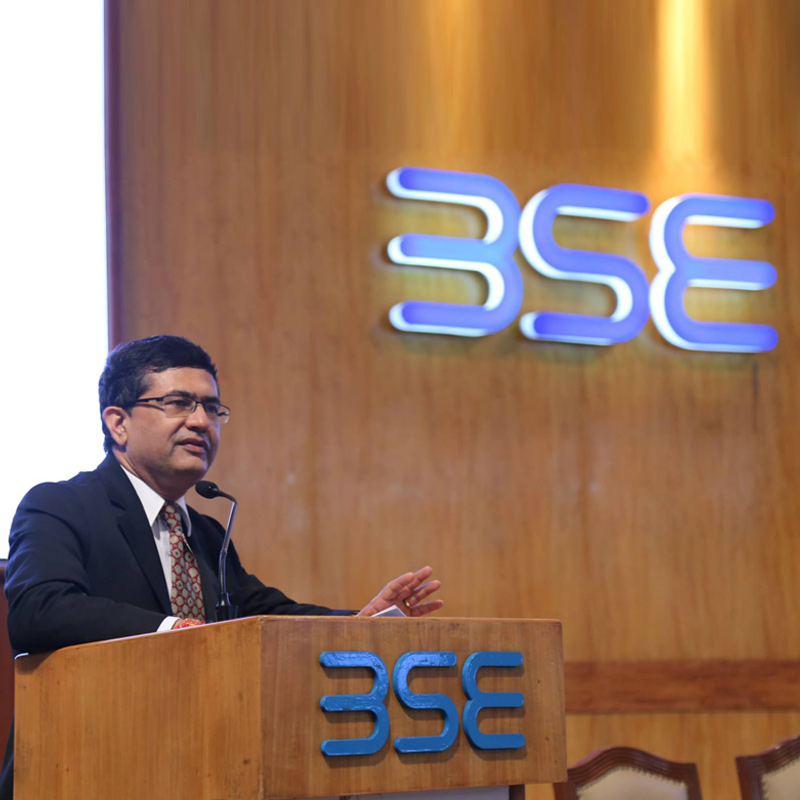
    Endorsing this partnership, Ashishkumar Chauhan, MD & CEO, BSE India, said, “BSE is known for its innovative products and strategies.”