Tag: internet

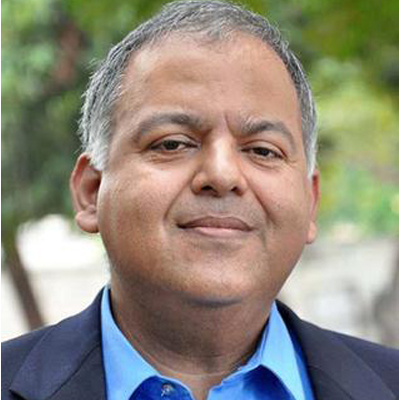
  • Amarinder S Dhaliwal joins YU as chief operating officer

    Amarinder S Dhaliwal joins YU as chief operating officer

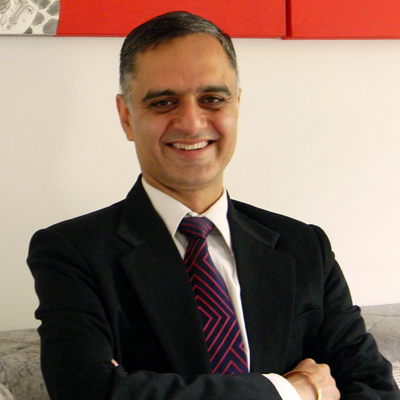
    MUMBAI: Micromax Informatics has appointed former co-founder and CEO of Done By None, Amarinder S Dhaliwal, as the chief operating officer (COO) for its new internet brand, YU.

    With over 20 years of experience in managing and incubating businesses, Dhaliwal has earlier led leading brands including Indiatimes Shopping and Zigwheels.com.

    Dhaliwal’s appointment is a testimony to the vision for YU, which is to bring in the best minds from the internet industry and build a world-class team. He will work closely with co-founder Micromax Rahul Sharma to build an innovative digital brand that engages directly with the user community.

    Sharma said, “These are exciting times for us. With YU, our aim is to reach out to a very unique set of audiences; tech-enthusiasts, digital natives and the developer ecosystem. Amarinder brings a unique combination of expertise with his entrepreneurial and leadership roles in internet & ecommerce space. He will be leading marketing initiatives for building the brand with a community of highly engaged users, driving revenue from product & services and setting-up world class internet operations. His rich experience will give an edge to our business and help us achieve this aim.”  

    “I am very excited with the opportunity to build YU as the first truly global internet and technology brand originating from India. My strong beliefs resonate with the company’s vision to be user centric and build world class products. We are building a brand where the user has the power to co-create and make things happen their way. We will build a strong ecosystem of connected devices thereby creating a revolutionary, new age internet brand,” said Dhaliwal.  


  • AT&T-DirecTV deal gets clearance from Mexico, US still undecided

    AT&T-DirecTV deal gets clearance from Mexico, US still undecided

    NEW DELHI: The controversial acquisition of DirecTV by AT&T has received the necessary approval from Mexico’s Federal Telecommunications Institute (IFT).


    Earlier, AT&T received approval in Brazil and Trinidad and Tobago.  AT&T has also filed an informational notice with the Hawaii Commission.

     
    However, AT&T is yet to receive the necessary approvals from the Federation Communications Commission in the United States.


    AT&T has already said it will invest further in mobile internet, a condition set by the US. Following the merger, AT&T will expand its deployment of both wireline and fixed wireless internet to cover at least 15 million customer locations across 48 states – most of them in underserved rural areas.


    The merger review process was completed among regulators at the US state level in July. AT&T said its petitions with the Public Service Commissions in Louisiana and Arizona did not receive protests or interventions and the petitions were deemed approved in July.


  • No MSO carrying more than 386 TV channels in first quarter of fiscal 2014-15: TRAI

    No MSO carrying more than 386 TV channels in first quarter of fiscal 2014-15: TRAI

    NEW DELHI: The maximum number of TV channels being carried by any reporting multi-system operator in the first quarter ending June 2014 of the current fiscal is 386, according to a report by the Telecom Regulatory Authority of India.

     In conventional analogue form, the maximum number of channels being carried by any reporting MSO is 100.

     There were a total of 186 pay channels as reported by broadcasters for which the wholesale channels rates have been taken on record.

     During the quarter ending June 2014, the distribution of “Fox Sports News” channel was discontinued by the broadcaster.

     Apart from All India Radio, there are 243 private FM Radio stations in operation at the quarter ending June, 2014, according to information supplied by the Information and Broadcasting Ministry.

     TRAI said no new DTH license was issued during the quarter ending June 2014.

     At present apart from the Freedish DTH service of Doordarshan, there are six private DTH Operators. All the six private DTH Operators are offering pay DTH services.

     The total number of registered subscribers and active subscribers being served by these six private DTH operators, as reported to TRAI, are 67.57 million and 38.24 million respectively as on 30 June 2014.

     The total number of Internet subscribers has increased from 251.59 million at the end of Mar-14 to 259.14 million at the end of Jun-14 there has been a quarterly growth of 3.00 per cent. Out of which wired internet subscribers are 18.55 million and wireless internet subscribers are 240.60 million.

     Number of broadband internet subscribers increased from 60.87 million at the end of March to 68.83 million at the end of June with quarter growth of 13.07 per cent.

     The number of narrowband internet subscribers has slightly declined from 190.72 million at the end of March to 190.31 million at the end of June with quarterly growth of -0.21 per cent.

     The license fee increased from Rs 3286 crore for the QE March to Rs 3503 crore for the QE June. The quarterly and the year-on-year (Y-O-Y) growth rates of license fee are 6.62% and 13.30 per cent, respectively in this quarter.

     Access services contributed 78.48  per cent of the total Adjusted Gross Revenue of telecom services. In access services, gross revenue, adjusted gross revenue (AGR), license fee and spectrum usage charges increased by 4.64 per cent, 7.81 per cent, 7.62 per cent and 8.61 per cent,  respectively, whereas Pass Through Charges decreased by 2.96 per cent in QE June.


    The Monthly Average Revenue per User (ARPU) for Access Services based on AGR increased from Rs 115.28 in QE March to Rs122.39 in QE June.

     Monthly Average Revenue Per User (ARPU) for GSM service increased by 4.84%, from Rs113 in QE March to Rs 119 in QE June, whereas Y-O-Y increase of 6.72%.

     Prepaid ARPU for GSM service per month increased from Rs 99 in QE March to Rs 104 in QE June, and Postpaid ARPU per month increased from Rs 453 in QE March to Rs 469 in QE June.

     On an all India average, the overall MOU per subscriber per month for GSM service increased by 0.42% from 389 in QE March to Rs 390 in QE June.

    Prepaid MOU per subscriber for GSM service increased from 365 in QE March to 366 in QE June and postpaid MOUs increased from Rs 957 in QE March to Rs 961 in QE June.

     The Monthly ARPU for CDMA full mobility service increased by 6.22%, from Rs 105 in QE March to Rs 112 in QE June. ARPU for CDMA has increased by 13.4% on Y-O-Y basis in this


  • Airtel launches ‘One Touch Internet’

    Airtel launches ‘One Touch Internet’

    MUMBAI: Bharti Airtel, the telecom service provider with operations in 20 countries across Asia and Africa, has announced the launch of ‘One Touch Internet’ – a first of its kind initiative aimed at simplifying internet services for millions of first-time users in India.

     Airtel’s ‘One Touch Internet’ is a WAP (Wireless Application Protocol) portal designed with a simple, secure and intuitive interface that will allow first-time users to discover the internet easily and help them overcome common perception barriers around the mobile data experience. Now available for prepaid mobile customers on Airtel – ‘One Touch Internet’ will work as a single point destination for uninitiated internet users to see-try-buy a host of popular services (including social networking, videos, online shopping and travel bookings) through free tutorial videos and trial packs – all with just one touch.

    Bharti Airtel consumer business director Srinivasan Gopalan said, “The Indian telecom market has entered a phase of data led growth. As data networks expand and internet enabled devices become affordable – more and more Indians are getting online on their mobile devices. However, our market research has shown that there are millions of customers across the country who own an internet-ready mobile device and are keen on getting online, but are apprehensive due to reasons like lack of know-how and fear of incurring heavy data charges. Airtel’s ‘One Touch Internet’ will address these very customer challenges and play the crucial role of hand-holding first-time mobile users as they discover the internet. We believe that this initiative can play a transformational role in breaking perception barriers among customers and demystifying the internet not only for the young and urban, but for people from across generations and social strata – thus giving the Indian masses an opportunity to enjoy their first ever internet experience”.

    The rapid penetration of mobile telephony has played a pivotal role in transforming the socio economic growth in countries world over, including India. According to estimates – India has over 220 million internet users today, of which, about 59 per cent get online over a mobile device. Projected to reach a whopping 385 million by 2017, the smartphone penetration in India is only growing stronger and contributing to a rapidly increasing base of internet users, which is expected to more than double to 480 million by 2017.

    To self-learn or have family and friends explain the internet to them easily, Airtel prepaid mobile customers can now call 111 or simply visit http://one.airtel.in on their mobile phones’ web browsers. Currently available in English and Hindi, ‘One Touch Internet’ will soon also be available in 8 Indian vernacular languages in weeks to come.

     To promote the launch of ‘One Touch Internet’, Airtel is also launching a full-blown 360 brand campaign. The insight for its Television Commercial (TVC) film comes from the brand’s core territory of enabling relationships, and evokes a strong emotional connect compelling viewers to teach someone how to discover the joys of the internet. The TVC will also be supported by a strong digital leg.


  • Growth in mobile broadband spurs internet use in August

    Growth in mobile broadband spurs internet use in August

    NEW DELHI: There was a sizeable increase in the number of broadband subscribers to 74.31 million by August-end as compared to 70.81 million subscribers by July-end, thus showing a monthly growth of 4.95 per cent.
     
    The largest growth rate in broadband was in the mobile devices users (phones and dongles) which went up by 6.29 per cent from 55.34 million to 58.82 million. The growth in fixed wireless subscribers (Wi-Fi, Wi-Max, Point-to-Point Radio & VSAT) was 2.75 per cent from 430,000 to 440,000. The growth in wired subscribers was a mere 0.06 per cent from 15.04 million to 15.05 million.
     
    The top five wired broadband service providers at the end of August were BSNL (9.97million), Bharti Airtel (1.39 million), Mahanagar Telephone Nigam (1.13 million), Beam Telecom (0.40 million) and YOU Broadband (0.41 million).
     
    The top five wireless broadband service providers at August-end were Bharti Airtel (15.14 million), Vodafone (12.51 million), Idea Cellular (9.85 million), BSNL (8.35 million) and Reliance Communications Group (6.53 million).


  • Facebook declares Internet.org innovation challenge

    Facebook declares Internet.org innovation challenge

    NEW DELHI: Facebook has declared the Internet.org innovation challenge in India today. The objective of the campaign is to make internet more accessible and relevant to four sections of the population that are currently underserved in India: women, students, farmers and migrant workers.
     
    These communities face maximum structural barriers when it comes to using the internet. McKinsey & Company’s recent study affirmed that the lack of relevant local and multilingual online content and services is one of the primary barriers to internet adoption. Even if they get connected online, the material they find turns out to be insignificant. Internet.org’s initiative will give people access to apps, websites and services that are relevant to their lives and readable in their own languages.
     
    Facebook will be presenting four $ 250,000 innovation challenge award prizes: one to the leading app, website or service or idea that best meets the needs of each of the designated population categories. Two $25,000 impact award prizes will also be granted in each category.
     
    Winners will be announced at Mobile World Congress in March 2015 and interested individuals, organisations and groups can submit applications through 31 January 2015.
     
    Companies, governments and individuals need to work together to remove connectivity barriers. This will ensure everyone has access to the internet globally.


  • GroupM launches India Digital Playbook 2014-15

    GroupM launches India Digital Playbook 2014-15

    MUMBAI: “We recall that, at WPP Stream India in February 2014, the renowned filmmaker Shekhar Kapur metaphorically referred to digital marketing as Shiv Tandava. We whole-heartedly agree with Kapur’s viewpoint,” is how the GroupM opened and launched its India Digital Playbook.


    The Playbook seeks to guide brand advertisers on the fast evolving digital media space in India.


    With India now standing at third position globally in internet users after China and US, the user growth is brisk- India today has 2.3 times the users that it had three years back. As of June 2014 India has 243 million internet users. For marketers, this comes as a significant challenge as well as opportunity to re-look media priorities and mix to take advantage of this shift.


    The always moving, always new, always-on digital and mobile screen experiences that are prevalent today constitute a new media phenomenon. This brings immense opportunities as well as new challenges on how brands now need to converse with their customers. Successful brands will be those that can adapt to the unrelenting pace of digital innovation.


    To help brands in this endeavour, GroupM has got some of the best digital minds in the country to come up with seven actionable opportunities in the coming year – like mobility, real time content and media, digital and experiential platforms.


    The playbook further details several milestones – including creating a matrix of outcomes and drafting a mobile first view- that brands should aspire to achieve this year to capitalise on these opportunities. The playbook recommends that brand advertisers adopt holistic insights and data driven approach with integrated marketing technology framework as the key enabler.


    GroupM Interaction managing partner Tushar Vyas said, “The digital revolution has now become an avalanche. This in turn opens greater avenues for brands to reach out and communicate effectively with their target audience. The Group M India Digital Playbook aims at providing a blueprint to help guide marketers through the twists and turns that await us.”


    The report goes on to say that currently the marketplace is very cluttered and fragmented in India and Programmatic Advertising has become a “catchall” term that the industry is using for behavioural targeting, real time bidding, exchange buying and all sort of things. Through the Playbook, the media agency wants to help marketers traverse this maze where it has outlined a few key recommendations on the Programmatic Advertising Strategy.


    Click here to read the Playbook

  • Google’s Android eyes TV market

    Google’s Android eyes TV market

    MUMBAI: The fight isn’t limited to content alone; the battle amongst various players is now all about who will come up with a smarter TV viewing experience. Launched recently, Google interface Android TV aims to do just that.


    The new interface is an extension of Google’s operating system which will take Android to the living room in the form of its upcoming version Android L. It can run on various products mainly smart TVs, set top boxes (STBs), smart watches and cars. Google’s earlier TV product, Chromecast, that was launched in 2010 as a plug-in device for television sets allowed viewers to send data from their phones and tabs on to the big screen using wi-fi. The product had failed to excite users.


    The USP of the new interface is that Android tablets, phones and watches can be used as remote control; all one needs is a D-pad and a microphone to send audio commands. The screen has three parts: recommendations, games and applications. It will also hold custom-made apps such as Netflix, Hulu, Pandora along with its own apps like YouTube, Hangout etc. The smart TV powered by Android TV can also reorganise its screen based on usage patterns.


    All of Sony’s HD and 4k (ultra HD), Phillips, Sharp and TP Vision television sets will support Android TV from 2015. Asus and Razor are the only confirmed set-top boxes to have taken up Android TV to focus on gaming.


    The software development kit for Android Auto will be launched later with Google’s list of nearly 40 partners such as Bentley, Ferrari, Audi, Ford, Nissan, Mazda, Suzuki, Skoda and Honda.


    Android TV runs on various hardwares and isn’t restricted to just STBs unlike its competitors Apple TV and Amazon Fire. Its main objective is to enhance the internet viewing experience on television. Google will launch Android TV and Android L simultaneously post September 2014. 

  • Sun TV Network signs ‘pay per view’ deal with iTunes and YouTube

    Sun TV Network signs ‘pay per view’ deal with iTunes and YouTube

    MUMBAI: In a major initiative, the south Indian broadcasting giant Sun TV has signed a mega deal with YouTube and iTunes to monetise its vast content libraries. The group’s proprietary content will be available to people across the globe on a ‘pay per view’ basis.


    “Sun TV has a wide ranging repertoire of content, with its channels offering almost every genre of entertainment with the exception of sports and business news,” Sun TV group CFO SL Narayanan told indiantelevision.com. He also added that a total of more than 25,000 hours of content would be available for viewing on both the platforms.


    In a growing internet world, Sun TV is looking at creating a mark for itself through its variety of programming.


    “This initiative positions Sun TV very well and much ahead of the shifts anticipated in buyer behavior with regard to consumption of entertainment services. More and more people are accessing content through mobile devices while on the move and over the internet. We believe that the revenues from these new formats could accelerate rapidly once smart phone penetration picks up in India,” says Narayanan.


    Apart from these two distribution platforms, Sun TV has also inked a deal with Mumbai based Purple IFE to license its popular Tamil, Kannada, Malayalam and Telugu programmes as in-flight entertainment on leading airlines such as Emirates, Singapore Airlines, Air India, Etihad, Jet Airways, Oman Air, British Airways, Cathay Pacific, Gulf Air and Qatar Airways.


    The broadcaster says these airlines carry a lot of south Indians who would consume its content.


    According to industry sources, the network would be looking at making approximately Rs 15 to Rs 20 crore through both the deals depending upon the kind of content that it offers to viewers  and its currency.


    “What’s called as catch up TV – which is episodes being uploaded as soon as they go on air – has good revenue generating potential as compared to catalogue content which adds to the volumes,” says a media observer. “Many of the TV shows are available on torrent sites online at no cost, which viewers download and watch. Sun TV can optimise its revenues on Youtube if it can attract viewers to its legitimate content – and away from these torrent sites.”

  • Life in the digital era: food, shelter, clothing and Internet

    Life in the digital era: food, shelter, clothing and Internet

    MUMBAI: As the lines blur between the real and virtual, many brands are making an effort to create a virtually real world to reach out to the audiences/consumers. Especially, when technology allows them a two-way communication with their target audience unlike before when they were left doing only the talking.


    Not only do consumers respond in real time on the digital platform, it is a faster, more measurable and result-driven medium that helps brands understand their user base, increase revenue and reward loyalty.


    Says Priti Nair of Curry Nation: “A good digital campaign can reach out far and wide as compared to any other medium and that too at a throwaway price. Also, the longevity of a good campaign is far more on the digital platform than any other medium. All these make digital a medium worth checking out.”


    Recently, the agency created a digital campaign for Nirlep – Khaate peete desh ka rakhwala – which revolves round Indians’ love for food, sending out a tongue-in-cheek message that healthy eating is still possible with Nirlep non-stick cookware.


     “The best part about a viral video is it gives you a lot of space to play around. Interesting characters, situations can be explored. Using the slogan of ‘Yes We can’ with food was both, entertaining enough as well as informative,” says Nair about the campaign.


    Says NeoNiche Integrated Solutions MD and CEO Prateek N Kumar: “With digital and technology, the sky’s the limit. If you can dream it, you can build around platforms to really make those elements come to life in real time. A well thought of digital plan also has the capacity of creating WOM and going viral, the ROI is literally exponential compared to traditional media.”


    While digital and social media is constantly evolving and is still uncharted territory for most marketers, the basic principles of communication remain the same: Who are you trying to reach, where are they and what excites them?


    Not so long ago, FoxyMoron launched a digital campaign – No Pimples, No Marks – for Garnier Pure Active. A fun take on popular movies, posters were released titled Rowdy Pimple, The Dirty Pimple, Pimple Tum Kab Jaaogey and I Hate Pimple Storys which conveyed how pimples haven’t spared Bollywood either.


    FoxyMoron co-founder and online strategist Harshil Karia believes one should use a medium which requires you to ‘only’ spend to achieve success. “This is a slightly touchy topic as social media increasingly spawns ideas from scaling organically. For instance, on YouTube, the organic percentage of video views or on Facebook, the organic percentage of fans has considerably reduced. Since both these are dominant mediums, it’s a challenge but try to find holes within the mediums where organic percentages are high and capitalize on them. For example, on Facebook, there was a time when video organic views were extremely high because Facebook was pushing a video agenda. Similarly, as Google pushes a social agenda, its propensity to help brands scale organically will be higher,” he explains.


    The brand must know its audience even better than itself. Otherwise, whatever be the strategy, it will never be seen or heard by the right people who matter.


    Karia gives the example of HUL’s Lifebuoy campaign, ‘Help a child reach 5’, which tells the story of how a father celebrates his son completing five years of age and has a heart-warming and thought-provoking concept at its core. The YouTube video went viral and garnered over 10 million views.


    Digital gurus believe that in the era of smart devices and social handles, the basic necessities of mankind have changed from “Food, Shelter and Clothing” to “Food, Shelter, Clothing and Internet”. With brands latching onto this trend, it will only help them garner user intelligence in real time – something the traditional marketing mix can’t help them achieve.