Tag: internet

  • TRAI extends time for responses to issues on availability of free data

    TRAI extends time for responses to issues on availability of free data

    NEW DELHI: Given the complicated issues around net neutrality, stakeholders have now been given more time to reply to a consultation paper on Free Data which also touched on this subject.

    Comments on the paper, issued by the Telecom Regulatory Authority of India on 19 May 2016, will have to be sent by 30 June 2016 with counter-comments on 14 July 2016. The earlier dates were 16 June and 30 June respectively.

    Stretching the discussion on net neutrality, TRAI had wants to know whether there is a need to have TSP agnostic platform to provide free data or suitable reimbursement to users without violating the principles of Differential Pricing for Data laid down in TRAI Regulation.

    It also wants to know if free data or suitable reimbursement to users should be limited to mobile data users only or could it be extended through technical means to subscribers of fixed line broadband or leased line.

    The paper says that in the recent past, some data services plans of the Telecom Service Providers (TSPs) came to the notice of TRAI which amounted to discriminatory tariff through offering zero or discounted tariffs to certain contents of certain websites/applications/platforms. The objective of offering such plans was claimed to be the desire of various service providers/content providers or platform providers to enable people of this country, especially the poor, to access certain content on the internet free of charge.
  • TRAI extends time for responses to issues on availability of free data

    TRAI extends time for responses to issues on availability of free data

    NEW DELHI: Given the complicated issues around net neutrality, stakeholders have now been given more time to reply to a consultation paper on Free Data which also touched on this subject.

    Comments on the paper, issued by the Telecom Regulatory Authority of India on 19 May 2016, will have to be sent by 30 June 2016 with counter-comments on 14 July 2016. The earlier dates were 16 June and 30 June respectively.

    Stretching the discussion on net neutrality, TRAI had wants to know whether there is a need to have TSP agnostic platform to provide free data or suitable reimbursement to users without violating the principles of Differential Pricing for Data laid down in TRAI Regulation.

    It also wants to know if free data or suitable reimbursement to users should be limited to mobile data users only or could it be extended through technical means to subscribers of fixed line broadband or leased line.

    The paper says that in the recent past, some data services plans of the Telecom Service Providers (TSPs) came to the notice of TRAI which amounted to discriminatory tariff through offering zero or discounted tariffs to certain contents of certain websites/applications/platforms. The objective of offering such plans was claimed to be the desire of various service providers/content providers or platform providers to enable people of this country, especially the poor, to access certain content on the internet free of charge.

  • Datawind wants Govt to promote affordable internet

    Datawind wants Govt to promote affordable internet

    NEW DELHI: Welcoming the Telecom Regulatory Authority of India’s consultation paper on Free Data, Datawind CEO and founder Suneet Singh Tuli said “the key barrier to getting broad internet adoption in India is breaking the affordability barrier.  This will require innovate out-of-the-box business models, and the consultation-paper is an important step towards exploring such solutions to provide free data.” 

    He described it as very progressive step to address the forgotten billions, “who are our largest constituent of digital age today.”

    He said the need was to have the vast majority of Indians, over a billion, who are still not on the internet. There is a need to deliver affordable internet access for the common man.

    “More importantly, despite the boom in smartphone penetration, studies show over 62 percent of customers with 3G enabled devices, are not activating data plans.”

    He said DataWind intends to bring the world’s most affordable internet access to India, using it’s patented technology. DataWind firmly believes that this digital and internet divide can be addressed through technology intervention, at an affordable price for this segment of customers. It is focused on driving the cost downward to a level where access to technology becomes ‘universally affordable’ and democratization of technology finds its true meaning.

    He added that DataWind’s innovations have always been focussed to break the affordability barrier and provide internet access to empower the billions of people globally who are left out of the digital age. The company’s patented technology allows for a fast, rich and affordable experience on existing networks without any new infrastructure.

    Free-search has made Google, free social networking has built Facebook, free messaging has built Whatsapp and free data will bring the next billion Indians online, he concluded.

    Stretching the discussion on net neutrality, TRAI had issued a paper wanting to know whether there is a need to have TSP agnostic platform to provide free data or suitable reimbursement to users, without violating the principles of Differential Pricing for Data laid down in TRAI Regulation.

    In the consultation paper on Free Data, TRAI has asked stakeholders to suggest the most suitable model to achieve the objective. Replies have to be filed by 16 June with counter replies if any by 30 June.

    The regulator also wants to know whether such platforms need to be regulated by the TRAI or the market should be allowed to develop these platforms.

    It wants to know if free data or suitable reimbursement to users should be limited to mobile data users only or could it be extended through technical means to subscribers of fixed line broadband or leased line.


  • Datawind wants Govt to promote affordable internet

    Datawind wants Govt to promote affordable internet

    NEW DELHI: Welcoming the Telecom Regulatory Authority of India’s consultation paper on Free Data, Datawind CEO and founder Suneet Singh Tuli said “the key barrier to getting broad internet adoption in India is breaking the affordability barrier.  This will require innovate out-of-the-box business models, and the consultation-paper is an important step towards exploring such solutions to provide free data.” 

    He described it as very progressive step to address the forgotten billions, “who are our largest constituent of digital age today.”

    He said the need was to have the vast majority of Indians, over a billion, who are still not on the internet. There is a need to deliver affordable internet access for the common man.

    “More importantly, despite the boom in smartphone penetration, studies show over 62 percent of customers with 3G enabled devices, are not activating data plans.”

    He said DataWind intends to bring the world’s most affordable internet access to India, using it’s patented technology. DataWind firmly believes that this digital and internet divide can be addressed through technology intervention, at an affordable price for this segment of customers. It is focused on driving the cost downward to a level where access to technology becomes ‘universally affordable’ and democratization of technology finds its true meaning.

    He added that DataWind’s innovations have always been focussed to break the affordability barrier and provide internet access to empower the billions of people globally who are left out of the digital age. The company’s patented technology allows for a fast, rich and affordable experience on existing networks without any new infrastructure.

    Free-search has made Google, free social networking has built Facebook, free messaging has built Whatsapp and free data will bring the next billion Indians online, he concluded.

    Stretching the discussion on net neutrality, TRAI had issued a paper wanting to know whether there is a need to have TSP agnostic platform to provide free data or suitable reimbursement to users, without violating the principles of Differential Pricing for Data laid down in TRAI Regulation.

    In the consultation paper on Free Data, TRAI has asked stakeholders to suggest the most suitable model to achieve the objective. Replies have to be filed by 16 June with counter replies if any by 30 June.

    The regulator also wants to know whether such platforms need to be regulated by the TRAI or the market should be allowed to develop these platforms.

    It wants to know if free data or suitable reimbursement to users should be limited to mobile data users only or could it be extended through technical means to subscribers of fixed line broadband or leased line.


  • Make the internet accessible, open and safe for all Indians to close the digital divides

    Make the internet accessible, open and safe for all Indians to close the digital divides

    NEW DELHI: At least 8 in 10 individuals in India own a mobile phone and digital technologies are spreading rapidly but with nearly a billion people still not connected to the internet, the opportunities for increasing access to digital technology for creating higher growth, more jobs, and better public services are significant for India.

    The `World Development Report 2016: Digital Dividends,’ launched in India today, the aggregate impact of digital technologies has fallen short and is unevenly distributed. Therefore, greater efforts must be made by countries across the world to connect more people to the internet to create an environment that unleashes the benefits of digital technologies for everyone.

    The report recognizes India’s early success in digital technology when it became a global powerhouse for information services. India is currently the largest exporter of ICT services and skilled manpower in the developing world.

    Even while having the largest number of offline population in the world, India has the third highest number of internet users by absolute number, only behind China and the United States. Moreover, adoption of digital technologies shows great variation within the country: very high for government and relatively low for businesses, especially among small and medium enterprises. 

    The Business Process Outsourcing (BPO) industry today employs more than 3.1 million workers, 30 percent of them are women. In rural India, a three-year awareness program on opportunities in the BPO industry increased women’s enrollment in relevant training programs, as well as school enrollment among young girls, by 3–5 percentage points.

    Biometric registration, authentication, and payments in India’s National Rural Employment Guarantee Scheme, the world’s largest workfare program, reduced the time for paying beneficiaries by 29 percent.

  • Make the internet accessible, open and safe for all Indians to close the digital divides

    Make the internet accessible, open and safe for all Indians to close the digital divides

    NEW DELHI: At least 8 in 10 individuals in India own a mobile phone and digital technologies are spreading rapidly but with nearly a billion people still not connected to the internet, the opportunities for increasing access to digital technology for creating higher growth, more jobs, and better public services are significant for India.

    The `World Development Report 2016: Digital Dividends,’ launched in India today, the aggregate impact of digital technologies has fallen short and is unevenly distributed. Therefore, greater efforts must be made by countries across the world to connect more people to the internet to create an environment that unleashes the benefits of digital technologies for everyone.

    The report recognizes India’s early success in digital technology when it became a global powerhouse for information services. India is currently the largest exporter of ICT services and skilled manpower in the developing world.

    Even while having the largest number of offline population in the world, India has the third highest number of internet users by absolute number, only behind China and the United States. Moreover, adoption of digital technologies shows great variation within the country: very high for government and relatively low for businesses, especially among small and medium enterprises. 

    The Business Process Outsourcing (BPO) industry today employs more than 3.1 million workers, 30 percent of them are women. In rural India, a three-year awareness program on opportunities in the BPO industry increased women’s enrollment in relevant training programs, as well as school enrollment among young girls, by 3–5 percentage points.

    Biometric registration, authentication, and payments in India’s National Rural Employment Guarantee Scheme, the world’s largest workfare program, reduced the time for paying beneficiaries by 29 percent.

  • DEN Networks to de-merge broadband biz; consolidate cable TV enterprises

    DEN Networks to de-merge broadband biz; consolidate cable TV enterprises

    NEW DELHI: With an aim of creating a distinct identity for each of its enterprises, major multi-satellite operator Den Networks Ltd to merge 23 subsidiaries in the cable business and to de-merge its broadband business into a wholly owned subsidiary.

    The Board of Directors has granted in-principle approval for the changes following corporate action subject to regulatory and shareholder approval.

    The aim is to strengthen the single brand leading to a stronger market presence, providing customers with a seamless on-board experience, and removing any other brand perceptions and distinctions in customers’ minds.

    The structure will result in economies of scale and reduce administrative and regulatory compliances and a more focused operational effort, realising synergies in terms of compliance, governance, administration and cost synergies.

    The de-merger of broadband will enable a focused attention on the Internet Service Provider business and achieve structural and operational efficiency, enhanced competitiveness and greater accountability besides accelerating value creation for shareholders, the company said.

    Furthermore, the separation will allow DEN to aggressively focus on the significant growth potential for high speed data and related services in India.

    DEN also intends to take the lead in driving wire line broadband penetration in India.

    DEN Networks CEO Pradeep Parameswaran said, “We are focused on creation of a distinct identity for each of our businesses and the recent in-principle board approval is a step in this direction. This corporate structure will strengthen the  brand while also giving us an opportunity for shareholder value creation.”

  • DEN Networks to de-merge broadband biz; consolidate cable TV enterprises

    DEN Networks to de-merge broadband biz; consolidate cable TV enterprises

    NEW DELHI: With an aim of creating a distinct identity for each of its enterprises, major multi-satellite operator Den Networks Ltd to merge 23 subsidiaries in the cable business and to de-merge its broadband business into a wholly owned subsidiary.

    The Board of Directors has granted in-principle approval for the changes following corporate action subject to regulatory and shareholder approval.

    The aim is to strengthen the single brand leading to a stronger market presence, providing customers with a seamless on-board experience, and removing any other brand perceptions and distinctions in customers’ minds.

    The structure will result in economies of scale and reduce administrative and regulatory compliances and a more focused operational effort, realising synergies in terms of compliance, governance, administration and cost synergies.

    The de-merger of broadband will enable a focused attention on the Internet Service Provider business and achieve structural and operational efficiency, enhanced competitiveness and greater accountability besides accelerating value creation for shareholders, the company said.

    Furthermore, the separation will allow DEN to aggressively focus on the significant growth potential for high speed data and related services in India.

    DEN also intends to take the lead in driving wire line broadband penetration in India.

    DEN Networks CEO Pradeep Parameswaran said, “We are focused on creation of a distinct identity for each of our businesses and the recent in-principle board approval is a step in this direction. This corporate structure will strengthen the  brand while also giving us an opportunity for shareholder value creation.”

  • Govt respects free discourse & social media via internet: Ravi Shankar Prasad

    Govt respects free discourse & social media via internet: Ravi Shankar Prasad

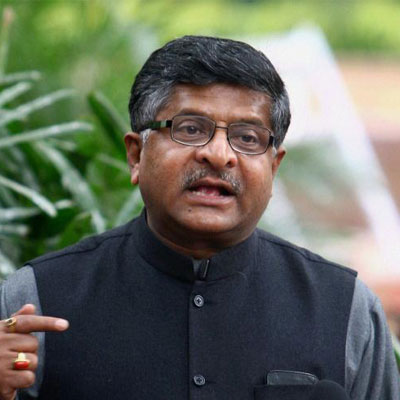
    NEW DELHI: Communications and Information Technology Minister Ravi Shankar Prasad has said the government fully respects the freedom of expression and discourse on social media and interned adding that “Our government is committed towards digital inclusion.”

    Welcoming the Telecom Regulatory Authority of India’s (TRAI) decision on discriminatory pricing, he said, “We very much appreciate this decision of TRAI whereby differential tariff in case of data services has been rejected. The view of our government from the beginning has been very clear, which I have also articulated in the Parliament, that is, internet is one of the finest creations of human mind and it should not become the monopoly of few.”

    “Differential pricing on data, whether it is Free Basics or any other mode, is plainly not acceptable,” the minister said, adding that the internet “must be available without discrimination.”

    Prasad said that the government was expanding Digital India into every “nook and corner of the country, and taking extraordinary steps to empower the people through technology, to create a knowledge economy, the very concept,” in order to bring about digital inclusion.

  • Govt respects free discourse & social media via internet: Ravi Shankar Prasad

    Govt respects free discourse & social media via internet: Ravi Shankar Prasad

    NEW DELHI: Communications and Information Technology Minister Ravi Shankar Prasad has said the government fully respects the freedom of expression and discourse on social media and interned adding that “Our government is committed towards digital inclusion.”

    Welcoming the Telecom Regulatory Authority of India’s (TRAI) decision on discriminatory pricing, he said, “We very much appreciate this decision of TRAI whereby differential tariff in case of data services has been rejected. The view of our government from the beginning has been very clear, which I have also articulated in the Parliament, that is, internet is one of the finest creations of human mind and it should not become the monopoly of few.”

    “Differential pricing on data, whether it is Free Basics or any other mode, is plainly not acceptable,” the minister said, adding that the internet “must be available without discrimination.”

    Prasad said that the government was expanding Digital India into every “nook and corner of the country, and taking extraordinary steps to empower the people through technology, to create a knowledge economy, the very concept,” in order to bring about digital inclusion.