Tag: internet

  • Govt favours net neutrality; data is the new oil: RS Prasad

    Govt favours net neutrality; data is the new oil: RS Prasad

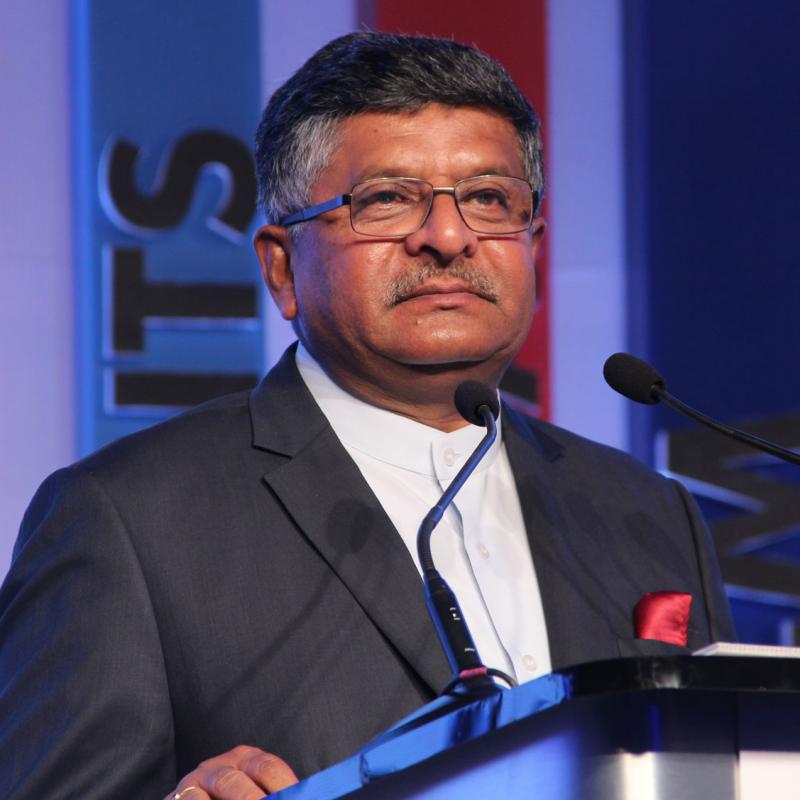
    NEW DELHI: The much-debated net neutrality issue got some additional boost from the Indian minister of electronics & information technology and law & justice Ravi Shankar Prasad when he said that the government favours non-discriminatory access to the Internet.

    “We are strong advocates of non-discriminatory access to Internet and democratization of Internet governance,” Prasad said yesterday while dwelling on the issue of net neutrality and digital dividends to average citizens.

    However, he didn’t elaborate on the net neutrality (and OTT) issue, which is being studied by the Telecom Regulatory Authority of India (TRAI) in totality for possible guidelines and regulations. TRAI has already undertaken a lengthy consultation process with various stakeholders and its final recommendations are awaited.

    Pointing out that India is home to 270 million smart-phones, a number that’s likely to swell to 500 million in few years time, Prasad said that India doesn’t want to miss out on the digital revolution having missed the industrial revolution.

    Making a case for more efficient bandwidth availability at affordable rates to an average Indian, Prasad said, “Data is the new oil… (and) digital India is ideology neutral, politics neutral and only pro-India.”

    Prasad, who was delivering the inaugural address at the Observer Research Foundation (ORF)-organised “CyFy 2016: Digital Asia & Scripting the New Governance Order” here yesterday evening, asserted if a digital profile of India is drawn it would look something like this: 1.03 billion mobile phones, 1.05 million digital identity (Aadhaar cards) and  400 million internet users, apart from a digital army of young people who have fanned out in rural areas running Common Services Centres at more than 200,000 places.

    Enumerating the various digital initiatives undertaken under the Digital India plan, something that is very dear to Prime Minister Modi, the senior minister opined that the government had undertaken some “path-breaking” programmes.

    “Digital India is for the under-privileged… (and) digital inclusion will come about with digital connect,” the Minister said, adding the government was creating a digital infrastructure for Indians so that citizens could reap digital dividends aplenty.

    Pointing out that a digital India would provide more effective governance and remove socialistic-era licence regime, Prasad said in a few years time India would become a $ 1 trillion digital economy.     

    But the cyber space also brings along many dangers. Emphasising on the importance of precaution, Prasad said, “Governments of all countries have to come together to safeguard their citizens from the threats of cyber crimes.”

    ORF, which annually organises a conference on cyber-related issues, including security and entertainment, is an independent self-sustaining think-tank. Having started in the early 1990s, it has been backed by the now Mukesh Ambani-controlled Reliance Industries.

    The full address of the minister could be viewed here:

    https://www.facebook.com/RaviShankarPrasadOfficial/videos/10154464395568329/
     

  • Govt favours net neutrality; data is the new oil: RS Prasad

    Govt favours net neutrality; data is the new oil: RS Prasad

    NEW DELHI: The much-debated net neutrality issue got some additional boost from the Indian minister of electronics & information technology and law & justice Ravi Shankar Prasad when he said that the government favours non-discriminatory access to the Internet.

    “We are strong advocates of non-discriminatory access to Internet and democratization of Internet governance,” Prasad said yesterday while dwelling on the issue of net neutrality and digital dividends to average citizens.

    However, he didn’t elaborate on the net neutrality (and OTT) issue, which is being studied by the Telecom Regulatory Authority of India (TRAI) in totality for possible guidelines and regulations. TRAI has already undertaken a lengthy consultation process with various stakeholders and its final recommendations are awaited.

    Pointing out that India is home to 270 million smart-phones, a number that’s likely to swell to 500 million in few years time, Prasad said that India doesn’t want to miss out on the digital revolution having missed the industrial revolution.

    Making a case for more efficient bandwidth availability at affordable rates to an average Indian, Prasad said, “Data is the new oil… (and) digital India is ideology neutral, politics neutral and only pro-India.”

    Prasad, who was delivering the inaugural address at the Observer Research Foundation (ORF)-organised “CyFy 2016: Digital Asia & Scripting the New Governance Order” here yesterday evening, asserted if a digital profile of India is drawn it would look something like this: 1.03 billion mobile phones, 1.05 million digital identity (Aadhaar cards) and  400 million internet users, apart from a digital army of young people who have fanned out in rural areas running Common Services Centres at more than 200,000 places.

    Enumerating the various digital initiatives undertaken under the Digital India plan, something that is very dear to Prime Minister Modi, the senior minister opined that the government had undertaken some “path-breaking” programmes.

    “Digital India is for the under-privileged… (and) digital inclusion will come about with digital connect,” the Minister said, adding the government was creating a digital infrastructure for Indians so that citizens could reap digital dividends aplenty.

    Pointing out that a digital India would provide more effective governance and remove socialistic-era licence regime, Prasad said in a few years time India would become a $ 1 trillion digital economy.     

    But the cyber space also brings along many dangers. Emphasising on the importance of precaution, Prasad said, “Governments of all countries have to come together to safeguard their citizens from the threats of cyber crimes.”

    ORF, which annually organises a conference on cyber-related issues, including security and entertainment, is an independent self-sustaining think-tank. Having started in the early 1990s, it has been backed by the now Mukesh Ambani-controlled Reliance Industries.

    The full address of the minister could be viewed here:

    https://www.facebook.com/RaviShankarPrasadOfficial/videos/10154464395568329/

     

  • China, India world’s largest Internet markets

    China, India world’s largest Internet markets

    NEW DELHI: India has overtaken the United States to become the world’s second largest Internet market, with 333 million users, trailing China’s 721 million.

    A new report released by the UN Broadband Commission for Sustainable Development also confirms that just six nations – including China and India – together account for 55% of the total global population still offline.

    While Internet access is approaching saturation in richer nations, connectivity is still not advancing fast enough to help bridge development gaps in areas like education and health care for those in poorer parts of the world, according to the 2016 edition of The State of Broadband report.

    Globally, an estimated 3.9 billion people are not using the Internet. But, the report estimates that, between them, China, India, Indonesia, Pakistan, Bangladesh and Nigeria account for 55% of all unconnected people, while 20 countries – including the US – account for a full 75% of those not using the Internet.

    These findings suggest that targeted efforts in just a few key markets could help enormously in redressing the gaping ‘digital divide’ between those who are online and those still offline.

    India also recently overtook the US to become the world’s second-largest smartphone market, with an estimated 260 million mobile broadband subscriptions.165 countries have deployed ‘4G’ high-speed mobile networks. As smartphone penetration reaches near-saturation in the US, Europe and mature markets in Asia like Japan and Korea, India and Indonesia in particular are expected to drive future growth.

    According to latest ITU figures, by end 2016 3.5 billion people will be using the Internet, up from 3.2 billion last year and equating to 47% of the global population. The top ten developing countries for household Internet penetration are all located in Asia or the Middle East.

  • China, India world’s largest Internet markets

    China, India world’s largest Internet markets

    NEW DELHI: India has overtaken the United States to become the world’s second largest Internet market, with 333 million users, trailing China’s 721 million.

    A new report released by the UN Broadband Commission for Sustainable Development also confirms that just six nations – including China and India – together account for 55% of the total global population still offline.

    While Internet access is approaching saturation in richer nations, connectivity is still not advancing fast enough to help bridge development gaps in areas like education and health care for those in poorer parts of the world, according to the 2016 edition of The State of Broadband report.

    Globally, an estimated 3.9 billion people are not using the Internet. But, the report estimates that, between them, China, India, Indonesia, Pakistan, Bangladesh and Nigeria account for 55% of all unconnected people, while 20 countries – including the US – account for a full 75% of those not using the Internet.

    These findings suggest that targeted efforts in just a few key markets could help enormously in redressing the gaping ‘digital divide’ between those who are online and those still offline.

    India also recently overtook the US to become the world’s second-largest smartphone market, with an estimated 260 million mobile broadband subscriptions.165 countries have deployed ‘4G’ high-speed mobile networks. As smartphone penetration reaches near-saturation in the US, Europe and mature markets in Asia like Japan and Korea, India and Indonesia in particular are expected to drive future growth.

    According to latest ITU figures, by end 2016 3.5 billion people will be using the Internet, up from 3.2 billion last year and equating to 47% of the global population. The top ten developing countries for household Internet penetration are all located in Asia or the Middle East.

  • Internet included in broadcasting for purpose of Copyright

    Internet included in broadcasting for purpose of Copyright

    NEW DELHI: “All kinds of broadcasting including internet broadcasting” will also form part of broadcasting organizations desirous of communicating to the public for purposes of copyright, according to the Government.

    Amplifying the definition of broadcasting in section 31D of the Copyright Act 1957, Department of Industrial Policy and Promotion Deputy Secretary Surabhi Sharma has said in a directive to the Registrar of Copyrights that broadcasting should not be restrictively read as meaning just radio and television.

    The Section refers to any performance or work available for being seen or heard or otherwise enjoyed by the public “other than by making physical copies of it.”

    This is one of the several measures taken by the DIPP since administration of the Copyright Act and Intellectual Property Rights were shifted to it in March this year. Until then, it had been part of the Human Resource Development Ministry and the film, music and television industries have always grudged this as they feel it should be with the Information and Broadcasting Ministry.

    A single window interface was unveiled by the Government for information on IPR and guidance on leveraging it for competitive advantage. The Indian IP Panorama portal seeks to increase awareness and build sensitivity towards IP, among stakeholders in the SME sector, academia and researchers. The Indian IP Panorama can be accessed at http://ict-ipr.in/index.php/ip-panorama

    It is a customized version of IP Panorama Multimedia toolkit developed by World Intellectual Property Organization, Korean Intellectual Property Office and Korea Invention Promotion Association.

    The toolkit has been adapted to cater to SMEs and start-ups, especially in the ICTE sector of India based on an agreement signed between WIPO and Department of Electronic and Information Technology. The Indian IP Panorama is thus a customized version of WIPO’s original product and is in accordance with Indian IP laws, standards, challenges and needs of the Indian ICTE sector.

    The Indian IP Panorama has been developed under the aegis of Department of Electronics and Information Technology (DeitY) and Department of Industrial Policy and Promotion (DIPP), Government of India by Centre for Development of Advanced Computing (C-DAC), in close coordination with the Indian IP office.

    India is a member of WIPO and party to several treaties administered by WIPO. Recognizing that the strategic use of intellectual property could contribute significantly to the national development objectives of India, DIPP entered into an MoU with WIPO on 13 November 2009.

    The Indian IP office has been recognised as an International Searching Authority and International Preliminary Examining Authority under the Patent Cooperation Treaty (as in force from 15 October 2013).

    India acceded to Madrid Protocol for the International Registration of Marks at WIPO on July 8, 2013. The Madrid System for the International Registration of Marks (Madrid system) offers trademark owners a cost effective, user friendly and streamlined means of protecting and managing their trademark portfolio internationally.

  • Internet included in broadcasting for purpose of Copyright

    Internet included in broadcasting for purpose of Copyright

    NEW DELHI: “All kinds of broadcasting including internet broadcasting” will also form part of broadcasting organizations desirous of communicating to the public for purposes of copyright, according to the Government.

    Amplifying the definition of broadcasting in section 31D of the Copyright Act 1957, Department of Industrial Policy and Promotion Deputy Secretary Surabhi Sharma has said in a directive to the Registrar of Copyrights that broadcasting should not be restrictively read as meaning just radio and television.

    The Section refers to any performance or work available for being seen or heard or otherwise enjoyed by the public “other than by making physical copies of it.”

    This is one of the several measures taken by the DIPP since administration of the Copyright Act and Intellectual Property Rights were shifted to it in March this year. Until then, it had been part of the Human Resource Development Ministry and the film, music and television industries have always grudged this as they feel it should be with the Information and Broadcasting Ministry.

    A single window interface was unveiled by the Government for information on IPR and guidance on leveraging it for competitive advantage. The Indian IP Panorama portal seeks to increase awareness and build sensitivity towards IP, among stakeholders in the SME sector, academia and researchers. The Indian IP Panorama can be accessed at http://ict-ipr.in/index.php/ip-panorama

    It is a customized version of IP Panorama Multimedia toolkit developed by World Intellectual Property Organization, Korean Intellectual Property Office and Korea Invention Promotion Association.

    The toolkit has been adapted to cater to SMEs and start-ups, especially in the ICTE sector of India based on an agreement signed between WIPO and Department of Electronic and Information Technology. The Indian IP Panorama is thus a customized version of WIPO’s original product and is in accordance with Indian IP laws, standards, challenges and needs of the Indian ICTE sector.

    The Indian IP Panorama has been developed under the aegis of Department of Electronics and Information Technology (DeitY) and Department of Industrial Policy and Promotion (DIPP), Government of India by Centre for Development of Advanced Computing (C-DAC), in close coordination with the Indian IP office.

    India is a member of WIPO and party to several treaties administered by WIPO. Recognizing that the strategic use of intellectual property could contribute significantly to the national development objectives of India, DIPP entered into an MoU with WIPO on 13 November 2009.

    The Indian IP office has been recognised as an International Searching Authority and International Preliminary Examining Authority under the Patent Cooperation Treaty (as in force from 15 October 2013).

    India acceded to Madrid Protocol for the International Registration of Marks at WIPO on July 8, 2013. The Madrid System for the International Registration of Marks (Madrid system) offers trademark owners a cost effective, user friendly and streamlined means of protecting and managing their trademark portfolio internationally.

  • TRAI commences exercise to explore growth of internet through Wi-fi networks

    TRAI commences exercise to explore growth of internet through Wi-fi networks

    NEW DELHI: Noting that Wi-Fi networks offer affordable, scalable and versatile technologies that can facilitate the spread of Internet access in rural and urban areas alike, the Telecom Regulatory Authority of India today issued a consultation paper on Proliferation of Broadband through Public Wi-Fi Networks.

    Through a set of twelve questions, the Authority has sought to get the opinion of stakeholders including internet and telecom service providers on how best Wi-fi (an acronym for Wireless Fidelity) can grow in the country. Comments have been invited by 10 August with counter-comments by 24 August.

    At the outset, the regulator has noted that the growth of Internet penetration in India and realisation of its full potential is closely tied to the proliferation of broadband services. “Broadband” is currently defined to mean a data connection that is able to support interactive services, including Internet access, with the capability of a minimum download speed of 512 kbps. It therefore refers to a means of delivering high-speed Internet access services.

    Broadband services can be delivered through a number of different access technologies, both wired and wireless, including Digital Subscriber Lines (DSL), optical fibre technology, cable TV networks and mobile broadband services like 2G/3G/4G. In addition to these, radio frequency signals (or spectrum) can also be used for the creation of “wireless local area networks” (WLANs), offering an effective mechanism for extending the “last-mile connectivity” of broadband connections to a wider segment of users.

    Trai says Modern technology makes it possible to integrate a server with high storage capacity with the Wi-Fi hotspot equipment. As the cost of such servers has come down significantly, along with the cost of storage, and the form factors of such devices are very small, it should be possible to cache or download content for easy browsing even when the backhaul connectivity is not available. Such an arrangement can find great application in storing children’s study materials, educational data, agricultural and health related information, as well as movies and entertainment content, for the benefit of Wi-Fi users in areas with irregular connectivity, such as rural areas.

    The regulator said that strictly speaking, Wi-Fi is a certification provided by the Wireless Broadband Alliance1 (WBA), which owns and controls the “Wi-Fi Certified” logo that can be applied to products that satisfy certain interoperability criteria.

    WBA is a non-profit organization, formed in 1999, that promotes Wi-Fi technology and certifies Wi-Fi products if they conform to certain standards of interoperability.

    The questions raised by Trai are:

    Q1. Are there any regulatory issues, licensing restrictions or other factors that are hampering the growth of public Wi-Fi services in the country?

    Q2. What regulatory/licensing or policy measures are required to encourage the deployment of commercial models for ubiquitous city-wide Wi-Fi networks as well as expansion of Wi-Fi networks in remote or rural areas?

    Q3. What measures are required to encourage interoperability between the Wi-Fi networks of different service providers, both within the country and internationally?

    Q4. What measures are required to encourage interoperability between cellular and Wi-Fi networks?

    Q5. Apart from frequency bands already recommended by TRAI to DoT, are there additional bands which need to be de-licensed in order to expedite the penetration of broadband using Wi-Fi technology?

    Q6. Are there any challenges being faced in the login/authentication procedure for access to Wi-Fi hotspots? In what ways can the process be simplified to provide frictionless access to public Wi-Fi hotspots, for domestic users as well as foreign tourists?

    Q7. Are there any challenges being faced in making payments for access to Wi-Fi hotspots? Please elaborate and suggest a payment arrangement which will offer frictionless and secured payment for the access of Wi-Fi services.

    Q8. Is there a need to adopt a hub-based model along the lines suggested by the WBA, where a central third party AAA (Authentication, Authorization and Accounting) hub will facilitate interconnection,
    authentication and payments? Who should own and control the hub? Should the hub operator be subject to any regulations to ensure service standards, data protection, etc?

    Q9. Is there a need for ISPs/ the proposed hub operator to adopt the Unified Payment Interface (UPI) or other similar payment platforms for easy subscription of Wi-Fi access? Who should own and control such payment platforms?

    Q10. Is it feasible to have an architecture wherein a common grid can be created through which any small entity can become a data service provider and able to share its available data to any consumer or user?

    Q11. What regulatory/licensing measures are required to develop such architecture? Is this a right time to allow such reselling of data to ensure affordable data tariff to public, ensure ubiquitous presence of Wi-Fi Network and allow innovation in the market?

    Q12. What measures are required to promote hosting of data of community interest at local level to reduce cost of data to the consumers?

  • TRAI commences exercise to explore growth of internet through Wi-fi networks

    TRAI commences exercise to explore growth of internet through Wi-fi networks

    NEW DELHI: Noting that Wi-Fi networks offer affordable, scalable and versatile technologies that can facilitate the spread of Internet access in rural and urban areas alike, the Telecom Regulatory Authority of India today issued a consultation paper on Proliferation of Broadband through Public Wi-Fi Networks.

    Through a set of twelve questions, the Authority has sought to get the opinion of stakeholders including internet and telecom service providers on how best Wi-fi (an acronym for Wireless Fidelity) can grow in the country. Comments have been invited by 10 August with counter-comments by 24 August.

    At the outset, the regulator has noted that the growth of Internet penetration in India and realisation of its full potential is closely tied to the proliferation of broadband services. “Broadband” is currently defined to mean a data connection that is able to support interactive services, including Internet access, with the capability of a minimum download speed of 512 kbps. It therefore refers to a means of delivering high-speed Internet access services.

    Broadband services can be delivered through a number of different access technologies, both wired and wireless, including Digital Subscriber Lines (DSL), optical fibre technology, cable TV networks and mobile broadband services like 2G/3G/4G. In addition to these, radio frequency signals (or spectrum) can also be used for the creation of “wireless local area networks” (WLANs), offering an effective mechanism for extending the “last-mile connectivity” of broadband connections to a wider segment of users.

    Trai says Modern technology makes it possible to integrate a server with high storage capacity with the Wi-Fi hotspot equipment. As the cost of such servers has come down significantly, along with the cost of storage, and the form factors of such devices are very small, it should be possible to cache or download content for easy browsing even when the backhaul connectivity is not available. Such an arrangement can find great application in storing children’s study materials, educational data, agricultural and health related information, as well as movies and entertainment content, for the benefit of Wi-Fi users in areas with irregular connectivity, such as rural areas.

    The regulator said that strictly speaking, Wi-Fi is a certification provided by the Wireless Broadband Alliance1 (WBA), which owns and controls the “Wi-Fi Certified” logo that can be applied to products that satisfy certain interoperability criteria.

    WBA is a non-profit organization, formed in 1999, that promotes Wi-Fi technology and certifies Wi-Fi products if they conform to certain standards of interoperability.

    The questions raised by Trai are:

    Q1. Are there any regulatory issues, licensing restrictions or other factors that are hampering the growth of public Wi-Fi services in the country?

    Q2. What regulatory/licensing or policy measures are required to encourage the deployment of commercial models for ubiquitous city-wide Wi-Fi networks as well as expansion of Wi-Fi networks in remote or rural areas?

    Q3. What measures are required to encourage interoperability between the Wi-Fi networks of different service providers, both within the country and internationally?

    Q4. What measures are required to encourage interoperability between cellular and Wi-Fi networks?

    Q5. Apart from frequency bands already recommended by TRAI to DoT, are there additional bands which need to be de-licensed in order to expedite the penetration of broadband using Wi-Fi technology?

    Q6. Are there any challenges being faced in the login/authentication procedure for access to Wi-Fi hotspots? In what ways can the process be simplified to provide frictionless access to public Wi-Fi hotspots, for domestic users as well as foreign tourists?

    Q7. Are there any challenges being faced in making payments for access to Wi-Fi hotspots? Please elaborate and suggest a payment arrangement which will offer frictionless and secured payment for the access of Wi-Fi services.

    Q8. Is there a need to adopt a hub-based model along the lines suggested by the WBA, where a central third party AAA (Authentication, Authorization and Accounting) hub will facilitate interconnection,
    authentication and payments? Who should own and control the hub? Should the hub operator be subject to any regulations to ensure service standards, data protection, etc?

    Q9. Is there a need for ISPs/ the proposed hub operator to adopt the Unified Payment Interface (UPI) or other similar payment platforms for easy subscription of Wi-Fi access? Who should own and control such payment platforms?

    Q10. Is it feasible to have an architecture wherein a common grid can be created through which any small entity can become a data service provider and able to share its available data to any consumer or user?

    Q11. What regulatory/licensing measures are required to develop such architecture? Is this a right time to allow such reselling of data to ensure affordable data tariff to public, ensure ubiquitous presence of Wi-Fi Network and allow innovation in the market?

    Q12. What measures are required to promote hosting of data of community interest at local level to reduce cost of data to the consumers?

  • TRAI gives more time for responses on infrastructure sharing for TV distribution

    TRAI gives more time for responses on infrastructure sharing for TV distribution

    NEW DELHI: Even as the Telecom Regulatory Authority of India extended to 4 July the deadline for its pre-consultation paper on infrastructure sharing in broadcasting TV distribution sector, it is yet to receive a single response on its paper on ‘Net Neutrality to ensure National Security and Customer Privacy’ despite an extension of date to 5 July.

    However, a reproduction of a summary of the pre-consultation paper on Net Neutrality on mygov.in has elicited around 80,000 responses from consumers.

    The paper on infrastructure sharing assumes greater importance with the regulator having issued a paper on opening up the Digital Terrestrial Transmission – a domain so far of Doordarshan – to private television channels.

    While the pre-consultation on Infrastructure sharing was issued on 23 May and the deadline for responses was 23 June, the paper on Net Neutrality was issued on 30 May seeking conments by 21 June.

    In its paper on Infrastructure sharing, the regulator wanted to know from stakeholders what could be the operational, commercial, technical and regulatory issues which require to be addressed at the time of developing policy and regulatory framework for enabling infrastructure sharing in the broadcasting TV distribution space.

    TRAI also asked whether stakeholders envisage any requirement for change in the existing licensing/registration framework laid for DTH, DAS and HITS broadcasting services.

    The regulator wants to know what more can be shared by the distributor platform operators (MSOs, HITS, DTH) for better utilization of infrastructure.

    TRAI said the pre-consultation paper had been issued with an aim to solicit stakeholder’s views on issues related to sharing of infrastructure on voluntary basis and separation of network and service provider functions so as to reduce cost of distribution of services and enhance competition in respect of all type of TV distribution platforms.

    With mounting pressure from different quarters for and against net neutrality, TRAI in its paper on Net Neutrality wants to know what India’s policy should be and/or regulatory approach in dealing with issues relating to net neutrality

    India is one of the fastest growing information and communication technologies markets in the world, fuelled largely by the cellular mobile revolution. Starting from a few million connections in 1997, there are more than a billion connections, with 97.5% of them being wireless subscribers. With this, the overall teledensity in India at the end of 2015 stood at 81.83%.

    India has also witnessed tremendous growth in terms of the total number of Internet users. At the end of December 2015, there were over 331 million Internet subscribers in the country, of which about 94% (over 311 million) were wireless Internet users.

    The current nature of telecommunications and internet access services in India is therefore largely wireless. The number of broadband users has also been increasing steadily over the years. At present, India has approximately 136.5 million broadband subscribers, a figure that is expected to rise significantly in the coming years, particularly in light of the Government’s ‘Digital India’ initiative.

    This initiative emphasizes the electronic delivery of services to all citizens as an urgent national priority, with ‘Broadband for All’ as one of its fundamental pillars. Providing broadband to all will require a significant expansion of service providers’ networks, with substantial investments in infrastructure development.

  • TRAI gives more time for responses on infrastructure sharing for TV distribution

    TRAI gives more time for responses on infrastructure sharing for TV distribution

    NEW DELHI: Even as the Telecom Regulatory Authority of India extended to 4 July the deadline for its pre-consultation paper on infrastructure sharing in broadcasting TV distribution sector, it is yet to receive a single response on its paper on ‘Net Neutrality to ensure National Security and Customer Privacy’ despite an extension of date to 5 July.

    However, a reproduction of a summary of the pre-consultation paper on Net Neutrality on mygov.in has elicited around 80,000 responses from consumers.

    The paper on infrastructure sharing assumes greater importance with the regulator having issued a paper on opening up the Digital Terrestrial Transmission – a domain so far of Doordarshan – to private television channels.

    While the pre-consultation on Infrastructure sharing was issued on 23 May and the deadline for responses was 23 June, the paper on Net Neutrality was issued on 30 May seeking conments by 21 June.

    In its paper on Infrastructure sharing, the regulator wanted to know from stakeholders what could be the operational, commercial, technical and regulatory issues which require to be addressed at the time of developing policy and regulatory framework for enabling infrastructure sharing in the broadcasting TV distribution space.

    TRAI also asked whether stakeholders envisage any requirement for change in the existing licensing/registration framework laid for DTH, DAS and HITS broadcasting services.

    The regulator wants to know what more can be shared by the distributor platform operators (MSOs, HITS, DTH) for better utilization of infrastructure.

    TRAI said the pre-consultation paper had been issued with an aim to solicit stakeholder’s views on issues related to sharing of infrastructure on voluntary basis and separation of network and service provider functions so as to reduce cost of distribution of services and enhance competition in respect of all type of TV distribution platforms.

    With mounting pressure from different quarters for and against net neutrality, TRAI in its paper on Net Neutrality wants to know what India’s policy should be and/or regulatory approach in dealing with issues relating to net neutrality

    India is one of the fastest growing information and communication technologies markets in the world, fuelled largely by the cellular mobile revolution. Starting from a few million connections in 1997, there are more than a billion connections, with 97.5% of them being wireless subscribers. With this, the overall teledensity in India at the end of 2015 stood at 81.83%.

    India has also witnessed tremendous growth in terms of the total number of Internet users. At the end of December 2015, there were over 331 million Internet subscribers in the country, of which about 94% (over 311 million) were wireless Internet users.

    The current nature of telecommunications and internet access services in India is therefore largely wireless. The number of broadband users has also been increasing steadily over the years. At present, India has approximately 136.5 million broadband subscribers, a figure that is expected to rise significantly in the coming years, particularly in light of the Government’s ‘Digital India’ initiative.

    This initiative emphasizes the electronic delivery of services to all citizens as an urgent national priority, with ‘Broadband for All’ as one of its fundamental pillars. Providing broadband to all will require a significant expansion of service providers’ networks, with substantial investments in infrastructure development.