Tag: internet

  • India’s internet market is no longer male, metro, millennial: Rajan Anandan

    India’s internet market is no longer male, metro, millennial: Rajan Anandan

    MUMBAI: Lightning speed – that’s how India’s internet adoption can be described. With an abundance of growth opportunities, India’s rural areas are leading the way for every company wanting to make a mark in the digital space.
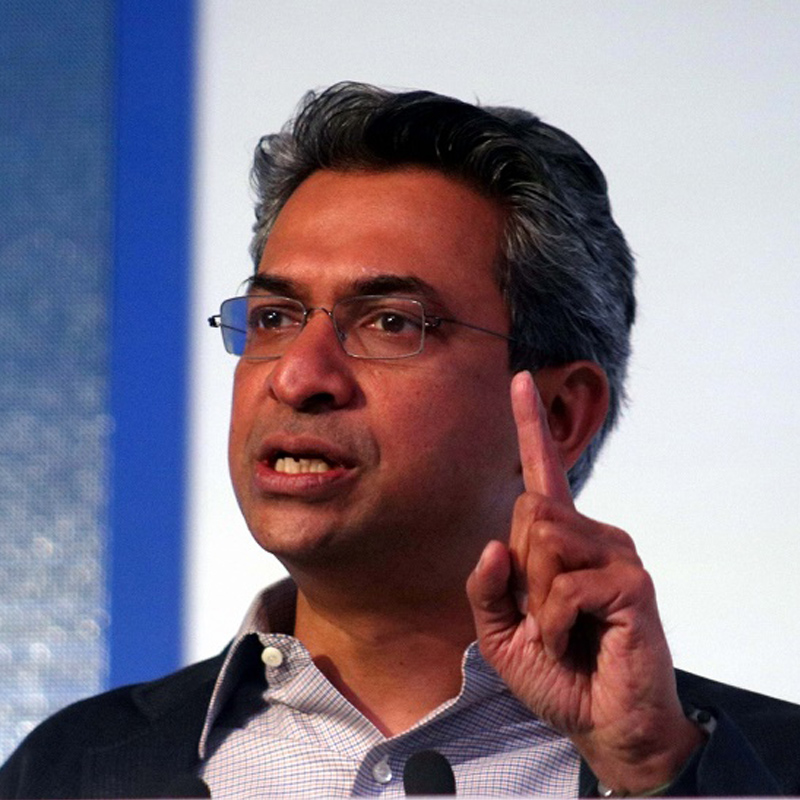
    When the online space is turning into more class agnostic nature, the gender divide is also abolishing. Google (http://www.indiantelevision.com/mam/marketing/brands/how-google-views-indias-internet-landscape-180531) vice president India and South Asia Rajan Anandan was speaking about new age internet users, notable trends and changes at the Subhash Ghosal Memorial Lecture recently. The veteran said that Indian internet users are no longer restricted to the metro, male, millennial phenomenon.
    Rajan highlights a gender disparity in internet usage that was prevalent in India three years ago, which wasn’t the case even in places like Africa or the Middle East. Just one in ten internet users was female. Several factors like lack of awareness and access worked in favour of the divide. Today, 37 per cent of India’s internet users are women which is expected to rise to 45 per cent by 2020.
    “If you go back even 8-10 months, you characterise India’s internet as male, metro and millennial. So millennial males in metro India was really what the internet was about. That has changed pretty dramatically. We see more women coming online. In fact, in terms of new internet users, there are many women than men actually and a lot of them are from rural India, small towns,” he commented.
    Speaking about megatrends in the Indian internet market, he said that voice, video, vernacular are grabbing high attention. Over the last 12-18 months, voice has shown the most surprising growth. There has been a 270 per cent growth in voice searches. “So, they (new users) are more comfortable speaking to internet than typing, tapping. India is going to be the world’s first voice driven internet market,” he said.
    Commenting on the vernacular(http://www.indiantelevision.com/iworld/social-media/google-assistant-becomes-bilingual-180901)growth, he said that almost 100 per cent of new Indian internet users access internet in local languages, not in English. The man with the statistics said over 200 million users access internet in regional languages. Moreover, there has been a 400 per cent growth in Hindi voice searches.

    Indian market went from a messaging first internet market to video first internet market over the time thanks to affordable data prices. “The journey of new age internet users has been pretty straightforward. They started with messaging, generally WhatsApp, then started using social networks, watched a little bit of video because data was expensive. That has actually changed. Almost every new internet user today actually starts his internet journey with video because they all understand video,” Anandan said. He also said 75 per cent of all traffic in mobile data in Indian internet actually comes from video, among which 95 per cent of total video consumption is happening in local languages.
    Indians are consuming higher amount of data, 8 GB per month, compared to developed markets like South Korea, the US and the UK. India is consuming more mobile data than the US and China combined. Even the smartphone quality has improved in India as 70 per cent of phones used here have a 2 GB RAM or more.
    The Google head said that the company is concerned with solving the problems of the common man. He said that the internet can even solve problems related to agriculture, financial institutions and health and education systems.


  • India to be APAC’s fourth largest online video subscription opportunity by 2023: MPA

    India to be APAC’s fourth largest online video subscription opportunity by 2023: MPA

    MUMBAI: The latest report by Media Partners Asia (MPA) predicts that by 2023, India will be Asia Pacific’s fourth-largest online video subscription opportunity after China, Australia and Japan.

    The Asia Pacific Online Video & Broadband Distribution report goes on to say that Asia Pacific’s online video revenue, comprising net ad spend and subscription fees, is expected to grow at 18 per cent CAGR, up from $21 billion in 2018 to $48 billion by 2023.

    The growth of online video subscription has been impressive in China, with fees rising from less than $850 million in 2015 to a projected $5 billion in 2018. The growth of online video subscription fees has also been strong and increasingly scalable in Australia and Japan, while meaningful opportunities are opening up in India, driven by the growth of payment infrastructure as well as investment in sports rights, local movies and series. Online video sub fees in Southeast Asia (including Hong Kong) are relatively low, at a projected $267 million in 2018. This could grow to $724 mil by 2023, driven by greater momentum in Hong Kong, Indonesia and the Philippines.

    China will account for the lion’s share of industry value, with more than 60 per cent of Asia Pacific online video revenue and more than 75 per cent of direct-to-consumer SVOD subs by 2023. After China, the largest markets by revenue in 2023 will be Japan, Australia, India, Korea and Taiwan. 

    MPA executive director Vivek Couto said,“Online video monetisation is starting to scale, supported by rising investment in premium entertainment and sports as well as the growth of broadband and digital payments. Strong digital ecosystems are emerging, especially in China while telcos are also becoming important aggregators of video services in markets such as Australia, India and Southeast Asia. Advertising is a major revenue stream for online video across the region, while subscription is also key, especially in Australia, China and Japan, and growing from a low base in India, Southeast Asia, Korea and Taiwan. Different payment models are emerging across China, India and Southeast Asia incorporating, including TVOD and shorter time commitments, freemium tiers, bundles and loyalty programs tied to a broader mix of digital services.”

    Net online video ad spend in Asia Pacific will grow from $13 billion in 2018 to $30 billion by 2023. Ex-China, this opportunity equates to more than $11 billion by 2023, versus $5 billion in 2018. YouTube and to some extent Facebook will remain dominant, with 73 per cent of online video ad spend ex-China by 2023, versus 78 per cent in 2018. The biggest online video ad markets after China by 2023 will be Japan, Australia, India and Korea. Local players will gain share with India leading the way, although Southeast Asia will lag behind.

    Online video content costs across Asia Pacific grew by 27 per cent in 2017 to reach $13 billion, with China contributing 85 per cent. Asia Pacific online video content costs will grow from $16.6 billion in 2018 to $31.5 billion by 2023, a 14 per cent CAGR, according to MPA. Ex-China, OTT video content costs will grow from $2.7 billion to $5.9 billion over 2018-23, a 16.5 per cent CAGR, with Australia, India and Japan driving momentum, followed by Korea.

    Advances in broadband will provide a significant boost to online video consumption, reach and monetisation. Mobile broadband will continue to grow, including the first flowering of 5G in North Asia and Australia post-2020, alongside a slow but steady transition to next-generation fixed broadband. Mobile broadband penetration in Asia Pacific ex-China will reach 80 per cent per capita by 2023 versus 57 per cent in 2018, with some of the biggest growth coming from India, Indonesia and Thailand. With China included, average mobile broadband penetration in Asia Pacific will grow from 74 per cent to 94 per cent per capita over the 2018-23 period. Average fixed broadband penetration in Asia Pacific will grow steadily from 50 per cent to 54 per cent of households over 2018-23, with the focus increasingly on upgrading networks using fibre and next-generation cable technologies.

    High level of online piracy leads the list of barriers to the growth. Apart from China, many local players are also struggling to scale in fragmented marketplaces. The top three SVOD players in a market typically have 50 per cent or more of online video subscription revenues, according to MPA analysis, leaving scope for future consolidation.

    Couto added: “We are in the early innings of an industry evolution which will require high levels of investment and strong balance sheets. For standalone players, there is no clear path to significant free cash generation in any market over the medium term, while integrated digital giants and large-scale TV players are subsidising losses for their online video services, although operational breakeven is likely in the near-to-medium term for local platforms in Australia, China, India and Japan.”

  • Mobile internet consumption to hit 28% of media use by 2020: Zenith Report

    Mobile internet consumption to hit 28% of media use by 2020: Zenith Report

    MUMBAI: The spread of mobile devices and rapid mobile data networks has transformed global media consumption in recent years. A recent report by Zenith Media Consumption Forecasts 2018, reveals that 24 per cent of all media consumption across the world will be mobile this year, up from just five per cent in 2011. The report highlights that by 2020 internet usage will reach 28 per cent, taking share from almost all other media.

    The rise of mobile is also forcing brands to transform the way they plan their communications across media, focusing less on channels and more on consumer mind-set as the distinctions between channels are eroded.

    The report surveys changing patterns of media consumption since 2011 and forecasts how the amount of time people allocate to different media will change between 2018 and 2020, in 63 countries across the world.

    Mobile internet use has eroded the consumption of almost all other media. Newspapers and magazines have lost the most, as between 2011 and 2018 time spent reading them has fallen by 45 per cent for newspapers and 56 per cent for magazines. However, this refers only to time spent reading printed publications. Time spent reading newspapers and magazines online is included in the internet total, and for many publications the time they have gained online more than makes up for the time they have lost from print.

    Zenith’s head of forecasting and director of global intelligence Jonathan Barnard says, “Under traditional definitions, all other media are losing out to the mobile internet. But the truth is that the distinctions between media are becoming less important, and mobile technology offers publishers and brands more opportunities to reach consumers than ever.”

    Television and radio have also lost out, though not on the same scale. The time spent watching television shrank by three per cent between 2011 and 2018, while time spent listening to radio shrank by eight per cent. Again, television channels and radio stations have gained audiences online at the same time as they have lost them offline, but they have faced stiff competition from native digital platforms such as YouTube and Spotify.

    The rise of mobile has blurred the boundaries between different channels: it can be used for entertainment, news, information, research, socialising and communication. For brands it can play the role of building awareness, creating direct responses, allowing one-to-one communication, or generating earned content, depending on how the consumer is using the device, and in particular their mind-set while using it.

    A consumer who is actively searching for a specific information is in a very different mind-set from one who is sharing holiday photos with friends, or leaning back and enjoying a video. Brands need to understand the signals a consumer’s activity provides about their mind-set, and therefore what forms of communication are appropriate.

    Focusing on mind-set also dissolves the distinction between traditional and digital media: it’s more important that a consumer is reading news, than whether they are doing so using a printed newspaper or newspaper websites. People who are watching video content on television sets, laptops or smartphones have much in common, though people watching long-form entertainment can have quite different mind-sets from people scrolling short-form content on social media. Brands need to decide the role each platform plays in their communications strategies, however the consumer happens to access it.

    The rapid expansion of mobile internet use has increased the amount of time the average individual spends consuming media, by giving people access to essentially unlimited content almost everywhere, and at any time of the day. The report estimates that the average person will spend 479 minutes a day consuming media this year, 12 per cent more than in 2011 and will reach 492 minutes a day in 2020.

    Time spent at the cinema actually increased three per cent between 2011 and 2018 as cinema owners have invested in more screens and a better experience for visitors, while studios have marketed their films more effectively at international audiences. On average, though, people spend much less time at the cinema than they do with any other medium.

    Zenith’s global brand president Vittorio Bonori mentions, “Mobile technology is challenging brands to rethink how they communicate with consumers. Brands need to understand both the consumer’s mind-set and where they sit on the consumer journey, to determine how to communicate with them. By using data, ad tech and now artificial intelligence, brands can co-ordinate their communications across media and mind-sets to move them along the consumer journey most effectively.”


  • JioFiber to take on DTH players

    JioFiber to take on DTH players

    MUMBAI: December 2018 is the target that Reliance Jio has set for itself to launch its broadband services. According to a report in Digit, JioFiber will be launched in 20 cities initially with a minimum speed of 40 Mbps.

    An optical network termination (ONT) box will be installed in the homes of users which can even handle IPTV requests. This means that Jio’s target is not just broadband companies but even DTH providers including Tata Sky, Dish TV, Airtel DTH, etc., as it gets ready to offer all-in-one bundled services.

    The ONT box can be connected to a TV or any device. There are four LAN ports attached to the device. Subscribers opting for special plans can avail speeds of one Gbps. The pricing of the service isn’t yet known but it is expected that people will get unlimited packs like its current mobile phone schemes.

    It will initially target tier I and II cities including Mumbai, Delhi, Kochi, Bhopal, Chandigarh, etc before it moves into other towns.

    In its FAQs, the company boasts of the superiority of JioFibre by stating that the connectivity will be till each house ensuring high speed internet while other companies only provide fibre till the building after which traditional cable is used to reach every house thereby reducing the speed and causing frequent disturbances. It goes on to say that the fibre network need not be changed after the first installation since the company will ensure upgradation with latest technology that will create electronic light pulses.

    (Source : Reliance Jio plans to roll out JioFiber across India by December this year bundled with Internet Protocol Television (IPTV) services)

    Also Read :

    Reliance Jio ready to disrupt wired broadband: Matthew Oomen

    Reliance Jio readies Rs 60,000 cr war chest: Report

    Jio partners Screenz for interactive TV solution

  • DoT addresses broadband issues in policy out for public consultation

    DoT addresses broadband issues in policy out for public consultation

    MUMBAI: The Indian government is exploring renaming/replacing the National Telecom Policy (NTP) 2018 as the National Digital Communications Policy, which will aim to have increased synergies amongst ministries of telecom, IT and I&B.

    What the new draft policy, seeking public comments, does not look at is trying to make TRAI the converged regulator as had been suggested by TRAI in its feedback to the government on formulation of NTP 2018.

    Some of the important recommendations are:

    “Leveraging existing assets of the broadcasting and power sector to improve connectivity, affordability and sustainability”

    “Strengthening Satellite Communication Technologies in India
    (a) Review the regulatory regime for satellite communication technologies, including: 

    i. Revising licensing and regulatory conditions that limit the use of satellite communications, such as speed barriers, band allocation, etc.
    ii. Simplifying compliance requirements for VSAT operators to ensure faster roll out
    iii. Expanding scope of permissible services under the Unified Licensing regime using High Throughput Satellite communication systems

    (b) Optimise Satellite communications technologies in India, by: 

    i. Reviewing SATCOM policy for communication services, along with Department of Space, keeping in view international developments and social and economic needs of the country
    ii. Making available additional transponders and new spectrum bands (such as Ka band) for satellite-based commercial communication services
    iii. Rationalizing satellite transponder, spectrum charges and charges payable to WPC
    iv. Assessing the bandwidth demands across various spectrum bands used for satellite communications, in consultation with stakeholders
    v. Prioritising international engagement with ITU on spectrum management issues, specifically with respect to satellite communications in India

    (c) Develop an ecosystem for satellite communications in India, with focus on: 

    i. Streamlining administrative processes for assignment and allocations, clearances and permissions related to satellite communication systems
    ii. Promoting local manufacturing and development of satellite communications related infrastructure through appropriate policies
    iii. Promoting participation of private players, with due regard to national security and sovereignty”

    “Enabling Infrastructure Convergence of IT, telecom and broadcasting sectors:

    i. Amending the Indian Telegraph Act, 1885 and other relevant acts for the purpose of convergence in coordination with respective ministries
    ii. Establishing a unified policy framework and spectrum management regime for broadcast and broadband technologies
    iii. Restructuring of legal, licensing and regulatory frameworks for reaping the benefits of convergence”

    “Enabling unbundling of different layers (e.g. infrastructure, network, services and applications layer) through differential licensing”

    “Fostering an Intellectual Property Rights regime that promotes innovation, by:

    i. Implementing key recommendations in the National IPR Policy pertaining to Digital Communications, including a review of the legal regime around copyright, patents and trade marks
    ii. Assisting start-ups in filing copyright, patent and trademarks applications
    iii. Providing financial incentives for the development of Standard Essential Patents (SEPs) in the field of digital communications technologies
    iv. Promoting Indian IPR through international collaborations and active participation in standard development processes and IPR related events”

    “Recognising the need to uphold the core principles of net neutrality:

    i. Amending the license agreements to incorporate the principles of non-discriminatory treatment of content, along with appropriate exclusions and exceptions as necessary
    ii. Ensuring compliance with net neutrality principles, by introducing appropriate disclosure and transparency requirements”

    There are three aims- first is to connect India digitally, second is to propel India by using technologies like 5G, AI and IoT and third is to secure India which will enable the security of people’s privacy, security, data etc.

    After the Facebook-Cambridge Analytica scandal, the government will amend licences and terms and conditions to incorporate provisions for privacy and data security.

    This apart, the government aims to establish five million public wi-fi spots by 2020 and 10 million by 2022. It will also amend the Indian Telegraph Act to converge IT, telecom and broadcasting sectors.

    The government will re-look at the fees it levies at various places to enable investment of $100 billion in the digital communications sector. It will also revisit spectrum usage charges where telecom providers currently pay 3-6 per cent of adjusted gross revenue as fees. Licence fee is 8 per cent of the same.

    The Telecom Commission has also accepted the recommendations of the Telecom Regulatory Authority of India regarding a new framework for public data offices for setting up public wi-fi hotspots where people can purchase telecom or internet services in sachet-sized packets starting at Rs 2.

    Also Read :

    BSNL inks deals with SoftBank-backed OneWeb for satellite capacity 

    DEN expands broadband services; plans Rs 100 cr capex

    Zee, Star, NBA oppose converged regulator for broadcast and telecoms

  • TRAI urges govt to set up public wi-fi systems

    TRAI urges govt to set up public wi-fi systems

    MUMBAI: The Telecom Regulatory Authority of India (TRAI) is of the opinion that the the government must encourage public wi-fi solutions from a public policy point of view. “The availability of broadband services at a very low cost and in every corner of the country is the basic requirement of digital India,” it said in a report.

    In the report on ‘Public Wi-Fi Open Pilot Project’, submitted to the Telecoms Ministry, TRAI  said, “Wi-fi is a technology that can easily meet this requirement [for digital India]. The recommendation envisages an architecture that supports one time authentication requirement, interoperability across different wi-fi networks, ease of payment through any instrument and above all inexpensive service.”

    According to TRAI,  global internet traffic is anticipated to increase three times to 3.3 ZB per year by 2021 from 1.2 ZB per year in 2016 and wi-fi will play an important role in driving that growth. Public wi-fi hotspots are crucial for broadband internet in international countries. As per a Cisco report, the number of public wi-fi hotspots is set to increase from 94 million in 2016 to 541.6 million in 2021. The density of WiFi hotspots will also increase from one hotspot for 150 people to one hotspot for 20 people.

    The authority noted that India significantly lags behind other countries in terms of providing access to broadband, especially to people in rural areas. Since there is a significant section of the population still to be connected, it feels there is a need to take some measures so as to provide broadband services to the unconnected. This calls for introduction of new set of small players in the wi-fi service provisioning space, who will be able to extend their resources through a process of incentivisation.

    The report shows that mobile network data usage in India remains dominant currently as compared to other forms of internet usage. This can be attributed to a number of factors, including the cost and affordability of different broadband services, lack of fixed line coverage and relatively small number of public wi-fi zones. “This situation highlights the need for better proliferation of public wi-fi networks that can offer a more affordable and flexible alternative for scaling up of internet access,” it says.

    The regulator has come prepared. In 2017, it conducted a pilot trial of the suggested framework in the recommendations. Several companies registered to be app providers, software and hardware service providers and public data offices with a vision to ‘establish an open architecture based on wi-fi access network interface (WANI)’ in such a way that smaller entities were easily able to setup systems and users were able to easily identify and connect to them. Its opinion is that the prices must be of lower denominations such as Rs 2.

    The pilot was conducted to demonstrate that unbundling of services reduces rework, speeds up development and hence is the most effective way to tackle this complex problem. It also highlighted that multi-provider, inter-operable, collaborative model increases the overall innovation in the system, dismantles monopolies and encourages passing of benefits to end user. The pilot allowed for real life testing and suggestion of improvements as well as fine tune technology.

    The public wi-fi pilot outcome aims to offer a seamless experience to end users. As an encouragement for small entrepreneurs such as tea shops, grocery shops to set up and maintain access points, it wants to uncomplicated issues like unbundling authentication, payment and accounting from hardware and software running on the access point.

    TRAI mentions the operating guidelines to include a speed of at least 2 Mbps and e-KYC linked to Aadhaar or m-KYC via OTP authentication. The providers must set up systems capable of withstanding cyber attacks such as malware, denial of service (DoS) and even customer data and privacy protection.

    It calls the pilot a success since 96.3 per cent of the persons found the system user friendly and just 3.7 per cent of the persons believed that there is still a scope for improvement. It now intends to expand the second phase in two large cities – Delhi and Bengaluru – at junctures like airports, railway/metro stations, bus stands and other public places. This will allow testing WANI framework at scale.

    As an encouragement, TRAI says that the success of the pilot addresses the issues of interoperability and payment options. The WANI architecture would unleash the power of wi-fi and provide an impetus to the number of public hotspots in the country thereby providing the user a good quality of service and also a foolproof payment system.

    Also Read:

    Industry hails doubling of digital allocation

    Wi-Fi: TRAI plans to set up ‘open’ WANI, seeks inter-operable, sachet-priced model

  • DEN expands broadband services; plans Rs 100 cr capex

    DEN expands broadband services; plans Rs 100 cr capex

    MUMBAI: DEN Broadband Pvt Ltd (DEN) has expanded its hi-speed internet services to 100 cities across India. After an encouraging response to the pilot project in five cities, DEN has already started its first phase of expansion in 15 cities.

    DEN’s expansion plan is in sync with the massive growth in the internet consumption in the country. Data usage in India has already jumped by 144 per cent (y-o-y) with average consumption per user in 4G broadband reaching 11 GB per month. The rise in data consumption has not been matched by a corresponding increase in the speed of connection. While India globally ranks 67 in fixed broadband speeds with an average download speed of 20.72 Mbps, mobile broadband speeds still lags at 109th rank with an average download speed of 9.01 Mbps, as per Ookla’s speedtest Global Index, February 2018 report.

    DEN Networks CEO SN Sharma said: “This is a game changing moment not just for DEN but also for the Internet users in the country. Our hard work and investment in transforming our Co-ax cable trunk routes into fiber optics will now yield tangible results. For DEN it will mean a minimum investment whereas for our users it will mean best in class Internet speed.”

    The company intends to tap this high-potential market by capitalising on its existing cable TV infrastructure and providing hi-speed fixed broadband internet. With speeds upto 1Gbps at affordable prices, DEN Broadband will cater to the future needs of Internet while penetrating further into the untapped markets.

    DEN’s fibre cable infrastructure is already present across 13 states. The company plans to roll out through a franchisee model, which will leverage its strength as a leading national MSO with an established on-ground Cable LMO network to usher in a broadband revolution in the entire country. Its 14,000 plus LMO network would use its technology while adhering to the operational standards set by DEN. Being the franchisor, DEN will bill the subscribers directly and collect tariffs from them directly. The franchisee would get paid based on their agreement and size of their investment.

    The MSO’s fixed broadband infrastructure is being built using a mix of GPON/FTTX and metro ethernet technologies enabling download speeds from 20 Mbps till 1 Gbps. It estimates a capital expenditure of Rs 100 crore over the next three years. This expansion plan is targeted towards 100 cities across states where DEN has a strong foothold such as UP, Karnataka, Jharkhand and Uttarakhand.

  • Mobile internet rates drop by 93% in three years

    Mobile internet rates drop by 93% in three years

    MUMBAI: Mobile internet rates witnessed a phenomenal drop of 93 per cent while data usage per user surged by more than 25 times in the three years ended 30 September 2017, the Department of Telecom (DoT) said in a tweet today.

    The mobile data consumption in India is now the highest in the world at 1.3 million GB per month–more than the combined data usage in the US and China. This trend has also been fueled by the penetration of smartphones—which has shot up from 190 million to 390 million—in the country.  Internet users have increased by about 66 per cent from 251 million to 429 million (in June 2017) between 2014 and 2017.

    “Cheapest tariff globally—Rs 33 per GB in 2014 to Rs 21 per GB as on September 2017, tariff reduction of 93 per cent,” the DoT tweeted. The data war started following the entry of Reliance Jio in 2016. The company this year slashed the prices to as low as Rs 4 per GB per day. With declining mobile internet rates, data usage also grew multi fold. “Average data usage per subscriber grew 25 times from 62 MB per month in 2014 to 1.6 GB per month in 2017,” the DoT said .


    The broadband access in the country increased from 61 million subscribers in March 2014 to 325 million subscribers in September 2017, the DoT said. According to latest performance indicator of the Telecom Regulatory Authority of India, there were 445.9 million internet subscribers at the end of December 2017.

    The DoT data showed that during the three-year period, the mobile base stations in the country more than doubled from 7.9 lakh in May 2014 to 16.8 lakh by 2017-end.

  • Reliance launches JioTV for web

    Reliance launches JioTV for web

    MUMBAI: After recently announcing a web version of its content platform, JioCinema, Reliance Jio has silently introduced the web version of its Live TV watching platform, Reliance JioTV. The launch of the platform has been imminent as the customers of Reliance are asking for a web version of the JioTV for quite some time.

    Jio customers can now head over to jiotv.com on any browser. All the content and live TV channels that are available in the JioTV application are made available on the web version. Moreover, the web interface is similar to the interface of the JioTV application for Android. The channels are displayed in a line-based interface and users can toggle between the SD and HD channels.

    Interestingly, unlike the Jio TV app on mobile phones, JioTV on the desktop can stream and play programmes with the help of internet service providers other than Reliance Jio.

    With this move, Reliance Jio is allowing its customers to watch online content anywhere. Furthermore, users can access the website in any mobile browser. This essentially removes the hassle of downloading the application to watch the content.

    JioTV has more than 525 channels and more than 90 channels in HD.

  • TRAI says all stakeholders responsible to protect user data

    TRAI says all stakeholders responsible to protect user data

    NEW DELHI: The Telecom Regulatory Authority of India (TRAI) has assured its commitment to protect data and define each stakeholder’s responsibility to enable the same. Speaking at ‘i-Bharat 2017’, TRAI chairman R S Sharma said that information privacy, security and data ownership need to be defined.

    Any decision will be taken only after seeking views and conducting open houses with relevant stakeholders. Several consultation papers are out in the public domain for recommendations and suggestions.

    He highlighted the plight of users who weren’t even aware of the long-term consequences of sharing their data and its being misused. In some instances, the privacy policy of a service provider seeks the right to use the data of the customer in any form.

    TRAI is expected to release its views on net neutrality soon but added that it calls for access to internet content without discrimination in data speed or cost. He added that digital consent and blockchain were emerging trends and suggested that there should be a provision for data portability as well.