Tag: Internet Radio

  • Future of Prasar Bharati lies in Freedish, FM Radio and internet radio, says Jawhar Sircar

    Future of Prasar Bharati lies in Freedish, FM Radio and internet radio, says Jawhar Sircar

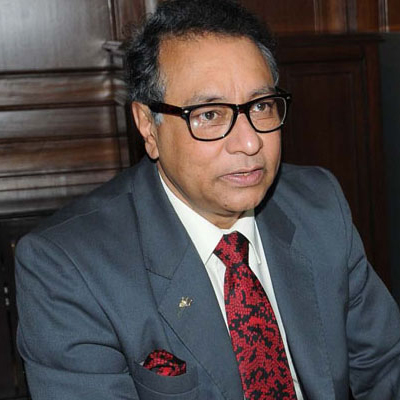
    NEW DELHI: Prasar Bharati chief executive officer Jawhar Sircar has said that the pubcaster would have to strengthen its direct-to-home platform Freedish and its FM services if it has to survive.


    He announced that Freedish was expected to go up to 112 television channels in the next two to three months but he had made it clear to the government that while most were coming through e-auctions, some popular channels may have to be ‘attracted’ to join Freedish since satellite television was the future. He said he was not opposed to digital terrestrial transmission but advances in technology may make it obsolete.  


    He said that when Freedish utilises its full strength, it will give the other DTH operators ‘a run for their money,’ while addressing a function organised by the Broadcast Engineering Society (India) on the occasion of Public Service Broadcasting Day.


    Similarly, he said he was conscious that FM was on analogue and may have to be phased out at some stage, but was the best alternative at present since medium wave and short wave were on the way out. That was the intent in his plan to simulcast MW programmes on FM channels. According to Sircar, AIR should direct its resources to strengthen FM broadcasts, particularly as even mobile phones and car radios could catch these signals.


    He denied that he was opposed to DRM (Digital Radio Mondiale), but said the present DRM will become obsolete by the time people are able to afford it and a futuristic version of DRM may be in vogue.


    He also felt that Internet Radio was the best alternative at present to short wave and asked the engineers to work on this.


    The day is marked as Public Service Broadcasting Day as it coincides with the only time that the father of the nation, Mahatma Gandhi, ever visited All India Radio. He had come to the station in Delhi to make a broadcast in 1947 aimed at Hindu refugees from Pakistan then staying in a camp near Kurukshetra.


    AIR director general F Sheheryar referred to Prime Minister Narendra Modi’s decision to talk to the people through AIR and to the disaster management that AIR had helped in during the floods in Jammu and Kasmmir or the storm in the Bay of Bengal. In Kashmir, he said people depended either on the Army for help or AIR for information on how to get that help.


    He said the clear philosophy of the public service broadcaster was to do more than just entertainment as the private FM channels were doing. A pubcaster gave precedence to public welfare over pecuniary gain.


    A pubcaster also helped in development of languages and literature and taking forward classical art, music and dance.


    He said AIR had now undertaken a major exercise to record for posterity all the dying forms of folklore and folk music before these vanish.


    From six stations in 1947, he said AIR had grown to 414 stations at present. However, there was severe dearth of technical staff.


    Speaking earlier, Doordarshan engineering-in-chief N A Khan said terrestrial transmission was necessary for narrow casting.


    Meanwhile, he said DD had already begun using 19 of the 64 digital transmitters being set up to strengthen digital terrestrial transmission.


    Nobel Peace Prize winner Kailash Satyarthi, who was the chief guest, said that he had depended on AIR when he set up ‘Bachpan Bachao Aandolan’ to reach out to parents who had lost their children or to get information about forcibly kept children.


    He also lauded radio for its work when the country was struck by disaster like the floods in J and K and the storm in the Bay of Bengal.


    He wanted AIR to work towards democratisation of knowledge. The pubcaster could help the people march from despair to hope and the dissemination of collective construction of information.


    While AIR had united India, he wanted it to help create a child-friendly India.


    Three former engineers of Prasar Bharati –M C Aggarwal, G S Sarma, and A R Krishnamurthy – were given lifetime achievement awards. BES(I) president O K Sharma and AIR E-in-C Animesh Chakravarty also spoke on the occasion.


  • Consumers ‘quickly’ embrace radio’s digital platforms; Study

    Consumers ‘quickly’ embrace radio’s digital platforms; Study

    MUMBAI: The proliferation of digital broadcast platforms such as Internet radio, satellite radio, HD and podcasting is a testament to the popularity of radio programming in US.

    The Infinite Dial: Radio’s Digital Platforms, a new study by Arbitron Inc. and Edison Media Research, explores this expansion of the radio market and its implications for advertisers and media planners.

    “Consumers are quickly embracing radio’s digital platforms and this new research reveals that these advertising vehicles are becoming increasingly viable,” said Arbitron Sr VP marketing Bill Rose.

    “Our research shows that regardless of the platform consumers see all these options as merely being new forms of ‘radio’” said Edison Media Research president Larry Rosin. “This report provides crucial measurement on the development of radio as it is consumed in new and different ways.”

    The findings reported here are based on a 13 January – 12 February, 2006 telephone survey of 1,925 people who were interviewed to investigate Americans’ use of various forms of traditional, online and satellite media.

    Growth of Internet Radio
    Internet radio is growing rapidly. The monthly audience age 12+ now tops an estimated 52 million; an increase from an estimated 37 million people in 2005. The weekly Internet radio audience also increased 50 percent over the past year, with 12 percent of the US population age 12+ (an estimated 30 million) having listened to Internet radio in the past week, up from 8 percent in 2005, according to the findings.

    Advertiser highlights: Online radio reaches nearly one in five (19 percent) persons per week aged 18-34 and 15 per cent of persons aged 25-54. Weekly Online radio listeners are 36 percent more likely than the average consumer to live in a household with an annual income of more than $100,000.

    Satellite Radio In 2006, awareness of XM and Sirius satellite radio has reached equal levels of 61 percent awareness each among those aged 12 and older. Nearly one in five non-subscribers to satellite radio say they are ‘very’ or ‘somewhat’ likely to subscribe to satellite radio in the next 12 months.

    Advertiser highlights: Twenty-seven per cent of satellite radio subscribers live in households with an annual income of more than $100,000, nearly double the percentage of all households (14 per cent).

    Podcasting When asked to define podcasting in their own words, there was some confusion among respondents regarding the differences among podcasting, Internet broadcasting and downloadable music. When read a definition, eleven percent of Americans say that they have ever listened to an audio podcast.

    Advertising highlights: Podcasting attracts a youthful audience: one out of five who have ever listened to an audio podcast are 12-17 years old, and more than half (53 percent) are under the age of 35.

    HD Radio More than one-third of Americans say they are ‘very’ or ‘somewhat’ interested in HD Radio; more than 40 percent of satellite subscribers say they are interested in HD Radio as well.

    More than one-third of those who said they were interested in HD Radio say they would be likely to purchase an HD Radio receiver at a $100 price point, and 58 percent of those interested say they would be likely to purchase at $50.

    AM/FM Radio While there has been tremendous growth in usage of radio’s new digital platforms, AM/FM radio does not appear to be losing Time Spent Listening (TSL). Daily radio TSL is 2 hours 45 minutes for the average consumer, compared with 2 hours 48 minutes among those who listen to digital radio.

    Seventy-seven per cent of Americans say they expect to listen to AM/FM radio as much as they do now despite increasing advancements in technology. The same holds true for Internet radio listeners (77 per cent) and those who have tried audio podcasting (73 per cent). Satellite radio subscribers showed slightly less dedication to traditional broadcasting, with 64 per cent saying they plan to continue listening to the same amount of AM/FM radio.

    This study, as well as previous studies, may be downloaded free of charge via the Arbitron and Edison Media Research Web sites at www.arbitron.com and www.edisonresearch.com.