Tag: Internet of Things

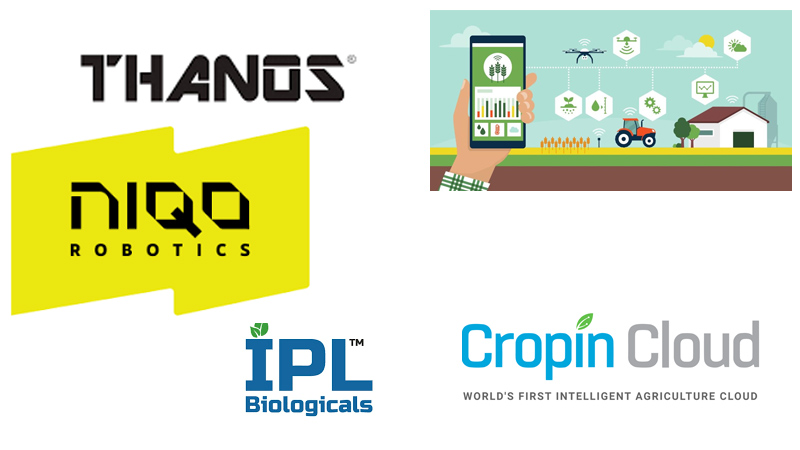
  • Top five game-changing technology-based solution providers for precision farming

    Top five game-changing technology-based solution providers for precision farming

    Mumbai: The agriculture sector is currently attempting to feed a growing global population sustainably while dealing with major issues including resource depletion and climate change. To improve agricultural practices, precision farming makes use of a variety of technology, including sensors, GPS, drones, artificial intelligence, and microbial-based solutions. These technologies enable farmers to monitor crop health, soil conditions, and weather patterns precisely, improving crop quality and increasing yields while decreasing waste and more efficiently allocating resources. In the face of climate change and food scarcity, precision farming is essential for sustainable agriculture because it promotes resource conservation, well-informed decision-making, adaptability, and global food security.

    Listing down the top five game-changing technology-based solution providers for precision farming:

    Microbial-Based Solutions: IPL Biologicals Limited has promoted a sustainable future by managing pests and residues while optimizing crop yield, quality, and soil health through the use of native microbial-based solutions. Maintaining its dedication to secure and environmentally friendly farming, IPL combines integrated pest and nutrient management, substituting microorganisms for chemicals. Ever since its inception in 1994, the company IPL Biologicals has laid down the benchmark to gain trust among farmers for premium yields and return on investment by putting the health of the world and the welfare of their customers first. With its wide array of biological solutions—such as bio-fungicides, bio-fertilizers, and bio-insecticides—IPL uses the power of microbes to promote sustainable agriculture. Their cutting-edge products, which have more than 50 organic certifications and comply with regulations, aim to transform the sector with their high CFU counts and extended shelf lives. Performance and sustainability are given top priority by IPL to improve the world going forward.

    Drones: Thanos Technologies has been a pioneer in the domain of drone manufacturing since 2016. However, no other company shouts louder about the revolution in precision farming than the company. They have a keen focus on in-house drone production and state-of-the-art technology for customized solutions for agriculture. Their commitment to innovation goes beyond anything and extends from agricultural drones for crop management to tailor-made solutions for specific needs. Notably, they have just introduced a cutting-edge agricultural spraying-as-a-service that pushes the boundaries of precision farming practices. On the path of innovation, Thanos Technologies represents the idea of a revolutionary break from ordinary practices. Their commitment to surpassing expectations underlines their belief in delivering instead of promising, painting the skies with ideas that challenge the status quo of farming practices.

    Artificial Intelligence (AI) and Machine Learning: Agriculture is changing through AI and machine learning in various ways: from predicting yields to disease detection and even sorting. To make these predictions, Cropin, a company founded in 2010, is a leader in Agtech thanks to its Cropin Cloud, the first industry cloud specifically designed for agriculture in the world. By enabling stakeholders to make well-informed decisions through the use of digitization and predictive intelligence, farming efficiency, production, risk management, and sustainability are all improved. With 16 million acres digitalized and more than 250 B2B partnerships, Cropin has an impact on more than seven million farmers worldwide. Leading the way in the ‘Ag-intelligence’ trend, Cropin’s agricultural knowledge graph spans 103 nations and more than 500 crops and 10,000 variants. Predictive intelligence is computed for more than 0.2 billion acres globally using the Cropin Cloud’s intelligence platform. By enabling data-driven insights, streamlining resource use, tackling issues like food shortages and climate change, and revolutionizing precision farming, this game-changing technology eventually advances sustainable agriculture on a worldwide basis.

    Robotics: Using AI-powered agricultural robots, Niqo Robotics (previously TartanSense) is leading a sustainable agricultural revolution in India. With a foundation in their goal of “Victory of the People,” Niqo seeks to liberate the farming ecology by developing trustworthy and easily available robots for environmentally friendly farming practices. Their creative strategy combines the concepts of precision farming with artificial intelligence to maximize agricultural techniques. These robots give farmers cutting-edge instruments to increase output, reduce resource use, and lessen their influence on the environment. Niqo Robotics enables farmers to make well-informed decisions, adjust to changing conditions, and sustainably increase yields by utilizing automation and data-driven insights. Their dedication to developing precision farming technologies is a testament to their vision of a day when agricultural innovation will drive agricultural growth and provide food security and environmental stewardship for future generations.

    Internet of Things (IoT): GramworkX uses satellite, AI, and Internet of Things technology to provide a cutting-edge smart farm resource management application. It provides farmers with essential information on microclimate, current weather information, forecasts, and irrigation scheduling. To avoid over- and under-irrigation, which can impede crop growth, the algorithm optimizes irrigation by taking into account soil type, meteorological conditions, crop stage, and irrigation system. Furthermore, by continuously improving forecasts through the analysis of meteorological information from multiple places, their machine-learning system provides irrigation forecasts up to one week in advance. Farmers can make more informed decisions with GramworkX, which increases farm output and resource efficiency. With the help of this all-inclusive solution, farmers can plan irrigation more easily and make well-informed decisions that will maximize crop growth and sustainability.

    From Microbial Based Solutions, drones, artificial intelligence, Robotics and the Internet of Things, there exist technological innovations that will revolutionize precision farming. These, in turn, have improved crop resilience, raised yields, and laid the foundation for sustainable and efficient production, in a bid to curb concerns of global food insecurity, while ushering in the way for effective and efficient agricultural production.

  • GUEST ARTICLE: 5G and IoT-The beginning of a new era

    GUEST ARTICLE: 5G and IoT-The beginning of a new era

    Mumbai: Meta Description: The integrated ecosystem of 5G and IoT (internet of things) has the potential to revolutionise business fortunes if these new technologies are coupled in a synergistic manner.

    What do the numbers say about 5G and IoT integration?

    Take a look at the data below to see the great potential that 5G technology integration in IoT devices offers:

    • According to Cisco, in the near future, 500 billion IoT devices will be integrated with 5G technology. This figure comprises, among other things, sensors, actuators, scanners, and medical devices.

    • Ericsson AB, another reputable brand in the IT business, forecasts that by the end of 2022, 550 million 5G customers will be part of the current iteration of mobile broadband. According to the analysis, 5G integration in IoT devices will see an unparalleled hike in the next few years.

    • Asia Pacific will become the 5G network’s second-fastest expanding hub, accounting for around 10 per cent of worldwide customers. This change in the customer segment will spread to the industrial sector, catalysing the use of 5G in IoT devices.

    What exactly are IoT and 5G technologies?

    The potential of 5G technology and its ramifications for IoT devices have piqued the imagination of information technology professionals. Given the projected increase in the number of IoT devices from 16.4 billion to 30.9 billion units by 2025, the growth of 5G technology is essential for flawless communication among these vast numbers of devices.

    The fifth-generation network, or 5G technology, is the next version of the broadband cellular network. It can provide larger bandwidths and data speeds of up to 20 gigabytes per second (20 Gbps). The 5G network, when combined with IoT devices, has the potential to revolutionise the faces of many organisations across industries. Healthcare, transportation, energy and power, and education are just a few of the industries that stand to benefit greatly from the combination of 5G and IoT devices.

    Data aggregation and information extraction from IoT devices

    IoT devices are critical for gathering, aggregating, and analysing data from a wide range of sources. This data is subsequently analysed, resulting in the extraction of actionable information that may be used to make critical organisational strategic and tactical decisions.

    Consider the application of IoT devices in the healthcare industry. Today, IoT devices record a wide range of customer data at hospitals, health centres, infirmaries, and other facilities. The acquired data is then used to extract information about patients’ various health factors, such as age, gender, health concerns, and so on. As a result, this data is used by a variety of stakeholders, including doctors, patients, pharmaceutical companies, and medication marketers, to develop policy frameworks, action plans, and market strategies.

    IoT and 5G: complementary forces

    All data collection and aggregation can now be done more efficiently if IoT devices are seamlessly connected with one another, which is where the importance of a fast and reliable 5G network comes into play. Because of the 5G network’s high-speed data transfer, IoT devices can work significantly more efficiently than they can with 4G networks. To summarise, for IoT devices to reach their full potential, a fully matured and evolved 5G network is required.

    In terms of benefits, 5G technology and IoT devices have the potential to transform the fortunes of numerous companies. The following are some concrete highlights that demonstrate the great potential that integrating these technologies can provide businesses:

    1) 5G technology has made a name for itself due to its unique efficiency, speed, and latency characteristics. Furthermore, 5G technology provides superior safety and security, which, when combined with next-generation IoT devices, can enable significant leaps forward in autonomous driving, drone operations, virtual reality, digital finance, and a variety of AI applications in various sectors.

    2) 5G networks will primarily benefit enterprises in the healthcare, education, transportation, supply chain, and manufacturing industries. The adoption of 5G-enabled IoT devices in the healthcare industry is already increasing at an exponential rate. The convergence of 5G and IoT in the education industry will result in a more interactive virtual learning and immersive experience for students. Transportation and logistics will profit from the convergence of these new technologies as well, through the use of real-time tracking, electronic data interchange, and automatic stock replenishment. The manufacturing industry may use the concept of remote access, repair, and maintenance in IoT devices via high-speed internet, which will be truly transformative for the business.

    The need for a comprehensive 5G and IoT ecosystem

    We need to establish an integrated ecosystem of 5G networks and IoT devices to achieve the full potential of 5G and IoT devices. Only with the seamless integration of both of these technologies will industries be able to make huge leaps across the value chain. From raw material procurement to product manufacture, and from sales and marketing to actual client purchasing, we must endeavour to create a comprehensive ecosystem. As a result, businesses across their value chain and participating stakeholders will benefit from synergies.

    The author of the article is Altorum Leren co-founder and CEO Prateek Shukla.

  • Lustral Water launches AI & IoT-based smart water purifier

    Lustral Water launches AI & IoT-based smart water purifier

    MUMBAI: Homegrown B2C model-based company, Lustral Water has launched what it claims is ‘the world’s first’ Artificial Intelligence (AI) & Internet of Things (IoT) enabled water purifier with inbuilt sensors.

    The Water Purifiers remove toxins and harmful bacteria but retain the necessary minerals and vitamins, the company said. In addition, these purifiers are ingrained with new-age technology that keeps a tab on consumer’s water intake, pH level, TDS level, turbidity, mineral content, water temperature etc through smartphones. 

    Lustral Water CEO and founder Aditya Patnaik said, “Even today over 50% of India’s population doesn’t have access to clean drinking water. They are dependent on boiled water or simply consuming undrinkable water. We firmly believe that with cutting-edge and futuristic technology transforming even the unthinkable things into a distinct possibility, access to clean drinking water shouldn’t be a far-fetched idea.”

    He further added, “Lustral Purifiers are cost-effective with great health benefits as we offer WHO recommended standards of water. We don’t offer filtered water; we offer a healthier version of clean drinking water infused with necessary minerals and vitamins. Our purifiers are equipped to provide valid water in domestic houses. On top of that, everything is absolutely automatic and requires little to no human interference. If the water quality goes down, the purifier is equipped to alert an expert technician immediately so that consumers won’t have to worry about these things.”

    The purifiers are equipped to send requests to the nearest service engineer as soon as the water quality goes down, said the company. The brand believes that consumers should have access to validated data to know what is happening inside the purifier and consume water only after inspecting the quality. 

    Lustral Water has registered a 22 per cent month-on-month growth in traffic since its inception in Bengaluru. The brand is now planning to launch its state-of-the-art water purifiers in new tier II markets such as Jaipur, Lucknow, Ahmedabad, and Bhubaneswar.

  • TRAI invites ICT-based solution providers to upgrade tech

    TRAI invites ICT-based solution providers to upgrade tech

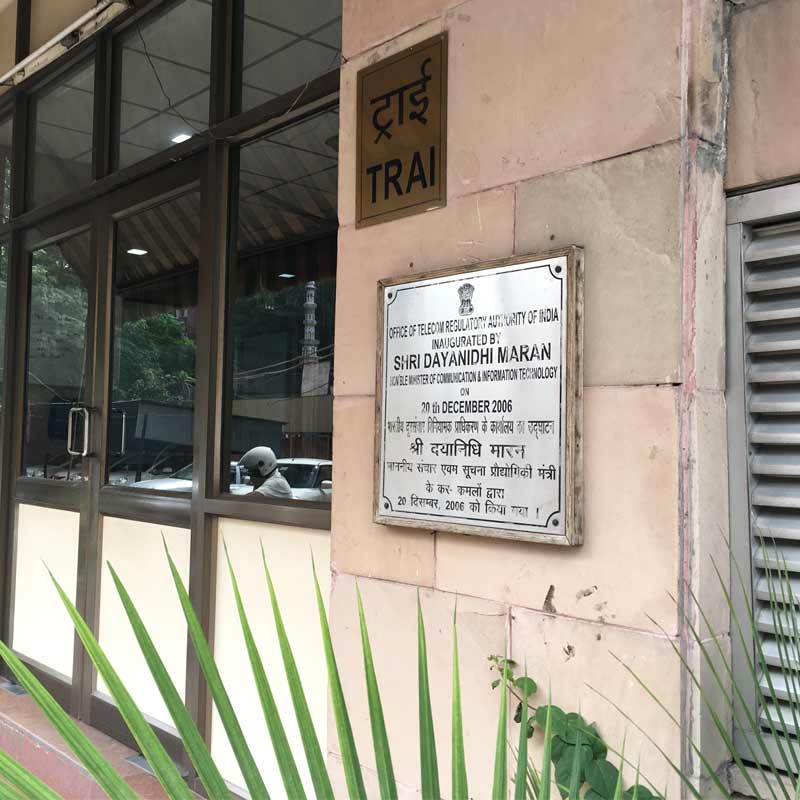
    NEW DELHI: With the demand for a wide range of services based on ICT platform involving machine-to-machine and internet of things, etc. increasing, Indian broadcast and telecom regulator TRAI is looking at expanding its technical capabilities and, in this regard, has invited proposals from application service providers (ASPs).

    As TRAI envisages massive expansion in the field of ICT and electronic governance services, it is looking at an ASP/IT solution provider/IT infrastructure maintenance/cloud management company having the capability of providing customised ICT-based solutions in telecom and broadcasting domains. Experience of integration of software application, database management, cloud/data centre administration, mobile applications, etc. is a pre-requisite.

    The ASP would be responsible for exploring opportunities, designing solutions and hardware and software management of TRAI’s partners, along with the capability to fulfill TRAI’s goals of having an integrated platform to effectively measure and represent the network performance of telecom and broadcasting stakeholders towards customer perceived quality of service.

    All rights on software/solutions developed by vendors would be vested with TRAI, according to a statement of the regulatory body. Development of solution will be on open source platforms and source code of all such development(s) will be provided to TRAI and stored at the designated location indicated by it.

    ALSO READ :

    TRAI issues new consultation paper on VNO

    150 IoT start-ups in 3 cities in as many yrs: IAMAI, Napino tie up

  • TRAI to meet b’casters, MSOs, DTH ops, telcos on ’17 roadmap

    TRAI to meet b’casters, MSOs, DTH ops, telcos on ’17 roadmap

    NEW DELHI: As promised by TRAI chairman RS Sharma, the regulator is getting pro-active. It has scheduled meetings with top executives of telecom, broadcasting, DTH and MSO companies over the next one week starting 6 January, 2017 to seek their opinion on issues to be taken up during 2017.

    The first of these high-level meetings would take place Friday when TRAI Chairman and other officials would interact with CEOs of all telecom companies, including Bharti, Vodafone and Reliance Jio, to discuss and identify important issues that need to be taken up during the year, PTI reported.

    A similar meeting is slated with top executives of cable, broadcasting, MSO and DTH companies on January 10, 2017, PTI quoted TRAI sources as saying.

    “We have invited the CEOs of all telecom companies, including Bharti Airtel, Vodafone, Idea Cellular, Reliance Jio and others for a discussion on January 6. Similarly, we have invited top executives of broadcasting companies, MSOs, and DTH companies on January 10,” the PTI report quoted sources as saying.

    TRAI’s latest initiatives are in line with what Chairman RS Sharma had told indiantelevision.com in a year-end interview middle of December 2016 on charting a roadmap for 2017.

    “What we plan to do in 2017 is something interesting. While there will be always issues that will need TRAI’s urgent attention — for example, the government may ask for advice on spectrum prices — we are trying to create a calendar for the next year…. highlighting the works that need to be taken up in 2017 and which will act as a roadmap,” Sharma had told indiantelevision.com.

    Asked about the issues likely to be taken up by TRAI in2017, in consultation with the industry, Sharma had indicated it could involve data and consumer protection, Internet of Things (IoT), digital terrestrial broadcasting and other issues related to emerging technologies.

    ALSO READ

    “There would be a lot on TRAI’s plate in 2017” – RS Sharma

  • TRAI to meet b’casters, MSOs, DTH ops, telcos on ’17 roadmap

    TRAI to meet b’casters, MSOs, DTH ops, telcos on ’17 roadmap

    NEW DELHI: As promised by TRAI chairman RS Sharma, the regulator is getting pro-active. It has scheduled meetings with top executives of telecom, broadcasting, DTH and MSO companies over the next one week starting 6 January, 2017 to seek their opinion on issues to be taken up during 2017.

    The first of these high-level meetings would take place Friday when TRAI Chairman and other officials would interact with CEOs of all telecom companies, including Bharti, Vodafone and Reliance Jio, to discuss and identify important issues that need to be taken up during the year, PTI reported.

    A similar meeting is slated with top executives of cable, broadcasting, MSO and DTH companies on January 10, 2017, PTI quoted TRAI sources as saying.

    “We have invited the CEOs of all telecom companies, including Bharti Airtel, Vodafone, Idea Cellular, Reliance Jio and others for a discussion on January 6. Similarly, we have invited top executives of broadcasting companies, MSOs, and DTH companies on January 10,” the PTI report quoted sources as saying.

    TRAI’s latest initiatives are in line with what Chairman RS Sharma had told indiantelevision.com in a year-end interview middle of December 2016 on charting a roadmap for 2017.

    “What we plan to do in 2017 is something interesting. While there will be always issues that will need TRAI’s urgent attention — for example, the government may ask for advice on spectrum prices — we are trying to create a calendar for the next year…. highlighting the works that need to be taken up in 2017 and which will act as a roadmap,” Sharma had told indiantelevision.com.

    Asked about the issues likely to be taken up by TRAI in2017, in consultation with the industry, Sharma had indicated it could involve data and consumer protection, Internet of Things (IoT), digital terrestrial broadcasting and other issues related to emerging technologies.

    ALSO READ

    “There would be a lot on TRAI’s plate in 2017” – RS Sharma

  • Chat Bots, VR/AR, Drones; When marketing marries technology

    Chat Bots, VR/AR, Drones; When marketing marries technology

    MUMBAI:  From Tata Motors taking India on its first ever virtual drive using Google Cardboard, Facebook allowing brands to message users using chat bots, to drones covering live gig at concerts –the  last few months have been exciting in brand land.  By themselves these events maybe little pockets of wonder, but they also point towards a larger paradigm shift in the way products will be hawked, how methods to attract consumers have evolved and are evolving. 

    If marketers in the country haven’t been taking notes, they better catch up as technology is fast changing how consumers interact with brands just like a friend after marriage. On the one hand it poses countless possibilities for innovation, on the other, there’s an impending threat of becoming irrelevant. It’s either adapt, adopt or perish. “Brands can surely become the tissue between consumers and technology. We will see emergence of many technology led marketing solutions  more so because business are challenged to break open the walls and digitally transform,” points out triggerbridge co founder and future facing marketer S. Yesudas.

    The best part about these emerging technologies is that they give equal opportunities for brands, small and big to be firsts in many ways. Given the accessibility options available, there is a more democratic penetration of some of these technologies across the globe, putting India at an advantage in many cases.  “If you watch the trends that are making the waves in the marketing communities, some are happening faster in India while others will take time to penetrate here. For example mobile and smartphone based technologies will  no doubt see a more rapid boom in India just for the sheer utility and scale that the country presents,” explains Kyoorius founder Rajesh Kejriwal. According to him, while mobile and social media aren’t ‘new’ technologies, the way they are used to target and interact with consumers will see a sea change in the  upcoming recent years.

    To some marketers who love to dabble in technology wearable technologies like ‘smart watches’ are on top of the list of marketers, though they do admit that India hasn’t caught on to their full fervor as yet. Location based marketing that makes optimum use of geo tagging will be the next phenomenon in local and regional markets. “They are not just tech but a source of data, very precise and targeted data,” quips Kejriwal. This is at a time when brands are paying millions to get hold of data and analyse them.

    As per the inputs from creatives, agencies, planners, startups, techies, gadget freaks, and brand managers,  top emerging technologies that marketers should watch out for are —

    Read on:  

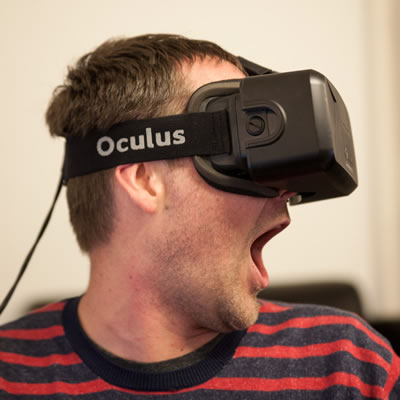
    Virtual Reality/ Augmented Reality: VR/AR seems to be the martech buzz word for 2016. It is evident from the number of technology and smartphone brands that have come out with their own headgears in the past few months — Facebook, HTC, Samsung Huawei just to name a few.  Globally several brands have awed their peers with a brilliant use of VR in marketing. India isn’t a late bloomer in this sphere and has churned out some awe inspiring work for the home market. Why use it? “Firstly, VR helps brands with a significant amount of credibility through immersive experience, which otherwise is not possible as effectively. Secondly it also allows to communicate the entire value chain with the customer, through multiple channels — be it retail, or post sale etc; from the factory to the showroom and then road,” says Happy Finish APAC CEO Ashish Limaye.

    Tata Motors initiated a virtual drive for its flagship car Tiago through a newspaper ad on the front page of a leading daily.  It mass distributed 2.3 million (23 lakh) branded Google Cardboards, digital campaign and print ads in The Times of India, across the highly potential automotive markets of Mumbai, Delhi/NCR and Bengaluru.


    Drones: While government restriction has given a limited exposure to drones in India, they are quite a craze in more mature markets like the US, South Asia and Europe. “Consumer drones  offer the ability to capture a unique perspective that previously required either a higher cost (helicopters), a more intense set-up and time (custom-made quadcopter or aerial rigs) or a mixture of both. Our drones create the right mix of affordability, stability and ease of use that allows small-to-medium-sized enterprises (as well as large ones) to create unique marketing campaigns based around this new perspective, at a cost effective alternative,” explains drone manufacturing giant  DJI’s director of Strategic Partnerships  Michael Perry.

    However, India is not alone in facing restrictions when it comes to a commercial field – the solution is that these platforms must be treated according to their weight classification, as a 2 kg quadcopter with minimal payload abilities should be governed by different rules as compared to a 10 kg quadcopter with a sizeable payload, shares Perry.

    Jaguar and DJI recently teamed up to showcase how drones can help change film car chase sequences and the future of such sequences. 


    Chat Bots: After disruption, convenience is the name of the game and that is exactly what chat bots are banking on. The recent announcement by Facebook last week, allowing brands to have their chat bots in the Facebook messenger has been a revolution of sorts, and brand owners in India have yet to get the feel of it. The biggest impact is expected in the service industry. There was a time when brands became apps, and now it’s time for them to become bots.

    So how are chat bots different? “Chat bots are a game changer because they are much simpler to use. Everyone is already on their messaging apps. If instead of having to go to a website, or an eCommerce site or download an app, consumers could simply access all their brands through their messengers, imagine how convenient it would be. Unlike AR and VR which need marketers to create an infrastructure to reach full potential, chat bots have a ready playing field,” shares cloud messaging platform Gupshup’s  co founder and CEO Beerud Sheth, while he was in India to create awareness on chat bots for brands. From ordering pizza to booking flights, nothing is impossible for these smart chat bots.

    3D Printing:  More than its utility in marketing, why brands and advertisers need to pay attention to the fast growing market for 3D printing and its quick evolution, is how it empowers consumers. With 3D printing becoming a household product, the entire manufacturing industry will see a drastic change. The rules of game will change for them and so will it for marketers who are promoting the products.

    “The beauty of 3D printing is that it will take advertising from computers and graphics into making into real physical products.  You customise the product and it will be immediately made for you. It will revolutionise advertising as none of the advertising has so far given us a product. Plus 3D printing will affect every pillar in the industry, like distribution, parts manufacturing, merchandising,” shares iPropect India MD Vivek Bhargava.


    Videos: India has seen a  huge boom in video consumption, which is only expected to grow bigger as the internet penetration expands and strengthens within the market. As per a Carat report  in 2016, “The continued  growth of digital is driven by mobile, online video and social media, increasingly becoming  more prevalent components of advertising investment.  Mobile continues to show the highest spend growth across all media in 2016, with a year-on- year estimated increase  at +37.9 per cent in 2016.

    Therefore videos will play a major role, especially live video streams. Facebook understands this well, and anticipates the trend before it has hit us by launching Facebook Live. It will open up new vistas for pushing one’s service and product. Infact, in the words of Facebook Creative Shop APAC head Fergus O’ Hare , “The dying breed of salesmen will find a renewed motivation with Facebook Live as they can make calls to consumers at specific relevant times of the day when they are most likely to buy the product. Brands can call you any time of the day when it matters the most.”


     Somewhere  down the line all these separate technological advancements will be connected, and what will connect them are Big Data and Internet Of Things.  That is why Big Data and The Internet of Things will revolutionise technology, marketing and human lifestyle even. Ai or artificial intelligence, which falls in the purview of the former, is also making ripples in the brand space.

    But Yesudas throws a note of caution for aspiring ‘martech’ users. Care needs to be taken about over dependency on technology or going overboard with it. “Brand owners need to understand digital transformation is not about technological gimmicks. They need to ensure humans are put before technology, using it only to accentuate human behaviour. Brands that will crack this code will lead the marketing charge in the digital era.

  • Chat Bots, VR/AR, Drones; When marketing marries technology

    Chat Bots, VR/AR, Drones; When marketing marries technology

    MUMBAI:  From Tata Motors taking India on its first ever virtual drive using Google Cardboard, Facebook allowing brands to message users using chat bots, to drones covering live gig at concerts –the  last few months have been exciting in brand land.  By themselves these events maybe little pockets of wonder, but they also point towards a larger paradigm shift in the way products will be hawked, how methods to attract consumers have evolved and are evolving. 

    If marketers in the country haven’t been taking notes, they better catch up as technology is fast changing how consumers interact with brands just like a friend after marriage. On the one hand it poses countless possibilities for innovation, on the other, there’s an impending threat of becoming irrelevant. It’s either adapt, adopt or perish. “Brands can surely become the tissue between consumers and technology. We will see emergence of many technology led marketing solutions  more so because business are challenged to break open the walls and digitally transform,” points out triggerbridge co founder and future facing marketer S. Yesudas.

    The best part about these emerging technologies is that they give equal opportunities for brands, small and big to be firsts in many ways. Given the accessibility options available, there is a more democratic penetration of some of these technologies across the globe, putting India at an advantage in many cases.  “If you watch the trends that are making the waves in the marketing communities, some are happening faster in India while others will take time to penetrate here. For example mobile and smartphone based technologies will  no doubt see a more rapid boom in India just for the sheer utility and scale that the country presents,” explains Kyoorius founder Rajesh Kejriwal. According to him, while mobile and social media aren’t ‘new’ technologies, the way they are used to target and interact with consumers will see a sea change in the  upcoming recent years.

    To some marketers who love to dabble in technology wearable technologies like ‘smart watches’ are on top of the list of marketers, though they do admit that India hasn’t caught on to their full fervor as yet. Location based marketing that makes optimum use of geo tagging will be the next phenomenon in local and regional markets. “They are not just tech but a source of data, very precise and targeted data,” quips Kejriwal. This is at a time when brands are paying millions to get hold of data and analyse them.

    As per the inputs from creatives, agencies, planners, startups, techies, gadget freaks, and brand managers,  top emerging technologies that marketers should watch out for are —

    Read on:  

    Virtual Reality/ Augmented Reality: VR/AR seems to be the martech buzz word for 2016. It is evident from the number of technology and smartphone brands that have come out with their own headgears in the past few months — Facebook, HTC, Samsung Huawei just to name a few.  Globally several brands have awed their peers with a brilliant use of VR in marketing. India isn’t a late bloomer in this sphere and has churned out some awe inspiring work for the home market. Why use it? “Firstly, VR helps brands with a significant amount of credibility through immersive experience, which otherwise is not possible as effectively. Secondly it also allows to communicate the entire value chain with the customer, through multiple channels — be it retail, or post sale etc; from the factory to the showroom and then road,” says Happy Finish APAC CEO Ashish Limaye.

    Tata Motors initiated a virtual drive for its flagship car Tiago through a newspaper ad on the front page of a leading daily.  It mass distributed 2.3 million (23 lakh) branded Google Cardboards, digital campaign and print ads in The Times of India, across the highly potential automotive markets of Mumbai, Delhi/NCR and Bengaluru.


    Drones: While government restriction has given a limited exposure to drones in India, they are quite a craze in more mature markets like the US, South Asia and Europe. “Consumer drones  offer the ability to capture a unique perspective that previously required either a higher cost (helicopters), a more intense set-up and time (custom-made quadcopter or aerial rigs) or a mixture of both. Our drones create the right mix of affordability, stability and ease of use that allows small-to-medium-sized enterprises (as well as large ones) to create unique marketing campaigns based around this new perspective, at a cost effective alternative,” explains drone manufacturing giant  DJI’s director of Strategic Partnerships  Michael Perry.

    However, India is not alone in facing restrictions when it comes to a commercial field – the solution is that these platforms must be treated according to their weight classification, as a 2 kg quadcopter with minimal payload abilities should be governed by different rules as compared to a 10 kg quadcopter with a sizeable payload, shares Perry.

    Jaguar and DJI recently teamed up to showcase how drones can help change film car chase sequences and the future of such sequences. 


    Chat Bots: After disruption, convenience is the name of the game and that is exactly what chat bots are banking on. The recent announcement by Facebook last week, allowing brands to have their chat bots in the Facebook messenger has been a revolution of sorts, and brand owners in India have yet to get the feel of it. The biggest impact is expected in the service industry. There was a time when brands became apps, and now it’s time for them to become bots.

    So how are chat bots different? “Chat bots are a game changer because they are much simpler to use. Everyone is already on their messaging apps. If instead of having to go to a website, or an eCommerce site or download an app, consumers could simply access all their brands through their messengers, imagine how convenient it would be. Unlike AR and VR which need marketers to create an infrastructure to reach full potential, chat bots have a ready playing field,” shares cloud messaging platform Gupshup’s  co founder and CEO Beerud Sheth, while he was in India to create awareness on chat bots for brands. From ordering pizza to booking flights, nothing is impossible for these smart chat bots.

    3D Printing:  More than its utility in marketing, why brands and advertisers need to pay attention to the fast growing market for 3D printing and its quick evolution, is how it empowers consumers. With 3D printing becoming a household product, the entire manufacturing industry will see a drastic change. The rules of game will change for them and so will it for marketers who are promoting the products.

    “The beauty of 3D printing is that it will take advertising from computers and graphics into making into real physical products.  You customise the product and it will be immediately made for you. It will revolutionise advertising as none of the advertising has so far given us a product. Plus 3D printing will affect every pillar in the industry, like distribution, parts manufacturing, merchandising,” shares iPropect India MD Vivek Bhargava.


    Videos: India has seen a  huge boom in video consumption, which is only expected to grow bigger as the internet penetration expands and strengthens within the market. As per a Carat report  in 2016, “The continued  growth of digital is driven by mobile, online video and social media, increasingly becoming  more prevalent components of advertising investment.  Mobile continues to show the highest spend growth across all media in 2016, with a year-on- year estimated increase  at +37.9 per cent in 2016.

    Therefore videos will play a major role, especially live video streams. Facebook understands this well, and anticipates the trend before it has hit us by launching Facebook Live. It will open up new vistas for pushing one’s service and product. Infact, in the words of Facebook Creative Shop APAC head Fergus O’ Hare , “The dying breed of salesmen will find a renewed motivation with Facebook Live as they can make calls to consumers at specific relevant times of the day when they are most likely to buy the product. Brands can call you any time of the day when it matters the most.”


     Somewhere  down the line all these separate technological advancements will be connected, and what will connect them are Big Data and Internet Of Things.  That is why Big Data and The Internet of Things will revolutionise technology, marketing and human lifestyle even. Ai or artificial intelligence, which falls in the purview of the former, is also making ripples in the brand space.

    But Yesudas throws a note of caution for aspiring ‘martech’ users. Care needs to be taken about over dependency on technology or going overboard with it. “Brand owners need to understand digital transformation is not about technological gimmicks. They need to ensure humans are put before technology, using it only to accentuate human behaviour. Brands that will crack this code will lead the marketing charge in the digital era.

  • Maxus partners IoTBLR to create unique campaigns & product prototypes

    Maxus partners IoTBLR to create unique campaigns & product prototypes

    MUMBAI: With an aim to co-create unique campaigns and product prototypes, Maxus has entered into a partnership with the IoTBLR Foundation for Pervasive Computing, which is one of world’s largest IoT (Internet of Things) focused meet up group.

    Maxus and IoTBLR will work together with brands in building new products and consumer engagement solutions.

    Talking about the partnership, IoTBLR founder Nihal Kashinath said, “We are very excited about working with Maxus and look forward to co-creating more campaigns and product prototypes that have rarely, if ever, been conceptualised before. We bring in a lot of technological firepower around the Internet of Things, wearable tech, virtual and augmented reality, rapid prototyping, etc as well as a massive developer network from which to crowd-source ideas plus expertise. To put these to work in the context of a brand’s story is terribly exciting for us. There is a symbiotic relationship between creative campaigns and bleeding-edge technologies, and from our interactions so far with the Maxus team, we can confidently say that this partnership is going to push creative technology to stratospheric levels (possibly literally). So get ready to see futuristic tech come alive today.”

    Maxus chief digital officer Unny Radhakrishnan added, “We have been working with IoTBLR for some time now and it is a great learning experience. We had earlier launched Maxus Metalworks, our R&D lab, to work in the areas of emerging technologies and completed a couple of projects. Our teams have been conducting specialised workshops for some of our clients as well. This new partnership will help us keep our pace in understanding technology and leverage it for marketing and consumer services.”

    IoTBLR was founded as an open community by Kashinath with a vision to grow awareness on IoT, empower individuals and organisations to build connected products, and create impact by leveraging pervasive computing solutions. Today IoTBLR has entrepreneurs, working professionals, students, researchers, investors, journalists, hobbyists, etc. as its members. Members can attend workshops/talks/hackathons, work together on IoT projects, share equipment and resources, build IoT solutions and startups, and generally stay updated about the latest developments in the connected world.

  • Maxus partners IoTBLR to create unique campaigns & product prototypes

    Maxus partners IoTBLR to create unique campaigns & product prototypes

    MUMBAI: With an aim to co-create unique campaigns and product prototypes, Maxus has entered into a partnership with the IoTBLR Foundation for Pervasive Computing, which is one of world’s largest IoT (Internet of Things) focused meet up group.

    Maxus and IoTBLR will work together with brands in building new products and consumer engagement solutions.

    Talking about the partnership, IoTBLR founder Nihal Kashinath said, “We are very excited about working with Maxus and look forward to co-creating more campaigns and product prototypes that have rarely, if ever, been conceptualised before. We bring in a lot of technological firepower around the Internet of Things, wearable tech, virtual and augmented reality, rapid prototyping, etc as well as a massive developer network from which to crowd-source ideas plus expertise. To put these to work in the context of a brand’s story is terribly exciting for us. There is a symbiotic relationship between creative campaigns and bleeding-edge technologies, and from our interactions so far with the Maxus team, we can confidently say that this partnership is going to push creative technology to stratospheric levels (possibly literally). So get ready to see futuristic tech come alive today.”

    Maxus chief digital officer Unny Radhakrishnan added, “We have been working with IoTBLR for some time now and it is a great learning experience. We had earlier launched Maxus Metalworks, our R&D lab, to work in the areas of emerging technologies and completed a couple of projects. Our teams have been conducting specialised workshops for some of our clients as well. This new partnership will help us keep our pace in understanding technology and leverage it for marketing and consumer services.”

    IoTBLR was founded as an open community by Kashinath with a vision to grow awareness on IoT, empower individuals and organisations to build connected products, and create impact by leveraging pervasive computing solutions. Today IoTBLR has entrepreneurs, working professionals, students, researchers, investors, journalists, hobbyists, etc. as its members. Members can attend workshops/talks/hackathons, work together on IoT projects, share equipment and resources, build IoT solutions and startups, and generally stay updated about the latest developments in the connected world.