Tag: Internet Freedom Foundation

  • MIB Minister tries to allay fears on online surveillance & privacy violations

    MIB Minister tries to allay fears on online surveillance & privacy violations

    NEW DELHI: The Indian government has denied that its proposed Social Media Communications Hub, under the jurisdiction of Ministry of Information and Broadcasting (MIB), will violate a citizen’s privacy through monitoring of social media footprints as the plan was more directed towards propagating the government’s policy initiatives.

    The government has also clarified that there was no proposal under consideration to get installed tracking chips in set-top- boxes through which various TV and broadband services are delivered to a large number of the 190 million-plus TV households in India.

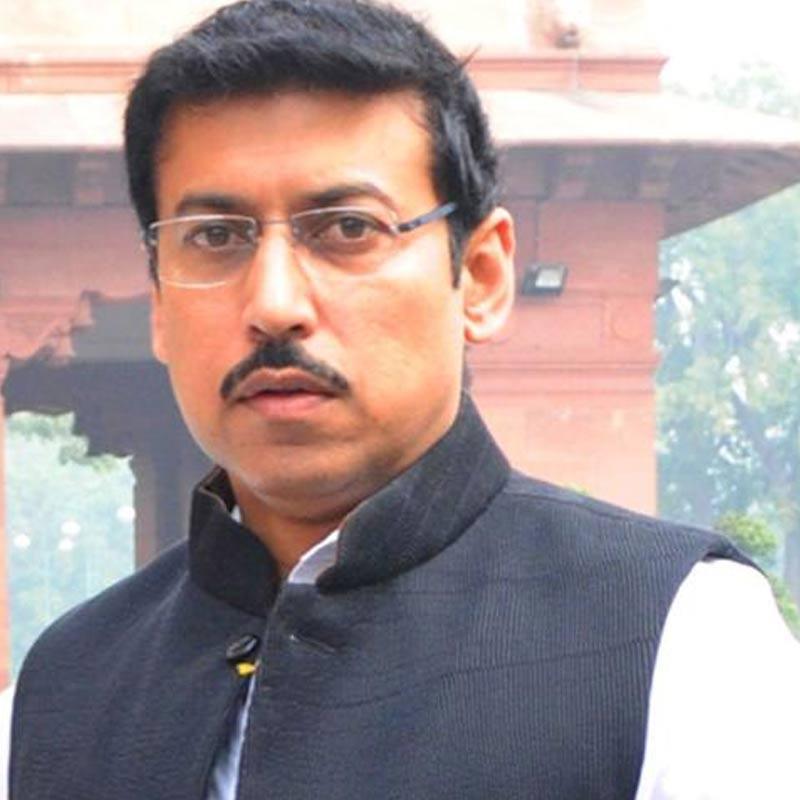
    “The government proposes to set up a Social Media Hub to facilitate information flow regarding its policies and programmes through social media platforms, that is Facebook, Twitter, Instagram, YouTube, etc.,” MIB Minister Rajyavardhan Rathore told the Indian Parliament’s Lower House yesterday while answering queries raised by fellow parliamentarians whether such a monitoring facility is aimed at collecting and analysing data across all major social media platforms that would ultimately be a surveillance tool for the government.

    The Minister also clarified that there was no proposal to “invade an

    individual’s right to privacy, and the right to freedom of speech” through the proposed social media hub.

    In the past two years, MIB has been a facilitator in providing publicity to the flagship schemes of the government on major social media platforms and had organized various online promotional activities in this regard, Rathore explained.

    What Rathore didn’t clarify or add — as he was not asked specifically so — as to why a tender for setting up of the Social Media Communications Hub was floated in the first place and why the document’s objectives were so detailed that it alarmed civil society on its citizen surveillance aspects. The full details of the tender document can be still found online.

    Incidentally, the deadline for a tender floated to locate vendor(s) to set up the proposed social media hub — termed by critics as a surveillance tool to monitor Indian citizens’ activities and thoughts in real time — has been extended several times since April 2018 with the new deadline now being 20 August 2018 before which the Supreme Court is scheduled to hear a case against its setting first week of August.

    The apex court’s initial observations sounded critical as it said if such a monitoring hub came up it could turn India into a “surveillance state”.

    Broadcast Engineering Consultants India Limited (BECIL), an organization under the umbrella of MIB, had floated a tender to supply a software for the project. When the idea was first mooted Smriti Irani was the MIB Minister.

    “A technology platform is needed to collect digital media chatter from all core social media platforms as well as digital platforms such as news, blogs… In a single system providing real-time insights, metrics and other valuable data,” the tender document stated.

    Under the project, media persons would be employed on contractual basis in each district to be the “eyes and ears” of the government and provide real-time updates from the ground — one of the reason for extending the deadline was this condition, missing in the original tender document, got added later.

    According to critics of the project, undertaken under a seemingly harmless name of Social Media Communications Hub, however, it aimed to monitor in real times not only the social media and online activities of Indian citizens, but also seeks to deploy technology to predict behavior and possible future actions of people. This, at a time when India doesn’t have strong data protection laws.

    Amongst the many listed objectives of the media hub is this: “What would be the headlines and breaking news of various channels and newspapers across the globe— could be done with knowledge about their leanings, business deals, investors, their country policies, sentiment of their population, past trends etc. NYT, Economist, Time etc. are good examples, what would be the global public perception due to such headlines and breaking news, how could the public perception be moulded in positive manner for the country, how could nationalistic feelings be inculcated in the masses, how can the perception management of India be improved at the world for a how could the media blitzkrieg of India’s adversaries be predicted and replied/neutralized, how could the social media and internet news/discussions be given a positive slant for India.”

    One of the many critics of this project is the Internet Freedom Foundation (IFF), which has also sent a notice to the MIB to stop the project, failing which the organization would take legal action. Its concerns? “Social Media Communication Hub will also have the ability to broadcast content without any legal authority or guidance through 20 central and 716 district level social media executives. In sum, this is a system of control through surveillance and a capacity to spread propaganda,” the Foundation had said in an online campaign last month.
  • Supreme Court questions MIB’s digital chatter monitoring proposal

    Supreme Court questions MIB’s digital chatter monitoring proposal

    NEW DELHI: The government proposes, Supreme Court disposes. Well, almost. Not fully yet. Though, the apex court has questioned a Ministry of Information and Broadcasting proposal to monitor digital chatter and online footprint, observing today that if done it would be “like creating a surveillance state”.

    The top court said the government wants to tap citizens’ WhatsApp messages and sought its response within two weeks, according to a report filed by Press Trust of India.

    A bench of Chief Justice Dipak Misra and Justices A M Khanwilkar and D Y Chandrachud issued notice to the federal government on a plea by Trinamool Congress (TMC) legislator Mahua Moitra and sought Attorney General K K Venugopal’s assistance in the matter.

    “The government wants to tap citizens’ WhatsApp messages. It will be like creating a surveillance state,” the bench was quoted by PTI as having said earlier in the day.

    The bench then said it was listing the matter on 3 August 2018, before the opening of the tender on 20 August 2018 for the proposed monitoring cell. The attorney-general or any law officer for the government will assist the court in the matter. As reported by Indiantelevision.com earlier, the project’s deadline has already been extended several times.

     The project being undertaken under a seemingly harmless name of Social Media Communications Hub, however, has aims to monitor in real times not only the social media and online activities of Indian citizens, but also seeks to deploy technology to predict behavior and possible future actions of people. This, at a time when India doesn’t have strong data protection laws.

    Amongst the many listed objectives of the media hub is this: “What would be the headlines and breaking news of various channels and newspapers across the globe— could be done with knowledge about their leanings, business deals, investors, their country policies, sentiment of their population, past trends etc. NYT, Economist, Time etc. are good examples, what would be the global public perception due to such headlines and breaking news, how could the public perception be moulded in positive manner for the country, how could nationalistic feelings be inculcated in the masses, how can the perception management of India be improved at the world for a how could the media blitzkrieg of India’s adversaries be predicted and replied/neutralized, how could the social media and internet news/discussions be given a positive slant for India.”

    One of the many critics of this project is the Internet Freedom Foundation (IFF), which has also sent a notice to the MIB to stop the project, failing which the organization would take legal action. Its concerns? “Social Media Communication Hub will also have the ability to broadcast content without any legal authority or guidance through 20 central and 716 district level social media executives. In sum, this is a system of control through surveillance and a capacity to spread propaganda,” the Foundation had said in an online campaign last month.

    Meanwhile returning to the Supreme Court, earlier on 18 June 2018 the court had refused to accord urgent hearing on the TMC member’s plea seeking to stay a central government move to set up a ‘Social Media Communication Hub’ that would collect and analyse digital and social media content.

    The counsel for Moitra had said that the government is trying to monitor social media content of individuals by tracking their social media accounts such as those on Twitter, Facebook and Instagram, and their e-mails.

    Broadcast Engineering Consultants India Limited (BECIL), an organization under the umbrella of MIB had floated a tender to supply a software for the project. When the idea was first mooted Smriti Irani was the MIB Minister.

    “A technology platform is needed to collect digital media chatter from all core social media platforms as well as digital platforms such as news, blogs… In a single system providing real-time insights, metrics and other valuable data,” the tender document elaborated.

    Under the project, media persons would be employed on contractual basis in each district to be the “eyes and ears” of the government and provide real-time updates from the ground — one of the reason for extending the deadline as this condition, missing in the original tender document, got added later.

  • MIB social media monitoring cell tender deadline extended

    MIB social media monitoring cell tender deadline extended

    NEW DELHI: The Big Brother has arrived? Well the Indian government, being accused of proposing to unleash a surveillance of citizens, has gone in for another extension of the deadline seeking vendors for technical and logistics help to set up such a center.

    The new date for submitting proposals for Ministry of Information and Broadcasting (MIB)’s Social Media Communications Hub is now 18 June 2018, which is the third revision of the deadline since tender was floated earlier this year inviting proposals, enumerating wide-ranging deliverables.

    Under criticism from a section of the civil society and online journalists and activists for this proposed over Rs. 400 million surveillance project, both MIB and BECIL (a unit under the ministry) have maintained a stoic silence.

    The project, first reported by Indiantelevision.com in January 2018 and being undertaken under a seemingly harmless name of Social Media Communications Hub, however, has aims to monitor in real times not only the social media and online activities of Indian citizens, but also seeks to deploy technology to predict behavior and possible future actions of people. This, at a time when India doesn’t have strong data protection laws.

    Amongst the many listed objectives of the media hub is this: “What would be the headlines and breaking news of various channels and newspapers across the globe— could be done with knowledge about their leanings, business deals, investors, their country policies, sentiment of their population, past trends etc. NYT, Economist, Time etc. are good examples, what would be the global public perception due to such headlines and breaking news, how could the public perception be moulded in positive manner for the country, how could nationalistic feelings be inculcated in the masses, how can the perception management of India be improved at the world for a how could the media blitzkrieg of India’s adversaries be predicted and replied/neutralized, how could the social media and internet news/discussions be given a positive slant for India.”

    One of the many critics of this project is the Internet Freedom Foundation (IFF), which has sent a notice to the MIB to stop the project, failing which the organization would take legal action. Its concerns? “Social Media Communication Hub will also have the ability to broadcast content without any legal authority or guidance through 20 central and 716 district level social media executives. In sum, this is a system of control through surveillance and a capacity to spread propaganda,” the Foundation said in an online campaign.

    The Foundation’s letter to MIB minister Rajyavardhan Rathore, sent last week, criticizes the government move on the ground that“the wider project to surveil social media is illegal and unconstitutional, being contrary to the right to privacy and freedom of speech and expression”.

    Urging the ministry to withdraw the requests for proposal invited by BECIL, the IFF said, “The RFP document clearly indicates that the proposed Social Media Communication Hub seeks to create a technology architecture that merges mass surveillance with a capacity for disinformation. It is a perilous expense on the exchequer, given that an exorbitant amount of [Rs] 42.4833 crores (approximately Rs. 42 million) is being earmarked for a project that will undermine our fundamental rights.”

    Meanwhile, MIB is also seized of the fate of a committee set up by former minister Smriti Irani to propose regulations for online media. Though Rathore in recent times has spoken of self-regulation of media, in general, he hasn’t yet articulated the government view on the committee, which critics say was beyond the remit of the MIB.

    Indiantelevision.com learns from government sources that the online regulation committee has already held few informal meetings, though non-governmental organisations, seeking to be part of it, were not invited.

    While some media industry organisations were named by the government to be part of this online regulation committee, many others like the internet and mobile association of India, Broadband Forum India and Asian media body CASBAA have, reportedly, sent in formal requests to be made part of this government committee, which, interestingly, doesn’t include a single online venture or body.

    Also Read :

     MIB to collect data on satellite capacity needs, digital chatter