Tag: internet

  • Media ‘investment pundit’ Karan Taurani gets his executive stripes at Elara Capital

    Media ‘investment pundit’ Karan Taurani gets his executive stripes at Elara Capital

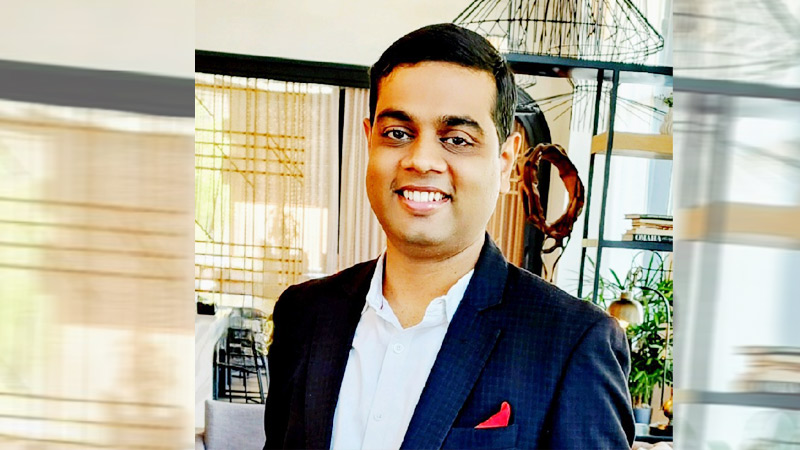
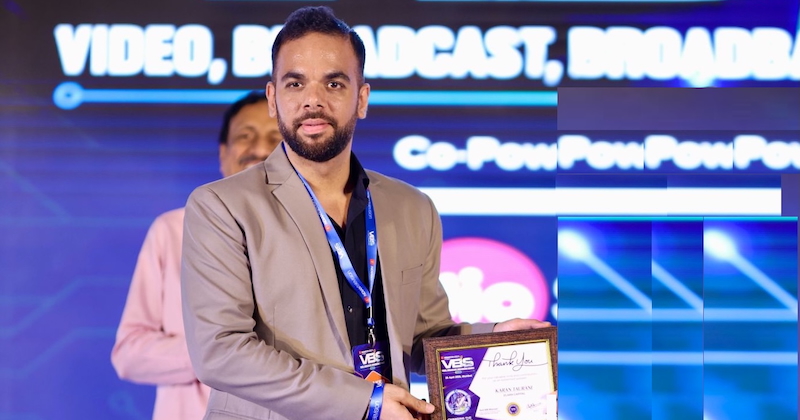
    MUMBAI: Karan Taurani, Mumbai’s most recognisable media analyst, has bagged the executive vice president role at Elara Capital. The May 2025 promotion caps nearly seven years at the investment firm, where he’s dissected media, consumer discretionary, and internet sectors with surgical precision. Now retail has been added to his watch portfolio. 

    Taurani’s climb from vice president (October 2018) to senior vice president (April 2021) and now to the executive suite reflects his growing clout. His trajectory mirrors his expanding media footprint—from conference circuits to prime-time television punditry.

    The analyst’s journey began at Pioneer Investcorp (2008-2011), covering IT and mid-cap technology during the sector’s boom years. IFCI Financial Services expanded his remit to education whilst maintaining IT expertise. Religare offered broader horizons, juggling 15-plus companies across technology, media, telecoms, and education as lead analyst.

    Dolat Capital Market cemented his media sector reputation before Elara Capital came calling in 2018. What sets Taurani apart is his media savvy—regular television appearances and conference circuit presence make him the go-to voice for sectoral insights, whether streaming wars, retail disruption, or consumer spending patterns.
    His independent directorship at Kavithalayaa since January 2024 adds board-level strategic nous to complement analytical prowess. It’s cross-pollination that makes for rounded market commentary.

    At Elara, Taurani’s executive elevation suggests the firm recognises value beyond pure research. In an era where analyst personalities drive investment decisions, having a media-savvy executive who articulates complex trends across platforms is worth its weight in rupees.

    For Taurani, the promotion validates a career built understanding India’s evolving consumer landscape. His analytical journey mirrors the country’s economic transformation—and executive stripes suggest more commentary ahead.

  • Decoding the role of high-speed internet in enhancing quality of life

    Decoding the role of high-speed internet in enhancing quality of life

    The digital revolution has transformed our world in ways we could scarcely have imagined just a few decades ago. This transformation has been led by high-speed internet, a technology that has become as essential to modern life as electricity. Far from being a mere luxury, high-speed internet has emerged as a powerful tool for enhancing our quality of life across multiple dimensions. In this article, we will explore how high-speed internet is reshaping our daily experiences and opening up new possibilities for personal and societal growth.

    The education revolution

    The days of confined learning restricted to the four walls of a classroom are gone. High-speed internet has opened the doors to a world of knowledge accessible at the click of a button. Students can now attend virtual lectures from top universities, collaborate on projects with peers across the globe, and access vast digital libraries without ever leaving their homes.

    This democratisation of education is particularly impactful in rural and underserved areas, where access to quality educational resources was once limited. With high-speed internet, a student in a remote village can potentially receive the same quality of education as one in a metropolis. Interactive learning platforms, educational videos, and online tutoring services are revolutionising how we acquire knowledge and skills, making lifelong learning a tangible reality for millions.

    The work-from-anywhere revolution

    The concept of a traditional office has also seen dramatic changes, thanks to high-speed internet. Remote work, once a niche arrangement, has become mainstream. This shift has profound implications for our quality of life. Employees can now balance work with personal commitments more effectively, reducing stress and improving overall well-being.

    The ability to work from anywhere also opens up new possibilities for where we choose to live. No longer tethered to urban centres, many are opting for quieter, more affordable locations without sacrificing career opportunities. This redistribution of the workforce has the potential to revitalise smaller communities and reduce the strain on overcrowded cities.

    Entertainment and social connections redefined

    High-speed internet has transformed how we entertain ourselves and connect with others. Streaming services offer a vast array of content, from movies and TV shows to live sports and concerts, all accessible from the comfort of our homes. This on-demand entertainment model gives us unprecedented control over our leisure time.

    Social media platforms and video calling apps have redefined how we maintain relationships, especially over long distances. Families separated by oceans can share daily moments, friends can game together in virtual worlds, and communities of like-minded individuals can form around niche interests, regardless of geographical boundaries.

    The smart home revolution

    As our homes become increasingly connected, high-speed internet serves as the backbone for a new era of convenience and efficiency. Smart home devices, from thermostats to security systems, rely on robust internet connections to function optimally. These technologies not only make our lives easier but can also contribute to energy savings and enhanced safety.

    Imagine adjusting your home’s temperature from your office, receiving real-time alerts about potential security breaches, or having your refrigerator automatically order groceries when supplies run low. These scenarios, once the stuff of science fiction, are now everyday realities for many, thanks to high-speed internet.

    Healthcare at your fingertips

    The impact of high-speed internet on healthcare cannot be overstated. Telemedicine has made healthcare more accessible, especially for those in rural areas or with mobility issues. Patients can consult with specialists from afar, receive remote monitoring for chronic conditions, and access their medical records instantly.

    Moreover, the ability to quickly share large medical files, such as MRI scans, between healthcare providers can lead to faster diagnoses and more coordinated care. In emergencies, this speed can be life-saving.

    Empowering entrepreneurship and innovation

    High-speed internet has levelled the playing field for entrepreneurs and small businesses. With minimal upfront costs, individuals can now reach global markets, collaborate with international teams, and access powerful cloud-based tools that were once the preserve of large corporations.

    This democratisation of business tools and market access has sparked a wave of innovation. From app developers working out of their garages to artisans selling handcrafted goods worldwide, high-speed internet has enabled a new generation of entrepreneurs to pursue their passions and create economic opportunities.

    Challenges and considerations

    While the benefits of high-speed internet are clear, it’s important to acknowledge the challenges that come with this technological advancement. Issues of the digital divide, where some communities lack access to high-speed internet, need to be addressed to ensure equitable distribution of these benefits.

    Additionally, as our reliance on the internet grows, so do concerns about cybersecurity and digital privacy. Educating users about online safety and implementing robust security measures are crucial steps in harnessing the full potential of high-speed internet while mitigating its risks.

    Looking ahead

    As we look to the future, the role of high-speed internet in enhancing our quality of life is set to expand even further. Emerging technologies like virtual reality, artificial intelligence, and the Internet of Things will rely heavily on fast, reliable internet connections to deliver their promised benefits.

    The potential for high-speed internet to drive positive change is immense. From revolutionizing education and healthcare to fostering innovation and connecting communities, it has become an indispensable tool for progress. As we continue to unlock its potential, we move closer to a world where knowledge, opportunity, and connection are accessible to all, enhancing the quality of life for individuals and societies alike.

    The article has been authored by ACT Fibernet CMO Ravi Karthik.

  • GUEST ARTICLE: The creator economy and how it has evolved over the last few years

    GUEST ARTICLE: The creator economy and how it has evolved over the last few years

    Mumbai: For many decades, we have relied on traditional media outlets like television, radio, and print for our information and entertainment, consuming content created and curated by a few major media houses based on the preferences and requirements of the masses. The advent of the internet and web 2.0 brought a significant shift in how we consumed information by decentralising content communication, creation, and distribution. Thanks to the opportunity offered by social media, we found ordinary people like ourselves writing, filming, and creating niche as well as mass content that resonated with people worldwide.

    And as a result of this, people moved away from traditional media sources. They started surfing the internet to consume content and connect with people who shared similar interests and experiences. Over time, people learned to market their skills, hobbies, and interests online. This resulted in the rise of a new economy built by millions of independent content creators, curators, and community builders, marking the beginning of the “creator economy.”

    Today, the creator economy is estimated to be worth more than $100 billion, and it includes everyone who is a part of the web economy, such as social media, blogs, videos, software tools, and tech platforms like Hypothesis designed to help them grow and monetise.

    More than 50 million people worldwide identify as “creators,” with two million or more earning a living from their passion through platforms such as YouTube, Instagram, Twitch, TikTok, and others. According to a survey, YouTube content creators contributed a whopping Rs 6,800 crore to the Indian economy in 2020.

    The evolution of the creator economy

    ●      The birth of social media platforms

    Towards the end of the 2000s, we witnessed the birth of many social and content channels like YouTube, Instagram, Spotify, Medium, Linkedin, and more. The rise of the creator economy has relied heavily on the development of these platforms. We wouldn’t have creators if you didn’t have platforms on which they could create. It was due to social media sharing that content distribution became normalised. Today, creators are no longer at the mercy of large production companies, as these platforms have equipped them well to solve their distribution problems.

    ●      The emergence of influencer marketing

    Brands began to see the value in investing in creators to promote their products and services to their large on-platform audiences as they began to build a dedicated audience engaging with their content due to their skills and personalities. This proved a very successful marketing strategy, aka “influencer marketing,” as it allowed brands to tap into a new market and advertise to a niche audience more likely to be interested in the brand’s product during their moment of consumption.

    Brand sponsors began paying creators on platforms such as Instagram and Tiktok in exchange for their reach to an audience gained through the platforms.

    ●      Covid impact 

    As social media platforms proliferated, people found themselves increasingly attracted to screens, both as creators and consumers. What many believed would be a passing phase, like the dot-com era, soon became a compulsion.

    With the onset of the pandemic, millennials and gen-z turned towards social and subscription based platforms either out of boredom or to supplement their income due to the economic slump. Because of the nationwide lockdown, everyone was forced to use online health, education, shopping, and entertainment resources.

    This has led to the growing dominance of content creators in mainstream media who are willing to pay for tools that help them grow their content reach and maximise their revenue.

    ●      Creators are brands within themselves

    With the constant influx of influencers, competition for branded collaborations is becoming increasingly fierce, prompting influencers to seek alternative revenue streams.

    Instead of chasing revenue through generic clickbait content, influencers are becoming the new brands. Today, creators have gained enough loyalty from their audiences to be able to sell any product better than the traditional brands. Creators are launching their brands without investing millions of dollars in a team and resources, instead relying on a combination of audience and reach, good branding, and a distinct point of view with their product.

    Today, many brands consider working with creators an essential part of their brand and marketing strategy. But it remains a largely unorganised space, with discovering the right talent to work with and measuring success depending on how each brand structures its efforts. The creator economy needs a unified platform to connect brands with customers through the right influencers and manage the entire campaign pipeline. At the same time, it requires a platform for creators to engage with their audience and build meaningful relationships with brands.

    That’s where “influencer marketing software services” step in, allowing agencies and brands to discover the right creator, conduct outreach, set up campaigns, and track performance on one platform. On the supply side of the ecosystem, it empowers creators and influencers to reach their audiences by understanding their content performance and audience affinity and collaborating with brands and agencies.

    The author of this article is Hypothesis senior VP product and analytics Himani Agrawal.

  • Reverie Language Technologies’ video campaign appeals for language equality

    Reverie Language Technologies’ video campaign appeals for language equality

    Mumbai: Reverie Language Technologies, a leader in Indian language localisation and user engagement technology solutions, has launched a video campaign to raise awareness about India’s digital language divide.

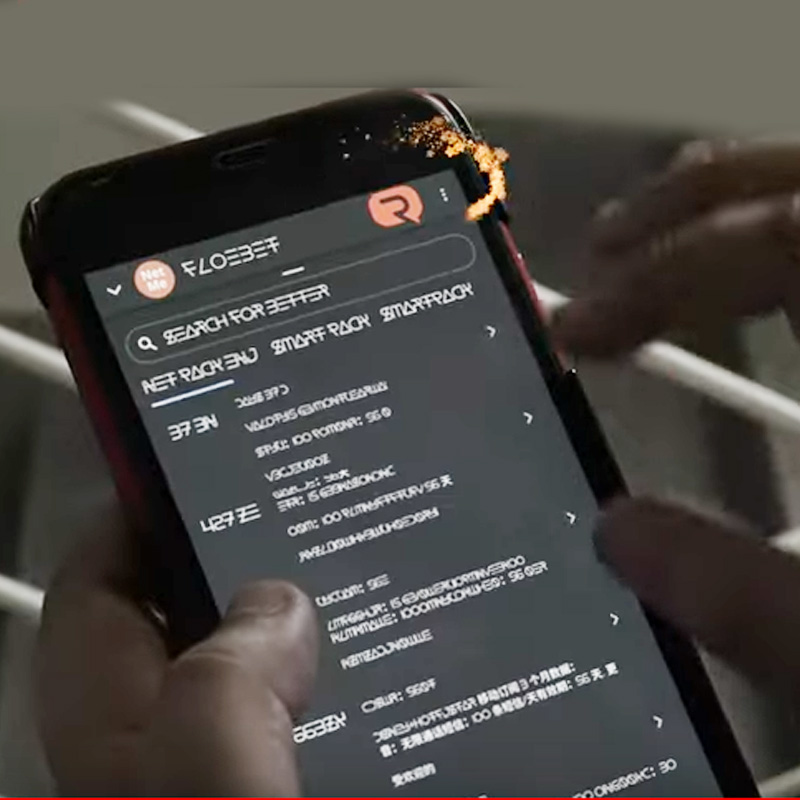
    Today, enterprises want to engage with the next billion digital citizens, but a majority of the non-English-speaking Indian population may find the internet has little to offer in the languages they speak at home. Reverie is bridging this gap with its state-of-the-art technology, powered by AI and ML, by providing all 22 official Indian languages with a presence on the Internet.

    The video highlights how most of the Indian population is unable to fulfil even their fundamental rights like the right to education and the right against exploitation because the internet is really siloed for them.

    The brand campaign is headlined by a video delineating how demarcated the Indian internet is for Indian language-literate Indians, limiting basic rights for almost 90% of the population.

    The New Education Policy 2020 recognises all Indian languages as ‘Bharat Bhasha’ and acknowledges the role of mother tongues in schools as a cornerstone in enabling access, retention, and preventing dropouts. Reverie Language Technologies aims to facilitate this by ensuring that the content is contextually localised, keeping in mind the aesthetics of Indian languages.

    “The video campaign is our humble effort to bring out that while the growth of the Indian Internet rides on our Indian-language literate digital citizens, the kind of Internet they deserve is a far cry. If we view the larger picture, the citizens are either categorised as browsers or ones that depend on OTP or QR verification, depriving them of the seamless Internet that English-literate citizens experience. Despite the massive strides India has made in the digital world, our natively literate citizens are still struggling to bridge the digital language divide and reap the benefits of the Internet and all it has to offer. Significant changes will not occur if languages on the Internet are not implemented through India-owned standards for our native languages. Through our campaign, we hope to build an equitable Internet for India,” said Reverie Language Technologies co-founder and CTO Vivekananda Pani.

    Amongst the nine pillars the government’s vision of a ‘Digital India’ infrastructurally thrives on are data, devices, and languages. With the advent of smartphones and cheap data plans, the first two have been achieved. However, language equality is the key to digital transformation – it must be accessible without any entry or engagement barriers.

    Imbalances in the information available in different native languages online affect who and what gets represented, and by whom. By partnering with businesses and government organisations, Reverie is filling this void by retaining the essence and nuance of all 22 official Indian languages across industries such as banking, fintech, education, healthcare, and gaming.

  • GUEST ARTICLE: Metaverse- A marketing trick or future of the internet

    GUEST ARTICLE: Metaverse- A marketing trick or future of the internet

    Mumbai: The metaverse is a concept of a persistent, online, 3D universe that combines multiple different virtual spaces. It is the intersection of virtual reality, augmented reality, and the world wide web. The 3D virtual reality ecosystem allows you to play games, create, explore, communicate, work, and socialise.

    From the advent of the internet in the 1990s to the web 3.0 wave, one of the most remarkable social developments is the confluence of real and digital worlds. The pandemic prompted brands to reach audiences worldwide using engaging ways that appeal to people while maintaining their authenticity, compelling the industry to resort to technology and tap into the metaverse.

    According to KPMG, by 2030, we may spend far more time in the metaverse than in the physical realm. People would use the metaverse’s virtual abilities to seek employment, generate an income, socialise with friends, shop, or even get married.

    Not just games but digital worlds

    The metaverse is so much more than solely a gaming environment; it’s a sci-fi vision come true. It is also not confined to tech giants; it’s open to creators from across industries. Established businesses are preparing for the virtual world. For instance, McDonald’s has applied for a trademark for a virtual fast-food restaurant and virtual goods and services. It will provide consumers another alternative to ordering food online and getting it delivered to their homes. Surely, creativity will drive the economy as experts from diverse professions integrate their expertise.

    The progression of the metaverse economic system will have a direct financial impact on the real-world balance sheets of entities. Which is why brands have started to employ creative marketing tactics to penetrate the metaverse and cash in on that early mover advantage. The metaverse is likely to transform the brand marketing paradigm as marketers will be able to engage consumers in immersive new ways while simultaneously working on developments and innovations to propel them forward with a seamless user experience.

    Additionally, metaverse allows employees’ digital avatars to enter and exit virtual workplaces and conference spaces in real-time. They can use their avatar to deliver live presentations, unwind with colleagues in a networking area, and perform any task with the ease of sitting at their desk.

    Marketing in metaverse

    With the rise of the internet, social media marketing has become essential to driving traffic and revenue for small and large businesses. Brands are shifting their digital marketing approach towards the metaverse to remain relevant, particularly to millennial and Gen Z audiences. They are the most fervent adopters of the metaverse. More importantly, metaverse platforms offer far more immersive and engaging experiences in comparison to traditional social media platforms. Some brands have even experimented with real-time monitoring of their brand visibility and engagement across many virtual platforms. It enables marketers to analyse data such as how long users hold digital products, how long they have users’ attention, and where users gaze while viewing advertisements.

    High-end fashion brands such as Gucci, Nike, and others are vying to “get there first,” putting their advertisements in front of a massive audience in innovative and engaging ways.

    Future of metaverse

    The future of the metaverse could be similar to our present world in many ways and may even replace some real-world activities, or it could almost overshadow our present world in a Ready Player One-esque future. The future trends are looking at the world through AR/VR devices and using immersive technology. Early adopters will have a huge advantage, making it essential for businesses to begin researching and experimenting as the pace of change accelerates.

    The metaverse is still at a nascent stage, and everyone is experimenting to see if they can see success stories as they explore, interact, and try out new marketing tactics. There are a few measures that brands may take to gain an edge by creating virtual experiences, offering in-world purchases, organising virtual events, exploring NFTs, streamlining social media marketing, developing a metaverse marketing strategy, and so on. More brands view the metaverse as a probability to interact with audiences in ways that are beyond their imagination and deliver new and unique brand experiences.

    The author of this article is Blink Digital director of technology Amer Ahmad.

  • GUEST ARTICLE: How web 3.0 can take full advantage of streaming’s potential making it accessible to all users

    GUEST ARTICLE: How web 3.0 can take full advantage of streaming’s potential making it accessible to all users

    Mumbai: Web3 promises to be the renaissance for how we use internet services. It is fundamentally an idea for a more open, decentralised, and secure internet, governed by anti-monopoly and pro-privacy norms. Naturally, the scale and allure of OTT services’ revenue and seemingly insatiable demand make it a prime industry to attempt to ‘disrupt’. The proposition boils down to ‘what value addition does this new technology and ownership structure bring’. It’s an idea we have experimented with for a few years now being on both 1.0 and 2.0 versions of the web.

    Web3 splitting the pie

    There are broadly three models that can exist at scale with web3 characteristics—one, where users are owners [I own a piece of Netflix and I watch it], two, where creators are owners [the studios or the producers or the individuals], and three, where ownership is split between creators, users, and intermediaries [marketers, platforms, other intermediaries, etc.]. Depending on the market this hypothetical business operates in, some of the business models become viable based on the negotiable split amongst these many stakeholders.

    Cutting the middlemen

    The promise of web3 essentially posits ‘cutting the middlemen’ who supposedly ‘do not add value to the flow of creation to consumption, or at least reduce their ‘cut’. “Hey, why is the app store taking 30 per cent?” and “Wait, XYZ label makes millions of dollars off her song, but my favourite artist lives in a rented house?” are the kinds of questions that can be approached two ways. First, since the relationship between creator and consumer is paramount, and since the audience makes someone famous by consuming created content, the value should primarily be distributed between these two.

    Second, stars and hits are made, not born. So, the backers, marketers, technology developers, and distributors (who work thanklessly behind the stage, risking their time and money) deserve a large part of the credit (aka value).

    Therefore, the model of web3 works well for already established creators who can rely on fanfare and loyalty to create subsequent work. However, they will have to choose between their audience’s capital or the existing pool of professional backers. They do acknowledge that the former carrier risks additional work in raising capital, but with the benefit of doing it on their own terms.

    For the new and upcoming creators, it offers them better terms, but at the risk of losing mainstream system support that has proven its success so far.

    Race to the start

    There is now an increasing list of examples of creators across movies, music, social media content, and TV experimenting with the web3 path, which has led to a crop of new web3-only services. Even incumbent studios, distributors, and platforms are making investments in web3 businesses. Following sufficient examples, existing incumbents will further adapt to offering web3-based models as well.

    The fact remains that the entertainment industry overall has very clear risk-reward profiles. If creators take the risk simultaneously with their hopeful audience, they can all potentially gain from it, but will then be on opposite sides of the table. And to create what we deem “hits,” large-scale distribution is still a professional industry, the providers of which will always demand a high fee for their services.

    The web3 model’s adoption will thus grow at the rate that the creators are willing to take it—and help create more stars and hits than the “industry” has allowed since it offers an alternative path to grow. To the end audience, for any type of content, the key criteria remain quality, price, and on-demand. Adding the proposition of being an earning shareholder makes the deal sweeter depending on the potential earnings. What could eventually emerge is a model where audiences contribute to a diversified pool of creators of their choice, while creators will choose who provides intermediary services to them. Some may argue that this is not too different from existing models, but the creatives are pathbreakers by nature.

    The author of the article is Vistas Media Capital & Fantico chief strategy officer Dhruv Saxena.

  • GUEST COLUMN: The role of AI and ML in the media industry

    GUEST COLUMN: The role of AI and ML in the media industry

    Mumbai: There is truly no such thing as “show business!” We have seen the world of entertainment and media shape shift over the last few years, and more dramatically ever since the world around us changed in the wake of the pandemic. The entertainment industry showed a massive fillip during the lockdown years, but not in the way that was expected. The new age of media and social media platforms have transformed the way entertainment is consumed today, and the role of technology has become far more intrinsic along the way too. Everything from how we create, publish, and share textual, audio, and video content to the increasing accessibility of production technologies such as high-resolution cameras, content development software, and smartphones is changing. The landscape is burgeoning with tech-driven innovation both from the delivery and consumption ends of the spectrum.

    With revenue expected to exceed $9.5 billion in 2022 when video ad tech is taken into account, the importance of AI and ML in the media and entertainment sector can no longer be dismissed. While it may not have been an obvious use case earlier, today, harnessing AI and ML to better target homes with advertisements, automate more operations, and secure the operators’ content and services is only the tip of the iceberg. AI has already demonstrated its promise in the music business by producing beautiful tunes and in the world of art with a strong aesthetic influence. It will be interesting to see how AI in entertainment is likely going to have a marked influence on how people interact with movies, television shows, videos, sports, and games.

    Glimpses of this shift are already apparent today. Media firms realise the growing competition they face with new players in the market, right from OTT platforms to social media platforms, vying for the consumer’s attention. There is a swelling urgency to not only produce more content more rapidly but also ensure that the quality and intrigue of the content produced remains top-notch.

    Enter AI and ML.

    There are myriad applications for these two cutting edge technologies, to enable a massive uptick for media and entertainment businesses, right from beta testing of content to gauge interest to creating interactive content to even assessing the right platform for maximum success and viewership. There is a role for AI and ML to play the hero that saves the day at every juncture.

    Some of the emerging areas of application for AI and ML are:

    Knowing your audience: With increased choices comes the problem of plenty too. Audiences that were previously limited to a few platforms for satiating their entertainment appetite are inundated with a plethora of choices. In such a landscape, knowing audience preferences becomes business critical, and media companies that can harness the power of machine learning to understand their audiences more keenly are going to have a definite advantage as we move ahead by being able to provide relevant and engaging content to each individual every single time.

    Feel with your audiences: It’s not enough to just know who your audience is. A step up from the data intelligence that AI and ML provide is understanding how audiences feel each time they view content that is produced by you. Testing your audience’s emotions can help you dive deeper into how the content was consumed and perceived in order to make future bets that are likely to help you win viewer share and also ensure stickiness in an era when customer/viewer acquisition costs are only climbing up.

    Deliver to your audiences: How many times have you heard the phrase “right place, wrong time”? Marketing leaders understand the critical importance of timing in reaching out to customers. The same content that finds resonance at a particular time can have a diametrically opposite response when you catch the consumer at the wrong hour. Emotion AI can help you not only understand how much of the content delivered is falling on the right side of the scale to ensure better results for your targeted campaigns. Retiring the spray and pray approach could be very possible if advertisers and marketers can tap into the hidden potential that emotion AI helps unlock for all the video content that is being produced for their brands’ success currently.

    Engage your audience: If only we could read the minds of our users to know exactly what they have understood and where the gap remains, all our efforts to produce better content in any context would be multiplied. This function is offered by all major corporations, like YouTube, Netflix, Spotify, etc., to improve the dependability and usability of their services.

    AI is also capable of adjusting video quality for internet speed. AI can analyse the internet connections of various viewers in various regions to handle this issue, and it can compress videos without sacrificing their quality to provide a buffer-free streaming experience.

    Advertising and the media

    Advertising, design, and content promotion are just a few of the marketing and trade applications of artificial intelligence in the entertainment industry. The greatest AI algorithms to use when developing solutions for advertising and marketing that are results-driven. With the use of AI-driven marketing software apps, companies may address the needs and preferences of their audience, develop marketing plans, and create efficient customer-centric digital solutions. For instance, AI in the media sector may quickly produce hundreds of eye-catching graphic designs for advertising. Thanks to such cutting-edge and revolutionary technology, manual labour has been substantially reduced, and productivity has increased. Using emotion AI, the advertiser can understand the best demographic to pinpoint their campaign towards to get maximum output.

    For example, if the emotion AI indicates that a person gets the feelings of passion and attachment while watching a football match, it can help the sportswear company understand that this particular audience and this medium work best to reach them through their campaign. By checking the pre-launch creative intelligence output and post-launch creative intelligence output, the campaigns will become more focused.

    Development of AR/VR

    As we are already seeing with the usage of AR in advertising, it’s important to note that in addition to the fundamental use of AI in entertainment, AR and VR app development will also make this area more compelling and immersive. We will be able to watch events from all angles, enabling us to have experiences that are richer and better. AI will assist us in comprehending the sensation of the actual, live event. AI may, however, be used to produce interactive content for AR and VR. With a set of goggles and AI technology, the entertainment sector may work miracles and produce magnificent scenes.

    Consumer interest is naturally drawn to the creation of virtual reality content for cooking shows, reality shows, and live events and programmes based on artificial intelligence. Watching television and movies with true emotional effects won’t be a pipe dream with all these modern technological advancements; it will certainly become a reality. To make this a reality and to understand the concrete effect of the content, Emotion AI will be a tool that will be pathbreaking and extremely important for advancements in terms of what kind of content would be precise for different pieces and scenarios.

    Harnessing Emotion AI

    For any piece of content to succeed, gaining and sustaining the attention of the audience in question is key. If the audience isn’t engaged from the beginning, one has already lost the plot. It, therefore, becomes imperative that the industry puts its best foot forward by testing creatives before the final launch—it helps to gauge the potential. Pre-testing content using Emotion AI helps empower the creators to better understand how pre-launch video creative intelligence can help drive better business outcomes. Emotion AI testing with a pre-defined target audience helps content creators ascertain whether the content is evoking the right kind of reciprocal emotional response. It empowers the creators to understand zones of high and low engagement and modify content for maximum engagement. The organisations can have the emotional AI response outputs mapped to multiple variables of age, gender, geography, time of day, etc., ensuring that the content is never out of flavour.

    Subtitles and automatic transcription

    International media companies should provide material that is relevant to audiences in different locations. As a result, businesses must offer precise and appealing multilingual subtitles for their video content platforms. It may take thousands of hours and effort to hand write subtitles for several films and TV series in a variety of languages. Additionally, finding the ideal applicant to accurately translate text into several languages is challenging.

    Thus, to bridge this existing gap, the powers of AI-based technologies like deep learning and machine learning are harnessed for natural language processing to transcribe movies, music videos, and TV episodes into many languages. To reach a larger audience and foster user engagement, the voice of the movie is translated into several languages with subtitles and audio commentaries.

    For instance, YouTube’s artificial intelligence helps its publishers easily access their material by automatically generating closed captions for videos posted to the platform.

    Metadata tagging

    With the huge amount of content being created every minute, making this content visible to viewers can be an unnerving task for media and entertainment companies. Distributors and media producers like CBS Interactive are utilising artificial intelligence-based video intelligence technologies to thoroughly analyse the footage by detecting and framing things in order to add appropriate tags in order to carry out this task on a wide scale. As a result, any content held by media firms is easily discoverable, regardless of its bulk.

    Due to the intense rivalry and the changing nature of the market, the economic and business models needed to flourish in the digital world are difficult and call for a considerable change in mentality and approach. Customers are the core of the media industry because they are now more powerful than ever. Organisations all across the world are realising that the customer is really the king and cannot be disregarded. By unravelling and experimenting with AI and ML, media and entertainment houses are maximising their business performance and enhancing the user experience and entertainment value with greater efficiency.

    The author of the article is Lightbulb.ai co-founder and CPO Vishal Soni.

  • Short-form video app, Tiki will grow its users to 60 mn in 2022, says CEO Ian Goh

    Short-form video app, Tiki will grow its users to 60 mn in 2022, says CEO Ian Goh

    Mumbai: The growing insatiable hunger for online videos will augment the long-term growth of short-form video market and likely increase the monetization opportunity for the industry to worth $19 billion by 2030, according to a recent report by global consulting firm Bain & Company.

    Similarly, Resheer, the management consulting firm’s report highlighted that India has approximately 640 million internet users and 550 million smartphone users spending nearly 1.3 trillion hours online. Smartphone users also spend about 4.8 hours per day on their devices, with an hour spent watching videos on average. This is second to China, which also has a huge consumer-base for smartphones and internet users. The report added that India is currently witnessing 300 million users of short video apps; it could rise to 600 million by 2025.

    While discussing the short-form video app Tiki’s CEO Ian Goh about the market opportunities of short-form video, he believes that visibility and recognition are the biggest challenges that creators are facing currently. He adds, “To grow the community, they need to support one another.”

    After the government’s imposition of a ban on the Chinese app TikTok, it has been observed that other Indian short-video apps have grabbed almost 97 percent of the former’s user base and considerably expanded the addressable market for short video apps, thanks to aggressive marketing strategies & user acquisition. 

    The Redseer also shared that the Indian apps have successfully retained 67 per cent of the TikTok subscribers by acquiring influencers and have added another 30-35 per cent of new users in the past year.

    Singapore-based DOL Technology’s Tiki, which was launched in 2021, is a “glocalised” platform that aims to redefine the standard for short video creation & sharing. It has millions of monthly active users in India. Since the last few months of operations, Tiki has become a platform where people come for the content but stay for the community. Tiki aims to cultivate an environment of “authentic entertainment, peer-to-peer support, and community.” 

    The platform’s vision is to help India’s talented content creators make a living doing what they love. Until today, Tiki has successfully on-boarded thousands of verified creators who produce great content for Indian users. Tiki also allows users to become verified Tiki creators through an easy-in-app application verification process. 

    In its quest to become the most preferred short-video app in the country, Tiki is developing two competitive mega-genres: Show-Yourself and Short Series, and sub-genres under them. The Show-Yourself genre includes lip syncing, dancing, music, dubbing, dress-up, etc., while short series feature melodrama (romance, friendship, family, patriotism, mystery, horror, action, etc.) and comedy (sketch comedy, spoofs, parodies, pranks, standup, epic fails, etc.).

    Tiki operates on three broad models:

    1. Content First Platform—Aids in the journey of true content creators.

    2. Real Original Content: Supports locally made, original, high-quality content that honours Indian values and cultures and that is also entertaining, inspiring, and educational.

    3. Community: Tiki’s platform for fostering relationships between creators and fans.

    The short-video app is focusing on the right kinds of tools, effects, filters, and video-editing capabilities to help create better content and retain top creators on the platform. In addition to that, the app is also trying to build stronger communities to promote Indian artists and creators.

    Indiantelevision.com caught up with Tiki’s CEO Ian Goh to find out more. He is an entrepreneur with a passion for building and launching tech ventures across Asia.

    He previously launched OYO’s business in Malaysia both on the demand (revenue/sales) as well as supply-side and extended it to other Southeast Asia (SEA) markets. He was also a pioneer in oBike-a Global Dock-less Bicycle Sharing startup for the Asia Pacific Region & Rush-a Scooter and Powerbank sharing startup.

    Goh grew up in a city in Borneo, Malaysia and pursued his education in Singapore and pursued his business degree at the University of Melbourne. He currently resides in Singapore.

    Edited Excerpts:

    On the trends being seen in the content creator economy in the country

    Ian: According to a recent report by RedSeer, short-video apps are expected to double their monthly active user base to 600 million by 2025 and to 850-900 million users by 2030. Today, everybody is a content creator, and people from tier two and three cities are also joining the league, aspiring to become professional creators.

    With a plethora of creators, the originality of content is lost under the pile of crawler content. Visibility and recognition are the biggest challenges for creators. Therefore, if they need their communities to grow, they need to support one another. They form their own communities, doing social good and trying to get recognised by a larger audience.

    On the idea of Tiki

    Ian: I have always been passionate about short videos. While there are other short video apps in India, we wanted to bring something that could help the creator economy and build a community of true talent. We found a gap in India in terms of the short-video creator economy. There are creators in every corner of the country, and many times, creators are left without a platform that appreciates them.

    Local creators also deserve a better platform for exposure. Therefore, we created an app that is “Made in India” for the real Indian content creators. We are the pioneers of promoting original content creators, which makes us stand out in the cluttered zone.

    On the Tiktok ban benefited Indian short video apps

    Ian: The sudden ban on TikTok created a void for Indian creators. It was a golden opportunity for many platforms to venture into the Indian market, but the creators were not well served. So, while the ban may have benefited Indian short video apps, it is difficult to say that it benefited Indian creators. Creators are still facing many obstacles: the growth of talented creators; plagiarised content; and no creator community.

    On Tiki’s USP vis-a-vis competition

    Ian: Today, online creators have the advantage of pursuing what they love and monetizing through their talents. But they desire more than easy money. They want their originality to be honoured and to earn their own fame with their talents. Tiki is a platform that fulfils the creators’ demands. We are the creators’ first platform.

    We prioritise 100 per cent original content. Every piece of content that goes on Tiki cannot be copied from anywhere else. No one can copy others’ content and put it on Tiki. We also focus on the power of community and have created a community of real talent who meet up with each other and support one another to become a star. Our monetisation model is fair and open. We bank on a fan economy, where a user can give stars to the creator.

    On Tiki’s 3-pillars that aim to empower the content creator community
    Ian: Tiki empowers its creators based on three broad pillars: Fame as a Service, Star Monetisation, and Creator-oriented Community.
    Fame as a Service: Based on Maslow’s Hierarchy of Needs, self-actualisation and esteem are at the top. Tiki translates that as fame for creators on the platform and even outside. Humans are always seeking to accumulate social capital. Tiki has designed a creator ecosystem in which everyone can be verified to join. Anyone can rise through the ranks to become a White V creator, then a Gray V, and finally a Blue V top influencer on Tiki.
    Tiki innovated and continues to manage the ecosystem so that the truly talented can break through. Tiki helps its verified creators along their hero journey by providing 100 percent of its traffic, constantly updating functions and stickers, and helpful managers, all in order for creators to fully express their creativity, be famous, and popular. Tiki calls it Fame as a Service (FaaS).

    Star Monetisation: Instead of the traditional black box model of paying creators, Tiki innovated a performance-based mechanism that is transparent and fair to the talented ones.

    Creator-oriented Community – It’s never only about getting famous and making money. Creators are also here to make friends and socialise with others. Now they’ve formed over 500 family guilds on Tiki. Some are holding panels to share video shooting skills, others are organising offline meetups for a shared interest or a charitable event. Every month, the Tiki community organises over 1000 offline meetups and 20,000 online meetups.

    For instance, three family guilds had offline cleanups and tree planting on Earth Day. Tiki sponsors verified meetups for creators to entertain and learn within the community. Tiki provides creators with a safe and family-like community to explore more opportunities and benefits with their peers.

    On Tiki’s monetisation model
    Ian: At Tiki, we don’t follow the traditional black box model of paying creators; we’ve innovated a performance-based mechanism that is transparent and fair to the talented ones. The money they earn is only defined by the stars they gain from users. Star is a feature Tiki designed for users to send to their favourite creators or content.
    Different from the “like” culture, which has been inflated and even abused on many other platforms, Star on Tiki can be viewed as a thoughtful and sincere vote from a user to a creator. Star can be earned via short videos, profile pages, and live broadcasting. Further, we would like to explore the fan economy, social commerce, and brand collaboration as monetisation models for our creators.

    On efforts to create an environment of authentic entertainment, peer-to-peer support, and community

    Ian: We are a “Make in India for India” platform that focuses on improving the Indian creator economy. We aim to create a platform where local talents are appreciated for their originality. For this, we have generated software that can detect the copied content. We have an experienced local team headed by Abhishek Dutta to do creator verification to make sure all verified creators are real and upload original content.

    On Tiki’s plan to reach 60 million users by the end of the year

    Ian: Tiki started with only 120 content creators in the beginning but now boasts of having over four lakh content creators on board in a matter of 1.5 years in India. Our aim is not to scale up to 120 million users overnight. We focus a lot on time spent on the app and the retention rate of users.

    The industry average for time spent on short-form video apps is 20 minutes. People spend close to 22 minutes on Tiki every day. Therefore, by the end of 2022, we intend to reach 60 million users. We will continue to empower local creators and bridge the online and offline gap via community meetups.

    On the strategy that ensures that only original content is on Tiki

    Ian: Short video platforms are in abundance in India, and many of them do not emphasise the originality of the content. Different from the flood of crawler content on other platforms, Tiki stands strong for locally made, original, high-quality content that honours Indian values and cultures and is also entertaining, inspiring, and educational. Tiki manages to do it with its in-house developed creator verification system and strict content moderation standards.

    On the content that works on Tiki

    Ian: Our insight tells us that crawler content, vulgar content, non-original content, and even indecent content are prevailing on many other platforms. That’s where we want to position Tiki differently.

    Tiki discovered and developed two competitive mega-categories: ‘Show-Yourself’, and ‘Short Series.’ The ‘Show-Yourself’ genre is all about showcasing one’s talent. It includes lip syncing, dancing, music, dubbing, fashion, etc. While the ‘ShortWhile Short Series’ category features bite-sized video stories, sub-genres include: melodrama (romantics, friendship, family, patriotism, mystery, horror, action, etc.) and comedy (sketch comedy, spoofs, parodies, pranks, standup, epic fails, etc.). All the content on Tiki is original and created by real local creators in India.

    On the whitespace of tier two, and three cities

    Ian: India is on the cusp of the golden age of short-form video platforms. The size of the short video market is expected to grow from 240 million to 650 million in 2025 as many tier two and three cities’ users are embarking on the journey of content creation. Instagram has become too saturated to grow an easy follower base. Many short video creators can amass five million Tiki followers but only 20,000 on Instagram. With our real creator ecosystem, we believe many new talents will be discovered through Tiki.

    On whether a shakeout is imminent given the competition

    Ian: There is healthy competition in the creator space, and we have to stick to our USPs to support the creators. The shakeout would happen to those that do not add value to the stakeholders.

    On the potential Tiki sees in social commerce and branded content

    Ian: According to EY India, social commerce currently accounts for one per cent to 1.5 per cent of overall e-commerce. The share of social commerce is expected to go up to six per cent by 2025. Social commerce is not a competitor to e-commerce but an important extension of it. Tiki sees potential in social commerce in the near future, but first it’s about building a healthy creator-user ecosystem.

    On fundraising plans

    Ian: Yes, we are open to funding and looking for investors who share the same vision and cherish the same values as us—creators deserve a better platform to thrive through their talents. Investing in Tiki is investing in the creator economy.

    On the challenge of scaling up rapidly

    Ian: There are many short video apps in India claiming to be number one in the market. However, we believe that the challenge is not about its speed or scale but whether it’s sustainable or not. We want our creator and content ecosystem to grow consistently, benefiting our creators. We want to be a powerhouse for the Indian creator economy.

    Therefore, our challenge is to scale up while remaining sustainable. We will stick to our creator first principle, providing our creators with monetisation channels and helping them grow and thrive.

  • GUEST ARTICLE: 5G and IoT-The beginning of a new era

    GUEST ARTICLE: 5G and IoT-The beginning of a new era

    Mumbai: Meta Description: The integrated ecosystem of 5G and IoT (internet of things) has the potential to revolutionise business fortunes if these new technologies are coupled in a synergistic manner.

    What do the numbers say about 5G and IoT integration?

    Take a look at the data below to see the great potential that 5G technology integration in IoT devices offers:

    • According to Cisco, in the near future, 500 billion IoT devices will be integrated with 5G technology. This figure comprises, among other things, sensors, actuators, scanners, and medical devices.

    • Ericsson AB, another reputable brand in the IT business, forecasts that by the end of 2022, 550 million 5G customers will be part of the current iteration of mobile broadband. According to the analysis, 5G integration in IoT devices will see an unparalleled hike in the next few years.

    • Asia Pacific will become the 5G network’s second-fastest expanding hub, accounting for around 10 per cent of worldwide customers. This change in the customer segment will spread to the industrial sector, catalysing the use of 5G in IoT devices.

    What exactly are IoT and 5G technologies?

    The potential of 5G technology and its ramifications for IoT devices have piqued the imagination of information technology professionals. Given the projected increase in the number of IoT devices from 16.4 billion to 30.9 billion units by 2025, the growth of 5G technology is essential for flawless communication among these vast numbers of devices.

    The fifth-generation network, or 5G technology, is the next version of the broadband cellular network. It can provide larger bandwidths and data speeds of up to 20 gigabytes per second (20 Gbps). The 5G network, when combined with IoT devices, has the potential to revolutionise the faces of many organisations across industries. Healthcare, transportation, energy and power, and education are just a few of the industries that stand to benefit greatly from the combination of 5G and IoT devices.

    Data aggregation and information extraction from IoT devices

    IoT devices are critical for gathering, aggregating, and analysing data from a wide range of sources. This data is subsequently analysed, resulting in the extraction of actionable information that may be used to make critical organisational strategic and tactical decisions.

    Consider the application of IoT devices in the healthcare industry. Today, IoT devices record a wide range of customer data at hospitals, health centres, infirmaries, and other facilities. The acquired data is then used to extract information about patients’ various health factors, such as age, gender, health concerns, and so on. As a result, this data is used by a variety of stakeholders, including doctors, patients, pharmaceutical companies, and medication marketers, to develop policy frameworks, action plans, and market strategies.

    IoT and 5G: complementary forces

    All data collection and aggregation can now be done more efficiently if IoT devices are seamlessly connected with one another, which is where the importance of a fast and reliable 5G network comes into play. Because of the 5G network’s high-speed data transfer, IoT devices can work significantly more efficiently than they can with 4G networks. To summarise, for IoT devices to reach their full potential, a fully matured and evolved 5G network is required.

    In terms of benefits, 5G technology and IoT devices have the potential to transform the fortunes of numerous companies. The following are some concrete highlights that demonstrate the great potential that integrating these technologies can provide businesses:

    1) 5G technology has made a name for itself due to its unique efficiency, speed, and latency characteristics. Furthermore, 5G technology provides superior safety and security, which, when combined with next-generation IoT devices, can enable significant leaps forward in autonomous driving, drone operations, virtual reality, digital finance, and a variety of AI applications in various sectors.

    2) 5G networks will primarily benefit enterprises in the healthcare, education, transportation, supply chain, and manufacturing industries. The adoption of 5G-enabled IoT devices in the healthcare industry is already increasing at an exponential rate. The convergence of 5G and IoT in the education industry will result in a more interactive virtual learning and immersive experience for students. Transportation and logistics will profit from the convergence of these new technologies as well, through the use of real-time tracking, electronic data interchange, and automatic stock replenishment. The manufacturing industry may use the concept of remote access, repair, and maintenance in IoT devices via high-speed internet, which will be truly transformative for the business.

    The need for a comprehensive 5G and IoT ecosystem

    We need to establish an integrated ecosystem of 5G networks and IoT devices to achieve the full potential of 5G and IoT devices. Only with the seamless integration of both of these technologies will industries be able to make huge leaps across the value chain. From raw material procurement to product manufacture, and from sales and marketing to actual client purchasing, we must endeavour to create a comprehensive ecosystem. As a result, businesses across their value chain and participating stakeholders will benefit from synergies.

    The author of the article is Altorum Leren co-founder and CEO Prateek Shukla.

  • GUEST COLUMN: How the metaverse, web3, and blockchain are changing the dynamics of marketing

    GUEST COLUMN: How the metaverse, web3, and blockchain are changing the dynamics of marketing

    Mumbai: Web3, blockchain, and metaverse are three concepts that are generating a lot of buzz and enthusiasm in the domain of business technology right now. There are new technologies emerging all the time, and web 3, blockchain, and metaverse are among those that have the potential to change many industries. Digital marketing is always evolving and developing as new technologies emerge. We now have a much better approach to connecting consumers and companies as we go to Web 3. The metaverse, on the other hand, is now a catch-all term for virtual worlds in which users may connect with one another and interact using applications and services in a significantly more realistic manner. With the advent of digital marketing, various new and innovative internet marketing trends have emerged to target customers. Things are set to change again, especially with the advent of blockchain technology.

    Let’s have a close look at what Web3, blockchain, and metaverse play in digital marketing and how these three are changing the dynamic of the industry-

    1)   Web3

    What really is the purpose of the name web3? because it is expected to be the third significant development of the internet, following the worldwide web (web1) and the consumer web (web2, or social media). The idea behind the creation of web 3 was to create a more democratic internet. No single party will be able to restrict the information flow or “pull the plug” and terminate a network just because they possess the hardware on which it runs.

    Web 3 undoubtedly raises the bar in order to provide something innovative and remarkable, but also engaging and uplifting in the digital marketing industry. Web 3 seems to be something that allows businesses to engage with customers and give them reliable solutions. It clearly works, and if used correctly, it may yield fantastic benefits. Web3 intends to be wiser and more knowledgeable than earlier internet eras. We can anticipate digital marketing changing as a result of newer, more immersive technology. Digital marketing is by far the most effective method of reaching out to audiences and consumers.

    2)   Blockchain

    Blockchain technology improves transparency, prevents fraud, and ensures that data collection is done correctly and without issues. It undoubtedly contributes to this element and experience, yet pushes the boundaries in a really unique way. Blockchain marketing is a modern digital marketing method that makes use of blockchain technology. A blockchain is a database that enables transactions to be safe, transparent, and tamper-proof. It is an ideal marketing tool since companies can trace data transfer and guarantee its accuracy.

    Blockchain technology overcomes this problem by bypassing networks such as Facebook and Instagram, providing companies with immediate access to their clients. As an outcome, companies may be more creative in their marketing strategies and more proactive when anything goes wrong.

    3)   Metaverse

    Marketing in the metaverse is still very much in development. While everyone wants to enter the metaverse, leading companies say that the industry is still trying to figure out what marketing in the virtual world entails, whether through social media, public relations, or digital marketing. An entrepreneur evaluates and understands if marketing in a metaverse leads to a greater return on investment (ROI) or more engagement with their end customers than marketing in the digital or physical worlds where they are directly targeting their consumers.

    Old-fashioned advertising methods are being phased out in favour of fresh concepts that reach individuals of all ages. Influencers, who post photos or videos on social media platforms like Instagram and other platforms to show off their products in an engaging way, are the most popular type of digital marketing—it’s not uncommon for personal sponsorships from everyday people with a large number of followers (or “influencer”) accounts to attract thousands, if not millions, more views than traditional ads alone!

    Web3, metaverse, and blockchain are technologies that will influence our future. As we speak, the way we live, earn, and socialise is changing dramatically. The greatest method is to have an open metaverse in which everyone may come and depart whenever they choose. This is where everyone may explore projects and communities that they are interested in. Blockchain technology is changing not just the way digital marketers buy advertisements, but it is also opening up new prospects for small companies. Blockchain’s security, transparency, and simplicity will revolutionise the way businesses do business online, including making their social responsibilities more visible to customers.

    The author is Hyper Connect Asia co-founder and business & growth lead Ankur Pujari.