Tag: International Women’s Day 2025

  • How brands are redefining women’s day: beyond platitudes to authentic empowerment

    How brands are redefining women’s day: beyond platitudes to authentic empowerment

    MUMBAI: In a marketplace saturated with female-focused messaging, Indian brands are pivoting toward more authentic approaches this International Women’s Day. Gone are the predictable pink-washing campaigns and hollow empowerment slogans. Instead, companies across beauty, entertainment, sports, and finance are crafting initiatives that address real challenges faced by women while celebrating their multidimensional identities.

    The beauty industry—traditionally criticised for propagating unrealistic standards—is experiencing a remarkable transformation. Shryoan Cosmetics has launched “True Beauty. Unstoppable You,” a digital movement encouraging women to share their journeys of self-acceptance across Instagram, YouTube, and Facebook.
    “Beauty is about confidence, authenticity, and embracing oneself without fear,” explains Shryoan co-founder and makeup expert Drishti Madnani.The campaign emphasises beauty as a form of self-expression rather than conformity to trends.

    Meanwhile, Glam21’s “Haq Se Haseen” campaign directly confronts beauty stereotypes through a short film featuring three women who confidently break norms—whether by embracing their curves, sporting short hair, or challenging conventional beauty ideals.

    “We want women to own their beauty with pride, free from outdated standards,” says Glam21 marketing head Yuvika Saxena. . The campaign’s name, which translates roughly to “Beautiful by Right,” reinforces that beauty is every woman’s right, not a privilege.

    Taking an even bolder stance, The D-wave has introduced “Untrending Skincare,” rejecting the ephemeral beauty trends that dominate social media in favor of evidenc e-based solutions.

    “The skincare world thrives on fleeting fads that exploit insecurities,” notes The D-wave fonder Deepthi M.R..”Women are bombarded with false promises that lead to frustration rather than results.” The campaign promotes scientific innovations like Phyto Stem Cell Technology that blend biotechnology with natural ingredients for genuine, lasting outcomes.

    Similarly, Clinikally’s “The Skin We Hide” campaign directly addresses the pressure women face to conceal their natural skin. The campaign film follows three women struggling with judgment over acne, dark spots, and natural skin tones, ultimately choosing healing over hiding.

    “This isn’t just a campaign—it’s a movement,” states Clinikally  head of brand marketing Isha Godboley.. “We’re inviting women across India to take control of their skin health with expert guidance.”

    Terribly Tiny Tales (TTT) is taking a refreshingly different approach with “Mud Ke Naa Dekh” (Don’t Look Back), a film celebrating the strength of female friendships. Written and directed by Sonam Nair, it stars Kareema Barry and Aditi Dot as best friends navigating heartbreak, revenge, and self-discovery together.

    “This is more than just a Women’s Day film—it’s a celebration of friendships that shape us, heal us, and remind us of our own strength,” explains Anuj Gosalia, founder and CEO of TTT. It  premiered on 6 March  on TTT’s YouTube channel, the film captures the essence of unwavering female camaraderie in times of crisis.

    Himalaya Wellness is looking beyond celebration to create tangible opportunities through its “1derwoman project.” Partnering with the Royal Challengers Bengaluru women’s cricket team, the initiative offers aspiring female cricketers mentorship and training sessions.

    “Every girl has the potential to be a leader, a changemaker, and a wonder woman in her own right,” says Himalaya Wellness  business director Rajesh Krishnamurthy. “Through the 1derwoman project, we aim to inspire the next generation to dream fearlessly and break barriers.”

    In a similar spirit of recognition, Barbie is honoring five trailblazing Indian women who have shattered stereotypes in their fields: Harmanpreet Kaur (India’s women’s cricket captain), Neeti Mohan (acclaimed singer), Anamika Khanna (fashion designer), Beena Noronha (groundbreaking chef), and Meghna Sakpal (third-generation firefighter).

    Some brands are addressing practical challenges faced by women. YoloBus, in collaboration with AbhiBus (ixigo’s bus division), is launching India’s first women-only intercity bus service on 8 March, starting with the Gurgaon-Chandigarh route. The service will feature a female conductor for additional support, responding to the growing demand for safer travel options.

    “We believe this initiative will set new benchmarks for secure intercity travel, empowering female travelers with greater confidence,” says YoloBus. CEO Sanjay Jadoun. AbhiBus reports a 50 per cent year-on-year increase in solo female traveler bookings, indicating a significant market need.

    The financial sector, traditionally male-dominated, is also making strides. Motilal Oswal Financial Services Ltd. (MOFSL) hosted “Researcher” on 5 March  to honor the top 20 women researchers for their excellence in the field. The event featured a panel discussion titled “Breaking Barriers, Building Legacies: Women Redefining Research,” followed by a masterclass by Raamdeo Agrawal.

    “The financial markets have long been male-dominated, but women are slowly taking their rightful positions,” notes Agrawal, co-founder and chairman of MOFSL. “Through ‘Researcher,’ we aim to inspire more women to step into financial research and shape the future of investing.”

    This initiative comes at a critical time, as new research from Mastercard indicates that Indian women are embracing entrepreneurship at unprecedented rates. Nearly 45 per cent  of Indian women have considered starting their own business, with millennials (46 per cent) and Gen Z (45 per cent) leading the charge.
    The study highlights the top motivators for Indian women venturing into business: pursuing their dreams (51 per cent), seeking better work-life balance (44 per cent), and breaking free from traditional work structures (40 per cent). Interestingly, 46 per cent of Indian women already run a side hustle, with baby boomers (61 per cent ) being the most financially driven to explore additional income streams.

    Women business owners also demonstrate greater optimism than their male counterparts, with 38 per cent expecting revenue increases of over 50 per cent in the next five years, compared to just 20 per cent of men. The preferred industries for women entrepreneurs include education (28 per cent), food and beverage (21 per cent), and e-commerce (16 per cent). .

    As Women’s Day evolves from a single-day celebration to a catalyst for year-round initiatives, brands are recognizing that authentic engagement requires more than surface-level messaging. The most impactful campaigns address real challenges, celebrate women’s multidimensional identities, and create tangible opportunities.

    While challenges remain, this year’s shift toward authenticity, community support, and practical solutions suggests a maturing approach to women’s empowerment in Indian marketing. As consumers increasingly demand meaningful action over empty platitudes, brands that genuinely invest in women’s advancement may find themselves not just winning hearts and minds, but fostering lasting loyalty in an increasingly competitive marketplace.

  • Indians among most progressive on gender equality, Ipsos survey finds

    Indians among most progressive on gender equality, Ipsos survey finds

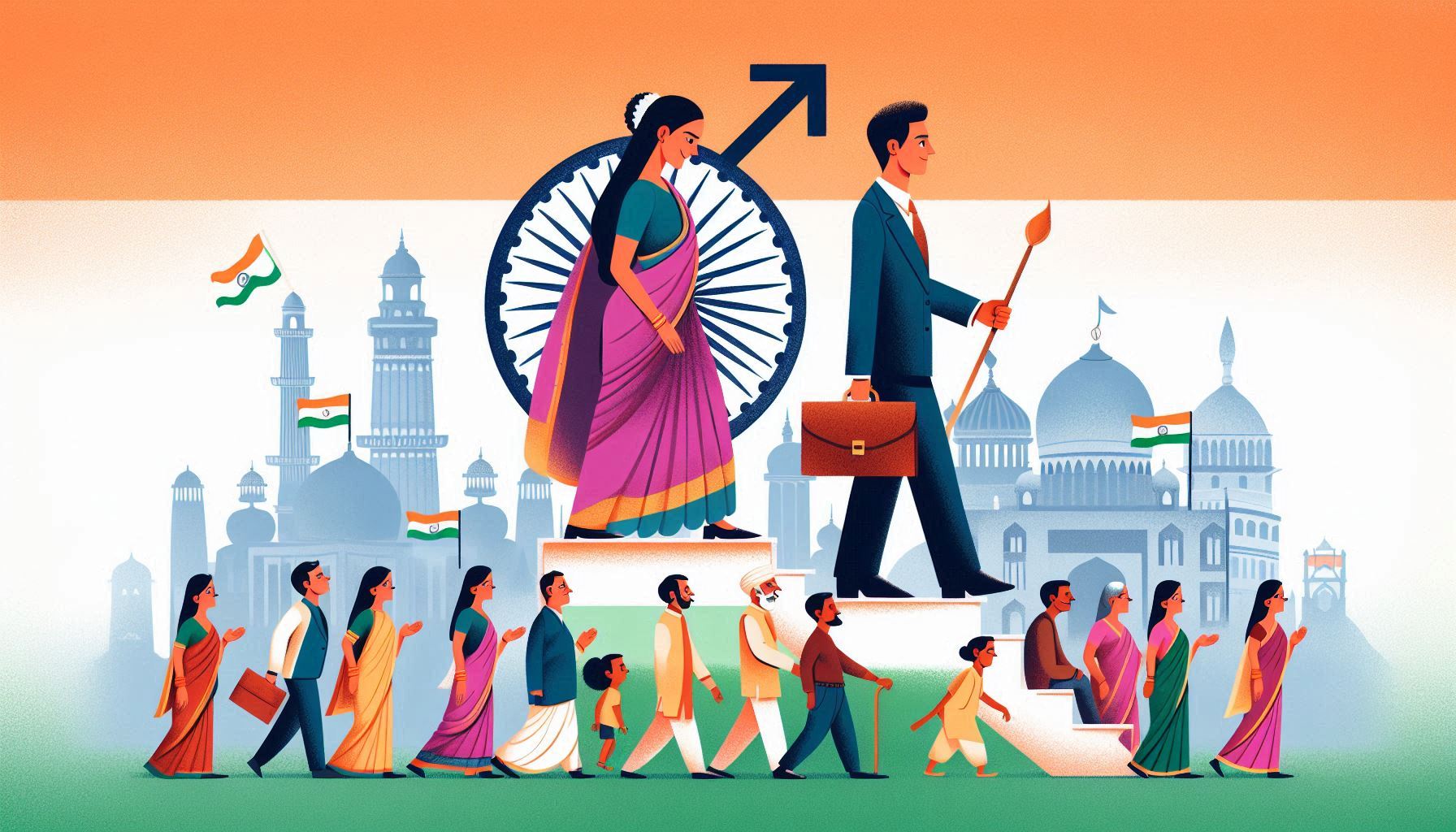
    MUMBAI — Indians rank among the world’s most progressive citizens in their views on gender equality, with 78 per cent believing in the importance of achieving gender parity, according to a new global survey released ahead of International Women’s Day 2025.

    The 30-country study by Ipsos reveals strong alignment between Indian men (77 per cent) and women (80 per cent) on gender equality issues, contrasting sharply with more polarised views in South Korea (52 per cent) and the Netherlands (54 per cent).

    Nearly half of Indians surveyed (48 per cent) perceive domestic responsibilities such as housekeeping and cooking as shared obligations rather than gender-specific tasks. Only 28 per cent attributed these responsibilities solely to women, while 18 per cent associated them with men.

     Ipsos India chief executive officer Amit Adarkar  noted the significance of these findings in light of the World Economic Forum’s projection that full gender parity remains over a century away.

    “According to the WEF, at the current rate of progress, it would take until 2158—roughly five generations from now—to reach full gender parity,” said Adarkar. “It is heartening to see that both men and women in India are aligned in their views on equal treatment and opportunity for women.”

    The survey, conducted in alignment with the International Women’s Day 2025 theme of #AccelerateAction, identified several key findings about Indian attitudes:
    * 69 per cent believe women holding positions of responsibility in business and government is crucial for accelerating gender equality
    * 66 per cent perceive increased pressure on men to support gender equality
    * 64 per cent feel that in promoting gender equality, men are sometimes discriminated against
    * 60 per cent consider men who stay home to care for children as “less of a man”—a view that has become more pronounced since 2019, when only 39 per cent held this opinion

    Regarding gender stereotypes, the survey revealed increasingly progressive attitudes in several areas. For unpaid family care, including childcare and looking after elderly relatives, 53 per cent of Indians attributed responsibility to both genders. Similar balanced views were expressed on gender-based violence (48 per cent), physical assault (48 per cent), parental leave (48 per cent), and healthcare access (52 per cent).

    Adarkar attributed these progressive shifts to changing family structures and government initiatives.
    “Urban Indians would be by far more progressive in their views on gender equality versus those residing in rural India. With urban pressures of work and home responsibilities, parents are showering their love on their child minus gender bias. Even rural India is witnessing progressive shifts with projects like Beti Bachao, Beti Padhao and Lakhpati Didis,” he said.

    The Ipsos survey interviewed 24,269 people across 30 countries between 20th December 2024 and 3rd January 2025. The India sample comprised approximately 2,200 individuals, with 1,800 interviewed face-to-face and 400 online.