Tag: International business

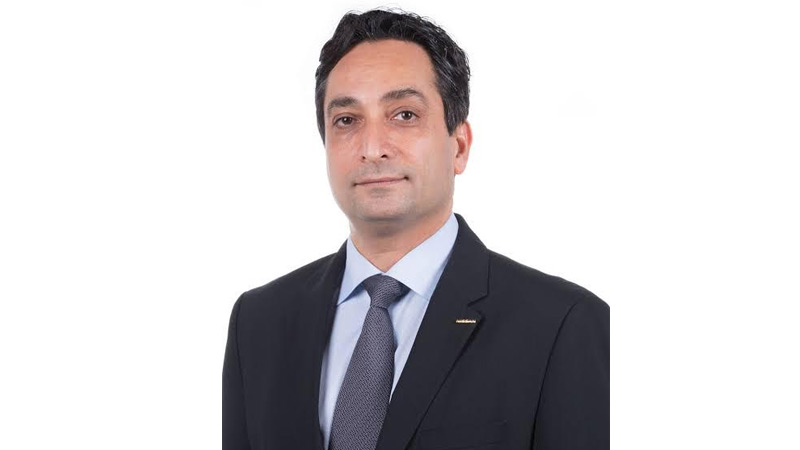
  • TVS Motor turbocharges its global team with Peyman Kargar at the helm

    TVS Motor turbocharges its global team with Peyman Kargar at the helm

    MUMBAI: Bengaluru has just thrown another spice into the global business curry with TVS Motor Company’s latest executive shuffle. The appointment of Peyman Kargar as head of international business isn’t just another corporate chess move—it’s akin to placing a turbocharger in an already speeding vehicle. Settling in Dubai, Kargar is expected to race through the global markets with the grit of a seasoned rally driver.

    With a swagger that could rival any high-flyer’s, Kargar steps into his new role with over three decades of vrooming across the automotive sectors of Europe, Asia, and the middle east. “Peyman’s prolific global leadership experience and expertise will add significant value to the company,” declared TVS Motor Company director & CEO K.N. Radhakrishnan.

    Having previously chaired the luxury skids as Infiniti global chairman & president, and having steered Nissan’s Datsun across 80 countries, Kargar isn’t new to the fast lanes. His stint with Infiniti turned heads not just for sleek designs but for robust sales, catapulting the brand’s volume by 20 per cent and cruising towards a billion-dollar profit mark. Before his grand tour with Nissan and Renault, Kargar had already been mapping the terrains of 50 countries, steering a whopping 4 billion euros in turnover. It’s safe to say, when it comes to the global auto-route, Kargar knows every shortcut and speed bump.

    Stationed in Dubai, the crossroad of continents, Kargar’s gearbox is well-equipped with a Mechanical Engineering degree and an MBA focusing on finance, strategy, and leadership. This isn’t just about managing auto parts; it’s about driving a corporate philosophy that shifts gears towards expansive horizons. “We are confident that under his leadership, we will further strengthen our market position and continue to set benchmarks. We wish him the very best and welcome him to the TVSM family,” Radhakrishnan revved up.

    For now, Kargar’s hands are firmly on the wheel, and it looks like he’s got the road map to success.

  • A paint giant’s growth slows as net profit slides to 42.4 per cent

    A paint giant’s growth slows as net profit slides to 42.4 per cent

    Mumbai: In a season marked by dampened demand, economic pressures, and persistent monsoons, Asian Paints saw a dip in performance during Q2 of FY25. The company’s consolidated net sales for the quarter reached Rs 8,003 crores, down 5.3 per cent from Rs 8,451.9 crores in the previous year. The period was particularly challenging for the domestic decorative business, impacted by low consumer sentiment, extensive rains, and floods in key regions, marking a volume decline of 0.5 per cent and a revenue decrease of 6.7 per cent.

    Asian Paints’ standalone financials also reflect these struggles. The standalone net sales fell by 6.5 per cent, reaching Rs 6,840.6 crores compared to Rs 7,315.7 crores in Q2 FY24. The company’s efforts to adjust its pricing, with reductions last year and selective increases this quarter, had limited impact on countering the cost pressures from raw material prices and sales expenses, hitting the operating margins substantially. For Q2, the standalone PBDIT margin decreased to 16.4 per cent, a decline of 530 basis points from last year.

    The strategic decisions on pricing have had a notable impact on Asian Paints’ bottom line. Although the firm implemented price increases during Q2, the benefits are expected to manifest only in the second half of the year, while ongoing cost pressures from raw materials and elevated sales expenses strained Q2 margins. The consolidated PBDIT margin narrowed to 15.5 per cent, down 480 basis points from last year’s 20.3 per cent. Net profit after tax, excluding exceptional items, saw a sharp 42.4 per cent reduction, sliding to Rs 694.6 crores.

    Exceptional items further dampened the quarter’s results, including a Rs 180.1 crore impairment loss, which affected goodwill on acquisitions like White Teak and Weatherseal in addition to foreign exchange losses associated with subsidiary operations in Ethiopia.

    Despite the challenging quarter, Asian Paints’ Industrial Business displayed resilience. General Industrial, Protective Coatings, and Refinish segments reported decent growth, providing some support against the broader revenue challenges. In international markets, however, the effects of currency devaluation in Ethiopia, Egypt, and Bangladesh weighed heavily, contributing to a revenue decline of 0.7 per cent. On a constant currency basis, though, the segment achieved an 8.7 per cent growth rate, underscoring the strength of Asian Paints’ offerings despite global economic pressures.

    Asian Paints’ Home Décor category experienced growth through its Beautiful Homes network, albeit below expectations. In the Bath Fittings and Kitchen segments, sales growth was steady, with bath fittings recording a 2.1 per cent increase to Rs 83.1 crores and the kitchen business up by 8.8 per cent to Rs 105.3 crores. Yet, profit margins in these segments were under pressure, as the Kitchen business posted a slight loss in Q2 despite increased sales.

    Meanwhile, White Teak and Weatherseal, recent acquisitions within the decor portfolio, continued to benefit from synergies with Asian Paints’ distribution network. White Teak’s Q2 sales rose by 19.2 per cent to Rs 31.1 crores, while Weatherseal saw a 4.8 per cent increase to Rs 13.2 crores.

    As Asian Paints enters the latter half of FY25, it faces ongoing pressures in both domestic and international markets. With anticipated easing of material costs and the impact of recent price increases expected to flow through, the company foresees margin improvement in the coming quarters.

    Key Financial Highlights:

    •    Q2 FY25 Consolidated Net Sales: Rs 8,003 crores, down 5.3 per cent YoY

    •    Standalone Net Sales: Rs 6,841 crores, down 6.5 per cent YoY

    •    Consolidated PBDIT Margin: 15.5 per cent, down 480 bps from last year

    •    Standalone PBDIT Margin: 16.4 per cent, down 530 bps from last year

    •    Net Profit (post-minority interest): Rs 694.6 crores, down 42.4 per cent YoY

  • Madhav Sheth named president of int’l business group at realme

    Madhav Sheth named president of int’l business group at realme

    Mumbai: Technology brand realme has elevated realme VP and realme India, Europe and Latin America CEO Madhav Sheth to the position of VP of the international business unit. With this promotion, Sheth’s new designation would now be realme India CEO, realme VP and realme international business group VP.

    Sheth will be fully responsible for realme’s overseas business operation, reporting directly to realme founder ad CEO Sky Li. Helmed by his strategic vision and keen market acumen, realme will bring leap-forward technology and trendsetting design to the consumers in global regions. He will be fully responsible for realme’s business operations in Africa, Asia Pacific (excluding mainland China), Central and Eastern Europe, Latin America, Middle East, and Western Europe, said the brand in a statement.

    “Madhav has made tremendous contributions to the development of realme’s overseas business in the past,” said Sky Li. “We fully believe that in the future, Madhav will lead realme to make new breakthroughs and bring realme’s products with leap-forward technologies and trend-setting designs to more young people around the world.”

    realme was co-founded in 2018 by Madhav Sheth and Sky Li. A brand born in India, realme is spread to 61 markets worldwide. During his tenure as CEO of realme India and Europe, Sheth has led the team to continually increase realme’s presence in the Indian and European markets. The elevation marks a significant milestone with Sheth emerging as the first Indian Global CEO in the smartphone industry, hailing from India to the world, said the statement.

  • WOW Skin Science onboards Sandeep Ghoshal as head of international business

    WOW Skin Science onboards Sandeep Ghoshal as head of international business

    Mumbai: Personal care brand WOW Skin Science has announced the appointment of Sandeep Ghoshal as head of international business.

    With his vast repertoire in the said field, Ghoshal will play a pivotal role in leading and expanding the international market for Body Cupid Pvt Ltd with a special focus on WOW Skin Science in APAC, Middle East, and in the African regions by setting up a strong team and building robust partnerships, said the company.

    With an extensive experience of 16 years in the FMCG industry, Ghoshal’s core competencies lie in international business development, trade marketing, and retailer management. Previously, as Godrej Consumer Products Ltd’s deputy general manager, he led their international business across various geographies of APAC, Europe, CIS, and North America. With his proficiency in communication skills and collaboration, he has lent his expertise and worked as a senior business manager (APAC) with BIC. He has also worked as a national trade marketing manager for Himalaya Herbals and escalated to become business manager for their Latin American & Caribbean markets. 

    Speaking on the new appointment, WOW Skin Science, co-founder, Manish Chowdhary said, “With this vast knowledge in understanding business development in the overseas market, he is a resourceful personnel who will drive the growth trajectory for WOW Skin Science and take it one step further to achieve our goals and objectives. We look forward to having Sandeep as an asset to the organisation who will make our vision of becoming a global Indian brand in its truest sense.”

    Elated about his new role, Ghoshal said, “When you think of truly iconic brands, they transcend their country of origin and are known the world over for their superior quality and their ability to deliver on customer promise every single time. We have the same vision for WOW Skin Science. We want WOW to be the first truly global Indian brand with their strong ‘nature inspired’ positioning & world-class packaging to reach every nook and corner beyond India.”

  • Cosmos-Maya names Rajaram Sundaresan the director of operations, international

    Cosmos-Maya names Rajaram Sundaresan the director of operations, international

    Mumbai: Animation major Cosmos-Maya on Thursday announced the appointment of Rajaram Sundaresan as the director of operations for international business.

    In his new role, Sundaresan will look to take responsibilities ranging from project management and client relations to revenue maximisation for the division. He has been brought aboard to set a higher standard for the creative team at Cosmos-Maya by targeting to produce content for the largest international broadcasters, the company said in a statement.

    The paradigm shift in the Indian kids entertainment segment that was initiated with successful shows like Motu Patlu in the domestic market and Eena Meena Deeka internationally, will now be helmed by Sundaresan and the company expects to see much more growth in this space in FY22 and beyond, it added.

    “We extend a warm welcome to Rajaram,” Cosmos-Maya CEO Anish Mehta said. “Cosmos-Maya hopes to significantly benefit from his expertise in scaling businesses and deepening their position while maintaining a strong governance and risk mitigation structure. We have a growing presence globally with multiple international co-production projects in nearly every continent, and with Rajaram coming on board we are gearing to see much more along this road.”

    Rajaram brings more than 30 years of experience in the animation industry, having previously handled production for ventures like Prime Focus, Delux Entertainment, and DQ Entertainment.

    “I am excited to be joining the team of creative technology enthusiasts who have relentlessly worked for a decade to create a highly fertile ecosystem and a huge corporate entity with immense brand value in its sector. With the entertainment industry witnessing rapid growth, Cosmos-Maya will look to increase market share with consistent quality production in the animation space commensurate with global benchmarks of kids animated content,” Sundaresan said on his new role.

  • “International business is growth area for players with long-term plans”

    “International business is growth area for players with long-term plans”

    The global slowdown in 2011 has made it clear for Indian broadcasters to have a long term strategy, exploit new media, study local content consumption patterns and have a pricing that is reasonable rather than getting engaged in a race to the bottom.

    Indian broadcasters have similar growth opportunities in the international market as they have in India, though the challenges are of different nature.

    Historically, large parts of international business for Indian broadcasters are dependent on subscription revenues and long term contracts. Having secured these long term contracts, Indian broadcasters generally do little to grow their shares.

    Subscription business, unlike advertising business worldwide, is not measured on transparent measurement parameter. Hence B2B deals are conducted on the basis of gut, perception or portfolio leverages. Most of these tend to be highly uncertain and unpredictable. The lack of effective measurement also leads to gut-based theories of local programming or additional programming inputs.

    Another key element in building a sound foundation is to invest in brand building and, hence, create an emotional connect.

    The triggers and hooks for content consumption need not be same for the audience based out of India or in some remote corner of the world. Unless Indian broadcasters draw a long term plan in strategy for international business, they would never get a pulse of overseas South Asian consumers.

    Economic slowdowns in various markets make the scenario more complex for broadcasters in wooing consumers and for consumers in selecting content offerings at right price/value. It will also be important for the Indian broadcasters to use new media avenues optimally.

    Given the fact that Internet and OTT models are getting used more as tools for piracy and cheap distribution, it can pose serious threat to the distribution revenues. If used well especially in markets with higher broadband penetration, new medium can work best to get incremental subscribers and eyeballs including the younger audience and next generation Indians in those markets.

    Distributors are facing bigger challenges in mainstream content or local subscriber growth as well as local content costs. In most markets, essentially in West, there is a proliferation of South Asian content in the past four years, most of which are not growing the pie because of poor content quality and incorrect business models.

    Distributors are left with no choice but to apply their judgments on how to manage international/ethnic category of business. Distributors are desperately looking forward to good partners who can participate in the business growth in a given cluttered and economically challenged environment.

    In order to crack growth, broadcasters need to pay closer attention to the purchasing power of South Asian households being superior to local households in most international markets. However, consumers would expect right content on right platform at right price with least diversions of piracy, cheaper new media platform, FTA or compelling Asians based content on mainstream channels.

    Rationalisation of content offerings on traditional media and consolidation of content offerings are key levers to expand the market.

    Advertising business is suffering before growing, as majority of players, including big ones, do not respect the value of their inventory, and the quality of their audiences. South Asian subscribers are of various generations and have varied interests including mainstream content. However, they are loyal to home grown content for connect and nostalgia apart from entertainment in their desi style.

    There is a component of audience base which is born there and does not have emotional connect with India. The composition of these set of audiences is changing rapidly and a good judgment can help broadcasters define their content strategy appropriately.

    The scenario in local audience market offers unique challenges. There are content hungry markets which find eastern culture and values appealing, but those businesses need to be treated in the same fashion as the mainstream business in India in order to make a definitive dent in those markets rather than looking at them as incremental syndication revenues. These markets require tenacious focus, long drawn plans and tremendous hard work.

    International business is well poised for growth but only for serious and long term players who are willing to invest and reap the benefit over a long period of time than in ATM solutions.