Tag: inter-ministerial committee

  • MSO’s net worth should be positive for registration: Govt.

    MSO’s net worth should be positive for registration: Govt.

    NEW DELHI: An inter-ministerial committee (IMC) of the government, grappling with the issue of differentiating between serious and non-serious players, has recommended that net worth of an MSO must be positive for grant of registration, but shied away from stipulating a minimum monetary ceiling.

    The IMC, which met earlier this month, came to the conclusion after feedback from various other ministries, including finance, information and broadcasting and commerce, that in case an existing registered MSO applied for registration for additional areas, the net worth of the company must be positive for those areas too for a green signal from the government.

    For an expenditure of about 25 lakh (Rs. 25,00,000) by a company to establish an MSO business, a loan can be availed of by a new applicant through banks, the IMC said.

    Justifying its stand on the MSO company’s net worth being positive, IMC said it should be so as the government was providing loans without collaterals to small entrepreneurs for starting a business. “Hence the net worth of the entity applying for MSO registration has to be positive,” the government panel observed.

    For the purposes of net worth evaluation, IMC reiterated that immovable/movable assets, generally included in the net worth certificates submitted by the applicants, could continue to be taken into account as per previous practice.

    The panel took into consideration, among other issues, whether for registration purpose an entry level threshold net worth be specified and whether an MSO, already registered for certain areas, may be considered as eligible for registration in extended areas if its net worth was presently negative.

  • MSO’s net worth should be positive for registration: Govt.

    MSO’s net worth should be positive for registration: Govt.

    NEW DELHI: An inter-ministerial committee (IMC) of the government, grappling with the issue of differentiating between serious and non-serious players, has recommended that net worth of an MSO must be positive for grant of registration, but shied away from stipulating a minimum monetary ceiling.

    The IMC, which met earlier this month, came to the conclusion after feedback from various other ministries, including finance, information and broadcasting and commerce, that in case an existing registered MSO applied for registration for additional areas, the net worth of the company must be positive for those areas too for a green signal from the government.

    For an expenditure of about 25 lakh (Rs. 25,00,000) by a company to establish an MSO business, a loan can be availed of by a new applicant through banks, the IMC said.

    Justifying its stand on the MSO company’s net worth being positive, IMC said it should be so as the government was providing loans without collaterals to small entrepreneurs for starting a business. “Hence the net worth of the entity applying for MSO registration has to be positive,” the government panel observed.

    For the purposes of net worth evaluation, IMC reiterated that immovable/movable assets, generally included in the net worth certificates submitted by the applicants, could continue to be taken into account as per previous practice.

    The panel took into consideration, among other issues, whether for registration purpose an entry level threshold net worth be specified and whether an MSO, already registered for certain areas, may be considered as eligible for registration in extended areas if its net worth was presently negative.

  • Govt hands NDTV India 24-hr ban for breach of content code

    Govt hands NDTV India 24-hr ban for breach of content code

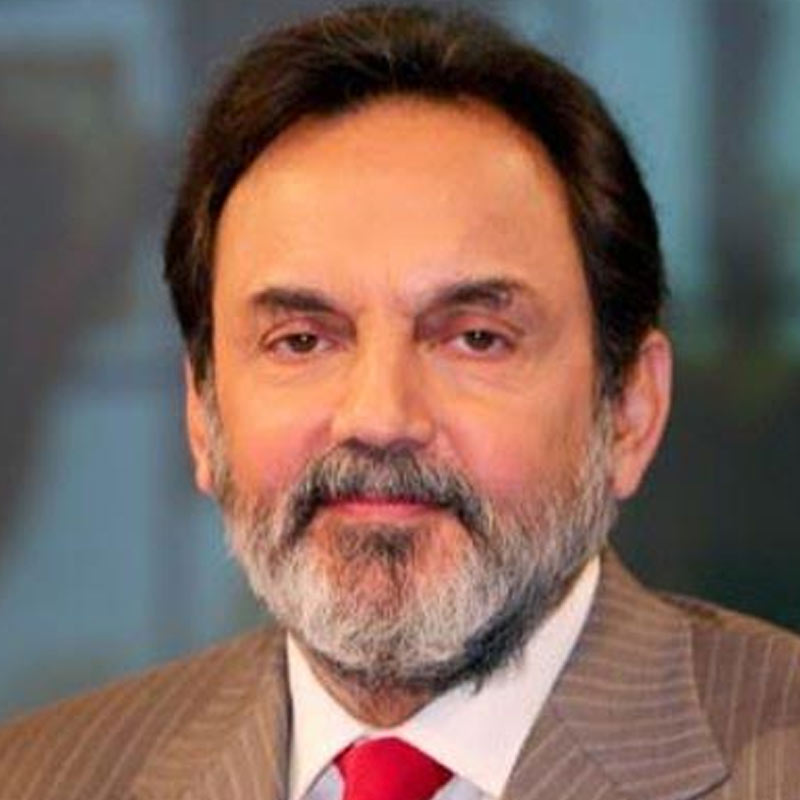
    MUMBAI: In what is being viewed in certain quarters as an assault on media freedom reminiscent of Rajiv Gandhi government’s bid to gag media in late 1980s, the Prannoy Roy and family-controlled NDTV India, has been directed by the government to go off air for 24 hours from 9 November 2016 as a penalty for breaching telecast norms related to security issues.

    NDTV is exploring all options against this 24-hour ban with opinion split on the issue. While a section of views on social media supported the government action, many who part of the Indian media criticised it saying it reminded them of Indira Gandhi-imposed Emergency in India in 1977.

    Confirming the recent development, Ministry of Information and Broadcasting (MIB) sources said that Hindi news channel NDTV India has been accused of airing images and revealing information regarding defence locations while covering the Pathankot terrorist attack a few months back. The sources added that NDTV India was given a chance by an inter-ministerial committee (IMC) of the government to put forth its viewpoint on the allegations and was found wanting.

    Indiantelevision.com made futile attempts to get in touch with NDTV for independent reactions, including newly-anointed group CEO KVL Narayan Rao and his predecessor Vikram Chandra.
    However, in a statement put out by NDTV on its website (http://www.ndtv.com/communication/ndtv-statement-on-order-against-our-hindi-channel-ndtv-india-1621155), the company said, “The order of the MIB has been received. It is shocking that NDTV has been singled out in this manner. Every channel and newspaper had similar coverage. In fact NDTV’s coverage was particularly balanced. After the dark days of the Emergency when the press was fettered, it is extraordinary that NDTV is being proceeded against in this manner. NDTV is examining all options in this matter.”

    The IMC, the government sources said, was earlier in favour of handing out a one-month ban, which was diluted to 24 hours later.
    The matter pertains to the coverage of Pathankot defence areas after a terrorist attack in January this year. The IMC has blamed NDTV India of providing on-air information about ammunition stockpiled in the airbase, fighter-planes, rocket-launchers, fuel-tanks, etc. The committee felt that such crucial information could have been readily picked by up by hostile nations and could have compromised lives of civilians and defence personnel.

    The committee has also mentioned that the channel appeared to give out the exact locations of terrorists on air, thus compromising counter offensives by India.
    In its reply, the channel said that it was a case of subjective interpretation and most of the information they had put out was already in public domain in print, electronic and social media.

    A section of Indian media reacted strongly against such a government move.

    “Govt pulling TV news channels off air is a dangerous trend. Don’t want sarkari babus deciding what content they like and what they don’t,” India Today (TV) and Aaj Tak Managing Editor Rahul Kanwal tweeted.

    A former NDTV star and presently with India Today group, Rajdeep Sardesai, said in a series of tweets, “One of India’s most sober and responsible channels NDTV India to be banned for a day by I and B ministry. NDTV today, who tomorrow? Media should be accountable, scrutinised, but with transparency and not selectively.”


    Shekhar Gupta, former editor of the Indian Express Group and presently anchoring a digital news venture, said in a tweet, “What’s shocking is lack of protest/outrage. Reprehensible, somebody in Ind(ia) having power to ban news channels as in Pak(istan). Tom(orrow), it’ll be print.”


    Meanwhile in an another development, the NBSA (News Broadcasting Standards Authority), the self-regulatory body of news channels under the News Broadcasters’ Association ( NBA) late last month asked NDTV, the English news channel,  to air an apology covering for showing an incorrect map of India

    The letter from NBA to NDTV stated the complaint was studied and the channel was directed to run an apology (full screen) prior to 9 pm on 5 November.

    While  NBA refused to comment on this matter, it is learnt that MIB had forwarded to NBSA complaints received by it from people, especially by one person who had taken up this issue on social media in a big way.

  • Govt hands NDTV India 24-hr ban for breach of content code

    Govt hands NDTV India 24-hr ban for breach of content code

    MUMBAI: In what is being viewed in certain quarters as an assault on media freedom reminiscent of Rajiv Gandhi government’s bid to gag media in late 1980s, the Prannoy Roy and family-controlled NDTV India, has been directed by the government to go off air for 24 hours from 9 November 2016 as a penalty for breaching telecast norms related to security issues.

    NDTV is exploring all options against this 24-hour ban with opinion split on the issue. While a section of views on social media supported the government action, many who part of the Indian media criticised it saying it reminded them of Indira Gandhi-imposed Emergency in India in 1977.

    Confirming the recent development, Ministry of Information and Broadcasting (MIB) sources said that Hindi news channel NDTV India has been accused of airing images and revealing information regarding defence locations while covering the Pathankot terrorist attack a few months back. The sources added that NDTV India was given a chance by an inter-ministerial committee (IMC) of the government to put forth its viewpoint on the allegations and was found wanting.

    Indiantelevision.com made futile attempts to get in touch with NDTV for independent reactions, including newly-anointed group CEO KVL Narayan Rao and his predecessor Vikram Chandra.
    However, in a statement put out by NDTV on its website (http://www.ndtv.com/communication/ndtv-statement-on-order-against-our-hindi-channel-ndtv-india-1621155), the company said, “The order of the MIB has been received. It is shocking that NDTV has been singled out in this manner. Every channel and newspaper had similar coverage. In fact NDTV’s coverage was particularly balanced. After the dark days of the Emergency when the press was fettered, it is extraordinary that NDTV is being proceeded against in this manner. NDTV is examining all options in this matter.”

    The IMC, the government sources said, was earlier in favour of handing out a one-month ban, which was diluted to 24 hours later.
    The matter pertains to the coverage of Pathankot defence areas after a terrorist attack in January this year. The IMC has blamed NDTV India of providing on-air information about ammunition stockpiled in the airbase, fighter-planes, rocket-launchers, fuel-tanks, etc. The committee felt that such crucial information could have been readily picked by up by hostile nations and could have compromised lives of civilians and defence personnel.

    The committee has also mentioned that the channel appeared to give out the exact locations of terrorists on air, thus compromising counter offensives by India.
    In its reply, the channel said that it was a case of subjective interpretation and most of the information they had put out was already in public domain in print, electronic and social media.

    A section of Indian media reacted strongly against such a government move.

    “Govt pulling TV news channels off air is a dangerous trend. Don’t want sarkari babus deciding what content they like and what they don’t,” India Today (TV) and Aaj Tak Managing Editor Rahul Kanwal tweeted.

    A former NDTV star and presently with India Today group, Rajdeep Sardesai, said in a series of tweets, “One of India’s most sober and responsible channels NDTV India to be banned for a day by I and B ministry. NDTV today, who tomorrow? Media should be accountable, scrutinised, but with transparency and not selectively.”


    Shekhar Gupta, former editor of the Indian Express Group and presently anchoring a digital news venture, said in a tweet, “What’s shocking is lack of protest/outrage. Reprehensible, somebody in Ind(ia) having power to ban news channels as in Pak(istan). Tom(orrow), it’ll be print.”


    Meanwhile in an another development, the NBSA (News Broadcasting Standards Authority), the self-regulatory body of news channels under the News Broadcasters’ Association ( NBA) late last month asked NDTV, the English news channel,  to air an apology covering for showing an incorrect map of India

    The letter from NBA to NDTV stated the complaint was studied and the channel was directed to run an apology (full screen) prior to 9 pm on 5 November.

    While  NBA refused to comment on this matter, it is learnt that MIB had forwarded to NBSA complaints received by it from people, especially by one person who had taken up this issue on social media in a big way.

  • 75 violation cases by TV channels in 3 years; Rs 90 crore to prop monitoring: Jaitley

    75 violation cases by TV channels in 3 years; Rs 90 crore to prop monitoring: Jaitley

    NEW DELHI: Information and Broadcasting minister Arun Jaitley has denied that there is any proposal is under consideration for setting up a separate mechanism for censorshjip of television programmes on the lines of the Central Board of Film Certification.

    While stressing that the present mechanisms within the ministry are adequate deal with television channels, he said that action had been taken against television channels in 75 cases of violation of programme or Advertisement Codes from 2013 to 2015. He said no action had been initiated against any channels during 2016.

    He said the Cable Television Networks (Regulation) Act 1995 under which the programmes telecast on private satellite TV channels are regulated does not provide for pre-censorship of content broadcast on TV channels. The Act and the rules of 1994 provide for a Programme Code.

    All programmes and advertisements telecast on TV channels are required to be in conformity with the prescribed Programme Code and Advertising Code available on ministry’s website www.mib.nic.in.

    These codes contain a whole range of principles to be followed by the TV channels for all kinds of programmes including reality shows. Action is taken whenever violation of these codes is brought to the notice of the ministry.

    The I and B ministry set up a state-of-art Electronic Media Monitoring Centre (EMMC) in 2008 to look over the content telecast on 50 private satellite television channels on a 24×7 basis. This was gradually increased to 100 and then to 300.

    Under the 12th plan (2012-2017), a plan scheme “Strengthening of EMMC” has been sanctioned at a cost of Rs 90 crores to increase the monitoring capacity to 1500 TV channels by the end of Plan period. Accordingly, EMMC is presently monitoring 600 TV channels while work is on to increase the capacity further to 900 TV channels shortly.

    The Iand B ministry had constituted an Inter Ministerial Committee (IMC) to regulate content on satellite TV channels on 25 April and amended it in 2011 to include a representative from the Consumer Affairs, Food and Public Distribution Ministry to accord focused attention to consumer related issues. It is headed by the Additional Secretary in the I and B with seven representatives of different ministries as well as a nominee of the Advertising Standards Council of India. The Joint Secretary (Broadcasting) is the Member Convener

  • 75 violation cases by TV channels in 3 years; Rs 90 crore to prop monitoring: Jaitley

    75 violation cases by TV channels in 3 years; Rs 90 crore to prop monitoring: Jaitley

    NEW DELHI: Information and Broadcasting minister Arun Jaitley has denied that there is any proposal is under consideration for setting up a separate mechanism for censorshjip of television programmes on the lines of the Central Board of Film Certification.

    While stressing that the present mechanisms within the ministry are adequate deal with television channels, he said that action had been taken against television channels in 75 cases of violation of programme or Advertisement Codes from 2013 to 2015. He said no action had been initiated against any channels during 2016.

    He said the Cable Television Networks (Regulation) Act 1995 under which the programmes telecast on private satellite TV channels are regulated does not provide for pre-censorship of content broadcast on TV channels. The Act and the rules of 1994 provide for a Programme Code.

    All programmes and advertisements telecast on TV channels are required to be in conformity with the prescribed Programme Code and Advertising Code available on ministry’s website www.mib.nic.in.

    These codes contain a whole range of principles to be followed by the TV channels for all kinds of programmes including reality shows. Action is taken whenever violation of these codes is brought to the notice of the ministry.

    The I and B ministry set up a state-of-art Electronic Media Monitoring Centre (EMMC) in 2008 to look over the content telecast on 50 private satellite television channels on a 24×7 basis. This was gradually increased to 100 and then to 300.

    Under the 12th plan (2012-2017), a plan scheme “Strengthening of EMMC” has been sanctioned at a cost of Rs 90 crores to increase the monitoring capacity to 1500 TV channels by the end of Plan period. Accordingly, EMMC is presently monitoring 600 TV channels while work is on to increase the capacity further to 900 TV channels shortly.

    The Iand B ministry had constituted an Inter Ministerial Committee (IMC) to regulate content on satellite TV channels on 25 April and amended it in 2011 to include a representative from the Consumer Affairs, Food and Public Distribution Ministry to accord focused attention to consumer related issues. It is headed by the Additional Secretary in the I and B with seven representatives of different ministries as well as a nominee of the Advertising Standards Council of India. The Joint Secretary (Broadcasting) is the Member Convener

  • Govt. earmarks Rs 13 crore for DAS Phase III & IV completion

    Govt. earmarks Rs 13 crore for DAS Phase III & IV completion

    NEW DELHI: The government has earmarked a sum of Rs 13.02 crore for completion of Phase III and IV of Digital Addressable System (DAS) for cable television.


    Minister of State for Information and Broadcasting Rajyavardhan Rathore informed the Parliament that the scheme ‘Mission Digitization’ had been drawn up and a sum of Rs 1 crore out of the total Plan allocation had been earmarked for the MIS Software.


    A multi-lingual and multi-desk toll free call centre was established under the Mission Digitisation Project to address peoples’ queries regarding ongoing cable TV digitization in the country.


    Answering a question about committees set up by the Ministry for overseeing DAS, he said a Task Force had been set up to steer the digitization of cable TV network in the country in the remaining Phase III & IV. All the stakeholders, State level nodal officers of all States/UTs, Departments of Electronics and Information and Technology, Telecommunications and others including one consumer forum from each region have been made members of the body.


    Referring to other committees relating to television, the Minister said an Inter-Ministerial Committee (IMC) had been constituted to take cognisance suo moto or to look into specific complaints regarding content on private TV channels on any platform including direct to home (DTH) & FM Radio with regard to violation of the Programme and Advertising Code as defined in Rule 6 & 7 of the Cable Television Network Rules, 1994 for TV channels & applicable Content Code for Radio. 


    Members include the I&B, Home Affairs, Law & Justice, Women & Child Development, Health & Family Welfare, Extemal Affairs, Defence, Consumer Affairs, and Food and Public Distribution Ministries apart from a representative of the Advertising Standards Council of India (ASCI).


    On a question about use of modern technology, Rathore said his Ministry and the Media Units under the administrative control of the Ministry have been consistently making efforts to use the state-of-art technology to increase their efficiency.


    In a bid to modernise the Press Information Bureau (PIB), officers are being equipped with laptops and smart phones to enable them to effectively use Information Technology to disseminate information.


    Rathore added that mobile applications like WhatsApp have been utilised by the Department of Field Publicity during ‘Beti Bachao Beti Padao’ campaign in Rajasthan during March 2015 and other Special Outreach Programmes. 


    The Minister added that MIB and most of the Media Units under its control had presence on various social media platforms like Twitter, Facebook, Blog, Google+, YouTube and Instagram. These platforms were being used to disseminate information due to easy accessibility and their wider reach.


    The Ministry’s Twitter account had 425,000 followers, its Facebook account has more than 1.1 million likes, YouTube has 4,049,641 views, the blog page has 1.9 million page views and Instagram has 1040 followers.


    The PIB website is being revamped and new technologies such as live streaming, smart phones, hi-speed broadband etc. are being used for this purpose.


    Video conferencing facilities are also being installed to carry out the live streaming of press conferences by important news makers.

  • Electronic Media Monitoring Centre to go up to 1500 channels by 2017: Rathore

    Electronic Media Monitoring Centre to go up to 1500 channels by 2017: Rathore

    NEW DELHI: The government hopes to increase the capacity of the state-of-art Electronic Media Monitoring Centre (EMMC), which currently monitors around 300 television channels, to 1500 by 2017.

     
    Minister of State for Information and Broadcasting Rajyavardhan Singh Rathore told Parliament that these 300 channels are chosen randomly out of the 839 channels beaming into Indian homes.

     
    He said that the aim was to first achieve the target of monitoring 600 channels within the next few months, while answering a question about reality shows playing with the sentiments of the people.

    In a reply to a supplementary question about young children being used in dance shows, Rathore said that there are a large number of channels and there is undoubtedly a race to attract as many eyeballs as possible. Therefore, most of these channels, no doubt, are walking a very thin line and working in that grey area. However, there is a freedom of expression. Therefore, the government does not want to impinge on the freedom of expression. Keeping in mind the morality, decency and various levels of acceptance on television, certain guidelines have been issued. “What the Ministry can say is that we will issue advisories and we will also take into account any complaint that comes,” he said.


    He also said that a Task Force had earlier been set up to work on a regulatory body but the channels had opposed this and wanted self-regulation.

     
    Answering the main question, I&B Minister Arun Jaitley said no fact had been brought to the notice of the government alleging shows playing with sentiments of the people. However, the content carried on private satellite TV channels is regulated according to the provisions of the Programme and Advertising Codes contained in the Cable Television Network Rules 1994 and the Cable Television Network (Regulation) Act 1995. The rules provide for a whole range of parameters to regulate programme and advertisements on TV channels including the reality shows.

     
    The programme code says that no programme should be carried which (a) offends good taste or decency (b) contains anything obscene, defamatory, deliberate, false and suggestive innuendos and half truths (c) criticizes, maligns or slanders any individual in person or certain groups, segments of social, public and moral life of the country (d) denigrates women through the depiction in any manner of the figure of a woman, her form or body or any part thereof in such a way as to have the effect of being indecent or derogatory to women, or is likely to deprave, corrupt or injure the public morality or morals (e) denigrates children (f) is not suitable for unrestricted public exhibition (g) is unsuitable for children.


    Action is taken against defaulting channels whenever any violation of the said codes is noticed or brought to the notice of the Ministry.


    The Ministry also has an Inter Ministerial Committee (IMC) to look into the violations of the Programme and Advertisement Codes. IMC has representatives from the Ministry of Home Affairs, Defence, External Affairs, Law, Women and Child Development, Health and Family Welfare, Consumer Affairs and a representative from the industry in Advertising Standards Council of India (ASCI). IMC meets periodically and recommends action against violations.


    Besides, as part of self-regulation by industry, Indian Broadcasting Foundation (IBF), which is a representative body of non-news and current affairs TV channels, has set up Broadcasting Content Complaints Council (BCCC) to examine the complaints about television programmes.


  • MIB warns TV channels to not show ads as found ‘violative’ by ASCI

    MIB warns TV channels to not show ads as found ‘violative’ by ASCI

    MUMBAI: The Ministry of Information and Broadcasting (MIB) has come out sharply against ads that have been found ‘violative’ of the rules by Advertising Standards Council of India (ASCI). In an advisory, the MIB has warned TV channels not to carry such ads.


    It states that non-compliance of ASCI’s code of self regulation was a violation of rule 7 (9) of the Advertising Code contained in the Cable Television Network Rules (1994) which states that ‘no advertisement which violates the code of self regulation in advertising, as adopted by ASCI for public exhibition in India, from time to time, shall be carried in the cable service.’ Therefore, the ASCI decisions are not just bound for compliance by advertisers but also by TV channels. Any violation of ASCI rules implies violation of the advertising code enshrined in the CTN Act 1995 and rules 1994.


    Also, the Inter- Ministerial Committee (IMC) observed that ASCI has pointed to possible violation of the provision of drug and magic remedies (objectionable advertisements) Act 1954 and rules 1955. Therefore it has recommended that TV channels do not telecast such ads. The recommendation has already been accepted by MIB.


    Click here to read the list of violative ads