Tag: Instagram

  • Great Learning launches “Naye Zamaane Ki Degree”

    Mumbai: Edtech company for higher and professional education Great Learning of  launched its new brand campaign #NayeZamaaneKiDegree in a bid to create awareness about the new age degree programs in different specializations offered by various universities through their platform.

    The campaign is targeted towards freshers and young professionals who are looking for career growth. According to the company, it is a creative attempt to draw attention to the fact that people’s lives have changed in countless ways over the years – lifestyle choices, gadgets, lingo etc., but the world of degrees has stayed largely unchanged. But after the formal recognition received to online degrees by UGC under the New Education Policy acquiring the new age degrees has become affordable and accessible, it said.

    Great learning offers UGC recognized new age degrees- MBA, MCA, BBA etc. from sever Indian universities, in cutting- edge specialisations like Data Science, Cloud Computing, Digital Marketing etc. “These degrees will help learners acquire industry relevant skills to score lucrative jobs and build successful careers,” said the company.

    As part of the campaign, the brand has also announced a social media contest for the audience where they are inviting creative minds to submit their version of quirky headlines that would capture the essence of the #NayeZamaaneKiDegree. The brand will also be rewarding some top entries in the contest, which is live on the Facebook, Instagram of the brand.

    Speaking about the campaign Great Learning, chief marketing officer, Aparna Mahesh said, “In a highly volatile digital economy, employers are looking to hire talent with industry relevant skill sets, so they can start adding value right from the start. Just the stamp of a degree is not enough, it is important for young professionals to demonstrate a holistic understanding of fundamentals needed for the job. UGC approved online degrees from reputed institutes, supported by tech platforms like ours will ensure a wide number of students across have access to high quality, industry relevant education. With this campaign, we aim to strike a chord with our target audience on the need to choose the right degree for themselves. The response to this campaign has been overwhelming so far. It is great to see the idea of this communication resonate with so many learners across domains and sectors.”

    The brand started the campaign across its social media channels- Facebook, Instagram, Twitter and LinkedIn from 1 June.

  • Gupshup adds Messenger API for Instagram to help businesses engage better

    Mumbai: Messaging services company Gupshup on Friday announced the addition of the Messenger API for Instagram to its platform. This will now allow Gupshup businesses to benefit through a richer two-way conversation with their followers on Instagram at scale.

    Gupshup has a longstanding collaboration with the Facebook family of messaging platforms; having collaborated with Messenger in 2017, and as one of the earliest to adopt WhatsApp for business service in 2018. According to Instagram research1, 90 per cent of people on Instagram follow a business and 50 per cent are more interested in a brand when they see ads for it over Instagram.

    “We are delighted that Gupshup is launching the Messenger API support for Instagram. The Messenger API for Instagram is now available for all developers who make it possible for brands to improve and enhance messaging experiences with customers,” said Messenger’s vice president, platform partnerships, Konstantinos Papamiltiadis. “By integrating the Messenger API for Instagram, businesses and developers can effectively scale messaging workflows to better own the customer experience and build more authentic relationships.”

    “Gupshup is committed to helping businesses engage their customers better through conversations across multiple channels” explained Gupshup’s co-founder and CEO Beerud Sheth. “We are now making available our rich set of tools, powered by conversational AI, to help businesses make their Instagram conversations rich, contextual and personalized. Using these tools, businesses and celebrities and influencers with business accounts on Instagram will now be able to build stronger customer relationships, improve customer satisfaction, develop new business models and drive greater revenues.”

     Gupshup, with the Messenger API for Instagram for conversational messaging, is now available to its businesses who may access the same at www.gupshup.io

  • IT whiplash for social media for missed deadlines?

    IT whiplash for social media for missed deadlines?

    KOLKATA: Social media platforms in India, barring Koo, failed the compliance test of the Indian government to appoint grievance officers in India as the three month deadline expired today (May 26).

    Many international online platforms, including Twitter, were in regular conflict with the government amidst a heightened scrutiny and complaints over privacy in the last one year. In the latest such incident the Delhi Police raided the micro-blogging site’s Delhi office on Monday.

    Facebook too has had its fair share of controversies, and backlash from both opposition and ruling political parties in the country.

    Given this situation, the government issued new intermediary guidelines for social media platforms last February with a three-month deadline for compliance. It had directed intermediaries to appoint a grievance officer based out of India for timely redressal of complaints by users.

    As per the rules that came into force today, every social media intermediary was required to appoint a chief compliance officer and a nodal contact person for 24/7 coordination. They were also directed to publish monthly compliance reports with details of complaints received and commensurate action taken.

    The rules come into effect from today (26 May) but no other social media giant has complied with the new rules barring Koo. The question being asked by Indian consumers is whether these intermediary platforms will be banned now?

    As a first step, the government may serve show cause notices upon these platforms while asking about the reasons in delay (read non-compliance). The act and the rules empower the government to force stop a particular platform from operating access in India but, it is very unlikely that the government will invoke the same at the very first instance, according to a legal expert. “Most of the intermediaries are in the process (read various stages) of complying with the rules,” he added.

    “We aim to comply with the provisions of the IT rules and continue to discuss a few of the issues which need more engagement with the government. Pursuant to the IT Rules, we are working to implement operational processes and to improve efficiencies. Facebook remains committed to people’s ability to freely and safely express themselves on our platform,” a spokesperson for  Facebook said on Tuesday.

    Social media platforms like Facebook and Twitter have hitherto enjoyed the status of “intermediaries” under the IT Act, 2000, and were exempted from the liabilities that would otherwise accrue for publication of illegal content,  according to  partner at Bharucha & Partners Kaushik Moitra.

    As per the provisions of Section 79 of the IT Act, 2000, “an intermediary shall not be liable for any third-party information, data, or communication link made available or hosted by him.”

    Simply put, an intermediary is not liable for any content posted on its platform by a third-party if it is merely facilitating the transfer of information between third-parties, Moitra explained.

    Social media platforms are welcome to do business in India, but they are also required to practise “due diligence” under the new guidelines, failing which safe harbour provisions do not apply to them, union information technology minister Ravi Shankar Prasad had said at the time of introducing the rules. The rules in India go beyond a single content moderation body and have mandated a more complex institutional structure to regulate information flow through intermediaries, BMU Law school dean Nigam Nuggehalli pointed out.

    “It’s not merely the appointment of officers but the bureaucratic structure that comes with it-maintenance of records, hearings and government scrutiny- that must be reviewed carefully to ensure a balance is maintained between discouraging abuse and fake news on the one hand and innovation and creativity on the other,” he further added.

    The IT Rules, 2021 themselves do not set out any penalties for non-compliance of their stipulations. The provisions of the IT Act, 2000 are relevant, Moitra clarified.

    “The government may decide to (i) revoke the ‘intermediary’ status of the social media platforms, therefore taking away the immunity enjoyed by them; (ii) per the IT Act, 2000, the penalty for failure to furnish information, return, etc. as required under the Act or the Rules, ranges from Rs 5000 – Rs 10,000 for every day during which such failure continues; and (iii) otherwise for contravening any rules or regulations made under the IT Act, the social media platforms may be required to pay a compensation or penalty of INR 25,000.

    Additionally, the government may issue blocking orders against such non-compliant platforms under the IT Act,” he added.

  • Facebook to start testing ads on Instagram Reels

    Facebook to start testing ads on Instagram Reels

    New Delhi: Social media giant Facebook Inc said on Thursday that it will begin testing advertisements on Instagram Reels in India as it aims to expand revenue from its short-form video feature. It will also launch this feature in a few other countries including Brazil, Germany, and Australia.

    The social media platform plans to cash in on the popularity of Instagram Reels in India — a fast-growing social media market. 

    “The introduction of ads is an indication of how strong the momentum is for Reels,” said Facebook vice president – global business group Carolyn Everson. “It is a big deal for marketers.”

    Facebook plans to test other features in India, such as letting content creators share Reels videos on their Facebook accounts, according to a report published by Reuters. As with other content on Reels, ads can be up to 30 seconds long and users can choose to skip the ads.

    The Mark Zuckerberg-owned tech behemoth also announced that it will let advertisers select categories of video content they want to place ads on, such as videos about children and parenting, animals and pets, or fitness and workouts. Advertisers typically use Facebook to target certain users by their interests.

    In addition to this, the social networking platform will begin testing sticker ads for Facebook Stories. Brands can create stickers that creators will place in their Stories, and influencers will earn a cut of any sales made through the sticker ads.

    According to government data, India has as many as 41 crore Facebook users and as many as 21 crore people who use Instagram.

  • Mitron turns one: Vernacular, monetisation to be key focus areas

    Mitron turns one: Vernacular, monetisation to be key focus areas

    KOLKATA: In last June, a number of short video platforms stepped into the limelight after the Indian government’s unceremonious ban on popular Chinese-origin app, TikTok. After riding on the initial wave of fame, these homegrown apps have now started solidifying their business models. This comes at a time when big league players like Instagram, Facebook and YouTube are raising the stakes in the short form video space. Mitron TV, which turned one this April, has rolled out new monetisation models for creators and is looking at various innovative solutions for higher engagement on the app.

    The video sharing app that started with two people now consists of 55+ people in the team. While it is scaling operations across the board, tech is taking centre stage, said Mitron TV CEO & co-founder Shivank Agarwal. With new initiatives, the platform has set the target of 100 million users in the next six months. For the second year, the focus is on how it can go bullish on vernacular and drive monetisation for creators, he added.

    Other new features like Mitron Club, Mitron Academy and Mitron On-Demand have been introduced in the app. Through Club, creators can churn out engaging content exclusively for users opting for the service. Through Mitron Academy, content creators get an opportunity to share educational videos to help users learn from the platform. Additionally, with Mitron On-Demand, users will be able to place requests for on-demand content across segments.

    Recently, Mitron rolled out the Editor Tool to help remove creators’ dependency to log on to other video editing apps to edit their content. Post this launch, the number of videos created using Mitron camera has jumped 50 per cent. Moreover, the platform has lately seen a huge growth in creator to user ratio, Agarwal stated. Currently, 22 per cent of the total user base falls under the creator category.

    To increase brand recall, the Made in India app has also created an opinion platform where users can create videos or add text in different topics – be it sports, politics, entertainment. The initiative has been rolled out to encourage users to create a social asset. Once they come in and create a social asset, the recall to the platform increases a lot, shared Agarwal. Mitron TV is focusing more on the users who are liking, commenting, participating in opinions, along with watching videos as it aims to establish itself as a short video social media platform.

    At present, the highest number of users hail from Maharashtra, making up 19 per cent of the overall base. In the western region, Gujarat is also contributing highly to its user base. Among other states, Uttar Pradesh, Rajasthan, Madhya Pradesh, Bihar, Karnataka, Haryana, Telangana, Tamil Nadu, and Odisha make up the lion’s share of members. From the age group perspective, most users belong to the 25-34 segment, followed by 18-24, 35-44, 45+ age groups.

    While the platform is eying at markets as its next frontier for growth, Mitron TV CTO and co-founder Anish Khandelwal said that the recommendation engine is already in place to boost the growth but content strategy needs to be aligned in that line.

    “I think everybody is trying to innovate the revenue model, somebody is trying the e-commerce model, somebody is going the advertisement way. Everybody has to find which model suits their product and how to benefit. The good part for us is we have seen a good trend in terms of users spending on the platform, not just time but some money since last quarter,” he commented.

    “If we can convert 20 per cent customer audience into paying customers, that will be a good target for us,” he added. The platform is developing recommendations for users in such a way that it includes exploration along with personalisation. It does not want to personalise user experience in such a way that it becomes monotonous for the consumer, Khandelwal explained. Moreover, developers are focusing on the metric that if the app is showing a video to the user, he should finish the video.

    At a time when short video platforms are splurging on media spend, roping in brand ambassadors, Mitron TV execs want their product to stay low-key. Agarwal stated that they have avoided media spend but users have organically liked the app. The platform is prioritising technology and improving experience for users to improve retention and engagement, rather than going on an acquisition spree by burning cash.

    “For us, infotainment and edutainment are two important pillars we are very bullish about. And on the content perspective, technology perspective, recommendation engine and editor tool, we want to create differentiation. The overall idea is anybody with any knowledge to share, skill to share should come to the platform, engage on the platform,” Agarwal concluded.

  • Rizzle’s Rimix to allow users to mashup up to five videos

    Rizzle’s Rimix to allow users to mashup up to five videos

    NEW DELHI: The void that TikTok left in the Indian short video sharing ecosystem has been plugged by a rash of similar homegrown apps, which are vying to become king of the hill. These Made in India platforms are constantly coming up with new and improved features to outdo rivals and reel in new users. In keeping with this trend, Rizzle has launched Rimix, touted as the world's first video mixing feature on short-video apps.

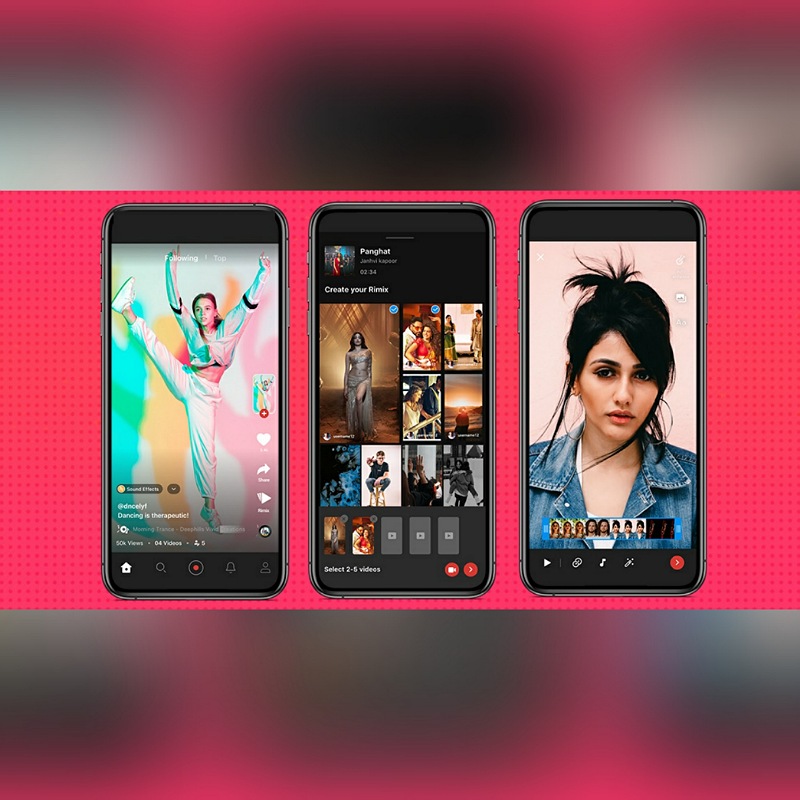
    This feature allows users to make video mashups using two to five videos within a matter of a few seconds. Users can either choose existing videos from the Rizzle app or record their own videos, add a soundtrack of their choice, and share their masterpiece with the world. 

    According to a statement issued by Rizzle, Rimix is the industry’s first-of-its-kind spec that empowers users to create personalised short videos that are unique to them.

    Developers at Rizzle have created Rimix as a user-friendly feature, and a person does not need extensive prior knowledge of advanced video editing tools to create mashups. Rimix has been introduced at a time when other short video platforms in the industry are trying to reinvent the 'duet' feature launched around four years ago. 

    "At Rizzle we constantly strive to empower all our users to become creators of content. And with Rimix, we are a step closer to our goal. Rimix allows all our users- with no to minimum to advanced video editing skills, to create videos and share their stories," said Rizzle marketing head Sapna Patel. 

    Rizzle’s music library has 35,000+ tracks owing to their partnerships with Sony Music Entertainment and Aditya Music. This, combined with Rimix, can bring about a wide variety of exciting user generated content.

    It may be recalled that Instagram has rolled out a new feature called Remix on its Reels platform, which essentially lets users upload a video next to another user's, building on top of the original clip – similar to TikTok's duet function. What the Mark Zuckerberg-owned platform’s reaction to the similar-sounding ‘Rimix’ will be is anyone’s guess.

  • Instagram follows TikTok, launches ‘Remix’ on Reels

    Instagram follows TikTok, launches ‘Remix’ on Reels

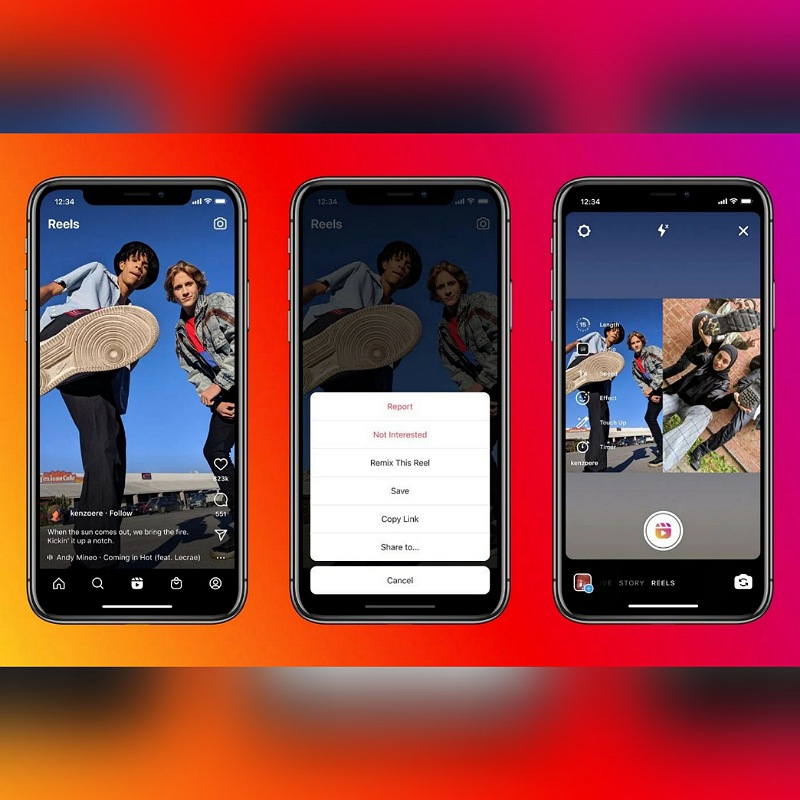
    NEW DELHI: In a bid to overpower short-video platform TikTok, image sharing app Instagram has rolled out a new feature called Remix. The Remix feature allows users to remix reels which means they can upload a video next to another user's, building on top of the original clip.

    To launch the Remix feature, users should click on the three dots that show up on the top right corner of the Reel, and choose Remix This Reel option. While using this feature, the screen will split into two parts; one part will carry the original reel, while the second will be your new reel. After recording, users can control the volume for the original audio, your recorded audio, and can even add a voiceover. 

    A similar feature is already popular in TikTok under the duet, and is being widely used for dance challenges. As TikTok is banned in India, Instagram believes that its new feature will garner huge popularity in the country. 

    "Remix lets you create your own Reel, along-side an existing reel. Interactive tools like Live Rooms, polls and questions in Stories, and AR effects have always been a huge part of how people connect on Instagram," said Instagram in a recent statement. 

    Facebook-owned Instagram had launched Reels last year, and since then, several features have been added to it. Some of these new specs include an extension of recording time to 30 seconds, and extending the countdown timer to 10 seconds while recording. It is also possible to trim and delete audio clips from the timeline. 

    It is to be noted that the Remix option will be enabled only in newly uploaded reels. If you want older reels to be remixed by others, the feature should be enabled manually. If you do not want people remixing your reels, you should go to settings, tap on reels, and disable the option. 

  • WhatsApp, Facebook and Instagram restored after global outage

    WhatsApp, Facebook and Instagram restored after global outage

    KOLKATA: WhatsApp, Facebook and Instagram were inaccessible all over the world for a brief period on Friday. In India, services went down around 11 pm (local time) and were restored by 11.40 pm approximately.

    “Earlier today, a technical issue caused people to have trouble accessing some Facebook services. We resolved this issue for everyone, and we apologise for any inconvenience,” a Facebook spokesperson said in a statement.

    During the outage, messages were not being delivered on WhatsApp and Messenger and no content could be loaded on Instagram.

    “Some people were having issues with their Instagram accounts earlier, but we're back now. The issue's been fixed and we're sorry for the trouble,” the photo-video sharing app tweeted.

    According to the website DownDetector, more than 100,000 users reported issues with Instagram, over 24,000 users reported issues with Whatsapp, while 5,000+ users reported issues with Messenger.

    Facebook Gaming also said it has restored services. In a tweet, it has urged users to contact support or report directly from the stream if they continue to have issues going live, or see issues on a stream.

    Hashtags like ‘Facebook down’ and ‘WhatsApp down’ started trending on Twitter, with the widespread service outage giving fuel to meme makers. Some took a dig at the Mark Zuckerberg-owned family of apps by saying they were now more motivated to or had already switched to rival apps like Telegram and Signal.

    “Signal registrations are through the roof; welcome everyone. Solidarity to the folks working on the WhatsApp outage. People outside of the tech industry will never understand how weird it sounds when someone says that they are "looking forward to some weekend downtime," Signal tweeted while many users complained about the outage.

  • Donald Trump barred from Facebook ‘indefinitely’

    Donald Trump barred from Facebook ‘indefinitely’

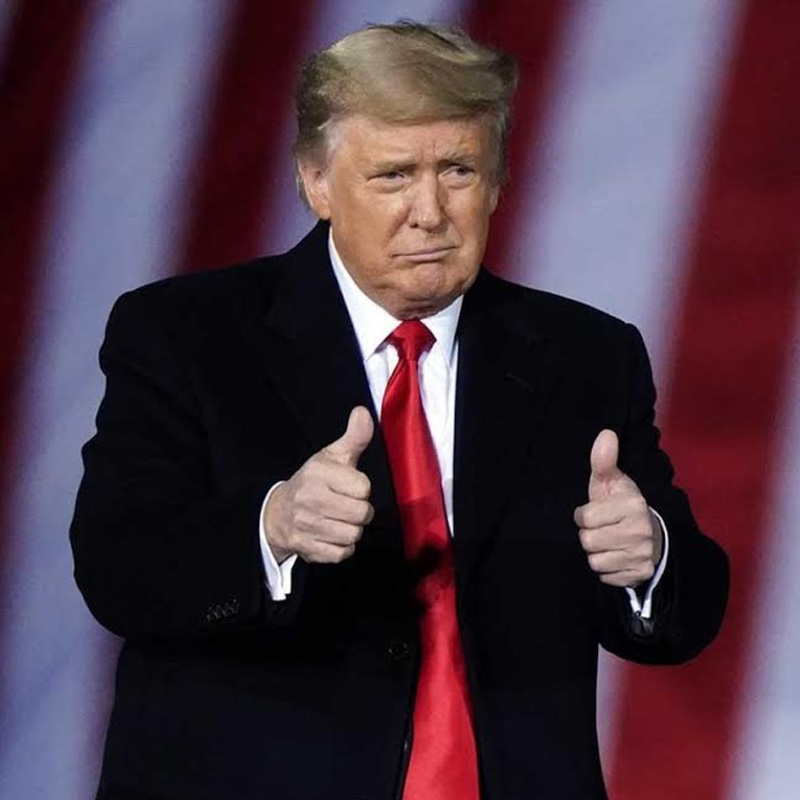
    NEW DELHI: Facebook has indefinitely banned US president Donald Trump from its platform after he tried to incite violence at the US Capitol earlier this week.

    Mincing no words, a far cry from the social media giant’s prior treatment of Trump with kid gloves, Facebook founder and CEO Mark Zuckerberg stated that the president intends to use his remaining time in office to undermine the peaceful and lawful transition of power to his elected successor, Joe Biden.

    “We believe the risks of allowing the president to continue to use our service during this period are simply too great,” he wrote in a community post. As a result, he said, Facebook and its photo-sharing site Instagram would extend blocks on Trump’s ability to post “until the peaceful transition of power is complete.”


    The shocking events of the last 24 hours clearly demonstrate that President Donald Trump intends to use his remaining…

    Posted by Mark Zuckerberg on Thursday, 7 January 2021

    Trump is also banned from using Instagram.

    Earlier in the day, when Trump made false claims about election fraud and the legitimacy of the next US president Joe Biden, nearly all social media platforms – Twitter, Facebook, Instagram and Snapchat — locked his account for a brief period. Facebook imposed a ban for 24 hours and Twitter for 12 hours. The latter also asked the US president to remove three tweets for severe violation of its civic integrity policy, and failing to do so would lead to permanent suspension of his account.

    Trump’s Twitter account had been unlocked at the time of filing this report.

    The diverging actions showed how social media companies were still grappling with how to moderate one of their most powerful and popular users. Trump has routinely used his online mouthpieces to attack others, rile up supporters and disseminate disinformation, and these social media platforms had offered platitudes of “upholding free speech” to defend their inaction in the matter of not curtailing such provocative posts.

    YouTube had also removed the video where Trump told his supporters who had broken into the Capitol ‘I love you’ and described the agitators as patriots. The platform also cited that the video violated its policies. 

    The march was partly organised online, including on Facebook groups and pages. Facebook has mentioned that it was looking for and removing content that had incited or supported the storming of Capitol Hill. The violence at the US Capitol led to the death on one person and several injured.  

  • A Bra Ka D Bra is a takedown of the culture of body shaming

    A Bra Ka D Bra is a takedown of the culture of body shaming

    NEW DELHI: Insecurities. Everyone has them. Stemming from the perception of how others see us. In the age of Instagram we’re all on display, and for many people, their self-esteem hinges on that one ‘heart’ from virtual strangers. Even though no two bodies are alike, and there is no right way to be beautiful, we’re all chasing that unattainable ideal – be it bubble booties, thigh gaps or perfectly plump bosoms.

    Which brings us to the heart of the movie A Bra Ka D Bra – the story of a young woman struggling to accept the fact that she is flat-chested. Her struggle is very real and very valid, for she inhabits a society where adolescent girls put women like Kim Kardashian and Kylie Jenner on a pedestal and want to look like them in the hopes of one day getting a taste of their high-rolling lifestyle. While the protagonist Bani may not aspire to be a Kardashian, she is exceedingly conscious of her own lacking assets, a fact that is rubbed in her face at every turn by family members, peers and even random passers-by. Her cousin knowledgeably points out to her – bada hai tabhi to behtar hai (Bigger is better) – which perfectly sums up the mindset of people today.

    Living in this toxic environment does a number on Bani, who resorts to every trick in the book, from creams to padding, to give her cup size a boost. While these scenes may have been presented humorously, they also highlight the insidious effect that body image issues and body shaming can have on a person’s psyche. Bani, played brilliantly by Prachi Bansal, is far from defined by her boobs (or lack thereof). She is a confident ace basketball player, a starry-eyed small town girl who moves to the big city, and dreams of fulfilling her passions and finding love. Yet her vibrant personality and busy life are gradually overshadowed by one aspect of herself that she is insecure about – which society has conditioned her to believe is the be-all and end-all of being a woman.

    Like any teenage girl, Bani wants to fit in, make friends, have a lit college life – so when nature fails her, she takes matters into her own hands and stuffs her bra with fake pads. The scheme pays off – for a while. The pads hamper her when she plays, so she quits basketball. It also attracts an unwelcome suitor, which leads to unsavoury consequences. Eventually, the pretence and lies catch up with Bani, pushing her into despair and making her consider an extreme and irreversible step.

    But thanks to her clueless but supportive father, better sense prevails. The message is clear: love yourself. Acceptance and being comfortable in your skin may be hard to come by, but its better than kowtowing to superficial standards of beauty that invariably take a toll on one’s self-esteem.

    Bani’s story is a reality that millions live with. Some are unhappy with the shape of their body, some with their height, others with their skin tone. They are trolled and shamed both online and offline; they are depressed and filled with self-loathing. Producer Shyamashis Bhattacharya and director Neelima Bajpai take up a bold subject to explore in their maiden venture for the big screen and they execute it well. Bani’s inner turmoil and frustration with the world that constantly looks down on her is showcased with a deft hand by the writing team comprising Bajpai, Amit Babba and Indira Bisht. The screenplay could have been more cohesive and flown better, but doesn’t detract from the overall impact of the story. The supporting cast also leaves an impression – Avinash Mishra is Vidyut, the lovable himbo Bani crushes on; Poulomi Das plays the prickly friend Shanti and Luv Vispute shines as the happy-go-lucky confidant with a few secrets of his own.

    A Bra Ka D Bra is a step in the right direction. It’s a wake-up call for a society obsessed with outward appearances, and a shot in the arm for those lacking in body confidence. The film can be streamed online as a pay-per-view on BookMyShow.