Tag: INSAT

  • Revised guideline for rational pricing of satellite transponders soon, says Govt

    Revised guideline for rational pricing of satellite transponders soon, says Govt

    NEW DELHI: The government is processing a revised policy guideline for allocation and pricing of transponders based on the review and approval of INSAT Co-ordination Committee (ICC) and Space Commission.


    Parliament was told on 23 July by Department of Space Minister in charge Jitendra Singh that the new guideline envisages a rational classification structure for users such as strategic, government including societal, not-for-profit PSUs and commercial to form a basis for allocation and pricing of transponders. 

    At present, there are 12 INSAT/GSAT satellites in orbit, out of which 10 are communication satellites and two are meteorological satellites. In INSAT/GSAT satellite system there are 41 government users and 59 non-government users are utilising the capacity in C band, extended C band and Ku band to the extent of 152 transponders (36 MHz equivalent each). 

    At present, a uniform pricing policy is implemented for all categories of users. However, a multi-pricing policy for transponders is under the consideration of the government as INSAT systems transponders are utilised for non-profit purposes viz. governmental, societal, strategic as well as for commercial purposes. 

  • GSAT-15 and GSAT-16 get the go ahead from the Cabinet

    GSAT-15 and GSAT-16 get the go ahead from the Cabinet

    MUMBAI:Two Indian birds are on the way to Indian skies in the next two to three years (if launch schedules are kept). The Union Cabinet earlier today gave its approval to the proposals from the Indian Space Research Organisation (Isro) to enhance its satellite capacity through the GSAT-15 and GSAT-16 communication satellite projects. The government‘s nod now allows it to go ahead with its process to get a good launch partner as well as the required insurance cover for the two satellites.

    In the past decade, Isro has relied on commercial launch consortium Arianespace as its launch partner for a majority of its big bird communication launches from Kourou, French Guiana.

    GSat-15 and GSat-16 are part of Isro‘s efforts towards building in-orbit spare capacity to meet contingency requirements and to protect the services of existing users.

    GSat-15 (similar to GSat-10 which is yet to provide services to its clients despite a launch some nine months ago) is slated to be put together and launched in 18 months at an approved cost of Rs 859.5 crore. As compared to this, GSat-10 cost the agency around Rs 750 crore at the time of its launch in September 2012.

    GSat-15 will provide required redundant capacity, will augment Ku-band capacity, and shall provide in-orbit redundant requirement of safety of life operations benefitting civil aviation services in the country. It will be located at 93.5 degrees east with a payload of 24 Ku-band transponders with an EIRP of 52 dBW.

    On the other hand, GSAT-16 has an approved satellite production and launch budget of Rs 865.50 crore with a launch timeline of 24 months. It is targeted to meet contingency requirements, protect services of existing users and will augment and support existing telecommunication, television, VSAT and other satellite based services in the country

    The satellite will have 48 transponders providing C-band, extended C-band, and Ku-band frequencies (24 normal C, 12 extended C and 12 Ku-band). Its Ku-band beacon transmistter is expected to be the highest for an Indian satellite. G-Sat 16 is to be co-located with GSat-8 at 55 degrees East.

    Isro currently has nine operational INSAT/GSAT satellites in orbit with nearly 195 transponders providing different frequency bands to its customers.

    Its Insat 3D meteorological satellite has already been lined up for a 25 July launch using an Ariane 5 launch vehicle from Kourou, French Guiana.

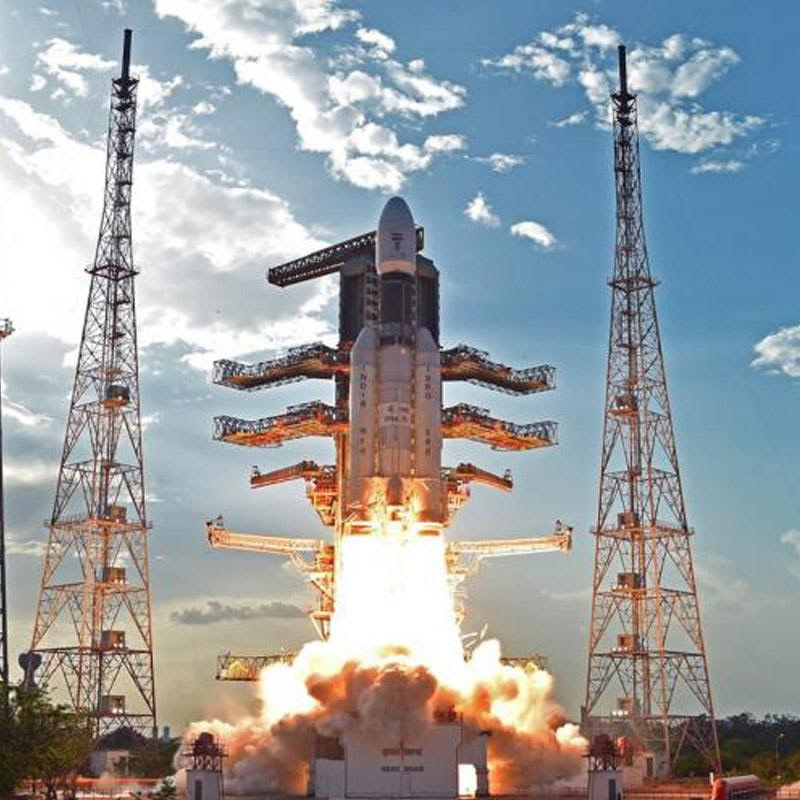
  • Insat-4B to launch on 10 March

    Insat-4B to launch on 10 March

    MUMBAI: The Indian Space Research Organisation (Isro)-built INSAT-4B, which is mainly meant for direct-to-home (dth) television services, is slated for launch from the European spaceport of Kourou in French Guiana on 10 March.

    The Rs 3 billion telecom satellite, which is identical to INSAT-4A, carries 12 Ku-band and 12 C-band transponders. European space consortium Arianespace will carry out the launch. It will cost around $ 50 million, according to a press release.

    As had been reported last month by Indiantelevision.com one likely customer for the KU band transponders is Kalanithi Maran’s Sun Group, which had booked space last year on the failed Insat-4C for its DTH venture Sun Direct.

    Sun TV had booked six transponders for DTH and one for DSNG (digital satellite news gathering) on Insat-4C.

  • Another Intersputnik satellite gets into orbit

    Another Intersputnik satellite gets into orbit

    Intersputnik’s Express-6A satellite was launched successfully on 12 March (Moscow Time). The satelllite to be located at 80 degrees East, is positioned as a bird that will significantly improve communications capacity across Russia and was lifted off Kazakhstan’s Baikonur Cosmodrome aboard a Proton launch vehicle. Under an agreement with the Russian Satellite Communications Company (RSCC), Intersputnik will utilize the major part of Express-6A’s 17 transponder strong C- and Ku-band relay capacity.

    Express-6A will replace the aging Express-6 spacecraft currently in orbit and allows Intersputnik’s customers to use earth stations without tracking systems, and providing a higher quality of services.

    “The successful launch of Express-6A is the next step in modernizing Intersputnik’s communications system,” Gennady Kudryavtsev, Intersputnik’s Director General, said. “The new Express-A series of spacecraft provides a longer service life, more capacity and higher radiated power. Express-6A will carry all of the television channels currently handled via Express-6, and also will be used for new digital communications and broadcasting channels including relay in Ku-band.”

    In addition to traditional services such as analog broadcasting and public switched telephone networks, Express-6A also will provide such services as digital television and radio broadcasting, Internet access and dedicated corporate VSAT-based Ku-band networks. Users of the Express-6A include such Russian television channels as TV-6, TV-Centre, AST; large telecommunications network operators (Rustel); dedicated networks operators (Insat, Sirena), and telephone companies from Intersputnik’s member nations.

    The second satellite in the new Express-A series is Express-3A, which is to be launched in June and positioned at 11 degrees West. This spacecraft will replace the aging Statsionar-11 (Gorizont-26) satellite. Express-3A will allow Intersputnik to offer more satellite channels to telecommunications companies interested in transAtlantic traffic.

    Russia’s Krasnoyarsk-based NPO PM is prime contractor for the Express-A-series satellites. The satellite bus is developed by NPO PM, while Alcatel Espace of France supplies the payload.