
Tag: INSAT satellites

  • Zee Telefilms plans to launch religious channel – Jaagaran- this month

    Zee Telefilms plans to launch religious channel – Jaagaran- this month

    NEW DELHI: The Subhash Chandra-promoted Zee Telefilms is at it again. And this time it wants to add a religious channel to the stable.

    The proposed religious channel, to be called Jaagaran, is slated for a launch some time this month via Asiasat 3S and INSAT satellites. The stable already boasts of about 15 channel brands, including the ones that are part of the DTH package.

    Confirming to indiantelevision.com Zee Tele vice-chairman Jawahar Goel said, “We had some spare transponder capacity and lot of religion-related material in our library. So, we thought that we should start a religion-oriented channel.”

    At the moment, a host of religious channels received in Indian cable homes include Aastha, Sanskar, CMM, ETC (partly showing live Gurbani from the Golden temple in Amritsar) and an English channel- Miraclenet beamed from abroad.

    Jaagaran (in Hindi it means to be awakened to the truth), however, would be slightly different from the others of its ilk in the sense that apart from religious discourses, it would also have religious serials (may be like Ramayan) and movies.

    There is no dearth of religious movies and TV serials in India. Several such serials have had a great inning on various TV networks, including Doordarshan, Sony and Star. The series have kept the nation hooked on to mythology and tales from the ancient Indian scriptures and epics.

    Zee Tele is open to commissioning new religious serials for its proposed channel as also buying stuff off the shelf wherever available.

    Whether the channel would be started in a pay mode or as a digital free to air is still not clear as Zee Telefilms is not revealing the final script.

    But what becomes evident is that Zee is preparing itself with all genres of channels and trying to be ready for a regime when conditional access becomes a reality and niche channel would have their own place in such on-demand scenario. DTH is certainly one such scenario, but at the moment Zee and ASC Enterprise combine’s DTH package cannot take more than 48 channels, which it already has.

    Religious channels are slowly but surely creating their small spaces under the advertising sun. Quite a few advertisers, like manufacturers of herbal tea and incense sticks, have started buying airtime on religious channels whose rates are low if compared to even news channels or regional music channels.

    The Zee scrip, which has been dancing to the bull tune that is playing out in the Indian stock markets, was quoting at Rs 159.90 on the Bombay Stock Exchange at 14.52 hours, signifying a 3.16 per cent gain over the last closing. On the National Stock Exchange, the scrip was being quoted at Rs 159.70 at 15.05 hours today.

    Of late, the scrip has been northward bound on reports of subscription revenue from its pay channels increasing by the time the company closes the financial year on 31 March. This had also been aided with media reports suggesting that conditional access system would finally become a reality in true sense, starting off from South Delhi.

    So, additions to the Zee family of channels would always make sense as long as the company doesn’t splurge money on its niche new ventures, a Delhi-based capital markets experts said.
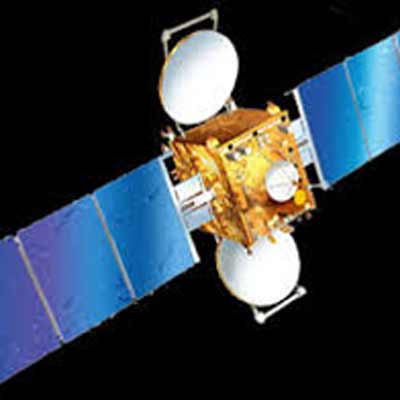

  • INSAT 3C dedicated to the nation

    INSAT 3C dedicated to the nation

    Prime minister Atal Behari Vajpayee this morning dedicated newly launched indigenous satellite INSAT 3C to the nation.

    At a function at the Delhi Earth Station, Atal Behari Vajpayee also inaugurated the telemedicine project for the Andaman and Nicobar Islands. The function was telecast live on Doordarshan National at 11 am. ISRO chairman Dr K Kasturirangan also presented models of INSAT 3C to the prime minister and to minister of state for space Vasundhara Raje, also present on the occasion.

    The INSAT 3C, that has strengthened India’s communication, broadcast and meterological capabilities and is currently positioned 36,000 km above Earth was also instrumental in carrying the event live on DD National today, officials said.

    The Indian National Satellite(INSAT) is a multipurpose space system for communication, broadcasting and meteorological services. INSAT-3C, carrying Fixed Satellite Services (FSS) transponders, Broadcast Satellite Services (BSS) transponders and Mobile Satellite Services (MSS) transponders is intended to continue the services of the earlier INSAT-2DT and INSAT-2C, which are nearing the end of their life, besides improving and augmenting the Insat system capacity. 

    INSAT-3C, launched on 24 January this year is the second satellite of the INSAT-3 series; the first satellite, INSAT-3B was launched in March 2000. Another three satellites INSAT-3A, INSAT-3D and INSAT-3E are planned to be launched under INSAT-3 series in the coming years. Like all other INSAT satellites, INSAT-3C is controlled from the Master Control Facility at Hassan in Karnataka. 

    The telemedicine project for the Andaman and Nicobar Islands, on the other hand, will help provide expert medical services to rural and remote areas, helping link hospitals and remote areas through Insat satellites. The G D Pant Hospital in Port Blair will be linked to the SRNC in Chennai initially, officials announced at the function.

  • Agrani satellite transponders to be used for DTH platform

    Agrani satellite transponders to be used for DTH platform

    After Star, it is the turn of the Subhash Chandra-controlled Essel Group promoted ASC Enterprises Limited (ASCEL) to apply for a DTH license.

    Agrani Satellite Services Limited (an ASC Enterprise) has signed a turnkey satellite contract for India’s first private sector satellite initiative, thus agreeing to procure a geostationary, C & Ku band satellite from Alcatel Space Industries of France. The deal involves ‘in-orbit delivery’ of the satellite and a ground control station by Alcatel and Arianespace will provide the Launch Services. The project is estimated to cost Rs11 billion.

    According to the information available, seven to 10 transponders on the satellite will be used for the DTH platform, while the remaining will be used for telecom purposes. There is no clear word though when the company proposes to launch the DTH platform. This will depend in large measure.

    The high power KU band spot beam of the proposed Agrani satellite is ideally suited for Direct to Home signals, as well as to provide domestic bandwidth to various Telecom and Internet Service Providers, analysts said. 

    The power of the Ku band transponder(s) on the proposed Agrani satellite is designed to take care of heavy rainfall in costal and hilly areas of the country.

    “The project will save foreign exchange out flow, enable TV channels to be up-linked from Indian soil using Indian Satellite system,” a senior executive of an Indian-controlled broadcasting company opined.

    ASSL is the first Indian private satellite system to be authorised by the Government of India under May 2000 SatCom policy framework. The Government has also approved the equity participation of Alcatel and Arianespace in ASSL.

    Government of India’s Satcom policy announced in May 2000 and operationalised in November 2000 allows private Indian companies to launch, own, operate and maintain private satellite systems as Indian registered satellite.

    The policy also allows preference treatment to the Indian registered satellite (including the INSAT Satellites which have also been allowed to be used by Private Indian Companies); if suitable capacity is available on INSAT or Private Indian Satellite Systems, the service provision of any kind on the Foreign Satellite will not be permitted. Currently India uses more than 80 transponders on different foreign satellites.

    Other than INSAT, ASSL will be the only satellite system to offer C-band capacity on an India-only coverage beam. Other Asian satellites have Asia-coverage beams that result in lower downlink power levels in India.

    ASSL’s Ku-band capacity offering features a high downlink power in India compared to the best available in the region, and a unique India-Europe connectivity that is suitable for Internet backbone access. ASSL also has the ability to offer turnkey bundled solutions and technical consulting services for India-specific requirements.

    The Agrani transponders will support a broad range of applications ranging from TV broadcasting and DTH to rural and remote area communications, providing telecom media diversity along critical long distance routes to improve resilience against natural or man made disasters, private and public VSAT networks, domestic and international Internet backbone bandwidth as well as direct access and international connectivity among others.