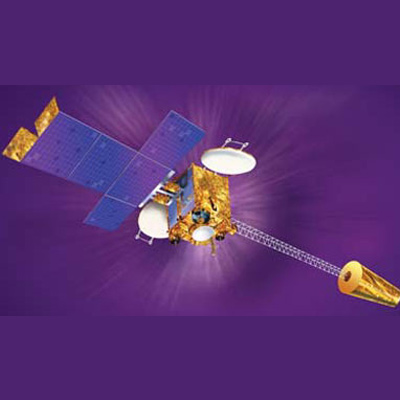
Tag: Insat-4B

  • 13 indigenous communication satellites over Indian skies

    13 indigenous communication satellites over Indian skies

    New Delhi: Thirteen of the 34 Indian satellites operational in the country are communication satellites.  

    These sare: INSAT-3A, INSAT-3C, INSAT-4A, INSAT-4B, INSAT-4CR, GSAT-6, GSAT-7, GSAT-8, GSAT-10, GSAT-12, GSAT-14, GSAT-15 and GSAT-16.  The others include 12 Earth Observation Satellites; seven Navigational Satellites;and two Space science Satellites. 
    About 30 service providers are utilising Ku-band (a part of K band) transponders onboard indigenous communication satellites for various communication applications, which include direct-to-home television, digital satellite news gathering, telecommunication, VSAT services for banking, tele-education, business communication. The government is not seeking any foreign assistance/collaboration for satellite operations, Space Department minister Jitendra Singh has told Parliament. 

    The Indian Space Research Organization has an action plan in place for developing indigenous satellites, with the participation of Indian industries, for earth observation, communication, navigation and space science and planetary exploration. 

    Meanwhile, ISRO has signed MoU/ cooperative agreements for exploration and use of outer space with 37 countries viz. Argentina, Australia, Brazil, Brunei Darussalam, Bulgaria, Canada, Chile, China, Egypt, France, Germany, Hungary, Indonesia, Israel, Italy, Japan, Kazakhstan, Kuwait, Mauritius, Mexico, Mongolia, Myanmar, Norway, Peru, Republic of Korea, Russian Federation, Saudi Arabia, Spain, Sweden, Syria, Thailand, The Netherlands, Ukraine, United Kingdom, United Arab Emirates, United States of America and Venezuela. 

    The fields to explore newer research activities addressed in these MoUs include Joint development of advanced scientific instruments to observe earth and universe; joint realization of satellite missions; jointly carrying out calibration and validation experiments; conducting airborne campaign with advanced instruments; deep space navigation and communication support for space science missions; development of advanced technologies for building and launching of spacecrafts for earth observation and space science exploration. 

    Application possibilities in the field of remote sensing addressed in these MoUs include – natural resource management; vegetation biomass estimation; meteorological & oceanographic applications; atmospheric parameter retrieval & modelling; climate monitoring and weather forecasting; disaster management support.

  • 13 indigenous communication satellites over Indian skies

    13 indigenous communication satellites over Indian skies

    New Delhi: Thirteen of the 34 Indian satellites operational in the country are communication satellites.  

    These sare: INSAT-3A, INSAT-3C, INSAT-4A, INSAT-4B, INSAT-4CR, GSAT-6, GSAT-7, GSAT-8, GSAT-10, GSAT-12, GSAT-14, GSAT-15 and GSAT-16.  The others include 12 Earth Observation Satellites; seven Navigational Satellites;and two Space science Satellites. 
    About 30 service providers are utilising Ku-band (a part of K band) transponders onboard indigenous communication satellites for various communication applications, which include direct-to-home television, digital satellite news gathering, telecommunication, VSAT services for banking, tele-education, business communication. The government is not seeking any foreign assistance/collaboration for satellite operations, Space Department minister Jitendra Singh has told Parliament. 

    The Indian Space Research Organization has an action plan in place for developing indigenous satellites, with the participation of Indian industries, for earth observation, communication, navigation and space science and planetary exploration. 

    Meanwhile, ISRO has signed MoU/ cooperative agreements for exploration and use of outer space with 37 countries viz. Argentina, Australia, Brazil, Brunei Darussalam, Bulgaria, Canada, Chile, China, Egypt, France, Germany, Hungary, Indonesia, Israel, Italy, Japan, Kazakhstan, Kuwait, Mauritius, Mexico, Mongolia, Myanmar, Norway, Peru, Republic of Korea, Russian Federation, Saudi Arabia, Spain, Sweden, Syria, Thailand, The Netherlands, Ukraine, United Kingdom, United Arab Emirates, United States of America and Venezuela. 

    The fields to explore newer research activities addressed in these MoUs include Joint development of advanced scientific instruments to observe earth and universe; joint realization of satellite missions; jointly carrying out calibration and validation experiments; conducting airborne campaign with advanced instruments; deep space navigation and communication support for space science missions; development of advanced technologies for building and launching of spacecrafts for earth observation and space science exploration. 

    Application possibilities in the field of remote sensing addressed in these MoUs include – natural resource management; vegetation biomass estimation; meteorological & oceanographic applications; atmospheric parameter retrieval & modelling; climate monitoring and weather forecasting; disaster management support.

  • DD Free Dish to include more channels in MPEG 2, DD denies glitches in satellite migration

    DD Free Dish to include more channels in MPEG 2, DD denies glitches in satellite migration

    NEW DELHI: Even as the migration to MPEG 4 will commence from April, Prasar Bharati is making attempts to increase the capacity of television channels that can be carried by its free-to-air DTH platform DD Free Dish under the existing MPEG 2.

    While declining to give the number of channels that it will gain in MPEG 2, a Prasar Bharati source confirmed to Indiantelevision.com that the switch-over to MPEG4 will be in two phases and the aim was to take the total capacity to 112.

    The source confirmed that the channels that bid successfully in the auction being held next week will be accommodated within MPEG 2.

    Meanwhile, the source denied any glitches in the transfer of DD Free Dish channels from INSAT 4B to GSAT 15 and said clear guidelines had been given to all channels on the steps they had to take in the regard and the Engineering section of Doordarshan was stepping in wherever needed. The source also said that it had been responding to calls from various channels in this connection.

    Asked why the ratings of some popular channels were falling on DD Free Dish, the source added that this was a question best answered by the channels.

    The official was reacting to a comment that even after the Broadcast Audience Research Council (BARC) India had commenced including rural area ratings in its weekly reports, there had been no perceptible increase in the figures of DD viewership despite claims by the pubcaster that it has the largest viewership in the country.

    The source said the popularity of DD Free Dish could be gauged from the fact that Aaj Tak and Big Magic, which are pay channels, were being run as FTA on Free Dish.

    A DD source added that the viewership of Big Magic, which had earlier been on Free Dish but had left it early this year had seen a steep fall and the channel had decided to come back on the platform.

    DD Free Dish is adopting the conditional access system (CAS) designed by the Bangalore-based ByDesign India Pvt Ltd.

    The ByDesign model is totally indigenous and built for DVB-C setup. This CAS solution will enable broadcasters and network operators to control access to their services by viewers, and thereby enabling them to extend their business models to subscription based schemes.

    This will mean that the Free Dish will become encrypted but will remain FTA. In addition to helping increase the number of channels on the platform, this will enable Free Dish to gauge the exact number of households relying on Free Dish as encrypted set top boxes will only be available with authorised dealers.
    DD Free Dish currently has 64 channels including its own channels and Rajya Sabha and Lok Sabha TV. It also carries channels of All India Radio.

    The ByDesign CAS is provided by making access possible to the content, depending on subscriber credentials, which are generated by this CAS and sent through the broadcast system to receivers in the field. 

    Doordarshan has for the first time made a conscious effort to attract regional television channels by fixing a lower reserve of Rs 2 crore even as the price for the other channels remains the Rs 4.3 crore for its 26th e-auction slated for 15 February.

    This has been done considering the tremendous reach of DD Free Dish in semi-urban and rural areas all over the country.

    Reserved slot for regional language channel includes only Non-Hindi Channels (News or Non-News). Bhojpuri channels and Hindi regional channels have been kept as part of the general slots.

  • DD Free Dish to include more channels in MPEG 2, DD denies glitches in satellite migration

    DD Free Dish to include more channels in MPEG 2, DD denies glitches in satellite migration

    NEW DELHI: Even as the migration to MPEG 4 will commence from April, Prasar Bharati is making attempts to increase the capacity of television channels that can be carried by its free-to-air DTH platform DD Free Dish under the existing MPEG 2.

    While declining to give the number of channels that it will gain in MPEG 2, a Prasar Bharati source confirmed to Indiantelevision.com that the switch-over to MPEG4 will be in two phases and the aim was to take the total capacity to 112.

    The source confirmed that the channels that bid successfully in the auction being held next week will be accommodated within MPEG 2.

    Meanwhile, the source denied any glitches in the transfer of DD Free Dish channels from INSAT 4B to GSAT 15 and said clear guidelines had been given to all channels on the steps they had to take in the regard and the Engineering section of Doordarshan was stepping in wherever needed. The source also said that it had been responding to calls from various channels in this connection.

    Asked why the ratings of some popular channels were falling on DD Free Dish, the source added that this was a question best answered by the channels.

    The official was reacting to a comment that even after the Broadcast Audience Research Council (BARC) India had commenced including rural area ratings in its weekly reports, there had been no perceptible increase in the figures of DD viewership despite claims by the pubcaster that it has the largest viewership in the country.

    The source said the popularity of DD Free Dish could be gauged from the fact that Aaj Tak and Big Magic, which are pay channels, were being run as FTA on Free Dish.

    A DD source added that the viewership of Big Magic, which had earlier been on Free Dish but had left it early this year had seen a steep fall and the channel had decided to come back on the platform.

    DD Free Dish is adopting the conditional access system (CAS) designed by the Bangalore-based ByDesign India Pvt Ltd.

    The ByDesign model is totally indigenous and built for DVB-C setup. This CAS solution will enable broadcasters and network operators to control access to their services by viewers, and thereby enabling them to extend their business models to subscription based schemes.

    This will mean that the Free Dish will become encrypted but will remain FTA. In addition to helping increase the number of channels on the platform, this will enable Free Dish to gauge the exact number of households relying on Free Dish as encrypted set top boxes will only be available with authorised dealers.
    DD Free Dish currently has 64 channels including its own channels and Rajya Sabha and Lok Sabha TV. It also carries channels of All India Radio.

    The ByDesign CAS is provided by making access possible to the content, depending on subscriber credentials, which are generated by this CAS and sent through the broadcast system to receivers in the field. 

    Doordarshan has for the first time made a conscious effort to attract regional television channels by fixing a lower reserve of Rs 2 crore even as the price for the other channels remains the Rs 4.3 crore for its 26th e-auction slated for 15 February.

    This has been done considering the tremendous reach of DD Free Dish in semi-urban and rural areas all over the country.

    Reserved slot for regional language channel includes only Non-Hindi Channels (News or Non-News). Bhojpuri channels and Hindi regional channels have been kept as part of the general slots.

  • DD Freedish set to beam up to 250 channels under 12th Plan

    DD Freedish set to beam up to 250 channels under 12th Plan

    NEW DELHI: Doordarshan’s free-to-air (FTA) direct-to-home (DTH) Freedish, which currently has only 64 slots for television channels and is expected to go up to 112 by March-end, has received a shot in the arm for upgradation to 250 TV channels under the 12th Plan.

    Information and Broadcasting Minister Arun Jaitley told Parliament that the Department of Space had agreed in principle to provide additional transponders on new GSAT 15 satellite required for 250 TV channels

    Meanwhile, he said that DD was facing issues in implementing Conditional Access System (CAS), which is a part of upgraded system. But it had now decided to adopt Indian Conditional Access System (Indian CAS), which is being finalised by Department of Electronics and Information Technology. As was reported earlier by Indiantelevision.com, DD is acquiring the Bangalore based ByDesign India’s CAS.

    Late last year, the Department of Electronics and Information Technology (DeitY) approved a proposal by ByDesign India to develop an Indian conditional access system. ByDesign was to receive a support amount of Rs 19.79 crore from DeitY to develop the new system in association with Centre for Development of Advanced Computing (C-DAC).

    The ByDesign model is totally indigenous and built for DVB-C setup. This CAS solution will enable broadcasters to control access to their services by viewers, and thereby enabling them to extend their business models to subscription based schemes. 

    Apart from the TV channels, Freedish also beams 21 All India Radio (AIR) channels. 

    DD director general C Lalrosanga had earlier told Indiantelevision.com that the DTH player will switch over to MPEG 4 from the current MPEG 2 in two phases. “The first phase may begin by early next month,” he informed.

    Meanwhile even as regional channels of DD switched over to INSAT 4B, DD’s main channels have also shifted to GSAT 10, which was launched in September 2012. The regional channels were shifted in view of End of Life (EOL) of INSAT-3A as declared by Indian Space Research Organisation. Four new transponders have been provided for these channels on INSAT-4B by ISRO. 

    It has 12 Ku-Band, 12 C-Band and 6 lower extended C-Band Transponders. 

    Now GSAT 10 started transmission on C-Band transponders.

    The channels that have been switched to GSAT 10 are DD National, DD News, DD Bharati, DD Sports, DD Urdu, DD India, Rajya Sabha TV and DD HD.


    Department of Space sources told this website that GSAT 15 satellite will ultimately accommodate Freedish, as it has more capacity of transponders to provide more bandwidth and better coverage. 

    GSAT-15 satellite, launched recently, has planned its mission for 12 years and this satellite will be located at same direction of INSAT-3A / INSAT-4B satellite at 93.5° East Longitude.

    GSAT-15 carries 24 Ku-band transponders with 36 Mhz high bandwidth.

    GSAT-15 also has two GAGAN navigational payloads and 2 Ku-Band beacons. This satellite will be use mainly for Direct to Home services, radio navigation services and VSAT services.

  • ISRO’s GSAT-15 launch on 11 November; DTH to benefit

    ISRO’s GSAT-15 launch on 11 November; DTH to benefit

    NEW DELHI: Even as Indians are celebrating the festival of lights, a new bird  from the Indian Space Research Organisation (ISRO) is set to be blasted off into geostationary orbit come early 11 November from Kouro in French Guiana.  The satellite GSAT-15 – with its 24 Ku-band transponders – is going to provide a lifeline to India’s DTH television operators.


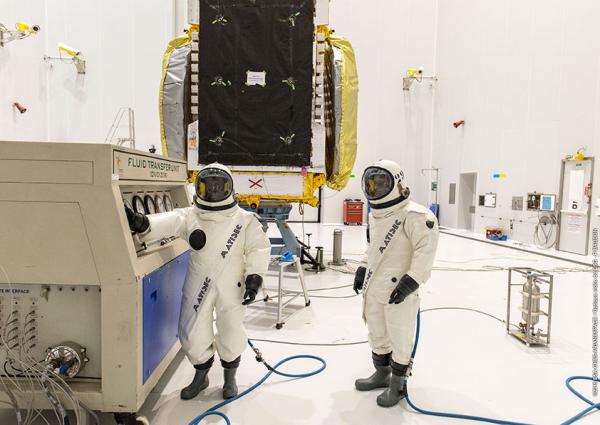
    It is currently waiting at the launch pad as a payload of an Ariane 5 Rocket  – launch firm Arianespace’s trusted launcher – in launch complex No 3 in Kouru. The satellite cost – including the launch fee – is at Rs 860 crore.


    The GSAT-15 will replace two older birds – INSAT-3A and INSAT-4B – both are which are at the fag end of their lives. INSAT 3A will expire in November while 4b will cease functioning later next year.


    Most of the transponder capacity on these two satellites is being utilized by Prasar Bharati’s DD and  DTH operators FreeDish and  Sun Direct, according to satellite TV tracker Lyngsat.


    GSAT-15 will thus see these services being shifted to its transponders, which will also serve the needs of VSAT operators who offer Digital satellite news gathering operations to India’s news channels. It will also be carrying as a GPS-Aided GEO Augmented Navigation (GAGAN) payload operating in L1 and L5 bands as  a backup service for airlines and other users of augmented GPS-based system.  According to ISRO, it has a design life of 12 years and its weight will be 3,164 kg at lift-off


    The Ariane-5 VA-227 launch vehicle, which will launch GSAT 15, will also carry Arabsat-6B for Arabsat, Saudi Arabia. Arabsat-6B, to be renamed BADR-7 once in orbit, will be the ninth satellite orbited by Arianespace for use by the operator Arabsat, based in Riyadh, Saudi Arabia. It is the initial sixth-generation satellite for Arabsat’s fleet, providing broadcast, broadband and telecommunications services over the Middle East, Africa and Central Asia.


    The Ariane 5 mission will have a total payload lift performance of 9,810 kg, Arianespace said. This includes the two satellites’ mass at liftoff – 5,798 kg for Arabsat-6B and 3,164 kg for GSAT-15 – along with launcher integration hardware and Ariane 5’s dual-passenger deployment system, it added.


    The launch is planned to take place during a launch window of 21:34 and 22:17 pm coordinated universal time (around 03:04 am IST).


    Interested viewers can watch it live on http://www.arianespace.tv.

  • DD India’s Europe transmission uninterrupted by Deutsche Welle contract expiry

    DD India’s Europe transmission uninterrupted by Deutsche Welle contract expiry

    NEW DELHI: With Doordarshan’s contract with German pubcaster Deutsche Welle ending soon, the transmission of DD’s international channel DD India may go off the Hotbird European satellite.


    However, Doordarshan sources told Indiantelevision.com that DD India is available and will continue to be available to European viewers via the INSAT 4B’s connectivity with IS 20 satellite.


    Sources also said that the Prasar Bharati Board was considering various options available apart from IS 20, and will take a decision shortly.


    The agreement with Deutsche Welle was a year-long agreement on barter basis under, which India was using the German pubcaster’s transponder on Hotbird and was transmitting their German channel on an Indian satellite.


    Sources said that the stoppage of use of Hotbird will not mean depriving European viewers of DD India as the IS 20 transmission was on.

  • FTA DD Freedish to soon encrypt with MPEG-4

    FTA DD Freedish to soon encrypt with MPEG-4

    MUMBAI: Since inception, DD Freedish has been the only DTH service that hosts free to air (FTA) channels. Boasting 18 million subscribers on the platform, it soon plans to encrypt signals for its future channels.


    With nearly 60 channels in its roster, Freedish plans to encrypt future channels with MPEG-4 compression technology to take it up to 110. Speaking exclusively to indiantelevision.com, Doordarshan deputy director general CK Jain said that the auction for the encrypted channels will happen in November with the commercial roll out of set top boxes (STBs) soon after. “48 channels will be on MPEG-4 and 64 on MPEG-2. Viewers who opt for MPEG-4 STBs will be able to view a total of 112 channels, including the FTA ones,” he said.


    The extended version of Freedish will have two streams of MPEG-4 and four of MPEG-2 so that the existing subscribers can continue watching the FTA channels. Currently the DTH service has five transponders on Insat 4B and will be soon getting an additional one, taking its tally to six. “The two encrypted streams will allow us to know definite subscriber numbers,” he adds.


    Jain is confident that digitisation drive in phase III and phase IV markets will see households pick Freedish. He is also sure that the plus point would be in the new TV households. The MPEG-4 STBs will be sold at a price higher than the current Rs 1200 for MPEG-2. But Jain says that given an option to watch more channels, he expects people to pick MPEG-4 boxes.


    Both the boxes will be available for sale through its distributors. November will see the auction for the 48 encrypted slots. Broadcasters who wish to be on the MPEG-4 bands, will have to undergo the auction, including ones who are also available on FTA.

  • Rs 800 crore earmarked for two communication satellites in current year

    Rs 800 crore earmarked for two communication satellites in current year

    NEW DELHI: A budget of Rs 800 crore has been set aside for the launch of the GSAT 15 and GSAT 16 communication satellites during 2013-14.

    However, the total budget for GSAT-15 is Rs 859.5 crore and the figure for GSAT-16 is Rs 865.5 crore.

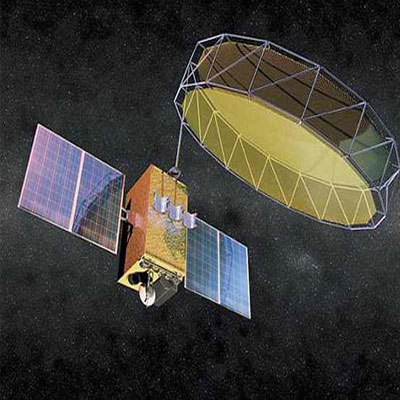
    GSAT-15 is a geostationary communication satellite which will carry 24 Ku-band transponders and one GAGAN (GPS Aided Geo Augmented Navigation) payload. GSAT-15 satellite will support the existing Direct-To-Home (DTH) and Very Small Aperture Terminal (VSAT) services in the country and the GAGAN payload will be a part of GAGAN space segment to provide better air traffic management over Indian Air Space.

    GSAT-16 is a geostationary communication satellite which will carry 24 C-band, 12 Ku-band and 12 Upper Extended C-band transponders. GSAT-16 satellite will support satellite based telecommunication, television, VSAT and other services in the country.

    GSAT-15 and GSAT-16 satellites are targeted for launch during the 2014-16 timeframe. The two satellites were approved in July this year, Minister of State in Prime Minister’s Office V Narayansamy told Parliament.

    The revenue earned by ANTRIX Corporation, the commercial arm of the department, through leasing of INSAT/GSAT transponders during the year 2012-13 is approximately Rs 482.67 crore.

    This revenue accrues from service providers of Direct-To-Home (DTH) services, TV Uplink services, Digital Satellite News Gathering (DSNG) services and Very Small Aperture Terminal (VSAT) services. This revenue does not include the capacities provided to various societal applications such a tele-education, tele-medicine, Village Resource Center, Disaster Management and part of public broadcasting services, which are not of the nature of revenue-earning services.

    At present, there are nine operational INSAT/GSAT communication satellites: INSAT-3A, INSAT-3C, INSAT-3E, INSAT-4A, INSAT-4B, INSAT-4CR, GSAT-8, GSAT-10 and GSAT-12. The total number of transponders available at present from these satellites is 195 operating in C, Extended C, Ku, and S-bands.

    Transponders on communication satellites are leased to users after the launch and operationalisation of the satellite. The Department of Space leases the transponders on INSAT/GSAT satellites through ANTRIX.

  • If transponder space unavailable on Insat-4B, Sun might opt for Measat3

    If transponder space unavailable on Insat-4B, Sun might opt for Measat3

    MUMBAI: A day after the unfortunate failure of the GSLV-F02 launch rocket carrying the Insat-4C communication satellite, it is not just India’s space establishment that has been forced to relook its plans.

    For Kalanithi Maran’s southern broadcast network Sun Group, the mishap could well mean that the launch of its direct-to-home (DTH) service sees a change of satellite operator. Sun TV had booked seven high-power Ku-band transponders, six for DTH and one for DSNG (digital satellite news gathering), of the total 12 carried by the Indian Space Research Organisation’s Insat-4C.

    The big question now is this: If Isro is not able to provide Ku-band transponder space for his DTH venture Sun Direct, will Maran opt for an alternative satellite like Malaysia’s soon-to-be-launched Measat-3?

    Maran already has a running relationship with Measat’s parent company Astro, having stitched a deal last year for a $25 million joint venture to originate, aggregate and distribute television programming and channels for a global audience. Measat Broadcast Network Systems is a subsidiary of Astro company which has a 20-year exclusive licence for DTH transmission in Malaysia.

    Measat has scheduled a September launch for the Measat-3 satellite. The satellite will be shot into space atop a Proton rocket from the Baikonur Cosmodrome in Kazakhstan. Measat-3 will have 24 Ku-band transponders and has been designed to provide capability for data services and DTH applications in Malaysia, Indonesia, India and China.

    Maran, however, says he has got intimation from Isro that he will be provided with Ku-band transponders at the earliest. “Isro has assured us of providing alternate transponders to meet our DTH requirements. We have not made any request to Isro for taking space on Measat-3. We were, in any case, looking at a time frame between October-November,” the Sun Group promoter tells Indiantelevision.com.

    Has Maran been told which satellite will provide him the Ku-band transponders? “We will know from Isro in three to four days,” he says.

    For DTH providers who want to operate from foreign satellites, Isro will have to provide the approval and lease it out for them. Dish TV, for instance, is on NSS-6 with Isro’s backing as required by regulatory norms.

    For Isro’s commercial arm Antrix Corporation, hiring of foreign transponder space for a short time could be a possibility. There is a precedence of this having happened in the past.

    According to a report in Hindu Businessline, when Insat-2D failed, Isro bought transponder space on an Arabsat satellite. Isro has also provided temporary leases on Thaicom, GE-Americom, and even now on NSS, Businessline reported.

    At the moment though, Isro has not received any fresh proposal from Maran’s DTH company, Sun Direct TV, to lease out a satellite for them. Says Isro contract management and legal services director SB Iyer, “Sun has not asked us for a foreign satellite yet. The failure of Insat-4C is a brief setback which has put us behind 4-6 months. But we are recasting our programme by which we can accelerate the Ku-band capacity growth. We may be putting up larger satellites to boost the capacity.”

    So will Sun get space on Insat-4B, which is meant for Doordarshan’s DTH service like DD Direct Plus? “We haven’t taken any decision yet. DD, which is on NSS-6, has a low requirement,” says Iyer. Sun has asked up to eight transponders for its DTH service.

    Even if Sun gets Insat-4B, the launch of the satellite is expected to take place early next year. The commercial operations can, thus, commence only by the first quarter of next fiscal. “We have the flexibility to accommodate Sun. It is too early to comment on the steps we are going to take,” says Iyer.