Tag: INSAT-4A

  • ISRO to replace INSAT-4A with GSAT-30

    ISRO to replace INSAT-4A with GSAT-30

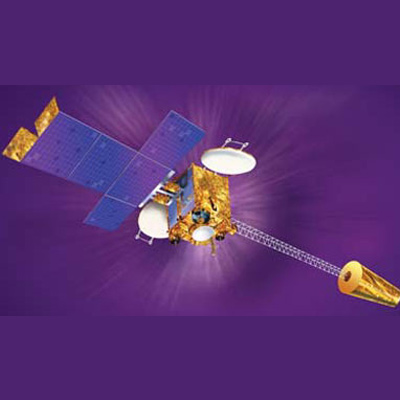
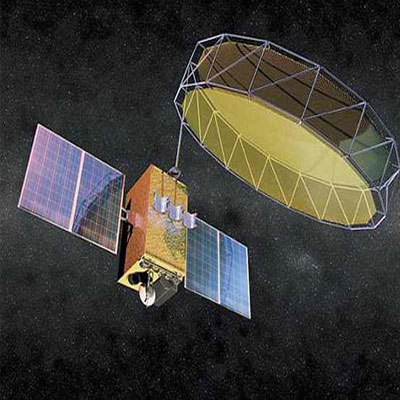
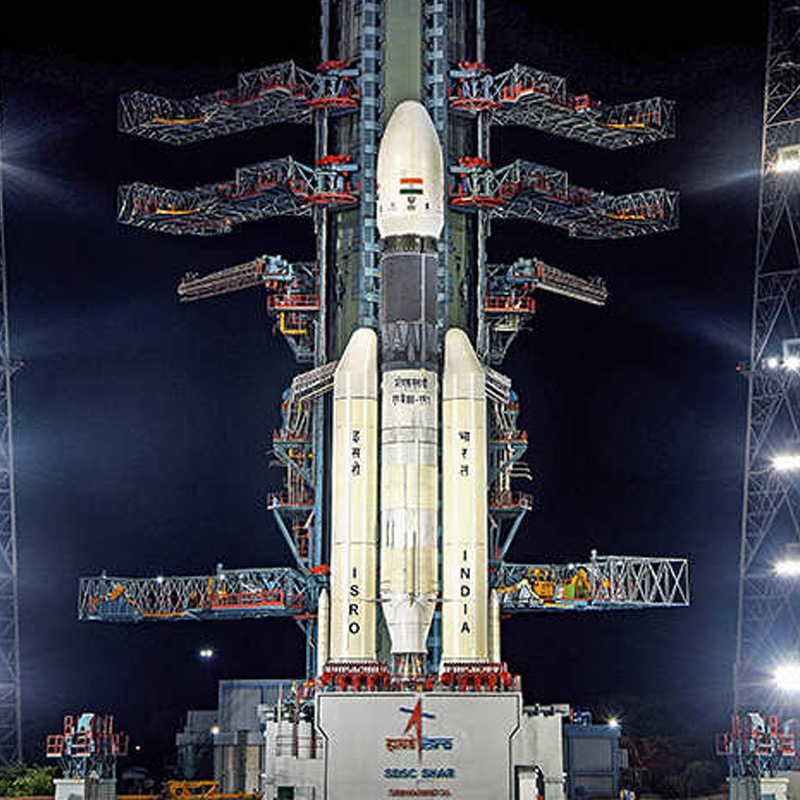
    Mumbai: The location: Kourou, French Guiana. The date: 17 January 2020. The time: 02:35 am IST. Indian Space Research Organisation (ISRO) scientists will be at their consoles, their brows creased in concentration as the countdown for the liftoff off its new generation communication satellite GSAT 30 off Arianespace’s Ariane 5 rocket begins. Weighing 3,375 kg, GSAT-30 is set to replace one of the early birds in the ISRO fleet, the ageing Insat 4A.

    Insat-4A was launched in 2005 with a lifespan of at least 12 years and has been operational way beyond that. Even though it is functioning fine, ISRO has decided to put in a replacement with advanced features and network strength. Amongst the two major  occupants and users of transponder capacity on Insat 4A are Tata Sky and Star India group.

    Along with GSAT 30, Arianespace will also be putting into orbit global operator Eutelsat’s Konnect satellite on the same launch vehicle. GSAT-30 is the lower passenger in the Ariane-5 spacecraft, with Konnect its copassenger being released first.  This will be Arianespace’s 107th Ariane 5 mission.

    To be positioned at a longitude of 83° East, GSAT-30 will provide high-quality television, telecommunications and broadcasting services over Indian mainland and islands. GSAT-30 is configured on ISRO’s enhanced I-3K platform to provide communications services from geostationary orbit in C- and Ku-band for a lifetime greater than 15 years. Last year, Arianespace had delivered the GSAT-31 into orbit.

    GSAT-30 will provide extended coverage in C-band to Gulf countries, a large part of Asia and Australia. The move will help Indian broadcasters beam their content to Gulf countries, large parts of Asia and Australia, as well as the Indian mainland.

    The GSAT-30 was speculated to launch in June last year, but was postponed to 2020 as India’s pioneer space agency got busy in launching military satellites in space in order to boost strategic assets in space as well as its moon mission.

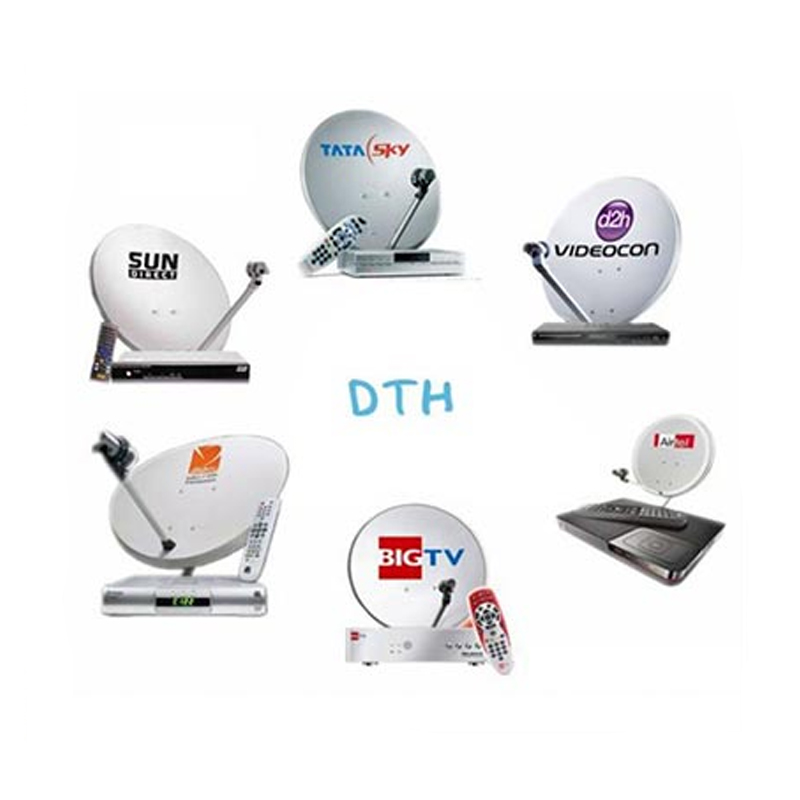
    In its GSAT-30 launch kit, ISRO said: “GSAT will be extensively used for supporting VSAT networks, Television uplinking and teleport Services, Digital Satellite News Gathering (DSNG), DTH-television services cellular backhaul connectivity and many such applications”.

    Eutelesat Konnect on the other hand will offer total capacity of 75 Gbps and by next autumn will allow Eutelsat to provide Internet access services for companies and individuals alike at up to 100 Mbps. The satellite will help to fight against the digital divide by bringing broadband Internet across 40 countries in Africa and 15 countries across Europe.

    Produced by Thales Alenia Space, it is the first to use the company’s Spacebus NEO platform developed under the Neosat Partnership Project conducted by the European and French space agencies (ESA and CNES). Eutelsat Konnect will weight approximately 3,620 kg. at liftoff and is to operate from an orbital slot at 13 degrees East.

    The proceedings will of course be telecsast live online as well on DD. To watch a live, high-speed online transmission of the launch (including commentary in French and English from the launch site), go to arianespace.com or to youtube.com/arianespace on 16 January 2020, beginning 20 minutes before liftoff.

  • 13 indigenous communication satellites over Indian skies

    13 indigenous communication satellites over Indian skies

    New Delhi: Thirteen of the 34 Indian satellites operational in the country are communication satellites.  

    These sare: INSAT-3A, INSAT-3C, INSAT-4A, INSAT-4B, INSAT-4CR, GSAT-6, GSAT-7, GSAT-8, GSAT-10, GSAT-12, GSAT-14, GSAT-15 and GSAT-16.  The others include 12 Earth Observation Satellites; seven Navigational Satellites;and two Space science Satellites. 
    About 30 service providers are utilising Ku-band (a part of K band) transponders onboard indigenous communication satellites for various communication applications, which include direct-to-home television, digital satellite news gathering, telecommunication, VSAT services for banking, tele-education, business communication. The government is not seeking any foreign assistance/collaboration for satellite operations, Space Department minister Jitendra Singh has told Parliament. 

    The Indian Space Research Organization has an action plan in place for developing indigenous satellites, with the participation of Indian industries, for earth observation, communication, navigation and space science and planetary exploration. 

    Meanwhile, ISRO has signed MoU/ cooperative agreements for exploration and use of outer space with 37 countries viz. Argentina, Australia, Brazil, Brunei Darussalam, Bulgaria, Canada, Chile, China, Egypt, France, Germany, Hungary, Indonesia, Israel, Italy, Japan, Kazakhstan, Kuwait, Mauritius, Mexico, Mongolia, Myanmar, Norway, Peru, Republic of Korea, Russian Federation, Saudi Arabia, Spain, Sweden, Syria, Thailand, The Netherlands, Ukraine, United Kingdom, United Arab Emirates, United States of America and Venezuela. 

    The fields to explore newer research activities addressed in these MoUs include Joint development of advanced scientific instruments to observe earth and universe; joint realization of satellite missions; jointly carrying out calibration and validation experiments; conducting airborne campaign with advanced instruments; deep space navigation and communication support for space science missions; development of advanced technologies for building and launching of spacecrafts for earth observation and space science exploration. 

    Application possibilities in the field of remote sensing addressed in these MoUs include – natural resource management; vegetation biomass estimation; meteorological & oceanographic applications; atmospheric parameter retrieval & modelling; climate monitoring and weather forecasting; disaster management support.

  • 13 indigenous communication satellites over Indian skies

    13 indigenous communication satellites over Indian skies

    New Delhi: Thirteen of the 34 Indian satellites operational in the country are communication satellites.  

    These sare: INSAT-3A, INSAT-3C, INSAT-4A, INSAT-4B, INSAT-4CR, GSAT-6, GSAT-7, GSAT-8, GSAT-10, GSAT-12, GSAT-14, GSAT-15 and GSAT-16.  The others include 12 Earth Observation Satellites; seven Navigational Satellites;and two Space science Satellites. 
    About 30 service providers are utilising Ku-band (a part of K band) transponders onboard indigenous communication satellites for various communication applications, which include direct-to-home television, digital satellite news gathering, telecommunication, VSAT services for banking, tele-education, business communication. The government is not seeking any foreign assistance/collaboration for satellite operations, Space Department minister Jitendra Singh has told Parliament. 

    The Indian Space Research Organization has an action plan in place for developing indigenous satellites, with the participation of Indian industries, for earth observation, communication, navigation and space science and planetary exploration. 

    Meanwhile, ISRO has signed MoU/ cooperative agreements for exploration and use of outer space with 37 countries viz. Argentina, Australia, Brazil, Brunei Darussalam, Bulgaria, Canada, Chile, China, Egypt, France, Germany, Hungary, Indonesia, Israel, Italy, Japan, Kazakhstan, Kuwait, Mauritius, Mexico, Mongolia, Myanmar, Norway, Peru, Republic of Korea, Russian Federation, Saudi Arabia, Spain, Sweden, Syria, Thailand, The Netherlands, Ukraine, United Kingdom, United Arab Emirates, United States of America and Venezuela. 

    The fields to explore newer research activities addressed in these MoUs include Joint development of advanced scientific instruments to observe earth and universe; joint realization of satellite missions; jointly carrying out calibration and validation experiments; conducting airborne campaign with advanced instruments; deep space navigation and communication support for space science missions; development of advanced technologies for building and launching of spacecrafts for earth observation and space science exploration. 

    Application possibilities in the field of remote sensing addressed in these MoUs include – natural resource management; vegetation biomass estimation; meteorological & oceanographic applications; atmospheric parameter retrieval & modelling; climate monitoring and weather forecasting; disaster management support.

  • Rs 800 crore earmarked for two communication satellites in current year

    Rs 800 crore earmarked for two communication satellites in current year

    NEW DELHI: A budget of Rs 800 crore has been set aside for the launch of the GSAT 15 and GSAT 16 communication satellites during 2013-14.

    However, the total budget for GSAT-15 is Rs 859.5 crore and the figure for GSAT-16 is Rs 865.5 crore.

    GSAT-15 is a geostationary communication satellite which will carry 24 Ku-band transponders and one GAGAN (GPS Aided Geo Augmented Navigation) payload. GSAT-15 satellite will support the existing Direct-To-Home (DTH) and Very Small Aperture Terminal (VSAT) services in the country and the GAGAN payload will be a part of GAGAN space segment to provide better air traffic management over Indian Air Space.

    GSAT-16 is a geostationary communication satellite which will carry 24 C-band, 12 Ku-band and 12 Upper Extended C-band transponders. GSAT-16 satellite will support satellite based telecommunication, television, VSAT and other services in the country.

    GSAT-15 and GSAT-16 satellites are targeted for launch during the 2014-16 timeframe. The two satellites were approved in July this year, Minister of State in Prime Minister’s Office V Narayansamy told Parliament.

    The revenue earned by ANTRIX Corporation, the commercial arm of the department, through leasing of INSAT/GSAT transponders during the year 2012-13 is approximately Rs 482.67 crore.

    This revenue accrues from service providers of Direct-To-Home (DTH) services, TV Uplink services, Digital Satellite News Gathering (DSNG) services and Very Small Aperture Terminal (VSAT) services. This revenue does not include the capacities provided to various societal applications such a tele-education, tele-medicine, Village Resource Center, Disaster Management and part of public broadcasting services, which are not of the nature of revenue-earning services.

    At present, there are nine operational INSAT/GSAT communication satellites: INSAT-3A, INSAT-3C, INSAT-3E, INSAT-4A, INSAT-4B, INSAT-4CR, GSAT-8, GSAT-10 and GSAT-12. The total number of transponders available at present from these satellites is 195 operating in C, Extended C, Ku, and S-bands.

    Transponders on communication satellites are leased to users after the launch and operationalisation of the satellite. The Department of Space leases the transponders on INSAT/GSAT satellites through ANTRIX.

  • Insat 4A services disrupted due to minor glitch

    Insat 4A services disrupted due to minor glitch

    MUMBAI: Insat 4A, the satellite which Tata Sky uses for its direct-to-home (DTH) operations, saw a minor disruption in services for about 30 minutes at around 4 pm due to solar disturbances.

    Insat 4A lost earth lock when one of the momentum wheels used for stabilizing the spacecraft got switched off, Indian Space Research Organisation said today in a release.

    Isro engineers at master control facility, Hassan, immediately took action to recover the earth lock and orient the satellite properly within about half an hour.

  • Lamhas Satellite Services Ltd sets up teleport facility in Mumbai

    Lamhas Satellite Services Ltd sets up teleport facility in Mumbai

    MUMBAI: Satellite services provider Lamhas has opened its first commercial uplinking hub for TV channels in Mumbai. The company offers facilities such as satellite bandwidth, automated server playout and uplinking in the newly-opened division.

    The 16,500 square feet facility, located in the International Infotech Park above Vashi Railway Station in Navi Mumbai, is set up on an investment of about Rs 150 million.

    “We got all the regulatory clearances for the teleport by December. The entire project was ready by March,” says Lamhas Satellite Services Ltd (LSSL) co-promoter Manoj Shah.

    The company offers multi-channel uplinking services in SDI (Single Document Interface), stat mix, routers, matrix, international video gateway, modulators, upconverters and NMS (network management system). Lamhas is also gearing up to provide flyaway kit service in Ku Band.

    With the new facility, Lamhas has signed up three international teleports to provide its Indian clients international service. “We have tied up with teleports in Israel (RR Sat), New York (promoted by NRI entrepreneur Deepak Viswanath) and France (Globecast) for multi teleport set up to transport signals to any part of the world,” states LSSL VP Wilfred Lobo.

    Lamhas has already announced the card rate for the teleport facility. The entire package, which includes satellite bandwidth, automated server playout and uplinking facilities, cost Rs 1.2 million per month. Lobo said the company was presently in talks with various Indian broadcasters to offer the facility.

    “We are targeting all channels who want to uplink from India. We have approached some of the leading broadcasters in the country,” he says.

    The company has booked a C-band transponder on Insat 4A to offer clients space on the satellite. Incidentally, Tata Sky will be using the Ku-band transponders from this satellite for its direct-to-home (DTH) service.

    Speaking on the expansion plans, Lobo said Lamhas was looking at Delhi and Bangalore to set up its next teleport facility. “We will choose one of these cities. We have already acquired land in both the cities,” he says.

  • Isro schedules Insat 4C launch for July

    Isro schedules Insat 4C launch for July

    MUMBAI: All indications point to the second half of the year being when we will see some fresh action on the direct-to-home (DTH) television services front. Even as the timeline for the Tata Sky DTH service looks to be June-July, the Indian Space Research Organisation (Isro) is all set to launch Insat 4C, the latest in the Insat series, in July.

    Kalanithi Maran’s Sun Group, which has booked space on Insat 4C, is negotiating with Isro for eight Ku-band transponders. Earlier Sun had indicated that it would start its Sun Direct DTH service with five transponders which it would ramp up to nine.

    “Sun now wants to start with eight transponders. The company is in discussions with Isro,” an industry source says.

    Though Insat 4C has a capacity of 12 Ku-band transponders, the problem with Isro is that it has got demand from other operators as well. The government requires four transponders for village telephony over a period of time. Even National Informatics Centre (NIC) has asked for four transponders to start with. “We have committed to giving them one transponder each. We may give some transponders to NIC on Insat 4B, which is slated for launch in the first quarter of 2007 as we have to coordinate with the launch vehicle (Arianespace’s commercial launcher Ariane 5),” says Isro contract management and legal services director SB Iyer.

    Isro will also be handing over two Ku-band transponders to media companies for digital satellite news gathering (DSNG) activities. “DSNG is a fast-growing segment. We are providing two transponders for DSNG operators,” Iyer says.

    With one-to-two transponders reserved for spare capacity, Sun may have to finally settle for less than what it wants. But Isro will allocate transponders to customers who are ready to take them first.

    Meanwhile, Anil Ambani’s Reliance has also booked space for its own DTH plans. As things stand now, there may be no room even on Insat 4B as the space on Insat 4B is reserved for Doordarshan which wants six Ku-band transponders at the minimum.

    Subhash Chandra’s Dish TV, which is on NSS satellite, has not yet indicated to Isro whether it wants space on the Insat series. BPCL, the other player which is waiting to launch, has also not applied to Isro for transponder space.

    Insat 4C will be put into orbit in July by the Geo-synchronous Satellite Launch Vehicle-5 (GSLV), to be launched from Isro’s Sriharikota facility.

    With 12 high power Ku-band transponders, Insat 4C is the first Indian satellite to exclusively offer DTH playout facilities. The satellite will have the capacity to beam about 150 television channels in all.

    The other two satellites of the Insat 4 series — 4A and 4B — have both Ku-band and C-band capacity, carrying 12 transponders of each. Insat 4A launched last December.

    Isro has already allocated all the 12 transponders on Insat 4A for Tata Sky, the 80:20 joint venture between the Tatas and Star Group.