Tag: Insat-3A

  • 13 indigenous communication satellites over Indian skies

    13 indigenous communication satellites over Indian skies

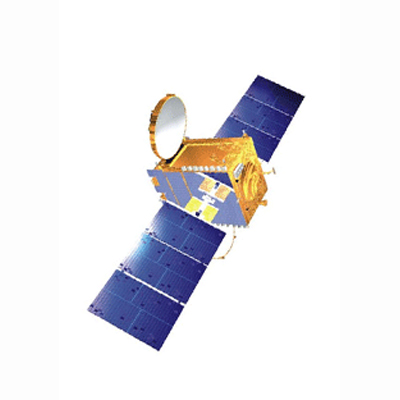
    New Delhi: Thirteen of the 34 Indian satellites operational in the country are communication satellites.  

    These sare: INSAT-3A, INSAT-3C, INSAT-4A, INSAT-4B, INSAT-4CR, GSAT-6, GSAT-7, GSAT-8, GSAT-10, GSAT-12, GSAT-14, GSAT-15 and GSAT-16.  The others include 12 Earth Observation Satellites; seven Navigational Satellites;and two Space science Satellites. 
    About 30 service providers are utilising Ku-band (a part of K band) transponders onboard indigenous communication satellites for various communication applications, which include direct-to-home television, digital satellite news gathering, telecommunication, VSAT services for banking, tele-education, business communication. The government is not seeking any foreign assistance/collaboration for satellite operations, Space Department minister Jitendra Singh has told Parliament. 

    The Indian Space Research Organization has an action plan in place for developing indigenous satellites, with the participation of Indian industries, for earth observation, communication, navigation and space science and planetary exploration. 

    Meanwhile, ISRO has signed MoU/ cooperative agreements for exploration and use of outer space with 37 countries viz. Argentina, Australia, Brazil, Brunei Darussalam, Bulgaria, Canada, Chile, China, Egypt, France, Germany, Hungary, Indonesia, Israel, Italy, Japan, Kazakhstan, Kuwait, Mauritius, Mexico, Mongolia, Myanmar, Norway, Peru, Republic of Korea, Russian Federation, Saudi Arabia, Spain, Sweden, Syria, Thailand, The Netherlands, Ukraine, United Kingdom, United Arab Emirates, United States of America and Venezuela. 

    The fields to explore newer research activities addressed in these MoUs include Joint development of advanced scientific instruments to observe earth and universe; joint realization of satellite missions; jointly carrying out calibration and validation experiments; conducting airborne campaign with advanced instruments; deep space navigation and communication support for space science missions; development of advanced technologies for building and launching of spacecrafts for earth observation and space science exploration. 

    Application possibilities in the field of remote sensing addressed in these MoUs include – natural resource management; vegetation biomass estimation; meteorological & oceanographic applications; atmospheric parameter retrieval & modelling; climate monitoring and weather forecasting; disaster management support.

  • 13 indigenous communication satellites over Indian skies

    13 indigenous communication satellites over Indian skies

    New Delhi: Thirteen of the 34 Indian satellites operational in the country are communication satellites.  

    These sare: INSAT-3A, INSAT-3C, INSAT-4A, INSAT-4B, INSAT-4CR, GSAT-6, GSAT-7, GSAT-8, GSAT-10, GSAT-12, GSAT-14, GSAT-15 and GSAT-16.  The others include 12 Earth Observation Satellites; seven Navigational Satellites;and two Space science Satellites. 
    About 30 service providers are utilising Ku-band (a part of K band) transponders onboard indigenous communication satellites for various communication applications, which include direct-to-home television, digital satellite news gathering, telecommunication, VSAT services for banking, tele-education, business communication. The government is not seeking any foreign assistance/collaboration for satellite operations, Space Department minister Jitendra Singh has told Parliament. 

    The Indian Space Research Organization has an action plan in place for developing indigenous satellites, with the participation of Indian industries, for earth observation, communication, navigation and space science and planetary exploration. 

    Meanwhile, ISRO has signed MoU/ cooperative agreements for exploration and use of outer space with 37 countries viz. Argentina, Australia, Brazil, Brunei Darussalam, Bulgaria, Canada, Chile, China, Egypt, France, Germany, Hungary, Indonesia, Israel, Italy, Japan, Kazakhstan, Kuwait, Mauritius, Mexico, Mongolia, Myanmar, Norway, Peru, Republic of Korea, Russian Federation, Saudi Arabia, Spain, Sweden, Syria, Thailand, The Netherlands, Ukraine, United Kingdom, United Arab Emirates, United States of America and Venezuela. 

    The fields to explore newer research activities addressed in these MoUs include Joint development of advanced scientific instruments to observe earth and universe; joint realization of satellite missions; jointly carrying out calibration and validation experiments; conducting airborne campaign with advanced instruments; deep space navigation and communication support for space science missions; development of advanced technologies for building and launching of spacecrafts for earth observation and space science exploration. 

    Application possibilities in the field of remote sensing addressed in these MoUs include – natural resource management; vegetation biomass estimation; meteorological & oceanographic applications; atmospheric parameter retrieval & modelling; climate monitoring and weather forecasting; disaster management support.

  • ISRO’s GSAT-15 launch on 11 November; DTH to benefit

    ISRO’s GSAT-15 launch on 11 November; DTH to benefit

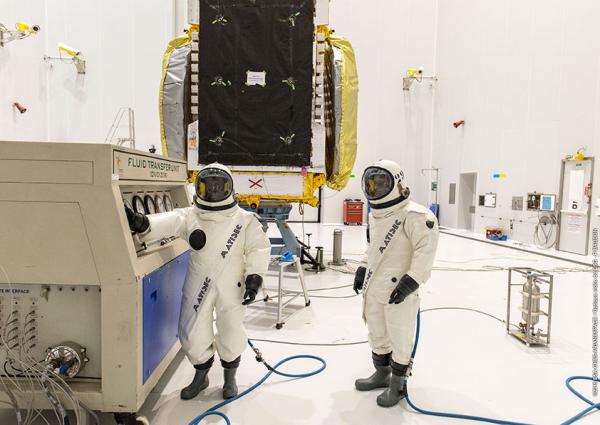
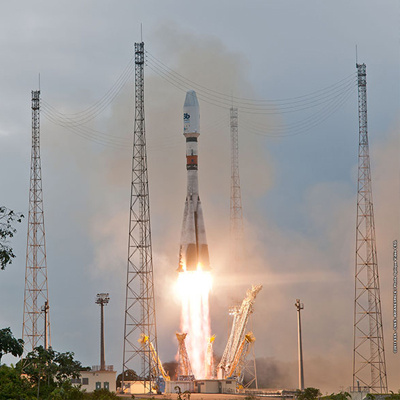
    NEW DELHI: Even as Indians are celebrating the festival of lights, a new bird  from the Indian Space Research Organisation (ISRO) is set to be blasted off into geostationary orbit come early 11 November from Kouro in French Guiana.  The satellite GSAT-15 – with its 24 Ku-band transponders – is going to provide a lifeline to India’s DTH television operators.


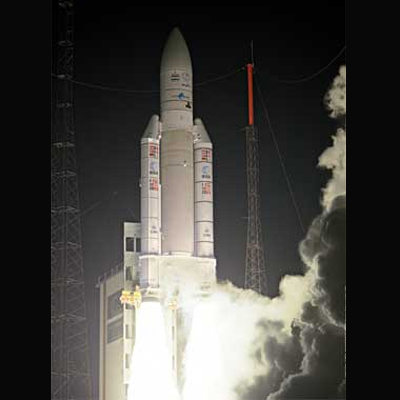
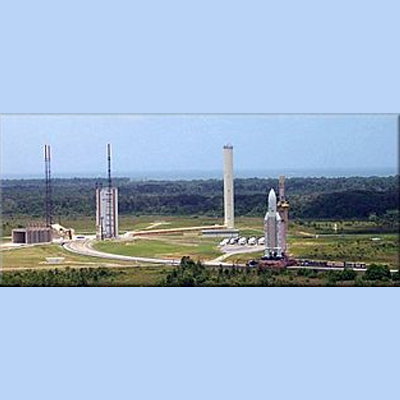
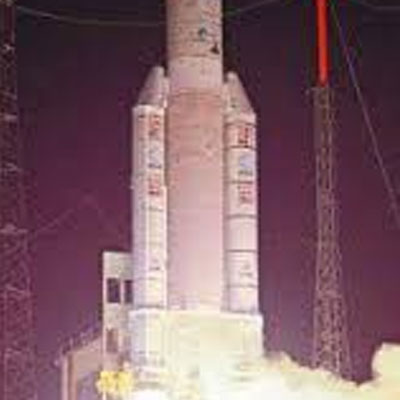
    It is currently waiting at the launch pad as a payload of an Ariane 5 Rocket  – launch firm Arianespace’s trusted launcher – in launch complex No 3 in Kouru. The satellite cost – including the launch fee – is at Rs 860 crore.


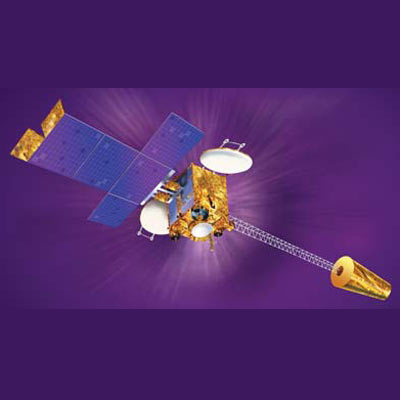
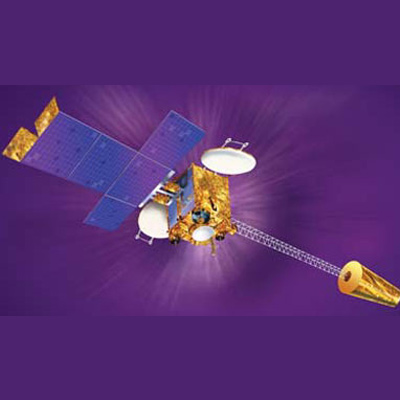
    The GSAT-15 will replace two older birds – INSAT-3A and INSAT-4B – both are which are at the fag end of their lives. INSAT 3A will expire in November while 4b will cease functioning later next year.


    Most of the transponder capacity on these two satellites is being utilized by Prasar Bharati’s DD and  DTH operators FreeDish and  Sun Direct, according to satellite TV tracker Lyngsat.


    GSAT-15 will thus see these services being shifted to its transponders, which will also serve the needs of VSAT operators who offer Digital satellite news gathering operations to India’s news channels. It will also be carrying as a GPS-Aided GEO Augmented Navigation (GAGAN) payload operating in L1 and L5 bands as  a backup service for airlines and other users of augmented GPS-based system.  According to ISRO, it has a design life of 12 years and its weight will be 3,164 kg at lift-off


    The Ariane-5 VA-227 launch vehicle, which will launch GSAT 15, will also carry Arabsat-6B for Arabsat, Saudi Arabia. Arabsat-6B, to be renamed BADR-7 once in orbit, will be the ninth satellite orbited by Arianespace for use by the operator Arabsat, based in Riyadh, Saudi Arabia. It is the initial sixth-generation satellite for Arabsat’s fleet, providing broadcast, broadband and telecommunications services over the Middle East, Africa and Central Asia.


    The Ariane 5 mission will have a total payload lift performance of 9,810 kg, Arianespace said. This includes the two satellites’ mass at liftoff – 5,798 kg for Arabsat-6B and 3,164 kg for GSAT-15 – along with launcher integration hardware and Ariane 5’s dual-passenger deployment system, it added.


    The launch is planned to take place during a launch window of 21:34 and 22:17 pm coordinated universal time (around 03:04 am IST).


    Interested viewers can watch it live on http://www.arianespace.tv.

  • Rs 800 crore earmarked for two communication satellites in current year

    Rs 800 crore earmarked for two communication satellites in current year

    NEW DELHI: A budget of Rs 800 crore has been set aside for the launch of the GSAT 15 and GSAT 16 communication satellites during 2013-14.

    However, the total budget for GSAT-15 is Rs 859.5 crore and the figure for GSAT-16 is Rs 865.5 crore.

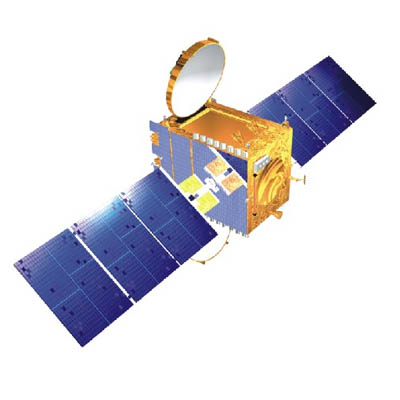
    GSAT-15 is a geostationary communication satellite which will carry 24 Ku-band transponders and one GAGAN (GPS Aided Geo Augmented Navigation) payload. GSAT-15 satellite will support the existing Direct-To-Home (DTH) and Very Small Aperture Terminal (VSAT) services in the country and the GAGAN payload will be a part of GAGAN space segment to provide better air traffic management over Indian Air Space.

    GSAT-16 is a geostationary communication satellite which will carry 24 C-band, 12 Ku-band and 12 Upper Extended C-band transponders. GSAT-16 satellite will support satellite based telecommunication, television, VSAT and other services in the country.

    GSAT-15 and GSAT-16 satellites are targeted for launch during the 2014-16 timeframe. The two satellites were approved in July this year, Minister of State in Prime Minister’s Office V Narayansamy told Parliament.

    The revenue earned by ANTRIX Corporation, the commercial arm of the department, through leasing of INSAT/GSAT transponders during the year 2012-13 is approximately Rs 482.67 crore.

    This revenue accrues from service providers of Direct-To-Home (DTH) services, TV Uplink services, Digital Satellite News Gathering (DSNG) services and Very Small Aperture Terminal (VSAT) services. This revenue does not include the capacities provided to various societal applications such a tele-education, tele-medicine, Village Resource Center, Disaster Management and part of public broadcasting services, which are not of the nature of revenue-earning services.

    At present, there are nine operational INSAT/GSAT communication satellites: INSAT-3A, INSAT-3C, INSAT-3E, INSAT-4A, INSAT-4B, INSAT-4CR, GSAT-8, GSAT-10 and GSAT-12. The total number of transponders available at present from these satellites is 195 operating in C, Extended C, Ku, and S-bands.

    Transponders on communication satellites are leased to users after the launch and operationalisation of the satellite. The Department of Space leases the transponders on INSAT/GSAT satellites through ANTRIX.